Machine Tools Market Size, Share & Analysis

Machine Tools Market by Product Type (Milling Machines, Turning Machines, Grinding Machines, Electrical Discharge Machines, Machining Centers), Automation Type (CNC and Conventional), End-use Industry, Sales Channel, and Region - Global Forecast to 2033




OVERVIEW
Source: Secondary Research, Interviews with Experts, MarketsandMarkets Analysis
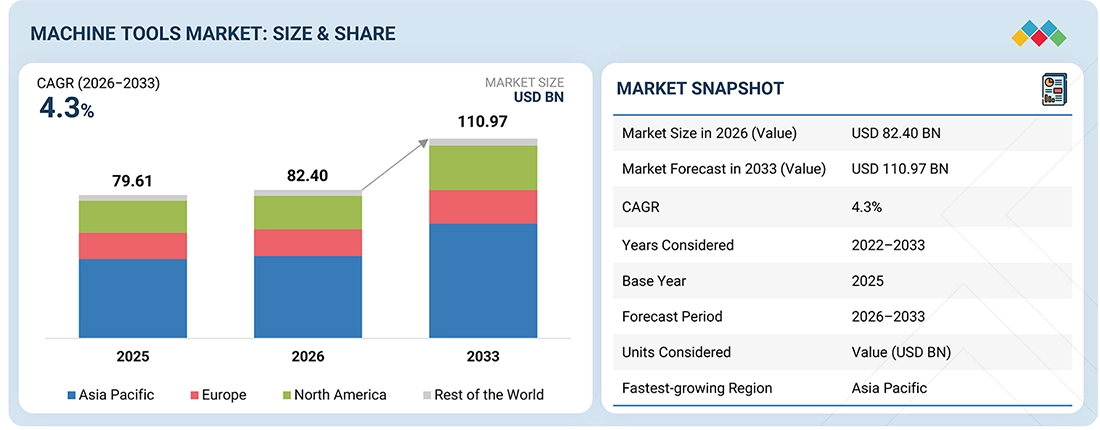
The machine tools market is projected to reach USD 110.97 billion by 2033 from USD 82.40 billion in 2026, at a CAGR of 4.3%. The global machine tools market is evolving from equipment-centric manufacturing toward digitally integrated production ecosystems, where competitiveness increasingly depends on machining precision, production flexibility, and operational resilience rather than installed capacity alone. Manufacturers are prioritizing investments in automation-ready CNC platforms, multi-axis machining, and intelligent production systems to reduce cost per part, shorten product development cycles, and support high-mix, low-volume manufacturing. At the same time, supply chain diversification, vehicle electrification, semiconductor localization, and aerospace production expansion are shifting capital expenditure toward advanced machining capabilities that improve productivity and reduce dependence on manual processes. For industry leaders, machine tools are becoming a strategic manufacturing asset that enables faster response to changing customer requirements, strengthens regional production capabilities, and supports long-term competitiveness in high-value precision manufacturing.
KEY TAKEAWAYS
-
MARKET SNAPSHOT:
Market Size (2025): USD 79.61 Billion
Current Market Size (2026): USD 82.40 Billion
Projected Market Size (2033): USD 110.97 Billion
CAGR (2026–2033): 4.3% -
BY REGIONAsia Pacific is expected to lead the market during the forecast period.
-
BY Product TypeBy product type, the machining centers segment is expected to account for a significant share of 26.98% of the machine tools market.
-
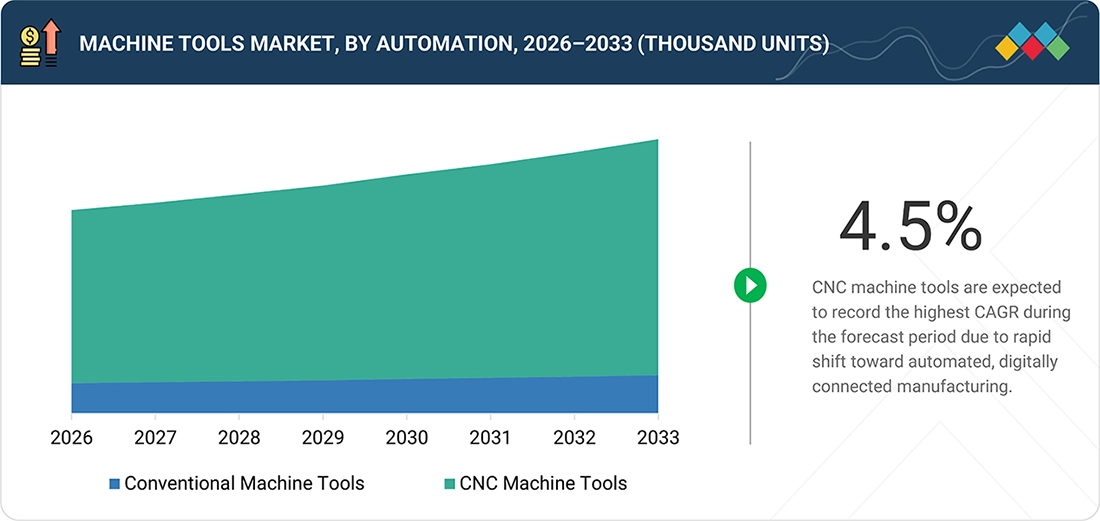
BY AutomationBased on automation, CNC machine tools are expected to register the highest CAGR of 4.5% during the forecast period.
-
BY Sales ChannelBy sales channel, dealers and distributors are projected to experience the highest growth rate of 4.6% during the forecast period.
-
COMPETITIVE LANDSCAPE (KEY PLAYERS)Major players in the machine tools market are adopting both organic and inorganic growth strategies, including product innovation, manufacturing capacity expansion, strategic partnerships, digital manufacturing initiatives, and technology acquisitions. For instance, DMG MORI (Japan), Makino Inc. (Japan), Okuma Corporation (Japan), DN Solutions (South Korea), and JTEKT Corporation (Japan) continue to strengthen their market positions through investments in intelligent machining technologies, automation integration, application engineering capabilities, and global service networks to address the growing demand for high-precision manufacturing across automotive, aerospace, medical devices, semiconductor, and industrial machinery markets.
-
COMPETITIVE LANDSCAPE (STARTUPS/SMES)Emerging machine tool manufacturers and specialized technology providers are strengthening their market presence by focusing on niche applications such as micro-machining, additive manufacturing, automation integration, precision tooling, and digital manufacturing software. Companies such as STM (S&T Machinery) (India) and SYIL Machine Tools (China), among others, are expanding their footprint by offering cost-competitive CNC machining solutions, application-specific customization, and localized technical support, highlighting their potential to capture opportunities in high-growth manufacturing markets.
The machine tools market is positioned for steady growth as manufacturers accelerate investments in automation, production localization, and high-precision manufacturing to improve operational efficiency and supply chain resilience. Demand is increasingly shifting toward CNC machining centers, multi-axis systems, and digitally connected machine tools that enable flexible production and reduce total manufacturing costs. Asia Pacific remains the largest regional market, supported by its strong automotive, electronics, aerospace, and industrial manufacturing base, while capital investments in smart factories continue to strengthen regional demand. The competitive landscape is evolving beyond machine performance toward integrated manufacturing solutions, where software, automation, predictive maintenance, and lifecycle service capabilities are becoming key differentiators that influence customer investment decisions and long-term profitability.
TRENDS & DISRUPTIONS IMPACTING CUSTOMERS' CUSTOMERS
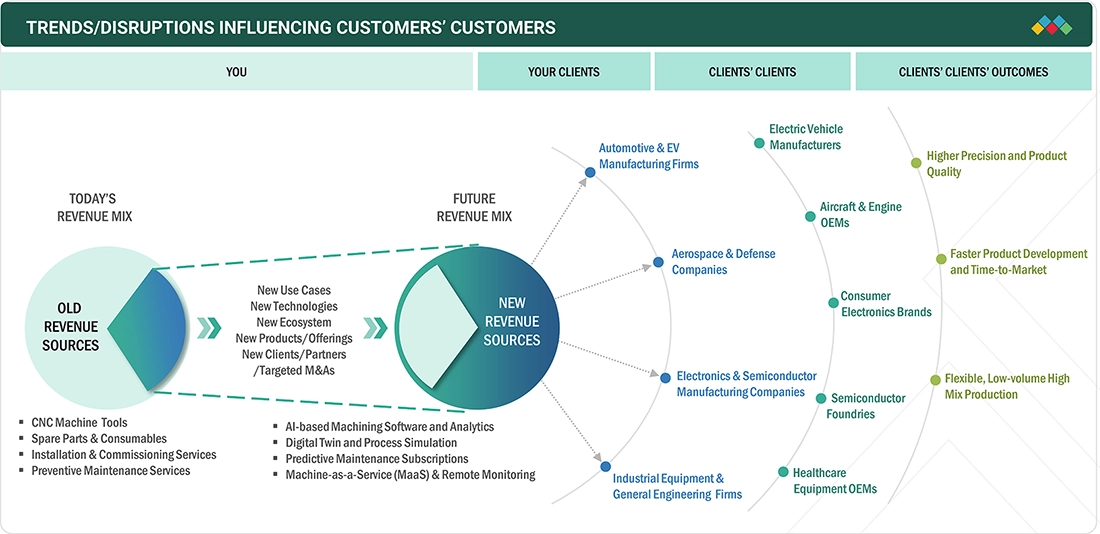
The machine tools market is evolving from a hardware-focused industry toward an integrated manufacturing solutions ecosystem. While traditional revenue continues to come from CNC machine sales, spare parts, installation, and maintenance services, future growth is increasingly supported by AI-enabled machining software, digital twins, predictive maintenance, remote monitoring, and Machine-as-a-Service (MaaS) offerings. This transition is strengthening collaboration between machine tool manufacturers, industrial automation providers, digital solution providers, and end users across automotive, aerospace, electronics, industrial equipment, and medical device manufacturing. As manufacturers prioritize flexible production, higher precision, and digital factory modernization, machine tool suppliers are expanding their software and lifecycle service portfolios, creating recurring revenue opportunities while improving machine utilization, operational efficiency, and long-term customer value.
Source: Secondary Research, Interviews with Experts, MarketsandMarkets Analysis
MARKET DYNAMICS

Level
-
Reshoring and Supply Chain Localization Accelerating Advanced Manufacturing Investments

-
Shift Toward Multi-axis Machining and Light-out Manufacturing


Level
-
High Capital Intensity and Prolonged Investment Cycles delaying Equipment Requirement


Level
-
Subscription-based Digital Services to Create New Revenue Models for Machine Tool OEMs

-
AI-enabled Autonomous Machining and Digital Manufacturing Ecosystems


Level
-
Dependence on Critical Precision Components Extending Equipment Lead Times

-
Hardware Commoditization Shifting Competition Toward Software and Digital Capabilities

Source: Secondary Research, Interviews with Experts, MarketsandMarkets Analysis
Driver: Reshoring and Supply Chain Localization Accelerating Advanced Manufacturing Investments
Government incentives, reshoring initiatives, and industrial policies are encouraging manufacturers to expand domestic production capacity and modernize machining facilities. As companies localize critical supply chains, investments in advanced CNC machine tools, automation, and precision manufacturing technologies continue to accelerate across major industrial economies.
Restraint: High Capital Intensity and Prolonged Investment Cycles Delaying Equipment Requirement
The high upfront cost of advanced CNC machine tools, automation systems, and supporting infrastructure often delays purchasing decisions, particularly among small and medium-sized manufacturers. Extended investment approval cycles and uncertain economic conditions continue to slow equipment replacement and limit adoption of next-generation machining technologies.
Opportunity: AI-Enabled Autonomous Machining and Digital Manufacturing Ecosystems
AI-enabled machining, digital twins, Industrial IoT, and intelligent process monitoring are transforming machine tools into connected manufacturing platforms that improve productivity and operational efficiency. As manufacturers accelerate smart factory adoption, integrated software, automation, and predictive maintenance solutions are likely to create new revenue opportunities for machine tool suppliers.
Challenge: Dependence on Critical Precision Components Extending Equipment Lead Times
Limited availability of high-precision components such as CNC controllers, linear guideways, ball screws, servo systems, and precision spindles continues to extend machine production and delivery timelines. Ongoing supply chain constraints and long procurement cycles increase manufacturing costs while delaying customer deliveries and factory expansion projects.
MACHINE TOOLS MARKET SIZE, SHARE & ANALYSIS: COMMERCIAL USE CASES ACROSS INDUSTRIES
| COMPANY | USE CASE DESCRIPTION | BENEFITS |
|---|---|---|
 |
Provides precision machining centers and EDM systems for aerospace, semiconductor, and medical manufacturing | Improves machining accuracy and production efficiency |
 |
Supplies grinding machines and machining centers for automotive and industrial manufacturing | Enhances production consistency and dimensional accuracy |
 |
Offers CNC turning, machining, and multitasking solutions for precision manufacturing | Increases machine utilization and manufacturing flexibility |
 |
Delivers turning centers, machining centers, and digital manufacturing solutions | Enables complex machining and supports smart manufacturing |
 |
Develops CNC machining centers and automation-ready production systems | Improves throughput and reduces operating costs |
Logos and trademarks shown above are the property of their respective owners. Their use here is for informational and illustrative purposes only.
MARKET ECOSYSTEM
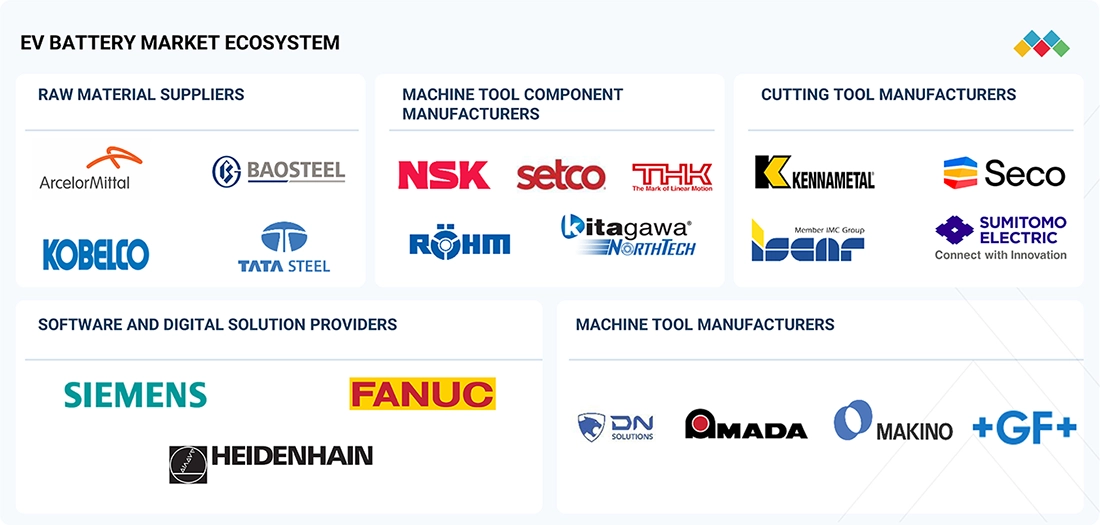
The machine tools ecosystem is built on close collaboration between raw material suppliers, precision component manufacturers, cutting tool providers, digital solution providers, and machine tool manufacturers to deliver high-performance machining solutions. Raw material suppliers provide specialty steels and alloys that improve machine durability and precision, while component and tooling manufacturers enhance machining accuracy, speed, and operational reliability. Digital solution providers enable AI-driven CNC control, machine connectivity, digital twins, and predictive maintenance, supporting the transition toward smart manufacturing. Machine tool manufacturers integrate these technologies into advanced CNC machining systems that address the growing requirements of automotive, aerospace, electronics, medical devices, and industrial equipment industries. This integrated value chain is accelerating innovation, improving manufacturing productivity, and creating long-term competitive advantages through higher precision, greater automation, and lifecycle service offerings.
Logos and trademarks shown above are the property of their respective owners. Their use here is for informational and illustrative purposes only.
MARKET SEGMENTS
Source: Secondary Research, Interviews with Experts, MarketsandMarkets Analysis
Machine Tools Market, By Product Type
The machining centers segment is expected to witness the fastest growth during the forecast period, supported by rising demand for multi-process machining that improves productivity, precision, and manufacturing flexibility. Industries are increasingly investing in advanced machining centers to consolidate operations, reduce setup time, and support high-mix, low-volume production. Strategic capacity expansion and technology investments by leading manufacturers are further accelerating adoption, particularly in automotive, aerospace, semiconductor, and medical device manufacturing.
Machine Tools Market, By Automation
CNC machine tools are expected to account for the largest market share throughout the forecast period, driven by the rapid shift toward automated, digitally connected manufacturing. Manufacturers continue to invest in advanced CNC systems to improve machining precision, production efficiency, and process consistency while supporting smart factory integration. Rising demand from automotive, aerospace, semiconductor, and precision engineering industries is expected to sustain the segment's market leadership.
Machine Tools Market, By Sales Channel
The dealers & distributors segment is expected to account for the largest market share during the forecast period, driven by the need for localized sales, application support, and responsive after-sales service. Established distribution networks enable OEMs to expand regional reach, accelerate machine deployment, and provide timely maintenance and spare parts support without significant direct sales investments. This channel remains critical for improving customer access and strengthening long-term service relationships across diverse industrial markets.
Machine Tools Market, By End-use Industry
The automotive & transportation segment is expected to account for the largest market share during the forecast period, supported by increasing investments in vehicle electrification, lightweight manufacturing, and high-precision component production. The industry's transition toward advanced mobility platforms is driving demand for machine tools that deliver high accuracy, automation, and production flexibility. Continuous expansion of automotive manufacturing capacity and technology adoption is expected to sustain the segment's market leadership.
REGION
Asia Pacific to Witness Fastest Growth in Machine Tools Market During Forecast Period
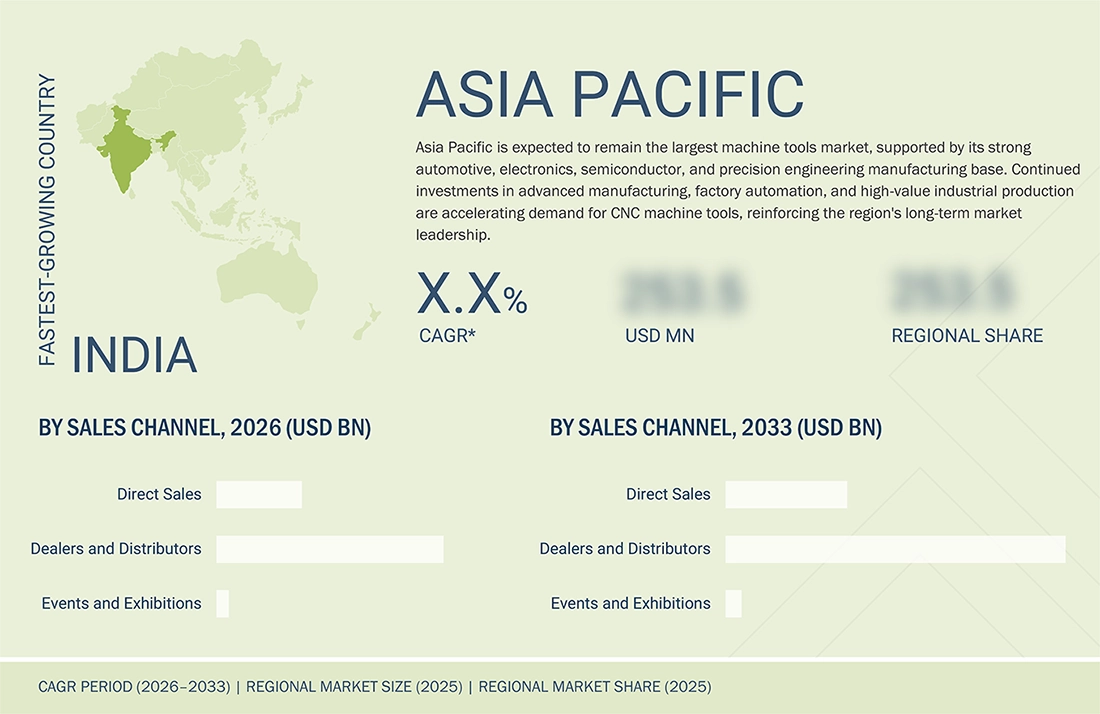
Asia Pacific is projected to record the fastest growth rate in the machine tools market during the forecast period, supported by its strong manufacturing base and sustained demand for machine tools from the automotive, electronics, semiconductor, and industrial equipment industries. The region continues to strengthen its advanced manufacturing ecosystem through ongoing industrial expansion and technology adoption. Supporting this trend, September 2026 will witness SEMICON India 2026, bringing together global semiconductor manufacturers and equipment suppliers to strengthen India's semiconductor manufacturing ecosystem. Such initiatives are expected to support long-term demand for advanced machine tools across the region.
MACHINE TOOLS MARKET SIZE, SHARE & ANALYSIS: COMPANY EVALUATION MATRIX
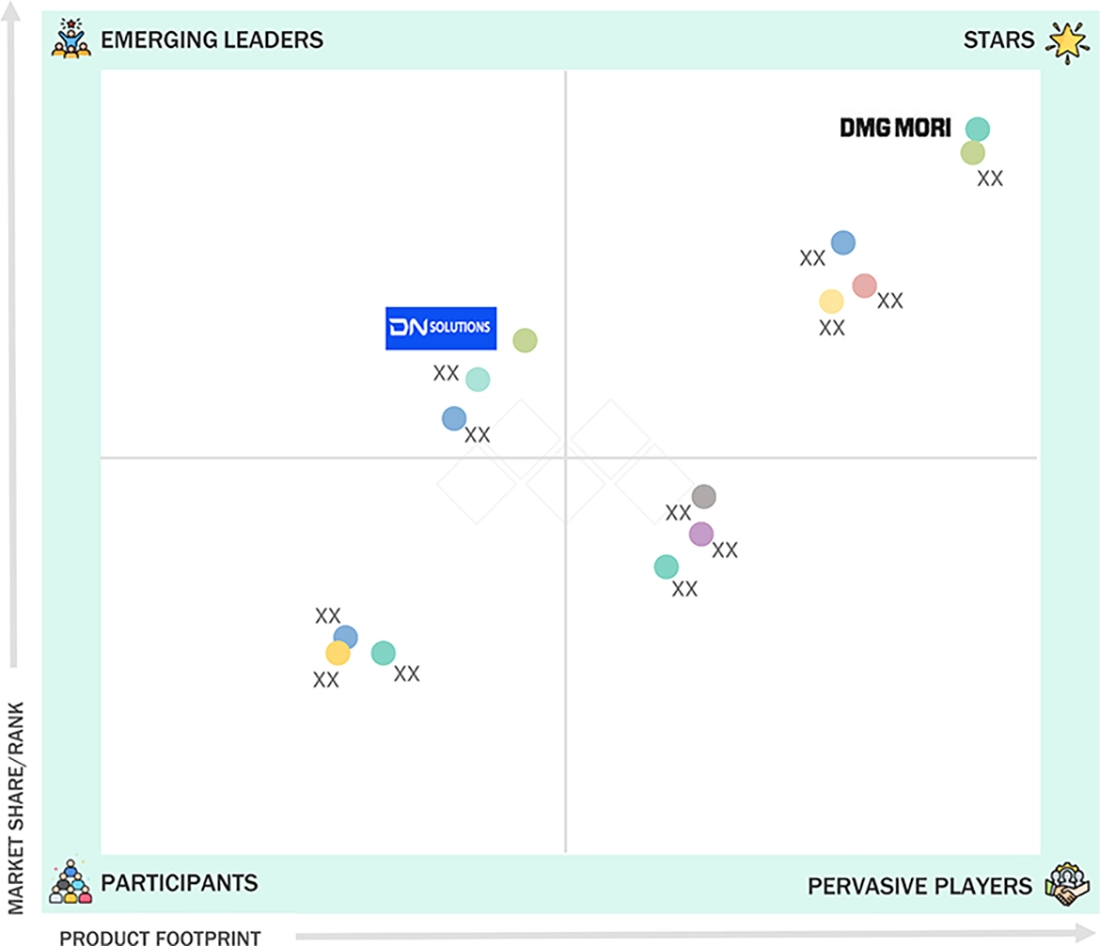
In the machine tools market matrix, DMG MORI (Star) leads with its comprehensive portfolio of CNC machine tools, strong digital manufacturing ecosystem, global production footprint, and continued investments in automation and intelligent machining technologies. The company strengthens its market leadership through product innovation, integrated software platforms, and advanced manufacturing solutions that support high-precision industries. DN Solutions (Emerging Leader) is expanding its global presence through strategic acquisitions, portfolio expansion, and automation-ready machining solutions. Its acquisition of HELLER in January 2026 and continued investments in multi-axis machining and smart manufacturing technologies position the company to strengthen its presence in Europe and North America while advancing toward the market leaders' quadrant.
Source: Secondary Research, Interviews with Experts, MarketsandMarkets Analysis
KEY MARKET PLAYERS
- Makino Inc. (Japan)
- JTEKT Corporation (Japan)
- Okuma Corporation (Japan)
- DMG MORI (Japan)
- DN Solutions (South Korea)
- Georg Fischer Ltd. (Switzerland)
- Amada Co., Ltd. (Japan)
- Hyundai Wia Corp (South Korea)
- Yamazaki Mazak Corporation (Japan)
- Chiron Group SE (Germany)
MARKET SCOPE
| REPORT METRIC | DETAILS |
|---|---|
| Market Size in 2025 (Value) | USD 79.61 BN |
| Market Size in 2026 (Value) | USD 82.40 BN |
| Market Forecast in 2033 (Value) | USD 110.97 BN |
| Growth Rate | CAGR of 4.3% from 2026 to 2033 |
| Years Considered | 2022–2033 |
| Base Year | 2025 |
| Forecast Period | 2026–2033 |
| Units Considered | Value (USD BN) |
| Report Coverage | Revenue forecast, company ranking, competitive landscape, growth factors, and trends |
| Segments Covered |
|
| Regions Covered | Asia Pacific, Europe, North America, Rest of the World |
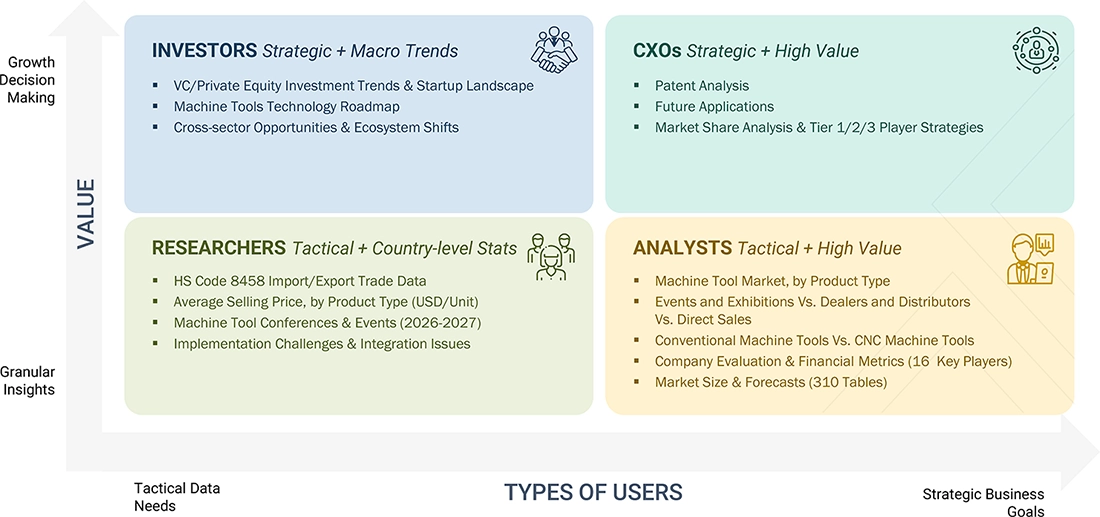
WHAT IS IN IT FOR YOU: MACHINE TOOLS MARKET SIZE, SHARE & ANALYSIS REPORT CONTENT GUIDE
DELIVERED CUSTOMIZATIONS
We have successfully delivered the following deep-dive customizations:
| CLIENT REQUEST | CUSTOMIZATION DELIVERED | VALUE ADDS |
|---|---|---|
| Global Automotive (Europe) | Competitive benchmarking of DMG MORI, Mazak, Okuma, Makino, and DN Solutions across CNC machining technologies | Manufacturing footprint assessment and supplier selection strategy by region |
| Machine Tool Manufacturer (China) | Market sizing by product type (machining centers, turning, grinding, EDM, milling), and end-use industry | Capacity expansion strategy, technology adoption roadmap, and demand outlook by application |
| Aerospace Component Manufacturer (North America) | Assessment of machining requirements for structural components, engine parts, and precision assemblies | Analysis of high-precision machine adoption (5-axis, CNC, multi-tasking machines, hybrid machining) |
| Industrial Equipment Manufacturer (Asia Pacific) | Evaluation of machine tool utilization, production efficiency, and automation integration across manufacturing facilities | Benchmarking of smart factory readiness, digital manufacturing adoption, and regional investment trends |
| Private Equity/Investment Firm (Global) | Identification of high-growth machine tool manufacturers, automation technology providers, and acquisition opportunities | Financial benchmarking, market attractiveness analysis, and competitive landscape assessment |
RECENT DEVELOPMENTS
- June 2026 : DMG MORI organized its Technology Days exhibition directly at its manufacturing facility in Pfronten, Germany, to present its latest machining capabilities to international clients.
- January 2026 : DN Solutions completed the acquisition of the German machine tool manufacturer HELLER, expanding its global portfolio of high-precision 5-axis machining technologies.
- January 2026 : EMAG finalized the integration of the Siemens SINUMERIK One control platform across its machinery lines to improve data processing and digital factory automation for customers.
- August 2025 : DN Solutions broke ground on its new manufacturing facility in Bengaluru, India, to establish a regional production base and improve local customer support timelines.
- May 2025 : AMADA launched the ORSUS-3015AJe fiber laser cutting system featuring the AMNC 4ie control platform to increase production speeds and simplify operations for global sheet metal manufacturers.
Table of Contents
 Exclusive indicates content/data unique to MarketsandMarkets and not available with any competitors.
Methodology
The study involved four major activities in estimating the current size of the machine tools market. Exhaustive secondary research was done to collect information on the market, the peer market, and the child markets. The next step was to validate these findings and assumptions and size them with industry experts across value chains through primary research. The top-down and bottom-up approaches were employed to estimate the complete market size. Thereafter, market breakdown and data triangulation processes were used to estimate the market size of segments and subsegments.
Secondary Research
In the secondary research process, various secondary sources such as company annual report/presentations, press releases, investor presentations of companies, white papers, certified publications, and articles from recognized authors have been used to identify and collect information useful for an extensive commercial study of the global machine tools market.
Primary Research
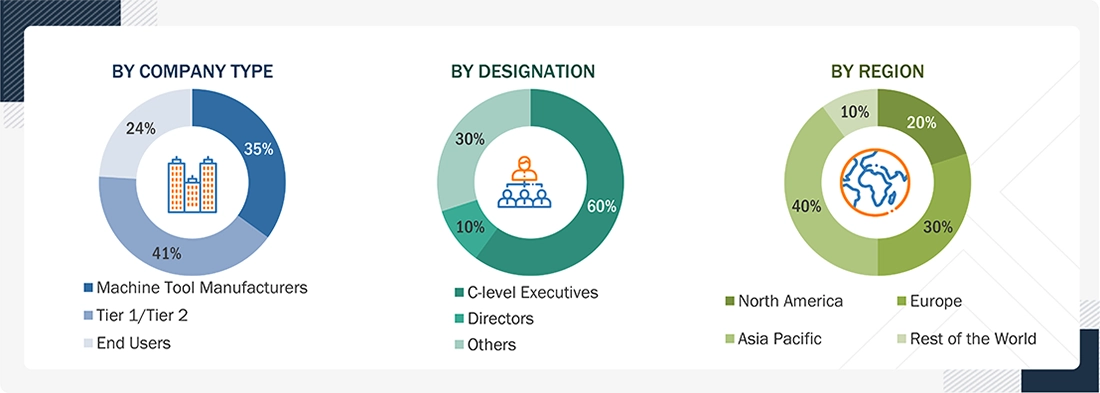
Extensive primary research was conducted after acquiring an understanding of the machine tools market scenarios through secondary research. Several primary interviews were conducted with market experts from both the demand (country-level government associations, trade associations, institutes, R&D centers, and machine tools manufacturers) and supply (machine tools manufacturers, machine tools component manufacturers, and raw material suppliers) sides across four major regions, namely, North America, Europe, Asia Pacific, and RoW. Approximately 24% and 76% of primary interviews were conducted from the demand and supply sides, respectively. Primary data was collected through questionnaires, emails, and telephonic interviews.
In the canvassing of primaries, various departments within organizations, such as sales, operations, and administration, were covered to provide a holistic viewpoint in the report. After interacting with industry experts, brief sessions were conducted with highly experienced independent consultants to reinforce the findings from primaries. This, along with in-house subject-matter experts’ opinions, led to the findings described in the remainder of this report.
To know about the assumptions considered for the study, download the pdf brochure
Market Size Estimation
Both top-down and bottom-up approaches were used to estimate and validate the total size of the market. These methods were also used extensively to estimate the size of various subsegments in the market. The research methodology used to estimate the market size includes the following:
Machine Tools Market: Top-Down and Bottom-Up Approach
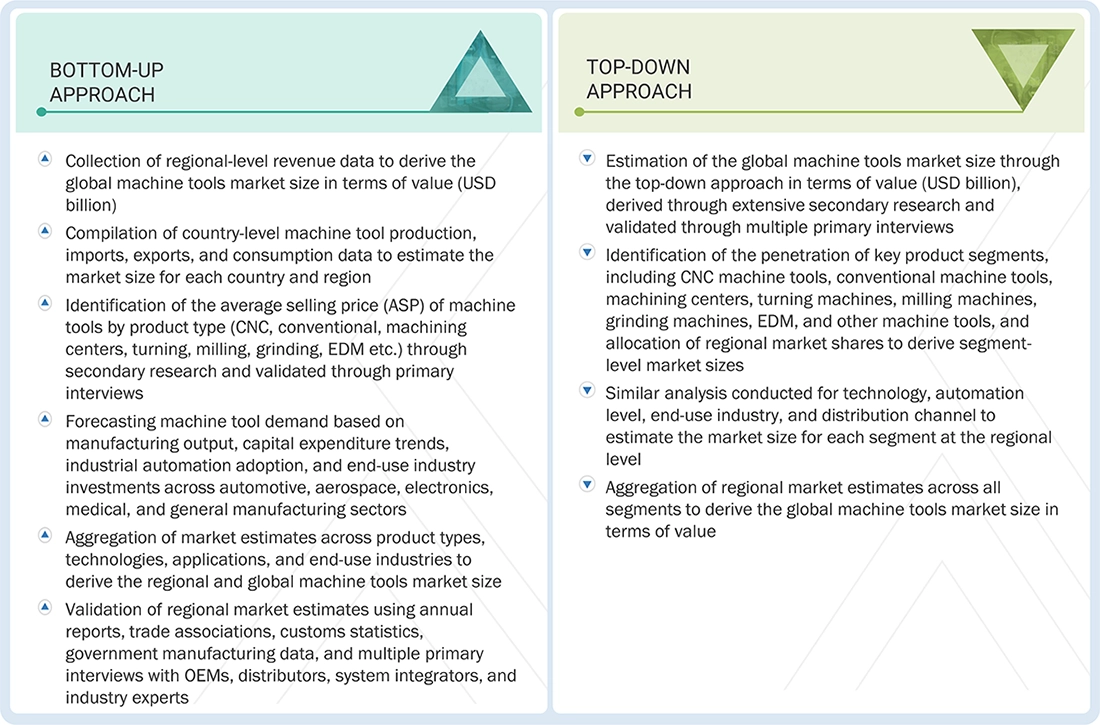
Data Triangulation
After arriving at the overall market size- using the market estimation processes as explained above- the market was split into several segments and subsegments. To complete the overall market engineering process and arrive at the exact statistics of each market segment and subsegment, data triangulation and market breakdown procedures were employed, wherever applicable. The data was triangulated by studying various factors and trends from both the demand and supply sides.
Market Definition
According to ISO standards, a “machine tool is a mechanical device, which is fixed and powered, typically used to process workpieces by selective removal/addition of material or mechanical deformation. Machine tools operation can be mechanical, controlled by humans or by computers”. There is a great variety of metalworking machine tools: milling machines, lathes, sheet metal forming machines, EDM machines and additive manufacturing machines are just some examples. Stainless steel, aluminum, titanium, and copper are some of the main metals processed by these machine tools. In addition, to manufacture components for key industries such as automotive, aerospace, energy and medical technology, machine tools enable the production of all the other machines, including themselves.
Key Stakeholders
- Automation consultants
- Companies developing and integrating industrial software
- Dealers and distributors of machine tools
- Government regulatory bodies, industry associations, and experts
- Integrators of automation systems
- Manufacturers of machine tools
- Manufacturers of machine tool components
- Research organizations and consulting companies
- Technology investors
- Technology standards organizations, forums, alliances, and associations
- Vendors of CNC machining software
Report Objectives
-
To define, segment, and forecast the size of the machine tools market in terms of value (USD billion) based on the following categories: product type, automation, end-use industry, sales channel, and region
- Product type {milling machines [by axis: 4-axis, 5-axis, others) and universal milling machines], drilling machines, turning machines (Swiss-type, multi-spindle, other turning machines), grinding machines, electrical discharge machines, machining centers, and other product types]
- Sales channel (events & exhibitions, dealers & distributors, and direct sales)
- Automation (CNC machine tools and conventional machine tools)
- End-use industry (automotive & transportation, aerospace, medical, semiconductor, sheet metal, energy & power, capital goods, and other end-use industries)
- Region [North America, Europe, Asia Pacific, and Rest of the World (RoW)]
- To evaluate the key market dynamics influencing the machine tools market, including strategic drivers, restraints, opportunities, challenges, and emerging technology trends shaping future industry growth
-
To study the following with respect to the market:
- Value Chain Analysis
- Ecosystem Analysis
- Technology Analysis
- Trade Analysis
- Case Study Analysis
- Investment and Funding Scenario
- Company Valuation and Financial Metrics
- Brand/Product Comparison
- Patent Analysis
- Regulatory Landscape
- Conferences and Events
- Global Manufacturing Investment Outlook
- Future Revenue Pools, 2026 Vs. 2033
- OEM Analysis
- EU India Trade Impact Analysis
- Iran-Israel Impact Analysis
- Future Roadmap of Multi-Axis CNC Adoption
- Machine Tools Software Market
- To strategically analyze segments with respect to individual growth trends, prospects, and contributions to the total market.
- To assess the competitive landscape by profiling leading global market participants based on their business overview, product portfolio, geographic presence, financial performance, and recent strategic developments such as product launches, partnerships, acquisitions, and capacity expansions.
- To map the competitive ecosystem by categorizing market participants into Stars, Emerging Leaders, Pervasive Players, and Participants using a robust evaluation framework based on the strength of their product portfolio, business strategy, innovation capability, and market presence.
Available customizations:
With the given market data, MarketsandMarkets offers customizations in line with company-specific needs.
- Further breakdown for the machine tools market, by product type, at the country level (for countries covered in the report)
- Further breakdown for the machine tools market, by end-use industry, at the country level (for countries covered in the report)
Company Profile
- Profiles of additional market players (Up to five)
Key Questions Addressed by the Report
What is the current size of the machine tools market?
The machine tools market is projected to reach USD 105.11 billion by 2032, from USD 81.09 billion in 2025, at a CAGR of 3.8%.
Who are the key players in the machine tools market?
The machine tools market is dominated by established players such as Makino Inc. (Japan), JTEKT Corporation (Japan), Okuma Corporation (Japan), DMG MORI Co., Ltd. (Japan), and DN Solutions (South Korea).
Which region will be the fastest-growing market for machine tools?
Asia Pacific is expected to be the fastest-growing market for machine tools due to rapid industrialization, increased investments in advanced manufacturing technologies, and government-led initiatives such as “Make in India” and “China Manufacturing 2025,” which are driving demand for high-precision CNC and automated machining solutions across automotive, electronics, and aerospace sectors.
What are the new market trends impacting the growth of the machine tools market?
The machine tools market is being reshaped by a rapid shift toward smart, automated, and sustainable manufacturing fueled by Industry 4.0/5.0 technologies such as IoT-equipped CNC machines, AI-driven predictive maintenance, digital twins, and collaborative robots (cobots). Manufacturers are also integrating multi-axis machining and hybrid (additive-subtractive) systems to handle advanced, lightweight materials like composites used in EVs and aerospace, while energy-efficient, eco-friendly designs ensure compliance with sustainability mandates
What countries are covered in Europe for the machine tools market?
The countries covered in the report for the machine tools market are the UK, Germany, France, Italy, Spain, Switzerland, and Turkey.


Personalize This Research
- Triangulate with your Own Data
- Get Data as per your Format and Definition
- Gain a Deeper Dive on a Specific Application, Geography, Customer or Competitor
- Any level of Personalization
Let Us Help You
- What are the Known and Unknown Adjacencies Impacting the Machine Tools Market
- What will your New Revenue Sources be?
- Who will be your Top Customer; what will make them switch?
- Defend your Market Share or Win Competitors
- Get a Scorecard for Target Partners

Custom Market Research Services
We Will Customise The Research For You, In Case The Report Listed Above Does Not Meet With Your Requirements
Get 10% Free CustomisationTESTIMONIALS

JIM NAAS
PRODUCT DIRECTOR, WEASLER
Weasler Engineering, a CentroMotion organization
Global Provider of Industrial Actuation & Control Solutionswww.weasler.com
Our organization was interested in learning more about the attractiveness of a particular market space. We contacted MarketsandMarkets to help us based on previous positive experiences we had with them. The results did not disappoint! We discussed our objectives with them, and the team at MarketsandMarkets developed and executed a proposal that met our needs precisely. We were very impressed by their level of expertise, the quality of the analysis and their insightful recommendations. We would not hesitate in working with them again in the future.

Matt Kardel,
Vice President
Aptiv,
A global technology company that develops safer, greener and more connected solutions.www.aptiv.com
We contracted with
MarketsandMarkets to evaluate the value chain and potential go-to-market partners related to our
interest in the Fleet Management space. The team successfully completed the work on time and at the
pricing agreed. MarketsandMarkets listened and understood our objectives and collaborated well with
us to help us get the visibility we needed to make an investment.
We have subsequently used
MarketsandMarkets again related to Smart Cities to good results.
- Canada Machine Tools Market
- Mexico Machine Tools Market
- US Machine Tools Market
- Russia Machine Tools Market
- Brazil Machine Tools Market
- Rest Of Asia Pacific Machine Tools Market
- China Machine Tools Market
- Japan Machine Tools Market
- South Korea Machine Tools Market
- India Machine Tools Market
- Thailand Machine Tools Market
- Taiwan Machine Tools Market
- Vietnam Machine Tools Market
- Malaysia Machine Tools Market
- UK Machine Tools Market
- Germany Machine Tools Market
- France Machine Tools Market
- Italy Machine Tools Market
- Spain Machine Tools Market
- Switzerland Machine Tools Market
- Turkey Machine Tools Market




Growth opportunities and latent adjacency in Machine Tools Market