
Hematology Analyzers and Reagents Market

Hematology Analyzers and Reagents Market by Product [Instrument (PoC,5 part 6 part), Reagents, Slide Stainers] & Service, Price (High, Mid, Low), Application (Infectious Diseases, Blood Cancer), End User (Hospital, CTL, Govt Lab) Global Forecast to 2031




OVERVIEW
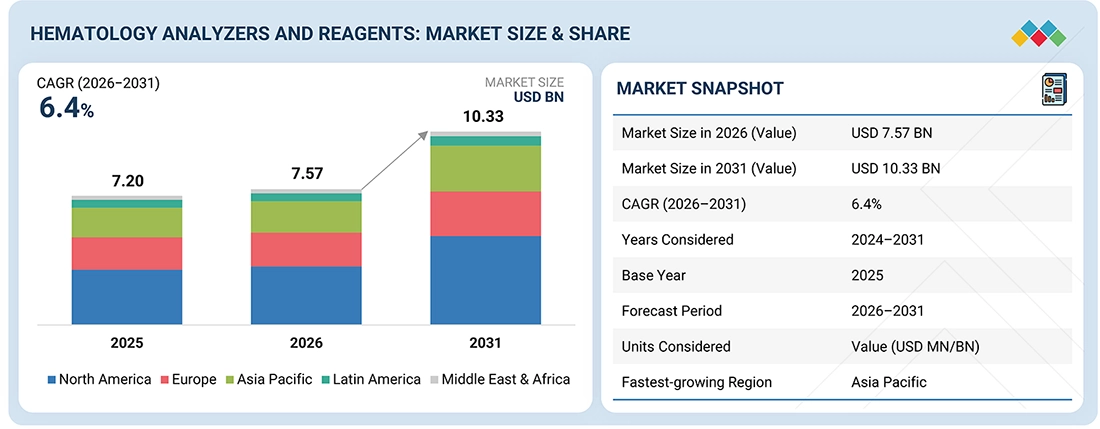
Source: Secondary Research, Interviews with Experts, MarketsandMarkets Analysis
The global hematology analyzers & reagents market is expected to grow from USD 7.57 billion in 2026 to USD 10.33 billion by 2031, representing a CAGR of 6.4%. There is a noticeable move towards automation in the hematology analyzers and reagents market. High first-pass yield and auto-validation are two features that have become more desirable in this market segment, as they help reduce repeat analyses and improve productivity. Furthermore, improvements in the design of the analyzers have made it possible to decrease reagent consumption, provide more walk-away time, and reduce manual intervention.
KEY TAKEAWAYS
-
BY REGIONThe Asia Pacific region is projected to witness the highest CAGR of 7.7% in the global hematology analyzers & reagents market.
-
BY PRODUCT & SERVICESThe hematology analyzers & reagents segment is estimated to account for the highest market share of 60.5% in 2025.
-
BY PRICE RANGEThe mid-range hematology analyzers segment is expected to register the highest CAGR of 6.3%.
-
BY APPLICATIONThe blood cancer segment is expected to dominate the market with 34% revenue share in 2025.
-
BY USAGE TYPEThe standalone analyzers segment accounted for the largest market share of 59% in 2025.
-
BY END USERThe commercial service providers segment is projected to grow at the fastest rate of 7.3% from 2026 to 2031.
-
COMPETITIVE LANDSCAPE: KEY PLAYERSAbbott Laboratories (US), Danaher (US), Siemens Healthineers (Germany), Sysmex Corporation (Japan), Bio-Rad Laboratories (US), and Horiba (Japan) are identified as some of the star players in the contrast media market, given their strong global market presence, extensive portfolios, advanced R&D capabilities, and well-established distribution networks across developed and emerging regions.
-
COMPETITIVE LANDSCAPE: OTHER PLAYERSThese companies offer unique products that have started occupying a niche for themselves within the industry. Their business and product superiority is yet to be matched when compared to some other leading start-up firms. Some of the most successful firms in this segment include Drucker Diagnostics (US), ELITechGroup SAS (India), Accurex (India), and Analyticon Biotechnologies GmbH (Germany).
There is a noticeable move towards automation in the hematology analyzers and reagents market. High first-pass yield and auto-validation are two features that have become more desirable in this market segment, as they help reduce repeat analyses and improve productivity. Furthermore, improvements in the design of the analyzers have enabled reduced reagent consumption, increased walk-away time, and reduced manual intervention.
TRENDS & DISRUPTIONS IMPACTING CUSTOMERS' CUSTOMERS
Certain trends and technological developments are reshaping the landscape of hematology analyzers and reagents. There is a clear trend among industry companies towards replacing traditional cell counters with more modern, sophisticated instruments capable of 5- and 6-part differentials, digital morphology, and flow cytometry. Besides, there are new products on the market for reagents and disposables that enable faster processing and increased result accuracy. Furthermore, there is an increase in the adoption of AI technologies, automation, and middleware for analysis by hospitals and laboratories.
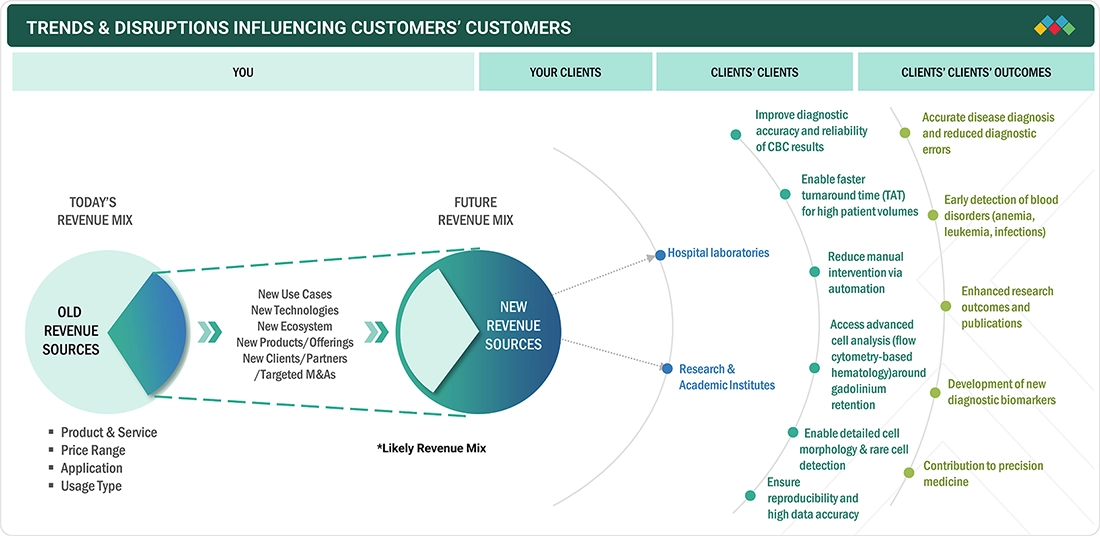
Source: Secondary Research, Interviews with Experts, MarketsandMarkets Analysis
MARKET DYNAMICS

Level
-
Rapid integration of AI to enhance diagnostic accuracy and optimize hematology workflows

-
Advanced parameters and multi-functional testing driving adoption of hematology analyzers


Level
-
High cost of advanced hematology analyzers limiting adoption across healthcare facilities

-
Limited accuracy of digital morphology analyzers in detecting rare and complex cell abnormalities


Level
-
Expansion of AI-enabled telehematology and remote diagnostics

-
Adoption of precision diagnostics enabling advanced cell profiling, rare cell detection, and early disease identification


Level
-
Increasing complexity in managing and interpreting data generated by next-generation hematology analyzers

-
Laboratory workforce shortages are impacting hematology workflow efficiency

Source: Secondary Research, Interviews with Experts, MarketsandMarkets Analysis
Driver: Rapid integration of AI to enhance diagnostic accuracy and optimize hematology workflows
AI is driving changes in the diagnostic hematology landscape, with a transition from traditional, manual, and parameter-limited tests to automated, information-driven, and intelligent systems that provide more in-depth morphological evaluation, greater speed, and improved accuracy. Hematology tests using artificial intelligence are leading to the complete automation of laboratory workflows, from sample preparation through to diagnosis and reporting, while limiting the need for human intervention and reducing inconsistencies across individuals. Digital morphology and advanced image analysis help detect unusual cell population distribution patterns, and AI-based systems can facilitate remote diagnosis and telehematological services. Moreover, artificial intelligence is used to address the shortage of qualified personnel by automating analysis. Morphometric and predictive analysis are opening up novel possibilities, such as biomarker detection, disease diagnosis, and prognosis assessment.
Restraint: High cost of advanced hematology analyzers limiting adoption across healthcare facilities
The adoption of advanced hematology analyzers is limited by high capital costs and total cost of ownership, restricting their use mainly to large hospitals and reference labs. These systems require significant investment in infrastructure, maintenance, and reagents, making them less accessible for small and mid-sized laboratories. As a result, cost-sensitive facilities, especially in emerging markets, continue to rely on lower-cost or semi-automated systems. High-end analyzers typically cost USD 50,000–120,000, while mid-range systems range from USD 30,000–80,000, making cost a key barrier to adoption.
Opportunity: Expansion of AI-enabled telehematology and remote diagnostics
Telehematology is being enhanced by combining AI with digital imaging and telemedicine. With the aid of artificial intelligence, cell examination can be automated, making blood testing easier. The use of AI systems will facilitate more accurate diagnoses of conditions like anemia and leukemia, as well as other medical conditions that require blood tests. Telemedicine technology can enhance tele-hematology by providing access to remote slide viewing and expert consultations.
Challenge: Increasing complexity in managing and interpreting data generated by next-generation hematology analyzers
Modern hematology instruments produce a growing volume of complex data, which poses challenges for analysis and processing. However, innovations such as microfluidics and POCT devices enable the development of small-scale equipment capable of conducting full-scale tests. Although artificial intelligence helps improve diagnostics, its application requires high-quality data.
HEMATOLOGY ANALYZERS AND REAGENTS MARKET: COMMERCIAL USE CASES ACROSS INDUSTRIES
| COMPANY | USE CASE DESCRIPTION | BENEFITS |
|---|---|---|
 |
It offers specialized contrast agents and syringeless injectors (like Max 3) for MRI and ultrasound (CEUS) applications. | Ensures scalable workflows, consistent results, and improved lab efficiency |
 |
It delivers DxH series analyzers with integrated automation and AI-enabled digital morphology. | Enables precise results, faster turnaround, and reduced manual intervention |
 |
It offers Atellica HEMA analyzers with integrated digital morphology, slide staining, and lab automation. | Supports standardized workflows, high accuracy, and seamless high-volume testing |
 |
It offers hematology analyzers, digital morphology (MC-80), and automation lines (CAL 8000) with advanced fluorescence-based technologies. | Improves diagnostic accuracy, enables high-throughput testing, and reduces turnaround time through automation |
 |
Logos and trademarks shown above are the property of their respective owners. Their use here is for informational and illustrative purposes only.
MARKET ECOSYSTEM
The stakeholders in the market for hematology analyzers and reagents include companies manufacturing hematology analyzers, reagent suppliers, other consumables suppliers, distributors, final consumers such as hospitals and laboratories, and government regulatory bodies that control the market by ensuring quality standards. These manufacturing companies are engaged in the design and production of technologically advanced hematology analyzers capable of automating tasks, conducting multiparameter and morphometric analyses using computers, and interpreting results using artificial intelligence. Suppliers of reagents and other consumables provide the needed components, including diluents, lytic solutions, stains, and calibration fluids. The distributors and group purchasing organizations are engaged in distributing products to hospitals and laboratories and negotiating pricing terms. Government regulatory bodies, such as the FDA in the US and the EMA in Europe, ensure quality standards through market oversight, particularly by approving medical devices. Key companies operating in this ecosystem include Abbott Laboratories (US), Danaher Corporation (US), Siemens Healthineers (Germany), Sysmex Corporation (Japan), Bio-Rad Laboratories (US), Horiba (Japan), Nihon Kohden (Japan), and Boule Diagnostics AB (Sweden).
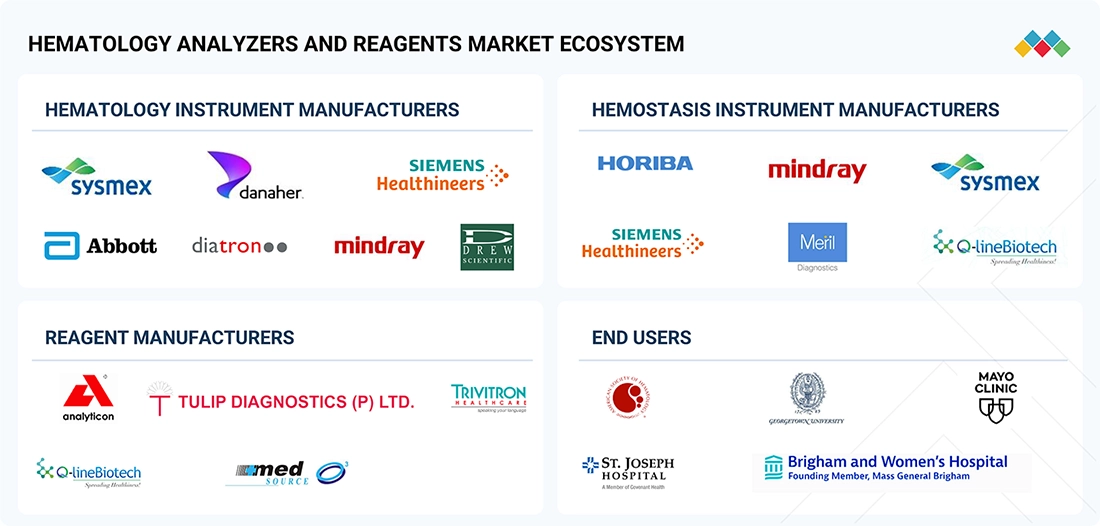
Logos and trademarks shown above are the property of their respective owners. Their use here is for informational and illustrative purposes only.
MARKET SEGMENTS
Source: Secondary Research, Interviews with Experts, MarketsandMarkets Analysis
Hematology Analyzers & Reagents market, By Product & Service
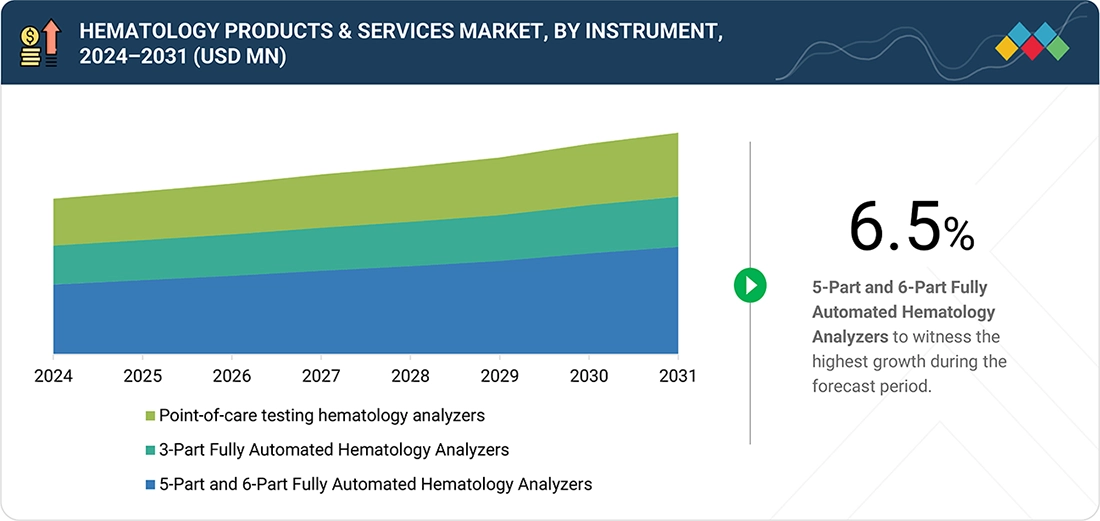
Based on product & service, the hematology analyzers and reagents market is segmented into hematology, hemostasis, and immunohematology products & services. These segments are further categorized into reagents & consumables, instruments, and services. In 2025, the hematology products & services accounted for the largest share of 60.5% of the hematology analyzers and reagents market. The large share of this segment can be attributed to factors such as the increasing preference towards automation; the growing adoption of POC testing hematology analyzers in emerging economies; the launch of technologically advanced hematology products; the trend of the “reagent rental” business model; and the availability of a wide range of services from hematology analyzer providers.
Hematology Analyzers & Reagents market, By Price Range
Based on the price range, the hematology analyzers and reagents market is segmented into high-range, mid-range, and low-range analyzers. These instruments are categorized based on their throughput values, the number of tests performed per hour, and price variation. Low-range hematology analyzers accounted for the largest share of 51.5% of the hematology analyzers market in 2025. The large share of this segment can primarily be attributed to the low cost per test using these instruments, coupled with high adoption in end-user settings due to affordability.
Hematology Analyzers & Reagents market, By Application
The hematology analyzers and reagents market is segmented based on application into anemia, blood cancer, hemorrhagic conditions, infectious diseases, immune system disorders, and other applications. The infectious disease segment is expected to register the highest growth rate of 7.6% during the forecast period. The growth is attributed to the increasing dependence of healthcare professionals on hematological tests for detecting infectious diseases in early stages due to the inclusion of biomarkers (WBC differentials, NLR) in CBC tests.
Hematology Analyzers & Reagents Market, By Usage Type
Based on the usage type, the global hematology analyzers and reagents market is classified into standalone and point-of-care analyzers. The standalone analyzers segment accounted for the largest share of 59% of the hematology analyzers and reagents market in 2025. Among the two, the standalone analyzer segment has the leading market share of 59% in 2025, owing to the capability of handling large volumes of samples along with accuracy in analysis, integration with LIS, and having multiple parameters such as 5-part DIFF, reticulocytes, and abnormal flag cells.
Hematology Analyzers & Reagents market,By End User
By end user, the hematology analyzers and reagents market is segmented into commercial service providers, hospital laboratories, government reference laboratories, and research & academic institutes. Commercial service providers accounted for the largest share, at 46.1%, in 2025. The large share and high growth rate of this end-user segment can primarily be attributed to the growing outsourcing of R&D activities to commercial service providers, especially in emerging economies, and the competitive benefits offered by these providers as compared to hospitals (such as affordable service costs, efficient turnaround time, and efficient management for sample collection).
REGION
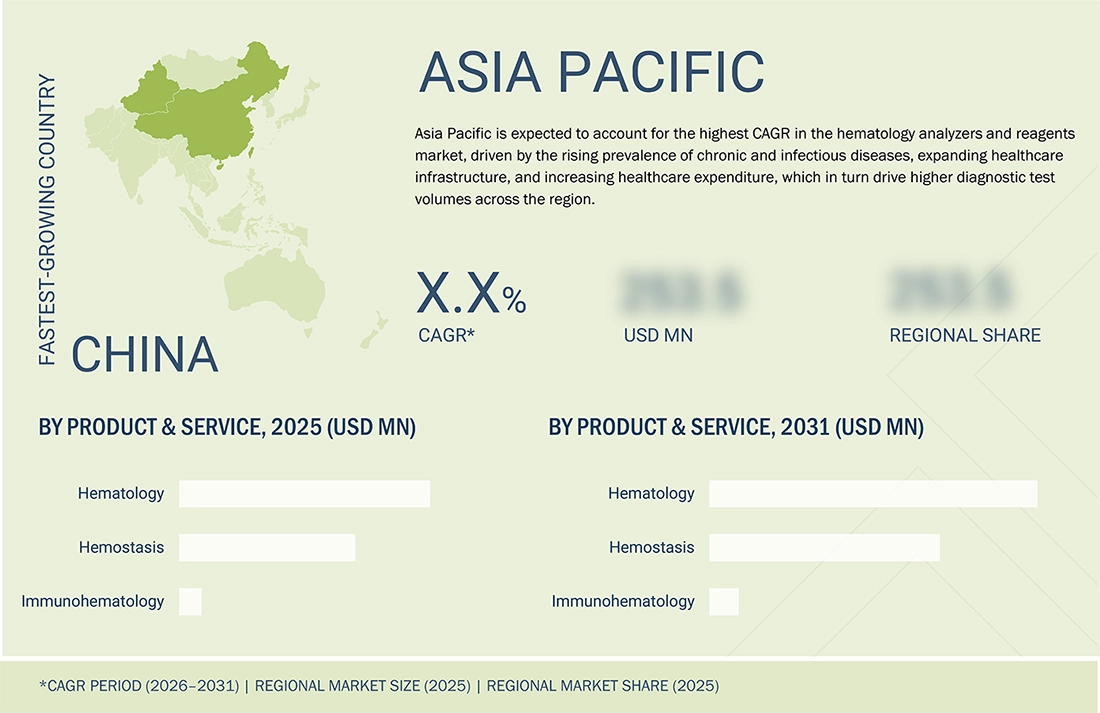
Asia Pacific to be the fastest-growing region in hematology analyzers & reagents market during the forecast period.
The market in Asia Pacific is expected to grow at the highest CAGR during the forecast period. This is because the region includes countries such as China, India, South Korea, Taiwan, and Singapore, where there has been an upsurge in both infections and chronic diseases amongst the people. This, in turn, has raised the demand for diagnostic tests. Also, factors responsible for growth include increased availability of healthcare facilities, more diagnostic centers, and the adoption of low-cost, effective analyzers. Growth is also due to increased awareness of early diagnosis. Additionally, innovative technologies, including POC (portable) analyzers, can contribute towards growth.
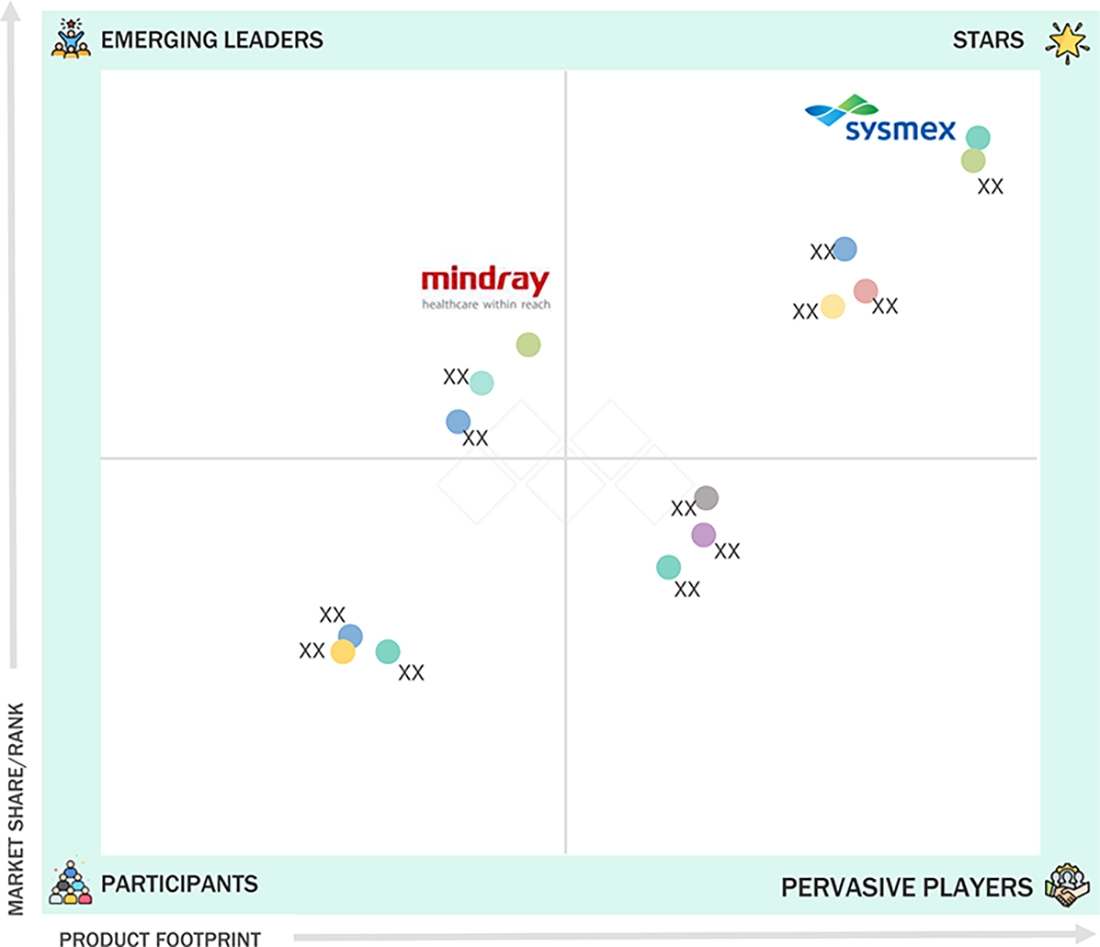
HEMATOLOGY ANALYZERS AND REAGENTS MARKET: COMPANY EVALUATION MATRIX
The hematology analyzers and reagents market has witnessed the presence of some dominant market players, including Abbott Laboratories, Danaher, Siemens Healthineers, Sysmex Corporation, Bio-Rad Laboratories, and Horiba, who are highly known for their dominance in the market, strong product portfolio, high levels of research and development activities, and well-established sales and distribution channels globally. In addition to the above-mentioned market players, some other emerging and niche market players, such as Drucker Diagnostics, ELITechGroup SAS, Accurex, and Analyticon Biotechnologies GmbH, are increasing their market share owing to their specialization and cost efficiency. Although these market players do not hold strong positions as compared to the leading market players, their offerings make them competitive in the market.
Source: Secondary Research, Interviews with Experts, MarketsandMarkets Analysis
KEY MARKET PLAYERS
- Sysmex Corporation (Japan)
- Danaher Corporation (US)
- Siemens Healthineers (Germany)
- Shenzhen Mindray Bio-Medical Electronics Co., Ltd. (China)
- Abbott Laboratories (US)
- Diatron (Hungary)
- Drew Scientific (US)
- Bio-Rad Laboratories, Inc. (US)
- Horiba, Ltd. (Japan)
- Nihon Kohden Corporation (Japan)
- EKF Diagnostics Holdings PLC (UK)
- Boule Diagnostics AB (Sweden)
- F. Hoffmann-La Roche Ltd. (Switzerland)
- Bio Systems (Spain)
- QuidelOrtho Corporation (US)
MARKET SCOPE
| REPORT METRIC | DETAILS |
|---|---|
| Market Size in 2026 (Value) | USD 7.57 Billion |
| Market Size in 2031 (Value) | USD 10.33 Billion |
| Growth Rate | CAGR of 6.4% from 2026 to 2031 |
| Years Considered | 2024–2031 |
| Base Year | 2025 |
| Forecast Period | 2026–2031 |
| Units Considered | Value (USD Million/Billion) |
| Report Coverage | Revenue forecast, company ranking, competitive landscape, growth factors, and trends |
| Segments Covered |
|
| Regions Covered | North America, Asia Pacific, Europe, Latin America, Middle East & Africa |
WHAT IS IN IT FOR YOU: HEMATOLOGY ANALYZERS AND REAGENTS MARKET REPORT CONTENT GUIDE
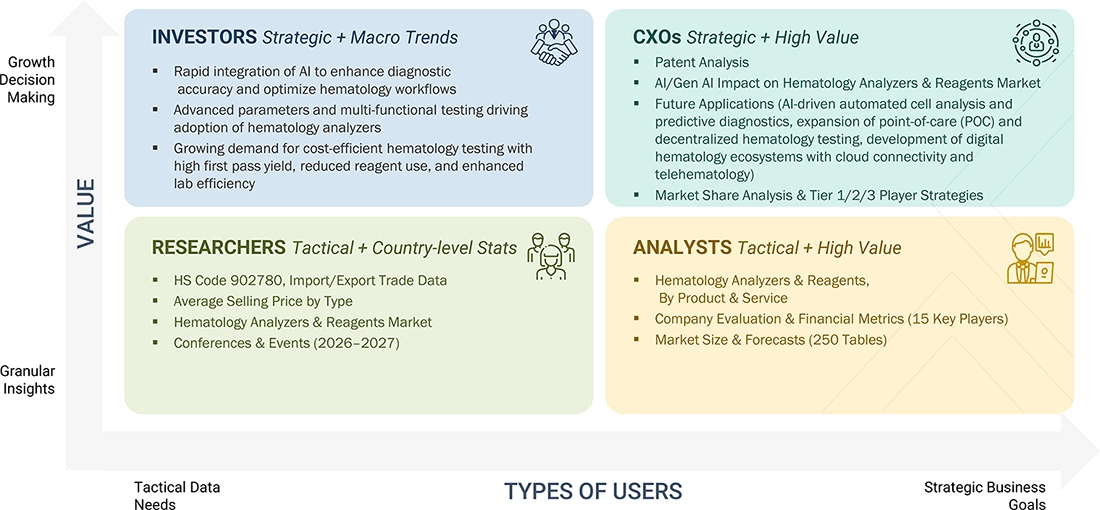
DELIVERED CUSTOMIZATIONS
We have successfully delivered the following deep-dive customizations:
| CLIENT REQUEST | CUSTOMIZATION DELIVERED | VALUE ADDS |
|---|---|---|
| Hematology Analyzers & Reagents Manufacturer |
|
|
| Healthcare Provider / Diagnostic Laboratory |
|
|
RECENT DEVELOPMENTS
- March 2025 : Sysmex America, Inc. announced the introduction of the Sysmex XQ-320, which is a new addition to the 3-part differential hematology analyzer family. The instrument is ideal for laboratories requiring efficient CBC testing at high throughput. It has a maximum throughput of 70 samples per hour, provides results within 60 seconds, and integrates BeyondCare Quality Monitor, providing greater efficiency and automation for North and South American users.
- December 2025 : Sysmex CN-700 (an automated hemostasis analyzer) was launched by Sysmex Corporation in Japan. This automated analyzer features a compact design with performance equivalent to other expensive models, a simpler workflow for easier handling, and quality control and traceability functions in accordance with ISO 15189 standards.
- January 2026 : The HORIBA Yumizen H500 CRP was certified under the CE IVDR category by the HORIBA Life Science Division. The benchtop analyzer combines a 5-part DIFF hematology test with rapid CRP test capabilities from a single blood sample. The integration of both tests helps in diagnosing infection and inflammation.
- March 2025 : The DxH 900 Hematology Analyzer from Beckman Coulter was launched in the Asia-Pacific region.
Table of Contents
 Exclusive indicates content/data unique to MarketsandMarkets and not available with any competitors.
Methodology
This study involved the extensive use of both primary and secondary sources. The research process involved the study of various factors affecting the industry to identify the segmentation types, industry trends, key players, competitive landscape, key market dynamics, and key player strategies.
Secondary Research
The secondary research process involves the widespread use of secondary sources, directories, databases (such as Bloomberg Businessweek, Factiva, and D&B Hoovers), white papers, annual reports, company house documents, investor presentations, and SEC filings of companies. Secondary research was used to identify and collect information useful for the extensive, technical, market-oriented, and commercial study of the hematology analyzers and reagents market. It was also used to obtain important information about the key players and market classification & segmentation according to industry trends, to the bottom-most level, and key developments related to market and technology perspectives. A database of the key industry leaders was also prepared using secondary research.
Primary Research
In the primary research process, various sources from both the supply and demand sides were interviewed to obtain qualitative and quantitative information for this report. The primary sources from the supply side include industry experts such as CEOs, vice presidents, marketing and sales directors, technology & innovation directors, and related key executives from various key companies and organizations in the hematology analyzers and reagents market. The primary sources from the demand side include OEMs, private and contract testing organizations, and service providers, among others. Primary research was conducted to validate the market segmentation, identify key players in the market, and gather insights on key industry trends & key market dynamics.
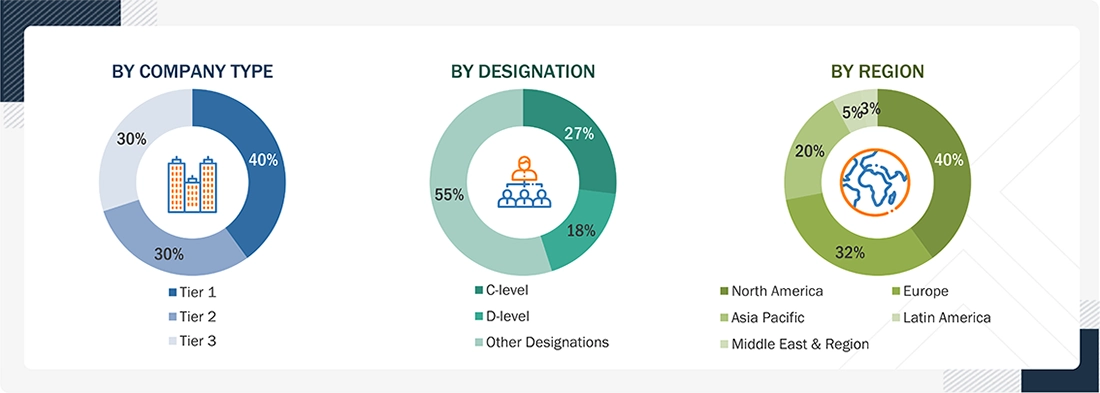
*Others include sales managers, marketing managers, business development managers, product managers, distributors, and suppliers.
Note: Companies are classified into tiers based on their total revenue. As of 2022, Tier 1 = >USD 2 billion, Tier 2 = USD 50 million to USD 2 billion, and Tier 3 = <USD 50 million.
To know about the assumptions considered for the study, download the pdf brochure
Market Size Estimation
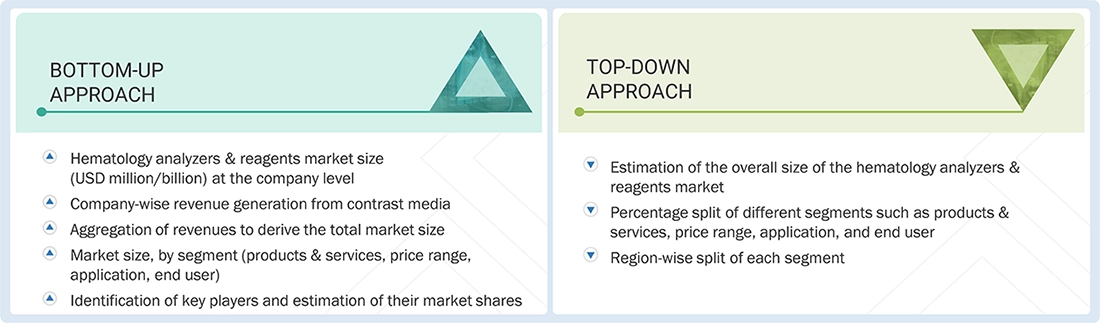
In this report, the market size of hematology analyzers & reagents was determined using the revenue share analysis of leading players. For this purpose, key market players were identified, and their market revenues were determined using insights gathered during the primary and secondary research phases. Secondary research included analyzing the annual and financial reports of the top market players. In contrast, primary research included extensive interviews with key opinion leaders, including CEOs, directors, and senior marketing executives.
Segmental revenues were calculated based on the revenue mapping of major solution/service providers to calculate the global market value. This process involved the following steps:
- Generating a list of major global players operating in the hematology analyzers & reagents market
- Mapping annual revenues generated by major global players from the product & services segment (or nearest reported business unit/product category)
- Revenue mapping of major players to cover a major share of the global market, as of 2025
- Extrapolating the global value of the hematology analyzers & reagents market industry.
Data Triangulation
After arriving at the overall market size from the market size estimation process explained above, the global hematology analyzers and reagents market was split into segments and subsegments. Data triangulation and market breakdown procedures were employed to complete the overall market engineering process and arrive at the exact statistics for all segments and subsegments. The data was triangulated by studying various factors and trends from both the demand and supply sides. Additionally, the hematology analyzers and reagents market was validated using both top-down and bottom-up approaches.
Market Definition
The hematology analyzers and reagents market can be defined as the global industry involved in the design, development, and sale of instruments and consumables used for blood analysis. It involves the use of various types of hematology analyzers, including manual, semiautomatic, and automatic ones – 3-part differential analyzers, 5-part/6-part full-automatic analyzers, as well as POCT hematology testing systems. Tests performed with them include CBC, WBC differentials, hemoglobin analysis, and platelet counts. They are widely used in the diagnosis of anemia, infectious diseases, hematologic malignancies, and other blood disorders.
Reagents for hematology include diluents, lysing reagents, stains, controls/calibrators, and other consumables required in the course of testing to achieve accurate, reliable results. In addition to the hematology segment, the market includes hemostasis and immunohematology segments. Thus, it offers a wider range of products/services.
The market is expected to grow significantly due to rising demand for blood analysis across hospitals, labs, research institutes, and POCT sites. It is due to advancements in technology and automation in the industry.
Key Stakeholders
- Manufacturers of hematology analyzers and reagents
- Suppliers, distributors, and channel partners of hematology analyzers and reagents
- Clinical research organizations
- Research laboratories and academic institutes
- Hospitals and clinics
- Research laboratories and CROs
- Research and academic institutes
- Government and private laboratories
- Market research and consulting firms
Report Objectives
- To define, describe, and forecast the hematology analyzers and reagents market on the basis of product and services, price range, application, usage type, end user, and region
- To provide detailed information regarding the major factors influencing the growth potential of the global hematology analyzers and reagents market (drivers, restraints, opportunities, challenges, and trends)
- To analyze the micro markets with respect to individual growth trends, future prospects, and contributions to the global hematology analyzers and reagents market
- To analyze key growth opportunities in the global hematology analyzers and reagents market for key stakeholders and provide details of the competitive landscape for market leaders
- To forecast the size of market segments and/or subsegments with respect to five major regions, namely, North America (the US and Canada), Europe (Germany, the UK, France, Italy, Spain, and Rest of Europe), Asia Pacific (Japan, China, India, Australia, South Korea, and Rest of Asia Pacific), Latin America (Brazil, Mexico, and Rest of Latin America), and the Middle East and Africa (GCC Countries and Rest of MEA)
- To profile the key players in the global hematology analyzers and reagents market and comprehensively analyze their market shares and core competencies
- To track and analyze the competitive developments undertaken in the global hematology analyzers and reagents market, such as agreements, expansions, and product launches
Available customizations:
Based on the provided market data, MarketsandMarkets offers customizations to meet the company’s specific needs. The following customization options are available for the present global hematology analyzers and reagents market report:
Product Analysis
- Product matrix, which gives a detailed comparison of the product portfolios of the top fifteen companies
Company Information
- Detailed analysis and profiling of additional market players (up to 13)
Geographic Analysis
- Further breakdown of the Rest of Europe's hematology analyzers and reagents market into Russia, Belgium, the Netherlands, Switzerland, Austria, Finland, Sweden, Poland, and Portugal, among other countries
- Further breakdown of the Rest of Asia Pacific hematology analyzers and reagents market into Singapore, Taiwan, New Zealand, the Philippines, Malaysia, and other Asia Pacific countries
- Further breakdown of the Rest of the Latin America hematology analyzers and reagents market into Argentina, Chile, Peru, and Colombia, among other countries.
Need a Tailored Report?
Customize this report to your needs
Get 10% FREE Customization
Customize This ReportPersonalize This Research
- Triangulate with your Own Data
- Get Data as per your Format and Definition
- Gain a Deeper Dive on a Specific Application, Geography, Customer or Competitor
- Any level of Personalization
Let Us Help You
- What are the Known and Unknown Adjacencies Impacting the Hematology Analyzers and Reagents Market
- What will your New Revenue Sources be?
- Who will be your Top Customer; what will make them switch?
- Defend your Market Share or Win Competitors
- Get a Scorecard for Target Partners

Custom Market Research Services
We Will Customise The Research For You, In Case The Report Listed Above Does Not Meet With Your Requirements
Get 10% Free CustomisationTESTIMONIALS

JAYANT RAJPUROHIT
Director of Market Insights, Data and Analytics
SFI Health,
Leading Pharmaceutical Companywww.sfihealth.com/

We at SFI Health approached MarketsandMarkets for an Opportunity Assessment on "Incidence and Prevalence of Focus Indications" as we wanted to know the most attractive HCPs like Physician, Functional MD, Naturopath and Pharmacist. The project was critical for us to ensure our focus on the right target which would enable sustainable growth and profitability for SFI Health. The business insights provided exceeded our expectations and we were extremely impressed. The team at MarketsandMarkets is highly professional and detail oriented and very well understood our business needs. MarketsandMarkets offers a unique combination of expertise and dedicated engagement model. We identified 2 new products to be launched in coming months, based on the research findings provided by MarketsandMarkets. We are happy with the services and would strongly recommend MarketsandMarkets to my peers in the industry.

BEATRIZ DE LA CALLE
Head of Commercial Analytics
Qualicaps,
Leading Pharmaceutical Companywww.qualicaps.com/

We partnered with MarketsandMarkets for an assessment study on hard empty capsules. The team was extremely professional in understanding our business requirements and we received timely responses to all our queries. The market intelligence and the recommendations has met our business requirements. We were extremely impressed to see the final study results; it really exceeded our expectations. The market intelligence offered by MarketsandMarkets, and clarity on next steps will help us achieve our business objective for the Year 2021. We are happy with the services and would strongly recommend MarketsandMarkets to my peers in the industry.

Bob Williams,
Senior Director Business Development & Innovation
Bracco Diagnostics Inc.,
Italian Multinational in life sciences sector and a World Leader in imaging diagnosticsimaging.bracco.com/us-en
We were pleased with targeted insights that MarketsandMarkets identified from a custom study on the 'Radiation Dose Management Solutions Market'. Your team identified and characterized the market participants as well as underlying trends accurately. This study was useful to Bracco in formulating business strategies for our dose monitoring product lines and we thank MarketsandMarkets for the job well done.
Cody Coonradt,
Market Development and Strategy Manager
3M Health Information Systems,
Leader in Health care Coding, Payment & Analytics Solutions.www.3m.com/3M/en_US/health-information-systems-us
The value for our organization comes from three things: depth of research, specificity of segments and being easy to work with. As important as the first two are, the third can't be underestimated. MarketsandMarkets, maybe more than any other research vendor, wants to know what is top of mind for our team and what big questions we are grappling to answer.
Their customer first approach and high value engagement model, have given us great analysis and excellent value for money

Still Researching the
Hematology Analyzers and Reagents Ecosystem?
See the competitors, opportunities, and growth signals shaping it - instantly.
Generate 15+ consulting-grade strategic insights tailored to your growth question.






Growth opportunities and latent adjacency in Hematology Analyzers and Reagents Market