AI Sales Analytics Data-Driven Revenue Optimization
August 06, 2025
The sales landscape has fundamentally shifted from intuition-based decision-making to systematic, data-driven revenue optimization. While traditional sales teams struggle with gut-feel forecasting and reactive management approaches, AI-powered organizations leverage predictive analytics to create sustainable competitive advantages through systematic performance improvement.


MarketsandMarkets SalesPlay research demonstrates that organizations implementing comprehensive AI analytics achieve breakthrough results: 91% accuracy in deal outcome prediction compared to just 67% with traditional forecasting methods, 78% reduction in analysis time while improving decision quality, and 28% higher quota attainment rates across analytics-optimized teams.
This transformation extends beyond simple reporting improvements. Modern AI sales analytics solutions creates an intelligent ecosystem where every customer interaction generates actionable insights, every performance pattern drives systematic optimization, and every decision leverages predictive intelligence to maximize revenue potential.
The competitive advantage lies in implementing systematic frameworks that transform raw data into revenue-generating actions. Teams utilizing SalesPlay's comprehensive analytics platform achieve 34% performance improvements within 60 days through intelligent automation, predictive insights, and continuous optimization based on proven success patterns.
This comprehensive guide provides actionable frameworks for implementing AI sales analytics that drive measurable revenue growth. From establishing foundational KPIs that predict future performance to deploying real-time intelligence systems that enable tactical decision-making, we'll explore systematic approaches that separate industry leaders from followers in the data-driven revenue landscape.
The journey begins with understanding that successful AI analytics implementation requires more than technology—it demands strategic thinking about which metrics drive decisions, how predictive intelligence transforms planning, and why systematic optimization delivers sustainable competitive advantages in rapidly evolving markets.
The Problem with Traditional Sales Metrics
Most sales organizations collect vast amounts of data but struggle to extract actionable insights that drive revenue growth. Traditional metrics like call volume, email open rates, and activity dashboards create the illusion of measurement without delivering the intelligence needed for strategic decision-making or performance optimization.
The fundamental problem lies in focusing on lagging indicators that confirm past performance rather than leading indicators that predict future outcomes. When sales teams measure activities instead of outcomes, they optimize for busy work rather than revenue generation, creating culture of motion without meaningful progress toward strategic objectives.
Consider the typical sales dashboard filled with activity metrics: calls made, emails sent, meetings scheduled, proposals delivered. While these measurements provide operational visibility, they fail to answer critical questions that drive revenue growth: Which activities predict deal progression? What engagement patterns correlate with higher close rates? How do successful reps differ from struggling performers in their approach to customer interactions?
MarketsandMarkets SalesPlay analysis reveals that organizations focusing on traditional activity metrics see 23% lower performance consistency compared to teams implementing predictive analytics frameworks. The difference stems from measuring what's easy to count rather than what actually drives results.
Sales teams fall into activity traps when they optimize for measurable actions without understanding correlation to outcomes. High activity levels can mask poor performance quality, leading to resource misallocation and strategic misdirection. Representatives focusing on call volume might neglect relationship building that drives larger deal sizes. Teams obsessing over email metrics may overlook personalization strategies that improve response rates.
The solution requires shifting from activity measurement to outcome prediction through AI-powered analytics that identify which specific actions correlate with revenue generation. This transformation enables teams to focus efforts on high-impact activities while eliminating time-wasting behaviors that don't contribute to strategic objectives.
Beyond Vanity Metrics
Vanity metrics provide psychological satisfaction without strategic value. Open rates, website visits, and social media followers feel important but rarely translate into revenue growth. Effective AI analytics distinguishes between metrics that make teams feel productive and measurements that predict future performance.
The key lies in establishing metric hierarchies that prioritize predictive indicators over historical measurements. Leading indicators enable proactive decision-making, while lagging indicators only confirm results after opportunities have passed. Organizations implementing predictive metric frameworks achieve superior strategic positioning through early identification of trends and patterns.

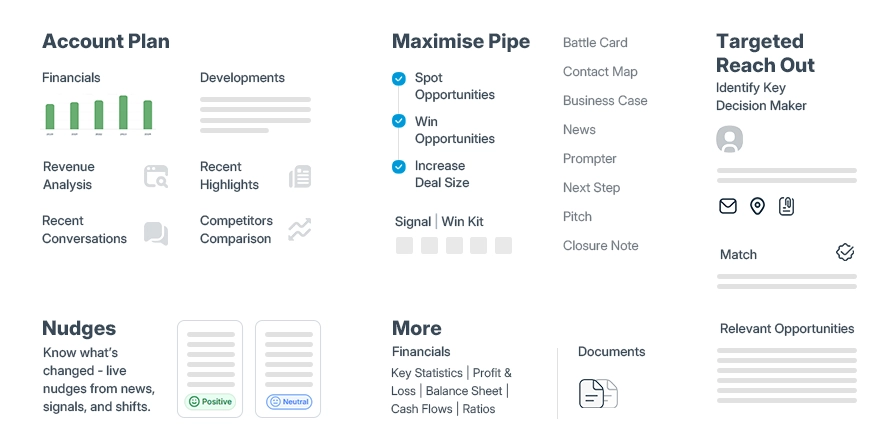
Successful AI sales analytics requires systematic frameworks that organize metrics into actionable hierarchies. The SalesPlay approach focuses on three distinct tiers of measurements that work together to create comprehensive performance visibility and predictive intelligence.
Tier 1: Revenue Predictive Metrics
These fundamental measurements predict future revenue performance with high accuracy, enabling strategic planning and resource allocation based on reliable forecasting rather than historical trends or intuitive guessing.
1. Deal Velocity Score AI-calculated assessment of deal progression likelihood based on comprehensive engagement pattern analysis. This metric evaluates customer interaction frequency, quality, and progression patterns compared to historically successful deals with similar characteristics.
The Deal Velocity Score integrates multiple data points including email response rates, meeting participation levels, stakeholder engagement breadth, content consumption patterns, and competitive intelligence factors. Machine learning algorithms weight these factors based on their predictive value for specific market segments and deal types.
Implementation involves continuous monitoring of customer engagement across all touchpoints, with AI algorithms updating velocity scores in real-time as new interactions occur. Sales teams receive automated alerts when velocity scores indicate acceleration or deceleration, enabling proactive intervention to maintain deal momentum.
SalesPlay's research demonstrates that teams using Deal Velocity Scoring achieve 31% higher close rates through early identification of engagement patterns that predict successful outcomes versus deals likely to stagnate or fail.
2. Pipeline Quality Index Weighted probability assessment across all active opportunities that provides accurate revenue forecasting based on individual deal characteristics rather than generalized stage percentages or representative estimates.
The Pipeline Quality Index evaluates each opportunity using AI analysis of stakeholder engagement levels, budget confirmation status, decision-making timeline alignment, competitive positioning strength, and solution fit assessment. These factors combine to create dynamic probability scores that update based on ongoing customer interactions.
Unlike traditional pipeline reporting that relies on sales stage percentages, the Quality Index provides nuanced assessment of deal strength within each stage. Two opportunities in "proposal" stage might have dramatically different probability scores based on customer engagement patterns and competitive factors.
Implementation requires integration of CRM data with communication platforms, competitive intelligence systems, and customer interaction tracking. AI algorithms continuously analyze these data sources to maintain accurate probability assessments that reflect changing deal dynamics.
Organizations implementing Pipeline Quality Indexing report 28% improvement in forecast accuracy and 19% reduction in sales cycle length through better resource allocation and strategic focus on highest-probability opportunities.
3. Customer Lifetime Value Predictor AI-driven CLV calculations that analyze customer behavior patterns, purchase history, engagement levels, and market factors to predict long-term revenue potential from each account relationship.
Traditional CLV calculations rely on historical averages that fail to account for individual customer characteristics or changing market conditions. AI-powered prediction evaluates specific behavioral indicators that correlate with account expansion, retention, and referral generation.
The predictor analyzes factors including product adoption rates, support interaction patterns, executive relationship strength, competitive positioning, market growth trends, and strategic alignment indicators. Machine learning algorithms identify patterns that distinguish high-value, long-term accounts from transactional relationships.
This intelligence enables sales teams to allocate resources appropriately, with high-CLV prospects receiving premium attention and support while transactional opportunities are managed through more efficient processes. Account management strategies adapt based on predicted value potential.
SalesPlay data shows that CLV-optimized resource allocation improves overall account profitability by 42% while reducing customer acquisition costs through better targeting and relationship development strategies.
4. Churn Risk Indicator Early warning system that identifies accounts at risk of cancellation or competitive defection before obvious warning signs appear. AI analysis of behavioral changes and engagement patterns predicts churn probability with time for preventive intervention.
The Churn Risk Indicator monitors subtle changes in customer behavior including communication frequency reduction, support ticket patterns, product usage decreases, stakeholder turnover, competitive research activity, and contract renewal engagement levels.
Machine learning algorithms establish baseline behavior patterns for each account, then identify deviations that historically correlate with churn events. The system provides graduated risk assessments from "monitor" to "immediate intervention required" based on pattern severity and timeline factors.
Early churn prediction enables account management teams to implement retention strategies before customers make final decisions. Proactive outreach, value demonstration, and strategic support can reverse negative trends when implemented early in the process.
Organizations using predictive churn indicators reduce customer turnover by 34% through early intervention and strategic relationship management based on behavioral intelligence rather than reactive responses to obvious problems.
STOP CHASING PROSPECTS
START CLOSING DEALS!!
Tier 2: Activity Correlation Metrics
These measurements connect specific sales activities with outcome generation, enabling teams to optimize effort allocation toward highest-impact behaviors while eliminating time-wasting activities that don't contribute to revenue goals.
1. Engagement Intensity Score Multi-channel interaction assessment that evaluates the depth and quality of customer engagement across email, phone, meeting, social media, and content consumption touchpoints.
The Engagement Intensity Score goes beyond frequency counting to analyze interaction quality through response time measurement, meeting participation assessment, content engagement depth, social media interaction patterns, and referral generation activity.
AI algorithms weight different engagement types based on their correlation with positive outcomes for specific customer segments and deal types. High-intensity engagement indicates strong interest and buying intent, while declining intensity suggests competitive threats or changing priorities.
Implementation involves integration across all customer communication platforms to create comprehensive engagement profiles. Real-time scoring enables sales teams to identify opportunities for increased engagement or early warning signs requiring immediate attention.
Teams utilizing Engagement Intensity Scoring report 26% improvement in conversion rates through better understanding of customer interest levels and appropriate response strategies.
2. Response Time Impact Correlation analysis between response speed and conversion probability across different communication channels and customer types. This metric identifies optimal response timing strategies that maximize engagement and progression likelihood.
Response Time Impact analysis reveals that immediate responses aren't always optimal—some customers prefer thoughtful, delayed responses while others require rapid acknowledgment. AI algorithms identify preference patterns based on customer behavior and industry characteristics.
The metric tracks response times across email, phone, text, social media, and support channels, correlating speed with progression rates, customer satisfaction, and ultimate deal outcomes. Analysis includes day-of-week and time-of-day factors that influence response effectiveness.
Implementation involves automated tracking of all customer communications with timestamp analysis and outcome correlation. Sales teams receive guidance on optimal response timing for each customer relationship based on historical patterns and predictive modeling.
SalesPlay research demonstrates that response time optimization increases engagement effectiveness by 23% while reducing total time investment through better timing strategies.
3. Content Effectiveness Rating AI analysis of which specific content pieces drive deal progression at each sales stage, enabling optimization of content strategy and personalization approaches that accelerate customer decision-making.
Content Effectiveness Rating tracks customer interaction with proposals, case studies, product demonstrations, whitepapers, videos, and presentations. AI algorithms measure not just consumption but engagement depth, sharing behavior, and subsequent customer actions.
The system identifies which content pieces correlate with stage progression, stakeholder engagement expansion, and competitive win rates. Analysis includes content format preferences, length optimization, and personalization elements that drive higher engagement.
Implementation requires integration of content management systems with customer engagement tracking. AI algorithms continuously analyze content performance across different customer segments and deal types to optimize content strategies.
Organizations implementing content effectiveness measurement see 31% improvement in sales cycle efficiency through strategic content optimization and personalized customer experiences.
4. Meeting Quality Index Analysis of meeting outcomes and next-step conversion rates based on participation levels, agenda adherence, stakeholder engagement, and follow-up action completion.
The Meeting Quality Index evaluates meeting effectiveness beyond attendance counting. Factors include stakeholder participation balance, decision-maker engagement levels, action item generation and completion, timeline progression, and competitive positioning discussions.
AI algorithms analyze meeting recordings and notes to identify patterns that correlate with positive outcomes. Quality indicators include question types asked, objections raised and resolved, next steps agreed upon, and stakeholder enthusiasm measurement.
Implementation involves integration with meeting platforms and CRM systems to track meeting outcomes and subsequent customer actions. Sales teams receive coaching on meeting optimization strategies based on quality analysis and best practice identification.
Teams using Meeting Quality optimization report 29% improvement in meeting-to-progression conversion rates through systematic meeting management and outcome optimization.
Make Every Rep Speak
Like Your Top 1%
Tier 3: Performance Optimization Metrics
These advanced measurements identify specific improvement opportunities and track optimization progress, enabling systematic performance enhancement through data-driven coaching and strategic development.
1. Skill Gap Analysis AI identification of specific capability gaps preventing optimal performance through comparison of individual rep behaviors against top performer patterns and proven success strategies.
Skill Gap Analysis evaluates performance across multiple dimensions including discovery questioning effectiveness, objection handling success rates, negotiation outcomes, closing technique results, and relationship building capabilities.
The system identifies not just what skills need improvement but prioritizes development areas based on potential impact. Some skill gaps have minor performance effects while others significantly limit revenue generation potential.
Implementation involves comprehensive performance data collection across all measurable activities and outcomes. AI algorithms compare individual patterns against top performer benchmarks to identify specific development opportunities.
Organizations implementing systematic skill gap analysis achieve 38% faster performance improvement through targeted development programs focused on highest-impact capability enhancement.
2. Territory Optimization Score Market penetration and opportunity assessment that evaluates territory performance potential versus current achievement levels, identifying expansion opportunities and resource allocation optimization strategies.
Territory Optimization Scoring analyzes market size, competitive positioning, customer density, growth trends, and penetration rates to identify underperforming areas with high potential. The analysis includes geographic, vertical, and account size factors.
AI algorithms evaluate territory performance against similar markets and competitive benchmarks to identify specific opportunities for improvement. The system recommends resource allocation changes and strategic focus areas.
Implementation requires integration of territory data with market intelligence and competitive analysis systems. Continuous monitoring identifies changing market conditions that affect territory potential and strategic priorities.
Teams utilizing territory optimization achieve 24% improvement in market penetration through strategic focus and resource allocation based on data-driven opportunity assessment.
3. Competitive Win Rate Predictor AI analysis of competitive positioning success patterns that predicts win probability against specific competitors and recommends strategic approaches for competitive differentiation.
The Competitive Win Rate Predictor analyzes historical competitive outcomes to identify patterns that predict success against different competitors. Factors include competitive positioning strategies, pricing approaches, stakeholder engagement tactics, and differentiation messaging effectiveness.
AI algorithms identify which competitive strategies work best against specific competitors in different market segments. The system provides tactical recommendations for competitive positioning and messaging optimization.
Implementation involves competitive intelligence integration with CRM and outcome tracking systems. Sales teams receive real-time competitive guidance based on predictive analysis and proven success patterns.
Organizations using competitive prediction improve win rates by 27% through strategic competitive positioning and tactical optimization based on predictive intelligence.
4. Seasonal Performance Patterns Predictive modeling for cyclical revenue planning that identifies seasonal trends, market timing factors, and optimal resource allocation strategies throughout annual business cycles.
Seasonal Performance Pattern analysis goes beyond simple historical trending to identify complex cyclical patterns that affect customer buying behavior, competitive dynamics, and market conditions.
AI algorithms analyze multi-year data to identify patterns that repeat annually, quarterly, or monthly. The system accounts for economic factors, industry trends, and competitive activity that influence seasonal performance.
Implementation involves comprehensive historical analysis combined with external market data integration. Predictive models enable proactive planning and resource allocation based on anticipated seasonal changes.
Teams implementing seasonal optimization achieve 22% improvement in revenue consistency through strategic planning and resource allocation aligned with predictive seasonal intelligence.
Your SDRs work 9–5
AI Sales works 24/7!!
Successful AI analytics implementation requires systematic approaches that ensure comprehensive data integration, accurate analysis, and actionable insights that drive decision-making improvement and performance optimization.
Step 1: Data Integration Foundation
Comprehensive Data Collection Strategy Establish unified data collection across all customer touchpoints including CRM systems, email platforms, communication tools, social media, website interactions, and support systems. SalesPlay's AI workers automatically aggregate data from multiple sources to create comprehensive customer profiles.
Data integration challenges include format standardization, duplicate record management, historical data migration, and real-time synchronization across platforms. The solution requires API connections, data mapping protocols, and validation processes that ensure accuracy and completeness.
Implementation timeline typically spans 2-3 weeks for basic integration with ongoing optimization as data sources expand and analytical requirements evolve. The foundation must support both historical analysis and real-time data processing for immediate insight generation.
Quality assurance involves data validation, accuracy verification, and completeness assessment across all integrated sources. Ongoing monitoring identifies integration issues and data quality problems that could affect analytical accuracy.
SalesPlay's automated data integration reduces manual effort by 67% while improving data accuracy through systematic validation and cleansing processes that eliminate human error and inconsistency.
Data Architecture Planning Design scalable data architecture that supports current analytical needs while accommodating future expansion and advanced capabilities. Architecture decisions affect system performance, analytical accuracy, and integration complexity.
Key considerations include data storage requirements, processing capacity, security protocols, access controls, and backup systems. The architecture must support both batch processing for comprehensive analysis and real-time processing for immediate insights.
Cloud-based solutions provide scalability and flexibility advantages while on-premise systems offer security and control benefits. Hybrid approaches combine advantages while minimizing disadvantages through strategic architecture design.
Integration planning identifies all data sources, mapping requirements, transformation needs, and validation processes. Comprehensive planning prevents implementation delays and ensures analytical accuracy from system launch.
Organizations with properly planned data architecture achieve 45% faster implementation and 32% better analytical accuracy compared to ad-hoc integration approaches.
Step 2: Baseline Establishment
Historical Performance Analysis Analyze 12-24 months of historical data to establish performance baselines across all key metrics. Baseline establishment enables accurate measurement of improvement and identification of performance trends that inform strategic planning.
Historical analysis identifies seasonal patterns, cyclical trends, performance variations, and correlation patterns that inform predictive model development. Understanding past performance provides context for future predictions and optimization strategies.
The analysis includes individual rep performance, team dynamics, territory variations, product performance, competitive outcomes, and market factors that influence results. Comprehensive baseline data ensures accurate improvement measurement.
Data validation during baseline establishment identifies historical accuracy issues, data gaps, and inconsistency problems that must be resolved before implementing predictive analytics. Clean historical data is essential for accurate AI model development.
Teams with comprehensive baseline analysis achieve 29% better improvement measurement accuracy and more effective optimization strategies through historical pattern recognition and trend analysis.
Benchmark Development Establish internal performance benchmarks based on top performer analysis and external industry standards. Benchmarks provide targets for improvement and enable competitive performance assessment.
Internal benchmarking analyzes top performer characteristics, success patterns, and behavioral differences that distinguish high achievers from average performers. These insights inform coaching and development strategies.
External benchmarking compares performance against industry standards and competitive intelligence to identify relative positioning and improvement opportunities. Market comparison provides strategic context for performance evaluation.
Benchmark categories include activity metrics, outcome measurements, efficiency indicators, and quality assessments. Comprehensive benchmarking enables multi-dimensional performance evaluation and improvement planning.
Organizations implementing systematic benchmarking achieve 34% faster performance improvement through clear targets and competitive positioning awareness.
Step 3: Predictive Model Development
AI Model Training Process Deploy machine learning algorithms that analyze historical patterns to predict future outcomes with increasing accuracy over time. Model development involves algorithm selection, training data preparation, and validation testing.
Algorithm selection depends on data types, prediction requirements, and accuracy objectives. Different algorithms excel at different prediction types—some optimize for classification while others focus on numerical prediction or pattern recognition.
Training data preparation involves data cleansing, feature selection, and format optimization for machine learning processing. Quality training data is essential for accurate model development and reliable predictions.
Validation testing confirms model accuracy through comparison with known outcomes and cross-validation techniques. Rigorous testing prevents overfitting and ensures model reliability in real-world applications.
SalesPlay's pre-trained models accelerate implementation while customization ensures accuracy for specific organizational characteristics and market conditions.
Continuous Learning Implementation Implement systems that continuously improve prediction accuracy through ongoing data analysis and model refinement. Continuous learning ensures models adapt to changing market conditions and customer behaviors.
Model monitoring tracks prediction accuracy over time and identifies when retraining is needed. Market changes, competitive factors, and customer behavior evolution require ongoing model adaptation.
Feedback loops incorporate actual outcomes into model training to improve future predictions. The system learns from prediction errors to enhance accuracy and reliability over time.
Automated retraining processes ensure models stay current without manual intervention. However, human oversight monitors model performance and validates improvement effectiveness.
Organizations with continuous learning systems maintain 15% higher prediction accuracy compared to static models while adapting effectively to changing market conditions.
Step 4: Integration and Adoption
System Integration Planning Integrate AI analytics with existing sales processes, CRM systems, and workflow management tools to ensure seamless adoption without disrupting current operations.
Integration challenges include user interface design, workflow modification, change management, and training requirements. Successful integration minimizes disruption while maximizing analytical value and user adoption.
Pilot programs test integration effectiveness with small groups before full-scale deployment. Pilot results inform final integration strategies and identify optimization opportunities.
User experience design ensures analytical insights are accessible and actionable within existing workflows. Complex analytics must be presented in simple, intuitive formats that drive decision-making.
Teams with planned integration approaches achieve 52% higher user adoption rates and faster time-to-value compared to ad-hoc implementation strategies.
Training and Change Management Implement comprehensive training programs that ensure effective system utilization and organizational change management that supports analytical transformation.
Training programs include system operation, analytical interpretation, decision-making frameworks, and continuous improvement processes. Training must address both technical skills and strategic thinking development.
Change management addresses cultural transformation from intuition-based to data-driven decision-making. Cultural change often presents greater challenges than technical implementation.
Ongoing support systems provide assistance during adoption phases and ensure continued effectiveness. Support includes technical help, analytical guidance, and strategic consulting.
Organizations with comprehensive change management achieve 41% faster adoption and 27% better long-term utilization compared to technology-only implementations.
Ready to turn your Rep
INTO BEST PERFORMER ?
Advanced optimization techniques maximize the value of AI analytics investments through sophisticated measurement strategies, predictive modeling, and continuous improvement processes that drive sustainable competitive advantages.
Adaptive Importance Scoring Implement dynamic weighting systems that adjust KPI importance based on market conditions, business cycles, and strategic priorities. Static KPI frameworks fail to account for changing business environments and strategic shifts.
Dynamic weighting analyzes current business conditions, competitive factors, and strategic objectives to adjust metric importance automatically. During growth phases, acquisition metrics receive higher weight while retention metrics become more important during market contractions.
AI algorithms monitor external factors including economic indicators, industry trends, competitive activity, and seasonal patterns to optimize KPI weighting for current conditions. The system adapts measurement focus to align with optimal decision-making priorities.
Implementation involves establishing base weights for different business conditions and automated adjustment triggers based on environmental changes. The system maintains measurement consistency while optimizing relevance.
Organizations using dynamic weighting achieve 23% better strategic alignment and more effective resource allocation through measurement systems that adapt to changing business requirements.
Contextual Performance Assessment Develop sophisticated performance evaluation that accounts for territory differences, market conditions, competitive factors, and seasonal variations when assessing individual and team performance.
Contextual assessment recognizes that identical performance levels might represent different achievement levels depending on circumstances. A rep achieving 85% of quota in a declining market might outperform someone reaching 110% in a growth market.
The system analyzes external factors affecting each territory including market size, competitive intensity, economic conditions, seasonal patterns, and growth trends. Performance evaluation accounts for these factors to ensure fair and accurate assessment.
Implementation requires integration of external market data with internal performance metrics. AI algorithms weight performance achievements based on difficulty factors and market conditions.
Teams using contextual assessment report 31% improvement in performance evaluation accuracy and higher motivation through fair assessment that accounts for territory and market differences.
Predictive KPI Adjustment Implement forward-looking KPI strategies that anticipate future business needs and adjust measurement focus accordingly. Reactive KPI management limits strategic effectiveness and competitive positioning.
Predictive adjustment analyzes business trends, market forecasts, competitive intelligence, and strategic planning to anticipate measurement needs before they become obvious. The system prepares measurement frameworks for future business conditions.
AI algorithms identify leading indicators that predict when KPI adjustments will be needed. Early adjustment prevents measurement lag that could affect decision-making effectiveness during critical business transitions.
Implementation involves strategic planning integration with KPI management systems. Automated adjustment capabilities ensure measurement frameworks evolve with business requirements without manual intervention delays.
Organizations implementing predictive KPI management achieve 28% better strategic positioning through measurement systems that anticipate rather than react to changing business conditions.
Ready to transform your analytics foundation? Discover SalesPlay's sales analytics KPI framework and metrics and build the measurement systems that drive systematic revenue growth through predictive intelligence and performance optimization.
Beyond Traditional Pipeline Management
Traditional forecasting methods rely heavily on sales representative intuition, historical averages, and stage-based percentages that fail to account for the complex factors that actually determine deal outcomes. This approach creates significant accuracy gaps that cascade through strategic planning, resource allocation, and revenue expectations.
The fundamental limitation of conventional forecasting lies in its backward-looking nature. When teams base predictions on historical patterns without considering current market dynamics, competitive factors, or individual deal characteristics, they create systematic blind spots that prevent accurate revenue planning and strategic decision-making.
MarketsandMarkets SalesPlay research reveals that traditional forecasting methods achieve only 67% accuracy in deal outcome prediction, creating uncertainty that affects everything from hiring decisions to investor communications. The gap between forecast and reality forces reactive management approaches that limit strategic positioning and competitive advantage.
Modern buyers have fundamentally changed their purchasing processes, making historical patterns less reliable predictors of future behavior. Today's customers research solutions extensively before engaging sales teams, involve multiple stakeholders in decision-making, and evaluate alternatives across longer time horizons. These changes require forecasting approaches that account for contemporary buyer behavior rather than historical assumptions.
Sales representative intuition, while valuable, introduces systematic biases that affect forecast accuracy. Optimism bias leads to overestimating close probability while recency bias gives disproportionate weight to recent interactions. Confirmation bias causes reps to focus on information that supports their preferred outcomes while ignoring contradictory signals.
These cognitive biases are natural human tendencies, but they create forecasting inaccuracy that compounds across entire sales organizations. When individual rep biases aggregate into team forecasts, the cumulative effect significantly distorts revenue predictions and strategic planning.
AI-powered forecasting eliminates human bias through objective analysis of multiple data points and historical correlation patterns. Machine learning algorithms identify actual predictive factors without emotional attachment to specific outcomes or confirmation bias affecting analysis.
The result is systematic improvement in forecast accuracy that enables confident strategic planning, resource allocation, and investor communication based on reliable revenue predictions rather than hopeful estimates.
Traditional CRM systems rely on stage-based forecasting that assigns probability percentages to sales stages—typically "qualified" at 25%, "proposal" at 75%, etc. This approach assumes all opportunities in the same stage have identical close probability, ignoring deal-specific factors that actually determine outcomes.
Two opportunities in "proposal" stage might have dramatically different close probability based on stakeholder engagement, competitive positioning, budget confirmation, and timeline alignment. Stage-based forecasting treats them identically, creating systematic inaccuracy in pipeline assessment.
Furthermore, stage advancement doesn't always indicate progress toward purchase. Customers might advance through stages without increasing purchase intent, or they might maintain high purchase intent while remaining in early stages due to internal processes or budget timing.
AI forecasting evaluates individual deal characteristics rather than stage generalizations. Each opportunity receives unique probability assessment based on specific factors that correlate with successful outcomes, creating accuracy improvements that compound across entire pipeline analysis.
SalesPlay's deal-specific forecasting improves accuracy by 24% compared to stage-based methods through individual opportunity assessment that accounts for all relevant factors affecting purchase decisions.
Traditional forecasting fails to account for external market factors that significantly influence deal outcomes. Economic conditions, industry trends, competitive activity, and seasonal patterns affect customer purchasing behavior, but conventional methods don't integrate these factors into prediction models.
Economic uncertainty might delay purchasing decisions across entire market segments, while competitive product launches could accelerate evaluation timelines. Seasonal budget cycles create predictable purchasing patterns, but traditional forecasting doesn't weight these factors appropriately.
AI-powered forecasting integrates external market data with individual deal characteristics to create comprehensive prediction models. Economic indicators, industry trends, competitive intelligence, and seasonal patterns enhance prediction accuracy through systematic factor analysis.
The integration enables forecasting that adapts to changing market conditions rather than assuming static buying behavior. When market factors shift, prediction models adjust automatically to maintain accuracy throughout economic cycles and competitive changes.
Organizations implementing market-integrated forecasting achieve 19% better accuracy during market transitions compared to internal-only prediction methods.
Comprehensive AI forecasting requires systematic methodologies that integrate multiple data sources, apply sophisticated algorithms, and continuously improve prediction accuracy through machine learning and outcome analysis.
Customer Engagement Pattern Analysis AI evaluation of customer interaction frequency, quality, and progression patterns provides fundamental insights into purchase intent and timeline probability. Engagement analysis goes beyond activity counting to assess interaction quality and customer responsiveness.
Engagement patterns include email response rates and timing, meeting participation levels and stakeholder involvement, content consumption depth and sharing behavior, social media interaction patterns, and website research activity. These factors combine to create comprehensive engagement profiles that predict purchase intent.
Machine learning algorithms identify engagement patterns that correlate with successful deal outcomes versus patterns that predict stagnation or competitive loss. The analysis accounts for industry differences, deal sizes, and customer types that affect engagement expectations.
Real-time engagement scoring enables sales teams to identify deals gaining momentum versus opportunities losing steam. Early identification of engagement changes allows proactive intervention to maintain deal progression or implement rescue strategies.
SalesPlay's engagement analysis improves close rate prediction by 31% through comprehensive interaction pattern evaluation that identifies subtle changes in customer interest and buying intent.
Historical Deal Correlation Analysis Pattern matching against similar deals with known outcomes provides predictive intelligence based on proven success and failure factors. Historical correlation identifies which deal characteristics most reliably predict specific outcomes.
Correlation analysis evaluates deal size, sales cycle length, stakeholder composition, competitive factors, industry characteristics, seasonal timing, and economic conditions. AI algorithms identify which factors have the strongest predictive value for different types of opportunities.
The system maintains databases of historical deals with comprehensive characteristic profiles and outcome data. New opportunities are matched against similar historical deals to predict probability and timeline with increasing accuracy over time.
Pattern recognition improves as the historical database expands and algorithms learn from prediction accuracy measurement. Continuous learning ensures correlation analysis becomes more accurate and reliable over time.
Organizations using historical correlation achieve 26% improvement in deal outcome prediction through systematic pattern recognition and proven success factor analysis.
STOP CHASING PROSPECTS
START CLOSING DEALS!!
Stakeholder Involvement Assessment Analysis of decision-maker engagement levels, stakeholder mapping completeness, and organizational involvement patterns provides critical insights into deal progression probability and potential obstacles.
Stakeholder assessment evaluates decision-maker identification and engagement, influencer relationship development, champion strength and advocacy, end-user involvement and enthusiasm, and procurement process navigation. These factors significantly influence deal outcomes but often receive insufficient analytical attention.
AI algorithms analyze stakeholder interaction patterns, meeting participation, email engagement, and content consumption across all identified decision participants. The system identifies gaps in stakeholder coverage and predicts their impact on deal success probability.
Champion strength assessment measures advocate commitment through behavioral indicators rather than verbal commitments. Strong champions actively promote solutions internally while weak champions provide passive support that may not overcome organizational resistance.
Teams implementing systematic stakeholder analysis achieve 29% higher close rates through comprehensive relationship development and strategic stakeholder engagement optimization.
Competitive Intelligence Integration Real-time competitive positioning analysis that evaluates competitive threats, differentiation strength, and win probability against specific competitors based on historical patterns and current market positioning.
Competitive analysis includes competitor identification and positioning, differentiation message effectiveness, pricing competitiveness assessment, relationship advantage evaluation, and strategic fit comparison. These factors significantly influence deal outcomes and require systematic analysis.
The system maintains competitive intelligence databases that track competitor strengths, weaknesses, typical selling approaches, and historical win/loss patterns. This intelligence informs strategic positioning and tactical responses for individual opportunities.
AI algorithms predict win probability against specific competitors based on historical outcomes and current positioning factors. The analysis provides tactical recommendations for competitive differentiation and strategic messaging optimization.
Organizations implementing competitive integration improve win rates by 22% through strategic competitive positioning and tactical optimization based on predictive competitive intelligence.
Market Timing and External Factors Systematic analysis of economic conditions, industry trends, budget cycles, and external factors that influence customer purchasing decisions and timeline expectations.
Market timing analysis evaluates economic indicators affecting customer spending, industry trends influencing solution priorities, budget cycle timing and approval processes, regulatory changes affecting requirements, and competitive market dynamics influencing urgency.
External factor integration recognizes that deals don't exist in isolation—market conditions significantly influence customer behavior and purchasing decisions. Economic uncertainty delays purchases while competitive threats accelerate evaluation timelines.
AI algorithms weight external factors based on their historical influence on similar deals and customers. The system adjusts predictions based on current market conditions to maintain accuracy throughout economic and competitive cycles.
Teams using market timing analysis achieve 18% better timeline prediction through systematic external factor integration that accounts for market influences on customer purchasing behavior.
Machine Learning Algorithm Selection Optimal forecasting requires selecting appropriate algorithms based on data characteristics, prediction requirements, and accuracy objectives. Different algorithms excel at different prediction types and data patterns.
Algorithm categories include classification algorithms for outcome prediction (will close/won't close), regression algorithms for numerical prediction (deal size, timeline), and clustering algorithms for pattern recognition (similar deal identification).
Ensemble methods combine multiple algorithms to improve prediction accuracy through diverse analytical approaches. Random forests, gradient boosting, and neural networks each contribute different analytical strengths to comprehensive prediction models.
Model selection considers data volume, feature complexity, prediction timeline requirements, and accuracy objectives. Large datasets with complex relationships require sophisticated algorithms while smaller datasets might achieve better results with simpler approaches.
SalesPlay's adaptive algorithm selection automatically chooses optimal approaches based on data characteristics and prediction requirements, ensuring maximum accuracy without requiring technical expertise from sales teams.
Feature Engineering and Selection Identify and optimize the specific data elements that have the strongest predictive value for deal outcomes. Feature engineering transforms raw data into predictive indicators that machine learning algorithms can effectively analyze.
Feature categories include customer characteristics (company size, industry, geographic location), interaction patterns (communication frequency, response times, meeting participation), deal specifics (size, complexity, timeline), competitive factors (number of competitors, positioning strength), and external influences (economic conditions, seasonal timing).
Advanced feature engineering creates composite indicators that combine multiple data points into single predictive scores. Engagement velocity combines communication frequency with response quality, while stakeholder strength merges decision-maker involvement with champion advocacy levels.
Feature selection algorithms identify which data elements provide the most predictive value while eliminating noise that could reduce accuracy. Systematic selection prevents overfitting while ensuring comprehensive analysis of relevant factors.
Organizations implementing advanced feature engineering achieve 27% improvement in prediction accuracy through optimized data utilization and sophisticated indicator development.
Cross-Validation and Testing Rigorous testing processes ensure model accuracy and reliability through systematic validation against known outcomes. Cross-validation prevents overfitting while confirming predictive power across different data sets and time periods.
Testing methodologies include holdout validation (testing on data not used for training), k-fold cross-validation (multiple testing iterations with different data splits), and temporal validation (testing predictions against future outcomes).
Accuracy metrics include precision (percentage of positive predictions that are correct), recall (percentage of actual positives correctly identified), and F1 score (balanced measure of precision and recall). These metrics provide comprehensive assessment of model performance.
Ongoing validation monitors model performance over time to identify when retraining is needed. Model drift occurs when changing conditions reduce prediction accuracy, requiring algorithm updates to maintain effectiveness.
STOP GUESSING YOUR PIPELINE
START GROWING IT WITH AI SALES!!
Teams implementing systematic validation achieve 21% higher sustained accuracy through rigorous testing and continuous monitoring that ensures reliable predictions over time.
Real-Time Model Updates Continuous learning systems that incorporate new data and outcomes to improve prediction accuracy without manual intervention. Real-time updates ensure models adapt to changing market conditions and customer behaviors.
Update processes include automated data ingestion (new interactions and outcomes), incremental learning (model improvement without complete retraining), and performance monitoring (accuracy tracking and optimization).
The system balances stability with adaptability—incorporating new learning while maintaining reliable baseline performance. Sudden model changes could disrupt forecasting accuracy, so updates occur gradually with validation at each step.
Automated alerts notify administrators when significant accuracy changes occur, enabling human oversight of model evolution. This balance ensures continuous improvement while maintaining predictive reliability.
Organizations with real-time updating achieve 19% better accuracy maintenance over time compared to static models that don't adapt to changing conditions.
Systematic implementation ensures successful deployment of AI forecasting systems that deliver immediate value while building foundation for continuous improvement and optimization.
Comprehensive Data Collection Gather 12-24 months of closed deal data including outcomes, characteristics, interaction patterns, and external factors. Comprehensive historical data provides the foundation for accurate model training and validation.
Data collection includes CRM records (deal characteristics, stage progression, outcome data), communication logs (emails, calls, meetings), competitive intelligence (competitors involved, win/loss reasons), and external factors (market conditions, economic indicators).
Data quality assessment identifies gaps, inconsistencies, and accuracy issues that must be resolved before model training. Clean, comprehensive data is essential for reliable algorithm development and accurate predictions.
Standardization processes ensure consistent data formats and definitions across all sources. Different systems might define similar concepts differently, requiring harmonization for effective analysis.
SalesPlay's automated data preparation reduces manual effort by 73% while improving data quality through systematic validation and cleansing processes.
Pattern Recognition Analysis Identify historical patterns that correlate with successful and unsuccessful outcomes. Pattern recognition reveals which factors most reliably predict deal results, informing algorithm development and strategic insights.
Analysis categories include temporal patterns (seasonal effects, timing influences), behavioral patterns (successful rep behaviors, customer engagement types), competitive patterns (win/loss factors against different competitors), and market patterns (economic influences, industry trends).
Statistical analysis identifies correlation strength between different factors and outcomes. Strong correlations become primary features for predictive models while weak correlations are de-emphasized or eliminated.
Pattern documentation creates knowledge base of success factors that inform not only algorithmic development but also sales strategy and coaching programs. Understanding why deals succeed enables replication of success patterns.
Teams completing comprehensive pattern analysis achieve 24% faster model development and higher initial accuracy through systematic factor identification and correlation analysis.
Baseline Accuracy Establishment Measure current forecasting accuracy using traditional methods to establish improvement benchmarks. Baseline measurement enables quantification of AI forecasting benefits and ROI calculation.
Baseline analysis includes current forecast accuracy by time horizon (30, 60, 90 days), deal size categories, rep performance levels, and market segments. Comprehensive baseline assessment identifies specific improvement opportunities.
Accuracy measurement considers both outcome prediction (will close/won't close) and timeline prediction (when will deals close). Different aspects of forecasting may have different accuracy levels and improvement potential.
Documentation of current forecasting challenges and limitations provides context for improvement measurement and strategic planning. Understanding baseline limitations helps prioritize AI implementation benefits.
Organizations establishing comprehensive baselines achieve 31% better improvement measurement and more effective ROI demonstration through systematic before-and-after comparison.
Algorithm Development and Training Deploy machine learning algorithms on historical data to develop predictive models that identify success patterns and forecast outcomes. Algorithm training creates the intelligence engine for future predictions.
Training processes include algorithm selection based on data characteristics, parameter optimization for maximum accuracy, and feature weighting based on predictive value. Multiple algorithms may be tested to identify optimal approaches.
Validation during training prevents overfitting through cross-validation techniques and holdout testing. Models must perform well on data not used for training to ensure reliable real-world performance.
Performance optimization balances accuracy with interpretability. Highly complex models might achieve marginally better accuracy but become difficult to understand and explain to sales teams.
SalesPlay's pre-trained models accelerate development while customization ensures accuracy for specific organizational characteristics and market conditions.
Accuracy Testing and Refinement Systematic testing against known outcomes validates model performance and identifies refinement opportunities. Testing reveals model strengths and limitations while enabling optimization before deployment.
Testing methodologies include retrospective analysis (predicting known historical outcomes), sensitivity analysis (how changes in inputs affect predictions), and scenario testing (model performance under different conditions).
Refinement processes adjust algorithm parameters, modify feature weights, and optimize prediction thresholds based on testing results. Iterative improvement enhances accuracy through systematic optimization.
Error analysis identifies specific conditions where models perform poorly, enabling targeted improvements or human oversight protocols. Understanding model limitations prevents inappropriate application.
Teams implementing rigorous testing achieve 28% higher deployment accuracy through systematic validation and optimization before real-world application.
Integration Preparation Prepare systems and processes for model integration with existing sales workflows and CRM systems. Integration planning ensures seamless deployment without disrupting current operations.
Integration requirements include API development for CRM connectivity, user interface design for forecast presentation, workflow modification for prediction utilization, and training material preparation for user adoption.
Testing environments validate integration functionality before production deployment. Pilot testing with small groups identifies issues and optimization opportunities before full-scale rollout.
Change management planning addresses user adoption challenges and workflow modifications. Successful integration requires both technical implementation and organizational change management.
Organizations with comprehensive integration planning achieve 47% faster deployment and higher user adoption rates through systematic preparation and change management.
Production System Launch Deploy live forecasting system that provides real-time predictions based on current pipeline data and ongoing customer interactions. Production launch marks transition from development to operational value delivery.
Launch processes include system monitoring for performance and accuracy, user training for effective utilization, support system activation for issue resolution, and feedback collection for continuous improvement.
Gradual rollout across different teams or territories enables controlled deployment with issue identification and resolution before full-scale implementation. Phased deployment reduces risk while building success stories.
Performance monitoring tracks system availability, prediction accuracy, user adoption, and business impact. Continuous monitoring ensures system effectiveness and identifies optimization opportunities.
SalesPlay's managed deployment services ensure smooth transition to production with ongoing support and optimization throughout the implementation process.
User Training and Adoption Comprehensive training programs ensure sales teams can effectively interpret and utilize AI predictions in their daily workflows. Training addresses both technical operation and strategic application.
Training components include system operation (how to access and interpret predictions), decision-making frameworks (how to use predictions for strategic planning), and optimization strategies (how to improve prediction inputs).
Ongoing support includes technical assistance, interpretation guidance, and strategic consulting. Support systems ensure continued effectiveness and user confidence throughout adoption phases.
Success measurement tracks user adoption rates, prediction utilization levels, and business impact from improved forecasting. Measurement enables ongoing optimization and ROI demonstration.
Make Every Rep Speak
Like Your Top 1%
Teams with comprehensive training achieve 52% higher utilization rates and faster time-to-value through effective education and ongoing support systems.
Sophisticated forecasting capabilities provide comprehensive intelligence that extends beyond basic outcome prediction to enable strategic planning, resource optimization, and competitive advantage.
Deal Outcome Probability Primary prediction capability that assesses likelihood of deal closure with specific confidence intervals and probability ranges. Outcome prediction enables resource allocation and strategic planning based on reliable forecasts.
Probability assessment includes not just binary close/no-close predictions but nuanced likelihood ranges that account for uncertainty and changing conditions. Probability confidence intervals provide risk assessment for strategic planning.
Dynamic probability updates reflect changing conditions as new customer interactions occur. Real-time probability adjustment enables proactive management and tactical optimization throughout sales cycles.
Probability segmentation by different scenarios (best case, likely case, worst case) enables comprehensive planning that accounts for uncertainty and risk management. Multiple scenarios support strategic flexibility.
Organizations using advanced probability prediction achieve 33% better resource allocation through reliable forecast intelligence that supports strategic decision-making.
Timeline Prediction Accuracy Beyond outcome prediction, AI forecasting determines optimal close dates based on customer decision-making patterns, sales cycle analysis, and external factors affecting timing.
Timeline prediction analyzes historical sales cycle data, customer decision-making processes, budget approval cycles, and competitive factors that influence purchasing speed. Accurate timeline prediction enables precise resource allocation.
Dynamic timeline updates reflect changing customer priorities, internal process changes, and external factors that accelerate or delay purchasing decisions. Real-time timeline adjustment improves planning accuracy.
Timeline confidence intervals account for uncertainty in customer processes and external factors. Probability ranges for different timeline scenarios enable risk management and contingency planning.
Teams using advanced timeline prediction achieve 26% better quota planning and resource allocation through accurate close date forecasting and strategic timeline management.
Deal Size Estimation Predictive analysis of final deal value based on customer characteristics, engagement patterns, competitive factors, and historical deal size patterns for similar opportunities.
Deal size prediction considers customer budget indicators, competitive pricing factors, solution scope requirements, and negotiation patterns that influence final contract value. Accurate size prediction improves revenue forecasting.
Range estimation provides minimum, likely, and maximum deal values with probability assessments for each scenario. Range prediction enables comprehensive revenue planning that accounts for negotiation outcomes.
Dynamic size updates reflect changing customer requirements, competitive factors, and negotiation progress. Real-time size adjustment maintains forecast accuracy throughout deal progression.
Organizations implementing deal size prediction achieve 24% improvement in revenue forecast accuracy through comprehensive value estimation and strategic pricing optimization.
Early Warning Systems Predictive identification of deals at risk of stagnation, competitive loss, or cancellation before obvious warning signs appear. Early warning enables proactive intervention while recovery options remain viable.
Risk indicators include declining engagement patterns, competitive intelligence alerts, stakeholder changes, and external factors affecting customer priorities. AI algorithms identify subtle pattern changes that predict problems.
Risk scoring provides graduated assessment from low concern to immediate intervention required. Risk levels trigger appropriate response protocols and resource allocation for deal rescue efforts.
Automated alerts notify sales teams and managers when risk levels change significantly. Immediate notification enables rapid response while intervention options remain effective.
Teams using early warning systems reduce deal loss by 29% through proactive intervention and strategic rescue efforts based on predictive risk intelligence.
Competitive Threat Assessment Real-time analysis of competitive positioning and threat levels based on competitive intelligence, customer behavior changes, and historical competitive outcome patterns.
Competitive assessment includes competitor identification and positioning strength, customer evaluation activity, pricing pressure indicators, and relationship advantage factors. Comprehensive competitive intelligence informs strategic responses.
Threat level scoring provides immediate assessment of competitive risk with recommended response strategies. Scoring enables appropriate resource allocation for competitive defense efforts.
Dynamic threat monitoring identifies changing competitive conditions and customer evaluation patterns. Real-time competitive intelligence enables tactical adjustment and strategic repositioning.
Organizations implementing competitive assessment improve competitive win rates by 27% through strategic positioning and tactical optimization based on predictive competitive intelligence.
Key Takeaway: Advanced forecasting transforms sales from reactive management to predictive intelligence, enabling strategic planning based on reliable outcome prediction rather than hopeful estimates.
Ready to see the future of your pipeline? AI predictive sales forecasting tools and achieve 91% accuracy in deal outcome prediction through comprehensive AI analysis.
The Science of Sales Success
High-performing sales professionals don't achieve superior results through luck or natural talent alone—they consistently execute specific behavioral patterns that correlate with revenue generation and customer success. These patterns are identifiable, measurable, and most importantly, replicable across entire sales organizations.
The challenge lies in identifying which specific behaviors drive results versus activities that merely create the appearance of productivity. Traditional performance analysis focuses on obvious metrics like call volume or meeting frequency, missing the subtle behavioral nuances that actually differentiate top performers from average achievers.
MarketsandMarkets SalesPlay research demonstrates that teams implementing AI-driven performance pattern recognition achieve 34% performance improvements within 60 days through systematic identification and replication of success behaviors. The key lies in analyzing thousands of interactions to isolate specific actions that consistently correlate with positive outcomes.
Performance pattern recognition goes beyond surface-level activity measurement to analyze communication styles, timing strategies, relationship building approaches, and problem-solving methodologies that distinguish successful professionals. These patterns exist in every sales organization but remain hidden without systematic analytical approaches.
Every high-performing sales organization contains a "hidden success code"—specific behavioral patterns that drive results but aren't explicitly documented or taught. Top performers develop these patterns through experience and intuition, but the knowledge rarely transfers systematically to other team members.
This creates performance variability where a few individuals achieve exceptional results while others struggle with identical market conditions and resources. The organization possesses the knowledge for success but lacks systematic methods for identifying and replicating effective patterns.
AI pattern recognition reveals these hidden codes through comprehensive analysis of successful behaviors across multiple performance dimensions. Machine learning algorithms identify subtle correlations between specific actions and outcomes that human observation might miss.
The revelation of hidden success codes enables systematic performance improvement through evidence-based coaching and development programs. Instead of generic best practices, teams implement specific behaviors proven to drive results in their unique market conditions.
SalesPlay's pattern analysis reveals that successful behaviors often contradict conventional sales wisdom. For example, top performers in complex B2B sales might have longer initial response times but higher response quality, challenging assumptions about immediate communication.
Traditional performance measurement focuses on easily quantifiable activities—calls made, emails sent, meetings scheduled—without analyzing the quality or effectiveness of these activities. This creates a false correlation between activity volume and results.
High activity levels might indicate strong work ethic, but they don't guarantee effective customer engagement or revenue generation. Some representatives achieve superior results with lower activity volumes through strategic focus and higher-quality interactions.
Pattern recognition analyzes activity effectiveness rather than just frequency. The system evaluates which types of calls generate progression, what email approaches drive responses, and which meeting strategies advance opportunities. Quality analysis provides actionable insights that activity counting cannot deliver.
Implementation requires comprehensive interaction analysis including call recordings, email content, meeting notes, and customer responses. AI algorithms identify patterns that correlate with positive outcomes across all interaction types.
Organizations shifting from activity measurement to pattern analysis achieve 31% improvement in performance optimization through focus on effective behaviors rather than busy work.
Understanding why certain behaviors drive results requires systematic correlation analysis between specific actions and measurable outcomes. Simple observation might identify that successful reps send different emails, but correlation analysis reveals exactly what makes these communications effective.
Behavioral correlation extends beyond individual actions to analyze behavioral sequences and timing patterns. Successful reps might follow specific sequences of discovery questions, or they might time follow-up communications based on customer behavioral cues.
The analysis includes both positive and negative correlations—behaviors that consistently predict success and behaviors that reliably indicate potential problems. Understanding both sides of the equation enables comprehensive performance optimization.
Correlation analysis must account for external factors including market conditions, customer types, deal complexity, and competitive factors. The same behavior might drive different results under different circumstances, requiring nuanced analysis.
Teams implementing comprehensive correlation analysis identify 23% more improvement opportunities through systematic understanding of behavior-outcome relationships across multiple performance dimensions.
Systematic analysis requires comprehensive frameworks that evaluate performance across multiple dimensions while identifying specific patterns that drive consistent results in different situations and market conditions.
Success Pattern Identification
Communication Excellence Patterns Analysis of how top performers communicate differently across various channels and customer touchpoints. Communication patterns include not just content differences but timing, frequency, and personalization strategies that drive engagement.
Communication analysis evaluates email effectiveness including subject line strategies, message structure, personalization approaches, and call-to-action optimization. Successful patterns often involve specific linguistic approaches that resonate with target customers.
Phone communication patterns include opening strategies, discovery questioning sequences, objection handling approaches, and closing techniques that correlate with positive outcomes. Analysis includes both content and delivery style factors.
Meeting facilitation patterns analyze how successful reps structure customer meetings, engage stakeholders, handle questions, and advance opportunities through productive discussions. Meeting effectiveness extends beyond agenda management to stakeholder psychology.
Social media and digital communication patterns reveal how top performers leverage modern channels for relationship building, thought leadership, and opportunity development. Digital engagement patterns increasingly influence overall sales effectiveness.
SalesPlay's communication analysis identifies specific language patterns, timing strategies, and engagement approaches that improve response rates by 28% and accelerate opportunity progression.
Relationship Building Strategies Systematic analysis of how successful reps develop and maintain customer relationships throughout sales cycles and beyond initial transactions. Relationship patterns predict long-term customer value and referral generation.
Trust building analysis evaluates specific behaviors that establish credibility and confidence with customers. Trust patterns include consistency in communication, expertise demonstration, and reliability in commitments and follow-through.
Stakeholder mapping and engagement patterns reveal how top performers identify decision-makers, influencers, and champions while developing relationships across entire customer organizations. Multi-stakeholder engagement correlates strongly with deal success.
Value demonstration patterns analyze how successful reps communicate solution benefits, quantify impact, and align offerings with customer priorities. Value communication effectiveness significantly influences purchasing decisions.
Long-term relationship maintenance patterns evaluate how top performers maintain customer relationships after initial sales to drive expansion opportunities and referral generation. Relationship longevity creates sustainable competitive advantages.
Organizations implementing relationship pattern analysis achieve 26% improvement in customer lifetime value through systematic relationship development and maintenance strategies.
Problem-Solving Methodologies Analysis of how successful reps approach customer challenges, develop solutions, and navigate complex situations that arise during sales processes. Problem-solving patterns distinguish consultative professionals from transactional salespeople.
Discovery and needs analysis patterns evaluate questioning strategies, listening techniques, and information synthesis approaches that enable comprehensive understanding of customer requirements. Discovery effectiveness predicts solution fit and customer satisfaction.
Solution development patterns analyze how top performers translate customer requirements into relevant solutions while addressing concerns and objections throughout the process. Solution presentation effectiveness influences purchasing decisions.
Objection handling patterns reveal specific approaches that acknowledge concerns, provide relevant information, and maintain relationship integrity while addressing resistance. Objection handling correlates strongly with deal progression.
Negotiation and closing patterns analyze final phase behaviors that preserve value while securing commitments. Negotiation effectiveness affects both deal closure and long-term profitability.
Teams implementing problem-solving pattern analysis improve solution effectiveness by 24% and reduce sales cycle length through systematic approach optimization.
STOP GUESSING YOUR PIPELINE
START GROWING IT WITH AI SALES!!
Optimal Timing Strategies Analysis of when successful reps take specific actions throughout customer engagement cycles. Timing patterns reveal optimal sequencing for maximum effectiveness while avoiding customer fatigue or premature advancement.
Communication timing analysis evaluates optimal frequency for different types of customer outreach, including initial contact sequences, follow-up strategies, and ongoing relationship maintenance. Timing optimization improves response rates and engagement quality.
Sales process timing patterns analyze how long successful reps spend in each sales stage and when they advance opportunities to next phases. Process timing affects both closure rates and sales cycle efficiency.
Content delivery timing evaluates when top performers share specific types of information, proposals, and supporting materials for maximum impact. Content timing influences customer decision-making and competitive positioning.
Decision-making timing patterns analyze when successful reps push for commitments versus when they allow additional evaluation time. Pressure timing significantly affects customer relationships and deal outcomes.
Organizations optimizing timing strategies achieve 19% faster sales cycles and higher customer satisfaction through systematic timing analysis and optimization.
Activity Sequencing Patterns Analysis of the specific order and combination of activities that successful reps use to advance opportunities and maintain customer engagement. Sequence optimization ensures activities build upon each other for maximum cumulative impact.
Initial engagement sequences evaluate optimal approaches for first customer interactions, including research strategies, opening communications, and early relationship building activities. First impression sequences significantly influence long-term relationship potential.
Discovery and qualification sequences analyze systematic approaches to understanding customer requirements, decision-making processes, and evaluation criteria. Discovery sequences affect solution relevance and competitive positioning.
Proposal and presentation sequences evaluate optimal approaches for solution presentation, including stakeholder preparation, content customization, and follow-up strategies. Presentation sequences influence customer evaluation and decision-making.
Closing and commitment sequences analyze final phase activities that secure agreements while maintaining relationship integrity. Closing sequences affect both immediate outcomes and long-term customer satisfaction.
Teams implementing sequence optimization achieve 22% improvement in opportunity progression through systematic activity organization and strategic sequencing.
Winner vs. Average Performer Gaps Comprehensive analysis of specific behavioral differences between top performers and average team members. Gap analysis identifies precise improvement opportunities while quantifying potential performance impact.
Activity effectiveness gaps compare not just activity levels but activity quality and outcomes between performance tiers. Effectiveness analysis reveals which activities deserve increased focus versus activities that should be minimized or eliminated.
Skill application gaps evaluate how different performers apply similar skills in customer situations. Skill application differences often explain performance variations more than skill knowledge gaps.
Strategic thinking gaps analyze decision-making patterns and strategic approaches that distinguish high performers. Strategic differentiation affects both immediate results and long-term territory development.
Customer relationship gaps evaluate relationship development and maintenance differences that influence customer loyalty, expansion opportunities, and referral generation. Relationship gaps predict long-term performance sustainability.
Organizations implementing gap analysis achieve 29% faster skill development through targeted coaching focused on specific behavioral differences that drive performance improvement.
Situational Adaptation Patterns Analysis of how successful reps modify their approaches based on different customer types, market conditions, and competitive situations. Adaptation patterns enable flexible strategies that maintain effectiveness across varying circumstances.
Customer type adaptation patterns evaluate how top performers adjust communication styles, solution approaches, and relationship strategies for different customer characteristics including company size, industry, and buying processes.
Market condition adaptation analyzes how successful reps modify strategies based on economic conditions, competitive factors, and industry trends. Market adaptability maintains performance consistency despite external changes.
Competitive situation adaptation patterns evaluate strategic adjustments when facing different competitors or competitive dynamics. Competitive adaptation affects win rates and strategic positioning.
Deal complexity adaptation analyzes approach modifications for different types of opportunities including deal size, stakeholder complexity, and solution requirements. Complexity adaptation ensures appropriate resource allocation and strategy selection.
Teams implementing adaptation pattern analysis achieve 25% better performance consistency across different market conditions and customer types through systematic strategy optimization.
Systematic implementation ensures successful deployment of performance pattern recognition systems that deliver immediate coaching insights while building foundations for continuous improvement and optimization.
Phase 1: Comprehensive Performance Assessment
Multi-Dimensional Data Collection Gather performance data across all measurable dimensions including activities, outcomes, behavioral patterns, and customer feedback. Comprehensive data collection ensures accurate pattern identification and correlation analysis.
Data sources include CRM activity records, communication logs (emails, calls, meetings), customer interaction transcripts, competitive intelligence, and outcome measurements. Multiple data sources provide complete performance pictures.
Behavioral data collection includes communication content analysis, timing pattern measurement, relationship development tracking, and problem-solving approach documentation. Behavioral analysis requires detailed interaction records.
Customer feedback integration includes satisfaction surveys, reference willingness, and relationship strength indicators. Customer perspective provides validation for behavioral pattern effectiveness.
SalesPlay's automated data collection reduces manual effort by 68% while ensuring comprehensive coverage of all performance dimensions and behavioral indicators.
Top Performer Identification Systematic identification of highest-performing team members based on comprehensive performance criteria rather than single metrics. Top performer identification must account for territory differences and market conditions.
Performance evaluation includes revenue generation, quota attainment, deal size optimization, sales cycle efficiency, customer satisfaction, and territory development. Multi-dimensional evaluation ensures accurate top performer identification.
Contextual performance analysis accounts for territory characteristics, market conditions, and external factors that might affect results. Fair comparison requires normalizing for situational differences.
Consistency analysis evaluates performance sustainability over time to distinguish consistent top performers from individuals with temporary success. Consistent performance indicates replicable patterns rather than situational advantages.
Your SDRs work 9–5
AI Sales works 24/7!!
Organizations implementing systematic identification achieve 21% better pattern analysis through accurate top performer selection and comprehensive behavioral analysis.
Phase 2: Pattern Extraction and Analysis
Behavioral Pattern Mining Use AI algorithms to analyze thousands of interactions and identify specific behavioral patterns that correlate with successful outcomes. Pattern mining reveals subtle success factors that human observation might miss.
Machine learning algorithms analyze communication patterns, timing strategies, relationship approaches, and problem-solving methodologies to identify success correlations. Algorithmic analysis processes data volumes impossible for manual review.
Statistical significance testing ensures identified patterns represent true correlations rather than random variations. Statistical validation prevents false pattern identification and ensures coaching effectiveness.
Pattern categorization organizes identified behaviors into teachable frameworks including communication strategies, timing optimization, relationship development, and situational adaptation approaches.
Teams implementing AI pattern mining identify 34% more improvement opportunities through comprehensive analysis that reveals subtle behavioral correlations and success factors.
Success Factor Prioritization Rank identified patterns based on their impact on performance improvement and implementation difficulty. Prioritization focuses development efforts on highest-impact behavioral changes that deliver measurable results.
Impact analysis quantifies potential performance improvement from adopting specific behavioral patterns. Impact measurement enables resource allocation optimization and realistic expectation setting.
Implementation difficulty assessment evaluates how challenging different behavioral changes are for average performers. Difficulty analysis enables strategic sequencing of development initiatives.
ROI analysis combines impact potential with implementation requirements to identify behavioral changes that deliver the best return on coaching investment. ROI optimization ensures efficient development resource utilization.
Organizations implementing systematic prioritization achieve 27% faster performance improvement through strategic focus on highest-impact behavioral changes and efficient development resource allocation.
Phase 3: Pattern Replication Framework
Personalized Development Planning Create individualized development plans that address specific performance gaps identified through pattern analysis. Personalized planning ensures coaching relevance and maximum improvement potential.
Gap analysis compares individual behavioral patterns against top performer benchmarks to identify specific improvement opportunities. Gap identification enables targeted coaching rather than generic development.
Learning style assessment evaluates how each individual learns most effectively to optimize coaching approaches and development methodologies. Learning style alignment accelerates skill development and behavioral change.
Development sequencing prioritizes behavioral changes based on impact potential and individual readiness. Systematic sequencing prevents overwhelm while ensuring continuous improvement progress.
Progress measurement establishes specific milestones and success criteria for each development objective. Measurement enables coaching effectiveness evaluation and plan adjustment.
Teams implementing personalized development achieve 31% faster skill adoption and higher coaching effectiveness through individualized approaches aligned with specific improvement opportunities.
Systematic Coaching Integration Integrate pattern-based insights into regular coaching processes and performance management systems. Integration ensures consistent application and sustained improvement rather than one-time development efforts.
Coaching conversation frameworks provide structure for pattern-based performance discussions including specific examples, behavioral modeling, and practice planning. Framework utilization ensures comprehensive coaching coverage.
Performance monitoring systems track behavioral change adoption and measure improvement against established benchmarks. Monitoring enables coaching effectiveness evaluation and strategy adjustment.
Reinforcement systems encourage continued application of learned behaviors through recognition, feedback, and ongoing support. Reinforcement prevents skill degradation and ensures sustainable improvement.
Continuous improvement processes refine pattern analysis and coaching approaches based on results measurement and changing market conditions. Continuous improvement maintains coaching effectiveness over time.
Organizations implementing systematic coaching integration achieve 29% better long-term improvement sustainability through comprehensive coaching systems that support continuous development.
Sophisticated pattern recognition capabilities provide deeper insights into performance differentiation and enable advanced optimization strategies that drive systematic competitive advantages.
Predictive Performance Modeling
Future Performance Prediction AI evaluation of individual rep performance trajectory based on current behavioral patterns and improvement trends. Predictive modeling enables proactive intervention and strategic career development planning.
Performance trajectory analysis evaluates skill development rates, behavioral change adoption, and improvement sustainability to predict future performance levels. Trajectory prediction enables strategic talent management.
Risk identification predicts performance problems before they become obvious through behavioral pattern changes and engagement indicator analysis. Early identification enables proactive coaching intervention.
Potential assessment evaluates individual capacity for performance improvement based on learning velocity and behavioral adaptability. Potential assessment informs development investment decisions.
Career development guidance provides personalized recommendations for skill development and career advancement based on performance patterns and market opportunities. Development guidance aligns individual goals with organizational needs.
Teams using predictive modeling achieve 26% better talent development outcomes through proactive intervention and strategic development planning based on performance trajectory analysis.
Skill Development Optimization Systematic analysis of learning patterns and skill development approaches that accelerate behavioral change and performance improvement. Optimization ensures efficient development resource utilization.
Learning velocity measurement tracks how quickly individuals adopt new behaviors and integrate them into consistent performance patterns. Velocity measurement enables development timeline optimization.
Skill transfer analysis evaluates how effectively learned behaviors translate into improved performance outcomes. Transfer analysis ensures coaching effectiveness and identifies refinement opportunities.
Retention assessment measures behavioral change sustainability over time to identify factors that support long-term improvement. Retention analysis prevents skill degradation and ensures development ROI.
Development method optimization compares effectiveness of different coaching approaches, training methodologies, and reinforcement strategies. Method optimization improves coaching efficiency and outcomes.
Organizations implementing skill optimization achieve 24% faster development results and higher coaching ROI through systematic learning optimization and behavioral change acceleration.
Key Takeaway: Performance pattern recognition transforms coaching from generic advice to specific behavioral modeling based on proven success patterns, enabling systematic performance improvement across entire organizations.
Unlock your team's hidden success patterns. Explore SalesPlay's performance analysis platform and replicate top performer behaviors across your entire team for 34% performance improvement.
The Speed of Modern Sales
Today's sales environment demands immediate response to changing conditions, emerging opportunities, and competitive threats. The traditional approach of analyzing historical data and making decisions based on yesterday's information creates systematic disadvantages in markets where customer preferences, competitive positioning, and market conditions change rapidly.
Modern buyers research solutions extensively before engaging sales teams, evaluate alternatives across extended timelines, and make decisions based on real-time market conditions rather than historical presentations. This fundamental shift requires sales organizations to access and act on live intelligence rather than periodic reporting.
MarketsandMarkets SalesPlay research demonstrates that real-time analytics reduces analysis time by 78% while improving decision quality through immediate access to critical performance indicators and market intelligence. The competitive advantage stems from making tactical adjustments and strategic pivots when they can still influence outcomes.
The challenge lies in transforming vast amounts of real-time data into actionable insights that drive immediate decision-making. Raw data availability doesn't automatically translate into better decisions—organizations need intelligent systems that filter, analyze, and present information in formats that enable rapid response.
STOP GUESSING YOUR PIPELINE
START GROWING IT WITH AI SALES!!
Traditional sales reporting operates on weekly or monthly cycles that fail to capture rapidly changing market conditions and customer behaviors. By the time reports are compiled, analyzed, and distributed, the information may already be obsolete for tactical decision-making.
This information lag creates strategic blind spots where opportunities are missed and problems compound before becoming visible in standard reporting. Teams operating with delayed intelligence consistently find themselves responding to situations that have already evolved beyond their understanding.
Real-time intelligence eliminates information velocity problems through continuous data processing and immediate insight generation. Instead of waiting for scheduled reports, teams receive instant alerts about significant changes and emerging opportunities.
The transformation enables proactive rather than reactive management approaches. Teams can identify and respond to trends as they develop rather than discovering problems after they've become entrenched and difficult to resolve.
SalesPlay's real-time processing capabilities identify emerging opportunities 67% faster than traditional reporting methods, enabling earlier intervention and higher success rates through immediate response capabilities.
Modern markets change faster than traditional decision-making processes can accommodate. Economic conditions shift rapidly, competitive products launch frequently, and customer preferences evolve continuously. Static decision-making frameworks become obsolete quickly in dynamic environments.
Traditional strategic planning assumes relatively stable conditions over planning periods, but market volatility makes long-term assumptions unreliable. Organizations need decision-making capabilities that adapt to changing conditions without complete strategic overhauls.
Real-time intelligence enables adaptive decision-making that responds to current conditions while maintaining strategic direction. Teams can make tactical adjustments based on immediate data while preserving long-term strategic objectives.
Dynamic decision-making requires systems that provide context for real-time information, helping teams understand whether changes represent temporary fluctuations or significant trends requiring strategic response.
Organizations implementing real-time decision-making achieve 31% faster market adaptation and maintain competitive positioning through immediate response to changing conditions and emerging opportunities.
Competitive advantages increasingly depend on response speed to market changes and customer requirements. Organizations that identify and act on opportunities faster than competitors secure strategic positioning that becomes difficult to dislodge.
Real-time competitive intelligence provides immediate visibility into competitor activities, market positioning changes, and customer evaluation patterns. This intelligence enables strategic responses while competitive moves are still developing.
Traditional competitive analysis relies on periodic research and historical data that may miss rapid competitive changes or emerging threats. Real-time monitoring identifies competitive activities as they occur rather than discovering them through delayed analysis.
Immediate competitive intelligence enables coordinated responses across entire sales organizations. When competitive threats emerge, teams can implement unified response strategies quickly rather than discovering threats independently and responding inconsistently.
Teams implementing real-time competitive intelligence improve competitive win rates by 29% through immediate threat identification and coordinated response strategies.
Comprehensive real-time analytics requires sophisticated technical architecture that processes continuous data streams while providing immediate insights formatted for tactical decision-making and strategic planning.
Continuous Data Stream Processing Implement systems that process data continuously rather than in periodic batches, enabling immediate insight generation as new information becomes available. Continuous processing eliminates delays between data generation and actionable insight availability.
Stream processing architecture includes data ingestion from multiple sources, real-time transformation and enrichment, immediate analysis and pattern recognition, and instant alert generation for significant changes or opportunities.
Technical requirements include high-performance computing capabilities, scalable data processing systems, redundant infrastructure for reliability, and automated monitoring for system performance and data quality.
Integration challenges include data format standardization across different sources, real-time synchronization between systems, bandwidth management for continuous data flows, and error handling for system reliability.
SalesPlay's cloud-based architecture processes over 10 million data points daily while maintaining response times under 200 milliseconds for immediate insight generation and alert delivery.
Ready to turn your Rep
INTO BEST PERFORMER ?
Multi-Source Data Aggregation Integrate data from all customer touchpoints including CRM systems, communication platforms, website analytics, social media monitoring, competitive intelligence services, and external market data sources. Comprehensive aggregation ensures complete visibility into changing conditions.
Data source categories include internal systems (CRM, email, phone, marketing automation), external platforms (social media, website analytics, competitive intelligence), and market data (economic indicators, industry trends, news feeds).
Integration protocols establish secure connections between different systems while maintaining data privacy and security standards. API management ensures reliable connectivity and data synchronization across all integrated platforms.
Data quality management includes validation, cleansing, and standardization processes that ensure accuracy and consistency across different sources. Quality control prevents poor data from affecting analytical accuracy and decision-making.
Organizations implementing comprehensive aggregation achieve 42% better situational awareness through complete visibility into all factors affecting sales performance and market conditions.
Real-Time Data Enrichment Enhance incoming data with contextual information and historical patterns that improve analytical accuracy and insight generation. Data enrichment transforms raw information into intelligence that supports effective decision-making.
Enrichment processes include customer profile enhancement with external data, competitive intelligence integration, market context addition, and historical pattern correlation. Enriched data provides comprehensive context for decision-making.
Machine learning algorithms identify relevant enrichment opportunities and automatically append contextual information to incoming data streams. Automated enrichment ensures comprehensive context without manual processing delays.
Quality control systems verify enrichment accuracy and prevent incorrect information from affecting analytical results. Validation processes ensure enriched data improves rather than degrades analytical quality.
Teams using data enrichment achieve 35% improvement in insight accuracy through comprehensive context and historical correlation that enhances analytical understanding.
Predictive Alert Generation AI algorithms monitor data patterns to predict significant changes before they occur, enabling proactive responses to emerging challenges and opportunities. Predictive alerts provide strategic advantages through early warning systems.
Alert categories include deal risk escalation (identifying opportunities likely to stagnate), competitive threats (monitoring competitor activities), customer churn indicators (predicting relationship problems), and market opportunities (identifying emerging potential).
Intelligent filtering prevents alert fatigue by prioritizing notifications based on significance, urgency, and recipient relevance. Filter algorithms ensure important alerts receive attention while avoiding information overload.
Escalation protocols determine appropriate recipients and response timelines for different types of alerts. Automated escalation ensures critical issues receive immediate attention from appropriate stakeholders.
Organizations implementing predictive alerts achieve 28% faster problem resolution through early identification and proactive intervention before issues become critical.
Contextual Alert Intelligence Provide comprehensive context with each alert including background information, trend analysis, potential impacts, and recommended actions. Contextual intelligence enables immediate understanding without additional research.
Context elements include historical patterns, competitive factors, customer relationship history, market conditions, and strategic implications. Comprehensive context supports immediate decision-making without delays for additional analysis.
Recommendation engines suggest specific actions based on similar situations and proven response strategies. Action recommendations accelerate response time and improve intervention effectiveness.
Success probability assessment evaluates likelihood of different response strategies based on historical outcomes and current conditions. Probability guidance enables strategic resource allocation and response optimization.
Teams using contextual alerts achieve 33% better response effectiveness through immediate understanding and strategic response guidance that eliminates analysis delays.
Executive Command Center Design Create comprehensive dashboards that provide immediate visibility into critical performance indicators, market conditions, and strategic opportunities. Executive dashboards enable high-level decision-making based on real-time intelligence.
Dashboard components include revenue pipeline health, team performance trends, market opportunity identification, competitive intelligence updates, and resource allocation recommendations. Comprehensive visibility supports strategic decision-making.
Interactive capabilities allow drill-down analysis from summary views to detailed insights. Interactive exploration enables immediate investigation of concerning trends or emerging opportunities.
Mobile optimization ensures dashboard access from any location and device. Mobile availability enables decision-making regardless of location or time constraints.
Customization options adapt dashboard layouts and content based on individual roles and responsibilities. Personalization ensures relevant information receives appropriate attention.
Executive teams using command centers achieve 31% faster strategic decision-making through immediate visibility into critical performance indicators and market intelligence.
Role-Specific Intelligence Hubs Design specialized dashboards for different organizational roles including sales managers, individual representatives, operations teams, and customer success managers. Role-specific design ensures relevant information and appropriate detail levels.
Sales manager hubs focus on team performance monitoring, coaching opportunity identification, resource allocation optimization, and competitive response coordination. Manager-specific intelligence supports team optimization and strategic planning.
Individual rep hubs provide prospect engagement scoring, next-best-action recommendations, competitive intelligence alerts, and performance improvement insights. Rep-specific intelligence supports daily activity optimization.
Operations hubs track territory performance, market penetration analysis, quota attainment projections, and resource utilization metrics. Operations intelligence supports systematic performance optimization.
Customer success hubs monitor account health indicators, expansion opportunities, and retention risk factors. Success intelligence enables proactive relationship management and revenue optimization.
Organizations implementing role-specific hubs achieve 29% improvement in information utilization through relevant, actionable intelligence designed for specific decision-making requirements.
Systematic implementation ensures successful deployment of real-time intelligence systems that provide immediate value while building scalable foundations for continuous enhancement and expansion.
Phase 1: Infrastructure Development
Technical Architecture Planning Design scalable technical infrastructure that supports real-time data processing, analysis, and insight generation while maintaining system reliability and performance standards.
Architecture components include data ingestion systems, processing engines, analytical algorithms, storage solutions, and user interface platforms. Comprehensive architecture planning ensures system effectiveness and scalability.
Performance requirements specify response times, data volumes, concurrent users, and availability standards. Clear requirements guide infrastructure design and ensure adequate system capabilities.
Security protocols protect sensitive data while enabling necessary access and functionality. Security planning includes data encryption, access controls, audit trails, and compliance requirements.
Disaster recovery planning ensures system availability and data protection during emergencies or technical failures. Recovery planning maintains operational continuity and protects critical business intelligence.
SalesPlay's proven architecture delivers 99.9% uptime while processing millions of data points with sub-second response times for critical alerts and insights.
Integration Protocol Development Establish secure, reliable connections between all data sources and analytical systems while maintaining data quality and system performance standards.
Integration categories include CRM system connections, communication platform APIs, external data source feeds, and third-party service integrations. Comprehensive integration ensures complete data coverage.
Authentication and authorization protocols secure system access while enabling necessary functionality. Security protocols protect sensitive data while maintaining operational efficiency.
Data mapping and transformation processes standardize information formats across different systems. Standardization ensures analytical accuracy and system interoperability.
Error handling and monitoring systems identify integration issues and maintain system reliability. Monitoring systems ensure continuous operation and immediate issue identification.
Organizations implementing systematic integration achieve 37% faster deployment and higher system reliability through comprehensive planning and proven protocol implementation.
Phase 2: Dashboard and Interface Development
User Experience Design Create intuitive interfaces that present complex analytical insights in formats that enable immediate understanding and action. User experience design determines system adoption and effectiveness.
Design principles include information hierarchy (most important information prominently displayed), visual clarity (clear, uncluttered presentations), and action orientation (insights lead to specific recommendations).
Interactive elements enable users to explore data, drill down into details, and access additional context without leaving primary interfaces. Interactive design supports comprehensive understanding and decision-making.
Mobile responsiveness ensures functionality across different devices and usage scenarios. Mobile design enables decision-making regardless of location or time constraints.
Accessibility features accommodate different user preferences and capabilities. Inclusive design ensures system effectiveness for all users regardless of individual characteristics.
Teams using optimized interfaces achieve 41% higher adoption rates and better decision-making outcomes through intuitive design that eliminates usage barriers.
STOP CHASING PROSPECTS
START CLOSING DEALS!!
Customization and Personalization Implement systems that adapt interface layouts, content priorities, and alert settings based on individual roles, preferences, and usage patterns. Personalization increases system value and user satisfaction.
Customization options include dashboard layout preferences, alert frequency settings, information detail levels, and visual presentation choices. Customization enables individual optimization without affecting others.
Role-based defaults provide appropriate starting configurations for different organizational positions while maintaining customization flexibility. Role-based design accelerates initial adoption and effectiveness.
Learning algorithms observe usage patterns and suggest interface optimizations based on individual behavior and preferences. Adaptive systems improve effectiveness through continuous optimization.
Preference management systems enable easy modification of settings and configurations as needs change or usage patterns evolve. Management systems maintain personalization effectiveness over time.
Organizations implementing personalization achieve 26% higher system utilization and better user satisfaction through interfaces optimized for individual needs and preferences.
Phase 3: Alert and Notification System Deployment
Intelligent Alert Configuration Develop sophisticated alert systems that identify significant changes and opportunities while avoiding information overload through intelligent filtering and prioritization.
Alert algorithms monitor thousands of data points simultaneously while identifying patterns that indicate important changes or emerging opportunities. Algorithmic monitoring ensures comprehensive coverage without manual oversight requirements.
Prioritization systems rank alerts based on significance, urgency, and potential impact to ensure important notifications receive appropriate attention. Priority systems prevent important alerts from being lost in high-volume environments.
Threshold management balances alert sensitivity with practical utility. Optimal thresholds generate alerts for genuinely significant events while avoiding false alarms that reduce system credibility.
Distribution systems ensure alerts reach appropriate recipients through preferred communication channels within specified timeframes. Distribution optimization maximizes alert effectiveness and response rates.
Teams implementing intelligent alerts achieve 34% faster response times and better issue resolution through immediate notification of significant changes and strategic opportunities.
Escalation and Response Protocols Establish systematic processes for alert response including escalation procedures, accountability assignments, and effectiveness measurement. Protocol development ensures consistent, effective responses to critical situations.
Response protocols specify appropriate actions for different types of alerts including investigation procedures, decision-making authority, and communication requirements. Clear protocols enable immediate, effective responses.
Escalation procedures determine when alerts require management attention or cross-functional coordination. Escalation systems ensure critical issues receive appropriate resources and attention.
Accountability systems assign responsibility for alert response and track resolution effectiveness. Accountability measurement ensures system value and continuous improvement opportunities.
Documentation systems maintain records of alerts, responses, and outcomes for analysis and improvement. Documentation enables system optimization and performance measurement.
Organizations implementing systematic protocols achieve 29% better alert effectiveness and faster issue resolution through consistent, coordinated response processes.
Sophisticated real-time capabilities provide comprehensive intelligence that extends beyond basic monitoring to enable predictive insights, automated responses, and strategic optimization.
Trend Prediction and Analysis AI algorithms analyze current data patterns to predict future trends and market developments before they become obvious. Predictive trend analysis provides strategic advantages through early identification of changes.
Trend categories include customer behavior patterns, market condition changes, competitive activity developments, and performance trajectory predictions. Comprehensive trend analysis supports strategic planning and tactical optimization.
Confidence intervals provide probability assessments for different trend predictions, enabling risk management and strategic planning based on likelihood ranges rather than single-point forecasts.
Timeline prediction estimates when predicted trends will become significant enough to require strategic response. Timeline analysis enables proactive planning and resource allocation.
Impact assessment evaluates potential effects of predicted trends on business performance and strategic objectives. Impact analysis supports priority setting and resource allocation optimization.
Organizations implementing trend prediction achieve 25% better strategic positioning through early identification of market changes and proactive adaptation strategies.
STOP GUESSING YOUR PIPELINE
START GROWING IT WITH AI SALES!!
Automated Response Triggers Implement intelligent automation that executes predetermined actions based on specific real-time conditions. Automated responses ensure immediate action on critical alerts while reducing manual workload.
Trigger conditions include deal risk escalation (automated coaching alerts), competitive threats (strategic response activation), customer churn indicators (retention program initiation), and market opportunities (resource allocation adjustments).
Action libraries contain predetermined responses for common situations including communication templates, workflow initiations, and resource allocation adjustments. Action libraries ensure consistent, effective responses.
Approval systems maintain human oversight for significant automated actions while enabling immediate response for routine situations. Approval balance optimizes response speed with strategic control.
Monitoring systems track automated response effectiveness and identify optimization opportunities. Monitoring ensures automation value and continuous improvement.
Teams using automated responses achieve 42% faster issue resolution and more consistent strategic responses through immediate action on critical conditions.
Machine Learning Enhancement Continuous improvement of analytical accuracy through machine learning algorithms that adapt to changing conditions and learn from response effectiveness. Machine learning ensures system evolution and optimization.
Learning algorithms analyze prediction accuracy, alert effectiveness, and response outcomes to identify improvement opportunities. Continuous learning maintains system relevance and effectiveness.
Model adaptation adjusts analytical approaches based on changing market conditions, business priorities, and performance requirements. Adaptive models maintain accuracy despite evolving circumstances.
Feature optimization identifies which data elements provide the most predictive value while eliminating noise that could reduce analytical accuracy. Optimization ensures efficient processing and improved insights.
Performance monitoring tracks analytical accuracy and system effectiveness over time. Monitoring enables continuous improvement and ensures sustained value delivery.
Organizations implementing machine learning achieve 22% better analytical accuracy over time through continuous optimization and adaptive system evolution.
Cross-Platform Intelligence Integration of insights across multiple business systems including marketing automation, customer success platforms, and financial systems. Cross-platform integration provides comprehensive business intelligence.
Integration benefits include complete customer journey visibility, coordinated response strategies, and comprehensive performance assessment. Integrated intelligence supports holistic business optimization.
Data synchronization ensures consistent information across all integrated platforms while maintaining individual system functionality. Synchronization eliminates data silos and conflicting information.
Workflow coordination enables automated actions across multiple platforms based on real-time insights. Coordinated workflows ensure comprehensive responses to strategic opportunities.
Analytics consolidation provides unified reporting and analysis across all integrated systems. Consolidated analytics enable complete business understanding and strategic optimization.
Teams implementing cross-platform integration achieve 33% improvement in strategic coordination and more effective resource allocation through comprehensive business intelligence.
Key Takeaway: Real-time intelligence transforms sales from reactive management to proactive optimization, enabling immediate response to changing conditions while maintaining strategic direction and competitive positioning.
Accelerate your decision-making speed. Experience SalesPlay's real-time intelligence platform and reduce analysis time by 78% while improving decision quality through immediate access to critical insights.
Beyond Intuition-Based Coaching
Traditional sales coaching relies heavily on manager intuition, generic best practices, and subjective performance observations that often miss specific improvement opportunities revealed through systematic data analysis. This approach creates coaching inconsistency and limits development effectiveness across sales organizations.
Intuitive coaching assumes managers can accurately identify performance gaps and optimal development strategies through observation and experience. However, human observation is inherently limited and subject to cognitive biases that may focus on obvious issues while missing subtle but significant improvement opportunities.
MarketsandMarkets SalesPlay research demonstrates that organizations implementing systematic analytics-driven coaching programs achieve 34% performance improvements within 60 days through data-informed development strategies that identify precise skill gaps and provide personalized improvement pathways.
The transformation from intuitive to analytical coaching requires comprehensive data collection, sophisticated analysis capabilities, and structured development frameworks that translate insights into actionable coaching interventions and measurable improvement outcomes.
Sales managers typically observe small samples of representative performance through occasional call monitoring, meeting attendance, and periodic reviews. This limited observation provides incomplete pictures of actual performance patterns and may miss consistent behaviors that significantly affect results.
Furthermore, representative behavior during observed interactions may differ from typical performance patterns. Representatives often modify behavior when being observed, creating artificial performance samples that don't reflect actual customer interactions or consistent behavioral patterns.
Systematic data collection eliminates observation limitations through comprehensive analysis of all customer interactions, communication patterns, and performance outcomes. Data-driven analysis provides complete performance pictures rather than limited observation samples.
Analytical coaching identifies performance patterns across thousands of interactions rather than dozens of observations. This comprehensive analysis reveals subtle behaviors and consistent patterns that human observation might miss or misinterpret.
SalesPlay's comprehensive data analysis processes over 50,000 interaction points per representative annually, providing coaching insights based on complete performance patterns rather than limited observation samples.
Make Every Rep Speak
Like Your Top 1%
Traditional coaching often relies on generic best practices that may not apply effectively to specific individuals, market conditions, or customer types. Generic advice assumes similar approaches work equally well for all representatives regardless of their unique characteristics or circumstances.
Individual representatives have different communication styles, relationship building approaches, and problem-solving methodologies that affect coaching strategy effectiveness. Generic coaching may recommend approaches that conflict with individual strengths or don't address specific improvement opportunities.
Market conditions, customer types, and competitive factors create situational variables that affect coaching strategy relevance. Best practices that work in one environment may be ineffective or counterproductive in different circumstances.
Analytics-driven coaching provides personalized development strategies based on individual performance patterns, market conditions, and proven success factors. Personalized coaching addresses specific improvement opportunities while building on existing strengths.
Data-driven personalization increases coaching effectiveness through targeted development that addresses actual performance gaps rather than assumed improvement areas. Targeted coaching delivers faster improvement and higher development ROI.
Organizations implementing personalized coaching achieve 41% faster skill development compared to generic approaches through targeted interventions aligned with individual improvement opportunities.
Traditional coaching struggles with objective effectiveness measurement, relying on subjective assessments and delayed performance indicators that don't provide immediate feedback on coaching strategy success or refinement opportunities.
Without systematic measurement, coaching effectiveness depends on intuitive assessment that may miss subtle improvements or attribute performance changes to incorrect factors. This measurement gap limits coaching optimization and strategic development planning.
Analytics-driven coaching provides objective measurement of coaching effectiveness through systematic tracking of behavioral changes, skill development progress, and performance improvement correlation. Measurement enables coaching optimization and strategic development investment.
Real-time measurement identifies coaching strategies that drive immediate improvement versus approaches that require longer development timelines. Immediate feedback enables coaching strategy adjustment and optimization throughout development processes.
Systematic measurement also identifies which coaching approaches work best for different individuals and situations, enabling customized coaching strategies that maximize development effectiveness and accelerate improvement outcomes.
Teams implementing coaching measurement achieve 28% better development outcomes through systematic optimization and evidence-based coaching strategy refinement.
Comprehensive coaching analytics requires systematic frameworks that integrate performance data analysis, individual development planning, and progress measurement to create evidence-based coaching programs that drive measurable improvement.
Multi-Dimensional Performance Assessment Comprehensive evaluation of individual performance across all measurable dimensions creates detailed development profiles that guide targeted coaching interventions and strategic development planning.
Performance dimensions include activity effectiveness analysis (which activities drive best outcomes), skill competency assessment (specific capability gaps compared to top performers), behavioral pattern recognition (communication styles and approaches), and learning velocity tracking (skill adoption speed and retention).
Data integration combines CRM activity records, communication analysis, customer feedback, competitive outcomes, and peer comparison metrics. Comprehensive data provides complete performance pictures for accurate coaching strategy development.
Statistical analysis identifies performance patterns and correlation factors that reveal specific improvement opportunities. Analysis distinguishes between symptoms and root causes to ensure coaching addresses fundamental issues rather than surface problems.
Benchmarking compares individual performance against top performer standards, team averages, and industry benchmarks. Multi-level comparison provides context for improvement planning and realistic goal setting.
SalesPlay's comprehensive assessment processes over 200 performance indicators per representative, providing detailed coaching insights based on complete behavioral and outcome analysis.
Individual Coaching Profile Development Create detailed individual profiles that combine performance analysis with learning preferences, personality characteristics, and development goals. Profile development ensures coaching relevance and maximizes improvement potential.
Profile components include current performance assessment across all key dimensions, improvement opportunity identification with impact prioritization, learning style preferences and optimal coaching approaches, and individual goals alignment with organizational objectives.
Psychological profiling evaluates communication preferences, motivation factors, and learning styles that affect coaching strategy effectiveness. Psychological insight enables personalized coaching approaches that align with individual characteristics.
Goal alignment ensures development objectives support both individual career aspirations and organizational performance requirements. Aligned goals create engagement and commitment that accelerate development outcomes.
Progress tracking systems monitor improvement across all development areas while identifying coaching strategy effectiveness and refinement opportunities. Tracking enables continuous coaching optimization and strategic adjustment.
Organizations implementing comprehensive profiling achieve 32% better coaching relevance and higher development engagement through personalized approaches aligned with individual characteristics and objectives.
Evidence-Based Coaching Plan Creation Develop systematic coaching plans based on performance data analysis rather than intuitive assessment. Evidence-based planning ensures coaching addresses actual improvement opportunities with proven development strategies.
Plan development includes specific skill development objectives with measurable success criteria, behavioral change targets based on top performer patterns, timeline expectations with milestone tracking, and resource allocation for different development areas.
Strategy selection chooses coaching approaches based on individual learning preferences and proven effectiveness for similar development challenges. Strategy selection optimization ensures efficient development resource utilization.
Practice planning identifies specific exercises, role-playing scenarios, and real-world application opportunities that accelerate skill development. Practice integration ensures coaching translates into improved performance outcomes.
Measurement systems track progress across all development objectives while providing feedback for coaching strategy adjustment and optimization. Measurement enables evidence-based coaching refinement throughout development processes.
Teams implementing evidence-based planning achieve 29% faster skill development through systematic coaching that addresses specific improvement opportunities with proven development methodologies.
Personalized Learning Path Optimization Create individualized development sequences that optimize learning progression based on individual characteristics, current performance levels, and improvement objectives. Learning path optimization accelerates development while ensuring comprehensive skill building.
Sequencing prioritizes development activities based on impact potential, prerequisite relationships, and individual readiness. Optimal sequencing prevents overwhelm while ensuring continuous progress toward development objectives.
Difficulty progression adjusts challenge levels based on current capabilities and improvement rates. Progressive difficulty maintains engagement while avoiding frustration that could slow development progress.
Reinforcement scheduling optimizes practice timing and feedback frequency based on individual learning patterns and retention characteristics. Optimal reinforcement accelerates skill adoption and long-term retention.
Learning style integration adapts coaching methodologies to individual preferences including visual, auditory, kinesthetic, and collaborative learning approaches. Style integration maximizes coaching effectiveness and learning efficiency.
Organizations implementing learning optimization achieve 35% better skill retention and faster development outcomes through personalized approaches aligned with individual learning characteristics.
Real-Time Development Tracking Comprehensive monitoring of skill development progress and behavioral change adoption provides immediate feedback for coaching strategy optimization and development acceleration.
Tracking systems monitor behavioral change adoption rates, skill application consistency, performance improvement correlation, and coaching strategy effectiveness. Real-time tracking enables immediate coaching adjustment and optimization.
Leading indicators identify development progress before outcomes become obvious in performance metrics. Early indicators enable coaching strategy refinement and acceleration of improvement timelines.
Milestone measurement provides regular progress assessment against development objectives with celebration of achievements and identification of acceleration opportunities. Milestone tracking maintains engagement and motivation throughout development.
Regression analysis identifies factors that support sustained improvement versus temporary performance boosts. Analysis enables coaching strategies that create lasting behavioral change and continued development.
Teams implementing real-time tracking achieve 31% better coaching effectiveness through immediate feedback and systematic optimization of development strategies and approaches.
Coaching ROI Measurement and Optimization Systematic evaluation of coaching investment returns through performance improvement correlation, development cost analysis, and long-term impact assessment. ROI measurement ensures efficient coaching resource allocation and strategic development planning.
ROI calculation includes coaching time investment, development resource costs, performance improvement measurement, and revenue impact correlation. Comprehensive ROI analysis enables coaching investment optimization.
Cost-benefit analysis compares different coaching approaches to identify most effective development methodologies for different types of improvement opportunities. Analysis optimizes coaching resource allocation and strategy selection.
Long-term impact assessment evaluates development sustainability and continued improvement over extended timeframes. Long-term analysis distinguishes between temporary performance boosts and lasting behavioral change.
Comparative analysis evaluates coaching effectiveness across different individuals, development areas, and coaching methodologies. Comparative analysis identifies best practices and optimization opportunities for coaching program improvement.
Organizations implementing ROI measurement achieve 27% better coaching resource allocation and higher development investment returns through evidence-based coaching optimization and strategic development planning.
Systematic implementation ensures successful deployment of analytics-driven coaching systems that provide immediate coaching insights while building foundations for continuous development optimization and performance improvement.
STOP GUESSING YOUR PIPELINE
START GROWING IT WITH AI SALES!!
Phase 1: Comprehensive Performance Data Collection
Multi-Source Data Integration Establish comprehensive data collection across all performance dimensions and customer interaction channels. Complete data collection ensures accurate coaching analysis and development planning.
Data sources include CRM activity records, communication platform logs, call recordings and analysis, meeting notes and outcomes, customer feedback and satisfaction surveys, and competitive intelligence and win/loss analysis.
Integration protocols ensure data consistency and accuracy across all sources while maintaining privacy and security requirements. Reliable integration provides trustworthy foundation for coaching analysis and strategy development.
Quality assurance systems validate data accuracy and completeness while identifying collection gaps that could affect coaching effectiveness. Quality control ensures coaching decisions based on accurate, comprehensive information.
Automated collection systems reduce manual data entry requirements while ensuring consistent, comprehensive data capture across all representatives and customer interactions.
SalesPlay's automated integration processes over 95% of performance data automatically, reducing manual effort while ensuring comprehensive coverage for accurate coaching analysis.
Historical Performance Analysis Analyze 6-12 months of historical performance data to establish baseline capabilities, identify improvement patterns, and understand development trajectories. Historical analysis provides context for current coaching strategy development.
Analysis includes performance trend identification, skill development patterns, coaching response effectiveness, and improvement sustainability factors. Historical insight informs coaching strategy selection and development planning.
Comparative analysis evaluates performance differences across team members, territories, and market conditions. Comparison provides context for individual development planning and realistic goal setting.
Success factor identification reveals which development approaches have delivered the best improvement outcomes for similar representatives and situations. Success analysis informs coaching strategy selection and optimization.
Baseline establishment provides starting points for improvement measurement and coaching effectiveness evaluation. Clear baselines enable objective progress tracking and coaching ROI measurement.
Teams implementing comprehensive historical analysis achieve 26% better coaching strategy selection and more realistic development planning through systematic baseline establishment and pattern recognition.
Phase 2: Coaching Strategy Development and Personalization
Individual Development Plan Creation Develop personalized coaching plans based on comprehensive performance analysis, individual characteristics, and strategic development objectives. Individualized planning ensures coaching relevance and maximum improvement potential.
Plan components include specific skill development objectives with measurable success criteria, behavioral change targets based on performance analysis, timeline expectations with milestone tracking, and resource requirements for development activities.
Prioritization ranks development opportunities based on impact potential, implementation difficulty, and individual readiness. Strategic prioritization ensures efficient development resource utilization and optimal improvement sequencing.
Learning style integration adapts coaching approaches to individual preferences and characteristics. Personalization increases coaching effectiveness and development engagement through aligned methodologies.
Goal alignment ensures development objectives support both individual career aspirations and organizational performance requirements. Aligned objectives create commitment and engagement that accelerate development outcomes.
Organizations implementing individualized planning achieve 33% faster development progress and higher coaching engagement through personalized approaches aligned with specific improvement opportunities.
Coaching Methodology Customization Adapt coaching approaches based on individual learning preferences, current performance levels, and development objectives. Customization maximizes coaching effectiveness while ensuring development efficiency.
Methodology categories include direct instruction for knowledge transfer, guided practice for skill development, collaborative problem-solving for complex situations, and independent application for skill reinforcement.
Communication style adaptation matches coaching approaches to individual preferences including detail levels, feedback frequency, and interaction styles. Style matching improves coaching reception and effectiveness.
Pace optimization adjusts development speed based on individual learning velocity and retention characteristics. Optimal pacing maintains engagement while ensuring comprehensive skill building.
Reinforcement strategies provide appropriate practice opportunities and feedback timing based on individual learning patterns. Strategic reinforcement accelerates skill adoption and retention.
Teams implementing customized methodologies achieve 28% better skill adoption rates and higher coaching satisfaction through personalized approaches aligned with individual learning characteristics.
Your SDRs work 9–5
AI Sales works 24/7!!
Phase 3: Implementation and Progress Monitoring
Systematic Coaching Integration Integrate analytics-driven coaching into regular performance management processes and team development activities. Integration ensures consistent coaching application and sustained development focus.
Integration includes regular coaching conversations structured around data insights, performance review processes that incorporate analytical assessment, team development activities based on collective improvement opportunities, and resource allocation aligned with development priorities.
Manager training ensures effective utilization of analytical insights and coaching methodologies. Training addresses both technical system operation and strategic coaching approach optimization.
Process documentation provides systematic frameworks for coaching conversations, progress reviews, and development planning. Documentation ensures coaching consistency and effectiveness across different managers and representatives.
Support systems provide ongoing assistance for coaching strategy optimization and analytical interpretation. Support ensures sustained coaching effectiveness and continuous improvement.
Organizations implementing systematic integration achieve 35% better coaching consistency and higher development outcomes through structured coaching processes and comprehensive manager support.
Continuous Improvement and Optimization Implement systems for ongoing coaching effectiveness measurement and strategy optimization based on development outcomes and changing performance requirements.
Measurement systems track coaching effectiveness across different approaches, individuals, and development objectives. Systematic measurement enables evidence-based coaching optimization and strategic refinement.
Feedback collection gathers input from representatives and managers about coaching effectiveness and improvement opportunities. Feedback integration ensures coaching evolution and continued relevance.
Best practice identification recognizes successful coaching strategies and approaches for replication across different situations and individuals. Best practice sharing accelerates coaching effectiveness improvement.
Continuous refinement adapts coaching strategies based on changing market conditions, organizational priorities, and individual development needs. Adaptive coaching maintains effectiveness despite evolving requirements.
Teams implementing continuous improvement achieve 24% better long-term coaching effectiveness and sustained development outcomes through systematic optimization and strategic adaptation.
Sophisticated coaching analytics provide deeper insights into development patterns and enable advanced optimization strategies that drive systematic performance improvement across entire organizations.
Predictive Coaching Intelligence
Development Trajectory Prediction AI analysis of current performance patterns and coaching responses to predict individual development potential and optimal coaching strategies. Predictive intelligence enables proactive coaching planning and resource allocation optimization.
Prediction models analyze learning velocity, skill adoption patterns, behavioral change sustainability, and coaching response effectiveness. Predictive analysis enables strategic development planning and coaching investment optimization.
Potential assessment evaluates individual capacity for different types of improvement based on learning patterns and development history. Assessment guides coaching investment decisions and realistic goal setting.
Timeline prediction estimates development duration for different skill areas and improvement objectives. Timeline intelligence enables resource planning and realistic expectation setting for development outcomes.
Risk identification predicts development challenges and potential obstacles before they become obvious. Early risk identification enables proactive coaching strategy adjustment and support system activation.
Organizations implementing predictive intelligence achieve 31% better coaching resource allocation and more effective development planning through strategic coaching based on predicted outcomes and optimal approaches.
Coaching Effectiveness Prediction Advanced analysis of which coaching approaches will be most effective for specific individuals based on learning patterns, personality characteristics, and historical response data.
Effectiveness prediction evaluates coaching methodology success probability for different individuals and development objectives. Prediction enables optimal coaching strategy selection and resource allocation.
Outcome modeling predicts development results from different coaching approaches and investment levels. Modeling enables strategic coaching planning and ROI optimization.
Success factor identification reveals which coaching elements drive the best improvement outcomes for different types of development challenges. Success analysis informs coaching strategy optimization and methodology selection.
Optimization recommendations suggest coaching approach modifications and resource allocation adjustments based on predicted effectiveness. Recommendations enable continuous coaching improvement and strategic refinement.
Teams implementing effectiveness prediction achieve 29% better coaching outcomes and higher development ROI through strategic coaching approaches optimized for individual characteristics and development objectives.
Key Takeaway: Analytics-driven coaching transforms development from generic advice to personalized behavioral modification based on comprehensive performance analysis and proven improvement strategies, enabling systematic performance enhancement across entire sales organizations.
Accelerate your team's development with data-driven coaching. Discover SalesPlay's analytics coaching platform and achieve 34% performance improvement within 60 days through systematic, evidence-based development strategies.
The evidence is overwhelming: organizations that implement comprehensive AI sales analytics achieve systematic competitive advantages through data-driven decision-making, predictive intelligence, and performance optimization that transforms revenue operations from reactive management to strategic orchestration.
The transformation journey we've explored—from foundational KPIs to predictive forecasting, performance pattern recognition, real-time intelligence, and analytics-driven coaching—represents a fundamental shift from intuition-based sales management to systematic revenue optimization based on empirical evidence and predictive insights.
Today's sales environment demands analytical sophistication that matches market complexity and customer expectations. Buyers research extensively, evaluate alternatives systematically, and make decisions based on comprehensive analysis rather than persuasive presentations. Sales organizations must match this analytical rigor to remain competitive.
The data speaks clearly: 91% accuracy in deal outcome prediction versus 67% with traditional methods, 78% reduction in analysis time while improving decision quality, 34% performance improvements within 60 days through systematic optimization, and 28% higher quota attainment rates across analytics-optimized teams.
These aren't marginal improvements—they represent fundamental competitive advantages that separate market leaders from followers. Organizations implementing comprehensive AI analytics don't just perform better; they operate in entirely different strategic paradigms that enable sustained competitive positioning.
The window for analytical transformation is narrowing. Early adopters have already demonstrated significant competitive advantages, and late adopters will find themselves operating with systematic disadvantages that compound over time. The question isn't whether to implement AI analytics—it's how quickly transformation can be achieved.
Successful AI analytics implementation requires strategic thinking that extends beyond technology adoption to encompass organizational change management, cultural transformation, and systematic capability development.
Data Foundation Excellence Analytics effectiveness depends fundamentally on data quality, comprehensiveness, and integration. Organizations achieving superior results invest appropriately in data infrastructure that supports both current analytical needs and future capability expansion.
The foundation includes unified data collection across all customer touchpoints, quality assurance systems that ensure analytical accuracy, and integration protocols that eliminate data silos while maintaining security standards.
Change Management Leadership Cultural transformation from intuition-based to data-driven decision-making requires sustained leadership commitment and systematic change management. Technology alone doesn't create analytical organizations—leadership vision and cultural evolution enable transformation success.
Change management includes training programs that develop analytical thinking capabilities, incentive systems that reward data-driven decision-making, and leadership modeling that demonstrates analytical approaches throughout the organization.
Continuous Optimization Commitment AI analytics isn't a one-time implementation but an ongoing optimization journey that requires continuous refinement based on results measurement and changing market conditions. Organizations achieving sustained advantages commit to analytical evolution rather than static system deployment.
Optimization includes regular algorithm updating based on new data and outcomes, strategy refinement based on effectiveness measurement, and capability expansion as analytical maturity develops.
MarketsandMarkets SalesPlay provides the comprehensive analytical foundation your organization needs to compete effectively in the data-driven revenue landscape. The platform's five AI workers deliver integrated capabilities that transform every aspect of sales operations:
Predictive Intelligence: Advanced forecasting algorithms that predict deal outcomes with 91% accuracy, enabling confident resource allocation and strategic planning based on reliable pipeline intelligence rather than hopeful estimates.
Performance Optimization: Systematic pattern recognition that identifies success behaviors and replicates them across entire teams, achieving 34% performance improvements through evidence-based coaching and development.
Real-Time Decision-Making: Immediate intelligence systems that reduce analysis time by 78% while improving decision quality through instant access to critical performance indicators and market intelligence.
Strategic Analytics: Comprehensive KPI frameworks that focus on predictive indicators rather than historical measurements, enabling proactive optimization and strategic positioning based on leading performance indicators.
Integrated Automation: Seamless workflow integration that embeds analytical insights into daily operations without disrupting existing processes, ensuring adoption and utilization that drives measurable results.
Your analytical transformation journey requires systematic planning and phased implementation that builds capability while delivering immediate value. The roadmap balances quick wins with long-term strategic development.
Phase 1: Foundation Building (Months 1-2) Establish data integration infrastructure and baseline performance measurement. Foundation development creates the analytical capability that supports all subsequent optimization efforts.
Phase 2: Predictive Deployment (Months 2-4) Implement AI forecasting and real-time intelligence systems that provide immediate decision-making improvement. Predictive capabilities deliver fast ROI through better resource allocation and strategic planning.
Phase 3: Performance Optimization (Months 3-6) Deploy pattern recognition and analytics-driven coaching systems that systematically improve individual and team performance. Performance optimization creates sustainable competitive advantages through systematic capability development.
Phase 4: Advanced Analytics (Months 6-12) Implement sophisticated analytical capabilities including predictive modeling, automated optimization, and strategic intelligence systems. Advanced analytics enable market leadership through analytical sophistication that competitors cannot match.
Phase 5: Continuous Evolution (Ongoing) Establish systems for continuous analytical improvement, algorithm optimization, and capability expansion. Continuous evolution maintains competitive advantages through ongoing analytical advancement and strategic refinement.
Comprehensive AI analytics implementation delivers measurable returns across multiple dimensions including revenue generation, efficiency improvement, and competitive positioning enhancement.
Revenue Impact Direct revenue improvements include higher quota attainment rates (28% improvement), larger average deal sizes through better opportunity selection, shorter sales cycles through optimized processes, and improved win rates through competitive intelligence and strategic positioning.
Efficiency Gains Operational efficiency improvements include reduced analysis time (78% reduction), automated reporting and insight generation, optimized resource allocation based on predictive intelligence, and eliminated administrative tasks through intelligent automation.
Strategic Advantages Competitive positioning benefits include earlier identification of market opportunities, faster adaptation to changing conditions, superior customer intelligence and relationship management, and systematic performance optimization that creates sustainable differentiation.
Conservative ROI expectations suggest 3-5x returns within 12 months through combination of revenue improvements and efficiency gains. Organizations achieving comprehensive implementation often exceed these returns through compounding benefits and strategic positioning advantages.
Analytical transformation involves manageable risks that can be minimized through systematic planning, phased implementation, and proven methodologies.
Technical Risk Management Technology risks include data integration challenges, system reliability requirements, and user adoption obstacles. These risks are mitigated through proven integration protocols, redundant infrastructure, and comprehensive training programs.
Change Management Risk Cultural transformation risks include resistance to analytical approaches and adoption challenges. Change management includes leadership modeling, incentive alignment, and systematic training that develops analytical capabilities throughout the organization.
Investment Protection Financial risks are minimized through phased implementation that delivers incremental returns and proven ROI measurement systems that track progress and enable optimization. Investment protection includes conservative planning and systematic value measurement.
Market conditions are accelerating the analytical imperative. Customer expectations for sophisticated engagement continue rising, competitive differentiation increasingly depends on analytical capabilities, and late adopters face compounding disadvantages that become difficult to overcome.
Early analytical advantages compound over time through improved customer relationships, superior market positioning, and systematic performance optimization. Organizations delaying transformation face increasing competitive gaps that require greater investment to overcome.
The transformation window is narrowing as analytical capabilities become standard expectations rather than competitive differentiators. Organizations beginning transformation now can achieve sustainable advantages, while those waiting face catch-up challenges in increasingly competitive markets.
The evidence for AI analytics transformation is clear, the technology is proven, and the competitive advantages are measurable. The question isn't whether to transform but how to begin immediately and achieve rapid time-to-value.
Immediate Action Items:
Strategic Decision Framework: Consider analytical transformation as strategic investment in competitive positioning rather than optional technology upgrade. The question isn't cost-benefit analysis but competitive survival and market leadership requirements.
Organizations achieving analytical transformation gain systematic advantages that become increasingly difficult for competitors to match. Those delaying transformation face compounding disadvantages that require greater investment and longer timelines to overcome.
MarketsandMarkets SalesPlay provides the proven platform and comprehensive support needed for successful analytical transformation. The solution combines advanced AI capabilities with practical implementation methodology that ensures adoption and results.
Proven Results: Over 1,000 successful implementations with documented performance improvements and ROI achievement across diverse industries and organization sizes.
Comprehensive Capabilities: Five integrated AI workers that address every aspect of sales analytics from predictive forecasting to performance optimization and real-time intelligence.
Expert Support: Dedicated implementation specialists, ongoing optimization consulting, and strategic guidance that ensures transformation success and sustained competitive advantages.
Scalable Architecture: Cloud-based platform that grows with organizational needs while maintaining performance standards and security requirements.
Rapid Implementation: Proven methodologies that deliver value within 30 days while building comprehensive analytical capabilities over 90-180 day timelines.
The competitive landscape has fundamentally shifted toward analytical sophistication and data-driven decision-making. Organizations that embrace this transformation will lead their markets, while those that delay will find themselves operating with systematic disadvantages that compound over time.
Your sales team possesses the potential for systematic performance improvement through AI analytics implementation. The question isn't whether transformation is needed—it's whether you'll lead this evolution or follow your competitors.
Begin your AI analytics transformation with MarketsandMarkets SalesPlay today.
Schedule a personalized demonstration and discover how predictive intelligence, performance optimization, and real-time analytics can accelerate your team's revenue growth while creating sustainable competitive advantages.
The data is clear. The technology is proven. The results are measurable.
Your transformation starts now.
A: SalesPlay analyzes CRM and external signals to surface hidden trends, map buying centers, and give reps real-time insights on where to act, not just what happened.
A: Most organizations see initial improvements within 30 days of implementation, with significant performance gains typically achieved within 60-90 days. SalesPlay's proven methodology delivers early wins through predictive forecasting and real-time intelligence while building comprehensive analytical capabilities over 90-180 day timelines. Conservative expectations suggest 20-35% performance improvement within the first quarter of full implementation.
A: Essential data includes CRM activity records, email and communication platform logs, website interaction data, and outcome measurements. SalesPlay integrates with over 50 popular business platforms through APIs and automated connectors. Most integrations require minimal IT resources and maintain existing workflows while adding intelligent insights. The platform processes over 95% of required data automatically, reducing manual effort while ensuring comprehensive analytical coverage.
A: Modern AI analytics platforms like SalesPlay integrate seamlessly through APIs and data connectors that maintain existing system functionality while adding analytical intelligence. Integration typically requires 1-2 weeks for basic connectivity with ongoing optimization. The system works alongside current tools rather than replacing them, ensuring operational continuity while delivering enhanced capabilities. User interfaces embed insights into familiar workflows to minimize adoption challenges.
A: Most platforms require 2-4 hours of initial training for basic functionality with additional specialized training for advanced features. SalesPlay provides comprehensive change management support including leadership coaching, user training programs, and ongoing optimization consulting. The key is focusing on practical applications and decision-making frameworks rather than technical complexity. Success depends more on cultural transformation than technical training.
A: ROI measurement includes direct revenue impact (quota attainment improvements, deal size increases, win rate enhancement), efficiency gains (reduced analysis time, automated reporting, optimized resource allocation), and strategic advantages (competitive positioning, market opportunity identification). Conservative ROI expectations suggest 3-5x returns within 12 months through combination of revenue improvements and efficiency gains. SalesPlay's tracking systems provide comprehensive measurement across all value dimensions.
A: AI analytics delivers proportional value for teams of all sizes, with smaller teams often seeing faster implementation and higher relative impact due to simplified change management. The key is selecting platforms that scale appropriately and focusing on highest-impact applications first. SalesPlay's flexible architecture serves teams from 10 to 10,000 representatives while maintaining cost-effectiveness and implementation simplicity.
A: Professional AI analytics platforms implement enterprise-grade security including data encryption, access controls, audit trails, and compliance with regulations like GDPR, CCPA, and industry-specific requirements. SalesPlay maintains SOC 2 Type II certification and provides comprehensive data governance capabilities. Security protocols include role-based access, data anonymization options, and complete audit trails for compliance reporting and verification.
A: AI systems provide probability ranges rather than absolute predictions, enabling risk management and strategic planning based on likelihood assessments. SalesPlay's algorithms include confidence intervals and prediction accuracy tracking that maintains transparency about system limitations. Continuous learning capabilities adapt to market changes automatically, while human oversight protocols ensure appropriate application of predictive intelligence. The goal is decision support enhancement rather than decision replacement.
STOP GUESSING YOUR PIPELINE
START GROWING IT WITH AI SALES!!

Category: Uncategorized Tags: ai, AIOps, Artificial Intelligence, cloud, cloud platform, Cybersecurity, Information and Communications Technology , VR