Integrating Sales Intelligence with Existing CRM Systems
August 29, 2025

Sales Intelligence is transforming how businesses win deals in 2025, and I'm excited to show you why. Did you know that 70% of CRM systems are expected to include AI features this year? That's a game-changer for sales teams everywhere!
I've seen firsthand how generative AI for sales is revolutionizing customer interactions, while sales process automation eliminates repetitive tasks that once consumed hours of our day. However, finding the right Sales Intelligence Solution isn't just about adopting new technology—it's about seamlessly integrating it with your existing CRM system. In fact, companies that successfully connect these systems are seeing shorter sales cycles and significantly higher win rates.
Throughout this article, I'll walk you through the current integration landscape, explain why data flow between systems matters, and share practical techniques for real-time synchronization. Additionally, we'll explore how these integrated systems enhance user experience, maintain security compliance, and which tools are leading the market in 2025. By the end, you'll understand how to prepare your sales team for the exciting shift toward more strategic, AI-augmented workflows.
Modern CRM systems have evolved far beyond simple contact databases. Today, they function as intelligent hubs where data meets strategy, especially through Sales Intelligence capabilities. In a survey of sales teams using AI, an astounding 98% reported improved lead prioritization, underscoring the value these tools bring to customer relationship management.
Ready to turn your Rep
INTO BEST PERFORMER ?
Traditionally, lead scoring has been a manual, subjective process dependent on human intuition and fixed criteria. Sales teams would assign points based on job titles, company size, and basic engagement metrics. This approach, though functional, often falls short when dealing with large volumes of data.
AI-driven lead scoring fundamentally changes this equation. Rather than relying on static rules, these systems:
Analyze vast datasets including firmographics, digital engagement, and behavioral patterns
Quantify prospect interest based on interaction history
Filter out low-quality opportunities automatically
Adapt and learn from historical conversion patterns
The technology examines not just who your leads are but how they interact with your business. For instance, AI can recognize when a prospect spends time reading specific product pages, attends webinars, or engages with emails—activities that signal genuine interest. Consequently, your sales team can focus on leads with higher conversion probability, dramatically improving productivity.
"Your sales intelligence tool must have a lead scoring and prioritization capability so your sales reps can make the most of their time," notes one industry expert. This efficiency becomes particularly important as businesses scale, when manual scoring simply cannot keep pace.
Sales forecasting represents another area where Sales Intelligence brings remarkable improvements to CRM functionality. Unlike traditional forecasting methods that rely primarily on historical data and subjective assessments, predictive analytics examines patterns to anticipate future outcomes.
Modern forecasting tools within CRM systems now:
Identify which deals are most likely to close versus those at risk
Assist with lead qualification based on conversion patterns
Provide better visibility into sales goals and team performance
Detect early warning signs when deals might slip to future periods
As a result, sales leaders gain unprecedented visibility into their pipeline. The Prediction column in advanced CRM dashboards shows predicted revenue for each seller and manager, enabling more strategic resource allocation. Furthermore, these systems even identify the top factors influencing predictions, giving sales teams actionable intelligence rather than just numbers.
The impact extends beyond accuracy—predictive analytics transforms forecasting from a reactive process into a proactive strategy. Instead of explaining missed targets after the quarter ends, teams can identify at-risk deals early and make data-driven adjustments during the sales cycle.
Perhaps one of the most powerful capabilities of modern Sales Intelligence within CRM is omnichannel customer tracking. Customers now interact with businesses across numerous touchpoints—phone, email, social media, websites, and messaging platforms.
Above all, customers expect consistent experiences regardless of channel. CRM systems with omni-channel support provide customer representatives with a comprehensive view of a customer's history across all interaction points. This unified perspective enables service agents to:
Access knowledge of past purchases and service interactions
Deliver more informed and elevated experiences
Identify potential upsell opportunities based on engagement patterns
Spot emerging issues before they escalate
Tools like Service Cloud incorporate features such as omnichannel routing, case management, and knowledge bases, ensuring no interaction falls through the cracks. Moreover, analytics tools provide insights into call patterns and customer behavior, allowing businesses to refine their communication strategies for better results.
The integration of these three capabilities—AI-driven lead scoring, predictive analytics, and omnichannel tracking—creates a Sales Intelligence ecosystem within CRM that dramatically enhances sales effectiveness. For teams seeking to maximize their CRM investment, these functions represent the core of what makes modern systems so powerful.

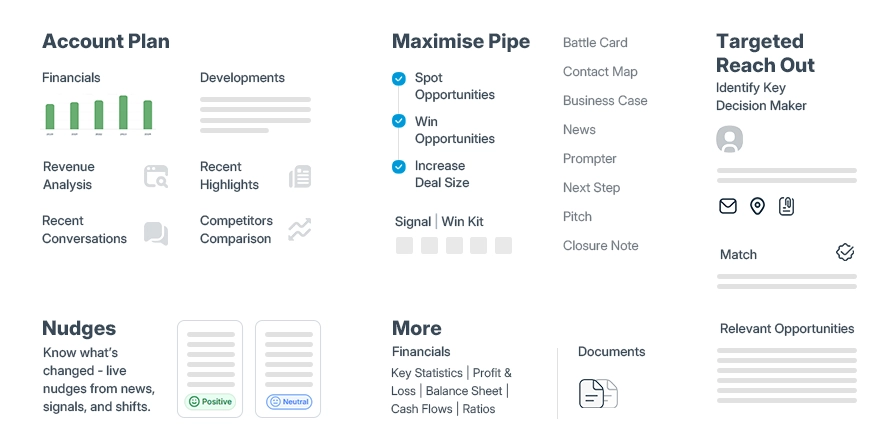
The CRM landscape has undergone a remarkable shift in 2025, with artificial intelligence no longer an optional add-on but a core requirement for businesses seeking competitive advantage. Integration between sales intelligence and CRM systems has become increasingly sophisticated, creating an ecosystem where data flows seamlessly between platforms to empower sales teams.
According to recent industry data, 65% of businesses have already adopted CRM systems with generative AI capabilities, with projections showing over 70% of all platforms will include AI integration by the end of 2025. This rapid adoption signals a definitive market shift, positioning CRMs without robust AI capabilities as legacy technology.
The integration of AI has evolved from basic features to fundamental rethinking of how revenue teams interact with data. Currently, 81% of organizations are expected to use AI CRM systems, demonstrating the technology's essential role in modern sales operations. This trend aligns with broader industry expectations that over 90% of businesses will have invested in AI-powered CRM solutions by the end of 2025.
What makes this shift notable is the pace of adoption. In late 2024, Deloitte predicted that "25% of companies that use gen AI will launch agentic AI pilots or proofs of concept" with actual adoption into existing workflows expected throughout 2025. This prediction has materialized even faster than anticipated, primarily driven by the demonstrated ROI of sales intelligence integration.
The evolution toward unified platforms represents perhaps the most significant development in the 2025 CRM landscape. Traditional systems have transitioned from simple data repositories to intelligent platforms that automate tasks, provide deep customer insights, and enhance overall customer engagement.
These integrated systems connect various communication channels and data sources:
Calls, emails, messaging platforms, and meetings fully integrated into single workflows
CRM data connected with sales intelligence for contextual insights
AI-powered analysis across all customer touchpoints
Automated workflow optimization based on performance data
Indeed, the most successful platforms don't replace existing CRMs—they connect calls, emails, Slack, Salesforce, and pipeline data into one real-time engine. This approach eliminates the need for disruptive migrations while still delivering enhanced functionality.
Systems are rapidly shifting from passive databases to active assistants capable of suggesting next steps, prioritizing opportunities, and detecting risks before they arise. This transformation is essentially changing how businesses manage customer relationships, with intelligent systems consolidating data, automating tasks, and identifying opportunities without manual intervention.
Specifically, AI-driven chatbots, predictive analytics, and personalized recommendations are now standard features, enabling businesses to streamline operations and enhance customer experiences. Similarly, large enterprises are specifically seeking CRM software incorporating artificial intelligence and analytics to increase workforce efficiency and reduce manual work through automation.
The connection between CRM systems and Sales Intelligence tools isn't just a technical matter—it directly impacts business outcomes. Research shows organizations implementing integrated CRM and Business Intelligence solutions typically report 15-25% increases in sales productivity and 10-15% higher conversion rates compared to using standalone systems. These numbers reflect real business advantages that occur when data flows seamlessly between platforms.
Effective CRM integration significantly enhances lead quality by consolidating customer data into a single, accessible platform. This unified data repository allows sales teams to track customer interactions, preferences, and purchase history more effectively. With comprehensive customer information at their fingertips, sales representatives can:
Identify high-potential leads with greater accuracy
Tailor their approaches to specific customer needs
Boost sales through personalized engagement strategies
Focus on high-value activities rather than administrative tasks
Furthermore, integrated CRM systems enhance sales efficiency by providing immediate access to customer information. This real-time availability enables more informed and personalized sales pitches, consequently increasing the likelihood of closing deals. Even more importantly, automated lead scoring helps prioritize prospects, ensuring sales efforts are directed toward the most promising opportunities.
AI-powered analytics offer sales leaders deep insights into activities, interactions, and market trends, giving them a clear picture of what's working and what isn't. This visibility allows for better resource allocation and improved win rates. In fact, studies indicate that organizations leveraging AI have reported a notable 10-20% increase in sales ROI and a 13-15% increase in revenue.
A startling discovery from HubSpot's 2024 report reveals that the average salesperson spends less than two hours a day actually selling. The remainder of their time is consumed by administrative tasks, emails, and prospecting. Certainly, this represents a significant opportunity cost for businesses.
AI plays a critical role in addressing this inefficiency by automating repetitive sales tasks. For instance, CRM automation tools help store and update customer data in real-time, track interactions, and automate regular tasks—giving sales representatives back more than 500 hours per year. This automation ensures that no detail is overlooked, simultaneously allowing sales professionals to concentrate on activities like negotiating deals and building trust with clients.
Through AI-powered tools, sales representatives receive real-time recommendations and vital information during calls, leading to improved engagement and efficiency. Sales intelligence delivers actionable insights faster than humans can, analyzing call recordings, emails, and CRM data to equip representatives with the information they need to make data-driven decisions immediately.
The results are clear: shorter sales cycles naturally optimize how time, money, and effort are spent. By reducing the time needed for each sale, salespeople can close more deals within the same timeframe—a classic example of getting more from existing resources.
Perhaps the most valuable aspect of CRM-Sales Intelligence integration is the shift from reactive to proactive sales methodologies. Predictive modeling can identify which prospects are most likely to convert, which existing customers may be at risk of churning, and which accounts have the highest potential for expansion.
This progression from descriptive to predictive and prescriptive analytics represents a quantum leap in sales capability. Organizations using data-driven strategies report substantial improvements:
20-30% better forecast accuracy
15-25% increase in EBITDA
Above-market growth rates and higher customer retention
74% of sales professionals expect AI to redefine their roles
Research from McKinsey Global Institute shows that data-driven organizations are 23 times more likely to acquire customers and 19 times more likely to be profitable. Additionally, AI has led to an increase in lead conversion rates of over 10% for many organizations.
The integration creates a continuous improvement loop where each customer interaction generates data that enhances future analysis, which then improves subsequent customer interactions. Organizations that successfully implement this integration often find themselves pulling ahead of competitors who still rely on intuition or basic reporting.
Ultimately, the business impact of disconnected systems is substantial. When CRM and sales intelligence tools operate separately, sales leaders lack a unified view of customer interactions, making it challenging to make data-driven decisions. Conversely, proper integration unlocks the full potential of both systems, creating a strategic advantage in today's competitive marketplace.
STOP CHASING PROSPECTS
START CLOSING DEALS!!
Effective data synchronization forms the foundation of any successful CRM and Sales Intelligence integration. Organizations must carefully select synchronization methods that align with their business needs, data volumes, and operational requirements.
The choice between real-time and batch synchronization fundamentally shapes how your sales data flows between systems. Real-time synchronization creates an immediate, continuous data flow between systems, propagating changes within seconds or even milliseconds. Batch synchronization, on the other hand, accumulates changes over a period and processes them during predefined windows.
These approaches differ substantially in their performance characteristics:
Latency: Real-time sync delivers updates in sub-seconds to seconds, whereas batch processing takes minutes to hours
Throughput: Real-time handles smaller, continuous data volumes, while batch excels with large volumes in single operations
Resource Usage: Real-time creates consistent resource utilization with smaller spikes, whereas batch processing generates periodic resource spikes during processing windows
The decision between these methods should reflect business priorities. Real-time synchronization provides substantial value in scenarios where customers interact directly with multiple systems or channels. Alternatively, batch processing makes sense for high-volume data with lower urgency or when system performance considerations exist.
Many organizations find value in hybrid approaches—implementing real-time synchronization for mission-critical data alongside batch processing for less time-sensitive information. For instance, customer purchases, support tickets, and sales opportunities might warrant real-time sync, whereas marketing campaign results and historical data enrichment could use batch processing.
AI-powered routing represents the next evolution in data synchronization, using machine learning, behavioral analytics, and real-time context to match each customer interaction to the ideal agent, channel, or resolution path. This approach optimizes outcomes like first contact resolution and customer satisfaction without requiring manual intervention.
The AI routing engine makes decisions based on multiple factors:
Customer attributes and intent
Agent behavior, skills, and historical performance
Channel availability and cost efficiency
Sentiment and urgency detection
What makes this approach powerful is how it continuously learns from outcomes, updating routing models to improve over time. Every routing decision receives a score that feeds back into the model, retraining the algorithm to optimize future matches—all while maintaining response times under 200ms latency.
For sales teams, this means connecting the right leads with the right representatives based on territory, product expertise, historical performance with similar accounts, and available capacity. Furthermore, it enables real-time prioritization, routing leads immediately when they cross a threshold and escalating if not engaged within target SLA timeframes.
Data silos represent isolated repositories of data that are disconnected from or inaccessible by other parts of the enterprise. These silos typically emerge organically as different departments develop their own systems and databases—usually without communicating with each other to ensure data accessibility across the organization.
The negative impacts of data silos extend throughout business operations:
Duplicate data: When information is siloed, the same data often gets stored in multiple places
Inefficient processes: Analysts might need to extract, load, and transfer data between databases, wasting time and increasing error risk
Incomplete customer views: Fragmented data across systems makes it difficult to build comprehensive customer profiles
Breaking down data silos requires implementing standardized data management practices across the organization, including consistent data formats and governance policies. Primarily, organizations should focus on having data communicate with every system through proper integration, subsequently maintaining accuracy, consistency, and reliability.
Data governance forms the backbone of this strategy by putting data policies and standards into action, creating an enterprise-wide understanding of data management practices. Together with technologies like Customer Data Platforms, businesses can create a single source of truth that processes and activates data the moment it's entered.
Efficiency in sales operations hinges on how well your team interacts with CRM and sales intelligence systems. When these tools enhance rather than complicate workflows, sales productivity soars.
Automated follow-up systems ensure consistent communication with prospects throughout their buying journey. Research shows that 80% of sales require at least five follow-up calls after the initial meeting to be effective. Yet manually tracking these interactions becomes nearly impossible as lead volume grows.
AI-powered automation addresses this challenge by creating personalized follow-up sequences based on prospect actions. These systems can:
Send timely emails after consultation calls or form submissions
Schedule follow-up SMS messages (which have a 90% read rate within three minutes)
Create task reminders for sales representatives before opportunities go cold
Adjust follow-up timing based on engagement patterns
This automation eliminates what was previously a time-consuming process. When a new lead enters your system, AI can immediately categorize and tag them, then initiate appropriate follow-up sequences without manual intervention.
Custom dashboards transform how sales teams interact with data, presenting critical metrics in visual formats that enable quick decision-making. Dashboards automatically organize and display information in clear, useful ways—updating in real-time so everyone sees the latest figures.
Role-based dashboards provide significant advantages by eliminating distractions and ensuring each team member focuses on metrics relevant to their success. For instance:
Sales representatives might see their pipeline progression and activity metrics, whereas managers need broader team performance visibility and forecasting data. This customization helps prioritize leads most likely to convert and highlights accounts requiring immediate attention.
Properly configured dashboards also foster healthy competition. Displaying representative performance for the entire sales team encourages them to push for the top of the leaderboard, naturally improving overall results.
Make Every Rep Speak
Like Your Top 1%
Sales teams typically lose up to three hours weekly on manual data entry—time that could be spent selling. This administrative burden leads to delayed follow-ups and incomplete customer records that ultimately impact conversion rates.
Voice-to-CRM technology markedly improves this situation. Field representatives can simply record voice notes during or after meetings, allowing AI to structure and enter this information directly into the CRM. This approach yields immediate benefits:
Field teams save approximately five hours weekly by eliminating manual logging. Additionally, real-time voice capture increases data accuracy by reducing information gaps that typically occur when representatives wait hours or days to update records.
AI-powered systems also detect patterns in customer interactions and automatically log relevant data, minimizing human error while maintaining data quality. In one case study, a real estate agency increased their interaction logging from 60% to 98% after implementing automated logging via AI, subsequently experiencing a 27% increase in deal closure rates within three months.
Throughout these efficiency improvements, the goal remains consistent: shifting sales professionals' time from administrative tasks to what truly matters—building relationships and closing deals.
As Sales Intelligence platforms access increasingly sensitive customer data, security and compliance considerations become paramount for any integration strategy. Securing customer information while maintaining seamless data flow requires specific protocols that balance protection with accessibility.
Role-based access control (RBAC) establishes security boundaries by restricting data access based on users' job functions. This approach ensures team members access only what they need for their specific responsibilities. RBAC offers multiple security advantages:
Reduced breach impact by confining potential attackers to limited data segments
Enhanced compliance with regulatory requirements through clear permission boundaries
Streamlined user management by assigning permissions to roles rather than individuals
The principle of least privilege forms the foundation of effective RBAC implementation, granting users only the access necessary to perform their jobs. For Sales Intelligence integrations, this might mean sales representatives can view prospect information but cannot access financial records or administrative tools.
Alongside RBAC, encryption serves as a critical defense layer. Implementing Advanced Encryption Standards (AES) for data at rest in databases and SSL/TLS protocols for data in transit ensures information remains protected throughout its lifecycle. Given that, encryption transforms data into unreadable code, guaranteeing that even if unauthorized access occurs, the compromised information remains unusable.
Modern CRM platforms must adhere to major privacy regulations like GDPR and CCPA, which enforce strict data protection standards. The CCPA applies to businesses with annual revenue exceeding $25 million, those handling personal information of 100,000+ California consumers, or deriving 50%+ of revenue from selling consumer data.
Proper implementation of consent management capabilities within integrated systems allows tracking when, how, and for what purposes data subjects provided permission. Furthermore, privacy-by-design principles should be embedded into system architecture rather than added afterward.
Comprehensive audit logging creates accountability by recording who accessed what data and when, providing crucial evidence during security investigations. Henceforth, these detailed records can reduce response and audit times by up to 40%.
Continuous monitoring helps identify unauthorized access patterns or unusual activities that might indicate security breaches. Inasmuch as integrated systems handle sensitive data, implementing real-time monitoring with automated alerts for suspicious behavior becomes essential.
Two-factor authentication provides an additional security layer beyond passwords, requiring a second verification form—typically a temporary code sent to a mobile device—making unauthorized access significantly more difficult.
In 2025, several innovative platforms stand out for their exceptional integration of Sales Intelligence with CRM capabilities. These tools exemplify how AI is now central to sales success rather than just an add-on feature.
SuperAGI's AI-Native CRM functions as a complete system of record for all sales activities, tracking actions by both sales representatives and AI agents. Currently, this platform combines full-stack AI agents with enterprise-grade functionality for managing every aspect of sales operations. The system automatically enriches leads and contacts with verified data like emails and phone numbers, ensuring data accuracy without manual intervention. According to a report by Gartner, 75% of organizations are expected to implement AI-powered CRM systems like SuperAGI by 2025.
Your SDRs work 9–5
AI Sales works 24/7!!
Salesforce Einstein transforms traditional sales forecasting with its data-driven approach. By examining historical trends, seasonality, and market variables, Einstein provides real-time insights into future sales outcomes. Notably, businesses using Einstein report up to 50% reduced support costs and improved customer satisfaction scores.
HubSpot's ChatSpot represents a major advancement in conversational CRM interfaces. Launched by HubSpot co-founder Dharmesh Shah, this tool builds ChatGPT-like functionality directly into the HubSpot CRM. Users can simply ask questions of their HubSpot portal through a natural language interface—for instance, requesting a report of companies added last quarter summarized by country. ChatSpot utilizes ChatGPT-4 Natural Language Processing to communicate with users in their own language.
Zoho's Zia serves as an integrated AI assistant that allows users to chat or speak for instant CRM updates. Fundamentally, Zia analyzes database information to check data accuracy for contacts and deals, suggesting updates when it finds discrepancies. The system can even recognize when customers mention competitors in communications and analyze their sentiment about those mentions.
Pipedrive's AI Sales Assistant focuses primarily on pipeline optimization. The system tracks deal health with color-coded indicators and flags stagnant opportunities that might otherwise go unnoticed. Following each call or email, it can create follow-up tasks with recommended dates and even propose initial lines for email responses based on previous discussions.
The evolution toward autonomous sales workflows represents the next frontier in Sales Intelligence. Recent McKinsey research shows companies will soon have sales teams comprised of both human and AI sellers collaborating effectively.
Currently, sales professionals spend only 28% of their time actually selling, with the remainder consumed by administrative tasks. AI agents address this inefficiency by autonomously managing:
Lead qualification and outreach
Meeting scheduling and follow-ups
Data entry and CRM updates
These AI-driven systems save representatives approximately five hours weekly, allowing them to focus on relationship-building rather than paperwork.
In light of these changes, sales roles are transitioning from transaction-focused to outcome-oriented. Initially, AI handles routine prospecting and qualification, freeing humans to concentrate on complex, solution-based deals. For instance, field teams using voice-to-CRM technology report five additional selling hours weekly.
Preparing teams for this transition requires strategic training approaches. Organizations should primarily:
Focus on AI collaboration skills—teaching representatives to work alongside AI tools effectively Update performance metrics to measure AI-assisted engagement rather than traditional activities Implement role-playing with AI systems to accelerate skill development
Yet the goal isn't replacement but enhancement—creating what one expert calls "an AI-augmented GTM team" that scales output without adding headcount.
Throughout this article, we've explored how Sales Intelligence integration with CRM systems is reshaping sales operations in 2025. The emergence of AI as a core component rather than an optional feature marks a significant shift in how teams approach customer relationships. Indeed, the 70% adoption rate of AI features in CRM platforms demonstrates this technology has moved from innovative to essential.
Sales teams that successfully integrate these systems gain clear advantages. First, they experience 15-25% increases in productivity through AI-driven lead scoring and prioritization. Second, their sales cycles shorten significantly due to real-time insights that eliminate guesswork. Third, data-driven decisions lead to measurable ROI improvements, with organizations reporting 20-30% better forecast accuracy.
Data synchronization sits at the heart of effective integration. The choice between real-time syncing and batch processing depends on your specific business needs, though many organizations benefit from a hybrid approach. AI-powered intelligent routing takes this a step further, ensuring information reaches the right people at the right time.
User experience remains paramount for adoption success. Automated follow-ups, personalized dashboards, and reduced manual data entry collectively save sales representatives approximately five hours weekly—time better spent on building relationships and closing deals.
Security considerations cannot be overlooked when implementing these integrated systems. Role-based access control, strong encryption practices, and compliance with regulations like GDPR and CCPA form the foundation of a secure integration strategy.
As we look toward the future, autonomous sales workflows represent the next evolution. AI agents handling routine tasks will continue to shift sales roles toward strategic engagement, requiring teams to develop new skills for an AI-augmented environment.
The integration of Sales Intelligence with CRM systems isn't merely about adopting new technology—it fundamentally transforms how sales teams operate. Companies that embrace this integration now will undoubtedly gain competitive advantages as AI continues to reshape the sales landscape. The question is no longer whether to integrate these systems but how quickly and effectively you can implement them to stay ahead in 2025 and beyond.
AI integration enhances CRM functionality by enabling AI-driven lead scoring, predictive analytics for sales forecasting, and customer behavior tracking across multiple channels. This allows for more accurate lead prioritization, better sales predictions, and a more comprehensive view of customer interactions.
Integrating Sales Intelligence with CRM systems leads to increased sales productivity, higher win rates, shorter sales cycles, and improved ROI. Organizations implementing such integrated solutions typically report 15-25% increases in sales productivity and 10-15% higher conversion rates compared to using standalone systems.
To ensure data security, businesses should implement role-based access control, use strong encryption for data at rest and in transit, comply with regulations like GDPR and CCPA, and maintain comprehensive audit trails and monitoring for data access. These measures help protect sensitive customer information while maintaining seamless data flow.
Some top CRM-Sales Intelligence integration tools in 2025 include SuperAGI (an AI-Native CRM with AI agents), Salesforce Einstein (for data-driven sales forecasting), HubSpot ChatSpot (offering conversational CRM interfaces), Zoho Zia (an integrated AI assistant), and Pipedrive AI Sales Assistant (focusing on pipeline optimization).
As AI takes over routine tasks like lead qualification and data entry, sales roles are shifting towards more strategic engagement. Sales professionals are spending less time on administrative work and more on complex, solution-based deals. This transition requires new skills in AI collaboration and a focus on outcome-oriented performance metrics.

Category: Uncategorized Tags: ai, AIOps, Artificial Intelligence, cloud, cloud platform, Cybersecurity, Information and Communications Technology , VR