Most nurture campaigns fail because they operate in isolation from business reality. Marketing automation platforms send predetermined sequences while accounts experience budget cuts, leadership changes, and strategic pivots that render generic messaging irrelevant. Sales teams manually research accounts hours before calls, scrambling to understand context that has been available for weeks. The disconnect between what sellers know and when they act creates a systematic gap—opportunities missed, relationships stalled, pipeline stagnant. Revenue intelligence changes the operating model entirely. Instead of nurturing based on calendar triggers, modern platforms watch what is changing inside target accounts and connect business movements to the people who matter. Signals replace guesswork. Context replaces assumptions. The result is nurture execution that responds to actual business conditions rather than arbitrary intervals. When sellers engage contacts based on what just happened inside their organization, conversations shift from interruption to insight. This is not incremental improvement to existing workflows. This is a fundamental restructuring of how enterprise teams identify where to act, who to engage, and what to say—systematically, at scale, without losing the precision that only deep account intelligence provides.
The Fragmentation Problem in Traditional Lead Nurturing
Enterprise sales teams operate in a state of perpetual fragmentation. CRM systems hold contact records and opportunity stages but lack the business context that makes those records meaningful. Marketing automation platforms execute sequences based on form fills and email opens, oblivious to whether the account just announced layoffs or secured Series C funding. Data enrichment tools provide firmographic details that were accurate six months ago. Account planning documents live in static slides that no one updates.
The operational reality looks like this: A seller receives a lead from marketing. The lead entered through a content download three weeks ago and has been in a nurture sequence ever since. Before reaching out, the seller needs to understand the account. They check Salesforce for past interactions. They search LinkedIn for organizational changes. They scan news sources for recent developments. They review the company's investor relations page. They ask colleagues if anyone knows the account. Thirty minutes later, they have fragmented intelligence from six different sources, none of which connect to each other.
This research burden compounds across every deal. A rep managing 40 accounts cannot maintain current intelligence on all of them simultaneously. So they prioritize the deals closest to close and let earlier-stage opportunities drift. Nurture campaigns continue running in the background, sending messages that may or may not align with current account conditions. Response rates remain low because the outreach feels automated rather than aware.
73% of enterprise sellers
report spending more time on research and administrative tasks than actual selling activities, according to Salesforce research on sales productivity barriers.
The fragmentation creates three failure modes. First, timing becomes random. Sellers engage when their sequence dictates, not when the account shows readiness. Second, messaging lacks context. Generic pain points replace references to actual business movements. Third, contact selection operates on incomplete information. Sellers guess which stakeholders matter rather than knowing who owns relevant initiatives.
Traditional nurture assumes a linear buyer journey that no longer exists. Enterprise purchases involve cross-functional buying committees, extended evaluation cycles, and shifting priorities. A contact who seemed engaged in March may have changed roles in April. A division that was evaluating your category may have been sold off in May. Budget that was allocated in Q2 may have been frozen in Q3. None of this surfaces in standard nurture workflows because those workflows do not watch accounts—they watch email engagement metrics.
What Account Signals Actually Reveal
Signals represent observable business movements that create selling opportunities. Not all information qualifies as a signal. A company's founding date is data. The appointment of a new Chief Revenue Officer is a signal. The distinction matters because signals indicate change, and change creates windows for engagement.
Revenue intelligence platforms like SalesPlay: AI Sales and Revenue Intelligence Co-pilot continuously monitor multiple signal categories across target accounts. Financial signals include earnings reports, revenue guidance changes, funding announcements, and margin pressure indicators. Organizational signals cover executive appointments, departmental restructuring, headcount expansion or contraction, and acquisition activity. Strategic signals encompass market expansion plans, product launches, partnership announcements, and technology investments. Operational signals track facility openings, regulatory filings, supply chain changes, and infrastructure modernization projects.
The intelligence value comes from signal interpretation, not signal detection. Many platforms surface news mentions. Few connect those mentions to buying centers, opportunity relevance, and recommended next actions. When an account announces a new data privacy initiative, that signal matters differently depending on what you sell. If you provide cybersecurity solutions, it likely indicates budget allocation and executive sponsorship. If you sell HR software, it may be irrelevant. Context determines actionability.
Signal Velocity and Nurture Prioritization
Not all signals carry equal urgency. Some create immediate engagement windows that close quickly. Others indicate longer-term strategic shifts that unfold over quarters. Effective nurturing requires understanding signal velocity—how fast the opportunity window opens and closes.
High-velocity signals demand rapid response. An executive departure, a major customer loss, or a significant technology failure creates urgency that decays within days. If your solution addresses the problem that signal revealed, waiting two weeks to engage means the account has already begun evaluating alternatives. Nurture sequences designed for gradual awareness-building cannot accommodate this speed requirement.
Medium-velocity signals indicate initiatives that will unfold over months. A company announcing geographic expansion, a strategic partnership, or a new product line creates opportunities that mature across quarters. These signals justify sustained nurture campaigns that layer value over time, but the initial engagement must reference the signal to establish relevance. Generic outreach that ignores the expansion announcement feels disconnected from the account's current reality.
Low-velocity signals represent structural changes that reshape how an account operates over years. Industry consolidation, regulatory transformation, or fundamental business model shifts create long-term contexts for engagement. These signals do not demand immediate action but should inform messaging strategy across all touchpoints. Understanding these slow-moving forces allows sellers to position solutions within the account's longer strategic arc rather than reacting only to tactical needs.
Operational Application
A software company selling revenue operations platforms identified that when target accounts hired a new Chief Revenue Officer, there was typically a 90-120 day window before that executive finalized their technology stack strategy. By triggering nurture sequences immediately upon detecting the appointment signal, they could establish relationships and provide value during the strategy formation period rather than responding to RFPs after decisions had already been made. This signal-triggered approach increased meeting conversion rates by 340% compared to calendar-based sequences.
Contact Context: Beyond Demographic Segmentation
Contact context means understanding what a person cares about based on their functional role, departmental objectives, career trajectory, and current business pressures. This goes far beyond job title segmentation. Two people with identical titles may operate under completely different constraints depending on their organization's maturity, market position, and strategic priorities.
A CFO at a pre-IPO technology company faces different pressures than a CFO at a mature manufacturing firm. The former prioritizes growth metrics, unit economics, and investor storytelling. The latter focuses on cost optimization, working capital management, and shareholder returns. Nurture campaigns that treat all CFOs as a monolithic segment miss this contextual variation. Effective messaging aligns with the individual's specific operating environment, not just their functional archetype.
Context accumulates across multiple dimensions. Role context includes functional responsibilities and decision authority. Organizational context covers company size, growth stage, ownership structure, and competitive positioning. Temporal context reflects where the person sits in budget cycles, planning windows, and contract renewal timelines. Relational context maps reporting structures, cross-functional dependencies, and external advisor networks. Combined, these dimensions create a multifaceted understanding of what matters to each contact.
Buying Center Dynamics and Nurture Orchestration
Enterprise purchases rarely involve single decision-makers. Buying centers include economic buyers who control budget, technical evaluators who assess capabilities, end users who will adopt the solution, and coaches who provide internal guidance. Each participant evaluates different criteria and responds to different messaging.
Effective nurture orchestration means engaging multiple buying center participants with contextually appropriate content, without creating internal confusion or coordination failure. This requires understanding not just who is involved but how they influence each other. An enthusiastic end user may have limited budget authority. A skeptical technical evaluator may have veto power. A supportive coach may lack executive sponsorship.
Revenue intelligence platforms map buying center relationships by analyzing organizational hierarchies, project involvement, and communication patterns. When sellers understand that the VP of Sales reports to the Chief Revenue Officer who is being advised by a specific consulting firm, they can craft nurture strategies that align with how the organization actually makes decisions rather than how org charts suggest they should.
Multi-thread nurturing becomes systematic rather than ad hoc. Instead of one seller manually trying to remember which executive to cc on which email, the platform maintains buying center context and suggests appropriate engagement sequences for each participant. The CFO receives ROI modeling and risk mitigation frameworks. The VP of Operations gets implementation timelines and change management resources. The Director of IT sees technical architecture and integration requirements. All messaging connects to the same underlying opportunity but addresses what each person actually needs to see.
How Revenue Intelligence Platforms Transform Nurture Execution
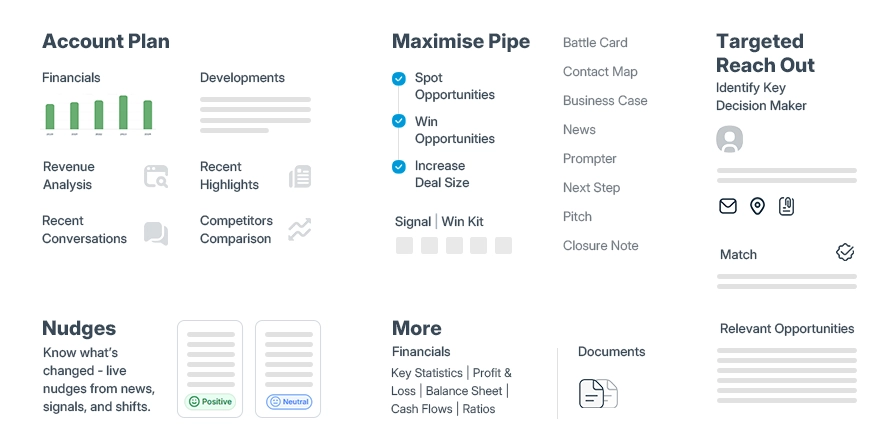
Revenue intelligence platforms restructure nurture workflows around continuous account monitoring rather than static contact lists. Instead of importing leads into sequences and hoping for the best, these systems watch what is changing inside target accounts and trigger engagement when signals indicate opportunity.
The operational shift is substantial. Traditional marketing automation asks: "Who downloaded our white paper 30 days ago?" Revenue intelligence asks: "Which accounts in our target list just announced budget increases, hired relevant executives, or launched initiatives that align with our solution?" The first question optimizes email opens. The second question identifies actual selling opportunities.
When an account shows multiple converging signals—new leadership, budget allocation, strategic initiative, and organizational restructuring—the platform surfaces this confluence and suggests which contacts to engage, what opportunities to pursue, and how to position the conversation. Sellers do not discover this through manual research. The intelligence arrives as part of their daily workflow, integrated into how they already work.
From Generic Sequences to Signal-Responsive Campaigns
Generic nurture sequences send predetermined messages on predetermined schedules. Email one goes out on day zero. Email two goes out on day seven. Email three goes out on day fourteen. This approach assumes all recipients are equally ready for engagement and face similar business conditions. Neither assumption holds in enterprise sales.
Signal-responsive campaigns operate differently. The platform watches target accounts and contacts continuously. When a signal appears that creates selling opportunity, it triggers contextually appropriate outreach. If an account announces a strategic initiative that aligns with your solution, contacts associated with that initiative receive messaging that references the announcement, explains relevant implications, and offers specific insights. If no signals appear, no outreach occurs. This eliminates the noise of calendar-based sequences that engage accounts regardless of readiness.
The messaging itself changes. Instead of talking about generic pain points, signal-responsive nurturing references actual business movements. "I noticed your company just announced expansion into Southeast Asian markets" creates immediate relevance that "Many companies in your industry struggle with market expansion" cannot match. The first statement proves you are paying attention to their specific situation. The second proves you are sending mass outreach.
68% higher response rates
Companies using account signal intelligence in their nurture campaigns see response rates 68% higher than generic sequence-based approaches, according to TOPO research on account-based engagement effectiveness.
Continuous Context vs. Point-in-Time Research
Traditional account research happens at discrete moments. A seller researches an account before a call. They update their understanding before a proposal. They scramble for intelligence before a negotiation. Between these moments, the account may experience significant changes that go unnoticed until the next research cycle.
Revenue intelligence platforms maintain continuous context. They watch accounts every day, tracking changes as they happen rather than when sellers remember to look. A CFO departure, a partnership announcement, or a regulatory filing becomes known to the sales team within hours, not weeks. This temporal advantage matters because early awareness creates engagement opportunities that late awareness cannot capture.
The accumulation of context over time builds institutional knowledge that survives individual seller transitions. When a rep leaves and a new seller inherits their accounts, traditional CRM systems provide contact lists and opportunity histories but lack the business intelligence that made those opportunities actionable. Revenue intelligence platforms carry forward the complete account context—all signals, all buying center mapping, all strategic initiatives—so new sellers can operate with full intelligence from day one rather than starting research from scratch.
Operationalizing Signal-Based Nurturing at Scale
Moving from concept to execution requires systematic workflows that sales teams can actually follow. The best intelligence means nothing if it lives in dashboards that sellers ignore. Operationalization means embedding signal-based nurturing into existing sales motions so using it becomes easier than not using it.
Start by defining which signals matter for your specific business. Not all signals carry equal relevance. A company selling financial compliance software cares deeply about regulatory changes, audit failures, and CFO appointments. They care less about product launches or marketing leadership changes. Signal prioritization should reflect your solution's value proposition and the buying centers you target. Attempting to track every possible signal creates noise rather than intelligence.
Next, establish signal-to-action mapping. When signal X appears, what should sellers do? This eliminates decision paralysis. If the signal is "new CTO appointed," the action might be "engage with technical buying center, emphasize integration capabilities, reference technology modernization initiatives." If the signal is "quarterly earnings miss," the action might be "delay outreach for 30 days, avoid budget-heavy positioning, emphasize efficiency gains when re-engaging." These mappings transform signals from interesting information into executable guidance.
Automated Nurture Campaigns with Contextual Awareness
Automation and personalization are not opposing forces when the underlying intelligence is sufficient. Platforms like SalesPlay enable automated nurture campaigns that incorporate real-time account signals and contact context without requiring manual customization for every message.
Here is how this works in practice. A seller selects target accounts and defines opportunity types they want to pursue. The platform monitors those accounts for relevant signals. When a signal appears, it automatically generates personalized outreach that references the specific business movement, explains why it matters, and suggests relevant next conversations. The seller reviews and approves the messaging but does not write it from scratch. The automation handles scale. The intelligence ensures relevance.
This approach solves the personalization paradox. Traditional automation achieves scale by sacrificing personalization—everyone gets the same message. Manual personalization achieves relevance by sacrificing scale—sellers can only customize messages for their highest-priority accounts. Signal-based automation with contextual intelligence achieves both. Every message references account-specific realities and contact-specific priorities, but the generation happens systematically across the entire target account list.
The campaigns adapt as accounts evolve. If an account shows new signals mid-sequence, the platform adjusts subsequent messaging to incorporate the updated context. If a contact changes roles, their nurture track shifts to reflect new functional priorities. This dynamic adjustment means campaigns remain relevant even as business conditions change, something static sequences cannot accomplish.
Implementation Example
An enterprise software company implemented signal-based nurturing across 500 target accounts. They defined 12 primary signals that indicated buying opportunity and created response templates for each signal type. When accounts showed signals, the platform automatically drafted personalized outreach incorporating signal details, account context, and contact priorities. Sellers reviewed and sent messages rather than writing them from scratch. Over six months, this approach generated 340 qualified meetings from accounts that had been unresponsive to traditional nurture sequences. The time investment per meeting dropped from 4.5 hours to 35 minutes.
Measuring Nurture Effectiveness Beyond Open Rates
Email open rates and click-through rates measure attention, not outcome. A contact can open every email and never take a meeting. Another contact may ignore nine messages and respond to the tenth because it referenced a signal that created immediate relevance. Traditional metrics optimize for engagement theater rather than pipeline creation.
Revenue intelligence platforms shift measurement toward business outcomes. The primary metric is not how many people opened emails but how many qualified opportunities entered the pipeline from nurture campaigns. Secondary metrics include meeting conversion rate, average deal size from nurtured accounts, and time from first touch to closed-won. These metrics connect nurture execution to revenue rather than treating marketing engagement as an end unto itself.
Signal attribution reveals which signals correlate with successful deals. If accounts that show executive appointment signals convert at 3x the rate of accounts that show only funding signals, that insight should reshape signal prioritization and response strategies. Over time, this attribution data builds a predictive model of which signals matter most for your specific business, allowing continuous refinement of nurture approaches based on actual outcomes rather than best-practice assumptions.
Contact-level analytics show which buying center participants respond to which message types. If technical evaluators consistently engage with implementation case studies while economic buyers ignore them but respond to ROI frameworks, messaging strategies should reflect these preferences. The goal is not uniform engagement across all contacts but appropriate engagement with each buying center participant based on their actual decision criteria.
Integration with Broader Revenue Workflows
Nurture campaigns do not exist in isolation. They connect to account planning, opportunity progression, deal execution, and post-sale expansion. Effective revenue intelligence platforms integrate nurture workflows with these broader motions so intelligence flows across the entire customer lifecycle.
When a nurtured contact takes a meeting, that conversation should inform account strategy. The platform captures meeting notes, identifies new buying center participants mentioned during the discussion, and surfaces additional signals relevant to topics the contact raised. This intelligence then shapes follow-up nurturing for other stakeholders, ensuring the entire buying center engagement strategy reflects current account reality rather than outdated assumptions.
As opportunities progress through pipeline stages, nurture campaigns adapt. An account in early discovery receives educational content that builds awareness and establishes thought leadership. The same account in technical evaluation receives implementation specifics and integration documentation. In contract negotiation, nurture shifts toward customer success stories and risk mitigation frameworks. The progression reflects where the account sits in their buying journey, not arbitrary sequence logic.
Post-sale, nurture continues but shifts focus toward expansion and retention. The platform watches for signals that indicate cross-sell or upsell opportunities—new departments, budget increases, competitive displacements, or strategic initiatives that align with additional products. This creates systematic expansion motion rather than relying on account managers to manually identify growth opportunities.
Transform How Your Team Nurtures Pipeline
See how revenue intelligence platforms watch your target accounts, detect relevant signals, and help you engage with precision rather than guessing.
Request a Demo
Common Implementation Pitfalls and How to Avoid Them
Most signal-based nurturing failures stem from three mistakes. First, tracking too many signals. Teams get excited about comprehensive monitoring and configure platforms to surface every possible data point. This creates signal overload where sellers cannot distinguish important developments from background noise. Start narrow. Focus on the five to seven signals that most clearly indicate buying opportunity for your specific solution. Expand signal coverage only after you have operationalized responses to core signals.
Second, treating signals as lead scores rather than engagement triggers. Some teams layer signal data into their existing lead scoring models, adding points when accounts show certain signals. This misses the point. Signals should trigger specific actions, not accumulate into abstract scores. When an account announces a new initiative, the response is not "increase their score by 10 points" but "engage the initiative owner with messaging about our relevant capabilities." Action orientation matters more than numerical ranking.
Third, automating without review. While automation enables scale, completely unsupervised messaging risks embarrassing errors when signals are misinterpreted or context is incomplete. Implement approval workflows where sellers review auto-generated outreach before it sends. This combines automation's efficiency with human judgment's quality control. Over time, as teams build confidence in platform accuracy, review requirements can ease, but early implementation benefits from human oversight.
The Competitive Advantage of Contextual Intelligence
When every competitor can buy the same contact lists and access the same marketing automation platforms, differentiation comes from intelligence rather than coverage. The seller who knows an account just reallocated budget toward digital transformation initiatives and can reference that realignment in their outreach wins against the seller sending generic "checking in" emails. The difference is not effort or intent—it is information asymmetry.
Revenue intelligence platforms create this asymmetry by doing continuously what competitors do manually and infrequently. While other sellers research accounts when they receive leads or before scheduled calls, teams using revenue intelligence maintain constant awareness. This temporal advantage compounds over time. Small information edges in early conversations become large positioning advantages by the time accounts reach vendor evaluation stages.
The strategic implication extends beyond individual deals. Organizations that embed contextual intelligence into their operating model can systematically outperform competitors with superior GTM execution but inferior intelligence infrastructure. This is not about having better salespeople—it is about equipping equivalent salespeople with substantially better information about where to focus, who to engage, and what to say.
Conclusion: From Nurture Theater to Revenue Motion
Lead nurturing has been trapped in an engagement paradigm that measures email opens rather than pipeline creation. This focus on vanity metrics over business outcomes has relegated nurturing to a marketing function disconnected from actual selling motion. Revenue intelligence fundamentally restructures this by grounding nurture execution in account reality rather than calendar triggers.
The transformation is operational, not incremental. Teams shift from sending predetermined sequences to all contacts toward engaging specific accounts when signals indicate opportunity. They move from generic messaging toward contextually aware outreach that references actual business movements. They transition from guessing which contacts matter toward systematically mapping buying centers and engaging participants based on their functional priorities.
This approach requires infrastructure that traditional marketing automation cannot provide. CRM systems lack continuous account monitoring. Data enrichment tools provide static firmographics, not dynamic signals. Point solutions address individual workflow steps but do not connect intelligence across the entire revenue lifecycle. Revenue intelligence platforms like SalesPlay solve this by consolidating account monitoring, signal detection, contact context, and nurture execution into unified workflows that sellers can actually use without heroic effort.
The companies that will dominate enterprise sales over the next decade will not be those with the largest sales teams or the biggest marketing budgets. They will be the organizations that systematically know more about their target accounts than competitors do and act on that knowledge faster and more precisely. Signal-based nurturing is not a tactic. It is the operational foundation for this intelligence-driven revenue motion.
For sales leaders evaluating how to improve nurture effectiveness, the question is not whether to adopt signal-based approaches but how quickly you can implement them before competitors gain irreversible intelligence advantages. The accounts you want to win are already experiencing the signals that indicate buying opportunity. The only question is whether you will see those signals in time to act on them or learn about them from competitors who did.
Frequently Asked Questions
What is the difference between traditional lead nurturing and signal-based nurturing?
Traditional lead nurturing operates on predetermined sequences and calendar triggers, sending content based on time elapsed rather than business reality. Signal-based nurturing responds to actual business movements—financial announcements, organizational changes, budget cycles, and strategic initiatives. Instead of following a 30-day sequence regardless of context, signal-based approaches engage when accounts show genuine reasons for conversation. This creates relevance that generic cadences cannot match.
How do account signals improve nurture campaign effectiveness?
Account signals eliminate guesswork from timing and messaging. Rather than nurturing based on arbitrary intervals, signals indicate when accounts are actually experiencing change—budget allocation, leadership transitions, technology investments, or market expansion. These moments create natural engagement windows. When nurture campaigns reference real business movements rather than generic pain points, response rates and meeting conversion increase substantially because the outreach feels contextually aware rather than automated.
What types of account signals should trigger nurture engagement?
The most actionable signals fall into several categories: financial signals (earnings reports, funding rounds, budget announcements), organizational signals (executive appointments, restructuring, headcount changes), strategic signals (market expansion, product launches, partnership announcements), and operational signals (technology implementations, facility openings, regulatory filings). Not all signals carry equal weight. Effective nurturing prioritizes signals that directly connect to your solution's value proposition and the specific buying centers you target.
How does contact context change nurture personalization?
Contact context transforms personalization from superficial mail merge to genuine relevance. Instead of inserting a name and company, context-aware nurturing understands each contact's functional priorities, departmental pressures, and career trajectory. A CFO receives messaging tied to cost optimization and risk mitigation. A VP of Operations sees efficiency and scale. This functional alignment, combined with account-level signals, creates nurture sequences that speak to what each individual actually cares about in their current business environment.
Can automated nurture campaigns maintain genuine relevance at scale?
Automation and relevance are not mutually exclusive when the underlying intelligence is sufficient. Modern revenue intelligence platforms continuously monitor accounts and contacts, detecting signals and building context without manual research. This enables automated nurture campaigns that reference current business realities rather than static demographic data. The automation handles scale and consistency. The intelligence ensures each message reflects what is actually happening inside the account and what matters to the specific recipient.
Ready to Transform Your Nurture Approach?
Discover how SalesPlay helps enterprise sales teams watch target accounts, detect signals, and engage with precision. Stop guessing where to focus. Start selling with intelligence.
Schedule a consultation to see signal-based nurturing in action.