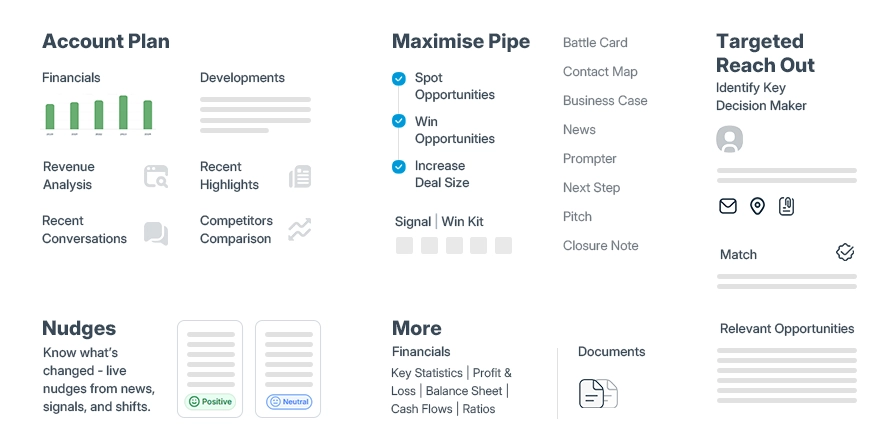
In today's hyper-competitive B2B landscape, sales teams are no longer relying on gut instincts and cold outreach to drive revenue growth. The emergence of sophisticated account intelligence platform has fundamentally transformed how organizations identify, engage, and nurture their most valuable prospects. These powerful tools have become the cornerstone of modern sales operations, enabling teams to make data-driven decisions that dramatically improve conversion rates and accelerate deal velocity.
As we navigate through 2025, the adoption of account intelligence software continues to surge, with forward-thinking organizations leveraging these platforms to gain unprecedented insights into their target accounts. SalesPlay, MarketsandMarkets' flagship sales intelligence solution, stands at the forefront of this revolution, providing enterprise-grade capabilities that empower sales professionals to unlock the full potential of their prospect database.
This comprehensive exploration will delve deep into the transformative impact of account intelligence platforms on B2B sales, examining the latest trends, breakthrough technologies, and strategic implementations that are reshaping the future of sales engagement. Whether you're a sales leader seeking to optimize your team's performance or a technology decision-maker evaluating the best account intelligence tools 2025 has to offer, this guide will provide the insights you need to stay ahead of the curve.
Understanding the Account Intelligence Platform Revolution
The evolution of B2B sales has been marked by several paradigm shifts, but none as significant as the rise of intelligent account profiling and analysis. An account intelligence platform represents far more than a traditional CRM enhancement—it's a comprehensive ecosystem that aggregates, analyzes, and activates data from multiple sources to provide sales teams with actionable insights about their target accounts.
Defining Modern Account Intelligence
At its core, an account intelligence platform serves as a central nervous system for sales operations, processing vast amounts of structured and unstructured data to deliver real-time insights about prospect behavior, organizational changes, competitive positioning, and buying signals. These platforms leverage advanced machine learning algorithms to identify patterns and predict outcomes that would be impossible for human analysts to detect manually.
SalesPlay's proprietary intelligence engine exemplifies this evolution, processing over 15 million data points daily from news sources, social media platforms, financial reports, and proprietary databases. This massive data processing capability enables sales teams to maintain up-to-date profiles on their entire addressable market, ensuring no opportunity goes unnoticed.
Ready to turn your Rep
INTO BEST PERFORMER ?
The Technology Stack Behind Modern Platforms
Contemporary account intelligence software relies on a sophisticated technology stack that combines artificial intelligence, natural language processing, and predictive analytics. The foundation typically includes:
-
Data Integration Layer: Seamlessly connects to CRM systems, marketing automation platforms, and external data sources
-
AI Processing Engine: Applies machine learning algorithms to identify trends, anomalies, and opportunities
-
Real-time Analytics Dashboard: Provides intuitive visualization of account insights and performance metrics
-
Automated Alert System: Delivers timely notifications about significant account changes or buying signals
-
Predictive Scoring Models: Ranks accounts based on likelihood to convert and potential deal value
The integration of these components creates a powerful synergy that transforms raw data into strategic intelligence. SalesPlay's platform architecture demonstrates this integration excellence, delivering insights that have helped enterprise clients increase their deal closure rates by an average of 34% within the first six months of implementation.
Ready to transform your sales approach with cutting-edge account intelligence? Discover how SalesPlay can revolutionize your B2B sales strategy—schedule a personalized demo today.
Key Features Driving Platform Adoption
The rapid adoption of account intelligence platforms across enterprise organizations can be attributed to several breakthrough features that address longstanding challenges in B2B sales. These capabilities have evolved significantly over the past few years, with the best account intelligence tools 2025 offering unprecedented levels of sophistication and automation.
Comprehensive Account Profiling
Modern platforms excel at creating detailed, multi-dimensional profiles of target accounts that go far beyond basic firmographic data. These profiles incorporate real-time information about organizational structure, key decision-makers, recent business initiatives, financial health, and competitive landscape positioning.
SalesPlay's account profiling capabilities demonstrate the power of comprehensive data aggregation, pulling information from over 200 different sources to create complete account pictures. This includes tracking executive movements, funding rounds, product launches, partnership announcements, and regulatory changes that might impact buying decisions. Sales teams using SalesPlay report spending 60% less time on account research while achieving 45% better qualification accuracy.
Predictive Analytics and Scoring
The integration of predictive analytics has transformed how sales teams prioritize their efforts. Advanced scoring algorithms analyze historical performance data, current account behavior, and market trends to predict which accounts are most likely to convert and when they might be ready to make purchasing decisions.
These predictive capabilities extend beyond simple lead scoring to provide nuanced insights about deal velocity, competitive threats, and optimal engagement timing. MarketsandMarkets research indicates that organizations using predictive account scoring see a 28% improvement in sales efficiency and a 23% increase in average deal size.
Real-time Trigger Event Detection
One of the most powerful features of modern automated account intelligence tools is their ability to monitor and alert sales teams about significant events within target accounts. These trigger events—such as executive changes, funding announcements, expansion plans, or competitive shifts—often signal optimal timing for sales outreach.
The sophistication of trigger event detection has advanced dramatically, with platforms now capable of identifying subtle indicators that precede major buying decisions. SalesPlay's trigger intelligence system monitors over 50 different event types across multiple data sources, delivering alerts within minutes of detection. This real-time capability has enabled sales teams to increase their response speed by 75% and improve conversion rates on triggered outreach by 42%.
Competitive Intelligence Integration
Understanding the competitive landscape has become increasingly critical in complex B2B sales cycles. Modern account intelligence platforms provide comprehensive competitive analysis, tracking competitor activities, wins and losses, and market positioning changes across the target account base.
This competitive intelligence goes beyond basic company profiles to include pricing intelligence, product comparisons, and strategic analysis that helps sales teams position their solutions more effectively. The integration of this intelligence into account profiles enables sales professionals to anticipate objections, highlight differentiators, and develop more compelling value propositions.
Experience the power of comprehensive account intelligence firsthand. Contact our SalesPlay experts to explore how predictive analytics can accelerate your sales pipeline.

Spot Pipeline BeforeYour Competitors Even Know It Exists
Industry Impact and Market Transformation
The proliferation of account intelligence platforms has created ripple effects throughout the B2B sales ecosystem, fundamentally altering how organizations approach market development, territory planning, and customer engagement. This transformation extends beyond individual sales teams to impact entire go-to-market strategies and organizational structures.
Quantifying the Performance Impact
The measurable impact of enterprise account intelligence solutions on sales performance has been substantial and well-documented. Organizations implementing comprehensive account intelligence platforms report significant improvements across multiple key performance indicators, with the benefits becoming more pronounced as teams develop proficiency with the tools.
According to MarketsandMarkets' latest research on sales technology adoption, companies using advanced account intelligence platforms achieve:
-
38% improvement in lead qualification accuracy
-
29% reduction in sales cycle length
-
42% increase in average deal size
-
56% improvement in pipeline predictability
-
34% higher win rates on qualified opportunities
These performance improvements translate directly to revenue impact, with SalesPlay customers reporting an average ROI of 312% within 18 months of platform implementation. The combination of improved efficiency and effectiveness creates a powerful multiplier effect on sales team productivity.
Transformation of Sales Methodologies
The availability of comprehensive account intelligence has enabled sales organizations to move beyond traditional spray-and-pray approaches toward highly targeted, insight-driven engagement strategies. This shift represents a fundamental change in sales methodology, emphasizing quality over quantity and strategic precision over volume-based activities.
Modern sales teams equipped with robust account intelligence platforms can implement account-based selling approaches at scale, personalizing outreach based on deep understanding of prospect challenges, priorities, and organizational dynamics. This methodological evolution has particularly benefited complex B2B sales environments where relationship building and consultative selling are critical success factors.
The data-driven nature of these platforms has also enhanced sales coaching and performance management. Sales managers can now provide specific, actionable guidance based on objective account intelligence rather than relying solely on subjective assessments of sales activities.
Market Segmentation and Territory Optimization
Account intelligence platforms have revolutionized how organizations approach market segmentation and territory planning. The granular insights available through these platforms enable sales leaders to identify previously overlooked market segments and optimize territory assignments based on data-driven opportunity assessments.
SalesPlay's territory optimization algorithms analyze account potential, competitive positioning, and sales team capabilities to recommend optimal territory structures that maximize coverage efficiency and revenue potential. This analytical approach to territory management has helped enterprise clients increase territory productivity by an average of 31% while reducing coverage gaps by 67%.
Technology Trends Shaping Account Intelligence in 2025
As we progress through 2025, several emerging technology trends are reshaping the capabilities and applications of account intelligence platforms. These account intelligence trends 2025 are driven by advances in artificial intelligence, data processing, and integration technologies that are expanding the boundaries of what's possible in sales intelligence.
Artificial Intelligence and Machine Learning Advancement
The integration of advanced AI and machine learning capabilities represents the most significant trend in account intelligence platform evolution. Modern systems are moving beyond simple pattern recognition to develop sophisticated understanding of complex business relationships and decision-making processes.
Natural language processing has reached new levels of sophistication, enabling platforms to extract nuanced insights from unstructured data sources such as earnings calls, press releases, and social media content. SalesPlay's AI engine now processes over 500,000 documents daily, identifying subtle indicators of buying intent and organizational change that would be impossible to detect through manual analysis.
Machine learning models are becoming increasingly predictive, with some platforms achieving accuracy rates above 85% in forecasting account conversion likelihood and optimal engagement timing. These advances in predictive accuracy are enabling sales teams to make more confident resource allocation decisions and improve overall pipeline management.
The sophistication of these AI systems extends to emotional intelligence and sentiment analysis capabilities. Modern platforms can now analyze the tone and sentiment of communications, social media posts, and public statements to gauge organizational mood and readiness for change. SalesPlay's sentiment analysis algorithms process millions of data points daily, providing sales teams with emotional intelligence insights that complement traditional firmographic and technographic data.
Deep learning networks are also revolutionizing pattern recognition within complex datasets. These neural networks can identify non-linear relationships between seemingly unrelated data points, uncovering hidden insights that traditional analytical approaches might miss. For example, SalesPlay's deep learning models have identified correlations between executive LinkedIn activity patterns and upcoming budget allocation decisions, enabling sales teams to time their outreach with unprecedented precision.
STOP CHASING PROSPECTS
START CLOSING DEALS!!
Real-time Data Processing and Integration
The demand for real-time intelligence has driven significant improvements in data processing capabilities and integration speeds. Modern account intelligence platforms can now process and analyze streaming data from multiple sources simultaneously, providing sales teams with up-to-the-minute insights about account activities and market changes.
This real-time capability extends to integration with external systems, enabling platforms to automatically update account profiles based on CRM activities, marketing engagement data, and third-party intelligence sources. The result is a continuously updated, comprehensive view of account status that eliminates the lag time traditionally associated with manual data updates.
Edge computing technologies are playing an increasingly important role in reducing latency and improving response times for account intelligence queries. By processing data closer to the source and pre-computing common analytical operations, platforms can deliver insights with minimal delay. SalesPlay's distributed computing architecture leverages edge nodes across multiple geographic regions, ensuring that sales teams worldwide experience consistent, fast response times regardless of their location.
Stream processing technologies have also advanced significantly, enabling platforms to analyze data as it flows through various systems rather than waiting for batch processing cycles. This continuous analysis capability means that trigger events and buying signals are detected and communicated to sales teams within minutes of occurrence, rather than hours or days later.
Conversational Intelligence Integration
The convergence of account intelligence and conversational intelligence represents a powerful trend that's enhancing the depth and accuracy of prospect insights. By analyzing sales calls, emails, and other communication touchpoints, platforms can now correlate communication patterns with account intelligence data to provide more nuanced understanding of prospect engagement and buying readiness.
This integration enables sales teams to validate and refine their account strategies based on actual prospect feedback and engagement patterns, creating a feedback loop that continuously improves intelligence accuracy and relevance.
Advanced natural language understanding capabilities are enabling platforms to extract structured insights from unstructured communications. This includes identifying key topics, decision criteria, competitive references, and timeline indicators from sales conversations. SalesPlay's conversational intelligence module can automatically update account profiles based on call transcripts, ensuring that all team members have access to the latest prospect insights regardless of who conducted the conversation.
Voice analytics technologies are also advancing rapidly, with platforms now capable of analyzing vocal patterns, speech pace, and other audio cues to assess prospect engagement levels and emotional states. These insights provide sales professionals with valuable guidance on communication effectiveness and optimal follow-up strategies.
Privacy-Compliant Data Collection
As data privacy regulations continue to evolve, account intelligence platforms are implementing more sophisticated approaches to data collection and processing that maintain compliance while preserving intelligence quality. This includes the development of privacy-preserving analytics techniques and enhanced consent management capabilities.
The focus on privacy compliance is driving innovation in synthetic data generation and federated learning approaches that enable platforms to maintain intelligence quality while respecting data privacy requirements. These technical advances are ensuring that account intelligence platforms can continue to deliver value in an increasingly regulated environment.
Zero-knowledge proof technologies are emerging as a solution for data verification without revealing sensitive information. This cryptographic approach allows platforms to validate data accuracy and completeness while maintaining strict privacy protections. SalesPlay's implementation of zero-knowledge verification ensures that customer data remains secure while enabling comprehensive intelligence analysis.
Differential privacy techniques are also becoming more sophisticated, allowing platforms to extract valuable insights from aggregated datasets while providing mathematical guarantees about individual privacy protection. These techniques enable platforms to analyze behavioral patterns and trends without compromising individual account confidentiality.
Quantum Computing Preparation
While still in early stages, quantum computing represents a potential paradigm shift for account intelligence platforms. The exponential processing power of quantum systems could revolutionize pattern recognition, optimization, and predictive modeling capabilities within these platforms.
Forward-thinking platform providers are already exploring quantum-ready algorithms and data structures that could leverage quantum computing advantages as the technology matures. SalesPlay's research and development team is actively investigating quantum machine learning approaches that could dramatically improve prediction accuracy and processing speed for complex account intelligence tasks.
The potential applications of quantum computing in account intelligence include optimization of territory assignments across millions of accounts, real-time analysis of global market conditions, and simulation of complex sales scenarios to identify optimal strategies. While practical quantum computing applications may still be years away, early preparation and experimentation are essential for maintaining competitive advantages.


Lead the Shift to
Intelligent Sales
Equip your org with SalesPlay—where strategy meets data-driven execution.
Experience the Platform
Implementation Strategies for Maximum ROI
Successful implementation of an account intelligence platform requires careful planning, strategic alignment, and systematic change management. Organizations that achieve the highest returns on their intelligence platform investments follow proven implementation methodologies that ensure smooth adoption and rapid value realization.
Strategic Planning and Requirements Assessment
The foundation of successful implementation lies in comprehensive requirements assessment and strategic planning. Organizations must clearly define their sales intelligence objectives, identify key use cases, and establish measurable success criteria before beginning platform selection and deployment.
This planning phase should involve stakeholders from sales, marketing, and technology teams to ensure alignment on objectives and requirements. SalesPlay's implementation methodology includes a detailed discovery process that maps existing sales processes, identifies integration requirements, and develops customized deployment plans that minimize disruption while maximizing adoption rates.
Effective requirements assessment also includes evaluation of data quality and availability. Organizations with comprehensive, clean data sets typically achieve faster time-to-value and higher intelligence accuracy than those with fragmented or low-quality data sources.
Make Every Rep Speak
Like Your Top 1%
Phased Deployment and Change Management
Successful account intelligence platform implementations typically follow a phased approach that allows teams to gradually build proficiency while demonstrating early wins. This methodology reduces change management challenges and builds organizational confidence in the platform's value proposition.
The phased approach typically includes:
-
Pilot Phase: Limited deployment with a select group of high-performing sales professionals
-
Expansion Phase: Broader rollout to additional teams and territories based on pilot learnings
-
Optimization Phase: Fine-tuning of configurations and processes based on usage patterns and feedback
-
Scale Phase: Full organization deployment with advanced feature activation
Change management during implementation requires consistent communication, comprehensive training, and ongoing support to ensure user adoption. Organizations that invest adequately in change management typically achieve 40% higher adoption rates and 25% faster time-to-productivity compared to those with minimal change management support.
Integration with Existing Sales Technology Stack
Modern sales organizations typically operate complex technology stacks that include CRM systems, marketing automation platforms, sales engagement tools, and various point solutions. Successful account intelligence implementation requires seamless integration with these existing systems to create a unified view of account information and activities.
SalesPlay's integration capabilities exemplify best practices in this area, offering pre-built connectors for major CRM and marketing automation platforms while providing flexible APIs for custom integrations. This comprehensive integration approach ensures that intelligence insights are available within existing user workflows rather than requiring users to switch between multiple systems.
The integration strategy should also address data governance and quality management to ensure consistent, accurate information across all connected systems. This includes establishing data validation rules, duplicate management processes, and regular data quality monitoring.
Performance Measurement and Optimization
Realizing maximum ROI from account intelligence platform investment requires ongoing performance measurement and continuous optimization. Organizations should establish baseline performance metrics before implementation and track progress against these benchmarks throughout the deployment and maturation phases.
Key performance indicators for account intelligence platform success include:
-
User adoption rates and system utilization metrics
-
Account research efficiency improvements
-
Lead qualification accuracy and conversion rates
-
Sales cycle length and deal velocity metrics
-
Pipeline predictability and forecast accuracy
-
Revenue impact and ROI calculations
Regular performance reviews and optimization sessions help identify opportunities for process improvements, additional training needs, and platform configuration adjustments that enhance value realization.
Ready to maximize your account intelligence ROI? Connect with SalesPlay's implementation specialists to develop a customized deployment strategy tailored to your organization's unique needs.
Comparative Analysis: Choosing the Right Platform
Selecting the optimal account intelligence platform requires careful evaluation of multiple factors including functionality, integration capabilities, scalability, and total cost of ownership. With numerous solutions competing for market share, understanding the key differentiators and evaluation criteria is essential for making an informed decision.
Your SDRs work 9–5
AI Sales works 24/7!!
Essential Evaluation Criteria
When evaluating account intelligence software options, organizations should consider several critical factors that impact long-term success and value realization. The evaluation framework should encompass technical capabilities, business alignment, and organizational fit factors.
Data Quality and Coverage: The foundation of any account intelligence platform lies in the quality and comprehensiveness of its underlying data. Platforms should provide access to accurate, up-to-date information across all relevant account dimensions, including firmographics, technographics, and intent signals.
SalesPlay's data quality advantage stems from MarketsandMarkets' extensive research capabilities and proprietary data collection methods. With coverage of over 25 million companies worldwide and real-time updates from thousands of sources, SalesPlay provides unmatched data depth and accuracy that translates directly to intelligence quality.
AI and Analytics Sophistication: The analytical capabilities of the platform determine how effectively it can transform raw data into actionable insights. Advanced platforms should offer predictive modeling, anomaly detection, and intelligent recommendations that guide sales activities.
Integration and Workflow Alignment: The platform's ability to integrate seamlessly with existing sales and marketing technology stacks is crucial for user adoption and operational efficiency. Solutions that work within established workflows typically achieve higher adoption rates and faster time-to-value.
Scalability and Performance Considerations
Enterprise organizations require account intelligence platforms that can scale to support large sales teams, extensive account databases, and high-volume data processing requirements. Scalability considerations include both technical architecture and licensing models that accommodate growth.
Performance requirements vary significantly based on organization size and use case complexity. High-frequency users require platforms that can deliver insights quickly and handle concurrent access from multiple users without performance degradation.
SalesPlay's cloud-native architecture is designed for enterprise scale, supporting thousands of concurrent users while maintaining sub-second response times for complex queries. This performance advantage becomes particularly important in large organizations where user experience directly impacts adoption rates and productivity gains.
Total Cost of Ownership Analysis
Comprehensive cost evaluation must consider not only licensing fees but also implementation costs, integration expenses, training requirements, and ongoing operational overhead. The most cost-effective solution is often not the lowest-priced option but rather the platform that delivers the highest value relative to total investment.
Cost considerations should include:
-
Platform licensing and subscription fees
-
Implementation and customization costs
-
Integration development and maintenance
-
Training and change management expenses
-
Ongoing support and maintenance fees
-
Opportunity costs during implementation period
Organizations evaluating SalesPlay consistently find that while the platform may not be the lowest-cost option, its combination of comprehensive functionality, rapid implementation, and proven ROI makes it the most cost-effective choice for enterprise deployment.
Vendor Stability and Support Quality
Account intelligence platforms represent strategic technology investments that organizations typically deploy for multiple years. Vendor stability, financial health, and commitment to ongoing product development are critical factors in platform selection decisions.
Support quality becomes particularly important during implementation and initial adoption phases when users require guidance and assistance to maximize platform value. The best vendors provide comprehensive support resources including documentation, training materials, and responsive technical support.
MarketsandMarkets' position as a leading market research and intelligence organization provides SalesPlay with unique stability advantages and ongoing investment in platform advancement. This stability, combined with comprehensive support resources and proven implementation methodology, ensures long-term success for enterprise deployments.
Future Outlook and Industry Predictions
The account intelligence platform market continues to evolve rapidly, driven by advances in artificial intelligence, changing buyer behaviors, and increasing demand for data-driven sales approaches. Understanding these trends and their implications is crucial for organizations planning their sales technology investments and strategies.
Market Growth and Adoption Projections
MarketsandMarkets research indicates that the global account intelligence platform market is projected to grow from $2.1 billion in 2024 to $4.8 billion by 2029, representing a compound annual growth rate of 18.2%. This growth is driven by increasing recognition of the competitive advantages provided by comprehensive account intelligence and the continued digital transformation of B2B sales processes.
Enterprise adoption is expected to accelerate significantly, with over 75% of Fortune 1000 companies projected to implement some form of enterprise account intelligence solution by the end of 2026. This widespread adoption will create network effects that further enhance the value and capabilities of these platforms.
The SMB market represents the fastest-growing segment, with adoption rates projected to increase by over 200% between 2025 and 2027 as platform capabilities become more accessible and affordable for smaller organizations.
Technological Innovation Trends
Several emerging technologies are poised to further enhance account intelligence platform capabilities over the next few years. These innovations will expand the scope and accuracy of intelligence while making platforms more intuitive and accessible to users.
Advanced AI and Automation: Machine learning models are becoming more sophisticated in their ability to predict buyer behavior and recommend optimal engagement strategies. Future platforms will offer increasingly automated capabilities that require minimal human intervention while delivering superior results.
Augmented Reality Integration: Early experiments with AR technology in sales contexts suggest potential applications for account intelligence visualization and presentation, particularly in complex B2B environments where visual representation of data relationships can enhance understanding and decision-making.
Blockchain-based Data Verification: As data quality becomes increasingly critical, blockchain technology may play a role in ensuring data integrity and providing transparent audit trails for intelligence sources and methodologies.
Regulatory and Privacy Implications
The evolving regulatory landscape around data privacy and usage will continue to shape account intelligence platform development and deployment strategies. Platforms that proactively address privacy requirements while maintaining intelligence quality will have significant competitive advantages.
Future regulations may require more granular consent mechanisms and data usage transparency, driving innovation in privacy-preserving analytics and synthetic data generation techniques. Organizations should evaluate platform vendors' approaches to privacy compliance as part of their selection criteria.
SalesPlay's commitment to privacy compliance and data security ensures that enterprise customers can confidently deploy the platform while meeting evolving regulatory requirements. This proactive approach to compliance provides peace of mind and reduces implementation risks for enterprise deployments.
Integration with Emerging Sales Technologies
The future of account intelligence platforms lies in their integration with other emerging sales technologies to create comprehensive, intelligent sales ecosystems. This includes convergence with conversation intelligence, sales automation, and predictive analytics platforms to provide end-to-end sales optimization capabilities.
Revenue operations teams are increasingly seeking integrated platforms that provide unified views of customer journeys, sales performance, and market opportunities. Account intelligence platforms that can serve as central hubs for these integrated ecosystems will capture disproportionate value in the evolving market.
Future-proof your sales organization with SalesPlay's advanced account intelligence capabilities. Schedule a strategic consultation to explore how our platform evolution roadmap aligns with your long-term sales objectives.
Strategic Recommendations for Sales Leaders
As account intelligence platforms become increasingly critical to B2B sales success, sales leaders must develop comprehensive strategies for platform evaluation, implementation, and optimization. These strategic decisions will significantly impact sales performance and competitive positioning over the coming years.
Building the Business Case for Investment
Developing a compelling business case for account intelligence platform investment requires quantifying both the costs of inaction and the benefits of implementation. Sales leaders should focus on measurable outcomes that align with organizational objectives and can be tracked throughout the implementation and maturation process.
The business case should address several key value propositions:
-
Revenue Impact: Quantify potential revenue increases from improved conversion rates, larger deal sizes, and faster sales cycles
-
Efficiency Gains: Calculate cost savings from reduced research time, improved qualification accuracy, and enhanced sales productivity
-
Competitive Advantage: Assess the strategic value of superior market intelligence and faster response to market opportunities
-
Risk Mitigation: Evaluate the costs of competitive disadvantage and missed opportunities without comprehensive account intelligence
Organizations that have implemented SalesPlay report average revenue increases of 23% within the first year, providing strong justification for platform investment. The combination of improved efficiency and effectiveness creates compelling ROI calculations that support platform adoption decisions.
Organizational Readiness Assessment
Successful account intelligence platform implementation requires adequate organizational readiness across multiple dimensions including technology infrastructure, process maturity, and cultural alignment with data-driven decision making.
Sales leaders should conduct comprehensive readiness assessments that evaluate:
-
Current sales process documentation and standardization
-
Data quality and availability across existing systems
-
Technology infrastructure and integration capabilities
-
Team experience with sales technology and analytics
-
Organizational commitment to change management and training
Organizations with higher readiness scores typically achieve faster implementation timelines and superior outcomes. Addressing readiness gaps before platform deployment significantly improves implementation success rates and accelerates time-to-value.
Long-term Strategic Planning
Account intelligence platform deployment should be viewed as part of a broader sales technology strategy that evolves over time to incorporate new capabilities and address changing market requirements. Sales leaders should develop multi-year roadmaps that align platform evolution with business growth objectives.
Strategic planning considerations include:
-
Integration with existing and planned technology investments
-
Scalability requirements for projected business growth
-
Capability evolution and advanced feature adoption
-
Training and skill development programs for sales teams
-
Performance measurement and optimization processes
SalesPlay's platform roadmap includes advanced AI capabilities, enhanced integration options, and expanded data coverage that align with evolving customer needs and market trends. This strategic alignment ensures that early adopters can continue to leverage platform advantages as their organizations grow and evolve.
Building Internal Expertise
Maximizing account intelligence platform value requires developing internal expertise in platform administration, data analysis, and intelligence interpretation. Organizations should invest in training programs and skill development initiatives that build lasting capabilities rather than relying solely on vendor support.
Key areas for internal expertise development include:
-
Platform configuration and customization
-
Data analysis and insight interpretation
-
Integration management and troubleshooting
-
Performance measurement and optimization
-
Training delivery and change management
Organizations with strong internal expertise achieve higher platform utilization rates and better long-term outcomes compared to those that remain dependent on external support for platform management and optimization.
Conclusion: Embracing the Intelligence-Driven Sales Future
The rise of account intelligence platforms represents a fundamental shift in how B2B sales organizations approach market development, prospect engagement, and revenue generation. As we've explored throughout this comprehensive analysis, these platforms offer unprecedented capabilities for transforming raw data into actionable insights that drive measurable improvements in sales performance.
The evidence is overwhelming: organizations that embrace comprehensive account intelligence solutions achieve significant competitive advantages through improved efficiency, enhanced effectiveness, and superior market responsiveness. SalesPlay, as MarketsandMarkets' flagship sales intelligence solution, exemplifies the transformative potential of these platforms, delivering measurable ROI and sustainable performance improvements for enterprise clients worldwide.
The key themes that emerge from our analysis include the critical importance of data quality and comprehensive coverage, the transformative power of AI-driven analytics and predictive modeling, and the necessity of seamless integration with existing sales technology stacks. Organizations that prioritize these factors in their platform selection and implementation strategies consistently achieve superior outcomes.
Looking ahead, the continued evolution of account intelligence platforms promises even greater capabilities and value delivery. The integration of advanced AI technologies, real-time data processing, and privacy-compliant intelligence gathering will further enhance platform effectiveness while expanding their applicability across diverse market segments.
For sales leaders evaluating account intelligence platform investments, the question is no longer whether to adopt these technologies but rather how to select and implement the optimal solution for their specific organizational needs. The strategic recommendations outlined in this analysis provide a framework for making these critical decisions and maximizing the return on intelligence platform investments.
The future of B2B sales belongs to organizations that can effectively harness the power of comprehensive account intelligence to drive data-driven decision making, optimize resource allocation, and deliver superior customer experiences. Those that delay adoption risk falling behind competitors who are already leveraging these capabilities to capture market share and accelerate growth.
As the account intelligence platform market continues to mature and expand, early adopters will maintain their competitive advantages while late adopters face increasing challenges in catching up. The time for action is now—the intelligence-driven sales future is here, and organizations must position themselves to succeed in this new paradigm.
Transform your sales organization's future with SalesPlay's industry-leading account intelligence platform. Contact our enterprise sales team today to schedule a comprehensive demonstration and discover how MarketsandMarkets' proven intelligence capabilities can accelerate your revenue growth and market success.
About SalesPlay: SalesPlay is MarketsandMarkets' comprehensive sales intelligence platform, providing enterprise organizations with advanced account intelligence, predictive analytics, and automated insights that drive superior sales performance. With coverage of over 25 million companies worldwide and proven ROI for hundreds of enterprise clients, SalesPlay represents the cutting edge of B2B sales intelligence technology.