Can Voice AI Agents Successfully Cold Call?
January 08, 2026
Automated prospecting has moved past the pilot stage. This guide covers how the technology works, where it delivers real results, and what it still cannot replace.
Cold calling has always sat at the uncomfortable intersection of necessity and inefficiency. High rejection rates, inconsistent rep execution, burnout, and limited scale have been structural problems for B2B sales teams for decades. The arrival of mature Voice AI technology is changing that calculus meaningfully — and in ways that are now measurable in production environments, not just vendor case studies.
Where early automated calling tools followed rigid scripts and failed at the first unexpected response, today’s intelligent systems handle nuance, interruptions, and dynamic objections with genuine fluency. When you look at how AI sales compares to traditional sales approaches, the gap in consistency and scale is no longer marginal — it’s structural. The shift is not incremental; it represents a different class of capability, and in 2026 it has moved firmly into mainstream sales operations.
What’s driving adoption isn’t just raw capability. It’s the combination of scale and personalization that was previously impossible: reaching more accounts without sacrificing the contextual relevance that makes a conversation land. That pairing — volume and precision — is what separates modern AI‑driven outreach from the spray‑and‑pray dialing of the past.
Understanding the architecture of modern conversational AI used in outbound sales helps separate realistic expectations from vendor hype. These aren’t voice‑enabled chatbots — they’re multi‑layer systems combining several distinct capabilities into a single calling workflow. For a deeper look at the full stack, the inside the agentic AI stack breakdown covers how these components interconnect.
The foundation is NLP — the ability to interpret spoken language in real time, understand intent, and generate contextually appropriate responses. Modern systems handle conversational detours, interruptions, and ambiguous phrasing without losing the thread. This is what makes the interaction feel like a conversation rather than a scripted exchange.
Text‑to‑speech quality has crossed a meaningful threshold in the past two years. Sales teams can now deploy voices that match their brand tone, with natural pacing and appropriate emotional modulation. Consistency across thousands of calls — something human teams can never guarantee — is one of the clearest structural advantages of this approach.
Perhaps the most operationally significant capability in today’s Voice AI systems: the ability to read emotional cues mid‑conversation. Tone, hesitation patterns, and word choice are analyzed continuously to detect interest or resistance — and to adjust approach accordingly. When a prospect disengages, the system shifts. When buying signals emerge, it moves toward next‑step scheduling. This mirrors the behavior of a skilled human rep, replicated at scale.
Every call generates structured data that feeds back into model performance. Patterns from successful conversations — openers that held attention, objection responses that advanced the call — are incorporated into future interactions. This is fundamentally different from manual sales processes, where institutional learning depends entirely on individual reps retaining and sharing what works.
Before a call is made, the system identifies accounts showing active buying signals — website visits, technology changes, funding events, executive hires. Intent data for B2B sales replaces volume‑based dialing with targeting grounded in real account movement.
CRM records, news feeds, and company data are synthesized before each call. The opener references something real about the prospect’s business — not a generic pitch. This context‑setting is what drives the 36% conversion uplift seen in real deployments.
Scripts branch dynamically based on what the prospect says. Budget objections route toward ROI framing. Mentions of existing vendors trigger differentiation messaging. The conversation follows the prospect, not a predetermined path.
When a call requires human depth — complex objections, relationship building, deal negotiation — the system escalates with a complete call summary. No context is lost. This is the handoff model that separates AI SDRs from traditional SDRs in practice.
“AI doesn’t replace the sales development representative — it augments them. The best sales professionals in 2026 are ‘AI copilots,’ not just callers.”
Performance benchmarks from real deployments tell a more grounded story than vendor claims. Here’s what organizations are actually seeing when they run these systems at scale.
Outreach’s 2025 dataset found that AI‑personalized calls achieved 36% higher meeting conversion rates compared to generic outreach. The driver isn’t novelty — it’s contextual relevance. Prospects respond to calls that reference something specific and accurate about their situation. This directly supports what real‑time sales intelligence enables: reaching accounts with timely, relevant context rather than recycled messaging.
Organizations running these workflows on a unified AI sales platform — where targeting, messaging, and execution are connected rather than siloed — report 43% higher win rates and 37% faster sales cycles compared to fragmented tool stacks. The compounding effect of integration is significant, and it’s a core argument for consolidated AI sales tool platforms over point solutions.
Where human SDRs complete 50–80 calls per day, automated systems handle thousands of simultaneous conversations. The more meaningful gain for most teams isn’t raw volume — it’s the 70% reduction in time spent on dialing, voicemail management, and note‑taking. That time shifts to relationship‑building and complex deal progression, where human judgment creates distinct value. Understanding how to measure the productivity impact of automation is essential for building an accurate business case.
Human calling performance is variable by nature. Mood, energy, and experience level produce wide swings across any given team. Automated systems don’t have bad mornings. Every call executes against best practices, captures structured data, and applies the latest messaging — whether it’s the first call of the day or the five‑hundredth.
A clear‑eyed view of current limitations is what separates successful implementations from expensive experiments. These systems are genuinely powerful — but they are not universally applicable, and organizations that treat them as a wholesale replacement for human sellers consistently underperform those that design deliberate human‑AI collaboration models.
Should prospects know they’re speaking with an automated system? From a trust and brand perspective, the answer is yes. Organizations that are upfront about using Voice AI Agents while delivering genuine value report stronger long‑term prospect relationships than those that obscure it. Deception creates fragility in pipeline — and given that change management for sales technology adoption already requires careful internal alignment, adding external trust erosion compounds the risk.
The FCC clarified in February 2024 that AI‑generated voices in automated calls fall under TCPA definitions of “artificial” calling. Compliance requirements include do‑not‑call list adherence, call‑time restrictions, and disclosure obligations. This is particularly relevant in regulated industries — financial services automation for compliance and efficiency covers how platforms can enforce these requirements programmatically. Automated systems often handle compliance more reliably than human teams precisely because rules are enforced at the platform level without deviation.
Complex sales conversations — those involving nuanced problem‑solving, executive relationships, or sensitive negotiation — still require human expertise. The most effective deployments build explicit handoff protocols: AI for qualification and volume, humans for depth and complexity. This is the model that agentic SDR systems are designed around, and it represents the practical ceiling of what fully automated calling can accomplish today.
Automated calling systems execute well. But execution without targeting intelligence is just faster noise. The missing layer — for most organizations — is knowing which accounts to call, why now, and what to say when the prospect answers. This is precisely what separates a revenue intelligence platform from a basic CRM or point solution.
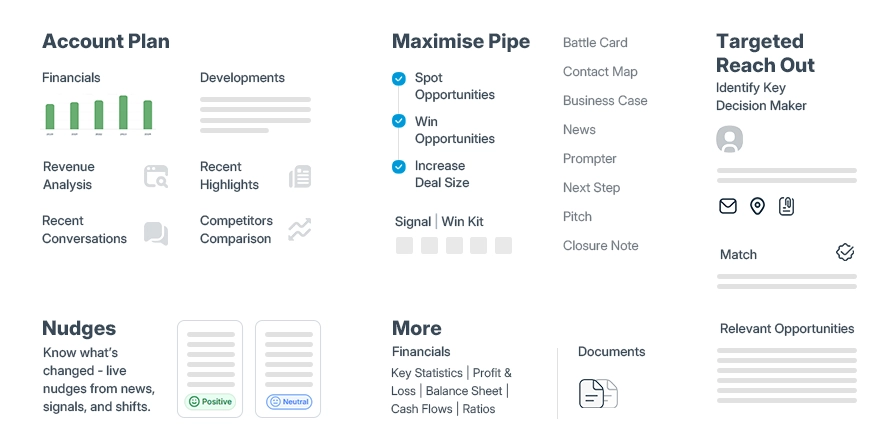
SalesPlay was built to solve this problem. As a dedicated AI sales platform, it combines real‑time market intelligence with predictive signal detection to surface accounts at peak buying intent — before that intent becomes visible to competitors. The result is that every outbound call is grounded in a reason that is timely, specific, and relevant to what is actually happening inside the target account.
SalesPlay monitors live account signals: funding announcements, leadership changes, technology migrations, budget cycle indicators, and competitive vulnerabilities. This is the signal‑driven approach to pipeline generation that enterprise sales teams are moving toward — not waiting for inbound intent, but acting on the account movement that precedes it. When an account crosses a relevance threshold for your offering, it surfaces automatically with context about why now is the right moment to engage.
That intelligence feeds directly into calling workflows. Instead of generic openers, outreach begins with a specific, grounded reason for the call. This is the difference between a conversation that converts and one that ends in voicemail. For teams building real pipeline rather than inflated pipeline, this targeting precision is not optional — it is the mechanism.
SalesPlay’s seven specialized agents — covering account intelligence, opportunity identification, contact mapping, messaging generation, and meeting prep — operate as a connected system rather than a bundle of separate tools. This is the architecture described in detail across the account intelligence and sales intelligence capability pages. The calling layer always has what it needs to run a relevant, timely conversation because every upstream agent has already done its work.
The compounding effect: when intelligent targeting meets automated execution, teams stop reaching the right accounts at the wrong time with the wrong message. Organizations using this combined approach report significantly higher conversion rates — not because individual calls are better executed in isolation, but because they are better timed and contextually grounded from the start.
The next generation of these systems will move fluidly between phone, SMS, video, and chat — maintaining full context across every touchpoint. A prospect might start with an automated call, continue over text, and close with a human video meeting, with complete continuity throughout. The role of third‑party integrations in maximizing platform value will become increasingly central as these multimodal handoffs require seamless data exchange between systems.
Generative AI advances will make real‑time, individual‑level value proposition construction possible at true scale. Rather than segment‑level messaging, each call will draw from a live synthesis of that specific prospect’s industry pressures, company situation, and decision‑maker priorities. This is the direction that advanced AI sales strategies are already moving, and it will become the baseline expectation rather than a competitive differentiator within two to three years.
The market for autonomous AI systems is growing at 25% annually through 2026, with 85% of enterprises expected to deploy some form of agent‑based workflow by 2025. In sales, this means systems that independently decide who to contact, when to escalate, and how to adjust campaigns — continuously, without manual input. Agentic AI in sales is already reshaping SDR productivity, and Voice AI in 2026 represents the early stage of what will become substantially more autonomous outbound execution.
Teams that treat AI as a replacement for human sellers consistently underperform teams that design genuine collaboration models. The data is consistent: organizations where automation handles volume and humans handle depth are 3.7× more likely to hit quota than those using either approach in isolation. The future of AI SDRs is one where the role itself evolves — not disappears.
Organizations achieving the strongest results share a handful of structural decisions that others consistently miss. These are not technical considerations — they are operational ones.
Establish baselines — conversion rates, cost per lead, rep activity distribution — before any system goes live. Without measurement infrastructure, it’s impossible to distinguish genuine improvement from variance. For a structured approach to this, measuring success KPIs for sales intelligence implementation provides a practical framework for setting up the right tracking from day one.
System performance depends directly on data accuracy. Analysis shows top‑tier AI sales platform providers achieve 94–97% contact data accuracy versus 68–75% for lower‑tier alternatives. That gap produces 2.4× higher connect rates and 3.1× better conversion rates. Investing in data quality improvement and enrichment best practices before deployment pays compound returns and should be treated as infrastructure, not a nice‑to‑have.
The transition from automated qualification to human selling is where most pipeline is won or lost. Define what a handoff‑ready lead looks like. Document what context transfers. Train human reps on how to receive warm leads from AI systems — it is a different motion than cold call follow‑up, and maximizing intelligence tool adoption through structured team training directly impacts how well this handoff performs in practice.
Pilot on a subset of accounts. Measure. Refine messaging. Then scale. Basic setups are operational in 2–4 weeks; comprehensive deployments with CRM integration typically take 8–12 weeks. Most teams see positive early results within the first month. Full optimization usually settles at 3–6 months post‑launch.
Prospects who discover they’ve been speaking with AI — without being told — react poorly. Prospects who are told upfront and still receive value from the conversation respond positively. The latter is reproducible at scale. The former creates irreversible brand damage that no amount of pipeline recovery can offset.
Software companies deploy automated outreach for product launches, trial activations, and upsell campaigns. Systems qualify based on technical requirements and company profile, then hand off to solution engineers with full qualification context documented. This is particularly effective in AI‑driven sales for technology companies, where fast‑moving competitive landscapes demand high‑velocity prospecting without sacrificing precision.
Strict regulatory environments actually favor automated systems here — compliance requirements around disclosure and call timing are enforced at the platform level without exception. Banks and investment firms use these tools for appointment setting, renewal campaigns, and initial inquiry handling, as detailed in the financial services sales automation compliance guide.
Healthcare represents the fastest‑growing AI adoption segment across sales technology categories. Medical device companies use automated outreach to reach hospital procurement teams at scale, qualifying interest before deploying field reps for in‑person relationship management. The role of account intelligence in enterprise sales success is especially pronounced here, where buying committees are large and decision timelines are long.
Agencies deploy AI‑powered calling for property inquiry follow‑up, showing scheduling, and lead qualification — freeing agents to focus on in‑person relationships, negotiation, and closing. The lead nurture automation layer handles the follow‑up cadence between calls, ensuring no warm prospect goes cold between touchpoints.
The results are in on automated prospecting. Voice AI Agents work in outbound sales — not as a replacement for human judgment, but as a scalable layer that handles volume, consistency, and qualification at a cost and quality level that human teams cannot match alone. The organizations that understand this structural distinction are the ones building durable pipeline advantages.
The teams performing best have stopped debating replacement and started designing collaboration. AI qualifies and scales. Humans build and close. A unified AI sales platform — one that connects account signals to execution — is what makes the system work as a whole rather than a collection of disconnected parts. If you’re evaluating where to start, the guide to choosing the right AI sales assistant and the broader best AI sales platform tools comparison are practical starting points.
For sales leaders evaluating where to focus in 2026, the signal is clear: get the infrastructure right, deploy deliberately, and let each layer do what it does best.
Yes — and in most initial outreach scenarios, they do. Modern text‑to‑speech generates voices with natural pacing and emotional modulation that prospects accept without friction. The more important variable is relevance. Calls that reference specific, accurate context about the prospect’s business outperform polished calls that say nothing meaningful. That combination drives the 36% conversion uplift seen in real deployments. For context on what makes AI‑driven outreach effective at a structural level, advanced sales analytics beyond basic reporting covers how teams measure and improve these interactions over time.
Basic platforms start around $30/user/month. Enterprise deployments on a full AI sales platform can run $25,000+ annually. Against a human SDR — $50,000–$80,000 in base salary before overhead — the cost‑per‑lead economics shift significantly at scale. Organizations report 42% reductions in cost per lead while running substantially higher call volumes. Maximizing ROI from your sales intelligence investment covers the full framework for building an accurate business case.
The evidence consistently says no — and teams performing best have stopped asking this question. These systems handle volume‑based qualification, scheduling, and follow‑up. Human SDRs handle conversations that require trust, nuance, and judgment. Teams structured this way outperform both fully automated and fully human operations. The AI SDRs vs. traditional SDRs comparison shows exactly where each model performs best and where the handoff should occur.
Trained on large volumes of successful call recordings, these systems handle common objections — “send me an email,” “we already have a vendor,” “not the right time” — with appropriate, context‑aware responses. Real‑time sentiment analysis detects resistance and adjusts approach accordingly. Current systems handle approximately 70–80% of standard objections successfully. For novel or complex pushback, escalation protocols hand off to human reps with full call context preserved. Advanced AI sales strategies covers how teams structure these escalation paths to avoid losing deals at the handoff point.
In the United States, AI‑generated voices in automated calls fall under TCPA regulations following the FCC’s February 2024 ruling. Requirements include respecting do‑not‑call registries, call‑time restrictions (typically 8am–9pm local time), caller identification disclosure, and consent where required. Automated platforms typically enforce these requirements more reliably than human teams — every regulation applied consistently at scale without manual oversight. The financial services compliance and automation guide provides the most detailed treatment of regulatory requirements across sectors.
Simple qualification‑focused deployments can be operational within 2–4 weeks. Full implementations involving CRM integration and setup, custom voice configuration, and complex conversation branching typically run 8–12 weeks. Plan for a phased rollout: pilot on a defined account subset, measure results, refine, then scale. Expect meaningful results within the first month, with full performance optimization at 3–6 months post‑launch.
Calling systems execute well in isolation. What they lack without an intelligence layer is targeting precision and message relevance. SalesPlay surfaces accounts based on live buying signals and generates account‑specific messaging context before any outreach begins. This ensures calls reach prospects at peak intent, with a reason for the conversation grounded in what’s actually happening inside their business. The SalesPlay pipeline generation guide walks through how sellers use this intelligence to decide exactly where to focus their outreach at any given point in the quarter.
Discover how real‑time account signals and AI‑generated messaging give your outreach the context it needs to convert.
Start Free Trial

Category: Uncategorized Tags: ai, AIOps, Artificial Intelligence, cloud, cloud platform, Cybersecurity, Information and Communications Technology , VR