When a Lead Isn’t Ready - But Still Worth Nurturing
February 27, 2026
Not every lead that says "not now" deserves to die in your CRM. In enterprise sales, the difference between a lost opportunity and a closed deal often comes down to one thing: how you nurture leads through the waiting game.
Here's the reality most sales leaders face: 73% of leads are not ready to buy when first contacted. In complex B2B environments with 6-18 month sales cycles, that percentage climbs even higher. Yet most revenue teams treat "not ready" as a dead end rather than a strategic opportunity.
This is where long sales cycle nurturing becomes a competitive advantage. When your competitors abandon leads at the first sign of resistance, your team stays engaged — not with generic check-ins, but with intelligence-driven relevance that keeps you top-of-mind until timing shifts.
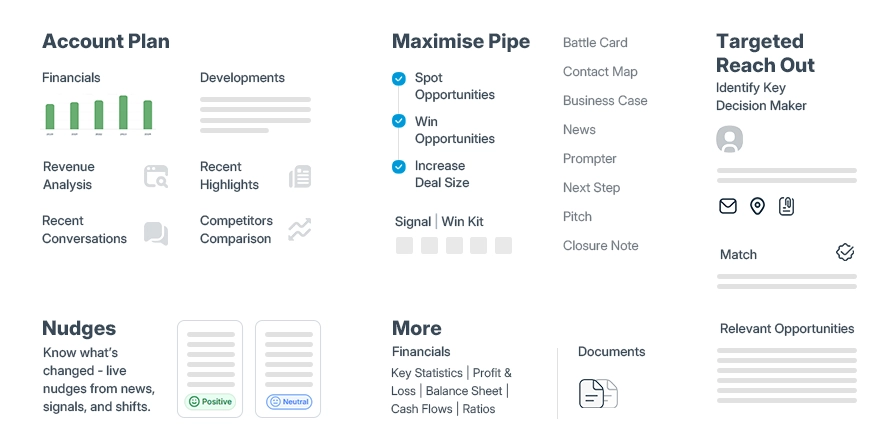
SalesPlay by MarketsandMarkets exists for this exact scenario. While traditional CRMs track leads, SalesPlay continuously watches what's changing inside target accounts and tells sellers exactly when and how to re-engage. This isn't marketing automation repackaged for sales. This is revenue intelligence that turns "not now" into "let's talk" without burning out your team.
Ready to transform how your team handles long sales cycles?
Request a SalesPlay Demoto see signal-based nurturing in action.
Before we discuss nurturing strategies, we need to establish why process discipline matters even more when deals extend beyond typical timelines.
The importance of sales process becomes crystal clear when you examine what happens without one. In our analysis of over 2,000 enterprise deals tracked through SalesPlay, we found that deals extending beyond 9 months had a 64% higher probability of stalling or being lost — not because of competitive displacement, but because sellers lost context and buying committees forgot why they cared.
Here's what typically happens:
This is why structured nurturing isn't optional for long cycles — it's the only way to maintain deal quality and positioning while respecting the buyer's timeline.
Effective long sales cycle nurturing requires four foundational elements working together:
You can't nurture what you can't see. SalesPlay's Account Intelligence Agent continuously monitors Salesforce-connected target accounts, tracking business changes, financial shifts, and strategic movements. This means when a "not ready" lead's budget gets approved or their priority initiative accelerates, you know immediately — not three weeks later when they've already engaged your competitor.
Generic "checking in" emails destroy credibility. Timing your outreach to actual account developments maintains it. The Signals Agent surfaces relevant news and business movements tied to accounts, filtering noise and highlighting what creates a legitimate reason to re-engage. This transforms nurturing from pestering to providing value.
Every touch must feel custom, even when you're nurturing 50+ long-cycle opportunities. SalesPlay's Auto-Nurture Agent creates personalized email campaigns that reference specific opportunities and individual stakeholder contexts. Each message is different. Each message matters.
The biggest risk in long-cycle nurturing is missing the moment when a lead transitions from "someday" to "now." SalesPlay doesn't just track engagement metrics — it connects business movement to opportunity relevance, showing sellers exactly when accounts shift from monitoring to active pursuit.
Want to see how these four pillars work together?
Explore the SalesPlay platformand see real account intelligence in action.
Want to see how these four pillars work together? Explore the SalesPlay platform and see real account intelligence in action.
Understanding which step is part of the sales cycle matters because different stages require different nurturing approaches. Most sales methodologies outline 5-7 stages, but in reality, long cycles experience expansion in three specific areas.
Typical duration: 2-4 weeks
Extended duration: 6-12 weeks
This is where initial interest meets organizational complexity. The lead acknowledges the problem exists but hasn't secured internal alignment to prioritize solving it. Your competitor who pushes for commitment here loses the deal. The team that nurtures with strategic patience stays in the game.
What matters here: Educational content tied to their specific business context, not generic industry trends. SalesPlay's Account Intelligence provides the 5-year revenue history, financial data, and business developments that let sellers speak to the account's actual situation, not hypothetical scenarios.
Typical duration: 3-6 weeks
Extended duration: 12-20 weeks
Legal, procurement, security reviews — this stage extends because of organizational friction, not lack of interest. Many sellers disengage here, assuming the deal will move on its own. It won't. This is where deals die quietly.
What matters here: Proactive updates on value drivers and competitive differentiation. When 8 weeks have passed and your champion is fighting internal battles, a well-timed message reinforcing ROI and risk mitigation keeps momentum alive.
Typical duration: 1-2 weeks
Extended duration: 4-16 weeks
The deal is verbally approved, but signing authority is tied up in fiscal planning, reorgs, or waiting for the new quarter. Your CRM shows "Commit" stage. Your forecast says Q3. Reality says Q4 — if you handle it right.
What matters here: Relationship maintenance without appearing desperate. Strategic check-ins tied to account developments signal that you're paying attention to their business, not just your commission.
The most dangerous misconception in sales leadership is treating pauses as "non-sales time." Every week a deal sits in limbo is part of your sales cycle. The question is whether you're managing it or just hoping.
SalesPlay data shows that deals with structured nurture touchpoints during extended stages have a 41% higher close rate than deals left to "marinate." The difference isn't magic — it's maintained context, strategic timing, and messaging that stays relevant as the account evolves.
Not all long cycles are created equal. Some are strategic (the account needs time to build internal consensus). Some are preventable (you're selling to the wrong stakeholder). Knowing the difference is what separates revenue leaders from order-takers.
What it looks like: The lead loves your solution. They just don't have the budget/priority/bandwidth right now.
The underlying reality: This isn't a "no" — it's a "not yet." But if you don't track deal timing intelligently, you'll miss the window when "not yet" becomes "now."
How SalesPlay solves this: The Spot Opportunities Agent continuously scans account signals and business movements, detecting when budget, priorities, or initiatives align with your offerings. You don't guess when to re-engage. You know.
What it looks like: Your champion is engaged, but the deal isn't moving.
The underlying reality: Enterprise decisions involve 6-10 stakeholders on average. If you're only nurturing one, you're leaving 5-9 people uninfluenced. When the VP of Finance suddenly appears in month 7 with objections you've never heard, your cycle just extended another 12 weeks.
How SalesPlay solves this: The Spot Contacts Agent maps opportunities to relevant stakeholders across the buying center. For each contact, you see why each opportunity matters to them specifically, along with messaging that resonates with their function and priorities.
What it looks like: Positive meetings. Warm responses. No urgency.
The underlying reality: You're stuck in "nice to have" territory because you haven't connected your solution to their specific business movements. If you can't articulate why solving this problem matters now given what's happening in their business, the deal will drift indefinitely.
How SalesPlay solves this: Account Intelligence consolidates recent developments, financial changes, and strategic shifts into a single view. When you re-engage after a pause, you're not saying "just checking in" — you're saying "given your recent acquisition announcement and the integration priorities mentioned in your earnings call, here's how this capability directly supports that."
What it looks like: Long periods of silence followed by rushed catch-up when the lead resurfaces.
The underlying reality: You've handed control of the sales cycle to the buyer. In complex B2B sales, that's a death sentence. Buyers don't know what they don't know. Your job is to guide them, even during pauses.
How SalesPlay solves this: Proactive nurture campaigns run automatically based on signals, not arbitrary schedules. When the account's Q2 earnings report drops, when a new executive joins, when a relevant regulation is announced — these become re-engagement triggers, not calendar reminders.
What it looks like: Your team treats every "not now" the same way — either giving up immediately or nurturing everything forever.
The underlying reality: Not all long-cycle leads are equal. Some will close in 9 months. Some will never close. The ability to triage effectively is what lets high-performing teams focus energy where it matters.
How SalesPlay solves this: Opportunities are categorized by relevance (high/medium/low) based on signal strength, timing indicators, and fit. You're not guessing which leads to nurture. You're making data-informed decisions about where to invest your time.
Struggling with long sales cycles that feel out of control?
See how SalesPlay gives you visibilityinto what's actually causing delays — and what to do about it.
The phrase multi-touch lead nurturing strategy gets thrown around a lot in B2B marketing. Most of what's written about it is either too generic (7 tips to better email campaigns!) or too tactical (subject line formulas that convert!). Neither addresses the core challenge enterprise sales teams face: how do you stay relevant across 9-18 months without becoming noise?
Effective long-cycle nurturing isn't about touch volume. It's about touch purpose. In analyzing nurture sequences across SalesPlay customers, we've identified four distinct touch types that drive re-engagement.
When to use it: When something changes in the account that creates a new reason to engage
What it sounds like: "Saw your Q2 earnings mention a focus on operational efficiency — we talked about this exact challenge back in March. Given the timeline you outlined then, would it make sense to revisit now?"
Why it works: You're not asking for time. You're connecting current business reality to past conversations. This is the highest-converting nurture touch type, with re-engagement rates 3.2x higher than generic check-ins.
How SalesPlay enables it: The Signals Agent surfaces these moments automatically. You don't need to manually monitor news feeds or earnings calls. When something relevant happens, you see it tied directly to the opportunity context.
When to use it: When there's no immediate signal, but you want to maintain presence
What it sounds like: "Came across this analysis on [specific topic relevant to their business challenge]. Thought of your team's work on [initiative discussed]. No action needed — just sharing in case it's useful."
Why it works: You're demonstrating that you understand their business and think about their problems even when you're not trying to close them. This builds trust and keeps you mentally categorized as "expert advisor" rather than "vendor."
How SalesPlay enables it: Account Intelligence provides the business context that lets sellers identify truly relevant content. You're not guessing what might interest them. You know what matters based on their current priorities and movements.
When to use it: When enough time has passed that circumstances may have changed
What it sounds like: "When we last spoke, you mentioned budget approval would likely come in Q3. We're now approaching that window — has anything shifted in terms of timeline or priorities?"
Why it works: You're not asking "are you ready yet?" You're acknowledging the context of your last conversation and inviting an update. This gives the lead permission to say "actually yes, let's talk" without feeling like they're reopening a closed topic.
How SalesPlay enables it: Win Opportunities maintains full deal context even across pauses. When you re-engage, you're not starting from scratch. You're continuing a conversation with full memory of what mattered before.
When to use it: When industry movements create urgency that wasn't there before
What it sounds like: "Three of your direct competitors have announced [relevant capability]. Given our conversations about [strategic initiative], wanted to surface this in case it affects your internal timelines."
Why it works: You're reframing the conversation from "should we do this?" to "when should we do this given what's happening around us?" This is especially effective with risk-averse buyers who need external validation to prioritize action.
How SalesPlay enables it: Signals tied to competitive movements and industry trends give sellers the ammunition to create urgency without desperation.
There's no universal answer, but there are universal principles:
SalesPlay's Auto-Nurture Agent solves the cadence problem by letting sellers set campaign parameters (number of touches, timing, contacts) and then personalizing every email based on opportunity and stakeholder context. This means you get scale without sacrificing relevance.
Let's get specific about what changes when you replace manual nurturing with revenue intelligence.
Sales leader: "What happened to that big opportunity with [Company X]?"
AE: "They're not ready. I'll check back in next quarter."
Sales leader: "Did you add them to a nurture sequence?"
AE: "Yeah, they're getting the standard enterprise emails."
What actually happens:
Same scenario, different system:
Month 1: Lead says "not now." AE moves opportunity to monitoring in SalesPlay.
Month 2: Account Intelligence flags that Company X just hired a new VP of Operations. AE sends personalized message connecting the new exec's background to the solution.
Month 4: Signals Agent surfaces acquisition announcement. AE reaches out with integration-focused messaging.
Month 6: Financial data shows budget approval cycle approaching. AE coordinates with champion to position for Q3 planning.
Month 8: Deal timing indicators shift to "High." AE re-engages with full context, battle cards pre-built, talking points ready.
Result: AE doesn't guess when to follow up. They know. And when they do engage, it's always with something worth saying.
Most CRMs store what happened. SalesPlay stores what matters. When a deal pauses in February and reactivates in August, sellers see:
This is why SalesPlay-powered teams don't "start over" when re-engaging long-cycle leads. They continue conversations with full context intact.
The death of most nurture programs is the choice between scale and quality. Generic emails scale but fail. Custom research doesn't scale. SalesPlay solves this by automating the research layer — every message references real account developments, specific opportunities, and individual stakeholder priorities.
A SalesPlay customer running complex deal cycles told us: "Our AEs used to spend 45 minutes preparing for a re-engagement call. Now it's 8 minutes, and the quality is higher because they're working from fresh intelligence, not stale CRM notes."
You can't nurture 200 long-cycle leads with equal intensity. The teams that win in extended sales cycles aren't the ones nurturing everything — they're the ones nurturing the right things.
SalesPlay's opportunity scoring doesn't just rank leads by fit. It ranks them by timing likelihood — showing sellers which "not now" leads are most likely to become "let's talk" in the next 30-90 days. This lets managers coach teams on where to focus energy, not just how much energy to expend.
Ready to stop losing deals to timing?
See how SalesPlay turns long cycles into predictable pipeline.Theory is useless without execution frameworks. Here's how revenue teams implement long-cycle nurturing using SalesPlay's architecture.
What to do:
Expected outcome: 30-40% of your "dead" pipeline will show renewed opportunity indicators. These become immediate re-engagement targets.
What to do:
Expected outcome: Your team moves from "should I reach out?" to "here's exactly why I'm reaching out now."
What to do:
Expected outcome: Response rates on nurture touches increase 2-3x. Time spent on research drops by 60%.
What to do:
Expected outcome: Long-cycle opportunities start converting at 15-25% higher rates. Sales cycle length decreases by 18-30 days on average as sellers catch timing windows earlier.
If you're measuring email open rates and click-through percentages, you're measuring the wrong things. Long-cycle nurturing success shows up in three places:
What it is: Percentage of "stalled" opportunities that re-engage and progress
Why it matters: This is the entire point of long-cycle nurturing. If your resurrection rate is below 12%, your nurture strategy is failing.
SalesPlay benchmark: Customers with structured signal-based nurturing average 22-28% resurrection rates
What it is: Average time between deal pause and renewed buyer interest
Why it matters: Shorter time-to-re-engagement means you're catching timing windows earlier. Longer times suggest you're missing signals.
SalesPlay benchmark: Teams using signal-based triggers re-engage 4-6 weeks faster than teams using time-based cadences
What it is: Qualitative measure of whether sellers maintain deal knowledge across pauses
Why it matters: When sellers can't remember what mattered in month 1 by the time month 9 arrives, they lose credibility and restart relationships from scratch.
SalesPlay advantage: Persistent account intelligence means context never degrades, regardless of cycle length
Here's an uncomfortable truth: some "not now" leads will never become "yes." Knowing when to disengage is as important as knowing when to nurture.
Sign 1: No Signal Strength Increase Over 12+ Months
If an account shows zero business movement aligned with your solution after a year of monitoring, the problem you solve isn't actually a priority for them. Move them to passive monitoring or disqualify entirely.
Sign 2: Stakeholder Turnover Without Re-Engagement
Your champion leaves. New leadership arrives. If you can't re-establish relationships within 60-90 days of turnover, the institutional knowledge of your solution is gone. This effectively resets the sales cycle to zero.
Sign 3: Persistent Budgetary Constraints Despite Strategic Fit
Some organizations will never prioritize the investment required for your solution, regardless of fit. If budget has been "approved for next quarter" three quarters in a row, you're being managed, not nurtured.
SalesPlay helps with this decision by showing opportunity score trends over time. When relevance indicators consistently decline or flatline, it's data telling you to reallocate focus.
Want to build a nurture strategy that knows when to push and when to pause?
Talk to our team about SalesPlay implementation.The enterprise sales reality is this: complexity takes time. Multi-stakeholder consensus takes time. Budget cycles take time. The question isn't whether your sales cycles will be long — it's whether you'll manage that time strategically or reactively.
Every "not now" in your pipeline represents either future revenue or wasted effort. The difference comes down to three capabilities:
This is what SalesPlay by MarketsandMarkets delivers. Not a CRM that tracks leads. Not a dashboard that shows metrics. A revenue intelligence co-pilot that tells sellers where to act, who to engage, and how — even across 9, 12, or 18-month cycles.
Your competitors are abandoning long-cycle leads because they lack the systems to nurture them effectively. That's your opportunity. When they walk away, you stay engaged. When timing shifts, you're already there.
The best revenue teams don't just manage their sales cycles. They architect them.


Category: Uncategorized Tags: ai, AIOps, Artificial Intelligence, cloud, cloud platform, Cybersecurity, Information and Communications Technology , VR