Spoil Detection Based Smart Label Market by Type (Fish, Meat, Vegetables, Dairy Products), and Geography (North America, Europe, APAC, Row) - Global Growth Driver and Industry Forecast to 2035


Spoil Detection Based Smart Label Market Summary
The global Spoil Detection Based Smart Label Market is emerging as an important segment of intelligent packaging, driven by growing concerns around food safety, cold-chain integrity, food waste, pharmaceutical logistics, and supply-chain transparency. Based on current market estimates, the global Spoil Detection Based Smart Label Market is valued at approximately US$1-2 billion in 2025 and is projected to reach approximately US$7-9 billion by 2035, expanding at an estimated 10%-13% CAGR during the forecast period. Published estimates vary according to product scope and segmentation; one recent assessment values the market at about US$1.14 billion in 2025 and forecasts US$2.24 billion by 2032, while another estimates US$2.95 billion in 2025 and US$7.41 billion by 2033.
Spoil detection based smart labels are designed to provide a visible or digitally readable indication of product condition by responding to factors associated with deterioration, including temperature exposure, oxygen, carbon dioxide, pH, moisture, volatile compounds, and microbial activity. Their ability to provide product-level freshness information makes them increasingly valuable for perishable foods such as meat, seafood, dairy, fruits, and vegetables, as well as temperature-sensitive pharmaceutical products. Time-temperature indicators currently represent a particularly important product category, while biochemical and freshness indicators are gaining attention because they can respond more directly to spoilage chemistry.
The market is also moving beyond passive visual labels toward connected smart packaging. RFID, NFC, IoT gateways, cloud analytics, and AI can enable condition data to be linked with warehouse-management and supply-chain platforms. This creates opportunities for automated inventory decisions, dynamic shelf-life estimation, predictive quality management, and targeted waste reduction.
Key Market Trends & Insights
Time-temperature indicators remain the dominant product category. These labels provide a history of cumulative temperature exposure and are particularly valuable in food and pharmaceutical cold chains. Recent research places time-temperature indicators at approximately 42% of the global market in 2024.
Freshness and biochemical indicators are emerging rapidly. Unlike conventional date labels, these technologies can respond to chemical changes associated with actual deterioration, creating the potential for more accurate product-quality assessment.
Food and beverage is the principal application opportunity. Meat, seafood, dairy, fruits, and vegetables have relatively short shelf lives and are highly sensitive to temperature and microbial conditions, making them strong candidates for spoilage-monitoring labels.
Asia Pacific is positioned for strong growth. Rising packaged-food consumption, expanding cold-chain infrastructure, urbanization, and increasing consumer awareness of food safety are creating favorable conditions across China, Japan, India, and other Asian markets.
AI, IoT, and automation are extending smart-label functionality. Connected labels can potentially feed condition information into digital supply-chain systems, while AI can combine temperature, gas, humidity, product age, and logistics data to estimate spoilage risk.
Market Size & Forecast
- Base year market size (2025): approximately US$1-3 billion
- Forecast value by 2035: approximately US$7-9 billion
- CAGR: approximately 10%-13%
- Short explanation of growth factors: Increasing food waste, stricter food-safety requirements, cold-chain expansion, demand for supply-chain transparency, pharmaceutical logistics, smart packaging adoption, IoT connectivity, and AI-enabled shelf-life prediction are expected to drive market expansion. Current published forecasts range from approximately 10% to 12% CAGR depending on market definition.
Spoil Detection Based Smart Label Market Top 10 key takeaway
- The global Spoil Detection Based Smart Label Market is estimated at approximately US$1-3 billion in 2025.
- The market is projected to reach approximately US$7-9 billion by 2035.
- The market is expected to expand at approximately 10%-13% CAGR through the forecast period.
- Time-temperature indicators currently represent the leading product category.
- Food and beverage is the largest commercial application area.
- Meat, seafood, dairy, fruits, and vegetables are major target products.
- Freshness and biochemical indicators are emerging as high-value technologies.
- Asia Pacific represents one of the strongest regional growth opportunities.
- IoT, RFID, NFC, cloud platforms, and AI are increasing the intelligence of smart labels.
- Key market participants and technology developers include Avery Dennison, Timestrip, Vitsab International, 3M, BASF, Insignia Technologies, Temptime, and Zebra Technologies.
Product Insights
The time-temperature indicator (TTI) segment currently represents the leading product category in the Spoil Detection Based Smart Label Market. TTIs respond to cumulative temperature exposure and provide an indication when a product has experienced conditions capable of accelerating degradation. Their relatively straightforward operation, low power requirements, and compatibility with conventional packaging make them attractive for food distribution and pharmaceutical cold chains. Recent market research estimates that TTIs accounted for approximately 42% of the market in 2024.
Temperature indicators provide a simpler alternative by responding when a predefined temperature threshold is exceeded. These solutions are particularly useful when a single temperature excursion can compromise product quality. As cold-chain networks become longer and more complex, manufacturers, distributors, retailers, and pharmaceutical companies increasingly require product-level visibility rather than relying only on shipment-level temperature monitoring.
Freshness indicators and biochemical indicators represent an important emerging opportunity. These technologies can respond to changes in the chemical environment surrounding a product. Spoilage can produce volatile organic compounds, ammonia, hydrogen sulfide, carbon dioxide, and other measurable substances. Research has demonstrated the potential to detect spoilage-related gases in packaged seafood, illustrating the scientific foundation for more direct freshness monitoring.
Gas indicators, oxygen indicators, carbon-dioxide indicators, pathogen indicators, and RFID-based smart labels are further expanding the product landscape. The long-term direction is toward multifunctional labels that combine several sensing mechanisms rather than relying on one variable.
AI integration is expected to increase the value of these products. Instead of simply showing a color change, connected smart labels could provide condition data to an analytics platform where machine-learning models estimate remaining shelf life based on temperature history, product type, humidity, transportation duration, and other factors.
Technology / Component Insights (Rename based on keyword if needed)
The technology landscape of the Spoil Detection Based Smart Label Market includes chemical indicators, biosensors, time-temperature mechanisms, RFID, NFC, printed electronics, gas sensors, colorimetric materials, and IoT connectivity. Conventional visual labels remain commercially important because they are inexpensive and easy for consumers and supply-chain personnel to interpret. However, connected technologies are expanding the potential applications of smart packaging.
RFID and NFC can provide a digital bridge between a physical label and a software platform. When combined with temperature or freshness sensing, these technologies can enable automated scanning and data collection throughout warehouses, distribution centers, pharmacies, retail stores, and transportation networks.
IoT connectivity is particularly important for large-scale supply chains. Instead of manually checking packages, connected systems can continuously collect information and identify products approaching a quality threshold. This can enable automated inventory rotation, targeted inspections, and more efficient cold-chain management.
AI adds a predictive layer. A machine-learning model can analyze historical spoilage behavior and correlate it with temperature, humidity, time, gas concentration, transportation conditions, and product category. The objective is to move from a static "best before" approach toward dynamic shelf-life estimation. Research into machine-learning-based shelf-life tracking has already demonstrated the potential to predict whether food has spoiled and estimate remaining time to spoilage.
Future innovation will also focus on sustainability. Battery-free electronics, printed sensors, biodegradable substrates, low-cost biosensors, and NFC-powered devices could make intelligent packaging easier to deploy at massive volumes. Research published in 2025 demonstrated a battery-free, stretchable smart-packaging concept integrating gas sensing and NFC while also supporting active preservation functions.
Application Insights
Food and beverage is the leading application segment in the Spoil Detection Based Smart Label Market. Perishable food represents an especially attractive opportunity because spoilage can occur before the printed expiration date under unfavorable storage conditions, while products may remain usable after a conservative date under appropriate conditions. Smart labels can therefore provide additional product-quality information without requiring destructive testing.
Meat and seafood are particularly relevant because microbial and biochemical deterioration can generate measurable gases and chemical compounds. Dairy products, fruits, vegetables, prepared foods, and chilled meals also provide substantial opportunities. As retailers and food manufacturers seek to reduce waste while maintaining safety, freshness monitoring can become an important component of intelligent packaging strategies.
Pharmaceuticals and healthcare represent another high-value application. Vaccines, biologics, temperature-sensitive medicines, and other pharmaceutical products can be damaged by inappropriate temperature exposure. Time-temperature indicators can provide a low-cost visual verification layer, while connected systems can provide digital traceability.
Logistics and supply-chain applications are expanding as distributors seek better visibility into product condition during transportation. Smart labels can complement conventional warehouse and cold-chain monitoring by providing information at the individual package level.
Agriculture is an emerging application area. Fresh produce can experience substantial losses after harvesting, particularly where storage and transportation infrastructure is limited. IoT-enabled monitoring systems combining temperature, humidity, gas sensing, and automation are being investigated as tools for reducing post-harvest losses.
Future opportunities will increasingly center on automated retail, dynamic pricing, waste reduction, predictive logistics, and digital traceability. Retailers could use condition data to prioritize products nearing the end of their freshness window, while supply-chain operators could automatically redirect inventory based on predicted remaining shelf life.
Regional Insights
North America represents a mature and technologically advanced market for spoil detection based smart labels. Strong consumer awareness of food safety, established cold-chain infrastructure, sophisticated food distribution networks, and pharmaceutical logistics support adoption. The region also benefits from an established ecosystem of packaging companies, sensor developers, RFID providers, and technology platforms. Recent industry research identifies North America and Western Europe as strong existing markets.
Europe is similarly important, particularly because of its emphasis on food quality, traceability, sustainability, and packaging innovation. Retailers and food manufacturers are increasingly interested in technologies that can reduce food waste while improving transparency throughout the supply chain.
Asia Pacific is expected to experience particularly strong growth. Increasing consumption of packaged and processed foods, expanding organized retail, urbanization, growth in e-commerce grocery delivery, and improvements in cold-chain infrastructure are supporting demand. China, Japan, India, South Korea, and Southeast Asian economies offer substantial long-term opportunities.
Latin America and the Middle East & Africa represent emerging opportunities where improvements in logistics infrastructure and food-safety practices can create demand for affordable condition-monitoring technologies.
- North America: Mature market supported by food safety and pharmaceutical cold chains.
- Europe: Strong focus on traceability, sustainability, and packaging innovation.
- Asia Pacific: Fast-growing opportunity driven by packaged-food consumption and infrastructure.
- Latin America: Cold-chain modernization is creating new demand.
- Middle East & Africa: Food-security initiatives and logistics development support long-term adoption.
Country-Specific Market Trends
China is expected to expand at approximately 14%-17% CAGR, supported by large-scale food production, e-commerce, cold-chain investment, smart manufacturing, and expanding demand for traceable packaged foods. Japan is projected to grow at approximately 9%-12% CAGR, supported by sophisticated food logistics, aging demographics, premium packaged foods, and advanced sensor technology.
In North America, the United States is expected to grow at approximately 9%-12% CAGR, supported by food safety requirements, pharmaceutical distribution, retail automation, and advanced packaging technology. Canada could expand at around 8%-11% CAGR, while Mexico may record approximately 10%-13% CAGR as food processing, export logistics, and modern retail infrastructure develop.
In Europe, Germany is expected to grow at approximately 9%-11% CAGR, driven by food manufacturing, industrial packaging, pharmaceutical logistics, and sustainability initiatives. France could expand at approximately 8%-11% CAGR, supported by food quality, retail innovation, and pharmaceutical supply chains.
- China: Strong growth from cold-chain expansion and smart food logistics.
- Japan: Advanced packaging and food-quality infrastructure support adoption.
- United States: Food, pharmaceutical, and retail applications drive demand.
- Germany: Strong industrial and pharmaceutical supply-chain opportunities.
- France: Food traceability and packaging innovation support market development.
Key Spoil Detection Based Smart Label Market Company Insights
The competitive landscape includes packaging companies, smart-label developers, sensor manufacturers, and technology providers. Important participants include Avery Dennison, 3M, BASF, Timestrip, Vitsab International, Insignia Technologies, Temptime, Zebra Technologies, SATO Holdings, and Thin Film Electronics. Competition is centered on indicator accuracy, cost, shelf-life, ease of integration, material compatibility, connectivity, and scalability.
Avery Dennison has a strong position in intelligent labeling and RFID, giving it opportunities to connect smart labels with digital supply-chain platforms. Timestrip focuses on time-based and time-temperature monitoring technologies, while Vitsab International is known for visual time-temperature indicators. 3M and BASF bring materials and chemical-science expertise that can support advanced indicator technologies.
Newer technology providers are focusing on digital and sensor-enabled packaging. The competitive environment is gradually moving toward integrated solutions combining physical labels, sensing materials, RFID/NFC connectivity, analytics, and cloud platforms.
- Avery Dennison: Focuses on RFID, intelligent labels, and supply-chain connectivity.
- Timestrip: Specializes in time and time-temperature monitoring solutions.
- Vitsab International: Develops visual time-temperature indicators.
- 3M and BASF: Leverage materials and chemical expertise for advanced packaging technologies.
- Emerging technology firms: Emphasize biosensors, connected packaging, AI analytics, and sustainable materials.
Recent Developments
A major innovation trend is the development of chemical and nanosensor-based packaging capable of detecting spoilage in real time. Researchers at Hanbat National University in South Korea developed a flexible sensor-based food wrapper designed to monitor chemical changes associated with freshness while also providing antimicrobial functionality. The technology remains developmental rather than broadly commercial, but it illustrates the direction of next-generation intelligent packaging.
Another important development is battery-free smart packaging. Researchers have demonstrated packaging that combines gas sensing, NFC communication, and active preservation functions without conventional batteries. Such architectures could eventually reduce the cost and environmental burden associated with electronic smart labels while enabling continuous monitoring.
AI-based shelf-life prediction is also gaining momentum. Machine-learning systems can combine sensory observations and product-specific characteristics to estimate whether food has spoiled and predict remaining shelf life, potentially enabling future smart-label systems to provide more meaningful information than a simple fixed expiration date.
Market Segmentation
The Spoil Detection Based Smart Label Market can be segmented by product type, sensing technology, material, functionality, end use, and region. By product type, the market includes temperature indicators, time-temperature indicators, freshness or biochemical indicators, gas indicators, oxygen and carbon-dioxide indicators, pathogen indicators, and RFID-based smart labels. TTIs currently dominate because of their established use across food and pharmaceutical cold chains, while biochemical and freshness indicators offer strong future potential.
By technology and component, the market includes chemical indicators, biosensors, colorimetric sensors, electronic sensors, RFID/NFC systems, and IoT-connected devices. By material, smart labels can use paper, polymers, metals, composites, and emerging biodegradable substrates. Functionality can include monitoring, tracking, alerting, reporting, and predictive quality assessment.
By application, food and beverage represents the core opportunity, followed by pharmaceuticals, logistics and supply chain, agriculture, and other temperature- or freshness-sensitive products. Within food, meat, fish, seafood, dairy, fruits, vegetables, and prepared foods are important categories. Regionally, North America and Europe represent mature markets, while Asia Pacific is positioned for faster expansion.
- By Product: Time-temperature indicators currently lead, while freshness indicators are gaining momentum.
- By Technology: Chemical indicators, biosensors, RFID, NFC, and IoT are key technology categories.
- By Material: Paper and polymer substrates dominate, with biodegradable materials emerging.
- By Application: Food and beverage leads, followed by pharmaceuticals and logistics.
- By Region: North America and Europe are mature markets, while Asia Pacific offers strong growth potential.
Conclusion
The global Spoil Detection Based Smart Label Market is positioned for sustained expansion through 2035, with current estimates indicating a market opportunity of approximately US$1-3 billion in 2025 and a potential value of US$7-9 billion by 2035, supported by approximately 10%-13% CAGR. Although market estimates differ because of variations in product definitions and included applications, the underlying growth outlook is consistently positive.
The strategic importance of these labels extends beyond packaging. By providing real-time or near-real-time information about temperature exposure, gas concentration, chemical changes, and product condition, smart labels can help manufacturers, logistics providers, retailers, pharmaceutical companies, and consumers make better decisions about product quality.
AI and IoT will be particularly important in the next phase of market development. Traditional indicators primarily provide a visual signal, whereas connected smart labels can potentially deliver machine-readable information to supply-chain platforms. AI can then interpret this information alongside transportation, environmental, and historical data to estimate remaining shelf life and identify products at elevated spoilage risk.
The most promising future is therefore a transition from static expiration dates to dynamic product-condition intelligence. This could support automated inventory rotation, predictive quality management, reduced food waste, improved cold-chain accountability, and more transparent consumer communication.
For businesses, investment opportunities will increasingly lie in low-cost sensors, sustainable materials, RFID/NFC connectivity, battery-free electronics, AI analytics, and scalable manufacturing. As food safety and sustainability become more important across global supply chains, spoil detection based smart labels are positioned to become a significant enabling technology for the next generation of intelligent and connected packaging.
FAQs
1. What is the current size of the Spoil Detection Based Smart Label Market?
The global market is estimated at approximately US$1-3 billion in 2025, depending on the products and technologies included. One recent estimate places the 2025 market at about US$1.14 billion, while another estimates approximately US$2.95 billion.
2. What is the expected growth rate of the Spoil Detection Based Smart Label Market?
The market is expected to grow at approximately 10%-13% CAGR through the forecast period. Published estimates include approximately 10.1%, 11.7%, and 12.2% CAGR under different market scopes.
3. What are the key drivers of the Spoil Detection Based Smart Label Market?
Key drivers include food waste reduction, increasing food-safety awareness, cold-chain expansion, pharmaceutical logistics, demand for supply-chain transparency, smart packaging adoption, IoT connectivity, and AI-enabled shelf-life prediction.
4. Which region leads the Spoil Detection Based Smart Label Market?
North America is a leading mature market, while Asia Pacific is expected to demonstrate strong growth due to rising packaged-food consumption, expanding cold-chain infrastructure, urbanization, and increasing awareness of food safety.
5. Who are the key companies in the Spoil Detection Based Smart Label Market?
Key participants include Avery Dennison, 3M, BASF, Timestrip, Vitsab International, Insignia Technologies, Temptime, Zebra Technologies, SATO Holdings, and Thin Film Electronics.
To speak to our analyst for a discussion on the above findings, click Speak to Analyst
 Exclusive indicates content/data unique to MarketsandMarkets and not available with any competitors.
Table of Contents
1 Introduction (Page No. - 8)
1.1 Objectives of the Study
1.2 Report Scope
1.2.1 Market Definition
1.2.2 Market Segmentation
1.3 Research Assumptions
2 Research Methodology (Page No. - 11)
2.1 Research Approach
2.1.1 Secondary Data
2.1.1.1 Key Data From Secondary Sources
2.1.2 Primary Data
2.1.2.1 Key Data From Primary Sources
2.2 Market Size Estimation
2.2.1 Bottom-Up Approach
2.2.2 Top-Down Approach
3 Executive Summary (Page No. - 16)
4 Market Overview (Page No. - 18)
4.1 Introduction
4.2 History and Evolution of Spoil Detection Industry
4.3 Trends in the Smart Label Industry
4.4 Complementary Spoil Detection Products
5 Market Analysis (Page No. - 21)
5.1 Introduction
5.2 Market Dynamics
5.2.1 Drivers
5.2.1 Restraints
5.2.2 Opportunities
5.3 Burning Issue
5.3.1 Indirect Increase in Product Cost
5.4 Winning Imperative
5.4.1 Increasing Adoption of Sensing Labels in the Healthcare
and Pharmaceutical Industry 28
5.5 Product Positioning of Spoil Detection Based Smart Labels
5.6 Value Chain Analysis
6 Smart Label Market, By Type (Page No. - 31)
6.1 Introduction
6.2 Fish
6.3 Meat
6.4 Vegetables
6.5 Dairy Products
6.6 Others
7 Smart Label Market By Geography (Page No. - 40)
7.1 Introduction
7.2 North America
7.3 Europe
7.4 APAC (Excluding Japan)
7.5 Japan
7.6 RoW
8 Competitive Landscape (Page No. - 47)
8.1 Overview
8.2 Market Share Analysis, Spoil Detection Based Smart Label Market
8.3 New Product Launches
8.4 Acquisitions
8.5 Strategic Alliance/Collaboration/Agreements
8.6 Others
9 Company Profiles (Page No. - 52)
(Company at A Glance, Recent Financials, Products & Services, Strategies & Insights, & Recent Developments)*
9.1 Sato Holdings AG
9.2 Thin Film Electronics ASA
9.3 Zebra Technologies
9.4 Smartrac N.V.
9.5 Invengo Information Technology Co., Ltd.
9.6 Muhlbauer Holding AG & Co. KGAA.
*Details on Company at A Glance, Recent Financials, Products & Services, Strategies & Insights, & Recent Developments Might Not Be Captured in Case of Unlisted Companies.
10 Appendix (Page No. - 68)
10.1 Related Reports
List of Tables (17 Tables)
Table 1 Complementary Spoil Detection Products
Table 2 Spoil Detection Based Smart Labels, By Geography, 2013-2020
Table 3 Run Time Protection, Automated Spoilage Detection, and Increase in Demand Are Driving the Spoil Detection Based Smart Label Market
Table 4 Additional Cost Incurred Due to the Use of Smart Labels is Restraining the Growth of This Market
Table 5 Increasing Demand in the Supply Chain for Perishables Generating New Opportunities for Smart Label Market Players
Table 6 Spoil Detection Based Smart Labels and Their Position on the Lifecycle Curve of the Smart Label Industry
Table 7 Spoil Detection Based Smart Label Market, By Type, 2013-2020 (USD Million)
Table 8 Fish:Spoil Detection Based Smart Labels Market, By Geography, 2013-2020 (USD Million)
Table 9 Meat: Spoil Detection Based Smart Label, By Type, 2013-2020 (USD Million)
Table 10 Vegetables: Spoil Detection Based Smart Label Market, By Type, 2013-2020 (USD Million)
Table 11 Dairy Products: Spoil Detection Based Smart Label Market, By Type, 2013-2020 (USD Million)
Table 12 Processed Foods: Spoil Detection Based Smart Label Market, By Type, 2013-2020, USD Million
Table 13 Others: Spoil Detection Based Smart Label Market, By Type, 2013-2020 (USD Million)
Table 14 New Product Launches, 2012–2015
Table 15 Acquisitions, 2011–2014
Table 16 Strategic Alliace/Collaboration/Agreements: 2012–2014
Table 17 Others Recent Developments
List of Figures (27 Figures)
Figure 1 Research Methodology
Figure 2 Market Size Estimation Methodology: Bottom-Up Approach
Figure 3 Market Size Estimation Methodology: Top-Down Approach
Figure 4 Japan and Rest of APAC Are Expected to Drive Spoil Detection Based Smart Label Market in Forecast Period
Figure 5 Spoil Detection Based Smart Label Market, 2013-2020 (USD MN)
Figure 6 Major Factors Impacting the Smart Label Market
Figure 7 Product Positioning: Spoil Detection Based Smart Labels, 2015
Figure 8 Value Chain Analysis: Major Value is Added During the Raw Material Supply and Original Equipment Manufacturing Phase
Figure 9 Spoil Detection Based Smart Label Market, By Type
Figure 10 Increased Applications in Fishery Expected to Spearhead the Spoil Detection Based Label Market in Forecast Period
Figure 11 Geographic Snapshot : Spoil Detection Based Smart Label Market
Figure 12 North American Market for Spoil Detection Labels Expected to Register A Double Digit Growth in Forecast Period
Figure 13 Government Regulations Are Expected to Drive Europe Spoil Detection Based Smart Label Market in Forecast Period
Figure 14 APAC Region Expected to Grow Exponentially in Spoil Detection Label Market in the Next Five Years
Figure 15 Japanese Market for Spoil Detection Based Smart Labels, 2013-2020 (USD MN)
Figure 16 RoW Market for Spoil Detection Based Smart Labels, 2013-2020 (USD MN)
Figure 17 Spoil Detection Based Smart Label Market Players Prefer New Product Launches and Strategic Alliances As A Key Strategy for Business Expansion
Figure 18 Spoil Detection Based Smart Label Market Share, By Key Player, 2013
Figure 19 Battle for Market Share: Strategicalliances /Collborations/ Agreements Was A Key Strategy
Figure 20 Sato Holdings AG : Revenue Mix, 2013
Figure 21 Thinfilm Electronics ASA : Company Overview
Figure 22 Zebra Technologies: Company Overview
Figure 23 Zebra Technologies:SWOT Analysis
Figure 24 Smartrac N.V.: Company Overview
Figure 25 Smartrac N.V.: SWOT Analysis
Figure 26 Invengo Information Technology Co., Ltd.: Company Overview
Figure 27 Muhlbauer Holding AG & Co. KGAA.: Company Overview
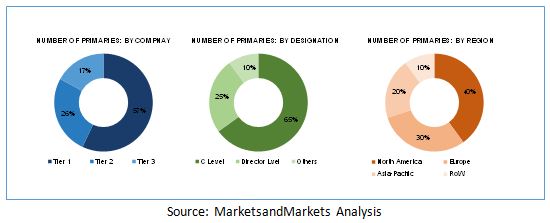
Major players operational in the spoil detection based smart label market have been identified across region, along with their offerings, distribution channel, and regional presence. Furthermore, the average revenues generated by these companies, segmented on the basis of region, were used to arrive at the overall market size. This overall market size was used in the top-down procedure to estimate the sizes of subsegments of markets via percentage splits from secondary and primary research. The entire procedure includes the study of the annual and financial reports of the top market players and extensive interview of key industry leaders such as CEOs, VPs, directors, marketing executives, subject matter experts (SMEs), and C-level executives of key market players to obtain and verify critical qualitative and quantitative information as well as to assess future prospects.
To know about the assumptions considered for the study, download the pdf brochure
This report provides valuable insights regarding the integrated ecosystem of the spoil detection based smart label market, which gives the holistic view of the current demand-side and vendor-side of this market. This study answers several questions for the stakeholders, primarily which market segments to focus on in next two to five years for prioritizing their efforts and investments. The value chain of smart label consists of product-based and service-based providers, with value being added at each stage, thereby producing end products and services comprising smart labels. Original equipment manufacturers (OEMs) and smart label manufacturers are the key contributor to the ecosystem of spoil detection based smart label market.
Target Audience
- Original Equipment Manufacturers (OEMs)
- Suppliers and Distributors
- Smart label manufactures
- Processed Food Manufactures
- Research Organizations and Institutes
- Market research and Consulting Firms
- Technology Standards Organizations, Forums, Alliances, and Associations
- Technology Investors
- Raw Material Supplier
- Base Material Manufacturing
- Third party Logistics
- Prototype Designing Firms
- Analysts and Strategic Business Planners
- End users interested to know more about the spoil detection based smart label and the latest technological developments in this market
- Government and Other Regulatory Bodies
Spoil Detection Based Smart Label Market Scope:
By Type:
- Fish
- Meat
- Vegetables
- Dairy Products
- Processed Foods
- Others
By Region:
- North America
- Europe
- Asia-Pacific (Excluding Japan)
- Japan
- Rest of the World
Available Customizations:
Along with the market data, MarketsandMarkets offers customizations as per the client’s specific needs. The following customization options are available for the report:
Regional Analysis
- Further breakdown of region/country-specific analysis
Company Information
- Detailed analysis and profiling of additional market players (Up to 5)












Growth opportunities and latent adjacency in Spoil Detection Based Smart Label Market