Wire-to-Board Connector Market by Pitch Size (0.8, 1.0, 1.25, 1.27, 2.0, 2.5, 2.54, 3.0, 3.3, 3.96, 5, 7.92, and 10.16), Style (Accessory, Header, Housing, Plug, Receptacle, and Socket), Application, and Geography - Global Forecast to 2035


Wire-to-Board Connector Market Summary
The global Wire-to-Board Connector Market is expanding steadily as electronic systems become more compact, connected, automated, and power-intensive across automotive, consumer electronics, industrial automation, telecommunications, medical devices, aerospace, and data infrastructure. Based on recent industry estimates and a harmonized market assessment, the global market is estimated at approximately USD 5–6 billion in 2025 and is projected to reach USD 8–10 billion by 2035, registering a CAGR of 5%–6% during the forecast period. Current industry research confirms that wire-to-board connectors are increasingly used across automotive, industrial, consumer electronics, medical, telecommunications, aerospace, and defense applications, while Asia Pacific represents a particularly important growth center.
Wire-to-board connectors provide an electrical and mechanical interface between wires or cable assemblies and printed circuit boards (PCBs). Their ability to deliver reliable power and signal transmission while supporting compact packaging makes them essential in increasingly sophisticated electronic architectures. The transition toward electric vehicles, advanced driver-assistance systems, connected appliances, industrial robots, smart factories, IoT devices, and edge computing infrastructure is increasing connector content per system. At the same time, AI-driven automation is encouraging manufacturers to develop connectors that can support higher density, improved signal integrity, secure locking, automated assembly, and demanding thermal and vibration environments.
The market is also benefiting from miniaturization. Modern electronics require smaller pitches, lower profiles, higher circuit density, and simplified assembly. Leading manufacturers are therefore developing compact wire-to-board connector systems with stronger retention mechanisms, high-current capabilities, sealed structures, and surface-mount compatibility. TE Connectivity, for example, offers wire-to-board products spanning miniature interconnects, PCB terminals, FFC/FPC connectors, headers, receptacles, and power connectors.
Key Market Trends & Insights
Asia Pacific is the largest growth engine. APAC is expected to account for a substantial share of global market expansion, supported by electronics manufacturing, automotive production, industrial automation, telecommunications infrastructure, and the expansion of EV supply chains. Technavio estimates that APAC could contribute approximately 48% of global market growth over its forecast period.
Automotive is becoming an increasingly important application. Vehicle electrification, connected-car architectures, ADAS, battery-management systems, infotainment, lighting, and power distribution are increasing the number and sophistication of electrical connections within vehicles. Wire-to-board products designed for vibration, temperature, and chemical resistance are particularly valuable in automotive environments.
Miniaturization is reshaping product development. Demand is shifting toward low-profile connectors with smaller pitch sizes while maintaining mechanical strength and electrical reliability. Molex, for instance, offers a 0.80 mm-pitch Zero-Hachi wire-to-board system designed for space-constrained applications.
Industrial automation and IoT are expanding the addressable market. Connected machines, sensors, controllers, robots, and edge devices require compact and dependable connections between field wiring and PCBs. As factories deploy more sensors and automated equipment, connector reliability becomes increasingly important to overall system uptime.
AI is influencing connector manufacturing as well as applications. AI-enabled machine vision, predictive quality control, automated assembly, and robotic connector insertion are emerging across electronics and wire-harness manufacturing. Recent research has demonstrated AI-based connector mating using visual, tactile, and force data, highlighting the potential for automation in traditionally manual assembly processes.
Market Size & Forecast
-
Base year market size: USD 5–6 billion in 2025
-
Forecast value by 2035: USD 8–10 billion
-
CAGR: 5%–6% during 2025–2035
-
Primary growth factors: Vehicle electrification, electronics miniaturization, industrial automation, IoT deployment, smart appliances, telecommunications infrastructure, and increasing PCB integration.
-
Growth outlook: Increasing electronic content in vehicles, industrial equipment, connected devices, and automated systems will continue to create demand for compact, reliable, high-density wire-to-board connections. Recent market research also indicates extensive segmentation across connector type, pitch, contact configuration, number of positions, housing material, current rating, mounting style, insulation material, and end-use industry.
Wire-to-Board Connector Market Top 10 key takeaway
-
The global Wire-to-Board Connector Market is estimated at USD 5–6 billion in 2025.
-
The market is projected to reach approximately USD 8–10 billion by 2035.
-
The market is expected to expand at a CAGR of 5%–6% during the forecast period.
-
Asia Pacific is expected to remain the primary growth region.
-
Automotive applications are becoming increasingly important because of electrification and connected vehicle architectures.
-
Miniaturized, low-profile, high-density connectors are gaining traction across electronics applications.
-
Industrial automation and IoT are creating additional demand for reliable PCB connectivity.
-
High-current and sealed connectors are becoming important for EVs, industrial equipment, and harsh environments.
-
AI and automation are improving connector assembly, inspection, quality control, and manufacturing efficiency.
-
Leading manufacturers are focusing on product miniaturization, secure locking, higher current capacity, and application-specific designs.
Product Insights
The header and receptacle-based wire-to-board connector segment represents a major product category because these configurations offer flexibility, serviceability, and reliable electrical contact between discrete wires and PCBs. Depending on the application, manufacturers can select vertical or right-angle configurations, single- or dual-row designs, different circuit counts, and various pitch sizes. TE Connectivity's portfolio illustrates the breadth of the product landscape, including headers, receptacles, PCB terminals, housings, jumpers, shunts, FFC/FPC connectors, and connector assemblies.
Traditional 2.54 mm and similar standard-pitch connectors continue to serve cost-sensitive and general-purpose applications, while smaller 1.0 mm, 1.25 mm, 1.5 mm, and 2.0 mm solutions are gaining importance in compact electronics. The trend toward smaller pitch is particularly visible in automotive electronics, wearables, portable devices, industrial controllers, and connected appliances.
Power-oriented wire-to-board connectors are another important product category. As electronic systems require more power within smaller footprints, manufacturers are developing connectors that combine compact packaging with higher current capacity. TE Connectivity's Economy Power and Economy Power II products, for example, support applications requiring higher current in compact PCB architectures, including appliances, industrial machinery, and lighting.
Molex similarly offers a broad portfolio spanning basic, enhanced, high-performance, sealed, rugged, and glow-wire-capable wire-to-board connectors. Its product portfolio includes low-profile solutions and high-current designs for automotive and industrial applications.
Emerging products increasingly incorporate secondary locking, polarization, terminal-position assurance, sealing, and automated-assembly compatibility. These features reduce the risk of incorrect mating and connector disengagement while supporting higher production efficiency.
Technology / Component Insights
The technology landscape of the Wire-to-Board Connector Market is shaped by contact design, pitch, terminal materials, housing materials, mounting methods, locking mechanisms, plating technologies, and insulation systems. Manufacturers are increasingly balancing electrical performance with mechanical robustness, thermal performance, manufacturability, and cost.
Miniaturization is one of the strongest technology trends. Smaller pitch connectors enable manufacturers to reduce PCB footprint and increase circuit density. However, shrinking dimensions can increase challenges related to insertion force, contact reliability, crosstalk, heat dissipation, and automated assembly. Advanced contact geometry and material engineering are therefore becoming increasingly important.
Surface-mount technology is gaining relevance because it enables connectors to be integrated into automated PCB assembly lines. Molex's Spot-On connector portfolio illustrates this trend, including SMT wire-to-board connectors designed for applications where potting and thermal cycling can create solder-joint challenges.
AI, IoT, cloud computing, and automation are indirect but increasingly important market drivers. AI servers, edge-computing systems, industrial controllers, smart cameras, and connected sensors all require reliable physical interconnections. As IoT architectures expand, a greater number of sensor and control nodes must connect to PCBs and embedded electronics.
Automation is also transforming connector manufacturing. Machine vision can inspect connector orientation, wire placement, terminal position, and assembly quality. AI-based robotic systems are being researched for connector mating and wire-harness installation, potentially improving consistency and reducing manual assembly requirements.
Future innovations are likely to focus on higher-speed signal transmission, hybrid power-and-signal connectors, high-current miniaturized systems, advanced sealing, improved electromagnetic compatibility, and connectors optimized for automated manufacturing.
Application Insights
Automotive is expected to remain one of the most strategically important application segments. Modern vehicles contain extensive electronic architectures covering power distribution, body controls, lighting, infotainment, ADAS, battery management, sensors, telematics, and connectivity. EVs further increase the importance of reliable electrical connections because of battery systems, power electronics, thermal-management systems, and charging infrastructure.
TE Connectivity's automotive wire-to-board portfolio demonstrates the growing need for connectors capable of supporting different current levels, pitches, pin counts, and harsh-environment requirements. Its products are designed for applications exposed to vibration, temperature variation, and chemicals.
Consumer electronics remains a high-volume application because smartphones, computers, appliances, gaming systems, televisions, and smart-home products require compact internal interconnects. Product designers increasingly prioritize low-profile connectors to maximize available PCB space.
Industrial automation is another important growth area. Robots, programmable controllers, sensors, motor drives, industrial PCs, machine-vision systems, and control equipment require dependable connections that can withstand vibration and repeated operating cycles.
Medical devices, telecommunications equipment, aerospace and defense systems, and data infrastructure provide additional opportunities. The increasing use of connected medical equipment and edge computing is creating demand for high-reliability, high-density connector systems.
Regional Insights
North America remains a major market for high-performance wire-to-board connectors because of its strong automotive, aerospace and defense, industrial automation, data infrastructure, and advanced electronics sectors. Increasing investment in semiconductor manufacturing, data centers, EV production, and industrial digitization is creating additional demand for PCB connectivity. The region also benefits from established connector manufacturers and technology companies.
Europe maintains a strong position due to its automotive manufacturing base, industrial automation expertise, aerospace industry, and focus on energy-efficient technologies. Germany is particularly important because of its automotive and industrial ecosystem. European manufacturers are increasingly adopting automated production and smart-factory technologies, increasing demand for connectors capable of reliable operation in demanding environments.
Asia Pacific is expected to be the fastest-growing regional market. China, Japan, India, South Korea, and Southeast Asian economies benefit from extensive electronics manufacturing, automotive production, telecommunications investment, and industrial automation. Research covering APAC wire-to-board connectors includes China, India, Japan, Australia, Indonesia, Malaysia, Thailand, and other markets, demonstrating the breadth of the regional opportunity.
-
North America: High-value demand from automotive, aerospace, data infrastructure, and industrial automation.
-
Europe: Strong automotive and Industry 4.0 ecosystem supports connector adoption.
-
Asia Pacific: Fastest growth due to electronics manufacturing and industrial expansion.
-
China: Large electronics and automotive manufacturing base drives volume demand.
-
Japan and India: Robotics, automotive electronics, industrial automation, and digitalization create new opportunities.
Country-Specific Market Trends
In China, the Wire-to-Board Connector Market is expected to expand at approximately 7%–8% CAGR through 2035. China's extensive electronics manufacturing ecosystem, EV production, industrial automation, telecommunications infrastructure, and consumer-device production provide a large addressable market. Government initiatives supporting advanced manufacturing and semiconductor development are also strengthening domestic electronics supply chains.
Japan is projected to grow at approximately 5%–6% CAGR, supported by automotive electronics, robotics, precision manufacturing, consumer electronics, and industrial equipment. Japan's emphasis on miniaturization and manufacturing quality makes high-density, reliable connectors particularly important.
In North America, the United States is expected to register approximately 5%–6% CAGR, supported by automotive electrification, data centers, aerospace and defense, industrial automation, and domestic electronics manufacturing. Canada could grow at approximately 4%–5% CAGR, supported by industrial equipment, automotive supply chains, aerospace, and technology infrastructure. Mexico is projected to achieve approximately 6%–7% CAGR, benefiting from automotive manufacturing, electronics assembly, and nearshoring.
In Europe, Germany is expected to grow at approximately 5%–6% CAGR, driven by automotive electrification, factory automation, robotics, and industrial equipment. France is expected to expand at around 4%–5% CAGR, supported by aerospace, automotive, energy systems, and industrial electronics.
-
China: EVs, electronics manufacturing, and automation are major growth engines.
-
Japan: Robotics and precision electronics support demand for advanced connectors.
-
United States: Data centers, automotive, aerospace, and industrial applications drive growth.
-
Germany: Automotive electrification and Industry 4.0 remain important demand generators.
-
France: Aerospace, energy, automotive, and industrial electronics support market development.
Key Wire-to-Board Connector Market Company Insights
The competitive landscape includes global connector manufacturers with broad portfolios spanning automotive, industrial, consumer electronics, medical, telecommunications, and aerospace applications. Key companies include TE Connectivity, Molex, Amphenol Corporation, Hirose Electric, JAE, HARTING Technology Group, Samtec, KYOCERA AVX, Phoenix Contact, and JST. Industry research covering the connector market identifies many of these companies among major participants, while APAC-focused research specifically includes TE Connectivity, Amphenol, Molex, HARTING, Hirose, JAE, Samtec, and others.
TE Connectivity maintains one of the broadest wire-to-board portfolios, covering miniature connectors, power connectors, PCB terminals, headers, receptacles, FFC/FPC products, and automotive solutions. Its product strategy emphasizes reliability, miniaturization, high-current capability, and application-specific engineering.
Molex is focusing on low-profile, high-current, sealed, rugged, and high-density products. Its Zero-Hachi, Rely-On, Compactus, CMC/CMX, and other product families address applications ranging from compact electronics to automotive and industrial automation.
Amphenol is developing compact hybrid power-and-signal solutions. Its ComboLock wire-to-board platform, for example, combines 1.00 mm pitch signal connectivity with 3.00 mm pitch power connectivity. Other leading companies are differentiating through higher-speed interconnects, automated assembly compatibility, harsh-environment products, miniaturization, and specialized automotive or industrial connector systems.
-
Companies are investing heavily in miniaturized and high-density connector designs.
-
High-current and hybrid power-and-signal products are gaining strategic importance.
-
Automotive and EV connectivity is a major product-development focus.
-
Sealed and ruggedized products are expanding in harsh industrial environments.
-
AI-assisted manufacturing and automated inspection are improving production efficiency and quality.
Recent Developments
A significant product-development trend is the introduction of miniaturized wire-to-board connector families designed for space-constrained electronic systems. Molex's Zero-Hachi system, for example, uses a 0.80 mm pitch and 1.60 mm profile for compact applications, demonstrating the industry's movement toward higher density.
Another important development is the expansion of hybrid power-and-signal connectors. Amphenol's ComboLock platform combines different pitch configurations for signal and power in a compact wire-to-board architecture, reflecting increasing demand for integrated connectivity in space-constrained applications.
Manufacturing automation is also advancing. Recent research has demonstrated AI-based connector mating using multimodal sensing, while automated machine-vision inspection systems are being developed to verify wire positioning, connector polarity, and color sequences. These developments indicate growing opportunities to integrate AI and robotics into connector and wire-harness manufacturing.
Market Segmentation
The Wire-to-Board Connector Market can be segmented by Product, Technology/Component, Application, and Region. By product, the market includes headers, receptacles, housings, terminals, PCB terminals, FFC/FPC connectors, ribbon connectors, board-in connectors, and specialized power and hybrid connectors. By technology and component characteristics, the market can be assessed according to pitch size, number of positions, contact type, current rating, mounting style, housing material, insulation material, termination method, and locking mechanism. Current industry research specifically tracks these parameters across global and regional markets.
By application, the market covers automotive, consumer electronics, industrial equipment and automation, telecommunications and data infrastructure, medical devices, aerospace and defense, appliances, and other electronics applications. Automotive and industrial markets are increasingly emphasizing vibration resistance, thermal durability, sealing, and secure mating, while consumer electronics favors miniaturization and high-density configurations. Regionally, the market is segmented into North America, Europe, Asia Pacific, Latin America, and the Middle East & Africa, with Asia Pacific representing the most significant manufacturing and growth hub.
-
By Product: Headers, receptacles, housings, terminals, FFC/FPC, and power connectors form the core product landscape.
-
By Technology: Miniaturized pitch, SMT compatibility, high-current contacts, locking, and sealing are key differentiators.
-
By Application: Automotive, consumer electronics, industrial automation, telecom, and medical are major end-use sectors.
-
By Region: Asia Pacific is the key growth region, while North America and Europe remain important high-value markets.
-
By emerging demand: EVs, smart factories, IoT devices, AI infrastructure, and automated equipment are expanding application opportunities.
The global Wire-to-Board Connector Market is expected to maintain steady growth through 2035 as the world's electronic systems become more connected, compact, automated, and electrically complex. From an estimated USD 5–6 billion in 2025, the market is projected to reach approximately USD 8–10 billion by 2035, representing a CAGR of 5%–6%.
The long-term opportunity extends well beyond conventional electronics. Vehicle electrification is increasing connector requirements across batteries, power electronics, sensors, infotainment, and control systems. Industrial automation is increasing the number of sensors, controllers, motors, and robotic systems requiring reliable PCB connections. Meanwhile, AI infrastructure and IoT are expanding the number of connected electronic nodes deployed across factories, buildings, vehicles, and data environments.
AI will influence the market in two distinct ways. First, AI-powered systems will increase demand for electronic equipment and therefore connectors. Second, AI and machine vision will improve connector manufacturing through automated inspection, defect detection, assembly optimization, predictive maintenance, and robotic connector mating. Research into AI-enabled connector assembly already demonstrates the potential for intelligent automation to improve insertion robustness and manufacturing efficiency.
The strategic direction of the market is therefore moving toward miniaturization, higher current density, improved signal integrity, stronger mechanical retention, automated assembly, and intelligent manufacturing. Companies that can deliver reliable connectors while reducing size, assembly complexity, and total system cost will be well positioned to benefit from the increasing electronic content of modern products through 2035.
FAQs - Wire-to-Board Connector Market
1. What is the estimated size of the Wire-to-Board Connector Market?
The global Wire-to-Board Connector Market is estimated at approximately USD 5–6 billion in 2025 based on a harmonized assessment of recent market research. Market estimates differ depending on whether the scope includes only wire-to-board products or broader PCB connector categories. Recent research specifically covers wire-to-board connectors across automotive, consumer electronics, industrial, medical, telecommunications, aerospace, and defense applications.
2. What is the expected growth rate of the Wire-to-Board Connector Market?
The market is projected to expand at a CAGR of approximately 5%–6% from 2025 to 2035. Growth will be supported by vehicle electrification, electronics miniaturization, industrial automation, IoT, smart appliances, and increasing PCB content.
3. What are the key drivers of the Wire-to-Board Connector Market?
Key drivers include increasing electronic content in vehicles, EV adoption, industrial automation, IoT deployment, consumer-electronics miniaturization, data infrastructure expansion, smart-home technologies, and demand for compact, high-density, reliable electrical connections.
4. Which region is leading the Wire-to-Board Connector Market?
Asia Pacific is the key regional growth center and is expected to record the fastest expansion. China, Japan, India, South Korea, and Southeast Asian economies benefit from strong electronics manufacturing, automotive production, industrial automation, and telecommunications investment. Technavio estimates APAC could contribute about 48% of global market growth in its forecast period.
5. Who are the key companies in the Wire-to-Board Connector Market?
Major companies include TE Connectivity, Molex, Amphenol Corporation, Hirose Electric, JAE, HARTING Technology Group, Samtec, KYOCERA AVX, Phoenix Contact, and JST. These companies are competing through miniaturization, high-current designs, automotive connectivity, ruggedized products, automated assembly, and application-specific connector technologies.
 Exclusive indicates content/data unique to MarketsandMarkets and not available with any competitors.
Table of Contents
1 Introduction (Page No. - 14)
1.1 Objectives of the Study
1.2 Market Definition
1.3 Study Scope
1.3.1 Markets Covered
1.3.2 Geographic Scope
1.4 Currency & Years Considered for Study
1.5 Market Stakeholders
2 Research Methodology (Page No. - 18)
2.1 Market Size Estimation
2.2 Actual Research Methodology
2.3 Research Data
2.3.1 Secondary Data
2.3.1.1 Key Data From Secondary Sources
2.3.2 Primary Data
2.3.2.1 Key Data From Primary Sources
2.3.2.2 Key Industry Insights
2.3.2.3 Breakdown of Primaries
2.4 Market Share Estimation
2.4.1 Bottom-Up Approach
2.4.2 Top-Down Approach
2.4.3 Market Share Estimation
2.5 Market Breakdown and Data Triangulation
2.6 Research Assumptions
3 Market Overview (Page No. - 36)
3.1 Introduction
3.2 Market Dynamics
3.2.1 Drivers
3.2.1.1 Increasing Internet Penetration and Data Traffic
3.2.1.2 Growing Demand for Smartphones and Other Connecting Device
3.2.1.3 Mainstream Adoption of Cloud Computing
3.2.2 Restraints
3.2.2.1 Increasing Network Complexity
3.2.3 Opportunities
3.2.3.1 Introduction of Smaller, Cheaper, and Energy Efficient Transceivers
3.2.3.2 Commercialization of IoT
3.2.3.3 Deployment of VOIP, LTE, and 5G Network
3.2.3.4 Extension of Network in Developing Countries
3.2.4 Challenges
3.2.4.1 Continuous Optimization of Component Size
4 Industry Trends (Page No. - 51)
4.1 Introduction
4.2 Value Chain Analysis
4.3 Porter’s Five Forces Analysis
4.3.1 Threat of New Entrants
4.3.2 Threat of Substitutes
4.3.3 Bargaining Power of Suppliers
4.3.4 Bargaining Power of Buyers
4.3.5 Competitive Rivalry
5 Market, By Style (Page No. - 60)
5.1 Introduction
5.2 Accessory
5.3 Header
5.4 Housing
5.5 Plug
5.6 Receptacle
5.7 Socket
6 Market, By Pitch Size (Page No. - 69)
6.1 Introduction
6.2 0.8mm
6.3 1.0mm
6.4 1.25mm
6.5 1.27mm
6.6 2.0mm
6.7 2.5mm
6.8 2.54mm
6.9 3.0mm
6.10 3.3mm
6.11 3.96mm
6.12 5.0mm
6.13 7.92mm
6.14 10.16mm
7 Market, By Applications (Page No. - 93)
7.1 Introduction
7.2 Computer & Peripherals
7.3 Medical
7.4 Industrial & Instrumentation
7.5 Data & Telecom
7.6 Automotive
7.7 Aerospace & Defense
7.8 Others
8 Market, By Geography (Page No. - 102)
8.1 Introduction
8.2 Americas
8.3 Europe
8.4 Asia-Pacific
8.5 RoW
9 Competitive Landscape (Page No. - 117)
9.1 Overview
9.2 Market Share Analysis
9.3 Competitive Scenario
10 Company Profiles (Page No. - 124)
10.1 Molex Incorporated
10.1.1 Business Overview
10.1.2 Products Offered
10.1.3 Recent Developments
10.1.4 SWOT Analysis
10.1.5 MnM View
10.2 Te Connectivity Ltd.
10.2.1 Business Overview
10.2.2 Products Offered
10.2.3 Recent Developments
10.2.4 SWOT Analysis
10.2.5 MnM View
10.3 Amphenol Corporation
10.3.1 Business Overview
10.3.2 Products Offered
10.3.3 Recent Developments
10.3.4 SWOT Analysis
10.3.5 MnM View
10.4 Samtec, Inc.
10.4.1 Business Overview
10.4.2 Products Offered
10.4.3 Recent Developments
10.4.4 MnM View
10.5 Japan Aviation Electronics Industry, Ltd.
10.5.1 Business Overview
10.5.2 Products Offered
10.5.3 Recent Developments
10.5.4 SWOT Analysis
10.5.5 MnM View
10.6 C&K Components, Inc.
10.6.1 Business Overview
10.6.2 Products Offered
10.6.3 Recent Developments
10.6.4 MnM View
10.7 Kyocera Corp.
10.7.1 Business Overview
10.7.2 Products Offered
10.7.3 Recent Developments
10.7.4 SWOT Analysis
10.7.5 MnM View
10.8 J.S.T. MFG. Co. Ltd.
10.8.1 Business Overview
10.8.2 Products Offered
10.8.3 Recent Developments
10.8.4 SWOT Analysis
10.8.5 MnM View
10.9 Harting Technology Group.
10.9.1 Business Overview
10.9.2 Products Offered
10.9.3 Recent Developments
10.9.4 MnM View
10.10 Earni Group
10.10.1 Business Overview
10.10.2 Products Offered
10.10.3 Recent Developments
10.11 Phoenix Contact GmbH & Co. Kg
10.11.1 Business Overview
10.11.2 Products Offered
10.11.3 Recent Developments
10.11.4 MnM View
10.12 Wago Holding GmbH
10.12.1 Business Overview
10.12.2 Products Offered
10.12.3 Recent Developments
10.12.4 MnM View
11 Appendix (Page No. - 152)
11.1 Insights of Industry Experts
11.2 Discussion Guide
11.3 Introducing RT: Real-Time Market Intelligence
11.4 Available Customizations
11.5 Related Reports
List of Tables (64 Tables)
Table 3.1 Connector Market vs Wire-To-Board Connector Market, 2015–2022 (USD Million)
Table 3.2 Impact Analysis of Market Drivers
Table 3.3 Impact Analysis of Market Restraints
Table 3.4 Impact Analysis of Market Opportunities
Table 3.5 Impact Analysis of Market Challenges
Table 5.1 Connector Market Size By Type (USD Million)
Table 5.2 Market for Accessories, By Pitch Size (USD Million)
Table 5.3 Market for Headers, By Pitch Size (USD Million)
Table 5.4 Market for Housings, By Pitch Size (USD Million)
Table 5.5 Market for Plugs, By Pitch Size (USD Million)
Table 5.6 Market for Receptacles, By Pitch Size (USD Million)
Table 5.7 Market for Sockets, By Pitch Size (USD Million)
Table 6.1 Market, By Pitch Size (USD Million)
Table 7.1 Wire-To-Board Market, By Application, 2015–2022 (USD Million)
Table 7.2 Market for Computers & Peripherals Applications, By Type, 2015–2022 (USD Million)
Table 7.3 Market for Computers & Peripherals Applications, By Pitch Size, 2015–2022 (USD Million)
Table 7.4 Market for Medical Applications, By Type, 2015–2022 (USD Million)
Table 7.5 Market for Medical Applications, By Pitch Size, 2015–2022 (USD Million)
Table 7.6 Market for Industrial & Instrumentation Applications, By Type, 2015–2022 (USD Million)
Table 7.7 Market for Industrial & Instrumentation Applications, By Pitch Size, 2015–2022 (USD Million)
Table 7.8 Market for Data/Telecom Applications, By Type, 2015–2022 (USD Million)
Table 7.9 Market for Data/Telecom Applications, By Pitch Size, 2015–2022 (USD Million)
Table 7.10 Market for Automotive Applications, By Type, 2015–2022 (USD Million)
Table 7.11 Market for Automotive Applications, By Pitch Size, 2015–2022 (USD Million)
Table 7.12 Market for Aerospace and Defense Applications, By Type, 2015–2022 (USD Million)
Table 7.13 Market for Aerospace and Defense Applications, By Pitch Size, 2015–2022 (USD Million)
Table 7.14 Market for Other Applications, By Type, 2015–2022 (USD Million)
Table 7.15 Market for Other Applications, By Pitch Size, 2015–2022 (USD Million)
Table 8.1 Connector Market, By Geography, 2015–2022 (USD Million)
Table 8.2 Market in the Americas, By Application, 2015–2022 (USD Million)
Table 8.3 Market for Computers & Peripherals Applications in the Americas, By Type, By 2015–2022 (USD Million)
Table 8.4 Market for Medical Applications in the Americas, By Type, 2015–2022 (USD Million)
Table 8.5 Market for Industrial & Instrumentation Applications in the Americas, By Type, 2015–2022 (USD Million)
Table 8.6 Market for Data/Telecom Applications in the Americas, By Type, 2015–2022 (USD Million)
Table 8.7 Market for Automotive Applications in the Americas, By Type, 2015–2022 (USD Million)
Table 8.8 Market for Aerospace & Defense Applications in the Americas, By Type, 2015–2022 (USD Million)
Table 8.9 Market for Other Applications in the Americas, By Type, 2015–2022 (USD Million)
Table 8.10 Market in Europe, By Application, 2015–2022 (USD Million)
Table 8.11 Market for Computers & Peripherals Applications in Europe, By Type, 2015–2022 (USD Million)
Table 8.12 Market for Medical Applications in Europe, By Type, 2015–2022 (USD Million)
Table 8.13 Market for Industrial & Instrumentation Applications in Europe, By Type, 2015–2022 (USD Million)
Table 8.14 Market for Data/Telecom Applications in Europe, By Type, 2015–2022 (USD Million)
Table 8.15 Market for Automotive Applications in Europe, By Type, 2015–2022 (USD Million)
Table 8.16 Market for Aerospace & Defense Applications in Europe, By Type, 2015–2022 (USD Million)
Table 8.17 Market for Other Applications in Europe, By Type, 2015–2022 (USD Million)
Table 8.18 Market in APAC, By Application, 2015–2022 (USD Million)
Table 8.19 Market for Computers & Peripherals Applications in APAC, By Type, 2015–2022 (USD Million)
Table 8.20 Market for Medical Applications in APAC, By Type, 2015–2022 (USD Million)
Table 8.21 Market for Industrial & Instrumentation Applications in APAC, By Type, 2015–2022 (USD Million)
Table 8.22 Market for Data/Telecom Applications in APAC, By Type, 2015–2022 (USD Million)
Table 8.23 Market for Automotive Applications in APAC, By Type, 2015–2022 (USD Million)
Table 8.24 Market for Aerospace & Defense Applications in APAC, By Type, 2015–2022 (USD Million)
Table 8.25 Market for Other Applications in APAC, By Type, 2015–2022 (USD Million)
Table 8.26 Market in RoW, By Application, 2015–2022 (USD Million)
Table 8.27 Market for Computers & Peripherals Applications in RoW, By Type, 2015–2022 (USD Million)
Table 8.28 Market for Medicals Applications in RoW, By Type, 2015–2022 (USD Million)
Table 8.29 Market for Industrial & Instrumentation Applications in RoW, By Type, 2015–2022 (USD Million)
Table 8.30 Market for Data/Telecom Applications in RoW, By Type, 2015–2022 (USD Million)
Table 8.31 Market for Automotive Applications in RoW, By Type, 2015–2022 (USD Million)
Table 8.32 Market for Aerospace & Defense Applications in RoW, By Type, 2015–2022 (USD Million)
Table 8.33 Market for Other Applications in RoW, By Type, 2015–2022 (USD Million)
Table 9.1 Competitive Landscape Table- 2015
Table 9.2 Competitive Landscape Table- 2014
Table 9.3 Competitive Landscape Table- 2013
List of Figures (27 Figures)
Figure 2.1 Research Methodology
Figure 3.1 Market Dynamics of the Wire-To-Board Connector Market
Figure 4.1 Value Chain Analysis of the Connector Market
Figure 4.2 Bargaining Power of Suppliers
Figure 4.3 Bargaining Power of Buyers
Figure 4.4 Threat of New Entrant
Figure 4.5 Threat of Substitutes
Figure 4.6 Degree of Competition
Figure 4.7 Impact Analysis of Porters 5 Forces
Figure 5.1 Market, By Type (USD Million)
Figure 6.1 Market, By Pitch Size (USD Million)
Figure 6.2 Market for 0.8mm Pitch Size (USD Million)
Figure 6.3 Market for 1.0mm Pitch Size (USD Million)
Figure 6.4 Wire to Board Connector Market, for 1.25mm Pitch Size (USD Million)
Figure 6.5 Wire to Board Connector Market, for 1.27mm Pitch Size (USD Million)
Figure 6.6 Wire to Board Connector Market, for 2.0mm Pitch Size (USD Million)
Figure 6.7 Wire to Board Connector Market, for 2.5mm Pitch Size (USD Million)
Figure 6.8 Wire to Board Connector Market, for 2.54mm Pitch Size (USD Million)
Figure 6.9 Wire to Board Connector Market, for 3.3mm Pitch Size (USD Million)
Figure 6.10 Wire to Board Connector Market, for 3.96mm Pitch Size (USD Million)
Figure 6.11 Wire to Board Connector Market, for 5.0mm Pitch Size (USD Million)
Figure 6.12 Wire to Board Connector Market, for 7.92mm Pitch Size (USD Million)
Figure 6.13 Wire to Board Connector Market, for 10.16mm Pitch Size (USD Million)
Figure 7.1 Market for Applications, By Type 2015–2022 (USD Million)
Figure 7.2 Market for Applications, By Pitch Size 2015–2022 (USD Million))
Figure 8.1 Market, By Geography, 2015–2022 (USD Million)
Figure 9.1 Market Share Analysis
The sizing of the wire-to-board connector market has been done by top-down and bottom-up methods. The bottom-up approach has been employed to arrive at the overall size of the wire-to-board connector market from revenues of the key players (companies) and their share in the market. In the top-down approach, calculations are based on considering the overall connector market as the parent market and then giving percentage split to arrive at the overall connector market size. For the calculation of specific market segments, the most appropriate parent market size has been used to implement the top-down approach as well as different paid as well as non-paid primary and secondary sources have been used.
In the process of determining and verifying the market size for several segments and subsegments, data has been gathered through secondary research such as company websites, articles, and associations (Electronic Components Industry Association, Fibre Channel Industry Association), and extensive primary interviews conducted with key opinion leaders. The break-up of the profiles of primary participants is given in the chart below:
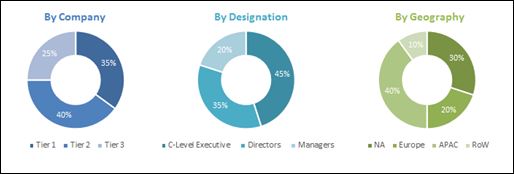
To know about the assumptions considered for the study, download the pdf brochure
The key players in the wire-to-board connector market are TE connectivity (Switzerland), Molex Incorporated (U.S.), Amphenol Corporation (U.S.), Samtec, Inc. (U.S.), Japan Aviation Electronic Industry, Ltd. (Japan), and Kyocera Corp. (Japan), among others.
Target Audience:
- Raw material suppliers
- Connector manufacturers
- Wire harness and cable assemblers
- Communication network providers
- Connector distributors and traders
- End users from all industries
- System/network integrators
- Government and other regulatory bodies
- Research institutes and organizations
- Market research and consulting firms
“Study answers several questions for the stakeholders, primarily which market segments to focus in the next two to five years (depends on the range of forecast period) for prioritizing the efforts and investments.”
Scope of the Report:
The market covered in this report has been segmented as follows:
Wire-to-Board Connector Market, by Style:
- Accessory
- Header
- Housing
- Plug
- Receptacle
- Socket
Wire-to-Board Connector Market, by Pitch Size:
- 0.8mm
- 1.0mm
- 1.25mm
- 1.27mm
- 2.0mm
- 2.5mm
- 2.54mm
- 3.3mm
- 3.96mm
- 5.0mm
- 7.92mm
- 10.16mm
Wire-to-Board Connector Market, by Application:
- Computer and Peripherals
- Medical
- Industrial and Instrumentation
- Data/Telecom
- Automotive
- Aerospace and Defense
- Others
Wire-to-Board Connector Market, by Geography:
- North America
- Europe
- Asia-Pacific
- Rest of the World
Available Customizations:
- Further breakdown of the style segment, by pitch size, application, and geography
- Further breakdown of the pitch size segment, by style, application, and geography
- Further breakdown of the geography segment, by pitch size, and style
- Detailed analysis and profiling of additional market players on the basis of various blocks of the value chain













Growth opportunities and latent adjacency in Wire-to-Board Connector Market