
Water Treatment Chemicals Market

Water Treatment Chemicals Market by Type (Flocculants & Coagulants, Corrosion Inhibitors, Scale Inhibitors, Biocides & Disinfectants, Chelating Agents), Source, End User (Residential, Commercial & Industrial), And Region - Global Forecast to 2030




WATER TREATMENT CHEMICALS MARKET SIZE & SHARE
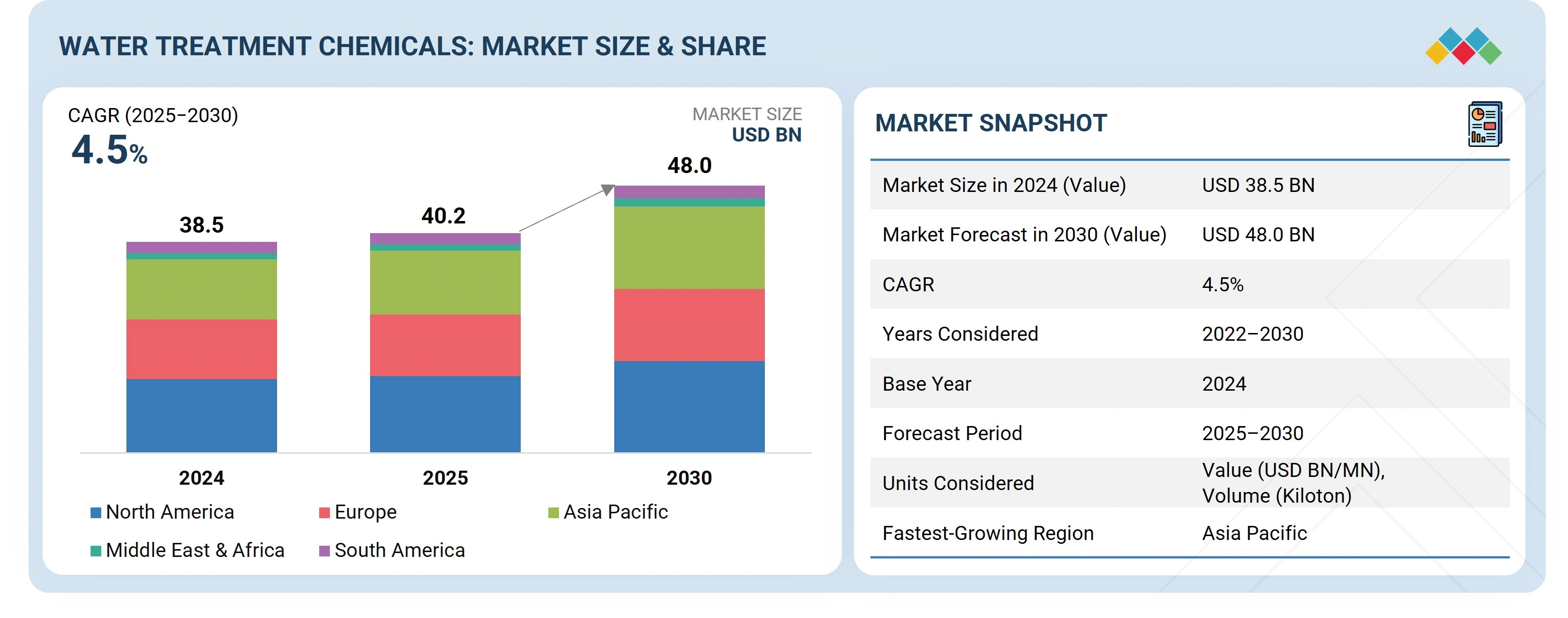
Source: Secondary Research, Interviews with Experts, MarketsandMarkets Analysis | Updated on : April 28, 2026
The water treatment chemicals market size is projected to reach USD 48.0 billion by 2030 from USD 40.2 billion in 2025, growing at a CAGR of 4.5% from 2025 to 2030. The global water treatment chemicals market size growth is driven by increasing urbanization and industrialization, as well as tightening environmental regulations that demand effective wastewater management. Water treatment plant investments have increased due to rising water scarcity and contamination, while membrane treatment technology, biocides, and corrosion inhibitors have boosted market growth.
KEY TAKEAWAYS
-
By RegionAsia Pacific is expected to be the fastest-growing market with a CAGR of 5.8% during the forecast period
-
By TypeScale Inhibitor is expected to be the fastest-growing type with a CAGR of 4.6% during forecast year
-
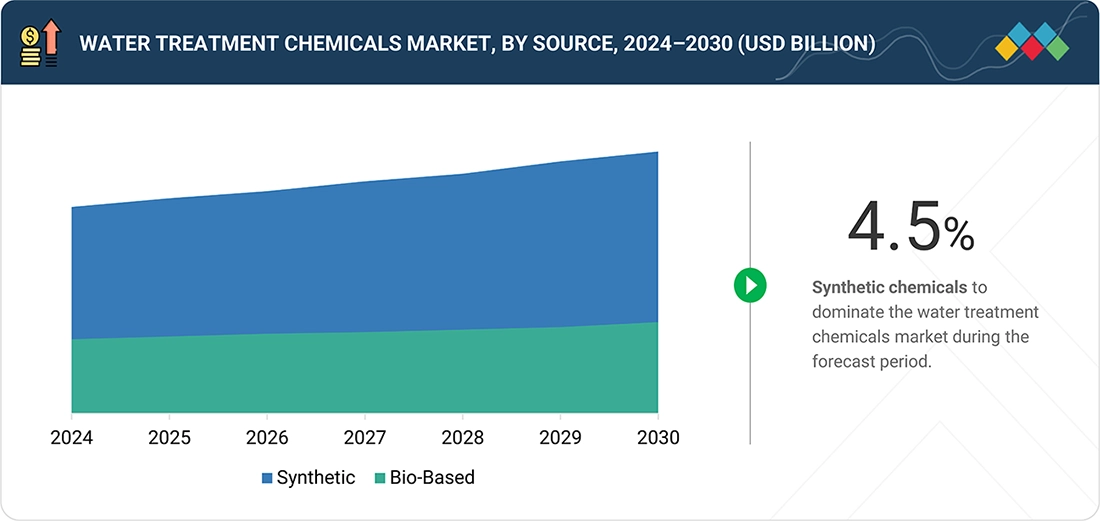
By SourceSynthetic chemicals would hold the largest market share of around 80% during the forecast period
-
By ApplicationRaw water treatment to hold largest market share during the forecast period
-
By End UserIndustrial end user to have the largest market share during the forecast period
-
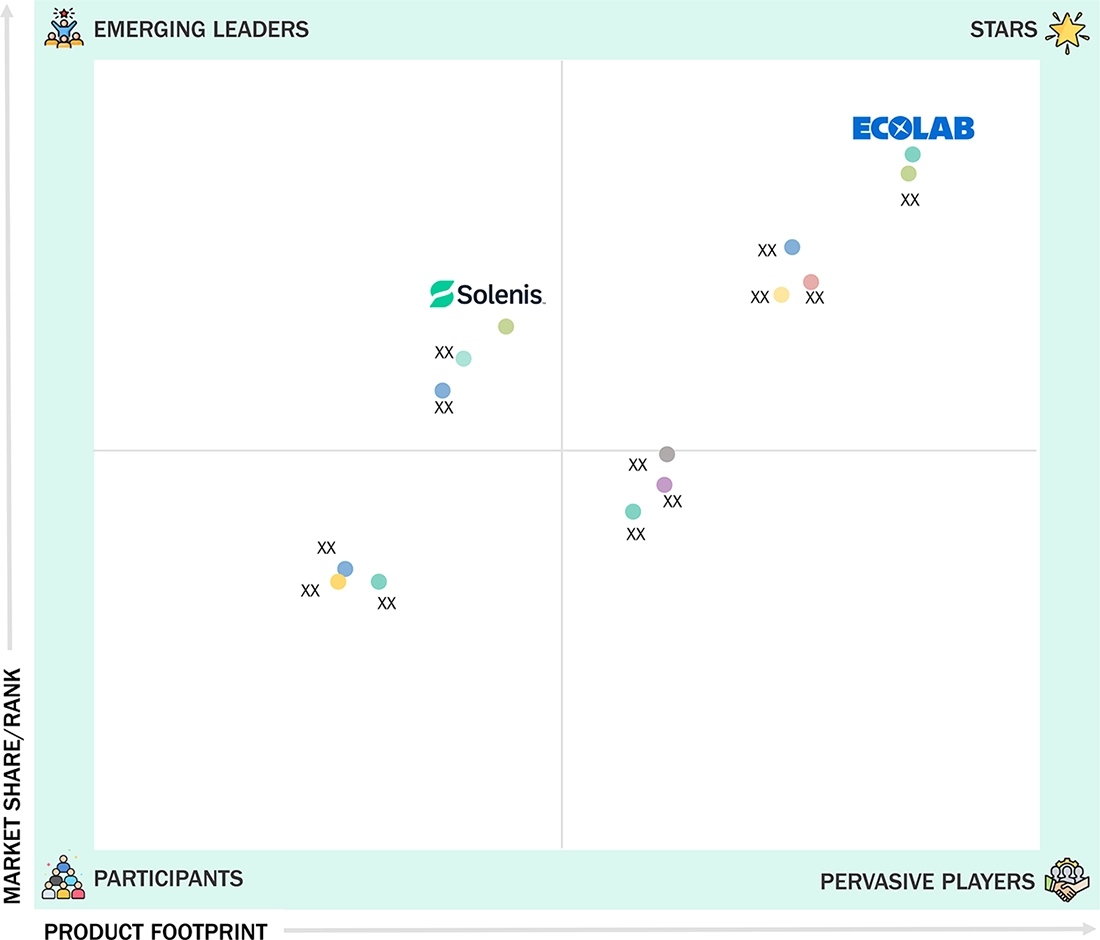
COMPETITIVE LANDSCAPE- KEY PLAYERSCompanies such as Ecolab, BASF, Kemira, and Veolia among others,were identified as some of the star players in the water treatment chemicals market globally, given their strong market share and product footprint
-
COMPETITIVE LANDSCAPE- STARTUPSAries Chemical, Inc., Buckman, and Dorf Ketal among others, have distinguished themselves among startups and SMEs by securing strong footholds in specialized niche areas, underscoring their potential as emerging market leaders
The water treatment chemicals market is experiencing strong growth as industrialization advances, freshwater supplies decline, and wastewater discharge regulations become more stringent. The new product development process focuses on designing environmentally safe, high-performance products, including bio-based coagulants and biodegradable scale inhibitors, as well as smart chemical dosing systems that optimize use and reduce waste. The digital monitoring technologies, together with modular plant designs, create a framework for industrial reuse and desalination and zero-liquid discharge systems to take advantage of their capabilities.
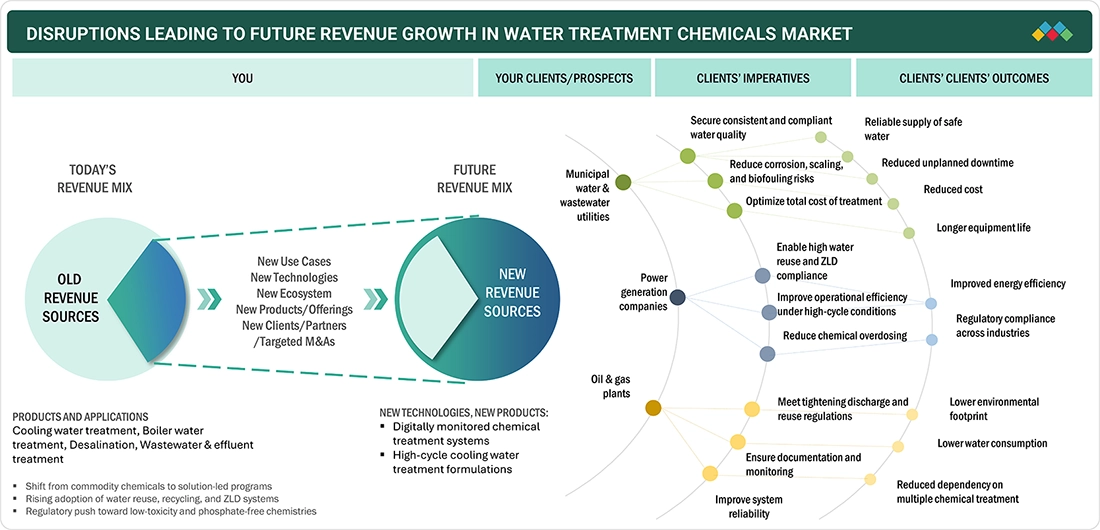
TRENDS & DISRUPTIONS IMPACTING CUSTOMERS' CUSTOMERS
The water treatment chemicals market is shifting from commodity-based consumption to performance- and solution-based product demand driven by stricter regulations, water scarcity, and rising environmental reuse requirements. The increasing use of water recycling and zero liquid discharge (ZLD) systems leads to higher chemical usage because end users prefer multi-functional and eco-friendly formulas which decrease treatment costs and operational expenses. The chemical suppliers now become solution partners through their implementation of digital monitoring and smart dosing systems, which change their business model from selling products.
Source: Secondary Research, Interviews with Experts, MarketsandMarkets Analysis
MARKET DYNAMICS

Level
-
Increasing demand for chemically treated water in various end-use industries

-
Growing focus on water reuse and scarcity management


Level
-
Availability of alternative water treatment technologies

-
High cost of water treatment processes


Level
-
Growing population and rapid urbanization in emerging economies

-
Increasing demand for specialty formulations


Level
-
Difficulties associated with eco-friendly formulations

Source: Secondary Research, Interviews with Experts, MarketsandMarkets Analysis
Driver: Increasing demand for chemically treated water in various end-use industries
The water treatment chemicals market is undergoing healthy growth, driven by rising demand for chemically treated water across various end-use markets in power generation, oil and gas, food and beverage, pharmaceutical, pulp and paper, and textile industries. With the rapid pace of industrialization worldwide, issues of water contamination and scarcity have become a serious concern, forcing industries to consider and implement effective chemical-based treatment processes to not only make processes more efficient but also ensure equipment longevity and a sustainable environment. Coagulants, flocculants, corrosion inhibitors, biocides, and scale control agents are these chemicals, and they are critical to ensuring water quality and its reuse in closed-loop systems. Moreover, increased imposition of tough discharge laws and zero liquid discharge (ZLD) laws, especially in the Asia Pacific and Europe, are forcing industries to incorporate high-level chemical treatment procedures. Increasing accuracy and cost-effectiveness of chemical applications is also being improved by the emergence of smart dosing and monitoring technologies.
Restraint: Availability of alternative water treatment technologies
The presence of alternative water treatment technologies poses a huge limitation on the water treatment chemicals market development. The use of emerging physical and biological treatment techniques (membrane filtration, ultraviolet (UV) disinfection, reverse osmosis (RO), ion exchange, and advanced oxidation processes (AOPs)) is becoming increasingly popular as both an alternative and a supplementary solution to chemical-based treatment. These technologies have been associated with benefits such as reducing chemical dependence, reducing sludge production, and minimizing secondary pollution, which is why they can be considered by industries and municipalities seeking sustainable water management solutions. Furthermore, the fact that operational costs are on the lower end and that efficiency of these advanced systems is increasing has also propelled their use especially in developed countries such as North America and Europe where there are tough environmental and sustainability requirements that prefer chemical free solutions. The transition to green and circular water management practices also contributes to the implementation of physical-biological and non-conventional chemicals in place of traditional ones.
Opportunity: Growing population and rapid urbanization in emerging economies
The increasing number of people and high urbanization rate in the emerging economy is a big opportunity to the water treatment chemicals market. India, China, Indonesia, Brazil and South Africa are already experiencing faster urbanization, industrial growth and increased water use and consequently the need to find efficient ways of treating water and waste water. The growth of towering cities is exerting a lot of pressure on the available water systems forcing the governments and the industry to invest on municipal water treatment, desalination and wastewater recycling plants. This generates a long-term demand of coagulants, flocculants, biocides, scale inhibitors, and corrosion inhibitors in order to sustain water quality and standards set by regulations. Moreover, the growing interest on safe drinking water, sanitation, and industrial water reuse are in line with such efforts as the Jal Jeevan Mission of India and water ten plan of China, which creates new possibilities in the work of chemical suppliers. The quick pace of industrialization also exposes the system to higher effluent loads which in turn require sophisticated chemical treatment so that the requirements of discharge norms are met.
Challenge: Difficulties associated with eco-friendly formulations
The challenges linked to the design and commercialization of environmental-friendly formulations also present a huge challenge to the water treatment chemicals market. Although pressure on regulators and industries to switch to bio-based, biodegradable, and non-toxic chemicals is increasing, achieving performance and stability comparable to traditional synthetic formulations remains challenging. The problem is that eco-friendly alternatives tend to be restricted in terms of efficacy, shelf life, and cost competitiveness, especially in extreme operating conditions, i.e., high temperature, salinity, or changing pH conditions encountered in industrial operations. In addition, the cost of production on bio-based raw materials is high and requires specialized formulation technologies that limit large-scale adoption, particularly in price-sensitive markets such as municipal and small-scale industrial markets. It also incurs extra costs in the form of compliance with various regional regulation like Europe and U.S.EPA, which results in higher cost in the field of R&D and postpones the commercialization of products. Also, performance benchmarks involving the performance of green water treatment chemicals have not been standardized as yet, thus the end users struggle to evaluate reliability and ROI.
WATER TREATMENT CHEMICALS MARKET: COMMERCIAL USE CASES ACROSS INDUSTRIES
| COMPANY | USE CASE DESCRIPTION | BENEFITS |
|---|---|---|
 |
Uses coagulants, disinfectants, corrosion and scale inhibitors in on-site water and wastewater treatment for food processing plants and water reuse systems | Ensures consistent food-grade water quality, supports water reuse targets, protects processing equipment, reduces downtime, and enables compliance with strict food safety and environmental regulations |
 |
Applies high-purity water treatment chemicals for boiler feed water, cooling systems, and wastewater treatment in pharmaceutical manufacturing facilities | Maintains pharmacopeia-compliant water quality, prevents contamination risks, improves equipment reliability, and supports validated, regulated production processes |
 |
Utilizes cooling water treatment chemicals, corrosion inhibitors, biocides, and desalination pretreatment chemicals across refineries, upstream facilities, power plants, and seawater desalination units | Ensures operational reliability under high-salinity and high-temperature conditions, minimizes corrosion and fouling risks, supports large-scale water reuse and desalination, and ensures compliance with stringent environmental discharge standards |
Logos and trademarks shown above are the property of their respective owners. Their use here is for informational and illustrative purposes only.
MARKET ECOSYSTEM
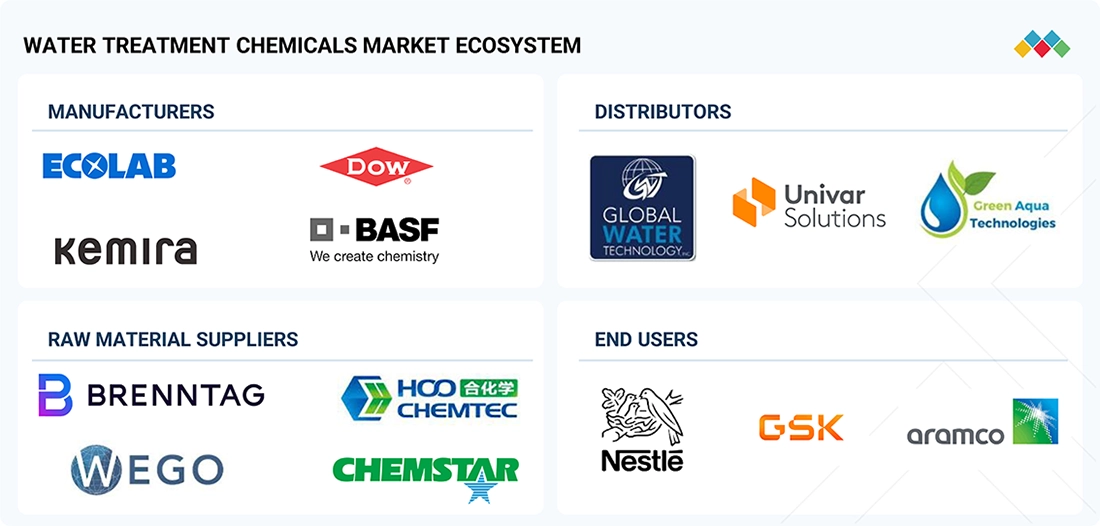
The water treatment chemicals industry has a complex ecosystem comprising manufacturers such as Kemira (Finland), Ecolab (US), and Veolia (France), raw material suppliers, distributors, government, and end-use industries. Leading companies in this industry include the established, financially stable manufacturers of water treatment chemicals. These companies have been in the industry for many years and have diversified product portfolios and robust global sales and marketing networks.
Logos and trademarks shown above are the property of their respective owners. Their use here is for informational and illustrative purposes only.
MARKET SEGMENTS
Source: Secondary Research, Interviews with Experts, MarketsandMarkets Analysis
Water Treatment Chemicals Market, By Type
The largest market segment in the water treatment chemicals market, by type, is coagulants & flocculants, which are widely used in municipal and industrial wastewater treatment, power generation, mining, and food & beverage processing. These chemicals are very crucial in the pretreatment of water to aggregate the suspended solids, colloidal particles, and organic elements into bigger flocs so that they can be easily separated and purified. Their demand has increased due to rising international attention to the supply of clean water and wastewater reuse, as well as the tightening of emission standards, particularly in developing countries where urban populations are growing and water infrastructure is insufficient. Moreover, the use of polymer and bio-based coagulants is also being developed in order to improve the treatment capacity in addition to being sustainable. The trend in the industries is moving towards high-performance and low dosage to generate less sludge and minimise the cost of operation. The most popular end-use segment is municipal wastewater treatment, which is backed by the massive infrastructure development in developing nations like India, China, and Brazil.
Water Treatment Chemicals Market, By Source
Bio-based water treatment chemicals are seen as the fastest-growing segment of the global market due to increased environmental awareness and stricter rules on chemical discharge. These chemicals are a sustainable alternative to commonly used petroleum-derived products because they are manufactured from renewable resources such as plant extracts, biopolymers, and natural enzymes. They are becoming popular in such applications as in coagulation, disinfection, and conditioning of sludge, where environmentally friendly solutions are becoming a top priority. Bio-based formulations are being embraced by industries and municipalities to reduce ecological impact, minimize toxicity, and increase biodegradability, according to the goals of sustainability in the world and the principles of the circular economy. Constant research and innovation have enhanced their functionality, economical nature and scalability rendering them competitive to conventional products.
Water Treatment Chemicals Market, By Application
Boiler water treatment is the most significant and the fastest expanding application markets in the water treatment chemicals, which is provided by the increasing demands of efficient generation of steam in industries like power generation, oil and gas, chemicals and food and beverage. To avoid scaling, corrosion, and furring, which may be extremely important to heat transfer effectiveness and equipment life, boiler systems must be carefully managed chemically. The heightened level of concern with energy efficiency and the reliability of operations has prompted the resort to the use of special chemicals like oxygen scavengers, corrosion inhibitors, and scale control agents. Also, the growth of industrial infrastructure, especially in the Asia Pacific, is driving the market growth as the adoption of high-pressure boilers in the manufacturing industry, and energy is on the rise.
Water Treatment Chemicals, By End User
The industrial sector is projected to be the fastest-growing end-use market for water treatment chemicals. Power generation, oil and gas, petrochemicals, food and beverage, and pulp and paper are some of the industries that heavily depend on high-quality process water and efficient wastewater management to ensure their operations run effectively and in compliance with regulations. The quantity and complexity of effluents are ever-increasing with industrial processes, and thus sophisticated chemical treatments such as coagulants, corrosion inhibitors, biocides, scale control agents, and antifoaming agents are in demand. These are vital chemicals that reduce scaling, microbial growth, and corrosion to ensure optimum equipment performance and long life of the plant. Moreover, industries are increasingly moving toward sustainable, digitalized treatment systems, integrating smart dosing and monitoring technologies with environmentally friendly formulations.
REGION
Asia Pacific to be fastest-growing region in the water treatment chemicals market during forecast period
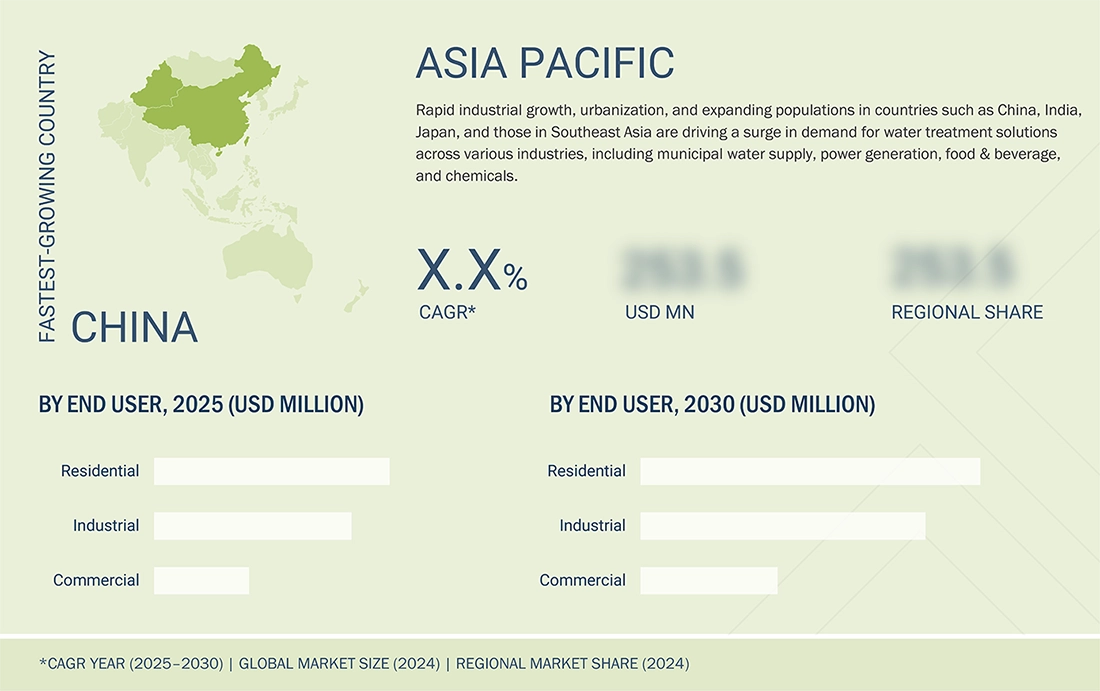
The Asia Pacific region is projected to register the highest CAGR during the forecast period, driven by rapid industrialization, rising environmental awareness, and government initiatives. Growth in this market is expected to be centered on China and India, driven by their expanding manufacturing sectors and demand for sustainable materials across various applications. There is a growing demand for treated water in the municipal, industrial, and residential sectors in countries like China, India, Japan, and South Korea.
WATER TREATMENT CHEMICALS MARKET: COMPANY EVALUATION MATRIX
In the landscape of the water treatment chemicals industry, Ecolab (Star) has a significant market share, offering a diverse product portfolio with coagulants & flocculants, biocides & disinfectants, corrosion inhibitors, scale inhibitors, and chelating agents offered for direct sales and made available for municipalities and industrial treatment markets. Solenis (Emerging Leader) is gaining awareness through its specialty water treatment chemistries, innovating with niche product launches, and expanding its product mix. While Ecolab dominates through scale and a broad sustainable portfolio, Solenis shows significant potential to move toward the leaders' quadrant as demand for water treatment solutions continues to rise.
Source: Secondary Research, Interviews with Experts, MarketsandMarkets Analysis
KEY MARKET PLAYERS
- Kemira (Finland)
- Ecolab (US)
- Veolia (France)
- BASF (Germany)
- Dow Inc (US)
- Solenis (US)
- Nouryon (Netherlands)
- Kurita Water Industries Ltd. (Japan)
- SNF Floerger (France)
- Baker Hughes Company (US)
MARKET SCOPE
| REPORT METRIC | DETAILS |
|---|---|
| Market Size in 2025 (Value) | USD 40.2 Billion |
| Market Forecast in 2030 (Value) | USD 48.0 Billion |
| Growth Rate | CAGR of 4.5% from 2025 to 2030 |
| Years Considered | 2022–2030 |
| Base Year | 2024 |
| Forecast Period | 2025–2030 |
| Units Considered | Value (USD Million/Billion), Volume (Kiloton) |
| Report Coverage | Revenue forecast, company ranking, competitive landscape, growth factors, and trends |
| Segments Covered |
|
| Regions Covered | Asia Pacific, North America, Europe, MiddleEast & Africa, and South America |
WHAT IS IN IT FOR YOU: WATER TREATMENT CHEMICALS MARKET REPORT CONTENT GUIDE
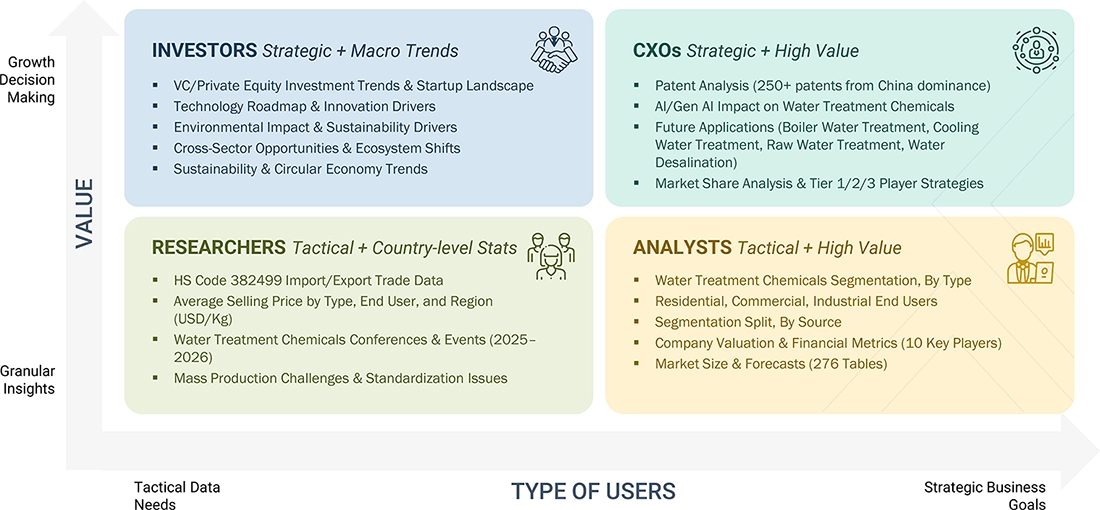
DELIVERED CUSTOMIZATIONS
We have successfully delivered the following deep-dive customizations:
| CLIENT REQUEST | CUSTOMIZATION DELIVERED | VALUE ADDS |
|---|---|---|
| Industrial Water Treatment Chemicals Manufacturer (Global) |
|
|
| Municipal Water Treatment Solution Provider |
|
|
| Power Generation / Industrial End User |
|
|
| Specialty Water Treatment Chemicals Producer |
|
|
| Water Treatment Chemical Distributor / Service Provider |
|
|
RECENT DEVELOPMENTS
- November 2024 : Ecolab acquired Barclay Water Management, a provider of water safety and digital monitoring solutions for industrial and institutional clients in the northeastern US. Barclay offers systems such as the iChlor Monochloramine System for Legionella treatment, enhancing water quality and enabling continuous monitoring and control.
- November 2024 : Solenis has acquired BASF's flocculants business, a strategic move that significantly enhances its portfolio in the mining sector, this acquisition allows Solenis to expand its offerings in specialty chemicals essential for mineral extraction, bolstering its position in a competitive market.
- September 2024 : Kemira completed the acquisition of Norit's UK reactivation business, entering the activated carbon market for micropollutant removal. The acquisition includes a UK facility for regenerating spent activated carbons used in potable water and food-related applications.
- June 2024 : Kurita Water Industries Ltd. announced the establishment of a local company in India to enhance its sales and distribution of water treatment chemicals.
- May 2023 : Kurita acquired Arcade Engineering AG to strengthen its position in Europe and Asia. The move enhances Kurita's manufacturing and supply chain for semiconductor water treatment and processing plants, fostering innovative solutions for energy and water efficiency.
Table of Contents
 Exclusive indicates content/data unique to MarketsandMarkets and not available with any competitors.
Methodology
The study involves two major activities in estimating the current market size for the water treatment chemicals market. Exhaustive secondary research was done to collect information on the market, peer market, and parent market. The next step was to validate these findings, assumptions, and sizing with industry experts across the value chain through primary research. Both top-down and bottom-up approaches were employed to estimate the complete market size. After that, market breakdown and data triangulation were used to estimate the market size of segments and subsegments.
Secondary Research
Secondary sources referred to for this research study include financial statements of companies offering water treatment chemicals and information from various trade, business, and professional associations. Secondary research has been used to obtain critical information about the industry’s value chain, the total pool of key players, market classification, and segmentation according to industry trends to the bottom-most level and regional markets. The secondary data was collected and analyzed to arrive at the overall size of the water treatment chemical market, which was validated by primary respondents.
Primary Research
Extensive primary research was conducted after obtaining information regarding the water treatment chemicals market scenario through secondary research. Several primary interviews were conducted with market experts from both the demand and supply sides across major countries of North America, Europe, Asia Pacific, the Middle East & Africa, and South America. Primary data was collected through questionnaires, emails, and telephonic interviews. The primary sources from the supply side included various industry experts, such as Chief X Officers (CXOs), Vice Presidents (VPs), Directors from business development, marketing, product development/innovation teams, and related key executives from water treatment chemicals industry vendors, material providers, distributors, and key opinion leaders. Primary interviews were conducted to gather insights into market statistics, revenue from products and services, market breakdowns, market size estimates, market forecasting, and data triangulation. Primary research also helped in understanding the various trends related to type, source, application, end user, and region. Stakeholders from the demand side, such as CIOs, CTOs, CSOs, and installation teams of the customer/end users who are seeking water treatment chemical services, were interviewed to understand the buyer’s perspective on the suppliers, products, component providers, and their current usage of water treatment chemicals and future outlook of their business, which will affect the overall market.
The following is a breakdown of the primary respondents:

To know about the assumptions considered for the study, download the pdf brochure
Market Size Estimation
The research methodology used to estimate the size of the water treatment chemicals market includes the following details. The market sizing was undertaken from the demand side. The market was upsized based on the demand for water treatment chemicals in different end-use industries at a regional level. Such procurements provide information on the demand aspects of the water treatment chemical industry for each end-use industry. For each end-use, all possible segments of the water treatment chemicals market were integrated and mapped.

Data Triangulation
After arriving at the overall size from the market size estimation process explained above, the total market was split into several segments and subsegments. The data triangulation and market breakdown procedures explained below were implemented, wherever applicable, to complete the overall market engineering process and arrive at the exact statistics for various market segments and subsegments. The data was triangulated by studying various factors and trends from the demand and supply sides. Along with this, the market size was validated using both the top-down and bottom-up approaches.
Market Definition
The water treatment chemicals refers to the global industry that produces, distributes, and consumes chemical formulations that enhance water quality for municipal, industrial, and commercial uses. The chemicals are used throughout raw water treatment, process water treatment, wastewater treatment, and water reuse systems to eliminate pollutants, manage scaling and corrosion, and prevent microbial growth while meeting environmental and safety regulations. The market usually contains coagulants and flocculants, biocides & disinfectants, corrosion inhibitors and scale inhibitors, pH adjusters, and defoamers, providing products for municipal water utilities, power generation, oil & gas, chemicals, food & beverages, pharmaceuticals, mining, and data center end-use sectors.
Key Stakeholders
- Water Treatment Chemical Manufacturers
- Water Treatment Chemical Distributors and Suppliers
- End-use Industries
- Universities, Governments, and Research Organizations
- Associations and Industrial Bodies
- R&D Institutes
- Environmental Support Agencies
Report Objectives
- To define, describe, and forecast the water treatment chemicals market size in terms of volume and value.
- To provide detailed information regarding the key factors, such as drivers, restraints, opportunities, and challenges influencing market growth.
- To analyze and forecast the market type, source, application, end user, and region.
- To forecast the market size concerning five main regions (along with country-level data), namely, North America, Europe, Asia Pacific, Middle East & Africa, and South America, and analyze the significant region-specific trends
- To strategically analyze micromarkets with respect to individual growth trends, prospects, and contributions of the submarkets to the overall market
- To analyze the market opportunities and the competitive landscape for stakeholders and market leaders
- To assess recent market developments and competitive strategies, such as agreements, contracts, acquisitions, partnerships & collaborations, and new product developments/new product launches, to draw the competitive landscape.
- To strategically profile the key market players and comprehensively analyze their core competencies.
Available customizations:
MarketsandMarkets offers the following customizations for this market report:
- Additional country-level analysis of the water treatment chemicals market
Product Analysis
- Product matrix, which provides a detailed comparison of the product portfolio of each company's market
Key Questions Addressed by the Report
Need a Tailored Report?
Customize this report to your needs
Get 10% FREE Customization
Customize This ReportPersonalize This Research
- Triangulate with your Own Data
- Get Data as per your Format and Definition
- Gain a Deeper Dive on a Specific Application, Geography, Customer or Competitor
- Any level of Personalization
Let Us Help You
- What are the Known and Unknown Adjacencies Impacting the Water Treatment Chemicals Market
- What will your New Revenue Sources be?
- Who will be your Top Customer; what will make them switch?
- Defend your Market Share or Win Competitors
- Get a Scorecard for Target Partners

Custom Market Research Services
We Will Customise The Research For You, In Case The Report Listed Above Does Not Meet With Your Requirements
Get 10% Free CustomisationTESTIMONIALS
We at Nissan Chemicals Corporation have been clients of MarketsandMarkets for more than a year now. We recently consulted MarketsandMarkets for a study, the team at MarketsandMarkets was extremely professional and organized. The business insights were very detailed and aligned well with our expectations that really helped us formulate the Business Plans and device new strategies for development themes. MarketsandMarkets offers a unique combination of expertise and dedicated engagement model. Their research findings have helped us in designing our Pricing Strategy which will make it easier for us to predict the future sales and profits for the next ten years. We look forward to working with MarketsandMarkets in the future.
VP of Strategy & New Business Development
Leading Specialty Chemical Company
The MarketsandMarkets Engagement Model, composed of both the Knowledge Store and advisory custom research, has greatly helped us in understanding our markets and making strategic decisions. The Knowledge Store is a fast way to allow everyone in our organization to understand more about most any market they are interested in. The ability to then get custom research done and get answers to specific strategic questions and market insight has been spectacular. The Markets and Markets team feel more like colleagues than vendors and their services have helped us change our culture where statements of things like growth opportunities and competitive position are always backed by industry research.

Rich Gibson,
Director, Corporate Strategy
Milliken & Company,
Leading Industrial Manufacturer of specialty chemical, floor covering, performance and protective textile materials, and healthcaremilliken.com
MarketsandMarkets is a trusted resource that helps us to better understand markets that are near-adjacencies-whether its technology, value chain or geography. Their Knowledge Store platform provides a dashboard of markets and their characteristics which is easy to use and saves us time.
Adam Shaw,
Market Development and Strategy Manager
AdvanSix Inc. USA,
An American Leader in Chemicalswww.advansix.com
The Knowledge Store from MarketsandMarkets is a valuable tool which has helped my team acquire greater insight in to the end markets that our business serves. This has enabled us to help our company build stronger strategies throughout our planning process.
TOSHIO KINOSHITA
Senior Chif Consultion Research & Consulting Division
Mitsubishi Chemical Research Corporation,
Leading Manufacturer of Chemical Productswww.mitsubishichem-res.co.jp/en/

We recently engaged with MarketsandMarkets for a study, the team not only clearly understood our business objectives but was also extremely professional in the way they handled the entire project. The study was efficiently conducted in a phase-wise manner, and the engagement model furnished us with high-quality business insights that far exceeded our expectations at each phase. We were especially happy that MarketsandMarkets could provide us with both, an English as well as a Japanese version of the study. A special thanks to the Analyst Team and Client Services Team, whose fluency in Japanese enhanced our comfort level, as we could converse with them in our preferred language.
Independent entrepreneurs
Arrow Precision
We approached MarketsandMarkets for study on Proppants Market, and their work exceeded our expectations. The study conducted was comprehensive and enabled us to view the market through the various dimensions. In addition, the team was extraordinarily responsive throughout the process and resolved our queries on time. I strongly recommend MarketsandMarkets and will certainly consider them for additional market assessments we will need in the future.
Global engineering company, Japan
Deputy Manager,
Strategic Planning OfficeThe high-quality insights shared by the MarketsandMarkets team helped us understand the pharmaceutical plant designers in a specific geography. It also captured the risks that we may likely face in communicating with our potential partners. The study would enable us identify partners, which would impact our future growth.

Still Researching the
Water Treatment Chemicals Ecosystem?
See the competitors, opportunities, and growth signals shaping it - instantly.
Generate 15+ consulting-grade strategic insights tailored to your growth question.




Growth opportunities and latent adjacency in Water Treatment Chemicals Market