Business Intelligence for Sales Teams: 2025 Strategy Guide
August 28, 2025
AI-powered sales tools will be part of 80% of companies' tech stack by the end of 2025. Business intelligence platforms are becoming essential components of successful sales operations.
Companies that use advanced sales intelligence solutions achieve 41% higher win rates. Their deals close 27% faster compared to traditional methods. Sales teams can now access more information than ever before as data-producing apps continue to grow in all verticals. This wealth of data only creates value when companies utilize it properly. The right business intelligence platform has become a critical strategic decision that shapes a company's competitive edge for years.


This piece breaks down what sales teams need from a business intelligence platform in 2025. You'll learn how AI tools revolutionize sales, why 65% of businesses already rely on sales intelligence software. We'll help you pick the perfect sales intelligence solution that matches your needs. The guide also shows how top-performing companies integrate these tools into their revenue operations to drive outstanding results.
Sales intelligence platforms have brought one of the biggest technological changes in B2B sales history. Traditional sales used to depend on gut feeling, cold calling, and generic email campaigns. The landscape today looks completely different. Data, automation, and predictive insights shape every aspect of modern sales.

Gone are the days of waiting for monthly sales reports. Teams used to work with static spreadsheets and outdated dashboards that only showed what already happened instead of what might happen next. This backward-looking approach left sales teams with major blind spots.
CRM systems marked the first step in this progress by giving teams a structured way to manage customer interactions. In spite of that, these original systems only offered simple data storage and analytics, which limited their strategic value.
The game changed when immediate analytics merged with business intelligence platforms. Modern platforms deliver insights based on current events, unlike traditional systems that waited for scheduled data updates. Companies using these platforms now have a big advantage over competitors who still rely on old information.
As streaming data became popular and customers started expecting 24/7 service, traditional data refresh methods proved inadequate. Modern intelligence platforms now provide:
Immediate buyer intent signals that spot prospects researching solutions
Detailed account intelligence including organizational changes
Personalization capabilities for tailored messaging
Predictive analytics that forecast deal probability and optimal engagement timing
This progress has done more than change how sales teams get information—it has revolutionized their operations. Modern business intelligence platforms display actionable data right on screen for quick response, rather than hiding insights in reports.
The year 2025 marks a crucial moment in sales intelligence adoption. Research shows 73% of high-growth companies have fully integrated sales intelligence into their revenue operations, up from 34% three years ago. This sharp increase shows how successful companies have changed their approach to sales strategy.
The sales intelligence market should reach between $3.80 billion and $3.99 billion by 2025, growing annually at 10.3% to 12.3%. This growth shows rising demand for advanced software that improves customer targeting and connection rates.
The year 2025 stands out because AI and machine learning in sales intelligence platforms have reached new heights. These technologies now enable:
Unified platforms that combine sales intelligence, marketing automation, and customer success
Cross-functional dashboards showing entire customer lifecycle metrics
Automated workflow orchestration across sales, marketing, and customer success teams
The integration trend has picked up speed in 2025. Extensive app marketplaces now allow quick integration with specialized tools. API-first architectures make custom workflow automation easier. These advances create complete ecosystems instead of standalone tools.
Sales teams don't have to guess anymore. AI-powered platforms identify trends, optimize strategies, and guide informed decisions. Companies using these advanced intelligence solutions see real results: 25% shorter sales cycles and 15% higher conversion rates.
The move from static reporting to dynamic, immediate business intelligence means more than just better technology. It shows a fundamental change in how sales organizations approach their markets, understand their customers, and hit their revenue targets.
Sales teams in 2025 need more than simple reporting from their business intelligence platforms. Four key capabilities have become essential for teams that want to stay ahead in complex markets.
Sales teams spend too many hours chasing prospects who never buy. AI-powered lead scoring changes this by analyzing past data to identify leads that need immediate attention.
Traditional manual scoring falls short compared to AI systems that analyze thousands of data points at once and find hidden patterns. These systems look at both demographic details and behavior signals to predict which prospects will likely convert. This helps sales teams focus on promising opportunities instead of cold leads.
The results are impressive - 98% of sales teams using AI say they prioritize leads better. Good scoring lets representatives focus on prospects ready to buy while marketing develops lower-scoring leads until they show stronger interest.
Platforms like Microsoft Dynamics need at least 40 qualified and 40 disqualified leads to train their models properly. These systems then update scores every 10 days (in Salesforce Einstein's case) to reflect new trends and changing behaviors.

The most valuable feature in modern sales intelligence helps identify prospects who actively research solutions like yours. Intent data providers track online activities across thousands of websites. They can spot interested companies weeks or months before they fill out any forms.
Your brand's direct interactions like website visits and content downloads create first-party intent data. Third-party data comes from external sources and gives a fuller picture of market behavior. This difference helps sales teams understand both direct engagement and broader solution research.
Cognism's intent data spots valuable buying signals like job changes and funding alerts. Companies that just raised funding are 2.5x more likely to buy new solutions. Bombora tracks prospect activity across 5,000+ B2B websites, and 70% of their data isn't available anywhere else.
This data really shines when you use it to shape conversations. Knowledge about what topics interest your prospect lets you skip generic pitches and address their specific challenges.
Modern business intelligence platforms must offer solutions, not just point out problems. AI recommendation engines use past customer data to spot patterns and predict which products, strategies, or actions will work best.
You can customize these systems to target specific results: engagement, revenue, or conversions. Business rules help fine-tune what customers see, broaden product displays, and filter by availability or custom tags.
The best recommendation engines analyze customer interactions across all touchpoints continuously. They update their understanding based on real-time behavior changes. This keeps recommendations relevant and matched to changing priorities.
Advanced platforms handle technical details automatically. You won't need to process data, train models, balance loads, or set up infrastructure for traffic spikes.
Good business intelligence platforms offer interactive dashboards that show key sales metrics in real time. Power BI lets sales leaders analyze revenue, factored revenue (based on opportunity stage), opportunity count, geography, funnel stage, and channel effectiveness through simple drag-and-drop interfaces.
Target remainder analysis proves especially valuable by calculating the gap between actual and target sales. It spreads the remainder across future months. Teams can see exactly what they need to achieve their goals.
Projected sales forecasting compares future targets against recent trends to determine the need for new contracts. Year-to-date breakdowns show cumulative insights into performance by sale type.
These capabilities do more than just report numbers. Organizations using advanced sales tracking report better visibility into performance across clients and time periods. They also make more accurate forecasts and better decisions.
These four capabilities change how sales teams work, moving them from reactive to proactive approaches based on data rather than gut feeling.
STOP CHASING PROSPECTS
START CLOSING DEALS!!
AI is changing how sales teams work in 2025. Five tools have proven their worth by boosting revenue and making operations smoother. These business intelligence platforms have become vital for top sales teams.
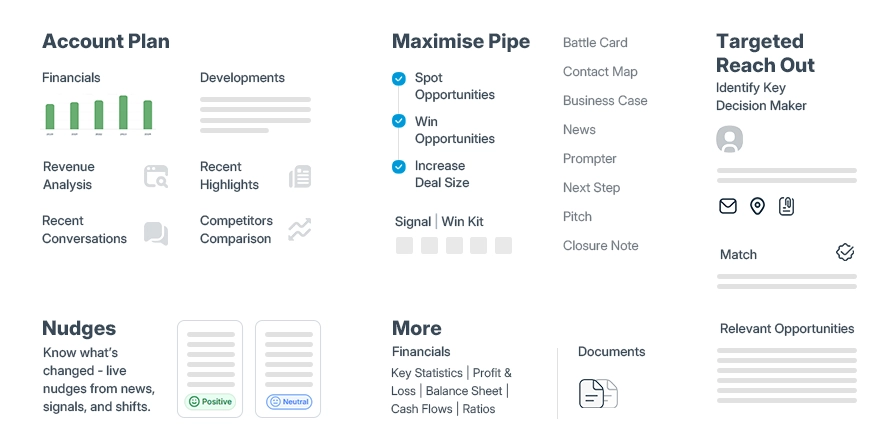
SalesPlay is the world's first AI Sales intelligence platform that transforms sales execution speed and precision through its revolutionary suite of 7 AI Agents. Unlike competitors offering fragmented data, SalesPlay delivers pitch-ready opportunity ecosystems—hyper-personalized sales kits, mapped buying centers, and conversion-ready outreach sequences that eliminate 80% of manual work while consistently closing deals others can't identify.
Built on exclusive MarketsandMarkets intelligence and thousands of premium data sources, and exclusive vendor partnerships, the platform creates a competitive moat that drives 3x productivity gains by enabling every rep to execute with the precision of your organization's elite performers.
SuperAGI's Agentic CRM changes the way sales teams work. This platform does more than store data - it makes decisions on its own and learns from market changes.
The platform's AI-powered SDRs qualify leads, create personal outreach messages, and send promising prospects to human sales teams. This has led to a 25% boost in sales productivity and 30% fewer customers leaving.
SuperAGI's AI Variables and Agent Swarms help sales teams write messages that appeal to potential customers. Companies using this new approach have seen 20% better customer satisfaction and kept 15% more customers.
Revenue leaders face a common problem - 80% say their compensation plans don't line up with business goals. QuotaPath uses AI to create better compensation plans that increase contract values and customer lifetime value.
The platform makes commission management easier by creating payout rules, solving disputes, and ensuring accurate payments. This automated system replaces manual tracking and saves time while making complex compensation plans clearer.
Sales representatives check QuotaPath right after closing deals to see their expected commissions. This immediate feedback pushes them to perform better and helps businesses measure their sales success.
ZoomInfo gives sales teams the largest B2B contact database with over 70 million direct phone numbers and 174 million verified email addresses. Teams use this data to find ideal customers.
The platform spots companies that are looking for solutions like yours early in their buying process. This early warning system lets sales teams reach out to prospects sooner.
ZoomInfo Copilot gives sellers an edge with better messaging and faster response times. Teams win more deals using the platform's AI-written emails and chat summaries. This makes ZoomInfo crucial for companies that want to grow their pipeline quickly.
Gong changes sales operations by capturing and analyzing every customer interaction through calls, emails, and web meetings. The platform shows what happens in customer conversations and improves performance and forecasting.
Gong's essential features include:
Processing calls and meetings to find key topics
Scoring deals to spot risks early
Comparing team performance to find what works best
Converting calls to text for analysis
Teams using Gong understand why they win or lose deals. Customer ratings have improved by 48% for companies using Gong's conversation analytics.
Salesforce Einstein works as an AI helper in your CRM. It looks at sales data, handles routine tasks, and creates content within Salesforce. The system finds promising leads and spots deals that might slip away.
Einstein scores leads based on their chance to close and warns teams about inactive deals. It flags issues like "No customer activity in 14 days". Companies report better win rates and productivity with Einstein's AI features.
Einstein GPT writes personalized emails, creates meeting summaries, and suggests next steps based on CRM data. Sales teams spend less time on paperwork and never miss post-meeting actions.
Einstein works naturally with other Salesforce tools and Slack GPT. Teams get AI insights directly in their chat conversations, creating a complete intelligence system.
Make Every Rep Speak
Like Your Top 1%
Choosing a BI platform for your sales team goes beyond comparing features and prices. The market in 2025 offers many options, and you need to be organized to pick the right one that fits your business needs.
You need to get a full picture of your current sales process before reviewing any BI platform. This helps you find the right options and ensures your chosen platform adds real value.
Start by identifying who will use the platform. Modern BI tools should work for three main user types: IT/BI professionals who manage setup and governance, content creators who build reports and dashboards, and information consumers who use curated content. Your platform needs to be intuitive because both technical and non-technical people will use it.
The next step is to look at your data access requirements. The right platform lets you analyze your data live without downloads. This means you can query databases quickly without much coding. This becomes crucial as your data grows.
The best BI platform helps everyone use insights effectively, no matter their skill level. Your review should spot gaps in your current analytics and show which features would help sales performance the most.
A BI platform's ability to integrate with other systems is crucial. Your solution should naturally connect with your existing tech stack instead of forcing you to change your data infrastructure.
Look for direct connections to your main data sources. A platform with built-in Office 365 integration makes data analysis faster if you use Microsoft products. It also makes sharing reports and dashboards easier. The platform should offer direct connectors if you use cloud services like AWS or Google Cloud.
Your platform should connect easily with your CRM system for sales-specific needs. This keeps your sales intelligence in sync with customer data and lets your team access insights through familiar tools.
Note that poor integration often costs more over time. Inflexible tools increase ownership costs through extra products, people, and infrastructure needed to make them work.
BI pricing can affect both your upfront investment and long-term value. The market has three main models: subscription licensing, perpetual licensing, and free/open source options.
Subscription models use per-user pricing that increases with user count. These plans typically offer:
Entry-level (1-10 users): Up to $205 monthly for simple features
Mid-tier (10-100 users): Up to $1,507 monthly with advanced features
High-end (100+ users): Up to $7,988 monthly for enterprise capabilities
Free tools rarely give the best value. They often need extra products, people, and infrastructure to work at an enterprise level, which leads to higher total costs.
Your pricing review should include these extra costs:
Data migration costs
Training expenses
Hardware and IT infrastructure
Ongoing maintenance and upgrades
Sales teams should weigh the platform's cost against potential ROI in better win rates, shorter sales cycles, and smarter resource use.
Your sales team's BI platform should include features made for sales analysis and optimization. Look for solutions with sales-focused functions beyond basic reporting.
Industry-specific BI solutions give you pre-built templates for your sector, specialized analytics, and optimization for your data types. These tailored tools can speed up implementation and boost adoption rates.
Sales teams need features like pipeline analysis, territory mapping, commission calculation, and customer segmentation tools. The platform should also offer sales forecasting predictions.
The vendor's experience in your industry matters. Their knowledge of sector challenges and rules helps during setup and support.
The final check should be about handling your data volume and growth. A tool that can't manage larger data sets might need expensive upgrades or replacement as you grow. Pick a solution that fits both current and future needs to avoid changing platforms later.
A business intelligence platform needs proper integration into your existing sales ecosystem to deliver real value. Companies that succeed know this integration is vital to turn raw data into useful information.
Your SDRs work 9–5
AI Sales works 24/7!!
Business intelligence tools must work together with CRM systems to maximize sales performance. This powerful duo helps sales teams extract meaningful insights from vast amounts of information by connecting data collection with actual use.
These systems offer the most important benefits when properly arranged:
A complete 360-degree view of customers that combines transactional, behavioral, and demographic data
A transformation from reactive to proactive sales methods through predictive modeling
Clear identification of conversion-ready prospects and at-risk accounts
In fact, a well-integrated tech stack helps information flow smoothly to stakeholders and improves visibility between departments. Your CRM should work with forecasting tools, and both need to blend with business intelligence solutions before adding any new platform.
Effective business intelligence implementation depends on automation. Power Automate helps you connect Power BI with your preferred apps and services to create automated workflows for notifications, file syncing, and data collection.
Organizations don't deal very well with their mountains of customer data without proper analytical tools. Data pipelines help by pulling information from different sources, transforming it into structured formats, and loading it into storage systems for analysis.
A well-laid-out data frontend makes insights accessible to everyone. Marketing teams can spot campaign issues early, while sales teams track performance metrics with up-to-the-minute data analysis.
Sales enablement through business intelligence brings together CRM data, enablement software, and tools for coaching and learning management. This combination lets sellers focus on human connections while automation handles the rest.
The best sales enablement solutions provide a single platform for learning and selling. Teams need ongoing training and people-centered support to stay current with knowledge and skills.
Call recording and coaching tools spot learning opportunities in sales conversations. These tools then track behavior changes—you might aim for mentioning a new product bundle in 10 sales calls to increase deal size.
Sales enablement ended up encouraging better teamwork between significant departments, which ensures consistent messaging and better lead nurturing. Teams can view data instantly and make informed decisions with standardized reporting and easy access to analytical tools.
A closer look at SuperAGI's Agentic CRM shows why it stands out as a business intelligence platform that smart sales teams love. This real-life example demonstrates how autonomous intelligence moves beyond theory to boost revenue.
SuperAGI's autonomous intelligence completely reshapes sales cycles by removing common roadblocks. The platform knows when prospects are ready for their next step and moves deals forward automatically. Enterprise clients have cut their average deal cycles by 32% with this autonomous approach.
The system excels at smart follow-ups. It keeps in touch with prospects based on how they interact with your business. Unlike regular CRMs that just remind sales reps to follow up, SuperAGI creates custom messages at the right time. This ensures deals don't get stuck because someone took too long to respond.
SuperAGI learns from hundreds of data points in every customer interaction to spot patterns that work. Sales teams get specific tips about which prospects need attention and what messages will strike a chord with each account.
These analytical insights really work. Companies that tap into SuperAGI's account-based intelligence see their win rates jump by 27% after full setup. Each closed deal helps the system get smarter about spotting qualified opportunities, which creates better predictions over time.
The platform's most valuable feature is its role as a virtual sales coach during customer calls. Its conversation intelligence software listens to calls and suggests talking points through subtle prompts that only the sales rep can see.
Beyond coaching, SuperAGI ranks leads based on how likely they are to buy, which helps teams focus where it matters most. This smart scoring looks at both demographic ICP data and behavior that shows real buying intent. Sales teams boost their output by 40% because they focus on promising opportunities instead of chasing dead ends.
The best business intelligence platform becomes useless when people don't adopt it properly. Buying AI-driven BI tools is just the first step—your team's ability to employ these powerful systems determines success.
Data literacy has evolved faster from a specialist skill to a core requirement for sales professionals. Research indicates that 70% of employees will heavily use data by 2025 (up from 40% in 2018). Many organizations don't deal very well with this significant competency gap. Leaders expect all employees to possess simple data literacy skills, with 82% making it a requirement. Upskilling should become a strategic priority.
Your team needs defined key data literacy competencies: understanding numbers, interpreting data visualizations, and using analytic tools. Skills assessments through surveys and one-on-one interviews help identify individual strengths and weaknesses. This targeted approach creates customized learning paths instead of generic training.
Effective training strategies often determine the success or failure of BI implementations. Multiple sessions of free, internal training for prospective users have shown remarkable results in driving adoption. The original implementation needs ongoing support through interactive workshops, webinars, and on-demand resources.
Business intelligence should become part of daily operations. Teams should use dashboards in meetings, include insights in email correspondence, and generate weekly reports using the platform. This "mere exposure effect" increases comfort with the tools and naturally boosts adoption rates.
A well-laid-out feedback system turns occasional BI usage into continuous improvement. Sales teams can refine strategies and adapt to changing conditions through systematic collection, analysis, and action on feedback.
The team environment should encourage members to share experiences and insights freely. Teams should conduct debriefing sessions after significant customer interactions to discuss successes and failures. These conversations help develop concrete action plans that address areas for improvement.
The process should include celebrating successes to boost morale and motivation. Recognition makes employees feel valued while showing others the benefits of embracing business intelligence data.
Business intelligence keeps evolving faster than ever, and new innovations emerge almost daily. Sales leaders planning their technology roadmaps beyond 2025 need to understand what lies ahead.
Users now prefer conversational interfaces as their main way to interact with business intelligence platforms. Sales professionals can ask questions like "Show me this quarter's pipeline by region compared to last year" thanks to natural language processing. Team members at all technical levels can now learn about data on their own.
Beyond simple queries, generative AI creates detailed narrative summaries of sales data that highlight anomalies and suggest fixes automatically. These AI-generated reports help teams save time they would spend analyzing numbers and make sure nothing gets missed.
Sales intelligence has entered a new era with hyper-personalization. Modern platforms give each rep tailored insights based on their deals, territories, and selling approaches.
AI systems learn from each rep's past performance and provide personalized coaching that targets their specific strengths and weaknesses. This individual-focused approach works much better than generic guidance.
Ethical considerations have become essential as business intelligence platforms gain more autonomy and influence. Companies now implement detailed governance frameworks to ensure their AI systems work transparently and fairly.
Business intelligence platforms will soon include built-in bias detection tools that spot potentially problematic recommendations before they affect sales strategies. Building trust determines sustainable AI adoption, which makes governance capabilities just as crucial as analytical power when choosing sales intelligence solutions.
Business intelligence platforms have changed from optional tools to vital components of successful sales operations. Our research shows that sales teams using analytical insights achieve up to 41% higher win rates and 27% faster deal velocity compared to traditional methods. Static reports have given way to AI-powered, immediate insights, which marks a fundamental change in how sales organizations approach their markets and understand their customers.
The right business intelligence platform strengthens sales teams to focus on what matters most – building relationships and closing deals – while AI handles the analytical work. Companies should think over their specific needs before picking a platform that lines up with their sales process, merges with existing tools, and offers industry-specific features.
Predictive lead scoring, immediate buyer intent detection, AI-powered recommendations, and detailed performance tracking work together. These features turn reactive sales approaches into proactive strategies guided by data rather than intuition. Tools like SuperAGI, QuotaPath, ZoomInfo, Gong, and Salesforce Einstein show how AI can dramatically improve everything from prospect identification to deal closure.
Data literacy has become essential for sales professionals. Even the most sophisticated platform will fail without proper upskilling and training. Sales leaders must create environments where teams adopt these tools and contribute to continuous improvement through structured feedback loops.
Generative AI, natural language interfaces, and hyper-personalized intelligence will revolutionize how sales teams interact with data. Ethical considerations around AI usage will grow in importance as these systems gain more autonomy and influence.
Companies that thrive in 2025 and beyond will combine human relationship skills with AI-powered intelligence effectively. The ultimate goal isn't about implementing technology for its own sake but using it to better understand and serve customers while driving eco-friendly revenue growth. Business intelligence platforms, when properly selected and implemented, make this goal achievable for sales teams of all sizes.
Sales teams need to embrace AI-powered business intelligence platforms to stay competitive, as companies using advanced sales intelligence see 41% higher win rates and 27% faster deal velocity.
• Prioritize predictive capabilities: Modern BI platforms must offer predictive lead scoring, real-time buyer intent detection, and AI-powered recommendations to maximize sales efficiency.
• Focus on seamless integration: Choose platforms that connect smoothly with your existing CRM and marketing tools to avoid costly disruptions and maximize ROI.
• Invest in data literacy training: 70% of employees will heavily use data by 2025, making upskilling in data interpretation essential for successful BI adoption.
• Look beyond basic reporting: Select platforms with sales-specific features like pipeline analysis, territory mapping, and conversation intelligence rather than generic analytics tools.
• Plan for AI-driven automation: Implement platforms that automate data collection, lead prioritization, and follow-up processes to reduce manual tasks and accelerate deal cycles.
The future belongs to sales teams that effectively combine human relationship skills with AI-powered intelligence. Success requires not just selecting the right platform, but ensuring proper integration, training, and ongoing optimization to transform data into actionable revenue-driving insights.
AI-powered BI platforms can significantly improve sales performance by providing predictive lead scoring, real-time buyer intent detection, and AI-driven recommendations. Companies using these advanced tools have seen up to 41% higher win rates and 27% faster deal velocity compared to traditional methods.
Sales teams should prioritize platforms that offer predictive lead scoring, real-time buyer intent detection, AI-powered recommendations, and comprehensive sales performance tracking. Additionally, look for tools with seamless CRM integration and industry-specific features tailored to your sales process.
Successful adoption requires a focus on data literacy training, ongoing support through workshops and resources, and integrating BI tools into daily operations. Create a feedback loop for continuous improvement and celebrate successes to demonstrate the value of embracing data-driven decision-making.
Key trends include generative AI and natural language interfaces for easier data interaction, hyper-personalized sales intelligence tailored to individual reps, and increased focus on ethical AI and data governance to ensure fair and transparent operations.
SuperAGI's Agentic CRM goes beyond data storage, offering autonomous decision-making capabilities and continuous learning. It features AI-powered SDRs for lead qualification, personalized outreach, and intelligent routing. This approach has led to significant improvements in sales productivity, customer satisfaction, and retention rates for adopting companies.

Category: Uncategorized Tags: ai, AIOps, Artificial Intelligence, cloud, cloud platform, Cybersecurity, Information and Communications Technology , VR