The Complete Guide to Revenue Intelligence Platforms (2025 Edition)
Revenue intelligence has evolved from a nice-to-have luxury to an absolute necessity for modern sales organizations. As we navigate through 2025, the landscape of revenue intelligence platforms continues to transform at breakneck speed, driven by artificial intelligence, machine learning, and increasingly sophisticated data analytics capabilities. This comprehensive guide explores the cutting-edge revenue intelligence trends 2025 and provides an in-depth analysis of the various types of revenue intelligence platforms reshaping how businesses drive growth and optimize their sales operations.


Unlock Next-Level
Revenue Insights Fast
Learn how SalesPlay boosts forecasting and team productivity.
View Interactive Demo
At MarketsandMarkets, we've witnessed firsthand how revenue intelligence platforms are revolutionizing sales processes through our flagship product, SalesPlay. This comprehensive platform combines advanced AI analytics with practical sales enablement tools, delivering the insights that modern sales teams need to exceed their revenue targets consistently. The shift toward intelligent, data-driven sales operations isn't just a trend—it's becoming the fundamental requirement for competitive success in today's rapidly evolving marketplace.
The modern sales environment presents unprecedented challenges and opportunities. Buyers are more informed, sales cycles are becoming increasingly complex, and competition is intensifying across virtually every industry. Traditional sales approaches that relied on intuition and basic reporting are no longer sufficient. Organizations need sophisticated tools that can process vast amounts of data, identify patterns that human analysts might miss, and provide actionable insights that drive real revenue growth.
Understanding Revenue Intelligence in the Modern Sales Ecosystem
Revenue intelligence represents the convergence of data science, artificial intelligence, and sales methodology into a unified approach for maximizing revenue potential. Unlike traditional Customer Relationship Management (CRM) systems that primarily focus on data storage and basic reporting, revenue intelligence platforms provide predictive insights, automated analysis, and actionable recommendations that directly impact sales outcomes.
The distinction between traditional sales tools and modern revenue intelligence platforms is profound. While CRM systems excel at organizing customer information and tracking sales activities, revenue intelligence platforms go several steps further by analyzing patterns, predicting outcomes, and recommending specific actions. This evolution represents a fundamental shift from reactive data management to proactive revenue optimization.
The Evolution of Revenue Intelligence
The journey from basic sales reporting to sophisticated revenue intelligence has been remarkable and accelerated significantly over the past decade. Early sales technologies focused primarily on contact management and opportunity tracking. These systems served as digital filing cabinets, organizing information but providing limited analytical insights. Today's platforms, exemplified by SalesPlay, integrate multiple data sources including CRM data, email communications, call recordings, social media interactions, and external market intelligence to create a comprehensive, 360-degree view of revenue opportunities.
This evolution has been driven by several key factors that continue to shape the revenue intelligence landscape:
-
Data Abundance: Modern businesses generate massive amounts of sales-related data from multiple touchpoints, creating opportunities for deeper analysis and insight generation
-
AI Advancement: Machine learning algorithms can now process and analyze complex datasets in real-time, identifying patterns and correlations that were previously impossible to detect
-
Competitive Pressure: Organizations need every advantage to stay ahead in increasingly competitive markets where differentiation often comes down to execution excellence
-
Remote Work Reality: Distributed sales teams require better tools for collaboration, performance monitoring, and maintaining consistent sales processes across geographic locations
-
Customer Expectations: Modern buyers expect personalized, relevant interactions that demonstrate deep understanding of their business needs and challenges
The transformation has been particularly dramatic in how organizations approach sales forecasting and pipeline management. Traditional methods relied heavily on sales representative intuition and basic historical analysis. Modern revenue intelligence platforms like SalesPlay use sophisticated algorithms that consider hundreds of variables to generate accurate predictions and identify potential risks before they impact revenue outcomes.
Core Components of Revenue Intelligence
Effective revenue intelligence platforms integrate several essential components that work together to provide comprehensive sales insights. SalesPlay exemplifies this integration through its advanced feature set that addresses every aspect of the modern sales process.
Ready to turn your Rep
INTO BEST PERFORMER ?
Data Collection and Integration
The foundation of any revenue intelligence platform lies in its ability to collect and integrate data from multiple sources seamlessly. This includes CRM systems, email platforms, communication tools, social media networks, and external databases. The challenge isn't just collecting this data—it's organizing, standardizing, and analyzing it in ways that provide actionable insights.
SalesPlay's lead enrichment capabilities demonstrate how modern platforms can automatically enhance prospect data with relevant business intelligence. This enrichment process goes beyond basic contact information to include company financials, technology usage, recent news and developments, competitive intelligence, and buying behavior patterns. The result is a comprehensive profile that enables sales representatives to approach prospects with valuable context and relevant insights.
Predictive Analytics and Forecasting
Advanced algorithms analyze historical data patterns to predict future outcomes, helping sales teams focus their efforts on the most promising opportunities. This predictive capability enables more accurate revenue forecasting, better resource allocation decisions, and proactive risk management. Modern predictive models consider factors such as prospect engagement levels, historical conversion patterns, competitive dynamics, market conditions, and individual sales representative performance.
The sophistication of these predictive models continues to advance rapidly. Where early systems might consider a dozen variables in their calculations, today's platforms can analyze hundreds or even thousands of data points to generate increasingly accurate predictions. SalesPlay's predictive analytics engine continuously learns from new data, refining its models to maintain accuracy as market conditions and buyer behaviors evolve.
Performance Monitoring and Coaching
Real-time performance tracking combined with AI-powered coaching recommendations helps sales representatives improve their effectiveness continuously. Modern sales team management platforms provide managers with the insights needed to optimize team performance through data-driven coaching and development programs.
These coaching capabilities extend beyond simple performance metrics to provide specific, actionable recommendations for improvement. For example, if the platform identifies that a sales representative has lower-than-average email response rates, it might recommend specific timing strategies, message templates, or follow-up sequences that have proven effective for similar prospects in the same industry.
Ready to transform your sales operations with cutting-edge revenue intelligence? Discover how SalesPlay can revolutionize your approach to sales success. Explore SalesPlay Today

Spot Pipeline BeforeYour Competitors Even Know It Exists
Key Revenue Intelligence Trends 2025
As we progress through 2025, several transformative trends are reshaping the revenue intelligence landscape. These developments represent more than just technological improvements—they constitute fundamental shifts in how organizations approach sales strategy, execution, and optimization. Understanding these revenue intelligence trends 2025 is crucial for organizations looking to maintain competitive advantage and drive sustainable revenue growth.
Artificial Intelligence Integration Reaches New Heights
The integration of artificial intelligence into revenue intelligence platforms has reached unprecedented sophistication levels in 2025. Modern platforms now employ advanced machine learning models that can understand context, predict behavior, and generate actionable insights with remarkable accuracy. SalesPlay leverages these AI capabilities to provide sales teams with intelligent recommendations that adapt dynamically to changing market conditions and evolving buyer behaviors.
Conversational AI and Natural Language Processing
One of the most significant developments in 2025 is the integration of advanced conversational AI into revenue intelligence platforms. These systems can now analyze sales calls, emails, and chat interactions to extract meaningful insights about prospect sentiment, buying intent, and potential objections with human-like understanding.
The applications of this technology are revolutionary for sales operations:
-
Sentiment Analysis: Advanced algorithms can detect subtle emotional cues in customer communications, helping sales representatives understand how prospects truly feel about their offerings and adjust their approach accordingly
-
Intent Recognition: AI systems can identify buying signals and readiness to purchase indicators that might be missed by human analysis, enabling more timely and effective sales interventions
-
Objection Identification: Platforms can automatically flag potential concerns or hesitations expressed by prospects, allowing sales teams to address issues proactively before they become deal-breakers
-
Next Best Action: AI-powered recommendation engines suggest optimal follow-up strategies based on comprehensive analysis of prospect behavior, communication history, and successful patterns from similar situations
-
Communication Optimization: Platforms can recommend specific messaging, timing, and communication channels that are most likely to resonate with individual prospects based on their demonstrated preferences and behaviors
Predictive Deal Scoring and Risk Assessment
Modern revenue intelligence platforms use sophisticated machine learning algorithms to assign probability scores to deals based on hundreds of variables simultaneously. These scores help sales representatives prioritize their efforts effectively and identify deals at risk of falling through before problems become critical. SalesPlay's predictive analytics capabilities enable sales teams to focus on opportunities with the highest likelihood of closure while proactively addressing potential risks that could derail important deals.
The sophistication of these predictive models has advanced dramatically. Early systems might consider basic factors like deal size, time in pipeline, and prospect engagement. Today's platforms analyze complex patterns including communication frequency and quality, stakeholder involvement levels, competitive positioning, market timing factors, and even external economic indicators that might influence buying decisions.
Real-Time Revenue Operations
The shift toward real-time revenue operations represents a fundamental change in how sales organizations operate. Traditional quarterly or monthly reviews are being replaced by continuous monitoring and optimization processes that enable immediate responses to changing conditions and emerging opportunities.
Dynamic Territory Management
Advanced platforms now support dynamic territory assignments based on real-time market conditions, sales representative performance, and opportunity distribution. This ensures optimal resource allocation and maximizes revenue potential across all territories while maintaining fairness and motivation among sales team members.
Dynamic territory management goes beyond simple geographic boundaries to consider factors such as industry expertise, relationship strength, pipeline health, and capacity utilization. As market conditions change or new opportunities emerge, territories can be adjusted in real-time to ensure the right salespeople are working the right accounts at the right time.
Adaptive Sales Processes
Revenue intelligence platforms are enabling adaptive sales processes that adjust automatically based on prospect behavior, market conditions, and historical success patterns. These dynamic processes help organizations maintain agility while ensuring consistent execution of proven strategies.
For example, if data shows that prospects in a particular industry respond better to technical demonstrations rather than high-level presentations, the platform can automatically adjust the recommended sales process for future prospects in that sector. This adaptability ensures that sales processes continue to evolve and improve based on real-world results rather than static assumptions.
STOP CHASING PROSPECTS
START CLOSING DEALS!!
Enhanced Customer Journey Intelligence
Understanding the complete customer journey has become crucial for revenue optimization in 2025. Modern platforms track interactions across all touchpoints, providing comprehensive visibility into buyer behavior and preferences throughout the entire purchase process.
Multi-Channel Attribution
Revenue intelligence platforms now provide sophisticated attribution models that track the impact of various marketing and sales activities on revenue outcomes. This helps organizations optimize their investment across different channels and tactics while ensuring that credit is appropriately assigned to all contributors in complex, multi-touch sales processes.
These attribution models have evolved far beyond simple first-touch or last-touch models to consider the complex reality of modern B2B buying processes. They can track the influence of content consumption, event attendance, social media engagement, referral sources, and multiple sales interactions to provide a complete picture of what drives successful outcomes.
Behavioral Pattern Recognition
AI-powered systems can identify subtle patterns in buyer behavior that human analysts might miss entirely. These insights enable sales teams to tailor their approaches based on individual prospect preferences and decision-making styles, significantly improving conversion rates and shortening sales cycles.
Advanced behavioral analysis can reveal insights such as optimal communication timing, preferred content formats, decision-making speed indicators, and stakeholder influence patterns. This information enables sales representatives to customize their approach for maximum effectiveness with each individual prospect.
Stay ahead of the competition with AI-powered revenue intelligence. Discover Advanced Sales Analytics
Types of Revenue Intelligence Platforms
The revenue intelligence market has evolved to include various specialized platforms, each designed to address specific aspects of the sales process or particular organizational needs. Understanding the different types of revenue intelligence platforms available in 2025 is crucial for organizations looking to optimize their sales operations and select the solution that best aligns with their strategic objectives and operational requirements.
Comprehensive Revenue Intelligence Suites
These all-in-one platforms provide end-to-end revenue intelligence capabilities, combining multiple functions into a single, integrated solution that addresses every aspect of the sales process from initial lead generation through deal closure and customer expansion. SalesPlay exemplifies this comprehensive approach, offering a unified suite of tools that eliminates the complexity and inefficiency of managing multiple point solutions.
Key Features of Comprehensive Suites
Comprehensive revenue intelligence suites typically include an extensive array of integrated capabilities:
-
Predictive Analytics: Advanced forecasting and deal scoring capabilities that provide accurate predictions of sales outcomes and identify potential risks before they impact revenue
-
Sales Coaching: AI-powered recommendations for sales improvement that provide personalized guidance based on individual performance patterns and proven best practices
-
Performance Monitoring: Real-time tracking of key sales metrics with customizable dashboards and alerts that keep managers informed of critical developments
-
Lead Intelligence: Comprehensive prospect research and enrichment capabilities that provide sales teams with the context they need for effective engagement
-
Competitive Analysis: Market intelligence and competitive positioning insights that help sales teams win against competitors
-
Workflow Automation: Streamlined processes that eliminate manual tasks and ensure consistent execution of sales activities
-
Integration Capabilities: Seamless connectivity with existing CRM, marketing automation, and business intelligence systems
Make Every Rep Speak
Like Your Top 1%
Advantages of Comprehensive Platforms
Organizations choosing comprehensive platforms benefit from numerous strategic and operational advantages:
-
Unified Data Model: All revenue intelligence functions work with the same underlying data, ensuring consistency and eliminating data silos that can lead to conflicting insights
-
Seamless Integration: No need to manage multiple vendor relationships or complex integration points between different systems
-
Consistent User Experience: Sales teams work within a single, familiar interface, reducing training requirements and improving adoption rates
-
Lower Total Cost of Ownership: Bundled pricing often provides better value than assembling multiple point solutions, while reducing implementation and maintenance costs
-
Coordinated Development: Features evolve together as part of a cohesive product strategy rather than requiring separate upgrade and integration efforts
The comprehensive approach also enables more sophisticated analytics and insights that leverage data from across the entire sales process. For example, SalesPlay can correlate early-stage prospect behavior with eventual deal outcomes to identify patterns that improve both lead qualification and sales forecasting accuracy.
Specialized Conversation Intelligence Platforms
These platforms focus specifically on analyzing sales conversations, calls, and meetings to extract actionable insights from verbal and written communications. They use advanced natural language processing and machine learning to understand context, sentiment, and buying intent from sales interactions.
Core Capabilities
Specialized conversation intelligence platforms typically offer sophisticated analysis capabilities:
-
Call Recording and Transcription: Automatic capture and conversion of sales conversations with high accuracy speech-to-text capabilities
-
Talk-Time Analysis: Detailed measurement of sales representative versus prospect speaking time, helping identify optimal conversation dynamics
-
Keyword and Topic Tracking: Identification of important discussion points and themes that correlate with successful outcomes
-
Competitor Mentions: Automatic flagging when competitors are discussed, enabling rapid competitive response strategies
-
Next Steps Identification: Extraction of commitments and follow-up actions from conversation content
-
Emotional Analysis: Assessment of sentiment and emotional tone throughout sales conversations
-
Question Analysis: Evaluation of question quality and effectiveness in driving productive sales conversations
Integration with Broader Revenue Intelligence
While conversation intelligence platforms provide valuable insights, they are most effective when integrated with broader revenue intelligence capabilities that can contextualize conversation insights within the larger sales process. SalesPlay incorporates conversation intelligence features as part of its comprehensive approach, ensuring that insights from sales conversations inform broader revenue optimization strategies and contribute to more accurate predictive models.
Deal Intelligence and Pipeline Management Platforms
These platforms specialize in providing detailed insights into individual deals and overall pipeline health. They focus on predictive deal scoring, risk assessment, and pipeline optimization to help sales teams and managers make better decisions about resource allocation and deal strategy.
Advanced Deal Scoring Mechanisms
Modern deal intelligence platforms use sophisticated machine learning algorithms that consider hundreds of variables to generate accurate deal scores:
-
Historical Success Patterns: Analysis of similar deals and their outcomes to identify factors that correlate with success or failure
-
Engagement Metrics: Measurement of prospect interaction levels across multiple channels and touchpoints
-
Stakeholder Analysis: Assessment of decision-maker involvement and influence within the prospect organization
-
Competitive Positioning: Evaluation of competitive threats and advantages based on available intelligence
-
Timeline Analysis: Comparison of deal progression against typical sales cycles for similar opportunities
-
Content Engagement: Analysis of which marketing and sales materials resonate most with prospects
-
Communication Quality: Assessment of the depth and quality of sales interactions with key stakeholders
Pipeline Health Monitoring
These platforms provide comprehensive visibility into pipeline health through advanced analytics and reporting capabilities. Sales managers can identify trends, spot potential problems early, and take corrective action to maintain revenue momentum. Key capabilities include pipeline velocity analysis, stage conversion optimization, and bottleneck identification.
Lead Intelligence and Prospecting Platforms
Focused on the early stages of the sales process, these platforms help sales teams identify, research, and prioritize prospects effectively. They combine internal data with external intelligence sources to provide comprehensive prospect profiles that enable more effective outreach and engagement strategies.
Advanced Lead Scoring and Prioritization
Modern lead intelligence platforms use sophisticated algorithms to score and prioritize prospects based on multiple factors:
-
Fit Criteria: How well prospects match ideal customer profiles based on firmographic, technographic, and behavioral characteristics
-
Intent Signals: Evidence of active buying behavior or interest derived from content consumption, search behavior, and engagement patterns
-
Timing Indicators: Factors suggesting optimal outreach timing based on business events, budget cycles, and market conditions
-
Competitive Analysis: Assessment of competitive positioning and likelihood of competitive displacement
-
Market Context: Understanding of industry trends, challenges, and opportunities that create selling opportunities
-
Relationship Mapping: Identification of existing connections and warm introduction opportunities
SalesPlay's lead enrichment capabilities demonstrate how modern platforms can automatically enhance prospect data with relevant business intelligence, enabling sales teams to approach prospects with valuable insights and context that differentiate their outreach from generic sales messages.
Sales Performance and Coaching Platforms
These platforms focus on improving individual and team sales performance through advanced analytics, coaching recommendations, and skill development programs. They provide managers with the tools and insights needed to develop their teams effectively and consistently.
Performance Analytics and Benchmarking
Sales performance platforms provide detailed analytics on individual and team performance, including:
-
Activity Metrics: Comprehensive measurement of sales activities and their effectiveness in driving pipeline and revenue outcomes
-
Conversion Analysis: Detailed tracking of conversion rates at each stage of the sales process with trend analysis and benchmarking
-
Revenue Attribution: Understanding which activities and behaviors drive the most revenue impact
-
Peer Benchmarking: Comparison of performance against team averages, top performers, and industry standards
-
Skill Assessment: Evaluation of specific sales skills and competencies with targeted development recommendations
AI-Powered Coaching Recommendations
Advanced platforms use AI to analyze performance data and provide personalized coaching recommendations. These systems can identify skill gaps, suggest training opportunities, and recommend specific actions to improve performance. The recommendations become more sophisticated and personalized as the system learns from individual performance patterns and successful outcomes.
Transform your sales team's performance with intelligent coaching and analytics. Explore Sales Team Management Solutions
Implementation Strategies for Revenue Intelligence Success
Successfully implementing a revenue intelligence platform requires careful planning, stakeholder alignment, and a structured approach to change management. Organizations that approach implementation strategically are significantly more likely to achieve their revenue optimization goals and realize maximum return on investment from their technology investment.
Pre-Implementation Assessment and Planning
Before selecting and implementing a revenue intelligence platform, organizations must conduct a comprehensive assessment of their current sales processes, technology infrastructure, and organizational readiness. This assessment forms the foundation for successful implementation and helps identify potential challenges before they become roadblocks.
Your SDRs work 9–5
AI Sales works 24/7!!
Current State Analysis
A thorough current state analysis should examine multiple dimensions of the sales organization:
-
Existing Technology Stack: Comprehensive inventory of current CRM, sales tools, and integration capabilities, including assessment of data quality and system performance
-
Data Quality and Availability: Detailed assessment of data sources, accuracy, completeness, and consistency across systems
-
Sales Process Maturity: Evaluation of current sales methodologies, process consistency, and adherence to established procedures
-
Team Skills and Readiness: Understanding of team capabilities, technology comfort levels, and readiness for change
-
Performance Metrics: Analysis of current measurement approaches, key performance indicators, and reporting capabilities
-
Competitive Position: Assessment of how current sales effectiveness compares to industry benchmarks and key competitors
Future State Vision
Organizations should develop a clear, compelling vision of their desired future state that includes specific, measurable objectives:
-
Revenue Goals: Specific targets for revenue growth, deal size improvement, and win rate enhancement
-
Process Improvements: Desired changes to sales processes, workflows, and operational efficiency
-
Capability Enhancement: New capabilities and functionalities to be gained through platform implementation
-
User Experience: Expected improvements to sales team productivity, satisfaction, and effectiveness
-
Competitive Advantage: How revenue intelligence will create sustainable competitive differentiation
Platform Selection Criteria
Choosing the right revenue intelligence platform requires careful evaluation of multiple factors that go beyond basic feature comparisons. Organizations should consider both technical capabilities and strategic alignment when making their selection decision.
Technical Evaluation Criteria
Key technical factors to evaluate include:
-
Integration Capabilities: Ability to connect seamlessly with existing systems and data sources without disrupting current operations
-
Scalability: Platform capacity to grow with organizational needs and handle increasing data volumes and user bases
-
Data Security: Compliance with security standards, data protection requirements, and industry-specific regulations
-
User Interface: Intuitive design and ease of use that promotes rapid adoption by sales teams
-
Mobile Accessibility: Comprehensive support for mobile devices and remote work scenarios
-
Performance: System responsiveness, reliability, and ability to handle peak usage periods
-
Customization: Flexibility to adapt to unique organizational requirements and processes
Strategic Alignment Factors
Strategic considerations should include:
-
Business Model Fit: Alignment with organizational sales approach, methodology, and market strategy
-
Industry Expertise: Platform understanding of specific industry requirements, challenges, and best practices
-
Vendor Partnership: Quality of vendor relationship, support capabilities, and commitment to customer success
-
Total Cost of Ownership: Comprehensive cost analysis including implementation, training, and ongoing operational expenses
-
Future Roadmap: Vendor commitment to innovation, platform development, and emerging technology integration
-
Market Position: Vendor stability, market share, and long-term viability
SalesPlay addresses these criteria comprehensively through its robust technical architecture, deep sales process expertise, and strong backing from MarketsandMarkets' extensive market research and industry knowledge. The platform combines technical excellence with practical understanding of real-world sales challenges and requirements.
Change Management and User Adoption
Successful revenue intelligence implementation depends heavily on effective change management and user adoption strategies. Organizations must address both technical and cultural challenges to achieve their desired outcomes and realize the full potential of their investment.
Stakeholder Engagement
Effective stakeholder engagement requires a comprehensive approach that addresses different stakeholder groups and their unique concerns:
-
Executive Sponsorship: Strong leadership support and visible commitment to implementation success, including resource allocation and change advocacy
-
Sales Team Involvement: Active participation from end users in platform design, testing, and feedback processes
-
IT Partnership: Close collaboration with technical teams for implementation, integration, and ongoing support
-
Training and Support: Comprehensive programs to ensure user competency, confidence, and ongoing success
-
Communication Strategy: Regular, transparent communication about progress, benefits, and addressing concerns
Phased Implementation Approach
Most successful implementations follow a carefully planned phased approach that allows for learning, adjustment, and momentum building:
-
Pilot Phase: Limited deployment with selected users to validate approach, identify issues, and build success stories
-
Core Functionality: Implementation of essential features across the organization with focus on fundamental capabilities
-
Advanced Features: Gradual introduction of sophisticated capabilities as users develop competency and confidence
-
Optimization: Continuous improvement and refinement based on usage data, user feedback, and performance results
-
Expansion: Extension to additional user groups, geographies, or business units based on proven success


Stop Guessing. Start Predicting Revenue Like a Pro!
SalesPlay’s AI-driven insights reveal what your team’s missing—explore now!
View Interactive Demo
Measuring ROI and Success Metrics
Demonstrating the value of revenue intelligence platforms requires comprehensive measurement of their impact on sales performance and business outcomes. Organizations must establish clear metrics and measurement frameworks to assess return on investment and guide continuous improvement efforts.
Key Performance Indicators for Revenue Intelligence
Effective measurement of revenue intelligence success requires tracking multiple categories of metrics that collectively demonstrate platform impact on sales performance and business results.
Revenue Impact Metrics
The most important metrics focus directly on revenue outcomes and business growth:
-
Revenue Growth: Year-over-year and quarter-over-quarter revenue increases that can be attributed to revenue intelligence implementation
-
Deal Size Improvement: Average deal value changes after platform implementation, including analysis of deal expansion and upselling effectiveness
-
Win Rate Enhancement: Improvement in opportunity-to-close conversion rates across different deal types and sales scenarios
-
Sales Cycle Acceleration: Reduction in average time to close deals, enabling faster revenue recognition and improved cash flow
-
Pipeline Velocity: Speed of opportunities moving through sales stages, indicating improved process efficiency and effectiveness
-
Forecast Accuracy: Improvement in revenue prediction reliability, enabling better business planning and resource allocation
-
Customer Lifetime Value: Increase in long-term customer value through better customer selection and relationship management
Sales Efficiency Metrics
Efficiency improvements demonstrate platform impact on sales productivity and operational effectiveness:
-
Sales Representative Productivity: Revenue per sales representative increases and improved quota attainment rates
-
Activity Effectiveness: Improvement in conversion rates for sales activities such as calls, emails, and meetings
-
Time-to-Productivity: Faster onboarding and ramp-up for new sales representatives through better coaching and guidance
-
Administrative Time Reduction: Decreased time spent on non-selling activities through automation and streamlined processes
-
Lead Response Time: Faster follow-up on new opportunities, improving conversion rates and customer experience
-
Territory Optimization: Better allocation of sales resources and improved territory coverage and penetration
Advanced Analytics for ROI Measurement
Modern revenue intelligence platforms provide sophisticated analytics capabilities that enable detailed ROI analysis and performance optimization. These analytics go beyond basic reporting to provide deep insights into what drives success.
Multi-Touch Attribution Analysis
Advanced attribution models help organizations understand the true impact of revenue intelligence platforms by tracking their influence across the entire sales process:
-
First-Touch Attribution: Measuring initial impact on lead generation, qualification, and early-stage pipeline development
-
Last-Touch Attribution: Assessing final influence on deal closure and revenue recognition
-
Multi-Touch Models: Understanding cumulative impact across all sales interactions and touchpoints
-
Time-Decay Attribution: Weighting recent interactions more heavily than earlier ones to reflect their greater influence on outcomes
-
Position-Based Attribution: Recognizing the unique importance of first and last interactions while attributing value to middle-stage activities
Cohort Analysis and Longitudinal Studies
Tracking performance improvements over time provides deeper insights into platform effectiveness and user maturity:
-
User Adoption Cohorts: Comparing performance of early adopters versus later users to understand adoption patterns and success factors
-
Feature Utilization Analysis: Correlating specific feature usage with performance improvements to identify highest-value capabilities
-
Maturity Progression: Tracking how benefits increase as users become more proficient with platform capabilities
-
Seasonal Adjustment: Accounting for seasonal variations in sales performance to isolate platform impact
-
Market Condition Analysis: Understanding how platform effectiveness varies under different market conditions and economic environments
SalesPlay provides comprehensive analytics and reporting capabilities that enable organizations to track these metrics effectively and demonstrate clear ROI from their revenue intelligence investment. The platform's integration with MarketsandMarkets' market research capabilities also provides valuable benchmarking data for comparative analysis.
Benchmarking and Industry Comparisons
Understanding performance relative to industry benchmarks helps organizations assess their revenue intelligence success and identify additional improvement opportunities.
Industry Performance Standards
Key benchmarks to track include:
-
Win Rate Comparisons: How organizational win rates compare to industry averages and best-in-class performers
-
Sales Cycle Benchmarks: Relative performance on time-to-close metrics compared to industry standards
-
Productivity Standards: Revenue per sales representative compared to industry norms and leading organizations
-
Technology Adoption: Usage of advanced features relative to best-in-class organizations and market leaders
-
Customer Satisfaction: Comparison of customer experience metrics with industry benchmarks
Competitive Intelligence Integration
Revenue intelligence platforms increasingly incorporate competitive benchmarking capabilities that help organizations understand their market position:
-
Market Share Analysis: Understanding competitive positioning in target markets and segments
-
Win/Loss Analysis: Detailed analysis of competitive wins and losses with actionable insights for improvement
-
Pricing Intelligence: Insights into competitive pricing strategies and positioning opportunities
-
Feature Comparison: Understanding product and service differentiation opportunities based on competitive analysis
-
Sales Process Benchmarking: Comparison of sales methodologies and process effectiveness against competitors
Maximize your revenue intelligence ROI with comprehensive analytics and benchmarking. Explore Advanced Analytics Capabilities
Future Outlook and Emerging Technologies
The revenue intelligence landscape continues to evolve rapidly, driven by advancing technologies and changing market demands. Understanding emerging trends and future developments helps organizations prepare for the next generation of revenue optimization capabilities and maintain competitive advantage in an increasingly sophisticated marketplace.
Emerging AI Technologies and Their Impact
Several breakthrough technologies are poised to transform revenue intelligence capabilities in the coming years, offering unprecedented insights and automation opportunities that will fundamentally change how sales organizations operate.
Generative AI and Large Language Models
The integration of generative AI capabilities represents one of the most significant developments in revenue intelligence platforms:
-
Automated Content Generation: AI-powered creation of personalized sales messages, proposals, and follow-up communications that adapt to prospect preferences and communication styles
-
Dynamic Presentation Building: Real-time customization of sales presentations based on prospect interests, industry requirements, and identified pain points
-
Intelligent Summarization: Automated generation of meeting summaries, opportunity updates, and progress reports that capture key insights and action items
-
Conversational Analytics: Natural language querying of sales data and analytics, enabling users to ask complex questions and receive detailed insights
-
Predictive Writing: AI assistance in crafting effective sales communications that optimize for response rates and engagement
-
Contract Intelligence: Automated analysis and optimization of contract terms and pricing structures
Computer Vision and Video Analytics
Advanced computer vision capabilities are beginning to influence revenue intelligence through video call analysis and presentation optimization:
-
Facial Expression Analysis: Understanding prospect engagement and emotional response during video calls to optimize sales approaches
-
Attention Tracking: Identifying which presentation elements capture and maintain prospect attention for content optimization
-
Body Language Interpretation: Analyzing non-verbal cues for buying intent and objection signals that complement verbal communication analysis
-
Presentation Optimization: Recommending visual improvements based on engagement analysis and attention patterns
-
Meeting Effectiveness: Assessment of meeting dynamics and participant engagement levels
Advanced Automation and Intelligent Workflows
The future of revenue intelligence includes increasingly sophisticated automation capabilities that can handle complex sales processes with minimal human intervention while maintaining personalization and relationship quality.
Autonomous Sales Process Management
Next-generation platforms will include autonomous capabilities for managing routine sales processes:
-
Intelligent Lead Routing: Automatic assignment of leads to optimal sales representatives based on complex matching algorithms that consider skills, availability, and success patterns
-
Dynamic Pricing Optimization: Real-time pricing adjustments based on market conditions, competitive intelligence, and prospect behavior
-
Automated Follow-up Sequences: Intelligent scheduling and execution of follow-up activities that adapt based on prospect responses and engagement
-
Risk Mitigation Workflows: Automatic triggering of interventions for at-risk opportunities with escalation and remediation strategies
-
Opportunity Qualification: Automated assessment of prospect fit and qualification status with continuous updates
Predictive Process Optimization
Future platforms will continuously optimize sales processes based on real-time performance data and predictive analytics:
-
Dynamic Territory Adjustment: Automatic rebalancing of territories based on performance, opportunity distribution, and market changes
-
Adaptive Sales Methodologies: Process modifications based on prospect behavior, market conditions, and success patterns
-
Intelligent Resource Allocation: Optimization of sales team assignments and support resources based on predictive models
-
Predictive Coaching: Proactive identification of skill development opportunities and performance improvement strategies
-
Market Timing Optimization: Automated adjustment of sales strategies based on market conditions and timing factors
Integration with Emerging Business Technologies
Revenue intelligence platforms will increasingly integrate with emerging business technologies to provide more comprehensive insights and capabilities that extend beyond traditional sales functions.
Internet of Things (IoT) Integration
For organizations selling physical products or services, IoT integration offers new sources of sales intelligence:
-
Product Usage Analytics: Understanding how customers use products to identify upselling, cross-selling, and renewal opportunities
-
Predictive Maintenance: Identifying service and replacement opportunities before customers experience problems or failures
-
Behavioral Insights: Analyzing product interaction patterns to inform sales strategies and product development
-
Real-time Customer Health: Monitoring customer satisfaction and success through product performance data and usage patterns
-
Usage-Based Pricing: Dynamic pricing models based on actual product utilization and value delivery
Blockchain and Distributed Ledger Technologies
Blockchain technologies may influence revenue intelligence through improved data security, transparency, and verification:
-
Contract Management: Secure, transparent tracking of contract terms, modifications, and performance
-
Commission Tracking: Immutable records of sales achievements and compensation calculations
-
Customer Verification: Enhanced identity verification and fraud prevention capabilities
-
Partnership Management: Transparent tracking of partner relationships, performance, and revenue sharing
-
Data Integrity: Ensuring the accuracy and security of sales data across multiple systems and organizations
Evolving Market Dynamics and Platform Requirements
Changing market conditions and business requirements continue to shape the evolution of revenue intelligence platforms in response to new challenges and opportunities.
Remote and Hybrid Sales Model Support
The continued shift toward remote and hybrid sales models requires platforms to provide enhanced capabilities for distributed teams:
-
Virtual Collaboration Tools: Advanced features for remote sales team coordination and collaboration
-
Digital Customer Engagement: Sophisticated tools for maintaining customer relationships in virtual environments
-
Performance Monitoring: Enhanced visibility into remote sales team performance and productivity
-
Cultural Integration: Tools for maintaining team culture and communication in distributed environments
-
Digital Sales Rooms: Virtual spaces for complex sales processes and stakeholder engagement
Sustainability and Social Responsibility Integration
Growing emphasis on sustainability and social responsibility is influencing revenue intelligence requirements:
-
ESG Scoring: Integration of environmental, social, and governance factors into customer and opportunity analysis
-
Sustainable Product Positioning: Analytics for promoting environmentally responsible solutions and services
-
Social Impact Measurement: Tracking the social benefits and community impact of sales outcomes
-
Ethical Sales Practices: Monitoring and ensuring ethical sales behaviors and practices
-
Carbon Footprint Tracking: Understanding and optimizing the environmental impact of sales activities and operations
SalesPlay, as a MarketsandMarkets product, stays at the forefront of these emerging trends, continuously evolving to meet the changing needs of modern sales organizations while maintaining its focus on delivering measurable revenue results and sustainable competitive advantage.
Stay ahead of the curve with next-generation revenue intelligence capabilities. Discover SalesPlay's Future-Ready Platform
Industry-Specific Revenue Intelligence Applications
Different industries have unique sales challenges and requirements that influence how revenue intelligence platforms are configured and utilized. Understanding these industry-specific applications helps organizations optimize their revenue intelligence investment for maximum impact and ensures that platform capabilities align with sector-specific needs and regulations.
Technology and Software Industry
The technology sector presents unique challenges for revenue intelligence, including complex product offerings, technical buyer personas, rapid market evolution, and sophisticated procurement processes that require specialized platform capabilities.
Specialized Analytics for Tech Sales
Technology companies benefit from revenue intelligence capabilities tailored to their specific operational requirements:
-
Technical Stakeholder Mapping: Identifying and tracking technical decision-makers, influencers, and end-users throughout complex organizational hierarchies
-
Product Usage Analytics: Understanding how prospects currently use existing technology to inform sales strategies and positioning
-
Integration Complexity Assessment: Evaluating technical requirements, implementation challenges, and integration timelines
-
Competitive Technology Analysis: Detailed comparison of technical capabilities, performance benchmarks, and market positioning
-
ROI Modeling for Technical Solutions: Sophisticated calculators for demonstrating value to technical buyers with quantitative analysis
-
Open Source Intelligence: Tracking prospect technology choices and preferences through public repositories and technical discussions
Subscription and SaaS-Specific Features
Software-as-a-Service companies require specialized capabilities for managing recurring revenue models and customer lifecycle optimization:
-
Customer Lifetime Value Prediction: Advanced modeling of long-term customer value based on usage patterns, engagement levels, and expansion potential
-
Churn Risk Assessment: Early identification of customers at risk of cancellation through behavioral analysis and engagement monitoring
-
Expansion Opportunity Identification: Automated detection of upselling and cross-selling opportunities based on usage data and business growth indicators
-
Usage-Based Insights: Analytics linking product usage patterns to renewal likelihood and expansion opportunities
-
Freemium Conversion Optimization: Strategies for converting free users to paid subscriptions based on engagement and value realization patterns
Financial Services Industry
Financial services organizations face unique regulatory requirements, compliance obligations, and customer relationship challenges that significantly influence their revenue intelligence needs and implementation approaches.
Compliance-Focused Revenue Intelligence
Financial services companies require platforms that support comprehensive regulatory compliance:
-
Regulatory Tracking: Monitoring compliance with industry regulations, reporting requirements, and documentation standards
-
Risk Assessment Integration: Incorporation of credit, financial, and operational risk factors into sales processes and decision-making
-
Documentation Management: Automated tracking of required documentation, disclosures, and regulatory filings
-
Audit Trail Maintenance: Comprehensive logging of sales activities, decisions, and interactions for regulatory review and compliance verification
-
Know Your Customer (KYC): Enhanced customer verification and due diligence processes integrated into sales workflows
Relationship-Centric Analytics
The relationship-driven nature of financial services sales requires specialized analytics and relationship management capabilities:
-
Relationship Mapping: Comprehensive tracking of all client relationships, family connections, and business associations
-
Trust and Reputation Monitoring: Analysis of factors that influence client trust, confidence, and satisfaction
-
Life Event Triggering: Identification of life events, business changes, and financial milestones that create service needs
-
Portfolio Analysis: Understanding of complete client financial portfolios, needs, and optimization opportunities
-
Wealth Management Intelligence: Sophisticated analysis of client financial goals, risk tolerance, and investment preferences
Healthcare and Life Sciences
Healthcare organizations must navigate complex regulatory environments while managing long sales cycles, multiple stakeholder groups, and evidence-based decision-making processes.
Healthcare-Specific Intelligence Features
Healthcare revenue intelligence platforms typically include specialized capabilities for industry requirements:
-
Clinical Outcome Tracking: Monitoring patient outcomes and clinical effectiveness related to products and services
-
Regulatory Compliance Monitoring: Ensuring adherence to healthcare regulations, standards, and reporting requirements
-
Provider Relationship Management: Comprehensive tracking of healthcare provider relationships, preferences, and decision-making patterns
-
Formulary and Coverage Analysis: Understanding insurance coverage, formulary positioning, and reimbursement scenarios
-
Clinical Evidence Integration: Incorporation of clinical data, research findings, and evidence-based outcomes into sales processes
-
Key Opinion Leader (KOL) Management: Tracking relationships and influence patterns among medical thought leaders
Multi-Stakeholder Decision Process
Healthcare sales often involve complex decision-making processes with multiple stakeholders and extended evaluation periods:
-
Clinical Committee Tracking: Monitoring committee decisions, approval processes, and stakeholder influence patterns
-
Budget Cycle Alignment: Understanding healthcare organization budget cycles, procurement processes, and financial constraints
-
Outcome Measurement: Tracking clinical and financial outcomes for existing customers to support future sales efforts
-
Evidence-Based Selling: Integration of clinical evidence, outcome data, and peer-reviewed research into sales processes
-
Value-Based Care Analytics: Understanding and demonstrating value in value-based care models and payment structures
Manufacturing and Industrial Equipment
Manufacturing companies often have complex, high-value sales processes that require specialized revenue intelligence capabilities for managing technical sales, long procurement cycles, and complex project requirements.
Complex Sales Process Management
Manufacturing revenue intelligence platforms address unique industry challenges:
-
Engineering Collaboration: Integration with engineering teams for technical sales support, specification development, and solution design
-
Specification Management: Tracking complex product specifications, customization requirements, and technical modifications
-
Project-Based Sales: Management of long-term projects with multiple phases, milestones, and stakeholder groups
-
Supply Chain Integration: Consideration of supply chain factors, lead times, and availability in sales planning and execution
-
Technical Documentation: Management of complex technical documentation, specifications, and compliance requirements
Industrial Customer Intelligence
Understanding industrial customers requires specialized analytics and market intelligence:
-
Industry Trend Analysis: Monitoring trends, developments, and disruptions in customer industries and markets
-
Capital Equipment Cycles: Understanding customer investment cycles, replacement schedules, and budget planning
-
Operational Efficiency Metrics: Analyzing customer operational performance and identifying improvement opportunities
-
Maintenance and Service Opportunities: Identifying ongoing service, support, and optimization needs
-
Sustainability Requirements: Understanding environmental regulations, sustainability goals, and green technology needs
SalesPlay's flexible architecture and industry expertise enable it to address these diverse industry requirements while maintaining a consistent, powerful platform foundation. The platform's integration with MarketsandMarkets' extensive market research capabilities provides industry-specific insights and benchmarking data that inform sales strategies and competitive positioning.
Discover how industry-specific revenue intelligence can transform your sales performance. Explore SalesPlay's Industry Solutions
Building a Revenue Intelligence Strategy
Developing a comprehensive revenue intelligence strategy requires careful consideration of organizational goals, current capabilities, market opportunities, and technology requirements. Successful strategies align technology investments with business objectives while ensuring sustainable adoption, continuous improvement, and measurable return on investment.
Strategic Planning Framework
Effective revenue intelligence strategies follow a structured planning framework that addresses both immediate needs and long-term objectives while considering organizational constraints and market dynamics.
Organizational Assessment and Readiness
Before implementing revenue intelligence capabilities, organizations must conduct a comprehensive assessment of their current state and readiness for transformation:
-
Sales Process Maturity: Evaluation of current sales methodologies, process consistency, adherence to established procedures, and opportunities for improvement
-
Data Infrastructure: Assessment of existing data sources, quality, integration capabilities, and information management practices
-
Technology Stack: Analysis of current systems, their ability to support revenue intelligence, integration requirements, and upgrade needs
-
Team Capabilities: Understanding of team skills, technology comfort levels, training needs, and readiness for change
-
Cultural Factors: Assessment of organizational culture, change readiness, leadership support, and potential resistance factors
-
Resource Availability: Evaluation of financial, human, and technical resources available for implementation and ongoing support
Goal Setting and Success Metrics
Clear goal setting is essential for revenue intelligence success and should include specific, measurable, achievable, relevant, and time-bound objectives:
-
Revenue Targets: Specific, measurable revenue growth objectives with clear timelines and accountability
-
Efficiency Improvements: Productivity and efficiency enhancement goals that reduce costs and improve performance
-
Customer Experience: Objectives for improving customer satisfaction, engagement, and loyalty
-
Competitive Positioning: Goals for market share growth, competitive advantage, and market leadership
-
Innovation Metrics: Objectives for process innovation, technology adoption, and continuous improvement
-
Risk Mitigation: Goals for reducing sales risks, improving forecast accuracy, and enhancing predictability
Technology Selection and Implementation
Choosing the right revenue intelligence platform and implementing it effectively is crucial for strategic success and long-term value realization.
Platform Evaluation Criteria
Organizations should evaluate platforms based on multiple factors that align with their strategic objectives:
-
Functional Capabilities: Alignment with specific business requirements, use cases, and operational needs
-
Integration Requirements: Ability to connect seamlessly with existing systems, data sources, and business processes
-
Scalability Considerations: Platform capacity to grow with organizational needs, handle increasing data volumes, and support expansion
-
Vendor Relationship: Quality of vendor partnership, support capabilities, industry expertise, and customer success focus
-
Total Cost of Ownership: Comprehensive cost analysis including implementation, training, ongoing operations, and opportunity costs
-
Security and Compliance: Platform security features, compliance capabilities, and data protection measures
Implementation Best Practices
Successful implementation follows proven best practices that minimize risks and maximize value realization:
-
Phased Approach: Gradual rollout that allows for learning, adjustment, and momentum building
-
Stakeholder Engagement: Active involvement of key stakeholders in planning, execution, and feedback processes
-
Training and Support: Comprehensive programs to ensure user competency, adoption, and ongoing success
-
Continuous Monitoring: Ongoing assessment of implementation progress, user adoption, and performance outcomes
-
Iterative Improvement: Regular refinement based on user feedback, performance data, and changing requirements
-
Change Management: Structured approach to managing organizational change and addressing resistance
Build a winning revenue intelligence strategy with expert guidance and proven platform capabilities. Get Started with Strategic Sales Management
Conclusion and Key Takeaways
Revenue intelligence platforms have fundamentally transformed from simple analytics tools to sophisticated AI-powered systems that revolutionize how organizations approach sales strategy, execution, and optimization. As we've explored throughout this comprehensive guide, the revenue intelligence trends 2025 are characterized by unprecedented artificial intelligence capabilities, real-time analytics, seamless integration technologies, and automated decision-making that enable organizations to achieve new levels of sales performance and competitive advantage.
The diverse landscape of types of revenue intelligence platforms available today offers organizations multiple strategic pathways to enhance their sales effectiveness. From comprehensive suites like SalesPlay that provide end-to-end revenue optimization capabilities to specialized point solutions that address specific aspects of the sales process, the key to success lies in selecting the right platform that aligns with organizational goals, integrates effectively with existing systems, and provides the specific capabilities needed to drive sustainable revenue growth.
Critical Success Factors for Revenue Intelligence Implementation
Our analysis has identified several critical factors that determine the success of revenue intelligence initiatives across organizations and industries:
-
Strategic Alignment: Revenue intelligence investments must align closely with broader business objectives, sales strategies, and organizational capabilities to deliver maximum value
-
Data Quality and Integration: Success depends fundamentally on high-quality, integrated data from multiple sources that provides comprehensive visibility into sales processes and customer behavior
-
User Adoption and Engagement: Platform effectiveness relies entirely on enthusiastic adoption by sales teams, managers, and executives who embrace data-driven decision-making
-
Continuous Optimization: Ongoing refinement, improvement, and adaptation ensure sustained value delivery and competitive advantage over time
-
Organizational Change Management: Successful implementation requires careful attention to change management, training, communication, and cultural transformation
-
Leadership Commitment: Strong executive sponsorship and visible leadership support are essential for overcoming resistance and ensuring long-term success
The Future of Revenue Intelligence: Opportunities and Implications
The future of revenue intelligence holds extraordinary opportunities for organizations willing to embrace emerging technologies and evolving best practices. Generative AI capabilities, advanced automation technologies, integrated ecosystem approaches, and sophisticated predictive analytics will continue to enhance platform capabilities and deliver new sources of competitive advantage that fundamentally change how sales organizations operate.
Organizations that invest strategically in comprehensive revenue intelligence platforms like SalesPlay position themselves to capitalize on these emerging opportunities while building sustainable competitive advantages in their markets. The combination of advanced technology, proven methodologies, expert support, and continuous innovation creates a foundation for long-term revenue growth, sales excellence, and market leadership.
Industry-Specific Considerations and Customization
Our examination of industry-specific applications demonstrates that while core revenue intelligence principles remain consistent, successful implementation requires careful consideration of sector-specific requirements, regulations, and market dynamics. Whether in technology, financial services, healthcare, manufacturing, or other industries, organizations must select platforms and configure capabilities that address their unique challenges and opportunities.
SalesPlay's flexible architecture and deep industry expertise enable it to address diverse industry requirements while maintaining a consistent, powerful platform foundation. The platform's integration with MarketsandMarkets' extensive market research and intelligence capabilities provides additional strategic context and insights that inform revenue optimization strategies across different sectors and market conditions.
Return on Investment and Value Realization
The measurement of revenue intelligence success requires comprehensive tracking of multiple performance categories that collectively demonstrate platform impact on business outcomes. Organizations that establish clear metrics, implement robust measurement frameworks, and commit to continuous improvement consistently achieve significant returns on their technology investments.
Key performance indicators spanning revenue growth, sales efficiency, customer satisfaction, and competitive positioning provide a complete picture of platform value and guide ongoing optimization efforts. The most successful organizations view revenue intelligence not as a one-time technology purchase but as an ongoing strategic capability that requires continuous investment, development, and refinement.
Getting Started: Your Revenue Intelligence Journey
For organizations ready to begin their revenue intelligence journey, success starts with a clear understanding of current challenges, desired outcomes, and organizational readiness for transformation. Whether the primary focus is improving forecast accuracy, accelerating sales cycles, enhancing team productivity, or gaining competitive advantage, revenue intelligence platforms provide the tools, insights, and capabilities needed to achieve these objectives effectively.
The implementation journey requires careful planning, stakeholder engagement, and commitment to change management, but the potential rewards are substantial. Organizations that successfully implement revenue intelligence capabilities consistently achieve significant improvements in sales performance, operational efficiency, and competitive positioning that justify their investment many times over.
The MarketsandMarkets SalesPlay Advantage
SalesPlay represents the culmination of MarketsandMarkets' extensive market research expertise and deep understanding of sales challenges across industries and geographies. The platform combines advanced technology capabilities with practical sales enablement tools, comprehensive market intelligence, and proven methodologies that enable organizations to exceed their revenue targets consistently.
As markets become increasingly competitive and customer expectations continue to evolve, the organizations that thrive will be those that leverage data-driven insights, artificial intelligence, and sophisticated analytics to optimize every aspect of their sales operations. SalesPlay provides the comprehensive capabilities, expert support, and continuous innovation needed to succeed in this challenging environment.
Final Recommendations and Call to Action
The investment in revenue intelligence represents more than just a technology purchase—it's a strategic commitment to data-driven sales excellence that can deliver sustained competitive advantage and transformational revenue growth. Organizations that embrace this opportunity position themselves for success in an increasingly competitive and complex business environment where execution excellence often determines market leadership.
The time to act is now. Market leaders are already leveraging advanced revenue intelligence capabilities to gain competitive advantage, optimize their sales operations, and accelerate revenue growth. Organizations that delay their investment in these capabilities risk falling behind competitors who are using data-driven insights to win more deals, shorten sales cycles, and build stronger customer relationships.
Revenue intelligence is not a future trend—it's a present reality that's transforming how successful sales organizations operate and compete. The question is not whether your organization should invest in revenue intelligence capabilities, but rather how quickly you can implement them to drive measurable improvements in sales performance and business outcomes.
Take Action Today: Transform Your Sales Operations
The evidence is clear: organizations that implement comprehensive revenue intelligence platforms achieve significant improvements in revenue growth, sales efficiency, and competitive positioning. The technology exists, the methodologies are proven, and the results are measurable. What's needed now is the commitment to take action and begin the transformation journey.
Consider these critical questions as you evaluate your organization's readiness for revenue intelligence:
-
Are your sales teams equipped with the insights they need to prioritize opportunities effectively and focus their efforts on the highest-value prospects?
-
Can your organization accurately predict revenue outcomes and identify potential risks before they impact business results?
-
Do your sales representatives have access to the coaching, guidance, and support they need to continuously improve their performance?
-
Are you leveraging all available data sources to gain comprehensive visibility into customer behavior and market opportunities?
-
Is your sales organization prepared to compete effectively against competitors who are already using advanced revenue intelligence capabilities?
If you answered "no" to any of these questions, your organization would benefit significantly from implementing a comprehensive revenue intelligence platform like SalesPlay that addresses these critical capabilities and more.
The SalesPlay Advantage: Comprehensive Revenue Intelligence for Modern Sales Organizations
SalesPlay by MarketsandMarkets represents the next generation of revenue intelligence platforms, combining advanced artificial intelligence with practical sales enablement tools and comprehensive market intelligence. The platform addresses every aspect of the modern sales process, from initial lead identification through deal closure and customer expansion.
Key differentiators that set SalesPlay apart include:
-
Comprehensive Integration: Seamless connectivity with existing CRM, marketing automation, and business intelligence systems
-
Advanced AI Capabilities: Sophisticated machine learning algorithms that provide accurate predictions and actionable recommendations
-
Market Intelligence: Integration with MarketsandMarkets' extensive research and market intelligence capabilities
-
Industry Expertise: Deep understanding of industry-specific requirements and best practices
-
Proven Results: Track record of helping organizations achieve significant improvements in sales performance
-
Continuous Innovation: Ongoing platform development and enhancement based on emerging technologies and customer feedback
Ready to unlock your organization's full revenue potential? Transform your sales operations with the power of AI-driven revenue intelligence. Start Your Revenue Intelligence Journey with SalesPlay Today
Next Steps: Begin Your Transformation
Starting your revenue intelligence journey requires a systematic approach that begins with assessment, continues through planning and implementation, and extends into ongoing optimization and improvement. Here's how to get started:
Immediate Actions (Next 30 Days)
-
Conduct Initial Assessment: Evaluate your current sales processes, technology stack, and performance metrics to establish baseline measurements
-
Define Success Criteria: Establish clear, measurable objectives for what you want to achieve with revenue intelligence
-
Engage Stakeholders: Build support among sales leadership, IT teams, and executive sponsors for the initiative
-
Research Solutions: Explore available platforms and understand how they align with your specific requirements
Short-Term Goals (Next 90 Days)
-
Platform Selection: Choose the revenue intelligence platform that best meets your needs and strategic objectives
-
Implementation Planning: Develop detailed project plans, timelines, and resource allocation strategies
-
Team Preparation: Begin change management and training preparation for your sales teams
-
Data Preparation: Ensure data quality and integration readiness for platform deployment
Long-Term Vision (Next 12 Months)
-
Full Implementation: Complete platform deployment across your sales organization
-
Performance Optimization: Continuously refine and improve platform utilization and effectiveness
-
Results Measurement: Track and report on key performance improvements and ROI achievement
-
Expansion Planning: Identify opportunities to extend revenue intelligence capabilities to additional business areas
Partner with Excellence: The MarketsandMarkets Commitment
When you choose SalesPlay, you're not just selecting a technology platform—you're partnering with MarketsandMarkets, a recognized leader in market research and business intelligence. This partnership provides access to:
-
Expert Guidance: Experienced professionals who understand the challenges and opportunities of modern sales organizations
-
Proven Methodologies: Best practices developed through extensive research and real-world implementation experience
-
Continuous Support: Ongoing assistance and guidance to ensure your success and maximize your investment
-
Market Intelligence: Access to comprehensive market research and competitive intelligence that informs your sales strategies
-
Innovation Leadership: Continuous platform development that keeps you at the forefront of revenue intelligence capabilities
The Time for Action is Now
Market conditions are evolving rapidly, customer expectations are increasing, and competitive pressures are intensifying across virtually every industry. Organizations that delay their investment in revenue intelligence capabilities risk falling behind competitors who are already leveraging these tools to gain market advantage.
The revenue intelligence revolution is happening now, and the organizations that embrace it first will be the ones that dominate their markets in the years to come. Don't let your organization be left behind—take action today to begin your transformation journey.
The future of sales success is data-driven, AI-powered, and intelligence-enabled. Make sure your organization is prepared to compete and win in this new reality.
Ready to revolutionize your sales operations and accelerate revenue growth? Connect with the SalesPlay team today to discover how our comprehensive revenue intelligence platform can transform your organization's sales performance.
Discover the complete suite of revenue intelligence capabilities available through MarketsandMarkets SalesPlay:
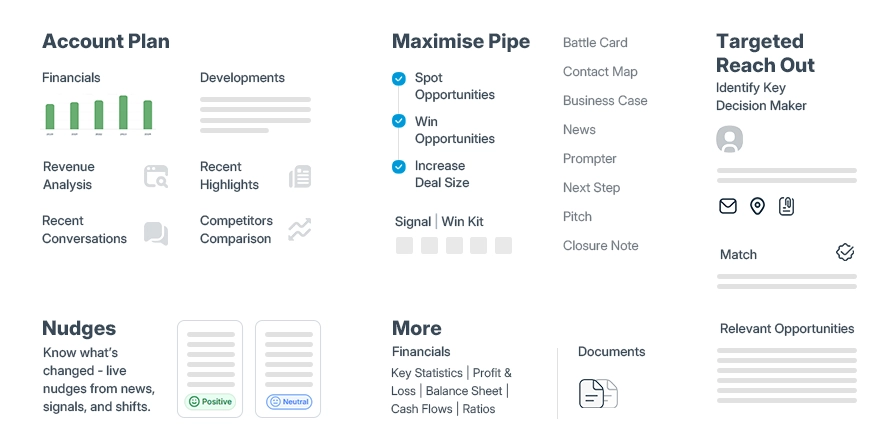
Transform your sales organization with the power of comprehensive revenue intelligence. SalesPlay by MarketsandMarkets provides everything modern sales teams need to exceed targets, optimize performance, and maintain competitive advantage in today's dynamic marketplace. From predictive analytics and automated coaching to advanced lead enrichment and market intelligence, SalesPlay delivers the insights and capabilities that drive sustainable revenue growth and sales excellence.