Home/ Contact Enrichment /The 2026 Contact Enrichment Landscape: Trends, Tools and What Enterprise Sales Teams Actually Need
The 2026 Contact Enrichment Landscape: Trends, Tools and What Enterprise Sales Teams Actually Need
August 14, 2025
Roughly one-third of your contact database goes stale every single year. Most enrichment tools hand you a list of names and emails. Enterprise sales teams need something more useful — knowing who matters, why they matter right now, and exactly what to say.
30%
of B2B contact data decays annually
$15M
average annual loss from poor data quality
74%
of marketers say lead quality is their #1 challenge
Why Contact Enrichment Is a Priority in 2026
The business case has always been there. What changed in 2026 is that the cost of inaction became undeniable. Companies lose an average of $15 million annually to poor data quality. That number comes from wasted outreach, missed pipeline, reps calling dead numbers, and campaigns landing in inboxes that no longer exist.
Enterprise sales teams did not become bad at selling. Their data just stopped keeping pace with how fast companies actually move. People change roles. Organizations restructure. Priorities shift. A contact database refreshed six months ago is already working against you.
The shift in 2026 is not toward better data hygiene. It is toward real-time, continuous enrichment that connects contact data directly to the account movements driving buying decisions. Static enrichment — upload a CSV, get a report back — no longer works for teams selling into enterprise accounts.
The core problem in plain terms
A 10,000-contact database started in January will have roughly 3,000 usable records by December. The other 7,000 have wrong titles, wrong companies, wrong emails — or belong to people who left the business entirely. 44% of sales reps cite outdated data as their single biggest headache. That is not a data problem. It is a pipeline problem.
The Real Cost of Data Decay on B2B Sales
30% Annual Decay — What That Means in Practice
B2B contact data deteriorates at approximately 30% per year. Some estimates place it higher: up to 70% of contacts experience meaningful changes in role, company, or location annually. The impact is direct. 44% of companies report revenue losses exceeding 10% annually from CRM data decay. IBM research found that incorrect data cuts into 27% of potential revenue.
Those are not abstract figures. They represent salespeople spending Tuesday morning calling disconnected numbers, SDRs burning quota on people who moved to competitors three quarters ago, and sales leaders looking at pipeline coverage they cannot actually trust.
27%
of potential revenue lost to incorrect contact data (IBM)
17%
of weekly outreach wasted on dead or disconnected contacts
22% → 2%
email bounce rate reduction with real-time enrichment
79%
of B2B leads historically never convert to sales
From Static Lists to Living Account Intelligence
The smarter response to data decay is not more frequent batch uploads. It is replacing the batch model entirely. Forward-looking teams now track contacts using social profiles and behavioral signals rather than just email addresses — maintaining continuity of records across role changes, org restructures, and company pivots.
This is the difference between a contact database and a living account map. One tells you who someone was. The other tells you who they are, where they sit in the buying structure, and what they are focused on today.
SalesPlay Bundles the Top Enrichment Capabilities in One Platform
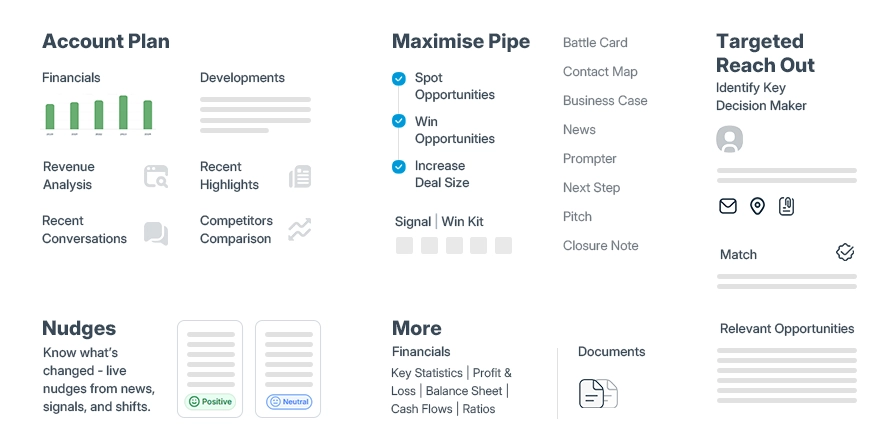
Instead of managing multiple enrichment vendors, SalesPlay gives enterprise sales teams real-time data, contact-to-opportunity mapping, and auto-drafted outreach — all in one login.
⚡
Real-time data, automatically refreshed Contacts update as account signals change — no manual intervention, no stale records sitting in CRM.
🔑
One login for the whole intelligence stack Account intelligence, contact enrichment, opportunity signals, and campaign drafts — all in a single platform connected to your CRM.
📈
30% more pipeline-ready leads from existing accounts SalesPlay connects enriched contacts to live opportunities you did not know existed inside accounts you already own.
What Buyers Actually Want from Enrichment Tools in 2026
Three requirements consistently top enterprise buyer evaluations. The vendors who understood this early separated themselves from the field.
1. Auto-Enrichment and Continuous Updates
Buyers do not want to trigger enrichment. They want enrichment that runs without them thinking about it. The leading tools now offer three distinct automation modes:
Continuous enrichment — previously enriched records refresh automatically each month when new data becomes available
New record enrichment — any contact added via form, integration, or manual entry is enriched immediately
Engagement-triggered enrichment — contacts who respond to email, book meetings, or visit key pages get enriched on the spot
Refreshing records the moment a change is detected became the benchmark. Buyers now expect this as table stakes, not a premium feature.
2. Deep CRM and Sales Tool Integration
Enriched data that lives in a vendor's platform is worth very little. Data that flows directly into CRM, maps to the right fields, and triggers the right workflows is worth a great deal. Modern buyers evaluate integration depth, not just connectivity.
The questions that matter: Does the integration support bi-directional sync? Can you control which fields auto-fill versus overwrite? Does enrichment trigger downstream sequences automatically? Can you pause enrichment at credit limits without disrupting workflows?
The largest GDPR fine on record reached €1.2 billion. Large organizations spend more than half a million dollars on average just to achieve GDPR compliance. Non-compliant companies risk losing roughly 9% of their customer base after a major privacy breach.
Buyers in 2026 do not ask whether a vendor is GDPR-compliant. They ask how compliance is enforced, how opt-out requests are processed, how often data sources are verified, and what the audit trail looks like.
Companies that invest proactively in compliance infrastructure save an average of $2.3 million per year in avoided fines and legal costs.
AI-Driven Capabilities Reshaping the Enrichment Landscape
The gap between enrichment tools that use AI effectively and those that do not has widened considerably. Three capabilities are driving real differentiation in 2026.
Predictive Scoring from Intent Signals
Rules-based lead scoring was always a proxy for something better. AI scoring is the real thing. Systems that continuously recalculate a contact's purchase readiness based on live behavioral signals — search activity, content consumption, competitor research, social engagement — outperform static models significantly.
Enterprise teams using intent-based scoring see a 30% increase in conversions from the same lead volume. 82% of sellers report that intent-qualified leads close faster. Gartner projected that 60% of B2B companies would adopt predictive analytics for lead generation by 2025 — a threshold that has now been largely met heading into 2026.
Technographic data — understanding what software and infrastructure a prospect actually runs — has moved from nice-to-have to a critical qualification filter. Sales teams using it identify companies actively investing in adjacent technology, pinpoint integration opportunities, and avoid wasting cycles on accounts where fit is structurally poor.
The practical impact: 25% higher sales productivity and 15% shorter sales cycles when technographic filters are built into the prospecting workflow.
Machine Learning That Learns as You Sell
The most sophisticated enrichment systems do not just pull from data sources — they learn from patterns in your own customer data. They predict missing attributes, assign confidence scores to each data point, detect anomalies, and improve through feedback loops as your team uses the platform.
Companies using ML-powered enrichment report 25% higher conversion rates and a 15% reduction in sales cycles. The efficiency gain comes from eliminating guesswork — outreach is based on verified, confidence-scored intelligence, not assumptions.
Top Contact Enrichment Tools of 2026 — Compared
The enrichment market has three clear tiers: broad-coverage platforms built on large licensed databases; API-first developer tools optimized for integration; and a newer category — revenue intelligence co-pilots that connect enrichment to live deal execution. Here is how the leading approaches actually work in 2026.
ZoomInfo: Enterprise Scale and Verified Accuracy
ZoomInfo has established itself as the default for enterprise teams that need depth of coverage and can justify the cost. Its database spans 260 million professional profiles and 135 million phone numbers, with a claimed accuracy rate above 95%.
Its real differentiator is the bi-directional CRM sync. Webhooks enable proactive re-enrichment — records enrich once, then update automatically when information changes. Enterprise pricing starts around $15,000/year for 5,000 credits.
Clearbit: API-First and Developer-Friendly
Clearbit's architecture is built for teams that want to embed enrichment inside existing workflows. It pulls from 250+ sources and appends 100+ firmographic and technographic attributes per contact and company. Its credit-based pricing — 1 credit per unique email or domain enriched — makes it accessible at lower volumes. Real-time refresh means records update the moment a change is detected in source data.
Cognism: GDPR-First for European Markets
Cognism has carved out a strong position in European and APAC markets where GDPR compliance is a hard requirement. Its integration breadth is wide — Salesforce, HubSpot, Pipedrive, Microsoft Dynamics, Outreach, and Salesloft all supported natively. Pricing starts at approximately $999/month, making it accessible for mid-market teams.
SalesPlay adds a full intelligence layer on top of verified, compliant account data — signals, contacts, opportunities, and auto-drafted messaging — that pure enrichment tools do not cover.
Traditional enrichment platforms compete on database size and accuracy. SalesPlay operates in a different category — enriched contacts connect directly to live opportunities, buying signals, and account intelligence inside your existing CRM workflow.
CRM data accuracy declines by approximately 2.1% every month. Teams implementing real-time enrichment have reduced bounce rates from 22% to below 2%. For enterprise teams running large account lists, that difference is thousands of valid contacts recovered per quarter.
Integration and Workflow Automation: What Actually Matters
Salesforce and HubSpot Integration in Practice
Most enrichment vendors offer Salesforce and HubSpot connections. The differences emerge in the details. Best-in-class integrations do all of the following:
Bi-directional sync — changes in either system propagate to the other automatically
Activity and engagement data (email opens, meeting bookings) flow into lead records
Lead scores sync between platforms so reps see consistent priority rankings
Revenue from closed-won opportunities ties back to originating enrichment signals
Field mapping is configurable — auto-fill for empty fields, overwrite for full refresh
Auto-Enrichment Triggers That Save Operations Teams Hours
The enrichment triggers that enterprise RevOps teams care about most in 2026:
Continuous record refresh — existing contacts re-enriched monthly or on change detection
New contact enrichment — any record added to the CRM enriches immediately, regardless of source
Engagement-triggered enrichment — contacts responding to campaigns get enriched at the moment of interaction
Lead Scoring and Workflow Automation — The ROI Driver
Enrichment that triggers automated lead scoring and routing produces the highest return on investment. Companies using this automation report a 25% increase in qualified leads and a 30% decrease in customer acquisition costs.
The automation chain that works: trigger (new lead created) → enrichment → scoring → routing → sequence enrollment. When all four steps happen automatically and in sequence, reps open CRM each morning with a prioritized, enriched, sequence-enrolled set of contacts ready to work.
Enterprise vs. Mid-Market: Different Priorities, Different Stakes
Enterprise sales teams need enrichment that handles volume at scale, integrates deeply with existing workflows, and does not require IT involvement each time a new source is added.
Mid-market teams (100–1,000 employees) tend to prioritize affordability and faster time-to-value. 75% of SMBs prefer enrichment tools with flexible pricing that scales as they grow.
SaaS: Technographic Filters Win Deals Before They Start
SaaS sales teams get the highest leverage from technographic enrichment. Knowing what a prospect currently uses, where their stack has gaps, and which integrations they would need narrows qualification from thousands of accounts to a focused list of strong-fit opportunities.
The teams using technographic filters most effectively treat them as qualification criteria — not talking points — filtering their CRM before a single contact is ever reached.
Healthcare and Financial Services: Compliance as a Feature
Healthcare organizations require HIPAA-compliant enrichment, specifically built for physician and hospital data. Financial institutions need enrichment that includes company financials, credit context, and AML/KYC-compatible data sourcing.
The compliance requirements in these verticals make vendor selection a legal and technical decision, not just a commercial one. Buying the wrong enrichment tool in a regulated industry can create liability that dwarfs the cost of the platform itself.
📊Sales CEOs report cutting research time by 50% after moving enrichment and account intelligence into SalesPlay. One login. No tab-switching. Every account update visible the moment it matters. Start free trial →
ROI, Implementation, and What the Data Shows
The Return on Enrichment Spend
The return on contact enrichment investment is consistent across industries and company sizes:
Average ROI of 300% reported by enterprise enrichment users, with some reaching 500%
25% increase in qualified leads after implementing continuous enrichment
Sales cycles shorten by an average of 30% with enriched, intent-scored contacts
Enriching 50,000 accounts at $37,000 delivered returns of 6x to 46x based on conversion improvements in documented case studies
The variance in ROI — 6x to 46x — is not about the tool. It is about whether enriched data connects to execution. Teams that enrich contacts and leave them sitting in a CRM see the lower end. Teams that connect enriched contacts to prioritized opportunities and automated follow-up see the higher end.
Basic contact enrichment setup runs 2–6 weeks. Full integration with existing CRM systems, scoring models, and downstream workflows typically takes 3–6 months. Most implementations require 1–2 dedicated staff depending on complexity.
Teams that approach enrichment as an ongoing operational investment — not a one-time cleanup — see positive ROI within 60 days. High-growth companies now treat data enrichment the same way they treat cloud infrastructure: an always-on utility, not a periodic maintenance task.
What Comes Next: Predictive Enrichment and Privacy-First AI
Two trends are shaping the enrichment landscape heading into 2026.
Predictive enrichment uses machine learning to anticipate missing data — filling gaps before they become problems, flagging records likely to decay before they go stale.
Privacy-first AI is emerging as a design requirement rather than a compliance checkbox. 75% of companies now cite data privacy as a top priority when evaluating enrichment tools — a figure that has only grown as we move through 2026. Vendors building privacy into their architecture — not just their terms of service — will have structural advantages as regulations tighten globally.
The global data enrichment market is projected to grow from $1.1 billion in 2022 to $3.5 billion by 2027 at a 24.5% CAGR.
What is contact enrichment and why does it matter in 2026?
Contact enrichment is the process of appending, verifying, and continuously refreshing B2B contact records with accurate firmographic, technographic, and behavioral data. It matters in 2026 because B2B contact data decays at roughly 30% per year. Without continuous enrichment, sales teams waste time on dead records, miss real buyers, and lose pipeline they never knew existed. Companies lose an average of $15 million annually to poor data quality alone.
What are the best contact enrichment tools in 2026?
The leading contact enrichment tools in 2026 include ZoomInfo (95%+ accuracy, 260M profiles, best for enterprise scale), Clearbit (API-first, best for growth-stage SaaS), Apollo (best for high-volume outbound prospecting), Cognism (best for European and GDPR-compliant use cases), and SalesPlay — a revenue intelligence co-pilot that connects contact enrichment directly to live opportunities inside CRM-connected target accounts. SalesPlay is the only platform in this list that maps enriched contacts to specific buying signals and deal context.
How does SalesPlay differ from traditional contact enrichment tools?
Traditional enrichment tools give you accurate contact data — names, emails, job titles, company attributes. SalesPlay connects that data to live account signals, identified opportunities, and pre-built deal messaging. A rep using SalesPlay does not just know someone is the VP of IT at a target account. They know that person is tied to an active opportunity SalesPlay detected, why that opportunity exists right now, and what to say in the first email. That context is what converts enriched data into closed revenue.
How do AI and machine learning improve contact enrichment?
AI enrichment systems continuously update contact records based on real-time behavioral signals — not just periodic database refreshes. They predict missing attributes, assign confidence scores to data points, and learn from your team's own historical deal data. Companies using AI-powered enrichment report 40% revenue increases, 30% higher conversion rates, and 25% shorter sales cycles. The core advantage is that outreach is based on verified, intent-scored intelligence rather than static lists.
What ROI should enterprise teams expect from contact enrichment tools?
Enterprise teams see an average 3.5x return on enrichment spend. Documented case studies show 6x to 46x returns from enriching 50,000 accounts, depending on how well enriched data connects to downstream execution. Companies see a 25% increase in qualified leads, 30% reduction in sales cycles, and bounce rates dropping from 22% to under 2% with real-time enrichment. Most implementations reach positive ROI within 60 days.
Is GDPR compliance a real concern when selecting an enrichment tool?
Absolutely. The largest GDPR fine on record is €1.2 billion. Large organizations spend over $500,000 on average just to achieve compliance. Non-compliant companies risk losing 9% of their customer base after a breach. Companies investing proactively in compliance infrastructure save an average of $2.3 million per year in avoided fines. Buyers in 2026 evaluate compliance architecture the same way they evaluate accuracy and database coverage — it is not a secondary consideration.