Airport Baggage Handling System Market by Airport Class (A, B, C), Identification Technology (Barcode, RFID), Service (Self-Service, Assisted-Service), Type (Conveyors, Destination-Coded Vehicles), Efficiency, Geography - Global Forecast to 2035


Airport Baggage Handling System Market
Airport Baggage Handling System Market Summary
The global Airport Baggage Handling System Market is undergoing steady expansion as airports invest in higher throughput, automation, baggage tracking, security screening, and more reliable passenger processing infrastructure. Based on a comparison of recent industry estimates, the market can be considered approximately US$ 9.00 Billion - US$ 10.00 Billion in 2025 and is projected to reach approximately US$ 19.00 Billion - US$ 22.00 Billion by 2035, at an approximate CAGR of 8.0% - 9.0% from 2025 to 2035. Recent estimates place the 2025 market at about US$9.15 billion and the 2035 value at approximately US$20.51 billion, while another forecast estimates a 2025 value of about US$10.55 billion. These variations reflect differences in market scope and segmentation.
The market is being driven by increasing air passenger traffic, airport terminal expansion, modernization of aging baggage infrastructure, demand for automated sortation, rising labor costs, and the need to reduce baggage mishandling. SITA reported that baggage mishandling costs the aviation industry approximately US$6.3 billion annually, highlighting the financial importance of improving baggage visibility, routing, and handling accuracy. Technology adoption is also accelerating, with RFID, computer vision, machine learning, robotics, automated bag drops, and real time tracking increasingly becoming part of modern baggage ecosystems.
Key Market Trends & Insights
A major trend in the Airport Baggage Handling System Market is the transition from conventional conveyor based infrastructure toward intelligent, automated, data driven baggage ecosystems. Airports are increasingly connecting baggage handling equipment with passenger processing, security screening, airline systems, and airport operational databases. This integration allows operators to monitor baggage movement and identify potential delays before they disrupt aircraft turnaround.
North America is expected to remain a leading region, supported by extensive airport infrastructure, modernization programs, advanced automation adoption, and the presence of major international airports. Recent market research identifies North America as the largest regional market in 2025.
Asia Pacific is expected to register comparatively strong growth, supported by new airport construction, passenger traffic expansion, tourism, urbanization, and large scale airport modernization projects. One regional estimate places Asia Pacific airport baggage handling systems at approximately US$0.78 billion in 2025 and projects approximately US$1.42 billion by 2030, representing a CAGR of about 12.82%.
Automated sortation is another important trend. Modern airports are increasingly using automated systems to route bags based on destination, flight information, security status, and transfer requirements. Automated sortation is expected to gain further traction as airports seek higher throughput and more consistent operating performance.
AI and machine learning are also becoming increasingly relevant. AI can support baggage risk prediction, computer vision based identification, automated routing, predictive maintenance, and operational decision making. SITA identifies AI driven risk modeling, computer vision, machine learning based bag biometrics, RFID, automated transfer, and real time baggage location as important developments in modern baggage operations.
Market Size & Forecast
-
Base year market size: Approximately US$ 9.00 Billion - US$ 10.00 Billion in 2025, based on a range of recent market estimates.
-
Forecast value by 2035: Approximately US$ 19.00 Billion - US$ 22.00 Billion by 2035.
-
CAGR: Approximately 8.0% - 9.0% from 2025 to 2035.
-
Short explanation of growth factors: Rising passenger volumes, airport capacity expansion, baggage modernization, automated sortation, RFID adoption, AI based analytics, security integration, and demand for lower baggage mishandling rates are expected to support long term growth. Recent estimates include approximately US$9.15 billion in 2025 and US$20.51 billion in 2035 at an 8.4% CAGR.
AI-Powered Military Transformation: The Future of Smart Combat and Defense Top 10 Key Takeaway
-
The Airport Baggage Handling System Market is estimated at approximately US$ 9.00 Billion - US$ 10.00 Billion in 2025.
-
The market could reach approximately US$ 19.00 Billion - US$ 22.00 Billion by 2035.
-
The market is expected to expand at an approximate CAGR of 8.0% - 9.0% from 2025 to 2035.
-
North America is expected to remain a leading regional market because of established airport infrastructure and modernization programs.
-
Asia Pacific is positioned as a comparatively fast growing region because of airport construction and rising passenger traffic.
-
Conveyor and automated sortation infrastructure remains fundamental to baggage handling operations.
-
RFID, barcode scanning, computer vision, and automated identification are improving baggage traceability.
-
AI is increasingly being applied to baggage risk prediction, routing, monitoring, and operational analytics.
-
Robotics and automated baggage transport can help airports address workforce constraints and increase throughput.
-
Integrated baggage platforms are becoming strategically important for improving passenger experience, operational efficiency, and airport capacity.
Product Insights
The Airport Baggage Handling System Market includes conveyor systems, destination coded vehicles, automated sortation equipment, baggage claim systems, check in systems, screening interfaces, baggage storage systems, automated bag drops, scanners, readers, and baggage management software. Among these categories, conveyor and automated sortation systems represent core product segments because they form the physical backbone of baggage movement between check in, security screening, aircraft loading areas, transfer zones, and baggage reclaim.
Conveyor systems remain widely deployed because they can move large volumes of baggage continuously across complex airport layouts. However, the market is gradually shifting toward more intelligent conveyor architectures that integrate sensors, controls, automated routing, and real time monitoring. Destination coded vehicles and automated transport technologies are also gaining attention at high throughput airports because they can provide more flexible baggage movement and routing.
Automated bag drop systems represent another emerging product category. These systems reduce pressure on conventional check in counters and enable passengers to complete baggage processing with limited staff intervention. Daifuku, for example, has highlighted its Drop UX T self service bag drop technology and Bag UX system, which uses AI cameras to support baggage transportation within airports.
Baggage screening equipment is also becoming more integrated with baggage handling infrastructure. Advanced screening systems can communicate with conveyor controls and baggage management software, allowing security processes to operate without unnecessarily interrupting baggage flows.
AI is increasingly being incorporated into products through intelligent cameras, predictive analytics, automated routing, anomaly detection, and operational optimization. This creates a transition from equipment focused procurement toward integrated technology platforms.
Technology / Component Insights
Technology is becoming one of the strongest differentiators within the Airport Baggage Handling System Market. Traditional conveyor infrastructure is increasingly being combined with sensors, industrial controls, RFID readers, barcode scanners, cloud connected software, edge computing, artificial intelligence, and predictive maintenance platforms.
RFID and barcode technologies remain essential for baggage identification and tracking. RFID can provide automated identification at multiple points in the baggage journey, improving visibility without requiring every bag to be manually scanned. Real time tracking is increasingly important because passengers and airlines expect baggage location information similar to the visibility provided by modern logistics platforms.
AI is creating a new layer of intelligence above physical baggage handling infrastructure. AI based systems can evaluate baggage movement, transfer windows, flight schedules, congestion, equipment status, and historical operational data. This information can help identify transfer risks and recommend corrective actions.
SITA reports that AI driven risk models can use real time information to identify baggage risks and recommend actions, while automated sorting and transfer systems, machine learning based bag biometrics, RFID tagging, and passenger facing tracking technologies are becoming increasingly relevant.
IoT connectivity is also expanding. Sensors attached to conveyors, motors, sorters, scanners, and other equipment can continuously provide information about operating conditions. This data can support predictive maintenance by identifying abnormal vibration, temperature, power consumption, or operating patterns before equipment failure occurs.
Cloud platforms can provide centralized monitoring across multiple airport terminals, while edge computing can support faster local processing. Future technology development is expected to focus on digital twins, autonomous baggage transport, computer vision, AI based predictive maintenance, advanced robotics, cybersecurity, and increasingly interoperable airport systems.
Application Insights
International airports represent a major application segment because they typically handle high passenger volumes, connecting traffic, multiple airlines, complex baggage transfer processes, and extensive security requirements. These airports require sophisticated baggage systems capable of processing large volumes while maintaining tight aircraft turnaround schedules.
Domestic airports also represent significant demand, particularly as passenger traffic expands and airports modernize legacy infrastructure. Regional airports are increasingly adopting automated systems where passenger growth justifies investment in scalable baggage technology.
Airlines and ground handling companies are important end users because baggage performance directly affects aircraft turnaround, passenger satisfaction, operating costs, and airline service quality. Efficient baggage handling can reduce delays, improve resource allocation, and limit the financial consequences of mishandled baggage.
The growing cost of baggage mishandling is creating a strong business case for technology investment. SITA estimates that mishandled baggage cost the industry approximately US$6.3 billion in 2025, while transfer baggage remained a significant source of operational risk.
Future opportunities are expected in automated transfer systems, early baggage storage, robotic transport, smart baggage tracking, AI based risk prediction, automated reflight decisions, and passenger facing real time baggage applications.
Regional Insights
North America is expected to remain the leading region in the Airport Baggage Handling System Market. The region has a mature airport ecosystem, high passenger volumes, extensive international hubs, and continued investment in terminal modernization. Recent market analysis identifies North America as the largest regional market in 2025.
Europe remains an important market because of its dense network of international airports, high connecting passenger volumes, stringent operational requirements, and emphasis on baggage tracking and passenger experience. Major European hubs require advanced sortation and transfer systems capable of managing complex airline networks.
Asia Pacific is expected to demonstrate strongest growth potential, supported by airport construction, increasing air travel, tourism, urbanization, and modernization programs. Countries such as China, India, Japan, and South Korea are investing heavily in airport capacity and digital infrastructure.
The Middle East is another strategically important market because large international hubs depend heavily on high capacity baggage systems to support transfer traffic. Airports in the region increasingly position baggage efficiency as part of the overall premium passenger experience.
-
North America: Mature infrastructure and modernization programs support regional leadership.
-
Europe: High transfer traffic and complex airport networks sustain demand for advanced systems.
-
Asia Pacific: Airport expansion and rising passenger traffic create strong growth opportunities.
-
Middle East: Large international hubs require high throughput automated baggage infrastructure.
-
Latin America: Airport upgrades and increasing passenger traffic create additional demand.
Country Specific Market Trends
In China, airport expansion, rising domestic and international passenger traffic, and smart airport development are expected to support strong baggage handling system adoption. New airport infrastructure is increasingly designed around automation, digital tracking, and integrated passenger processing.
Japan has a mature aviation infrastructure and a strong technology ecosystem. Airports are increasingly focused on automation, robotics, self service baggage processing, and operational reliability. Labor availability and productivity considerations also encourage automation.
In North America, the United States remains a major market because of its large airport network and substantial modernization requirements. Large airport expansion projects increasingly incorporate higher baggage throughput, automated screening integration, and upgraded conveyor infrastructure. Recent airport projects demonstrate the scale of investment. Austin Bergstrom International Airport, for example, introduced a new outbound baggage handling system capable of processing up to 4,000 bags per hour as part of a broader airport expansion program.
Canada is expected to see continued investment in airport modernization and passenger processing infrastructure. Mexico presents opportunities linked to passenger growth, tourism, airport expansion, and integration with broader North American aviation networks.
In Europe, Germany benefits from major international airports and a highly developed industrial automation ecosystem. France has significant opportunities through major hubs such as Paris Charles de Gaulle, where baggage infrastructure has been upgraded to support high passenger volumes and advanced screening requirements.
Indicatively, country growth can be viewed as approximately 10.0% - 12.0% CAGR for China, 7.0% - 9.0% for Japan, 6.0% - 8.0% for the United States, 7.0% - 9.0% for Canada, 8.0% - 10.0% for Mexico, 6.0% - 8.0% for Germany, and 6.5% - 8.5% for France during the broader 2025 to 2035 period.
-
China: Airport construction and smart airport programs support strong baggage automation demand.
-
Japan: Robotics and automation support advanced baggage handling adoption.
-
United States: Large airport modernization programs create substantial replacement and expansion opportunities.
-
Canada and Mexico: Passenger growth and infrastructure development support long term demand.
-
Germany and France: Major European hubs continue to invest in automation, security integration, and baggage reliability.
Key Company Insights
The competitive environment includes global airport automation companies, logistics technology providers, industrial automation specialists, baggage handling integrators, and airport technology companies. Major participants include Vanderlande Industries, Siemens Logistics, BEUMER Group, Daifuku, Leonardo, Fives Group, Alstef Group, SICK, Pteris Global, and Brock Solutions. These companies compete through system integration capabilities, automation technologies, software, service networks, lifecycle support, and large airport deployment experience.
Vanderlande focuses on automated airport logistics, baggage handling, sortation, and integrated airport solutions. Siemens Logistics combines baggage handling with automation, controls, software, and airport logistics technologies. BEUMER Group has extensive experience in baggage conveyor and sortation infrastructure, while Daifuku continues to emphasize automation and self service technologies.
Daifuku's recent focus on self service bag drops and AI camera based baggage transportation demonstrates how suppliers are expanding beyond conventional conveyor systems toward intelligent airport automation.
Fives and Alstef Group are also positioned around integrated airport logistics and baggage systems. Leonardo contributes through airport security and baggage screening capabilities, supporting greater integration between security and baggage movement.
The competitive landscape is increasingly influenced by AI, predictive maintenance, cloud platforms, robotics, cybersecurity, and the ability to retrofit intelligent technologies into existing airport infrastructure.
-
Companies are increasingly combining baggage hardware with software and analytics.
-
AI enabled cameras and predictive systems are becoming important innovation areas.
-
Self service bag drop technologies are expanding automation at passenger processing points.
-
Integrated screening and baggage handling capabilities are becoming increasingly valuable.
-
Lifecycle maintenance and retrofit services are important sources of long term competitive differentiation.
Recent Developments
One significant development is the increasing deployment of AI enabled baggage management and risk prediction. SITA's recent baggage technology analysis highlights the growing use of AI driven risk modeling, computer vision, machine learning based baggage biometrics, RFID, automated sorting, and real time tracking. These technologies are being used to improve baggage visibility and reduce mishandling.
Another development is the expansion of automated self service baggage processing. Daifuku has highlighted its Drop UX T automated bag drop and Bag UX technology, which uses AI cameras to support baggage movement and help airports manage passenger flows more efficiently.
Large airport modernization programs are also creating substantial opportunities for baggage handling suppliers. Austin Bergstrom International Airport recently introduced a new baggage system designed to process approximately 4,000 bags per hour, more than twice the capacity of its previous system. Such projects demonstrate how airport operators are using baggage infrastructure upgrades to support passenger growth and reduce operational delays.
Market Segmentation
The Airport Baggage Handling System Market can be segmented By Product into conveyor systems, destination coded vehicles, baggage claim units, check in systems, automated bag drops, screening systems, sortation systems, storage systems, and other equipment. By Technology / Component, the market includes barcode systems, RFID, sensors, machine vision, industrial controls, robotics, IoT connectivity, AI analytics, cloud platforms, and baggage management software. By Application, the market covers international airports, domestic airports, regional airports, airlines, ground handling companies, and airport operators. By Region, the market encompasses North America, Europe, Asia Pacific, the Middle East and Africa, and Latin America.
-
By Product: Conveyor and automated sortation systems remain core infrastructure segments.
-
By Technology: RFID, AI, machine vision, IoT, robotics, and cloud technologies are gaining importance.
-
By Application: International airports represent a major opportunity because of high passenger and transfer volumes.
-
By Automation Level: Automated systems are gaining share as airports seek higher throughput and operational consistency.
-
By Region: North America remains a leading market, while Asia Pacific offers strong long term growth potential.
Conclusion
The Airport Baggage Handling System Market is transitioning from conventional mechanical infrastructure toward intelligent, automated, connected baggage ecosystems. The market is estimated at approximately US$ 9.00 Billion - US$ 10.00 Billion in 2025 and is expected to reach approximately US$ 19.00 Billion - US$ 22.00 Billion by 2035, at an approximate CAGR of 8.0% - 9.0% from 2025 to 2035. These figures should be viewed as approximate market ranges because published research varies considerably according to market definition and geographic coverage. Recent studies place the 2025 market around US$9.15 billion to US$10.55 billion, while long range forecasts indicate values around US$20 billion by the mid 2030s.
AI will increasingly influence baggage handling by enabling predictive risk analysis, computer vision, intelligent routing, anomaly detection, predictive maintenance, and automated operational decisions. IoT connectivity will provide greater visibility into equipment performance, while RFID and real time tracking will improve baggage traceability across complex airline networks.
Automation will remain central to the market's long term development. Airports face increasing passenger volumes, pressure to improve aircraft turnaround times, workforce constraints, and growing expectations for seamless passenger experiences. These factors will encourage investment in automated sortation, robotics, self service bag drops, automated storage, and intelligent baggage transport.
By 2035, the most competitive baggage handling environments are likely to combine physical automation with AI, cloud systems, IoT sensors, computer vision, RFID, predictive analytics, and integrated airport operational platforms. For airports and airlines, investment in baggage handling will increasingly be viewed not simply as infrastructure expenditure, but as a strategic tool for improving capacity, reliability, passenger satisfaction, security, and operational resilience.
FAQs
1. What is the approximate Airport Baggage Handling System Market size in 2025?
The Airport Baggage Handling System Market is estimated at approximately US$ 9.00 Billion - US$ 10.00 Billion in 2025. Recent published estimates include approximately US$9.15 billion and US$10.55 billion, demonstrating variation based on market methodology and scope.
2. What is the expected growth rate of the Airport Baggage Handling System Market?
The market is expected to grow at an approximate CAGR of 8.0% - 9.0% from 2025 to 2035. Published forecasts currently range from approximately 6.3% to more than 10% depending on the forecast period and market definition.
3. What are the key drivers of the Airport Baggage Handling System Market?
Major drivers include rising air passenger traffic, airport expansion, baggage modernization, automated sortation, RFID adoption, labor constraints, demand for improved baggage tracking, AI integration, security requirements, and efforts to reduce baggage mishandling.
4. Which region is expected to lead the Airport Baggage Handling System Market?
North America is expected to remain a leading regional market because of its mature airport infrastructure, high passenger volumes, major international hubs, and continued investment in baggage system modernization. Asia Pacific is expected to offer particularly strong growth potential.
5. Which companies are key players in the Airport Baggage Handling System Market?
Major companies include Vanderlande Industries, Siemens Logistics, BEUMER Group, Daifuku, Leonardo, Fives Group, Alstef Group, SICK, Pteris Global, and Brock Solutions.
 Exclusive indicates content/data unique to MarketsandMarkets and not available with any competitors.
Table of Contents
1 Introduction (Page No. - 15)
1.1 Objectives
1.2 Market Definition
1.3 Study Scope
1.3.1 Geographic Scope
1.4 Study Years
1.5 Currency & Pricing
1.6 Distribution Channel Participants
1.7 Study Limitations
1.8 Stakeholders
2 Research Methodology (Page No. - 18)
2.1 Research Data
2.1.1 Secondary Data
2.1.1.1 Key Data From Secondary Sources
2.1.2 Primary Data
2.1.2.1 Key Data From Primary Sources
2.1.2.2 Breakdown of Primaries
2.2 Variables Considerd for Factor Analysis
2.2.1 Introduction
2.3 Demand Side Analysis
2.3.1 Increase in Air-Travel
2.3.2 Reduction in Number of Mishandled Bags
2.4 Supply Side Analysis
2.4.1 Improvement in Baggage Handling Capacity of the ABHS System
2.5 Market Size Estimation
2.5.1 Bottom-Up Approach
2.5.2 Top-Down Approach
2.5.3 Market Breakdown and Data Triangulation
2.6 Research Assumptions and Limitations
3 Executive Summary (Page No. - 29)
4 Premium Insights (Page No. - 33)
4.1 Attractive Market Opportunities in Airport Baggage Handling System Market
4.2 ABHS Market, By Technology
4.3 ABHS Market, By Airport Class
4.4 Asia-Pacific: Airport Baggage Handling Market, By Technology
4.5 ABHS Market, By Service Type
4.6 ABHS Market, By System Type
4.7 ABHS Market Share Analysis, By Region
4.8 ABHS Market, By Efficiency
4.9 ABHS Market Life Cycle Analysis, By Region
5 Market Overview (Page No. - 38)
5.1 Introduction
5.2 Market Segmentation
5.2.1 ABHS Market Segmentation, By Technology
5.2.2 ABHS Market: By Airport Class
5.2.3 ABHS Market, By Service Type
5.2.4 ABHS Market, By Type of ABHS
5.2.5 ABHS Market, By Efficiency
5.2.6 ABHS Market, By Region
5.3 Market Dynamics
5.3.1 Drivers
5.3.1.1 Increase in Air Travel
5.3.1.2 Modernization of Airports
5.3.1.3 Enhancing Airport Efficiency and Customer Satisfaction
5.3.1.4 Improving Aircraft Turnaround Time
5.3.2 Restraints
5.3.2.1 Complex Architecture
5.3.2.2 High Level of Initial Investment
5.3.3 Opportunities
5.3.3.1 Increasing Passenger and Cargo Traffic With Limited Airport Space
5.3.4 Challenges
5.3.4.1 Need to Decrease the Rate of Baggage Mishandled
5.3.4.2 Highly Efficient System During Peak and Non-Peak Hours
6 Industry Trends (Page No. - 47)
6.1 Introduction
6.2 Value Chain Analysis
6.3 Supply Chain Analysis
6.3.1 Key Influencers
6.4 Industry Trends
6.5 Porter’s Five Forces Analysis
6.5.1 Threat From New Entrants
6.5.2 Threat From Substitutes
6.5.3 Bargaining Power of Suppliers
6.5.4 Bargaining Power of Buyers
6.5.5 Intensity of Competitive Rivalry
6.6 Pestle Analysis
7 Airport Baggage Handling System Market, By Identification Technology (Page No. - 59)
7.1 Introduction
7.2 Barcode System
7.3 RFID System
8 Airport Baggage Handling System Market, By Airport Class (Page No. - 64)
8.1 Introduction
8.2 Class A Airport
8.3 Class B Airport
8.4 Class C Airport
9 Airport Baggage Handling System Market, By Service Type (Page No. - 69)
9.1 Introduction
9.2 Assisted Service Bag Check-In
9.3 Self-Service Bag Check-In
10 Airport Baggage Handling System Market, By Type (Page No. - 74)
10.1 Introduction
10.2 Conveyor System
10.3 Destination Coded Vehicle
11 Airport Baggage Handling Systems Market, By Efficiency (Page No. - 78)
11.1 Introduction
11.2 Below 3000
11.3 3000 to 6000
11.4 Above 6000 Segment
12 Airport Baggage Handling System Market, By Region (Page No. - 83)
12.1 Introduction
12.2 North America
12.2.1 US
12.2.2 Canada
12.3 Asia-Pacific
12.3.1 China
12.3.2 Japan
12.3.3 India
12.3.4 Singapore
12.3.5 Thailand
12.4 Europe
12.4.1 Germany
12.4.2 France
12.4.3 U.K
12.4.4 Netherlands
12.4.5 Germany
12.4.6 France
12.5 Middle East
12.5.1 UAE
12.5.2 Qatar
12.6 Rest of the World
12.6.1 Brazil
12.7.1 South Africa
13 Airport Baggage Handling System Market, By Cost Analysis (Page No. - 109)
13.1 Introduction
13.3 Operational Cost Analysis
13.4 Installation Cost Analysis
14 Competitive Landscape (Page No. - 113)
14.1 Introduction
14.2 Market Share Analysis of Bagagge Handling System Market
14.3 Competitive Situation and Trends
14.3.1 Contracts
14.3.2 New Product Launches
14.3.3 Partnerships, Collborations, and Acquisitions
14.3.4 Other Developments
15 Company Profiles (Page No. - 121)
15.1 Introduction
(Overview, Financials, Products & Services, Strategy, and Developments)*
15.2 Siemens
15.3 Vanderlande Industries
15.4 Daifuku Company.
15.5 Pteris Global
15.6 Beumer Group
15.7 Fives Group
15.8 G&S Airport Conveyer
15.9 Grenzebach Maschinenbau
15.10 BCS Group
15.11 Logplan
*Details on Overview, Financials, Product & Services, Strategy, and Developments Might Not Be Captured in Case of Unlisted Companies.
16 Appendix (Page No. - 147)
16.1 Discussion Guide
16.2 Introducing RT : Real Time Market Intelligence
16.3 Available Customization
16.4 Related Reports
List of Tables (71 Tables)
Table 1 Improving on Passenger and Baggage Processes at Airports With Rfid
Table 2 ABHS Market, By Identification Technology 2015-2020 (USD Million)
Table 3 Barcode System for ABHS Market, By Region 2015-2020 (USD Million)
Table 4 RFID System for ABHS Market, By Region
Table 5 ABHS Market, By Airport Class 2015-2020 (USD Million)
Table 6 Class A Airport ABHS Market, By Region 2015-2020 (USD Million)
Table 7 Class B Airport ABHS Market, By Region 2015-2020 (USD Million)
Table 8 Class C Airport ABHS Market, By Region 2015-2020 (USD Million)
Table 9 ABHS Market, By Service Type, 2013-2015 (USD Million)
Table 10 Assisted Service Bag Check-In Segment, By Region, 2013-2015 (USD Million)
Table 11 Self-Service Bag Check-In Segment, By Region, 2013-2015 (USD Million)
Table 12 ABHS Market, By Type, 2013-2020 (USD Million)
Table 13 Conveyor System Market, By Region, 2013-2020 (USD Million)
Table 14 Destination Coded Vehicle Market, By Region, 2013-2020 (USD Million)
Table 15 ABHS Market, By Efficiency, 2013-2015 (USD Million)
Table 16 Below 3000 Market, By Region, 2013-2015 (USD Million)
Table 17 3000 to 6000 Segment, By Region, 2013-2015 (USD Million)
Table 18 Above 6000 Segment, By Region, 2013-2015 (USD Million)
Table 19 ABHS Market, By Region, 2013-2020 (USD Million)
Table 20 U.S.: ABHS Market, By Identification Technology, 2013-2020 (USD Million)
Table 21 Canada: ABHS Market, By Identification Technology, 2013-2020 (USD Million)
Table 22 U.S.: ABHS Market, By Airport Class, 2013-2020 (USD Million)
Table 23 Canada: ABHS Market, By Airport Class, 2013-2020 (USD Million)
Table 24 U.S.: ABHS Market, By Service Type, 2013-2020 (USD Million)
Table 25 Canada: ABHS Market, By Service Type, 2013-2020 (USD Million)
Table 26 China: ABHS Market, By Identification Technology, 2013-2020 (USD Million)
Table 27 Japan: ABHS Market, By Identification Technology, 2013-2020 (USD Million)
Table 28 India: ABHS Market, By Identification Technology, 2013-2020 (USD Million)
Table 29 Singapore: ABHS Market, By Identification Technology, 2013-2020 (USD Million)
Table 30 Thailand: ABHS Market, By Identification Technology, 2013-2020 (USD Million)
Table 31 China: ABHS Market, By Service Type, 2013-2020 (USD Million)
Table 32 Japan: ABHS Market, By Service Type, 2013-2020 (USD Million)
Table 33 India: ABHS Market, By Service Type, 2013-2020 (USD Million)
Table 34 Singapore: ABHS Market, By Service Type , 2013-2020 (USD Million)
Table 35 Thailand: ABHS Market, By Service Type, 2013-2020 (USD Million)
Table 36 China: ABHS Market, By Airport Class, 2013-2020 (USD Million)
Table 37 Japan: ABHS Market, By Airport Class, 2013-2020 (USD Million)
Table 38 India: ABHS Market, By Airport Class, 2013-2020 (USD Million)
Table 39 Singapore: ABHS Market, By Airport Class, 2013-2020 (USD Million)
Table 40 Thailand: ABHS Market, By Airport Class, 2013-2020 (USD Million)
Table 41 Germany: ABHS Market, By Identification Technology, 2013-2020 (USD Million)
Table 42 France: ABHS Market, By Identification Technology, 2013-2020 (USD Million)
Table 43 U.K.: ABHS Market, By Identification Technology, 2013-2020 (USD Million)
Table 44 Netherlands: ABHS Market, By Identification Technology, 2013-2020 (USD Million)
Table 45 Germany: ABHS Market, By Service Type, 2013-2020 (USD Million)
Table 46 France: ABHS Market, By Service Type, 2013-2020 (USD Million)
Table 47 U.K.: ABHS Market, By Service Type, 2013-2020 (USD Million)
Table 48 Netherlands: ABHS Market, By Service Type, 2013-2020 (USD Million)
Table 49 Germany: ABHS Market, By Airport Class, 2013-2020 (USD Million)
Table 50 France: ABHS Market, By Airport Class, 2013-2020 (USD Million)
Table 51 U.K.: ABHS Market, By Airport Class, 2013-2020 (USD Million)
Table 52 Netherlands: ABHS Market, By Airport Class, 2013-2020 (USD Million)
Table 53 U.A.E.: ABHS Market, By Identification Technology, 2013-2020 (USD Million)
Table 54 Qatar: ABHS Market, By Identification Technology, 2013-2020 (USD Million)
Table 55 U.A.E.: ABHS Market, By Service Type, 2013-2020 (USD Million)
Table 56 Qatar: ABHS Market, By Service Type, 2013-2020 (USD Million)
Table 57 U.A.E.: ABHS Market, By Airport Class, 2013-2020 (USD Million)
Table 58 Qatar: ABHS Market, By Airport Class, 2013-2020 (USD Million)
Table 59 Brazil: ABHS Market, By Identification Technology, 2013-2020 (USD Million)
Table 60 Brazil: ABHS Market, By Service Type, 2013-2020 (USD Million)
Table 61 Brazil: ABHS Market, By Airport Class, 2013-2020 (USD Million)
Table 62 South Africa: ABHS Market, By Identification Technology, 2013 -2020 (USD Million)
Table 63 South Africa: ABHS Market, By Service Type, 2013 – 2020 (USD Million)
Table 64 South Africa: ABHS Market, By Airport Class, 2013-2020 (USD Million)
Table 65 ABHS Market, By Cost Analysis
Table 66 Operational Cost Analysis of ABHS Market, By Region 2015-2020 (USD Million)
Table 67 Installation Cost Analysis of ABHS Market, By Region 2015-2020 (USD Million)
Table 68 Contracts, 2011-2015
Table 69 New Product Launches, 2011-2015
Table 70 Partnerships, Collaborations, and Acquisitions, 2011–2015
Table 71 Other Developments, 2011-2015
List of Figures (75 Figures)
Figure 1 ABHS Market Segmentation
Figure 2 Research Design
Figure 3 World Air-Travel Growth, 1969-2014 (Rpk Trillion)
Figure 4 Growth in Middle Class, By Region, 2004-2014 (Millions of People)
Figure 5 Mishandled Bags, 2012 vs 2013
Figure 6 Mishandled Bags, 2003 vs 2013
Figure 7 Spent on RFID Systems in the Civil Air Industry, 2010
Figure 8 Bottom-Up Approach
Figure 9 Top-Down Approach
Figure 10 Market Breakdown and Data Triangulation
Figure 11 Assumptions
Figure 12 Geographic Analysis: ABHS Market Share, 2015
Figure 13 Need for Efficient Passenger Service is Expected to Drive the Self-Service Bag Check-In Segment
Figure 14 Siemens AG is the Market Leader
Figure 15 Rapidly Increasing Passenger Traffic Provide Untapped Market Opportunities in Airport Baggage Handling Systems Market, 2015-2020
Figure 16 Barcode Method is the Most Productive Technology Among Airport Baggage Handling Systems, 2015-2020
Figure 17 Class A Airports are the Most Lucrative Division for the ABHS Market, 2015-2020
Figure 18 Barcode Technology is Estimated to Capture the Major Share in Asia-Pacific, 2015
Figure 19 Assisted Service Bag Check-In is Anticipated to Drive the ABHS Market, 2015-2020
Figure 20 Conveyers Have Huge Potential to Drive the ABHS Market, 2015-2020
Figure 21 Asia-Pacific and Middle East to Grow at the Highest CAGR During the Forecast Period
Figure 22 Asia-Pacific is to Witness A Favorable Growth By 2020
Figure 23 Asia-Pacific Market to Witness A Remarkable Growth
Figure 24 ABHS Market Segmentation
Figure 25 ABHS Market Segmentation: By Technology
Figure 26 ABHS Market: By Airport Class
Figure 27 ABHS Market, By Service Type
Figure 28 ABHS Market, By Type of ABHS
Figure 29 ABHS Market, By Efficiency
Figure 30 Market Dynamics for ABHS Market
Figure 31 Value Chain Analysis: Airport Baggage Handling System
Figure 32 Supply Chain Analysis: ABHS Market
Figure 33 Technological Advancements Constitute the Latest Trend in the ABHS Market
Figure 34 Porter’s Five Force Analysis: ABHS Market
Figure 35 Pestle Analysis: ABHS Market
Figure 36 ABHS Market, By Identification Technology 2015-2020 (USD Million)
Figure 37 Barcode System for ABHS Market, By Region
Figure 38 RFID System for ABHS Market, By Region
Figure 39 ABHS Market, By Airport Class 2015-2020 (USD Million)
Figure 40 Class A Airport ABHS Market, By Region 2015-2020 (USD Million)
Figure 41 Class B Airport ABHS Market, By Region 2015-2020 (USD Million)
Figure 42 Class C Airport ABHS Market, By Region 2015-2020 (USD Million)
Figure 43 Self-Service Bag Check-In ABHS Will Be the Trend in the Years to Come
Figure 44 Asia Pacific Market Will Exhibit the Highest Growth on Account of Construction of New Airports
Figure 45 The Growth of Self-Service Bag Check-In Will Depend on the Passengers Inclination Towards Technology Adaptation
Figure 46 The Market for DCV is Expected to Grow at A Faster Rate Owing to the Speed of Operation and Efficiency of DCV
Figure 47 Conveyor System Market, By Region (USD Million)
Figure 48 Destination Coded Vehicle Market, By Region (USD Million)
Figure 49 ABHS Market, By Efficiency (USD Million)
Figure 50 Below 3000 Segment, By Region (USD Million)
Figure 51 3000 to 6000 Segment, By Region (USD Million)
Figure 52 Above 6000 Segment, By Region (USD Million)
Figure 53 Influencing Factors and Their Impact in Different Regions for the ABHS Market, 2014
Figure 54 ABHS Market Share, By Region, 2015
Figure 55 The Growth of ABHS North America is Projected to Be Driven By Upgradation of Existing Airports
Figure 56 Asia Pacific is Projected to Grow at the Highest CAGR of 8.26% During the Forecast Period
Figure 57 Strict Safety Standards Will Have A Positive Impact on the ABHS Market in Europe
Figure 58 FIFA World Cup 2022 Will Boost the ABHS Market in Middle East
Figure 59 The ABHS Market in Latin America Will Be Majorly Driven By Brazil
Figure 60 The ABHS Market in Africa is Expected to Be Driven By Tourism and Growing Trade in the Region
Figure 61 ABHS Market, By Cost Analysis
Figure 62 Operational Cost Analysis of ABHS Market, By Region
Figure 63 Installation Cost Analysis of ABHS Market, By Region
Figure 64 Companies Adopted Business Expansions and New Product Launches as Key Growth Strategies From 2012 to 2015
Figure 65 ABHS Market Share Analysis, 2014
Figure 66 ABHS Market has Witnessed Significant Growth From 2013 to 2015
Figure 67 Contracts Were the Most Actively Adopted Growth Strategy During 2013-2015
Figure 68 Matrix for Investment Attractiveness in ABHS Market
Figure 69 Region-Wise Presence of Top Five Players
Figure 70 Siemens AG : Company Snapshot
Figure 71 Vanderlande Industries: Company Snapshot
Figure 72 Daifuku Company, Ltd.: Company Snapshot
Figure 73 Pteris Global Limited: Company Snapshot
Figure 74 Fives Group: Company Snapshot
Figure 75 Grenzebach Maschinenbau GmbH: Business Overview
The study considered four major activities to estimate the current market size for airport baggage handling system. Exhaustive secondary research was undertaken to collect information on the market, the peer market, and the parent market. The next step was to validate these findings, assumptions, and sizing with industry experts across the value chain through primary research. Both, top-down and bottom-up approaches were employed to estimate the complete market size. Thereafter, market breakdown and data triangulation procedures were used to estimate the market size of segments and subsegments.
Secondary Research
In the secondary research process, various secondary sources, such as Hoovers, Bloomberg, BusinessWeek, and magazines have been referred to identify and collect information for this study. These secondary sources included annual reports, press releases & investor presentations of companies, certified publications, articles by recognized authors, and airport databases.
Primary Research
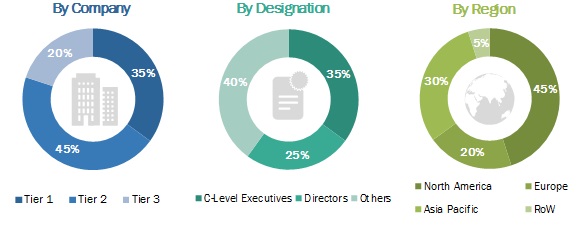
The report comprises several stakeholders, such as raw material suppliers, processors, end-product manufacturers, and regulatory organizations in the supply chain. The demand side of this market is characterized by various end users, such as airport administration as well as Maintenance, Repair and Operations (MRO) and leasing companies. The supply side is characterized by advancements in airport baggage handling system technology, development of airport baggage handling system, and software development. Various primary sources from both, the supply and demand sides of the market were interviewed to obtain qualitative and quantitative information. Following is the breakdown of primary respondents:
To know about the assumptions considered for the study, download the pdf brochure
Market Size Estimation
Both, top-down and bottom-up approaches were used to estimate and validate the total size of the airport baggage handling system market. These methods were also used extensively to estimate the size of various subsegments in the market. The research methodology used to estimate the market size includes the following:
- Key players in the industry and markets have been identified through extensive secondary research.
- The industry’s supply chain and market size, in terms of value, have been determined through primary and secondary research processes.
- All percentage shares, splits, and breakdowns have been determined using secondary sources and verified through primary sources.
Data Triangulation
After arriving at the overall market size using the market size estimation processes as explained above the market was split into several segments and subsegments. To complete the overall market engineering process and arrive at the exact statistics of each market segment and subsegment, data triangulation and market breakdown procedures were employed, wherever applicable. The data was triangulated by studying various factors and trends from both, the demand and supply sides, in the airport baggage handling system industry.
Report Objectives
- To identify and analyze key drivers, restraints, opportunities, and challenges influencing the growth of the report
- To analyze macro and micro indicators of the report
- To forecast the market size of segments based on 4 regions, including North America, Europe, Asia Pacific, and Rest of the World, along with major countries in each of these regions
- To strategically analyze micromarkets1 with respect to individual technological trends, prospects, and their contribution to the overall market
- To strategically profile key market players and comprehensively analyze their market shares and core competencies
- To provide a detailed competitive landscape of the airport baggage handling system market, along with an analysis of business and corporate strategies such as new product development, providing customized solutions, and mergers & acquisitions
- To identify detailed financial positions, key products, unique selling points, and key developments of leading companies in the airport baggage handling system market
Scope of the Report
|
Report Metric |
Details |
|
Market size available for years |
2013 to 2020 |
|
Base year considered |
2014 |
|
Forecast period |
2015 to 2020 |
|
Forecast units |
Value (USD) |
|
Segments covered |
Identification Technology, Service, Type, Airport Class, Efficiency and Region |
|
Geographies covered |
North America, APAC, Europe, Middle East, Latin America, Africa |
|
Companies covered |
Siemens AG (Germany), Vanderlande Industries (Netherland), Daifuku Company (Japan), Pteris Global (Singapore), Beumer Group (Germany), Grenzebach Maschinenbau (Germany), BCS Group (New Zealand), Logplan (US), G&S Airport Conveyor (US), and Fives Group (France) among others |
This research report categorizes the airport baggage handling system market based on identification technology, service, type, airport class, efficiency and region.
On the basis of identification technology, the airport baggage handling system market has been segmented as follows:
- Barcode
- RFID
- Others
On the basis of service type, the report has been segmented as follows:
- Assisted Service Bag Check-In
- Self-Service Bag Check-In
On the basis of type, the report has been segmented as follows:
- Conveyors
- Destination Coded Vehicles
- Others
On the basis of efficiency, the report has been segmented as follows:
- Below 3000
- 3000 to 6000
- Above 6000
On the basis of airport class, the report has been segmented as follows:
- A
- B
- C
On the basis of Region, the report has been segmented as follows:
- North America
- Europe
- Asia Pacific
- Middle East
- Latin America
- Africa
Available Customizations
With the given market data, MarketsandMarkets offers customizations according to the company’s specific needs.
Product Analysis
- Product matrix, which gives a detailed comparison of the product portfolio of each company
Company Information
- Detailed analysis and profiles of additional market players (up to 5)












Growth opportunities and latent adjacency in Airport Baggage Handling System Market
I require a marketing strategy report for baggage handling systems for SAARC, SE Asian countries, and the Middle East.