Energy Harvesting System for Wireless Sensor Network Market by Sensor (Temperature, Pressure, Flow, Level, Humidity, Position, Motion & IR), Technology (Light, Vibration, & Thermal), Application, and by Geography - Global Forecast to 2035


Energy Harvesting System for Wireless Sensor Network Market Summary
The Energy Harvesting System for Wireless Sensor Network Market is gaining momentum as industries seek maintenance-free, battery-independent, and self-powered sensing solutions for connected infrastructure. The market is estimated at US$ 0.9 Billion - US$ 1.2 Billion in 2025 and is projected to reach US$ 2.8 Billion - US$ 3.6 Billion by 2035 at a CAGR of 11.5% - 13.0% from 2025 to 2035. Growth is being driven by rapid deployment of IoT-enabled wireless sensor networks, industrial automation, smart buildings, predictive maintenance, environmental monitoring, and connected infrastructure. Energy harvesting technologies—including solar, thermal, vibration, radio-frequency, and kinetic energy harvesting—are increasingly being integrated with ultra-low-power electronics to enable sensors to operate for years with minimal battery replacement.
Key Market Trends & Insights
North America is expected to remain the leading region, supported by strong industrial IoT adoption, advanced manufacturing, smart-building deployments, aerospace applications, and investments in connected infrastructure.
Asia Pacific is projected to be the fastest-growing region, driven by industrial automation, smart-city initiatives, expanding electronics manufacturing, 5G infrastructure, and increasing adoption of wireless monitoring systems.
Ambient-light and solar energy harvesting represent a major opportunity because indoor and outdoor wireless sensors can convert available light into electrical energy, reducing dependence on batteries.
Ultra-low-power semiconductor technology is becoming increasingly important. Energy-efficient microcontrollers, sensors, wireless transceivers, and power-management ICs allow harvested energy to support increasingly sophisticated sensing applications.
AI is enhancing the value proposition by enabling sensor networks to process data intelligently and prioritize transmissions. Instead of continuously communicating raw information, AI-enabled edge nodes can identify anomalies and transmit only important events, reducing energy consumption.
The convergence of energy harvesting, IoT, edge AI, LPWAN, Bluetooth Low Energy, and automation is creating self-powered sensing ecosystems across factories, buildings, transportation networks, agriculture, and infrastructure.
Market Size & Forecast
-
Base year market size: US$ 0.9 Billion - US$ 1.2 Billion in 2025
-
Forecast market value: US$ 2.8 Billion - US$ 3.6 Billion by 2035
-
CAGR: 11.5% - 13.0% from 2025 to 2035
-
Growth factors: Industrial IoT, wireless sensor deployment, battery-reduction requirements, predictive maintenance, smart buildings, renewable-energy integration, edge AI, and connected infrastructure.
The market's long-term potential is linked to the increasing number of sensors being deployed in locations where replacing batteries is expensive, difficult, or unsafe. Energy harvesting provides a pathway toward autonomous sensor nodes capable of operating with limited human intervention.
AI-Powered Military Transformation: The Future of Smart Combat and Defense Top 10 Key Takeaway
-
The Energy Harvesting System for Wireless Sensor Network Market is projected to grow from US$ 0.9 Billion - US$ 1.2 Billion in 2025 to US$ 2.8 Billion - US$ 3.6 Billion by 2035.
-
The market is expected to expand at a 11.5% - 13.0% CAGR from 2025 to 2035.
-
North America is expected to remain the leading regional market.
-
Asia Pacific is projected to record the fastest growth.
-
Solar and ambient-light harvesting are important growth technologies.
-
Thermal and vibration harvesting are gaining adoption in industrial environments.
-
Ultra-low-power wireless sensors are improving the viability of self-powered networks.
-
AI can reduce energy consumption through intelligent local data processing.
-
IoT and industrial automation are major sources of demand.
-
Battery-free and maintenance-free sensing will remain a strategic opportunity through 2035.
Product Insights
Energy harvesting modules and power-management systems represent a core product segment because they convert environmental energy into usable electrical power for wireless sensor nodes. These systems typically combine an energy transducer with power-management circuitry, storage components, voltage regulation, and intelligent energy-management functions.
Solar and ambient-light harvesting products are gaining strong attention because light is widely available in outdoor environments and increasingly accessible indoors through artificial lighting. These systems are particularly suitable for smart buildings, environmental monitoring, asset tracking, and low-power IoT devices.
Vibration-based energy harvesting systems are attractive in industrial environments where machinery continuously produces mechanical energy. Sensors installed on motors, pumps, compressors, and production equipment can potentially capture vibration energy while simultaneously monitoring equipment health.
Thermal energy harvesting is another emerging category. Temperature differences between machinery, pipes, industrial equipment, and surrounding environments can generate usable electrical energy through thermoelectric technologies.
RF energy harvesting is gaining interest for extremely low-power applications where ambient radio-frequency signals can supplement other energy sources. Hybrid harvesting systems that combine multiple energy sources are expected to become increasingly important because they improve reliability under changing environmental conditions.
AI-enabled energy-management systems represent a future product opportunity. These systems can estimate energy availability, adjust sensing intervals, optimize transmission schedules, and dynamically allocate power between sensing, processing, and communication.
Technology / Component Insights
The technology ecosystem includes energy transducers, power-management ICs, storage components, wireless communication modules, sensors, microcontrollers, antennas, and software. Improvements in each component are increasing the efficiency and practicality of energy-autonomous wireless sensor networks.
Photovoltaic cells are among the most widely applicable harvesting technologies because they can operate across outdoor and indoor environments. New materials and improved low-light photovoltaic architectures are expanding opportunities for indoor IoT sensors.
Thermoelectric generators convert temperature gradients into electrical energy and are particularly relevant to industrial monitoring. Piezoelectric and electromagnetic harvesters convert vibration and mechanical movement into electricity and can be integrated into rotating machinery and transportation infrastructure.
Power-management technology is critical because harvested energy can be intermittent. Modern PMICs can efficiently capture small amounts of energy, regulate voltage, charge storage elements, and deliver stable power to connected sensors.
AI and edge computing are increasingly important. Intelligent sensor nodes can determine when measurements need to be taken and when data should be transmitted. This reduces unnecessary radio activity and extends the operational capability of energy-constrained systems.
IoT connectivity technologies such as Bluetooth Low Energy, Zigbee, LoRaWAN, Thread, and other LPWAN technologies are enabling low-power communication across different environments.
Future innovation will focus on higher conversion efficiency, miniature energy harvesters, flexible electronics, hybrid energy sources, advanced supercapacitors, solid-state storage, AI-based energy management, and self-optimizing wireless sensor nodes.
Application Insights
Industrial applications represent a major growth opportunity. Wireless sensors can monitor vibration, temperature, pressure, humidity, machine condition, and structural parameters without requiring extensive cabling. Energy harvesting reduces the need for frequent battery replacement, particularly in large factories with thousands of connected sensors.
Predictive maintenance is an important use case. Energy-autonomous sensors can continuously monitor equipment and provide early warnings when operating conditions deviate from normal patterns. AI algorithms can analyze sensor data locally and identify anomalies before major failures occur.
Smart buildings are another important application. Self-powered sensors can monitor occupancy, temperature, lighting, air quality, and energy consumption. This information can be used by building-management systems to automatically optimize HVAC, lighting, and ventilation.
Transportation infrastructure can also benefit from autonomous sensing. Bridges, railways, roads, tunnels, and vehicles can use wireless sensors for structural and environmental monitoring.
Agriculture is an emerging application, with energy harvesting supporting distributed sensors for soil moisture, temperature, humidity, crop conditions, and irrigation management.
Future opportunities will emerge from smart factories, connected logistics, wearable devices, remote infrastructure, environmental monitoring, and autonomous asset-tracking systems.
Regional Insights
North America is expected to remain the leading market due to strong adoption of industrial IoT, advanced manufacturing, aerospace, smart buildings, and connected infrastructure. The US has a mature ecosystem of semiconductor, sensor, automation, and IoT companies, supporting the development of energy-autonomous sensor networks.
Europe is benefiting from industrial digitalization, energy-efficiency initiatives, smart-building investments, and Industry 4.0 programs. Demand for predictive maintenance and sustainable infrastructure is creating opportunities for battery-independent sensing.
Asia Pacific is projected to be the fastest-growing region through 2035. China, Japan, South Korea, India, and Southeast Asian countries are expanding industrial automation, smart manufacturing, connected infrastructure, and smart-city deployments.
-
North America is expected to maintain regional leadership.
-
Europe has strong demand from industrial and energy-efficiency applications.
-
Asia Pacific is projected to achieve the fastest growth.
-
Industrial IoT is a major regional demand driver.
-
Smart buildings and infrastructure will expand adoption opportunities.
Country Specific Market Trends
In Asia Pacific, China is projected to grow at approximately 14.0% - 15.5% CAGR, supported by industrial automation, smart manufacturing, IoT infrastructure, electronics production, and smart-city development. Japan could achieve approximately 10.5% - 12.0% CAGR, supported by robotics, factory automation, aging infrastructure monitoring, and advanced sensor technologies.
In North America, the United States is expected to expand at approximately 11.0% - 12.5% CAGR, driven by industrial IoT, predictive maintenance, smart buildings, aerospace, defense, and infrastructure monitoring. Canada could register approximately 10.5% - 12.0% CAGR, while Mexico is projected to grow at approximately 12.0% - 13.5% CAGR, supported by manufacturing modernization and connected industrial facilities.
In Europe, Germany is projected to grow at approximately 10.5% - 12.0% CAGR, supported by Industry 4.0, industrial automation, automotive manufacturing, and predictive maintenance. France could achieve approximately 10.0% - 11.5% CAGR, supported by smart infrastructure, industrial digitalization, transportation, and energy-management applications.
-
China is expected to be a major APAC growth engine.
-
Japan has strong opportunities in robotics and factory automation.
-
The US remains the dominant North American market.
-
Mexico benefits from increasing industrial digitalization.
-
Germany is a major European market for Industry 4.0 applications.
Key Company Insights
Major companies participating in the ecosystem include EnOcean, Analog Devices, Texas Instruments, STMicroelectronics, Powercast, e-peas, Microchip Technology, Renesas Electronics, TE Connectivity, and Mouser Electronics. Competitive strategies focus on improving harvesting efficiency, reducing power consumption, miniaturizing components, and enabling complete energy-autonomous sensor platforms.
Companies are developing highly efficient power-management ICs capable of operating with extremely small input power. Semiconductor manufacturers are also combining energy harvesting with low-power processors, wireless connectivity, and sensor interfaces.
AI adoption is primarily occurring at the system level. Intelligent power-management algorithms can dynamically adjust device activity according to available energy. This can improve system reliability in environments where energy availability changes throughout the day.
Product strategies increasingly emphasize complete reference designs and integrated solutions rather than individual components. This allows industrial customers to develop energy-autonomous wireless sensor nodes faster.
-
Companies are improving energy-conversion efficiency.
-
Low-power semiconductor integration is a major innovation focus.
-
Hybrid energy harvesting is expanding system reliability.
-
AI-based energy management is emerging as a differentiator.
-
Integrated reference designs are simplifying IoT deployment.
Recent Developments
The market is witnessing continued development of ultra-low-power energy harvesting PMICs designed to extract useful energy from very small photovoltaic, thermal, or mechanical sources. These devices are enabling smaller and more autonomous wireless sensor nodes.
Manufacturers are also integrating energy harvesting with Bluetooth Low Energy, IoT sensors, and edge-processing platforms, enabling battery-reduced sensing solutions for smart buildings and industrial environments.
Partnerships among semiconductor companies, sensor manufacturers, automation providers, and IoT platform developers are increasingly focused on developing complete self-powered sensor solutions for predictive maintenance, asset monitoring, and smart infrastructure.
Market Segmentation
The Energy Harvesting System for Wireless Sensor Network Market can be segmented by product, technology/component, application, and region. By product, the market includes energy harvesting modules, power-management ICs, transducers, storage components, wireless sensor nodes, and complete energy-autonomous systems. Integrated energy-harvesting sensor nodes represent an important emerging category.
By technology/component, the market includes solar/photovoltaic, thermal, vibration, RF, kinetic, piezoelectric, electromagnetic, and hybrid harvesting technologies. Solar and vibration technologies have broad commercial opportunities, while hybrid architectures are expected to gain importance.
By application, the market covers industrial automation, smart buildings, healthcare, transportation, agriculture, environmental monitoring, consumer electronics, aerospace and defense, logistics, and infrastructure monitoring. Industrial IoT and smart buildings are expected to remain major demand centers.
By region, the market includes North America, Europe, Asia Pacific, Latin America, and the Middle East & Africa. North America is expected to lead the market, while Asia Pacific is projected to record the highest growth rate.
-
Solar and ambient-light harvesting have broad deployment potential.
-
Industrial applications represent a major demand segment.
-
Smart buildings are increasing demand for self-powered sensors.
-
AI and edge computing can reduce energy consumption.
-
Asia Pacific offers strong long-term growth potential.
Conclusion
The Energy Harvesting System for Wireless Sensor Network Market is becoming increasingly important as organizations deploy millions of connected sensors across industrial, commercial, transportation, and infrastructure environments. The ability to operate sensors with minimal battery dependence can reduce maintenance costs, improve deployment flexibility, and support sustainability objectives.
The market is projected to grow from US$ 0.9 Billion - US$ 1.2 Billion in 2025 to US$ 2.8 Billion - US$ 3.6 Billion by 2035 at a CAGR of 11.5% - 13.0% from 2025 to 2035. AI will strengthen the market by enabling energy-aware sensing, adaptive sampling, local analytics, and intelligent communication scheduling.
The combination of energy harvesting, IoT, edge AI, low-power semiconductors, LPWAN, automation, and cloud platforms will support the development of increasingly autonomous sensor networks. Industrial facilities, smart buildings, infrastructure operators, and remote assets stand to benefit particularly from battery-reduced monitoring.
Through 2035, companies that develop efficient, compact, reliable, and intelligent energy-harvesting solutions will be strategically positioned to benefit from the expansion of maintenance-free IoT infrastructure.
FAQs
1. What is the projected market size of the Energy Harvesting System for Wireless Sensor Network Market?
The market is estimated at US$ 0.9 Billion - US$ 1.2 Billion in 2025 and is projected to reach US$ 2.8 Billion - US$ 3.6 Billion by 2035.
2. What is the expected growth rate of the market?
The market is projected to grow at approximately 11.5% - 13.0% CAGR from 2025 to 2035.
3. What are the key drivers of the market?
Key drivers include industrial IoT, wireless sensor deployment, predictive maintenance, smart buildings, battery-reduction requirements, energy-efficient semiconductors, edge AI, and connected infrastructure.
4. Which region is expected to lead the market?
North America is expected to remain the leading region, while Asia Pacific is projected to be the fastest-growing region through 2035.
5. Who are the key companies in the market?
Key companies include EnOcean, Analog Devices, Texas Instruments, STMicroelectronics, Powercast, e-peas, Microchip Technology, Renesas Electronics, and TE Connectivity.
 Exclusive indicates content/data unique to MarketsandMarkets and not available with any competitors.
Table of Contents
1 Introduction (Slide No. - 15)
1.1 Objectives of the Study
1.2 Definition and Scope
1.3 Stakeholders and Major Players in the Market
1.4 Currency & Years Considerate for Study
2 Research Methodology (Slide No. - 21)
2.1 Introduction
2.2 Market Size Estimation
2.3 Market Breakdown & Data Triangulation
2.3.1 Bottom-Up Approach
2.3.2 Top-Down Approach
2.4 Market Share Estimation
2.2.1 Secondary Data
2.2.1.1 Key Data From Secondary Sources
2.2.2 Primary Data
2.2.2.1 Key Data From Primary Sources
2.2.2.2 Key Industry Insights
2.5 Research Assumptions
2.5.1 Assumptions
3 Premium Insight (Slide No. - 29)
3.1 Life-Cycle Analysis, By Geography
3.2 Growth Strategy Matrix (Ansoff Matrix)
3.3 Market Investment Analysis
3.3.1 Pro-Factors for Investment in WSN With Energy Harvesting System
3.3.2 Barriers for Investment in WSN With Energy Harvesting System
4 Market Overview (Slide No. - 33)
4.1 Introduction
4.2 History and Evolution of Wireless Sensor Networking
4.3 Market Dynamics
4.3.1 Drivers
4.3.2 Restraints
4.3.3 Opportunities
4.3.4 Challenge
5 Industry Trends (Slide No. - 40)
5.1 Introduction
5.2 Value Chain Analysis
5.3 Porter’s Five Forces Analysis
5.3.1 Threat of New Entrants
5.3.2 Bargaining Power of Buyers
5.3.3 Degree of Competetion
5.3.4 Bargaining Power of Suppliers
5.3.5 Threat of Substitute
6 Wireless Sensor Network Market, By Type of Sensors (Slide No. - 50)
6.1 Temperature Sensor
6.2 Pressure Sensor
6.3 Flow Sensor
6.4 Level Sensor
6.5 Humidity Sensor
6.6 Motion & Ir Sensors
6.7 Position Sensors
6.8 Gas Sensors
6.9 Others
7 Wireless Sensor Network Market, By Type of Primary Batteries (Slide No. - 62)
7.1 Lithium Battery
7.2 Alkaline
7.3 Others
8 Transducers Used in Energy Harvesting System (Slide No. - 65)
8.1 Introduction
8.2 Electrodynamic
8.3 Photovoltaic
8.4 Thermoelectric
8.5 Piezoelectric
8.5.1 Sound Energy Harvesting
8.5.2 On-Road(Kinetic) Energy Harvesting
8.5.3 Biomechanical Energy Harvesting
8.6 Radio Frequency (RF) Transducers
8.6.1 Radio Frequency (RF) Energy Harvesting
8.7 Electromagnetic Transducers
8.7.1 Inductive/Magnetic Energy Harvesting
8.8 Case Study
9 Wireless Sensor Network With Energy Harvester Market, By Component (Slide No. - 76)
9.1 Transducers
9.1.1 Photovoltaic
9.1.2 Piezoelectric
9.1.3 Thermoelectric
9.1.4 Others
9.2 Pmic
9.3 Secondary Batteries
9.3.1 Li-Ion Battery
9.3.2 Supercapacitor
9.3.3 Others
10 Wireless Sensor Network With Energy Harvester Market, By Technology (Slide No. - 80)
10.1 Introduction
10.2 Light Energy Harvesting
10.3 Vibration Energy Harvesting
10.4 Radio Frequency (RF) Energy Harvesting
10.5 Thermal Energy Harvesting
11 Wireless Sensor Network With Energy Harvester Market, By Application (Slide No. - 86)
11.1 Introduction
11.2 Building and Home Automation
11.3 Industrial
11.4 Aerospace
11.5 Automotive
11.6 Transportation Infrastructure
11.7 Security
11.8 Railways
11.9 Others
12 Wireless Sensor Networking With Energy Harvester Market, By Geography (Slide No. - 96)
12.1 Introduction
12.2 North America
12.3 Europe
12.4 Asia-Pacific
12.5 Rest of the World
13 Competitive Landscape (Slide No. - 103)
13.1 Competitive Analysis
13.2 Competitive Situation and Trends
13.3 Key Players in Wireless Sensor Network With Energy Harvesting System Ecosystem
13.4 Competitive Landscape
13.4.1 Competitive Landscape Table
13.4.2 New Product Development
13.4.3 Agreements, Partnerships, Joint Ventures & Collaborations
13.4.4 Expansions, Mergers & Acquisitions
13.4.5 Others
14 Company Profile (Slide No. - 119)
14.1 ABB Limited
14.2 Convergence Wireless
14.3 Cymbet Corporation
14.4 Cypress Semiconductor Corporation
14.5 Enocean GmbH
14.6 Fujitsu Limited
14.7 Honeywell International Inc..
14.8 Linear Technology
14.9 Lord Microstrain
14.10 Microchip Technology Inc..
14.11 Stmicroelectronics N.V.
List of Tables (32 Tables)
Table 1 List of Companies for Wireless Sensor Network With Energy Harvesting
Table 2 Wireless Temperature Sensor Network With Energy Harvesting System Market, By Technology
Table 3 Wireless Flow Sensor Network With Energy Harvesting System Market, By Technology
Table 4 Wireless Pressure Sensor Network With Energy Harvesting System Market, By Technology
Table 5 Wireless Level Sensor Network With Energy Harvesting System Market, By Technology
Table 6 Wireless Humidity Sensor Network With Energy Harvesting System Market, By Technology
Table 7 Wireless Motion & Ir Sensor Network With Energy Harvesting System Market, By Technology
Table 8 Wireless Position Sensor Network With Energy Harvesting System Market, By Technology
Table 9 Wireless Gas Sensor Network With Energy Harvesting System Market, By Technology
Table 10 Other Wireless Sensor Network With Energy Harvesting System Market, By Technology
Table 11 Primary Battery Market for Wireless Sensor Network
Table 12 Major Players Ranking: Transducers Manufacturers
Table 13 Major Players Ranking: Power Management Ic Companies
Table 14 Major Players Ranking: Energy Harvesting Cells Manufacturing Companies
Table 15 Major Players Ranking: Wireless Sensor Network
Table 16 Competitive Landscape Table - 2015
Table 17 Competitive Landscape Table – 2014 & 2013
Table 18 New Product Development
Table 19 Acquisition, Partnership & Collaboration
Table 20 Contracts and Agreements
Table 21 Awards & Recognition
Table 22 ABB Limited: Developments
Table 23 Convergence Wireless Inc.: Developments
Table 24 Cymbet Corporation: Developments
Table 25 Cypress Semiconductor Corporation: Developments
Table 26 Enocean GmbH: Developments
Table 27 Fujitsu Limited: Developments
Table 28 Honeywell International Inc.: Developments
Table 29 Lord Microstrain: Developments
Table 30 Linear Technology Corporation: Developments
Table 31 Microchip Technology Inc..: Developments
Table 32 Stmicroelectronics N.V.: Developments
List of Figures (86 Figures)
Figure 1 Market Segmentation
Figure 2 Life Cycle Analysis
Figure 3 Ansoff Matrix
Figure 4 Market Investment Analysis
Figure 5 Industry Trends
Figure 6 Value Chain Analysis
Figure 7 Poter`S Five Force Model Analysis
Figure 8 Threat of New Enterants
Figure 9 Bargaining Power of Buyer
Figure 10 Degree of Competition
Figure 11 Bargaining Power of Suppliers
Figure 12 Threat of Substitutes
Figure 13 Global Wireless Sensor Network Market
Figure 14 Global WSN With EHS Market
Figure 15 Wireless Sensor Network Market, By Type of Sensor
Figure 16 Wireless Temperature Sensor Network With Energy Harvesting System Market
Figure 17 Wireless Flow Sensor Network With Energy Harvesting System Market
Figure 18 Wireless Pressure Sensor Network With Energy Harvesting System Market
Figure 19 Wireless Level Sensor Network With Energy Harvesting System Market
Figure 20 Wireless Humidity Sensor Network With Energy Harvesting System Market
Figure 21 Wireless Motion & IR Sensor Network With Energy Harvesting System Market
Figure 22 Wireless Position Sensor Network With Energy Harvesting System Market
Figure 23 Wireless Gas Sensor Network With Energy Harvesting System Market
Figure 24 Other Wireless Sensor Network With Energy Harvesting System Market
Figure 25 Primary Battery for Wireless Sensor Networking Market
Figure 26 Transducer Technologies Used in Wireless Sensor Network
Figure 27 Electrodynamic Transducer for Energy Harvesting
Figure 28 Photovoltaic Cell (PV Cell)
Figure 29 Thermoelectric Transducer
Figure 30 Piezoelectric Transducer
Figure 31 Radio Frequency-To-Dc Converter
Figure 32 RF Energy Harvesting System
Figure 33 Electrodynamic Transducer for Energy Harvesting
Figure 34 Energy Harvesting Component for Wireless Sensor Network Market
Figure 35 Transducer Component in Energy Harvesting System for Wireless Sensor Network Market
Figure 36 Battery Component in Energy Harvesting System for Wireless Sensor Network Market
Figure 37 Wireless Sensor Network Market With Energy Harvesting System, By Technology
Figure 38 Wireless Sensor Network Market With Light Energy Harvesting System, By Application
Figure 39 Wireless Sensor Network Market With Vibration Energy Harvesting System, By Application
Figure 40 Wireless Sensor Network Market With Radio Frequency (RF) Energy Harvesting System, By Application
Figure 41 Wireless Sensor Network Market With Thermal Energy Harvesting System, By Application
Figure 42 Wireless Sensor Network With Energy Harvesting Market By Application
Figure 43 Market for Building and Automation By WSN With EHS
Figure 44 Market for Building and Automation By Technology
Figure 45 Market for Industry By WSN With EHS
Figure 46 Market for Industry By Technology
Figure 47 Market for Aerospace By WSN With EHS
Figure 48 Market for Aerospace By Technology
Figure 49 Market for Automotive By WSN With EHS
Figure 50 Market for Automotive By Technology
Figure 51 Market for Transportation By WSN With EHS
Figure 52 Market for Transportation By Technology
Figure 53 Market for Security By WSN With EHS
Figure 54 Market for Security By Technology
Figure 55 Market for Railways By WSN With EHS
Figure 56 Market for Railways By Technology
Figure 57 Market for Others Application By WSN With EHS
Figure 58 Market for Other Application By Technology
Figure 59 Wireless Sensor Network With Energy Harvesting System, Geography Snapshot
Figure 60 Wireless Sensor Network With Energy Harvesting System By Geography
Figure 61 Wireless Sensor Network With Energy Harvesting System in North America
Figure 62 Wireless Sensor Network With Energy Harvesting System in Europe
Figure 63 Wireless Sensor Network With Energy Harvesting System in Asia-Pacific
Figure 64 Wireless Sensor Network With Energy Harvesting System in Rest of the World
Figure 65 ABB Limited: Business Overview
Figure 66 ABB Limited: Product Portfolio
Figure 67 Convergence Wireless Inc.: Business Overview
Figure 68 Convergence Wireless Inc.: Product Portfolio
Figure 69 Cymbet Corp0ration: Business Overview
Figure 70 Cymbet Corporation: Product Portfolio
Figure 71 Cypress Semiconductors Corporation: Business Overview
Figure 72 Cypress Semiconductor Corporation: Product Portfolio
Figure 73 Enocean GmbH: Business Overview
Figure 74 Enocean GmbH: Product Portfolio
Figure 75 Fujitsu Limited: Business Overview
Figure 76 Fujitsu Limited: Product Portfolio
Figure 77 Honeywell International Inc.: Business Overview
Figure 78 Honeywell International Inc.: Product Portfolio
Figure 79 Lord Microstrain: Business Overview
Figure 80 Lord Microstrain: Product Portfolio
Figure 81 Linear Technology Corporation: Business Overview
Figure 82 Linear Technology Corporation: Product Portfolio
Figure 83 Microchio Technology Inc.: Business Overview
Figure 84 Microchip Technology Inc.: Product Portfolio
Figure 85 Stmicroelectronics N.V.: Business Overview
Figure 86 Stmicroelectronics N.V.: Product Protfolio
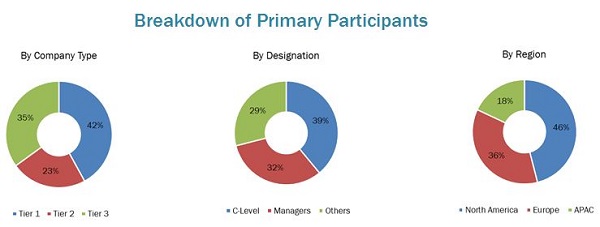
This research study involves the extensive use of secondary sources, directories, and databases (such as annual reports, press releases, journals, company websites, and paid databases) to identify and collect information useful for this study. The entire procedure includes the study of the financial reports of the top market players. After arriving at the overall market size, the total market has been split into several segments and subsegments and confirmed with the key industry experts such as CEOs, VPs, directors, and marketing executives. The figure below shows the breakdown of primaries on the basis of company type, designation, and region conducted during research study.
To know about the assumptions considered for the study, download the pdf brochure
The energy harvesting for wireless sensor network market has a diversified ecosystem that includes different types of transducer providers such as Laird Plc. (U.K.), Mide Technology Corporation (U.S.), Lord Microstrain (U.S.), EnOcean GmbH (Germany), and IXYS Corporation (U.S.); secondary battery and capacitor providers such as Cymbet Corporation (U.S.), Linear Technologies (U.S.), Murata Manufacturing Co., Ltd. (Japan), and Infinite Power Solution Inc. (U.S.); power management IC manufacturers such as Linear Technologies (U.S.), Cypress Semiconductor Corp. (U.S.), STMicroelectronics (Switzerland), Texas Instruments (U.S.), and Fujitsu (Japan); wireless sensors providers such as ABB Limited (Switzerland), EnOcean GmbH (Germany), Episensor (Ireland) and Monnit Corporation (U.S.); semiconductor wafer manufacturers, research institutes and universities, government organizations, low-power electronic product manufacturers, energy harvesting system consultancies, alliances and associations for wireless sensor network with energy harvesting system; and end users from all applications.
Target Audience:
- Technology providers
- Technology investors
- Technology standards organizations
- Forums, alliances, and associations
- Government bodies
- Venture capitalists
- Private equity firms
- Analysts, strategic business planners, and others
- Startup firms
Key Takeaways:
- Analysis of global market for energy harvesting for wireless sensor network
- Market size splits by technology, application, and geography
- Value chain analysis of wireless sensor network with energy harvesting system
- Major market trends, drivers, restraints, and opportunities for global energy harvesting for wireless sensor network market
- Detailed competitive landscape which includes key players, in-depth market analysis, individual revenue, and company strategies
The market in this report has been segmented as follows:
By Sensors:
- Temperature Sensors
- Pressure Sensors
- Flow Sensors
- Level Sensors
- Humidity Sensors
- Motion and IR Sensors
- Position Sensors
- Gas Sensors
- Others (Light Sensors, Contact Sensors)
By Primary Batteries:
- Lithium Batteries
- Alkaline Batteries
- Others
By Component:
-
Transducers
- Photovoltaic
- Piezoelectric
- Thermoelectric
- Others
- PMIC
-
Secondary Batteries
- Li-Ion batteries
- Supercapacitors
- Others
By Technology:
- Light Energy Harvesting
- Vibration Energy Harvesting
- Radio Frequency (RF) Energy Harvesting
- Thermal Energy Harvesting
By Application:
- Building and Home Automation
- Industrial
- Aerospace
- Automotive
- Railways
- Transportation Infrastructure
- Security
- Others (Ships, Water and Wastewater Management, Forestry and Agriculture)
By Geography:
- North America
- Europe
- APAC
- RoW












Growth opportunities and latent adjacency in Energy Harvesting System for Wireless Sensor Network Market