
Food Packaging Market

Food Packaging Market by Material (Plastic, Paper & Paperboard, Glass, Metal, Other Materials), Packaging Type (Bags, Pouches, Bottles, Jars, Boxes, Trays, Clamshells, Other Packaging Types), Format (Flexible, Rigid, Semi-Rigid), Technology, Food Type, Application, Region - Global Forecast to 2030




OVERVIEW
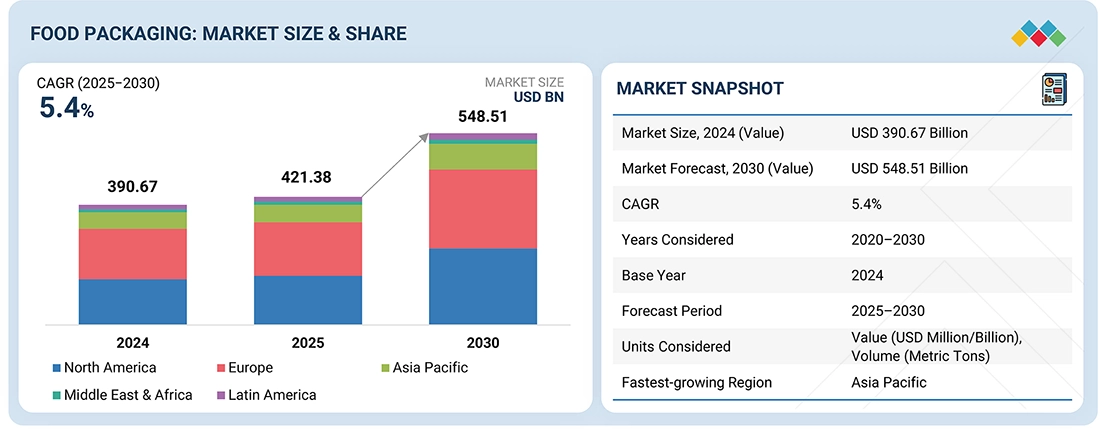
Source: Secondary Research, Interviews with Experts, MarketsandMarkets Analysis
The food packaging market is projected to reach USD 548.51 billion by 2030 from USD 421.38 billion in 2025, at a CAGR of 5.4%. The expanding food processing sector in Asia Pacific countries is a significant driver, with growing urbanization and rising demand for packaged, ready-to-eat, frozen, and convenience foods.
KEY TAKEAWAYS
-
BY MATERIALPlastic remains the most widely used material, offering flexibility, durability, and barrier protection. Paper and paperboard are gaining traction as eco-friendly alternatives, especially in bakery and fast-food segments. Glass and metal continue to serve premium and canned food applications, respectively, while biodegradable materials are emerging as sustainable substitutes.
-
BY PACKAGING TYPEPouches and bags dominate due to their convenience and compatibility with modern distribution channels. Bottles and jars are widely used for beverages, sauces, and dairy products, while boxes and clamshells are preferred in bakery and ready-meal packaging. Lightweight, resealable, and tamper-evident formats are increasingly favored for both retail and online food delivery segments.
-
BY FORMATFlexible packaging leads the market, driven by cost efficiency, lightweight design, and extended shelf life. Rigid packaging offers superior protection and is prevalent in beverages and dairy segments. Semi-rigid formats bridge the gap between flexibility and durability, commonly used for trays, clamshells, and ready-to-eat food packs.
-
BY TECHNOLOGYModified atmosphere packaging (MAP) is estimated to be the largest segment, driven by rapid growth in chilled and fresh food categories. Active packaging, featuring gas scavengers and antimicrobial films, enhances food safety, while smart packaging with RFID and sensors enables traceability. Vacuum packaging continues to play a key role in preserving meat, poultry, and seafood.
-
BY FOOD TYPEFrozen and chilled foods represent major market segments, benefiting from MAP and vacuum technologies. Canned and shelf-stable foods rely on metal and glass containers for long-term preservation. The growth of convenience and on-the-go food formats continues to drive innovation in flexible and portioned packaging designs.
-
BY APPLICATIONBakery and confectionery dominate the food packaging market, driven by high consumption of items such as chocolates, candies, croissants, and pastries. Additionally, demand for gluten-free products further supports market growth. Flexible films and paperboard are widely used in this segment for freshness and visual appeal. Dairy, meat, poultry, and seafood rely on barrier and preservation packaging, while fresh produce uses biodegradable, breathable materials. Sauces, snacks, cereals, and baby food favor resealable, portion-controlled, and safe packaging, and other items like grains, pulses, and oils use protective formats to extend shelf life.
-
BY REGIONAsia Pacific is projected to be the fastest-growing and largest regional market, driven by urbanization, rising incomes, and growing consumption of packaged foods. North America and Europe maintain strong positions due to mature retail infrastructure and high adoption of sustainable and smart packaging. South America and RoW are growing steadily.
-
COMPETITIVE LANDSCAPEKey market leaders like Amcor, Sealed Air, Tetra Pak, and Mondi Group dominate through global reach and innovation. These players are heavily investing in recyclable mono-material packaging, bio-based alternatives, and intelligent packaging. Strategic partnerships, acquisitions, and sustainability-driven innovation are key competitive strategies.
Food packaging plays a vital role in preserving food quality, extending shelf life, and ensuring safe transportation from producers to consumers. It involves a wide range of materials and technologies designed to meet evolving consumer demands, regulatory requirements, and sustainability goals. With increasing focus on eco-friendly packaging, the market is witnessing innovations in materials, formats, and smart packaging technologies.
TRENDS & DISRUPTIONS IMPACTING CUSTOMERS' CUSTOMERS
Changes in consumer trends or industry disruptions influence the operations of food & beverage companies. These shifts impact the revenues of end users such as food & beverage manufacturers, and retail & supermarkets, foodservice & quick-service restaurants, and e-commerce & food delivery platforms. Consequently, the revenue impact on end users is expected to affect the demand for food packaging, thereby influencing the revenues of food packaging suppliers and manufacturers.
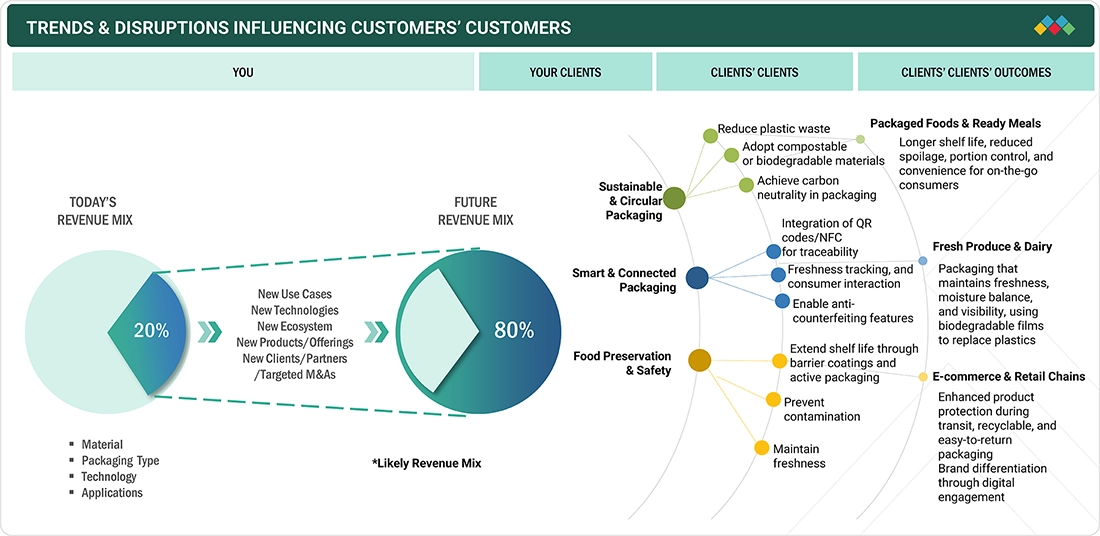
Source: Secondary Research, Interviews with Experts, MarketsandMarkets Analysis
MARKET DYNAMICS

Level
-
Rising demand for convenience & processed foods

-
Food safety, hygiene, and shelf-life extension needs


Level
-
Regulatory compliance complexity

-
High cost of raw materials and eco-friendly packaging alternatives


Level
-
Growing food consumption in emerging economies

-
Adoption of smart and intelligent packaging technologies


Level
-
Environmental concerns and waste management

-
Supply chain & raw material volatility

Source: Secondary Research, Interviews with Experts, MarketsandMarkets Analysis
Driver: Rising demand for convenience and processed foods
The rising demand for convenience and processed foods is a key driver of growth in the food packaging market. Urbanization, busier lifestyles, and increasing participation of women in the workforce are fueling the consumption of ready-to-eat, packaged, and on-the-go meals. These products require packaging solutions that ensure safety, freshness, and extended shelf life, creating opportunities for innovative materials and designs. Packaging formats such as microwavable containers, vacuum-sealed packs, and portion-controlled pouches are increasingly preferred by both consumers and manufacturers. Additionally, the growth of e-commerce and food delivery services has amplified the need for durable, tamper-evident, and transport-friendly packaging solutions. As consumer expectations shift towards convenience without compromising quality, food packaging companies are investing in technologically advanced, sustainable, and versatile packaging options to meet evolving demands, making this trend a major growth driver for the industry.
Restraint: Regulatory compliance complexity
The food packaging industry faces significant challenges due to the complexity of regulatory compliance across various regions. Different countries and even states within a country have distinct regulations concerning food contact materials (FCMs), labeling requirements, and environmental standards. The European Union's Packaging and Packaging Waste Regulation (PPWR) mandates that all packaging placed on EU markets be reusable or recyclable by 2030, while the US Food and Drug Administration (FDA) enforces Title 21 of the Code of Federal Regulations (21 CFR) Parts 170–199 for food packaging materials, manufacturers must ensure that all materials are safe for contact with food and meet strict safety and labeling requirements. The absence of harmonized regulations across regions imposes higher costs and administrative challenges on manufacturers, who must comply with multiple, often conflicting, regulatory frameworks. Moreover, the continual evolution of these standards necessitates ongoing monitoring and timely adjustments, adding further complexity to compliance processes. To navigate these demands effectively, companies are required to invest in specialized regulatory expertise, robust compliance systems, and rigorous quality controls. As a result, regulatory compliance remains a major constraint in the food packaging industry, influencing operational efficiency, product development, and market expansion strategies.
Opportunity: Growing food consumptions in emerging economies
Emerging economies, particularly in Asia Pacific, Africa, and Latin America, are experiencing rapid urbanization and rising disposable incomes, leading to increased demand for packaged and processed foods. This demographic shift is driving the growth of the food packaging market, as consumers seek convenient, safe, and ready-to-eat meal options. Asia Pacific dominated the global food packaging market with a xx% share in 2024 and is projected to continue its leadership through 2030. According to a study, the Indian food processing industry is anticipated to be valued at USD 535 billion by FY26, reflecting the country's expanding consumer base and demand for diverse food products. This surge in food consumption presents significant opportunities for packaging manufacturers to innovate and cater to the evolving needs of these dynamic markets.
Challenge: Environmental concerns and waste management
The food packaging industry faces significant environmental challenges due to the widespread use of single-use plastics and other non-biodegradable materials. These materials contribute substantially to global plastic pollution, with packaging accounting for a major portion of municipal solid waste. According to the Food Packaging Forum (2022), Recycling rates for plastic packaging remain low. In the US, only about 5–6% of plastic packaging is recycled, with significant portions ending up in landfills or as litter in natural environments. This inefficiency is worsened by the complexity of sorting and processing multi-layered and composite packaging materials, which are prevalent in the food industry. The environmental impact extends beyond waste accumulation; the production and disposal of packaging materials contribute to greenhouse gas emissions and resource depletion. Addressing these challenges necessitates a concerted effort towards sustainable packaging solutions, improved recycling infrastructure, and consumer awareness to mitigate the environmental footprint of food packaging.
Food Packaging Market: COMMERCIAL USE CASES ACROSS INDUSTRIES
| COMPANY | USE CASE DESCRIPTION | BENEFITS |
|---|---|---|
 |
Flexible packaging for snacks and ready-to-eat meals | Extends shelf life, reduces food waste, and offers space-saving advantages |
 |
Vacuum-sealed pouches for cereals and snacks | Enhances product freshness and reduces packaging material usage |
 |
Modified atmosphere packaging (MAP) for meats | Extends shelf life, maintains product quality, and reduces spoilage |
 |
Stand-up pouches for biscuits and chocolates | Enhances product visibility, extends shelf life, and offers convenience |
Logos and trademarks shown above are the property of their respective owners. Their use here is for informational and illustrative purposes only.
MARKET ECOSYSTEM
The food packaging market ecosystem involves interconnected relationships among key stakeholders, including raw material suppliers, packaging manufacturers, converters, distributors, and end users across the food and beverage industry. Raw material suppliers provide inputs such as plastics, paper, and glass materials that form the basis of packaging solutions. Packaging manufacturers and converters process these materials into specific formats such as bags, pouches, bottles, and trays, using technologies like modified atmosphere, active, smart, and vacuum. Distributors and packaging suppliers act as intermediaries, linking manufacturers with end users such as dairy producers, meat and seafood processors, bakery and confectionery companies, snack manufacturers, and fresh produce suppliers. This ecosystem streamlines the supply chain by ensuring product safety, extended shelf life, branding, and regulatory compliance, while also addressing consumer demand for convenience, sustainability, and cost efficiency.
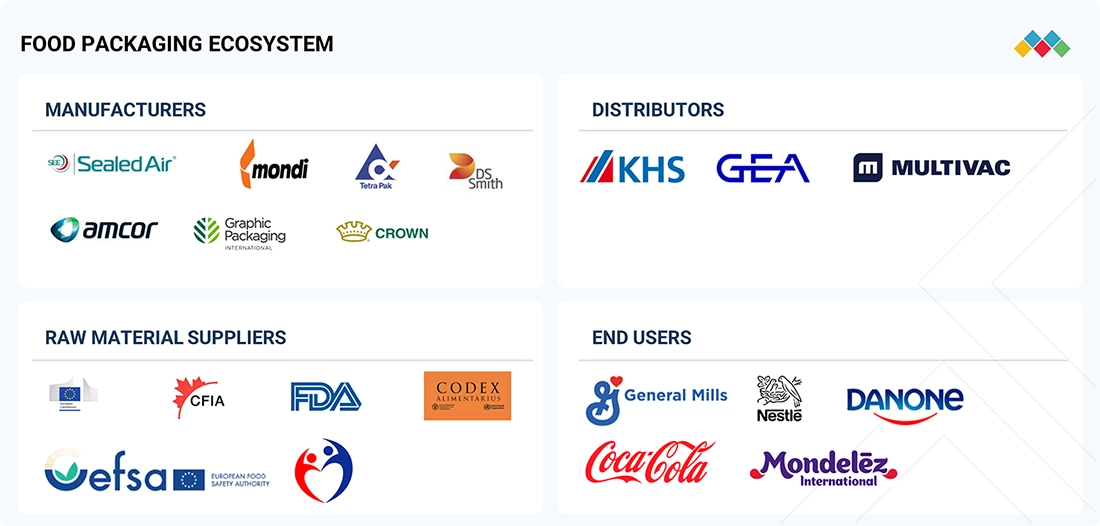
Logos and trademarks shown above are the property of their respective owners. Their use here is for informational and illustrative purposes only.
MARKET SEGMENTS
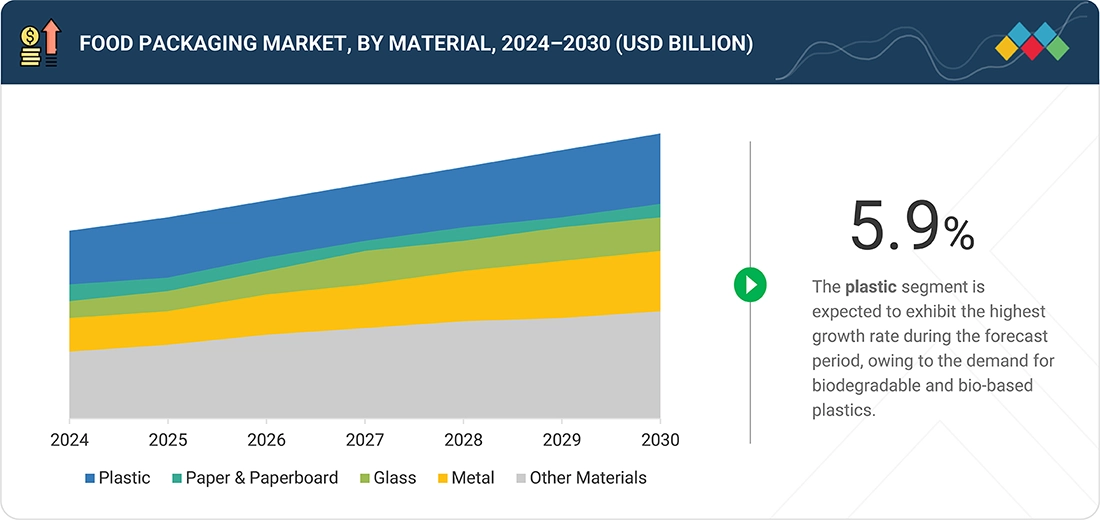
Source: Secondary Research, Interviews with Experts, MarketsandMarkets Analysis
Food Packaging Market, by Material
The plastic segment continues to dominate the global food packaging market due to its versatility, lightweight nature, and cost-effectiveness. Plastics are widely used across rigid and flexible packaging formats, including bottles, containers, films, pouches, and trays, serving applications in beverages, dairy, processed foods, and frozen products. Their ability to provide barrier protection against moisture, oxygen, and contaminants helps extend shelf life and maintain product quality. Additionally, plastic packaging is easy to transport, reduces breakage compared to glass, and supports complex designs that enhance consumer appeal. While environmental concerns have led to increasing attention on recycling and sustainable alternatives, innovations such as multilayer films, recyclable polymers, and bio-based plastics are helping the segment adapt to growing sustainability demands. Despite regulatory pressures and the rise of paper and biodegradable materials, plastics remain the dominant choice in food packaging due to their functional benefits, affordability, and global supply chain efficiency.
Food Packaging Market, by Packaging Type
Pouches are estimated to account for a significant share of the packaging type segment of the global food packaging market. Their popularity is driven by flexibility, convenience, and efficiency in material usage. Stand-up pouches, flat pouches, and spouted variants are widely used across ready-to-eat meals, snacks, beverages, sauces, and pet food. Flexible by design, pouches reduce storage and transportation costs while offering enhanced shelf appeal and extended product shelf life. They also allow for easy portion control, resealability, and on-the-go consumption, aligning with evolving consumer preferences for convenience. Advances in materials, including multilayer films and barrier coatings, improve product protection against moisture, oxygen, and light, ensuring food safety and quality. Sustainability trends are further increasing their adoption, as many pouches now incorporate recyclable, biodegradable, or compostable materials. Due to their combination of functional benefits, cost-effectiveness, and adaptability across product categories, pouches remain one of the dominant packaging types in the global food packaging market.
Food Packaging Market, by Format
Within the food packaging market, the flexible packaging segment continues to dominate, driven by its practical and functional advantages. Flexible packaging, including pouches, bags, sachets, and films, is widely adopted across diverse food categories such as snacks, beverages, dairy products, and ready-to-eat meals. Its lightweight design reduces transportation costs and storage space, offering logistical efficiency for manufacturers and retailers. Flexible packaging provides effective barrier properties that protect products from moisture, oxygen, and contaminants, thereby extending shelf life and maintaining food quality. Consumer convenience also plays a significant role, as resealable pouches and easy-to-open packaging enhance usability and support on-the-go lifestyles. The segment aligns with sustainability goals, as manufacturers increasingly explore recyclable, compostable, and mono-material options to reduce environmental impact. Collectively, these factors contribute to the sustained growth and widespread adoption of flexible packaging, reinforcing its position as the leading format within the global food packaging market.
Food Packaging Market, by Application
The bakery & confectionery segment is estimated to account for a significant share within the global food packaging market due to the widespread consumption of packaged baked goods, chocolates, and confectionery products. These items require packaging that preserves freshness, prevents moisture absorption, and maintains product integrity during transportation and storage. Flexible packaging materials such as bags, pouches, and wraps are widely used for biscuits, snack cakes, and candies, while rigid packaging formats like boxes and trays are preferred for pastries and chocolates. Growing demand for ready-to-eat and on-the-go products, coupled with increasing retail and e-commerce penetration, continues to boost packaging use in this segment. Innovations in sustainable and recyclable materials are gaining importance as manufacturers aim to reduce environmental impact. Seasonal and premium confectionery items also drive specialized packaging needs for branding and shelf appeal, further reinforcing the strong position of the bakery and confectionery sector in the global food packaging market.
REGION
Asia Pacific is projected to be the fastest region in the food packaging market
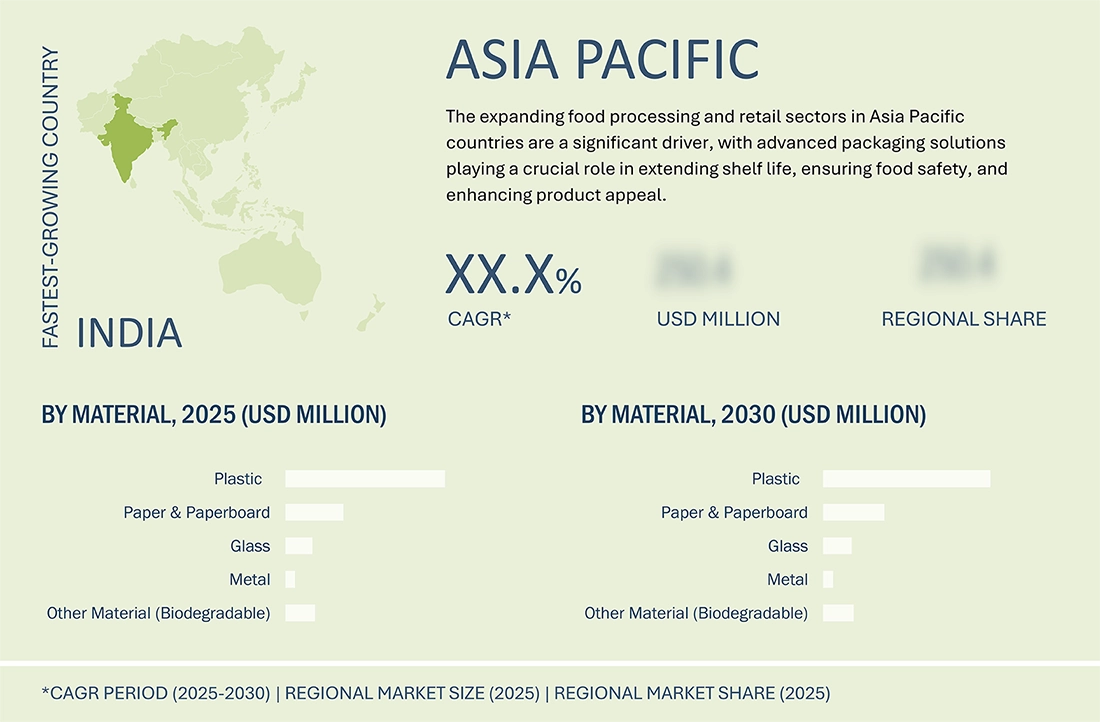
Asia Pacific is identified as the fastest-growing region in the food packaging market, driven by rapid urbanization, rising disposable incomes, and increasing demand for packaged food products. The region's expanding middle class and evolving consumer preferences are contributing to a surge in packaged food consumption. Countries like China and India are at the forefront of this growth, with China leading in market size and India emerging as the fastest-growing market within the region. This growth is further supported by the expansion of modern retail channels and the rise of e-commerce platforms, which are increasing the accessibility and demand for packaged food items. Advancements in packaging technologies, such as the development of sustainable and eco-friendly materials, are enhancing the appeal and functionality of food packaging solutions. These factors collectively position Asia Pacific as a key driver of innovation and growth in the global food packaging industry.
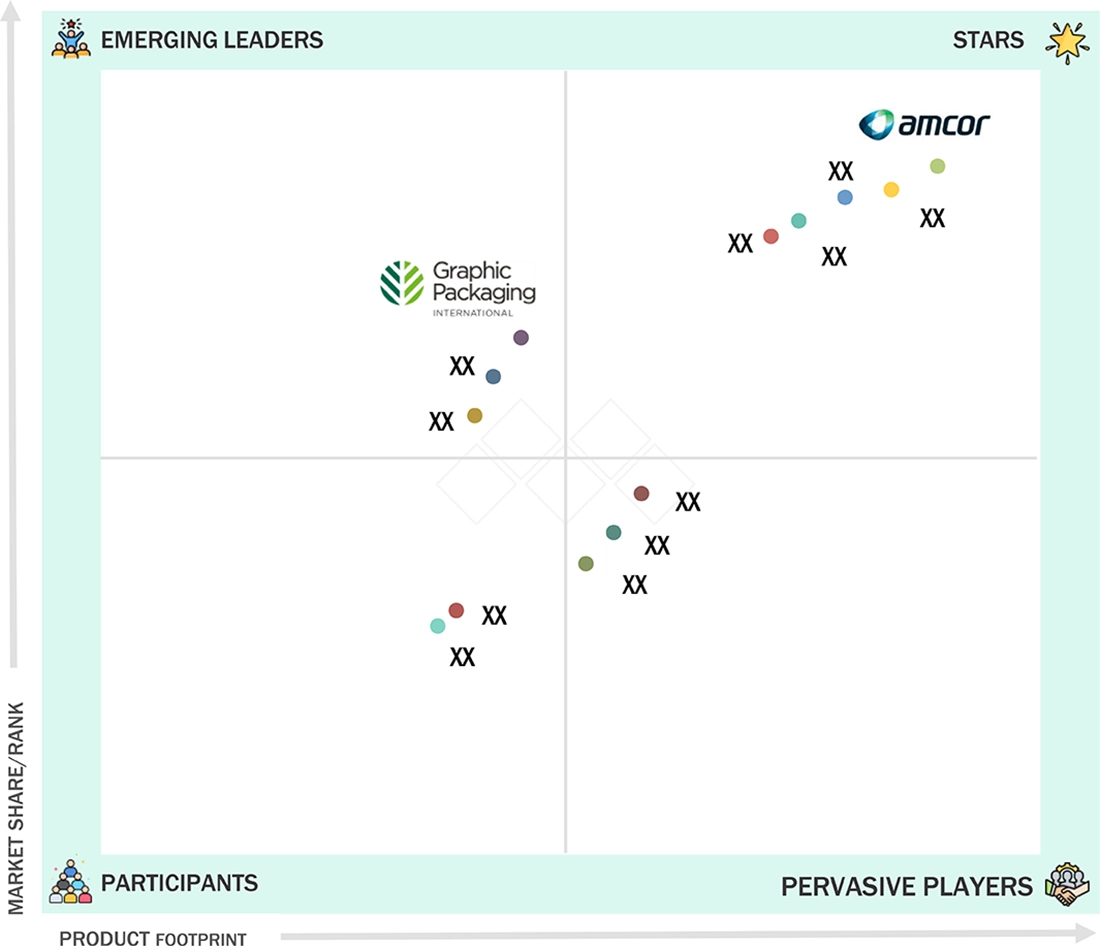
Food Packaging Market: COMPANY EVALUATION MATRIX
In the food packaging market matrix, Amcor Plc (Switzerland), positioned as a star player, leads the market with its comprehensive, innovative, and sustainably focused packaging solutions, serving a broad range of food segments globally. Graphic Packaging International, LLC (US), recognized as an emerging leader, is gaining momentum with its advanced paperboard packaging innovations and increasing recognition for sustainability and corporate responsibility. While Amcor Plc dominates through its robust global footprint, operational efficiency, and commitment to recyclable and eco-friendly materials, Graphic Packaging International demonstrates significant potential to move toward the leaders' quadrant in the food packaging market.
Source: Secondary Research, Interviews with Experts, MarketsandMarkets Analysis
KEY MARKET PLAYERS
MARKET SCOPE
| REPORT METRIC | DETAILS |
|---|---|
| Market Size, 2024 (Value) | USD 390.67 Billion |
| Market Forecast, 2030 (Value) | USD 548.51 Billion |
| Growth Rate | CAGR of 5.4% from 2025 to 2030 |
| Years Considered | 2020–2030 |
| Base Year | 2024 |
| Forecast Period | 2025–2030 |
| Units Considered | Value (USD Million/Billion), Volume (Metric Tons) |
| Report Coverage | Revenue Forecast, Company Ranking, Competitive Landscape, Growth Factors, and Trends |
| Segments Covered |
|
| Regions Covered | North America, Europe, Asia Pacific, South America, RoW |
WHAT IS IN IT FOR YOU: Food Packaging Market REPORT CONTENT GUIDE
DELIVERED CUSTOMIZATIONS
We have successfully delivered the following deep-dive customizations:
| CLIENT REQUEST | CUSTOMIZATION DELIVERED | VALUE ADDS |
|---|---|---|
| Smart Food Packaging |
|
|
| Food Service Packaging |
|
|
| Pet Food Packaging |
|
|
RECENT DEVELOPMENTS
- September 2025 : Amcor Plc collaborated with Burts to launch a crisp (potato chip) packaging containing 55% post-consumer recycled (PCR) content using its AmFiniti solution under an ISCC-Plus mass balance approach. This material offered the same quality and performance as virgin resin, making it suitable and safe for food-grade applications without compromising product integrity. The pack maintained food-grade safety and barrier performance, enabling snack brands to integrate higher recycled content while aligning with sustainability goals.
- January 2024 : SEE launched CRYOVAC compostable overwrap tray and revolutionized food packaging with its biobased, USDA-certified resin and industrial compostability. This sustainable alternative to EPS foam trays maintained strength and performance while reducing environmental impact. The tray aligned with processors' existing production lines, advancing SEE's commitment to innovation, sustainability, and supporting customers' eco-friendly goals in the protein packaging market.
- November 2023 : Tetra Pak, in collaboration with Lactogal, launched a new aseptic beverage carton with a paper-based barrier that increases paperboard content to ~80% and renewable content to ~90%, reducing the carbon footprint of milk packaging by up to one-third. This positioned Tetra Pak more strongly in the sustainable food packaging market, helping meet regulatory & consumer demand for lower-carbon, renewable packaging.
- August 2023 : Amcor launched AmFiber Performance Paper packaging in North America, a curbside-recyclable, high-barrier paper solution, strengthening its position in the food packaging market. By offering improved barrier properties and easy recyclability, AmFiber catered to consumer demand for sustainable packaging while maintaining operational performance. This innovation supported Amcor’s commitment to sustainability, enabling brands to meet consumer preferences for eco-friendly solutions without compromising on functionality, thus enhancing Amcor’s competitive edge.
- July 2023 : Mondi, in partnership with Syntegon, developed a recyclable paper packaging for dried foods such as flour, sugar, and pasta, using EcoVantage kraft paper, which includes recycled and responsibly sourced fibers. The material was approved by ISEGA for full food-contact use, with spot-coating applied to make it dust-tight and heat-sealable. This solution strengthens Mondi’s position in the food packaging market by aligning with the growing demand for sustainable, paper-based alternatives.
Table of Contents
 Exclusive indicates content/data unique to MarketsandMarkets and not available with any competitors.
Methodology
The study employed two primary approaches to estimate the current size of the food packaging market. Exhaustive secondary research was conducted to gather information on the market, peer markets, and parent markets. The next step was to validate these findings, assumptions, and sizing with industry experts across the value chain through primary research. Both top-down and bottom-up approaches were employed to estimate the complete market size. After this, the data triangulation method was used to estimate the market size of segments and subsegments.
Secondary Research
This research study involved the extensive use of secondary sources—directories and databases such as Bloomberg Businessweek and Factiva—to identify and collect information useful for a technical, market-oriented, and commercial study of the market.
In the secondary research process, sources such as annual reports, press releases & investor presentations of companies, white papers, food journals, certified publications, articles from recognized authors, directories, and databases were referred to for identifying and collecting information.
Secondary research was mainly used to obtain key information about the industry’s supply chain, the total pool of key players, and market classification and segmentation as per the industry trends to the bottom-most level, regional markets, and key developments from both market- and technology-oriented perspectives.
Primary Research
Extensive primary research was conducted after obtaining information regarding the food packaging market scenario through secondary research. Several primary interviews were conducted with market experts from both the demand and supply sides across major countries of North America, Europe, Asia Pacific, South America, and RoW. Primary data was collected through questionnaires, emails, and telephonic interviews. The primary sources from the supply side included various industry experts, such as Chief X Officers (CXOs), Vice Presidents (VPs), Directors from business development, marketing, research, and development teams, and key opinion leaders. Primary interviews were conducted to gather insights such as market statistics, data on revenue collected from the products and services, market breakdowns, market size estimations, market forecasting, and data triangulation. Primary research also helped in understanding the various trends related to packaging material, type, format, technology, and application. Stakeholders from the demand side, such as research institutions and universities, and third-party vendors, were interviewed to understand the buyer’s perspective on the service, their current usage of packaging, and the outlook of their business, which will affect the overall market.
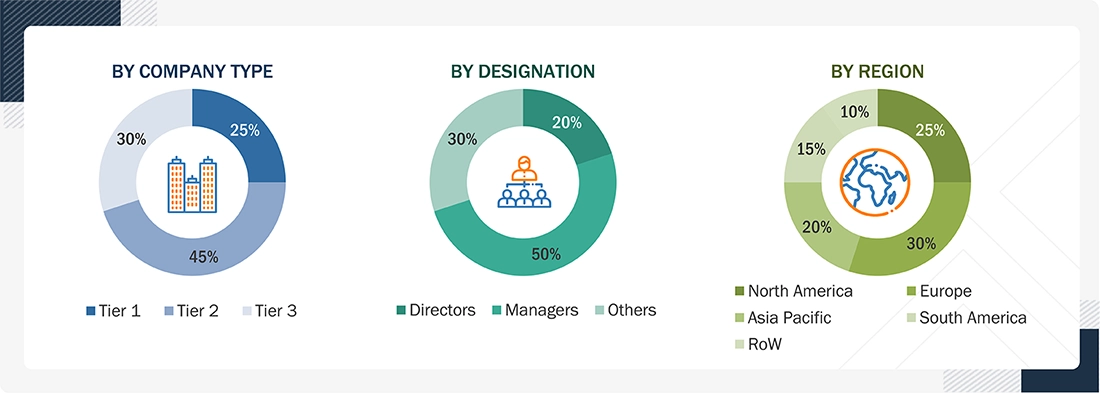
Note: The three tiers of the companies are defined based on their total revenues in 2023 or 2024, as per the
availability of financial data: Tier 1: Revenue greater than USD 1 billion; Tier 2: Revenue between USD 100 million and USD 1 billion;
Tier 3: Revenue less than USD 100 million.
To know about the assumptions considered for the study, download the pdf brochure
Market Size Estimation
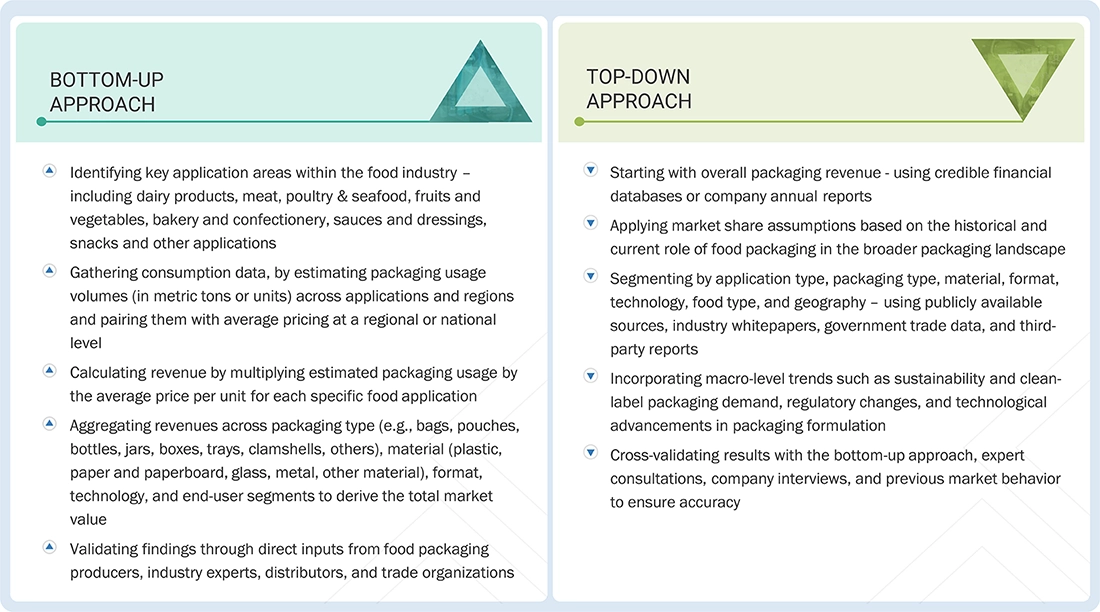
Both the top-down and bottom-up approaches were used to estimate and validate the total size of the food packaging market. These approaches were also used extensively to determine the size of various subsegments in the market. The research methodology used to estimate the market size includes the following details:
- The key players in the industry and the overall markets were identified through extensive secondary research.
- All shares, splits, and breakdowns were determined using secondary sources and verified through primary sources.
- All possible parameters that affect the market covered in this research study were accounted for, viewed in extensive detail, verified through primary research, and analyzed to obtain final quantitative and qualitative data.
- The research included the study of reports, reviews, and newsletters of top market players, along with extensive interviews for opinions from leaders, such as CEOs, directors, and marketing executives.
Food Packaging Market : Top-Down and Bottom-Up Approach
Data Triangulation
PAfter arriving at the overall market size from the estimation process explained above, the total market was split into several segments and subsegments. The data triangulation procedure was employed, wherever applicable, to estimate the overall food packaging market and arrive at the exact statistics for all segments and subsegments. The data was triangulated by studying various factors and trends from the demand and supply sides. The market size was also validated using both the top-down and bottom-up approaches.
Market Definition
According to the World Packaging Organisation (WPO), packaging is essential for “preserving food quality, minimizing food wastage and reducing preservatives used in food, while protecting against chemical and physical damage and providing information to consumers and marketers.”
Stakeholders
- Packaging raw material suppliers
- Food packaging manufacturers
- Food & beverage companies
- Packaging technology providers
- Intermediate suppliers, such as traders and distributors of packaging
- Government and research organizations
-
Associations, regulatory bodies, and other industry-related bodies:
- Food and Agriculture Organization (FAO)
- Environmental Protection Agency (EPA)
- Food Safety Council (FSC)
- Research Institutes and Universities
-
Organizations/Associations
- World Packaging Organisation (WPO)
- Institute of Packaging Professionals (IoPP)
- European Food Safety Authority (EFSA)
- United States Department of Agriculture (USDA)
- Food Standards Australia New Zealand (FSANZ)
- Food Safety and Standards Authority of India (FSSAI)
- Trade associations and industry bodies
Report Objectives
- To determine, define, and project the size of the food packaging market, with respect to material, packaging type, format, technology, food type, application, and regional markets, over a five-year period, ranging from 2025 to 2030
- To identify the attractive opportunities in the market by determining the largest and fastest-growing segments across regions
- To provide detailed information about the key factors influencing the growth of the market (drivers, restraints, opportunities, and challenges)
- To analyze the micro markets with respect to individual growth trends, prospects, and their contribution to the total market
- To strategically profile key market players and comprehensively analyze their core competencies in each segment
- To track and analyze competitive developments, such as alliances, joint ventures, new product developments, mergers, and acquisitions, in the food packaging market
Available Customizations
With the given market data, MarketsandMarkets offers customizations according to company-specific scientific needs.
The following customization options are available for the report:
Product Analysis
- Product Matrix, which gives a detailed comparison of the service portfolio of each company
Geographic Analysis as per Feasibility
With the given market data, MarketsandMarkets offers customizations according to company-specific scientific needs
- Further breakdown of the Rest of Europe food packaging market into key countries
- Further breakdown of the Rest of Asia Pacific food packaging market into key countries
- Further breakdown of the Rest of South America food packaging market into key countries
Company Information
- Detailed analyses and profiling of additional market players (up to five)
Need a Tailored Report?
Customize this report to your needs
Get 10% FREE Customization
Customize This ReportPersonalize This Research
- Triangulate with your Own Data
- Get Data as per your Format and Definition
- Gain a Deeper Dive on a Specific Application, Geography, Customer or Competitor
- Any level of Personalization
Let Us Help You
- What are the Known and Unknown Adjacencies Impacting the Food Packaging Market
- What will your New Revenue Sources be?
- Who will be your Top Customer; what will make them switch?
- Defend your Market Share or Win Competitors
- Get a Scorecard for Target Partners

Custom Market Research Services
We Will Customise The Research For You, In Case The Report Listed Above Does Not Meet With Your Requirements
Get 10% Free Customisation





Growth opportunities and latent adjacency in Food Packaging Market