Radio Modem Market for ITS Application by Frequency Band (License Free, UHF, Wi-Fi, VHF), Communication Channel (Point to Multi-Point, Point to Point), Operating Range (Short, Long), Application and Geography - Global Forecast to 2035


The Radio Modem Market for ITS Application Market Summary
The Radio Modem Market for ITS Application is gaining importance as transportation authorities, infrastructure operators, and mobility service providers accelerate the deployment of intelligent transportation systems (ITS) to improve traffic management, road safety, public transportation, and infrastructure efficiency. The global Radio Modem Market for ITS Application is estimated at approximately USD 1–2 billion in 2025 and is projected to reach USD 3–5 billion by 2035, registering a CAGR of 8%–10% during the forecast period. Market expansion is being supported by increasing investment in smart-city infrastructure, connected traffic systems, IoT-enabled roadside equipment, vehicle-to-infrastructure communication, automated traffic control, and digital transformation of transportation networks.
Radio modems provide reliable wireless communication between traffic signals, roadside units, variable message signs, traffic sensors, cameras, tolling equipment, control centers, connected vehicles, and other ITS infrastructure. Unlike consumer wireless communication systems, industrial radio modems are designed to support dependable data transmission in challenging environments, often with requirements for long communication distances, low latency, network resilience, cybersecurity, and continuous operation.
The increasing deployment of IoT and automation is changing the role of radio modems in ITS infrastructure. Sensors installed across roads and intersections generate continuous streams of traffic, environmental, vehicle, and infrastructure data. Radio modems provide the communication layer required to transfer this information to local controllers, edge-computing systems, or centralized traffic-management platforms. AI can then analyze the collected information to identify congestion, predict traffic conditions, optimize signal timing, and support incident management.
The transition toward connected and intelligent transportation infrastructure is also creating demand for more flexible communication architectures. Modern radio modems increasingly support Ethernet, serial interfaces, IP networking, cellular connectivity, GNSS, mesh networking, and multiple wireless protocols. This allows transportation agencies to integrate legacy equipment with modern cloud-connected ITS platforms.
Key Market Trends & Insights
One of the strongest trends in the Radio Modem Market for ITS Application is the transition from isolated traffic-control equipment toward interconnected infrastructure. Traffic signals, roadside sensors, cameras, message boards, tolling systems, and transportation management centers are increasingly connected through IP-based networks.
North America is expected to remain a leading regional market, supported by established ITS infrastructure, transportation modernization programs, smart-road initiatives, and substantial investment in connected traffic management. The United States represents a significant demand center because transportation agencies are upgrading legacy communication infrastructure and deploying connected roadside systems.
Asia Pacific is expected to register the fastest growth, supported by rapid urbanization, smart-city investments, expanding road networks, increasing traffic congestion, and large-scale transportation digitization. China, Japan, South Korea, and India are increasingly investing in intelligent traffic management and connected mobility.
Another important trend is the integration of radio modems with edge computing and AI. Instead of transmitting all raw data to centralized systems, roadside computing platforms can process information locally and transmit relevant events or summarized data. This reduces bandwidth requirements and enables faster responses.
Cybersecurity is also becoming a major consideration. As transportation infrastructure becomes connected, radio modem manufacturers are increasingly emphasizing encryption, secure authentication, access control, firmware protection, and network segmentation.
The growing deployment of connected vehicles is creating another opportunity. Radio modems can provide communication between roadside infrastructure and traffic-management systems, complementing cellular and dedicated short-range communication technologies.
Market Size & Forecast
- Base year market size (2025): USD 1–2 billion
- Forecast market value (2035): USD 3–5 billion
- CAGR (2025–2035): 8%–10%
- Key growth factors: Smart-city development, ITS modernization, IoT adoption, connected infrastructure, traffic automation, road safety initiatives, and transportation digitalization.
- Technology outlook: Industrial Ethernet, IP-based radio, mesh networking, edge computing, AI, cloud connectivity, cybersecurity, and hybrid wireless communication will shape future market development.
Radio Modem Market for ITS Application Top 10 key takeaway
- The Radio Modem Market for ITS Application is estimated at USD 1–2 billion in 2025.
- The market is projected to reach USD 3–5 billion by 2035.
- The market is expected to expand at a CAGR of 8%–10% during 2025–2035.
- Intelligent traffic management is a major demand generator for radio modems.
- IoT-enabled roadside infrastructure is increasing wireless data requirements.
- Industrial-grade radio modems support reliable communication in demanding transportation environments.
- North America is expected to remain a leading regional market.
- Asia Pacific is projected to record the fastest growth.
- AI and edge computing are improving the value of real-time transportation data.
- Cybersecurity, interoperability, low latency, and network reliability will remain important competitive factors.
Product Insights
The product landscape of the Radio Modem Market for ITS Application includes point-to-point radio modems, point-to-multipoint radio modems, mesh-networking modems, industrial wireless modems, IP radio modems, cellular-radio gateways, and hybrid communication devices. Point-to-point systems remain important for dedicated links between traffic controllers and centralized infrastructure, particularly where reliable communication is required between fixed locations.
Point-to-multipoint radio modems are gaining traction in ITS networks because a single base station can communicate with multiple roadside devices. This architecture can reduce infrastructure complexity and support scalable deployments across intersections, highways, tunnels, bridges, and urban transportation corridors.
Industrial IP radio modems represent an important emerging category. These products allow legacy serial-based traffic equipment to communicate with modern Ethernet and IP networks. This is particularly valuable for transportation authorities that need to modernize infrastructure without replacing all existing field equipment.
Mesh-capable radio modems can provide additional network resilience by allowing data to travel through multiple communication paths. If one link becomes unavailable, traffic information can potentially be routed through an alternative node.
Hybrid communication gateways are also gaining importance. Transportation networks increasingly combine private radio, cellular, Wi-Fi, Ethernet, fiber, and other communication technologies. Multi-interface devices can automatically select or support different communication channels based on application requirements.
AI integration is influencing product development indirectly through the data infrastructure surrounding radio modems. Future communication platforms are expected to include edge processing capabilities that prioritize critical traffic events, optimize bandwidth, identify abnormal communication behavior, and support predictive maintenance.
Technology / Component Insights
Technology is a critical differentiator in the Radio Modem Market for ITS Application because transportation infrastructure requires communication systems capable of operating continuously under variable environmental and electromagnetic conditions.
Industrial radio technologies provide long-distance wireless communication without requiring physical cabling between every roadside device. Depending on application requirements, systems may operate in licensed or unlicensed frequency bands and support different modulation, bandwidth, and networking architectures.
IP-based networking is becoming increasingly important. Modern ITS equipment commonly relies on Ethernet and Internet Protocol architectures, allowing radio modems to connect traffic controllers, cameras, sensors, and field devices to transportation management centers.
IoT is another major technology driver. Roadside sensors can monitor traffic volume, vehicle speed, occupancy, weather conditions, road surface conditions, air quality, and other parameters. Radio modems enable these distributed devices to transmit information to edge or centralized systems.
AI and machine learning can then transform communication infrastructure into an intelligent transportation-data ecosystem. AI models can analyze traffic patterns, detect incidents, forecast congestion, and support dynamic traffic-signal optimization.
Edge computing is particularly relevant because traffic management often requires rapid response. Local processing can identify an accident, traffic buildup, malfunctioning signal, or unusual vehicle pattern before sending a concise event message to a central system.
Cloud connectivity is expanding as transportation agencies adopt centralized dashboards and digital platforms. Cloud systems can aggregate information from multiple transportation corridors and provide long-term analytics.
Cybersecurity technologies are increasingly integrated into radio modem architectures. Encryption, secure authentication, VPN support, access controls, firmware security, and network monitoring are becoming essential as traffic infrastructure becomes more connected.
Future innovation will focus on higher data throughput, lower latency, improved interference resistance, adaptive networking, AI-enabled edge communication, stronger cybersecurity, and seamless integration between radio, cellular, fiber, and IP networks.
Application Insights
Traffic signal control is one of the leading applications in the Radio Modem Market for ITS Application. Intelligent traffic signals require communication between intersection controllers, central traffic-management platforms, pedestrian systems, emergency-vehicle priority systems, and traffic sensors. Reliable radio connectivity can be particularly valuable in locations where wired communication is expensive or difficult to install.
Variable message signs represent another important application. These systems provide drivers with real-time information about congestion, accidents, road closures, weather conditions, construction activities, and alternative routes. Radio modems enable remote configuration and monitoring of these signs.
Traffic monitoring systems also generate strong demand. Cameras, radar sensors, vehicle counters, speed sensors, and other roadside devices require communication links to transmit information to control centers or edge systems.
Electronic toll collection and intelligent parking systems represent additional applications. Wireless communication can connect tolling equipment, payment infrastructure, parking sensors, digital signs, and central management systems.
Public transportation systems are increasingly using connected infrastructure for bus priority, passenger information, fleet monitoring, and transit-signal coordination. Radio modems can support communication between vehicles and roadside equipment where appropriate.
Future opportunities are expected to emerge from connected intersections, autonomous mobility infrastructure, V2X systems, smart highways, emergency-response coordination, and AI-driven traffic management. As transportation systems become more automated, reliable communications will become increasingly important.
Regional Insights
North America is expected to remain a leading region in the Radio Modem Market for ITS Application because of its mature transportation infrastructure and continuing modernization of traffic-management networks. The United States has numerous intelligent transportation deployments involving traffic signals, highway management, connected intersections, electronic tolling, and transportation operations centers.
Europe represents another technologically advanced market, supported by smart mobility initiatives, intelligent highways, public transportation modernization, and sustainability objectives. European transportation authorities are increasingly focused on integrating digital infrastructure with multimodal mobility systems.
Asia Pacific is projected to be the fastest-growing regional market. Rapid urbanization and traffic congestion are encouraging governments to deploy intelligent traffic-control systems, connected intersections, smart highways, and integrated transportation platforms. China, Japan, South Korea, and India are important growth markets.
- North America: Mature ITS infrastructure and transportation modernization support demand.
- Europe: Smart mobility and sustainable transportation initiatives drive technology adoption.
- Asia Pacific: Urbanization and smart-city development support rapid market growth.
- China: Large-scale intelligent transportation investments create significant opportunities.
- India: Smart-city programs and transportation digitization are increasing demand.
Country-Specific Market Trends
China is expected to record approximately 11%–13% CAGR through 2035, supported by smart-city investments, connected highways, intelligent traffic signals, and extensive digital infrastructure deployment. Government-led transportation modernization programs are encouraging integration of sensors, cameras, communication networks, and AI-based traffic platforms.
Japan could achieve approximately 7%–9% CAGR, supported by advanced transportation infrastructure, high technology adoption, intelligent traffic management, and strong demand for reliable communications.
In North America, the United States is expected to grow at approximately 8%–10% CAGR, driven by ITS modernization, connected infrastructure, highway digitization, and transportation safety initiatives. Canada could register approximately 7%–9% CAGR, while Mexico could achieve approximately 8%–10% CAGR as urban transportation infrastructure and smart mobility programs expand.
In Europe, Germany is projected to grow at approximately 7%–9% CAGR, supported by advanced mobility infrastructure and industrial technology adoption. France could register approximately 7%–9% CAGR, supported by smart-city programs, public transportation modernization, and digital traffic management.
- China: Smart-city and connected-highway investments accelerate adoption.
- Japan: Advanced ITS infrastructure supports reliable wireless communication demand.
- United States: Highway modernization and connected transportation drive growth.
- Germany: Intelligent mobility and advanced infrastructure support adoption.
- France: Smart transportation and public mobility initiatives create opportunities.
Key Radio Modem Market for ITS Application Company Insights
The competitive landscape of the Radio Modem Market for ITS Application includes industrial wireless communication companies, networking equipment manufacturers, automation technology providers, and specialized radio modem developers. Key companies operating across the relevant ecosystem include Siemens, Schneider Electric, ABB, Motorola Solutions, Digi International, Advantech, SICK, Belden, Westermo, and Campbell Scientific.
Siemens and Schneider Electric leverage industrial communication capabilities to address smart infrastructure and transportation automation requirements. ABB provides industrial connectivity and automation solutions, while Motorola Solutions has extensive expertise in mission-critical communications.
Digi International focuses on industrial IoT connectivity and wireless communication solutions. Advantech combines industrial computing, networking, and edge technologies for intelligent infrastructure applications.
Belden and Westermo have strong positions in industrial networking, including solutions designed for transportation and other mission-critical environments. SICK contributes sensing technologies that can be integrated into intelligent transportation applications.
Competitive strategies increasingly focus on interoperability, cybersecurity, edge computing, industrial IoT, ruggedized hardware, and multi-protocol communication. Companies are also developing solutions that allow legacy transportation equipment to connect with modern IP networks.
- Siemens: Focuses on intelligent infrastructure, automation, and connected transportation.
- Schneider Electric: Emphasizes industrial IoT, automation, and energy-efficient infrastructure.
- Digi International: Develops wireless connectivity and IoT communication solutions.
- Advantech: Combines edge computing, networking, and industrial connectivity.
- Westermo and Belden: Focus on rugged, secure industrial networking for critical infrastructure.
Recent Developments
A major development in the Radio Modem Market for ITS Application is the integration of industrial wireless communication with edge-computing platforms. These architectures allow traffic data to be processed locally, reducing communication latency and enabling faster responses to traffic incidents.
Another trend is the development of multi-interface communication gateways capable of combining radio, cellular, Ethernet, and serial communication. These products help transportation agencies modernize legacy infrastructure while maintaining compatibility with existing traffic-control equipment.
AI-enabled transportation management is also increasing demand for higher-quality communication infrastructure. AI traffic platforms require continuous access to data from cameras, sensors, traffic signals, and connected infrastructure, increasing the importance of reliable field communication networks.
Market Segmentation
The Radio Modem Market for ITS Application can be segmented by Product, Technology/Component, Application, and Region. By Product, the market includes point-to-point radio modems, point-to-multipoint radio modems, mesh radio modems, IP radio modems, industrial wireless gateways, and hybrid communication devices. By Technology/Component, the market covers RF modules, antennas, processors, networking interfaces, security components, Ethernet interfaces, serial interfaces, and wireless communication technologies. By Application, the market includes traffic signal control, traffic monitoring, variable message signs, electronic toll collection, intelligent parking, public transportation, highway management, and connected infrastructure. By Region, the market comprises North America, Europe, Asia Pacific, and Rest of the World.
- By Product: Point-to-point and point-to-multipoint systems remain important for field connectivity.
- By Technology: IP networking, industrial RF, IoT, and edge computing are key technology areas.
- By Application: Traffic signals and monitoring systems represent major demand centers.
- By Infrastructure: Smart highways and connected intersections provide long-term opportunities.
- By Region: North America leads, while Asia Pacific is expected to grow fastest.
The Radio Modem Market for ITS Application is positioned for steady expansion as transportation infrastructure becomes more connected, intelligent, and automated. The market is estimated at USD 1–2 billion in 2025 and is projected to reach USD 3–5 billion by 2035, representing a CAGR of 8%–10% during the forecast period.
AI, IoT, edge computing, and automation will increasingly determine how radio modem technologies are deployed. Transportation systems are moving from isolated traffic devices toward interconnected ecosystems in which sensors, controllers, cameras, vehicles, and infrastructure continuously exchange data.
AI-powered traffic management will increase the need for reliable communications because real-time algorithms depend on continuous information from distributed field equipment. Edge computing will complement radio connectivity by processing critical information closer to where it is generated.
The long-term opportunity extends beyond traditional traffic control. Connected intersections, smart highways, autonomous vehicles, V2X communication, intelligent parking, automated tolling, and public transportation systems will create additional demand for reliable wireless communication.
For transportation agencies and technology providers, interoperability will remain strategically important. Many cities operate a combination of legacy serial equipment and modern IP-based infrastructure. Radio modems and gateways that can bridge these technologies can enable gradual modernization while minimizing infrastructure replacement costs.
Cybersecurity will also become a central purchasing consideration. As transportation networks become increasingly connected, secure communication, device authentication, encrypted data transmission, remote monitoring, and secure firmware updates will become essential.
By 2035, the convergence of radio communication, AI, IoT, edge computing, automation, cloud platforms, and connected mobility is expected to make wireless infrastructure an increasingly important component of intelligent transportation networks. Companies that provide secure, interoperable, scalable, and reliable communication solutions will be well positioned to benefit from the continuing transformation of the Radio Modem Market for ITS Application.
FAQs
1. What is the market size of the Radio Modem Market for ITS Application?
The Radio Modem Market for ITS Application is estimated at USD 1–2 billion in 2025 and is projected to reach USD 3–5 billion by 2035.
2. What is the growth rate of the Radio Modem Market for ITS Application?
The market is expected to register a CAGR of 8%–10% from 2025 to 2035, driven by ITS modernization, IoT connectivity, smart-city development, connected infrastructure, and transportation automation.
3. What are the key drivers of the Radio Modem Market for ITS Application?
Key drivers include smart-city development, intelligent traffic management, IoT-enabled roadside infrastructure, connected highways, V2X communication, traffic automation, edge computing, and digital transformation of transportation networks.
4. Which region is expected to lead the Radio Modem Market for ITS Application?
North America is expected to remain a leading regional market due to mature ITS infrastructure and transportation modernization. Asia Pacific is expected to register the fastest growth because of urbanization, smart-city investments, and expanding connected transportation infrastructure.
5. Who are the key companies in the Radio Modem Market for ITS Application?
Major companies across the relevant industrial communication ecosystem include Siemens, Schneider Electric, ABB, Motorola Solutions, Digi International, Advantech, SICK, Belden, Westermo, and Campbell Scientific. These companies are focusing on industrial IoT, secure wireless communication, edge computing, networking, and intelligent infrastructure.
To speak to our analyst for a discussion on the above findings, click Speak to Analyst
 Exclusive indicates content/data unique to MarketsandMarkets and not available with any competitors.
Table of Contents
1 Introduction (Page No. - 13)
1.1 Objectives of the Study
1.2 Market Segmentation & Coverage
1.3 Stakeholders
2 Research Methodology (Page No. - 15)
2.1 Integrated Ecosystem of Radio Modem Market for Its Application
2.2 Arriving at Global Market Size of Market in Its
2.2.1 Top-Down Approach
2.2.2 Bottom-Up Approach
2.2.3 Demand-Side Approach
2.2.4 Macroindicator-Based Approach
2.2.4.1 R&D Expenditure
2.3 Assumptions
3 Executive Summary (Page No. - 22)
4 Market Overview (Page No. - 24)
4.1 Introduction
4.2 Market Drivers and Inhibitors
4.3 Key Market Dynamics
4.4 Its America (Transportation Center System Specialist Certification Programs Level I and Level II)
4.5 European Commission’s Its Directive
4.6 Regulatory Bodies
4.6.1 ETSI
4.6.2 FCC
5 Radio Modem Market for Its Application, By Frequency Band (Page No. - 30)
5.1 Introduction
5.2 License Free Frequency
5.3 UHF
5.4 Wi-Fi
5.5 VHF
6 Radio Modem Market for Its Application, By Communication Channel (Page No. - 39)
6.1 Introduction
6.2 Point to Multi-Point
6.3 Point to Point
7 Radio Modem Market for Its Application, By Operating Range (Page No. - 43)
7.1 Introduction
7.2 Short Range
7.3 Long Range
8 Radio Modem Market for Its, By Application (Page No. - 47)
8.1 Introduction
8.2 Vehicle to Infrastructure Communication
8.3 Traffic Management System
8.4 Electronic Fee Collection
8.5 Vehicle to Vehicle Communication
8.6 Emergency Management System
9 Radio Modem Market for Its Application, By Geography (Page No. - 55)
9.1 Introduction
9.2 North America
9.3 Europe
9.4 Asia-Pacific
9.5 South America
9.6 RoW
10 Competitive Landscape (Page No. - 64)
10.1 Radio Modem Market for Its Application: Company Share Analysis
10.2 Company Presence in Market for Its Application, By Frequency Band
10.3 New Product Developments
10.4 Contracts
10.5 Acquisitions
10.6 Partnership and Expansions
11 Company Profiles (Page No. - 73)
(Company at A Glance, Recent Financials, Products & Services, Strategies & Insights, & Recent Developments)*
11.1 Adeunis RF
11.2 Arada Systems Inc.
11.3 Atim Radiocommunications
11.4 Autotalks Ltd.
11.5 B&B Electronics MFG
11.6 Campbell Scientific Inc.
11.7 Cohda Wireless
11.8 Commsignia Ltd.
11.9 Encom Wireless Data Solutions
11.10 Harris Corporation
11.11 Intuicom Inc.
11.12 Kapsch Trafficcom AG
11.13 Motorola Solutions, Inc.
11.14 Pro4 Wireless
11.15 Q-Free ASA
11.16 Satel OY
11.17 Savari Inc.
11.18 Schneider Electric Se
11.19 Simrex Corporation
11.20 Wood & Douglas Limited
*Details on Company at A Glance, Recent Financials, Products & Services, Strategies & Insights, & Recent Developments Might Not Be Captured in Case of Unlisted Companies.
12 Appendix (Page No. - 109)
12.1 Customization Options
12.1.1 Product Portfolio Analysis
12.1.2 Country-Level Data Analysis
12.1.3 Product Comparison of Various Competitors
12.1.4 Trade Analysis
12.2 Introducing RT: Real Time Market Intelligence
12.3 Related Reports
List of Tables (46 Tables)
Table 1 Radio Modem Market for Its Application: Assumptions
Table 2 Market for Its Application: Drivers and Inhibitors
Table 3 Market for Its Application, By Frequency Band, 2014-2020 (USD MN)
Table 4 License Free Frequency Market, By Communication Channel, 2014–2020 (USD MN)
Table 5 License Free Market, By Operating Range, 2014–2020 (USD MN)
Table 6 UHF Market, By Communication Channel, 2014-2020 (USD MN)
Table 7 UHF Market, By Operating Range, 2014-2020 (USD MN)
Table 8 Wi-Fi Market, By Communication Channel, 2014-2020 (USD MN)
Table 9 VHF Market, By Communication Channel, 2014-2020 (USD MN)
Table 10 VHF Market, By Operating Range, 2014-2020 (USD MN)
Table 11 Market for Its Application, By Communication Channel, 2014-2020 (USD MN)
Table 12 Point to Multi-Point Market, By Frequency Band, 2014–2020 (USD MN)
Table 13 Point to Point Market, By Frequency Band, 2014-2020 (USD MN)
Table 14 Market for Its Application, By Operating Range, 2014-2020 (USD MN)
Table 15 Short Range Market, By Frequency Band, 2014–2020 (USD MN)
Table 16 Long Range Market, By Frequency Band, 2014-2020 (USD MN)
Table 17 Market, By Application, 2014-2020 (USD MN)
Table 18 Vehicle to Infrastructure Communication Radio Modem Market, By Geography, 2014-2020 (USD MN)
Table 19 Traffic Management System Radio Modem Market, By Geography, 2014-2020 (USD MN)
Table 20 Electronic Fee Collection Market, By Geography, 2014-2020 (USD MN)
Table 21 Vehicle to Vehicle Communication Radio Modem Market, By Geography, 2014-2020 (USD MN)
Table 22 Emergency Management System Radio Modem Market, By Geography, 2014-2020 (USD MN)
Table 23 Market for Its Application, By Geography, 2014-2020 (USD MN)
Table 24 North America Market for Its Application, 2014-2020 (USD MN)
Table 25 Europe Market for Its Application, 2014-2020 (USD MN)
Table 26 Asia-Pacific Market for Its Application, 2014-2020 (USD MN)
Table 27 South America Market for Its Application, 2014-2020 (USD MN)
Table 28 RoW Market for Its Application, 2014-2020 (USD MN)
Table 29 Market for Its Application: Company Share Analysis, 2014(%)
Table 30 Market for Its Application: New Product Developments
Table 31 Market for Its Application: Contracts
Table 32 Market for Its Application: Acquisitions
Table 33 Market for Its Application: Partnership and Expansions
Table 34 Harris Corporation: Key Operating Data, 2010-2014 (USD MN)
Table 35 Harris Corporation: Revenue, By Business Segment, 2010-2014 (USD MN)
Table 36 Harris Corporation: Revenue, By Geographic Segment, 2010-2014 (USD MN)
Table 37 Kapsch Trafficcom AG: Key Operating Data, 2011-2015 (USD MN)
Table 38 Kapsch Trafficcom AG: Revenue, By Business Segment, 2011-2015 (USD MN)
Table 39 Kapsch Trafficcom AG: Revenue, By Geographic Segment, 2011-2015 (USD MN)
Table 40 Motorola Solutions, Inc.: Revenue, By Business Segment, 2010-2014 (USD MN)
Table 41 Motorola Solutions, Inc.: Revenue, By Geographic Segment, 2010-2014 (USD MN)
Table 42 Q-Free ASA: Revenue, By Business Segment, 2010-2014 (USD MN)
Table 43 Q-Free ASA: Revenue, By Geographic Segment, 2010-2014 (USD MN)
Table 44 Schneider Electric Se: Key Operating Data, 2010-2014 (USD MN)
Table 45 Schneider Electric Se: Revenue, By Business Segment, 2010-2014 (USD MN)
Table 46 Schneider Se: Revenue, By Geographic Segment, 2010-2014 (USD MN)
List of Figures (38 Figures)
Figure 1 Global Radio Modem Market for Its Application: Segmentation & Coverage
Figure 2 Market for Its Application: Integrated Ecosystem
Figure 3 Arriving at Global Market Size: Top-Down Approach
Figure 4 Arriving at Global Market Size: Bottom-Up Approach
Figure 5 Arriving at Global Market Size: Demand-Side Approach
Figure 6 Global R&D Expenditure, By Region (USD MN)
Figure 7 Market for Its Application: Snapshot
Figure 8 Market for Its Application: Growth Aspects
Figure 9 Market for Its Application: Frequency Band, By Communication Channel, 2015 (USD MN)
Figure 10 Market for Its Application: Geography, By Application, 2015 (USD MN)
Figure 11 Market for Its Application, By Frequency Band, 2015 & 2020 (USD MN)
Figure 12 License Free Frequency Market, By Communication Channel, 2015 & 2020 (USD MN)
Figure 13 License Free Frequency Market, By Operating Range, 2015 & 2020 (USD MN)
Figure 14 UHF Radio Modem Market, By Communication Channel, 2015 & 2020 (USD MN)
Figure 15 UHF Market, By Operating Range, 2015 & 2020 (USD MN)
Figure 16 Wi-Fi Radio Modem Market, By Communication Channel, 2015 & 2020 (USD MN)
Figure 17 VHF Market, By Communication Channel, 2015 & 2020 (USD MN)
Figure 18 VHF Market, By Operating Range, 2015 & 2020 (USD MN)
Figure 19 Market for Its Application, By Communication Channel, 2015 & 2020 (USD MN)
Figure 20 Point to Multi-Point Market, By Frequency Band, 2015 & 2020 (USD MN)
Figure 21 Point to Point Market, By Frequency Band, 2015 & 2020 (USD MN)
Figure 22 Market for Its Application, By Operating Range, 2015 & 2020 (USD MN)
Figure 23 Market, By Frequency Band, 2015 & 2020 (USD MN)
Figure 24 Long Range Market, By Frequency Band, 2015 & 2020 (USD MN)
Figure 25 Market, By Application, 2015 & 2020 (USD MN)
Figure 26 Vehicle to Infrastructure Communication Market, By Geography, 2015 & 2020 (USD MN)
Figure 27 Traffic Management System Market, By Geography, 2015-2020 (USD MN)
Figure 28 Electronic Fee Collection Market, By Geography, 2015 & 2020 (USD MN)
Figure 29 Vehicle to Vehicle Communication Market, By Geography, 2015 & 2020 (USD MN)
Figure 30 Emergency Management System , By Geography, 2015 & 2020 (USD MN)
Figure 31 Market for Its Application: Growth Analysis, By Geography, 2015 & 2020 (USD MN)
Figure 32 North America Market for Its Application, 2015 & 2020 (USD MN)
Figure 33 Europe Market for Its Application, 2015 & 2020 (USD MN)
Figure 34 Asia-Pacific Market for Its Application, 2015 & 2020 (USD MN)
Figure 35 South America Market for Its Application, 2015 & 2020 (USD MN)
Figure 36 RoW Market for Its Application, 2015 & 2020 (USD MN)
Figure 37 Market for Its Application: Company Share Analysis, 2014 (%)
Figure 38 Market for Its Application: Company Product Coverage, By Frequency Band, 2015
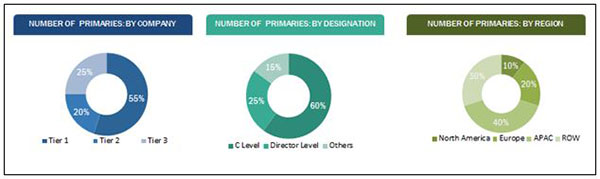
The research methodology used to estimate and forecast the radio modem market for ITS application begins with obtaining data on key vendor revenues through secondary research. The vendor offerings have also been taken into consideration to determine the market segmentation. The bottom-up procedure has been employed to arrive at the overall market size of the global radio modem market for ITS application from the revenue of the key market players. After arriving at the overall market size, the total market has been split into several segments and subsegments, which are then verified through primary research by conducting extensive interviews with key people such as CEOs, VPs, directors, and executives. Data triangulation and market breakdown procedures have been employed to complete the overall market engineering process and arrive at the exact statistics for all segments and subsegments. The breakdown of profiles of primaries is depicted in the below figure.
To know about the assumptions considered for the study, download the pdf brochure
The radio modem ecosystem comprises of vendors such as Adeunis RF (France), Arada Systems, Inc. (U.S.), ATIM Radiocommunications (France), Autotalks Ltd. (Israel), B&B Electronics Manufacturing Co. (U.S.), Campbell Scientific Inc. (U.S.), Cohda Wireless (Australia), Kapsch TrafficCom AG (Austria), Motorola Solutions, Inc. (U.S.) Q Free ASA (Norway), Satel Oy (Finland), Schneider Electric SE (France), and Wood & Douglas Ltd. (U.K.).
Key Target Audience
- Radio modem manufacturers and suppliers
- Research and development (R&D) companies
- Business research and consulting service providers
- Research organizations
- Academic centers and universities
- Associations and industrial bodies
- Electronics and semiconductor companies
- Technology investors
Scope of the Report
The radio modem market for ITS application in this research report has been segmented into the following submarkets:
By Frequency Band:
- License-free frequency
- UHF
- Wi-Fi
- VHF
By Communication Channel:
- Point to multi-point
- Point to point
By Operating Range:
- Short range
- Long range
By Application:
- Vehicle to infrastructure
- Communication
- Traffic management systems
- Electronic fee collection
- Vehicle to vehicle
- Communication
- Emergency management
- Systems
- Others
By Geography:
- North America
- Europe
- APAC
- South America
- RoW
Available Customizations
With the given market data, MarketsandMarkets offers customizations as per the company’s specific needs. The following customization options are available for the report:
Product Analysis
- A detailed analysis of different products by various competitors in the radio modem market for ITS application would be carried out. This analysis will help devise strategies for the company.
Geographic Analysis
- Further breakdown of the radio modem market for ITS application in North America
- Further breakdown of the market for ITS application in Europe
- Further breakdown of the market for ITS application in APAC
- Further breakdown of the market for ITS application in South America
Company Information
- Detailed analysis and profiling of additional market players













Growth opportunities and latent adjacency in Radio Modem Market