Services for Data Center Market 2030 – Size, Trends & Forecast

Services for Data Center Market by Service Type (Design & Engineering, Facility Management, Commissioning & Testing, IT Infrastructure Management, Decommissioning & Relocation, Specialized Consulting and Certification), Tier Type - Global Forecast to 2030




Global Services for Data Center Market Overview
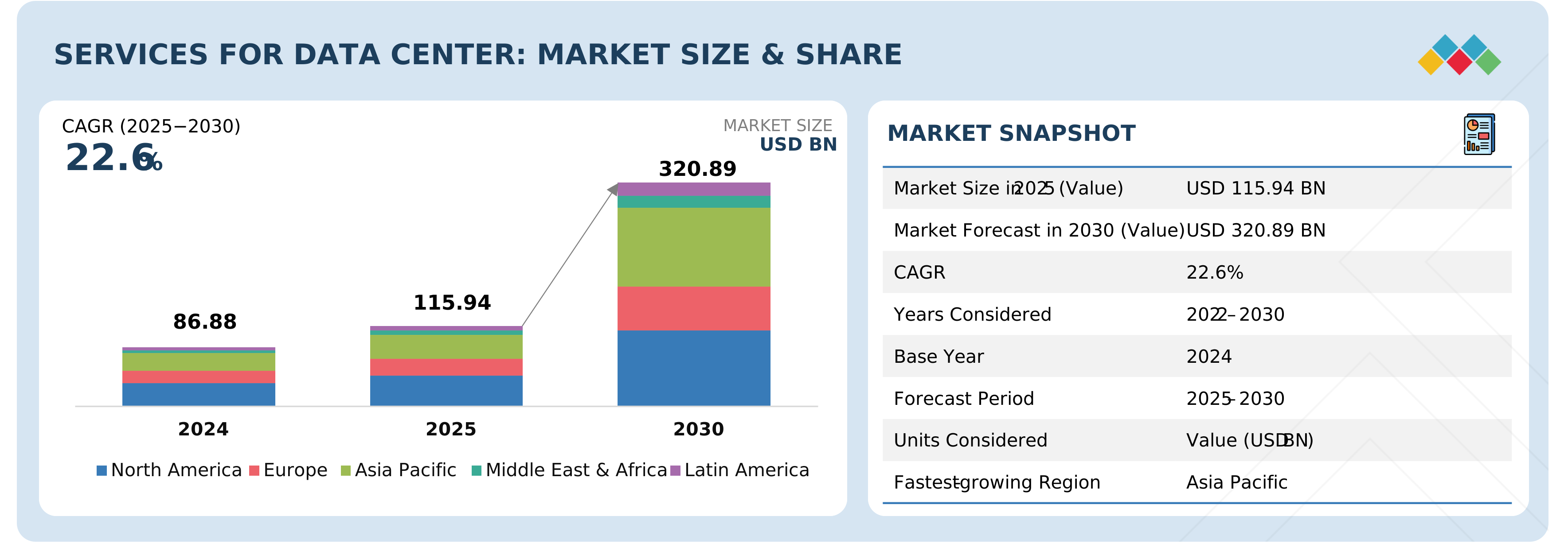
Source: Secondary Research, Interviews with Experts, MarketsandMarkets Analysis
The services for the data center market is witnessing robust growth, driven by the rising demand for advanced infrastructure management, enhanced data security, and scalable digital ecosystems. Valued at USD 115.94 billion in 2025, the market is projected to reach USD 320.89 billion by 2030, reflecting a CAGR of 22.6% during the forecast period of 2025–2030. This growth is underpinned by the accelerating adoption of cloud computing, digital transformation initiatives, and the increasing reliance on data-driven operations across industries. North America and Asia Pacific are anticipated to be the fastest-growing regions, fueled by significant investments in hyperscale facilities, rising IT workloads, and government-backed digitalization programs. Facility and IT services are forecasted to grow in the data center market as enterprises increasingly demand reliable infrastructure, energy-efficient operations, and advanced digital capabilities. Rising adoption of cloud, AI, and edge computing is driving outsourcing, modernization, and managed service needs, ensuring scalability, compliance, and operational continuity.
Market Size and Forecast:
- Market Size Value in 2024: USD 86.88 Billion
- Market Size Value in 2025: USD 115.94 Billion
- Revenue Forecast in 2030: USD 320.89 Billion
- Growth Rate: CAGR of 22.6% from 2025 to 2030
- Base year: 2024
- Forecast period: 2025–2030
Key Market Trends and Insights
- Growth Drivers: Cloud adoption, digital transformation, data security needs, and growing enterprise reliance on data-driven operations fuel market growth.
- Growing Trends:Hyperscale expansion, AI-ready infrastructure, energy-efficient operations, and advanced infrastructure management are key market trends.
- Growth Opportunities: Growth opportunities stem from hyperscale facilities, colocation expansion, AI workloads, and government-led digitalization initiatives.
- AI Transformation: AI drives demand for high-density computing, GPU infrastructure, specialized consulting, and advanced operational services.
KEY TAKEAWAYS
-
BY TIER TYPEThe demand for services from Tier IV data center facilities is projected to grow fastest as enterprises prioritize maximum fault tolerance, redundancy, and zero downtime. Increasing adoption by industries with critical workloads, such as banking, healthcare, and government, drives investment in Tier IV facilities to ensure uninterrupted operations and regulatory compliance.
-
BY DATA CENTER SIZE & CAPACITYThe demand for services from large data center facilities is expected to grow as hyperscale and enterprise clients expand capacity to support cloud, AI, and big data workloads. These facilities offer scalability, advanced infrastructure, and cost efficiencies, enabling organizations to meet the rising demands of digital transformation while ensuring performance, reliability, and operational sustainability.
-
BY DATA CENTER TYPEThe demand for colocation is witnessing growth in the data center services market as enterprises seek cost-effective infrastructure without heavy capital investment. Colocation offers scalability, secure facilities, and access to advanced connectivity, enabling organizations to optimize resources, enhance resilience, and focus on core operations while leveraging shared, high-performance environments.
-
BY ENTERPRISE DATA CENTERThe demand for healthcare and life sciences in the data center services market is growing due to increasing adoption of digital health technologies, electronic medical records, and advanced analytics. Rising data volumes from research, telemedicine, and regulatory compliance requirements drive the need for secure, scalable, and reliable data center infrastructure services.
-
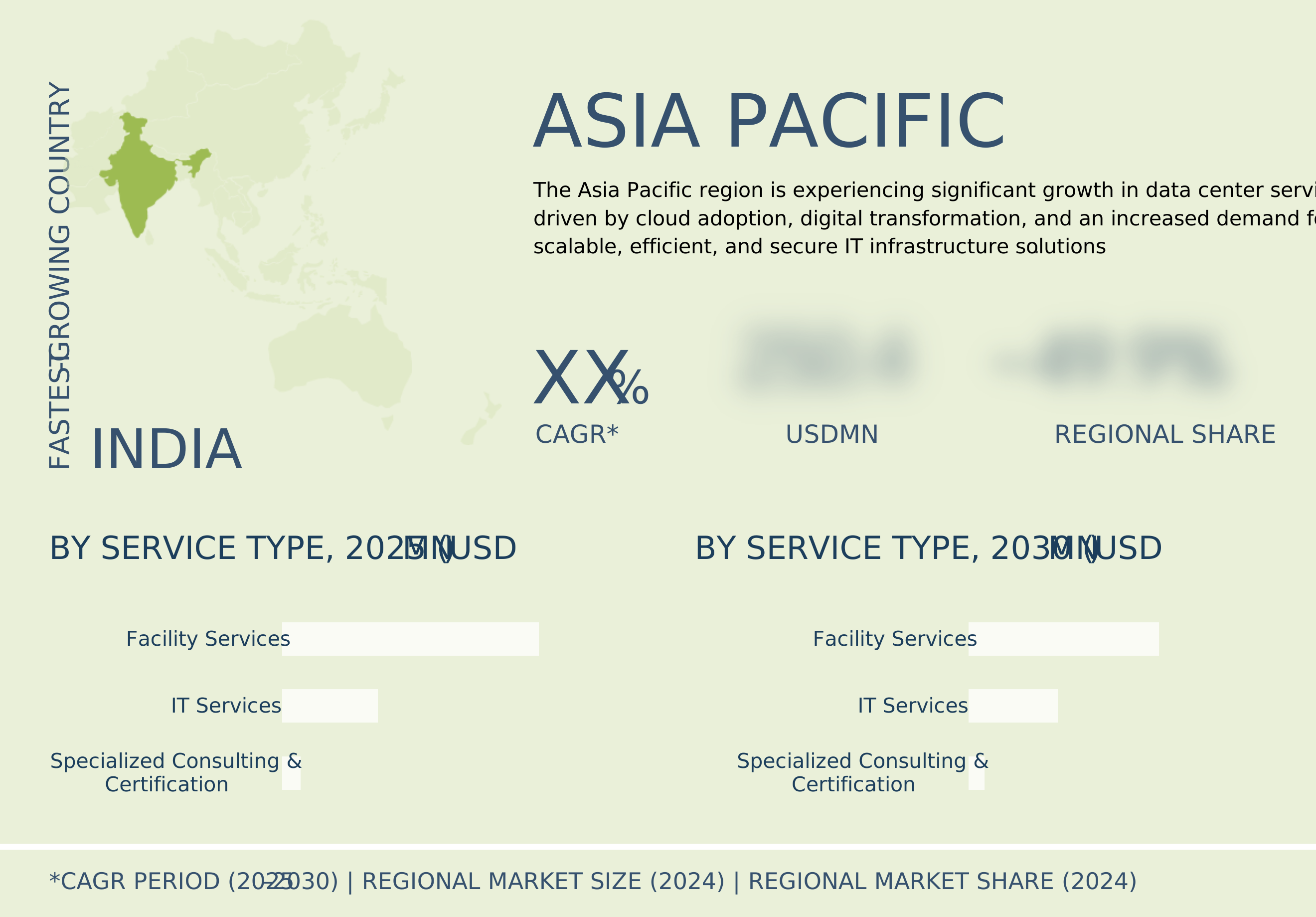
BY REGIONAsia Pacific is forecasted to grow at a CAGR of 35.4% from 2025–2030 in the data center services market, driven by rapid digitalization, expansion of cloud adoption, and increasing investments in IT infrastructure. Rising demand from e-commerce, telecommunications, and financial sectors, coupled with favourable government initiatives, is accelerating service adoption across the region.
-
COMPETITIVE LANDSCAPEThe major players in the services for data center market are pursuing both organic and inorganic strategies, including partnerships, technology launches, and strategic investments. Companies such as Kyndryl, CBRE, JLL, Schneider Electric, and DXC Technology are collaborating to deliver next-generation edge solutions, including AI-optimized hardware, high-density servers, advanced networking, and integrated edge-to-cloud architectures that enhance low-latency performance, scalability, and sustainability across distributed edge environments.
TRENDS & DISRUPTIONS IMPACTING CUSTOMERS' CUSTOMERS
The data center industry is undergoing significant transformation and disruption driven by rapid digitalization, cloud adoption, edge computing, and increasing data volumes. Emerging technologies such as AI, IoT, and big data analytics are increasing the complexity and scale of operations, necessitating advanced infrastructure management. Additionally, stringent regulatory requirements, sustainability goals, and the need for enhanced Cybersecurity are compelling organizations to modernize facilities and optimize workflows. These shifts are creating substantial demand for professional services, including IT management, facility operations, and specialized consulting, enabling enterprises to ensure reliability, operational efficiency, and business continuity while navigating the evolving technological and regulatory landscape.
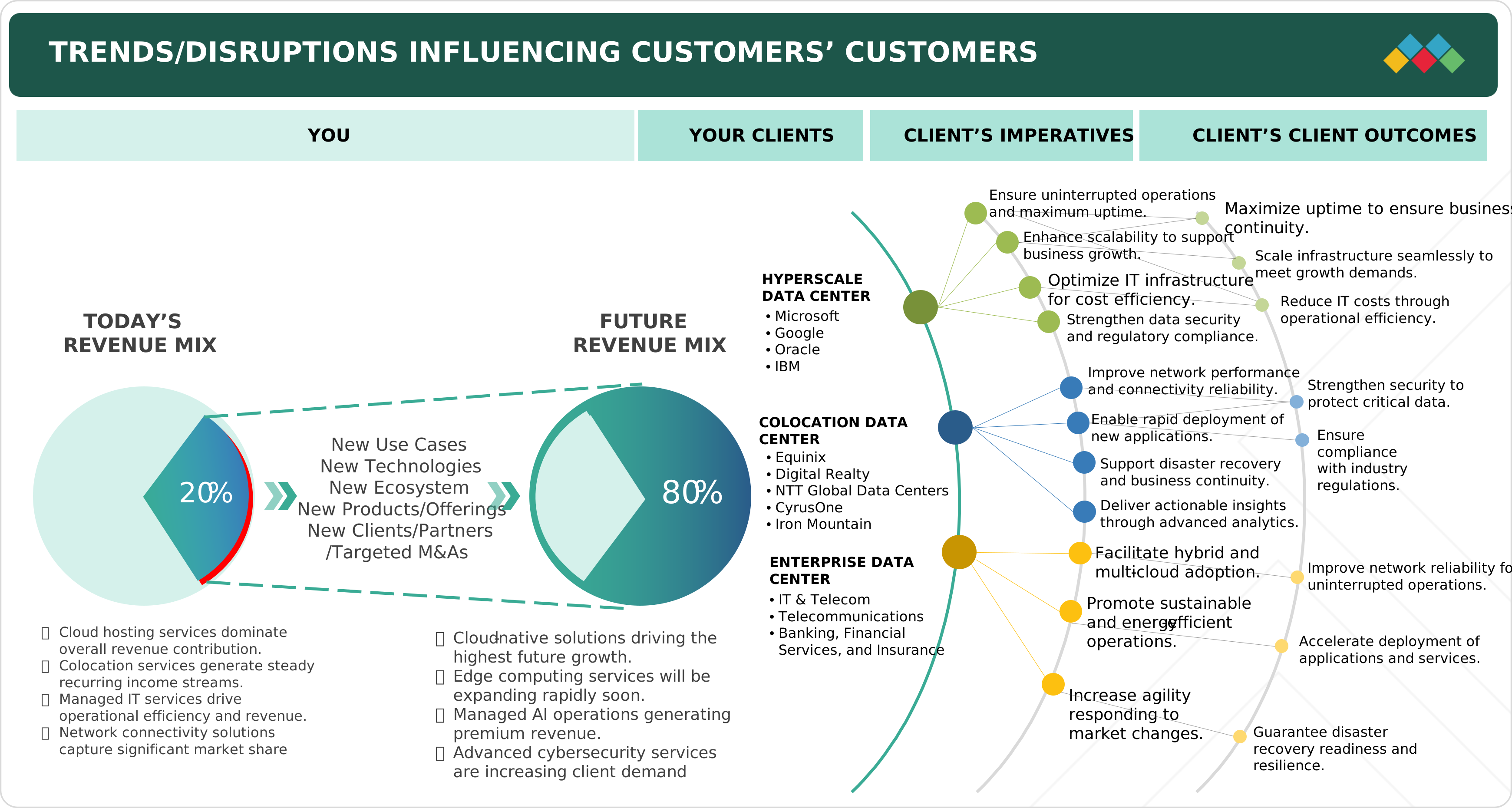
Source: Secondary Research, Interviews with Experts, MarketsandMarkets Analysis
MARKET DYNAMICS - Growth Drivers & Trends

Level
-
Hyperscaler AI spending fuels massive data center builds, boosting demand for design, power, cooling, and commissioning services

-
Density surge is driving liquid cooling and hybrid thermal strategies across data centers


Level
-
Skilled-labor scarcity and safety bottlenecks limiting data center services deliveryplanning

-
Land use and permitting bottlenecks to affect equipment lead times


Level
-
Growing demand to upgrade legacy data centers into AI-ready facilities creates a major retrofit services opportunity

-
Microgrids and CHP integration offer new revenue streams by enabling on-site power for data centers


Level
-
AI-Era Design Churn: Liquid Cooling & GPU Roadmaps Driving Late Redesigns

-
Controls/Telemetry Debt: Cooling Incidents, Compliance Misses, and Paid Rework

Source: Secondary Research, Interviews with Experts, MarketsandMarkets Analysis
Driver: Hyperscaler Al spending fuels massive data center builds, boosting demand for design, power, cooling, and commissioning services
Hyperscale cloud providers are driving data center services growth through massive capital investments in AI and high-performance computing infrastructure. Microsoft added 2?GW capacity across 400+ data centers in 70+ regions, Google spent $22.4?B in Q2?2025 on servers and facilities, Meta increased 2025 capex to $566–572?B, and Amazon prioritizes AI infrastructure with $107–112?B projected spend, fueling extensive facility integration, server-hall fit-outs, and networking expansion.
Restraint: Skilled-labor scarcity and safety bottlenecks limiting data center services deliveryplanning
Data center services face significant labor constraints as high-density, AI-ready buildouts expand. Uptime’s 2025 survey indicates nearly two-thirds of operators struggle to retain or hire qualified staff, with electrical (33%) and mechanical (30%) roles showing the largest gaps. Rising salaries, overtime, and training costs increase the delivered cost per MW, slow project mobilization, and compress service provider margins.
Opportunity: Growing demand to upgrade legacy data centers into Al-ready facilities creates a major retrofit services opportunity
Rising AI and HPC densities create demand for Retrofit-as-a-Service (RaaS) as legacy data centers require power, cooling, and controls modernization. Providers like Digital Realty and Equinix are deploying direct-to-chip liquid cooling across 100–170 facilities globally, enabling long-term, KPI-linked contracts and bundled design, installation, commissioning, and performance verification services, expanding revenue streams.
Challenge: AI-era design churn: Liquid cooling & GPU roadmaps driving late redesigns
The accelerated adoption of high-density GPUs and liquid-ready infrastructure is outpacing traditional design cycles, forcing mid-construction upgrades from air to hybrid or liquid cooling. Meta’s Mesa campus, delayed from 2023 to 2025, exemplifies resultant redesigns, permitting, procurement, and commissioning delays, increasing complexity for data center service providers.
services for data center market: COMMERCIAL USE CASES ACROSS INDUSTRIES
| COMPANY | USE CASE DESCRIPTION | BENEFITS |
|---|---|---|
 |
Equinix required a new Milan ML5 data center with 6MW IT power and sustainable design. Deerns provided MEP design, site supervision, commissioning management, and LEED support, ensuring high reliability, efficient connectivity, and environmental performance despite COVID-19 construction challenges. | Deerns’ services enabled Equinix ML5 to launch on schedule with high-quality installations, 6MW IT capacity, and LEED certification. The facility strengthened global connectivity, enhanced operational reliability, supported sustainability goals, and expanded Equinix’s digital infrastructure footprint efficiently and strategically. |
 |
Compass, a global data center operator, required smarter equipment maintenance and minimized downtime. Vertiv implemented Predictive and Next Predict Maintenance services, combining on-site technicians, stocked parts, and analytics to monitor equipment health and proactively address failures, ensuring uninterrupted operations. | Vertiv’s services enabled Compass to reduce downtime, optimize resource allocation, and streamline maintenance operations. Predictive analytics minimized failures, improved reliability, and enhanced operational efficiency, ensuring consistent performance for hyperscale clients while lowering waste and improving overall data center uptime and responsiveness. |
 |
BMW Group faced challenges managing 30,000 servers, 1,000 WAN connections, and global network operations. NTT DATA provided Managed Enterprise Networks, IaaS, automation, and advanced analytics, enabling resilient, automated, and cloud-like IT operations while minimizing disruptions and supporting digital transformation initiatives. | NTT DATA’s services enabled BMW to automate 85% of server deployments, achieve 99% accuracy in network error diagnosis, reduce downtime, and enhance operational stability. The solution improved efficiency, accelerated system deployment, and supported BMW’s transition toward a modern, cloud-ready IT infrastructure. |
 |
NOVVA Data Centers faced weekly downtime and unreliable cooling at its Colorado Springs facility. Siemens Smart Infrastructure, in collaboration with Holbrook Services, provided controls replacement, commissioning, sustainability consulting, and remote monitoring, ensuring uninterrupted, water-free, and energy-efficient cooling operations that aligned with NOVVA’s hyperscale client requirements. | Siemens and Holbrook’s solution eliminated downtime for 18 months, achieved full cooling redundancy, and transitioned NOVVA to air-cooled, water-free operations. Energy savings exceeded 2 million kWh, annual cost reductions reached USD 176,000, and system reliability, efficiency, and sustainability goals were significantly enhanced. |
 |
Virgin Media O2 faced rising energy costs and workload pressures across 20 UK data centers. SEKSgo delivered Data Centre Performance Optimisation Managed Service, providing real-time insights and advisory support to enhance resilience, reduce energy consumption, and advance sustainability goals. | SEKSgo’s optimization service reduced cooling energy use by 15%, cut 760 tonnes of CO2 annually, and secured over £1 million in savings. It eliminated thermal risks, maximised free-air cooling efficiency, and improved operational performance while supporting Virgin Media O2’s 2040 net-zero strategy. |
Logos and trademarks shown above are the property of their respective owners. Their use here is for informational and illustrative purposes only.
MARKET ECOSYSTEM
The services for data center market ecosystem encompasses three core segments: Facility Services, which ensure uninterrupted operations through maintenance, power, and cooling management; IT Services, delivering infrastructure management, cloud integration, and cybersecurity solutions; and Specialized Consulting & Certification, offering expert guidance, compliance audits, and industry-standard certifications, collectively enabling operational efficiency, regulatory adherence, and technological optimization across modern data centers.
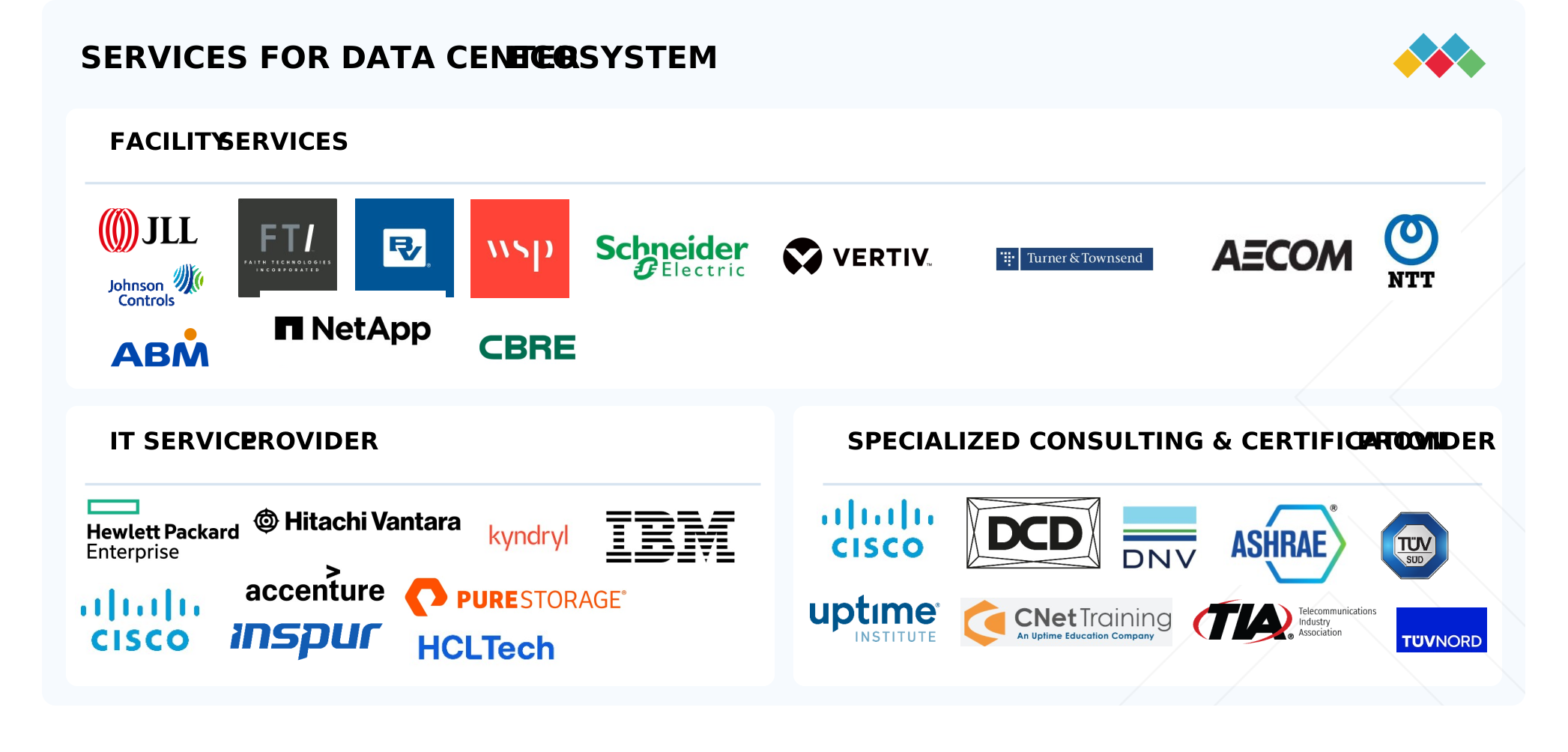
Logos and trademarks shown above are the property of their respective owners. Their use here is for informational and illustrative purposes only.
Also Read: Data Center Busways Market Report
MARKET SEGMENTS
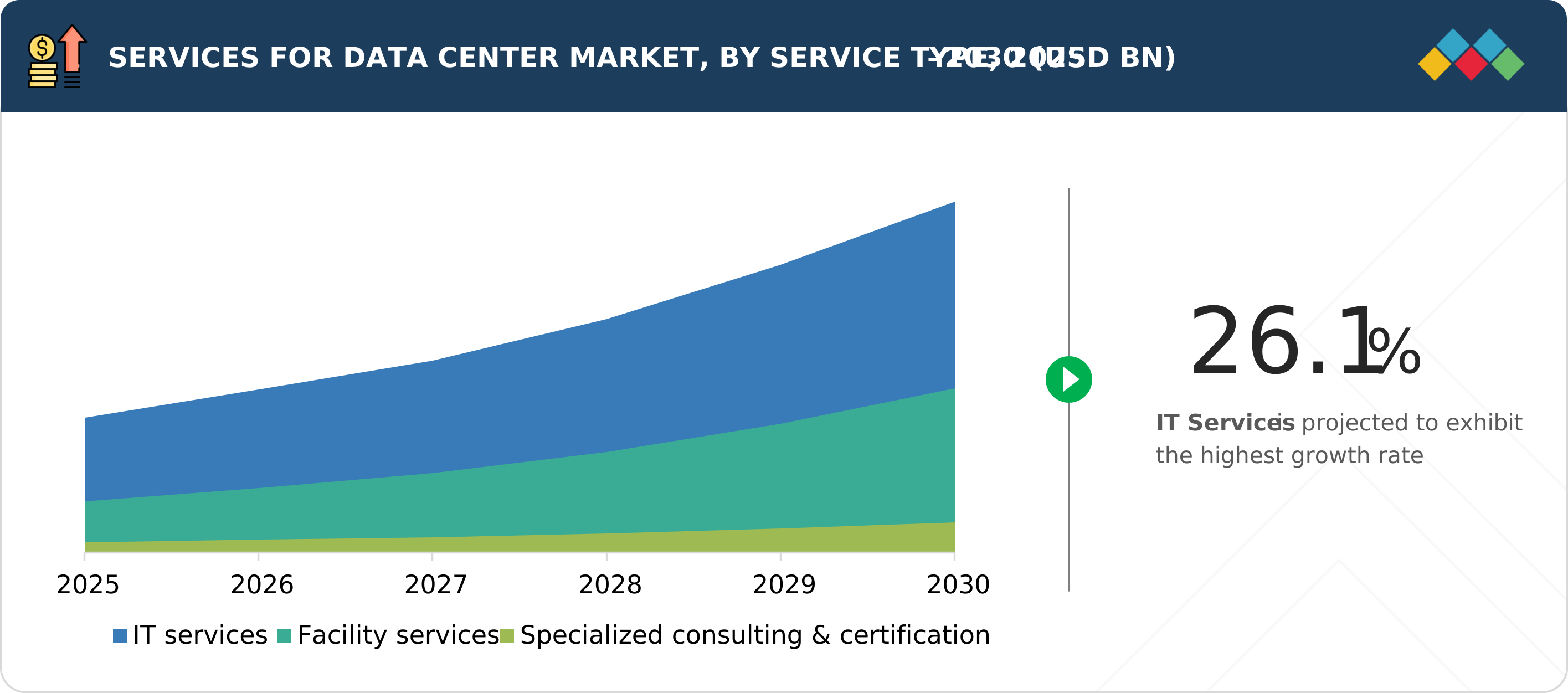
Source: Secondary Research, Interviews with Experts, MarketsandMarkets Analysis
Services for Data Center Market, By Service Type
IT services in facility services are growing due to increasing adoption of advanced data center technologies, cloud integration, and the need for continuous operational efficiency, modernization, and seamless management of critical infrastructure across diverse enterprise environments.
Services for Data Center Market, By IT Service
Within the IT service segment of the data center market, demand for decommissioning & relocation services is expected to increase, driven by enterprises modernizing their infrastructure, migrating to cloud environments, and optimizing data center operations to ensure minimal downtime, operational efficiency, and a seamless transition of critical assets.
Services for Data Center Market, By Facility Service
Commissioning and testing in facility services are growing as organizations focus on ensuring systems operate correctly and efficiently. The increasing scale of projects and their associated technical requirements are driving the greater adoption of structured commissioning and testing processes.
Services for Data Center Market, By Specialized Consulting & Certification
Within the specialized consulting & certification segment of the data center market, demand for strategic consulting is expected to grow, driven by enterprises seeking expert guidance for infrastructure planning, digital transformation, regulatory compliance, and optimized operational strategies, enabling informed decision-making and long-term business resilience.
Services for Data Center Market, By Tier Type
Within the tier segment of the data center market, demand for Tier IV facilities is expected to grow, driven by enterprises that require maximum uptime, fault-tolerant infrastructure, and robust redundancy to ensure uninterrupted operations, high reliability, and enhanced business continuity for critical applications and services.
Services for Data Center Market, By Data Center Size & Capacity
Hyperscale data centers are expanding as organizations increasingly require large, centralized facilities to support growing IT operations. Their growth is driven by the need for efficient, scalable infrastructure that can handle increasing workloads and complex computing demands.
Services for Data Center Market, By Data Center Type
Within the data center type segment, demand for hyperscale data centers is expected to grow, driven by cloud providers and large enterprises that require massive computing capacity, scalable architecture, and advanced automation, enabling the efficient management of high-volume workloads and supporting rapid digital transformation initiatives.
Services for Data Center Market, By Enterprise Data Center
Within the enterprise data center segment, demand from the healthcare and life sciences sector is expected to grow, driven by increasing digitalization, secure data storage requirements, regulatory compliance needs, and the adoption of advanced analytics, which support efficient patient care, research, and operational continuity.
REGION
Asia Pacific to be the fastest-growing region in the market during the forecast period
The Asia Pacific region is poised to become the fastest-growing market for services for data centers globally, driven by rapid digital adoption, cloud migration, and expansion of hyperscale and enterprise data centers. Increasing investments in IT infrastructure, coupled with supportive government policies and initiatives promoting smart cities, 5G deployment, and digital economies, are accelerating demand for facility services, IT services, and specialized consulting. The rising adoption of edge computing, sustainability-focused operations, and regulatory compliance requirements further reinforces the region’s growth trajectory. These factors collectively position Asia Pacific as a strategic hub for advanced, scalable, and efficient data center services worldwide.
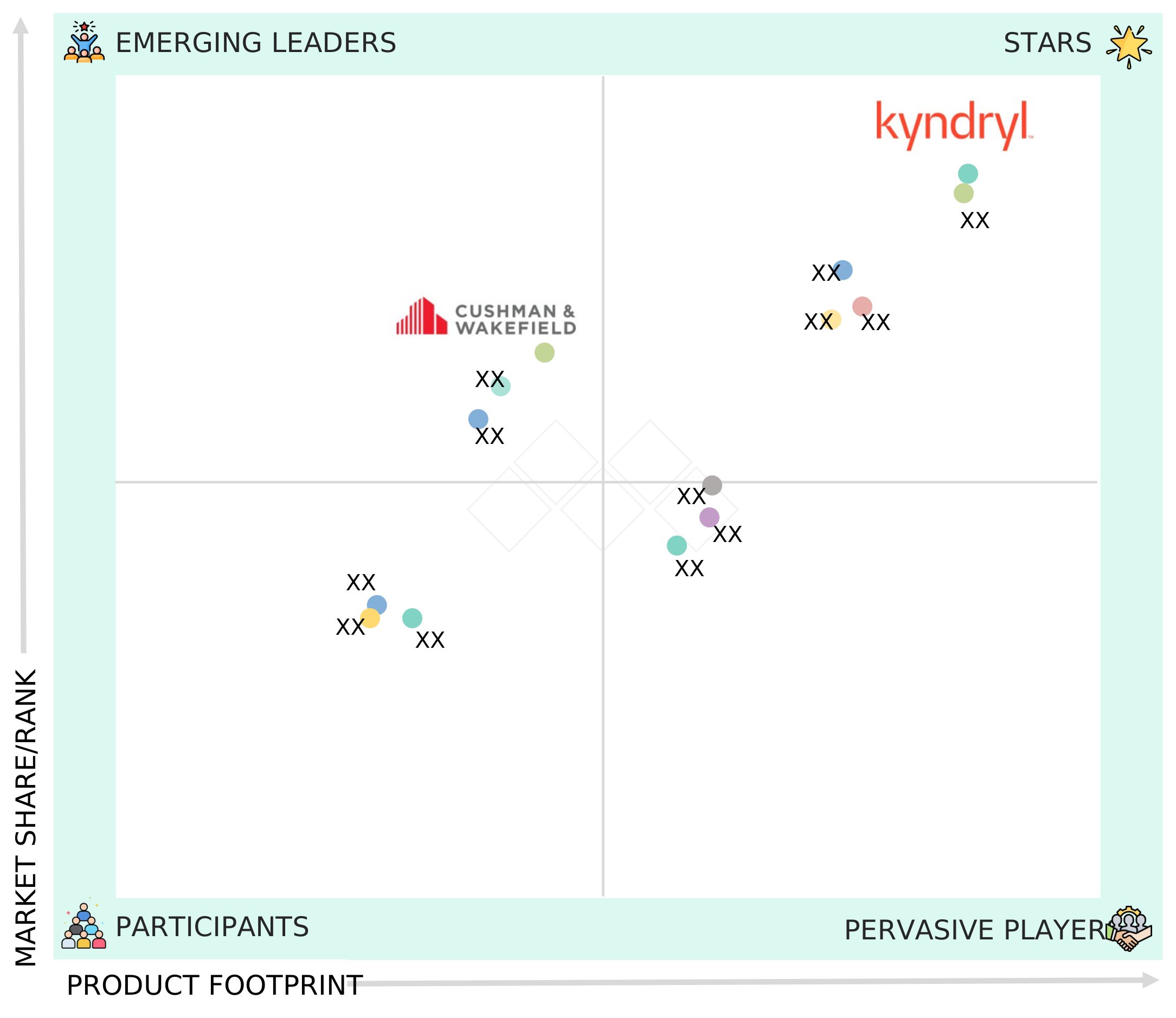
services for data center market: COMPANY EVALUATION MATRIX
In the services for data center market matrix, Kyndryl (Star) leads with a strong product footprint and market share, enabling large-scale deployments. Cushman & Wakefield (Emerging Leader) delivers comprehensive solutions, combining innovation with operational excellence to enhance reliability, sustainability, and business agility for enterprises in dynamic digital environments.
Source: Secondary Research, Interviews with Experts, MarketsandMarkets Analysis
KEY MARKET PLAYERS
MARKET SCOPE
| REPORT METRIC | DETAILS |
|---|---|
| Market Size in 2025 (Value) | USD 115.94 billion |
| Market Forecast in 2030 (Value) | USD 320.89 billion |
| Growth Rate | CAGR of 22.6% from 2025-2030 |
| Years Considered | 2022-2030 |
| Base Year | 2024 |
| Forecast Period | 2025-2030 |
| Units Considered | Value (USD Million/Billion) |
| Report Coverage | Revenue forecast, company ranking, competitive landscape, growth factors, and trends |
| Segments Covered |
|
| Regions Covered | North America, Asia Pacific, Europe, South America, Middle East & Africa |
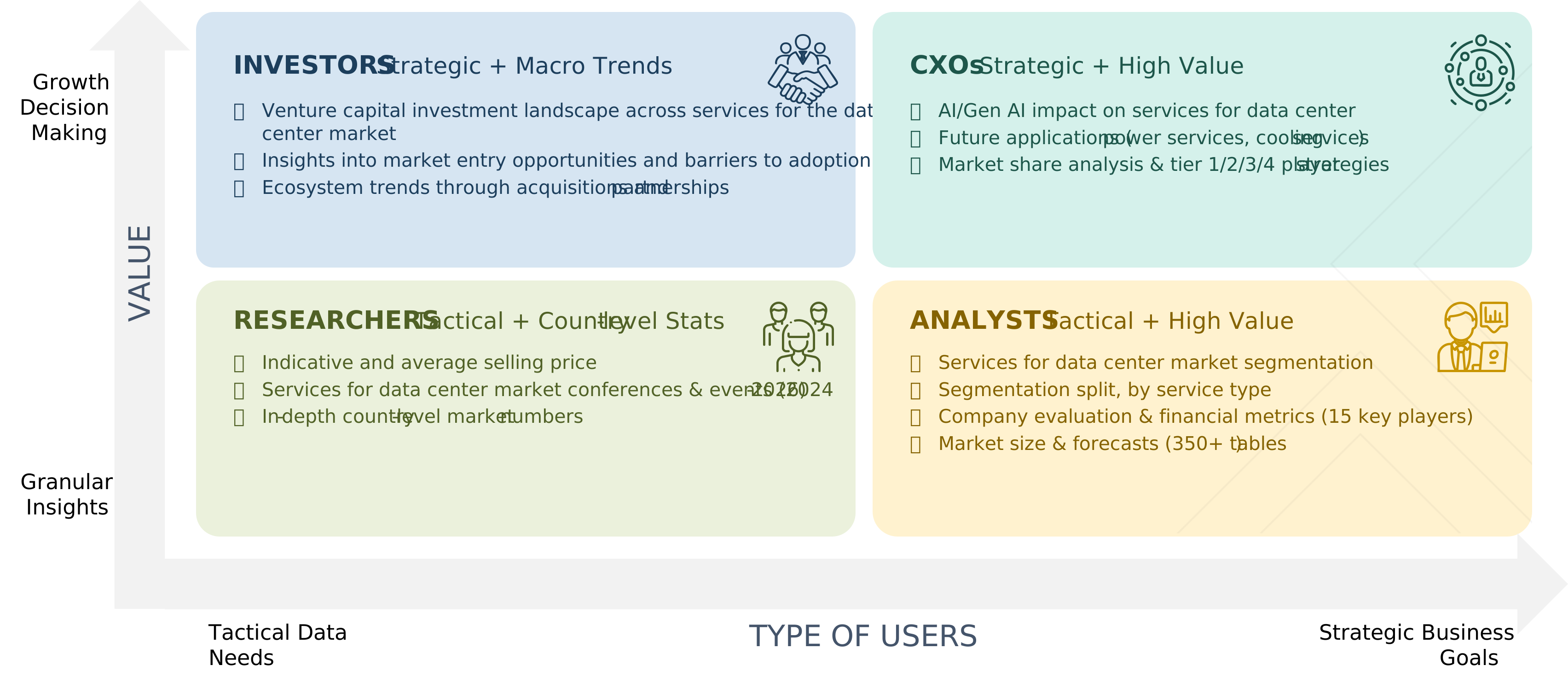
WHAT IS IN IT FOR YOU: services for data center market REPORT CONTENT GUIDE
DELIVERED CUSTOMIZATIONS
We have successfully delivered the following deep-dive customizations:
| CLIENT REQUEST | CUSTOMIZATION DELIVERED | VALUE ADDS |
|---|---|---|
| Leading Solution Provider | Extra Vendor Profiling (Client-specific Competitors) | Add profiles of client-identified competitors (up to five) to help benchmark directly against local and niche rivals. |
RECENT DEVELOPMENTS
- September 2025 : Kyndryl and Nokia partnered to modernize Swiss provider iWay’s data center infrastructure by integrating Nokia’s Data Center Fabric and Event-driven Automation with Kyndryl’s network management expertise. This enhances automation, scalability, and security, ensuring efficient operations and future-ready infrastructure to support evolving digital demands.
- August 2025 : DXC Technology partnered with 7AI to launch the DXC Agentic Security Operations Center, integrating fully autonomous artificial intelligence agents into managed security services. This enhances threat detection, investigation, and response efficiency globally, reducing operational costs while delivering faster, scalable, and more accurate cybersecurity outcomes.
- August 2025 : Vertiv acquired Waylay NV, a leader in generative AI and hyper automation software, to enhance its digital infrastructure solutions. The acquisition strengthens Vertiv’s capabilities in AI-driven monitoring, predictive maintenance, and dynamic optimization of power and thermal performance for high-density, mission-critical environments globally.
- June 2025 : Schneider Electric partnered with NVIDIA to co-develop sustainable, AI-ready infrastructure across Europe, focusing on advanced power, liquid cooling, and control systems. Aligned with the EU’s “AI Continent Action Plan,” this aims to accelerate scalable, energy-efficient AI factories while prioritizing grid coordination and decarbonization goals.
- March 2025 : Accenture acquired Soben, a global construction consultancy, to enhance its capital projects capabilities, particularly in data center development. This acquisition strengthens Accenture’s advisory, project, cost, and commercial management services, enabling clients to efficiently plan, execute, and modernize large-scale infrastructure projects worldwide.
- February 2025 : CBRE partnered with Nvidia to serve as a solutions adviser, providing specialized AI-related consulting services to support clients navigating the rapidly evolving artificial intelligence landscape. This leverages CBRE’s advisory expertise and Nvidia’s technological leadership to deliver strategic guidance and enhance AI-driven business outcomes.
Table of Contents
 Exclusive indicates content/data unique to MarketsandMarkets and not available with any competitors.
Methodology
This research study on the services for the data center market involved extensive secondary sources, including directories, IEEE Communication-Efficient: Algorithms and Systems, and the International Journal of Innovation and Technology Management, as well as paid databases. Primary sources were primarily industry experts from core and related industries, including preferred Services for data center providers, third-party service providers, consulting service providers, end users, and other commercial enterprises. In-depth interviews were conducted with primary respondents, including key industry participants and subject matter experts, to obtain and verify critical qualitative and quantitative information and assess the market’s prospects.
Secondary Research
In the secondary research process, various sources were referred to identify and collect information for this study. Secondary sources included annual reports, press releases, and investor presentations of companies; white papers, journals, and certified publications; and articles from recognized authors, directories, and databases. The data was also collected from other secondary sources, such as journals, government websites, blogs, and vendors’ websites. Additionally, the Services for data center spending of various countries were extracted from the respective sources.
Primary Research
During the primary research process, various sources from both the supply and demand sides were interviewed to gather qualitative and quantitative information on the market. The primary sources from the supply side included various industry experts, such as Chief Experience Officers (CXOs), Vice Presidents (VPs), and directors specializing in business development, marketing, and edge data center providers. It also included key executives from services for data center vendors, system integrators (SIs), professional service providers, industry associations, and other key opinion leaders.

Note: Tier 1 companies’ revenues are more than USD 10 billion; tier 2 companies’ revenues range between
USD 1 and 10 billion; and tier 3 companies’ revenues range between USD 500 million and USD 1 billion. Other designations
include sales managers, marketing managers, and product managers.
Source: Industry Experts
To know about the assumptions considered for the study, download the pdf brochure
Market Size Estimation
Multiple approaches were adopted to estimate and forecast the services for data center market. The first approach involved estimating the market size by the companies’ revenue generated through sales.
Market Size Estimation Methodology- Top-down approach
The top-down approach in the services for data center market is a strategic methodology that estimates the overall market size first and then allocates it across different segments and categories. This approach begins by defining the total market potential and subsequently dividing it into subsegments, including service type, facility services, IT services, specialized consulting and certification, tier type, data center size and capacity, and enterprise versus non-enterprise data centers. Percentage splits are applied for each segment to determine the market share of various categories, ensuring a structured understanding of the market composition. Additionally, regional and country-wise splits are incorporated to reflect geographic variations and demand distribution across key markets. The top-down approach is particularly valuable for forecasting market trends, identifying high-growth segments, and assessing overall market dynamics from a macro perspective. By providing a hierarchical view of the market, it facilitates strategic decision-making for investments, service expansion, and competitive positioning. This methodology complements the bottom-up approach by offering a comprehensive overview that captures overarching trends, regional and segment-level distributions, and the proportional impact of each segment on the global services for data center market, enabling stakeholders to formulate data-driven strategies effectively.
Market Size Estimation Methodology-Bottom-up approach
The bottom-up approach in analyzing the services for data center market is a methodical strategy that focuses on aggregating detailed data from individual components to derive an accurate estimation of the overall market. This approach begins by assessing the market size and breaking it down into specific market segments. Key parameters include market size by segment, percentage split for each segment, and company-wise revenue generation through services for data centers. By examining individual companies and their respective service offerings, analysts identify key players and assess their market share contributions. This method ensures a granular understanding of the market dynamics, capturing regional variations, segment-specific trends, and service-specific demand patterns. The bottom-up approach also enables a comprehensive evaluation of revenue streams generated through facility services, IT services, consulting, certification, and other specialized offerings within the data center ecosystem. By consolidating data at the company and segment level, this approach provides a robust and accurate representation of market size, growth potential, and competitive positioning. Its precision and focus on micro-level data make it particularly useful for identifying growth opportunities, understanding market concentration, and benchmarking key players against overall market performance.
Services for Data Center Market : Top-Down and Bottom-Up Approach

Data Triangulation
After determining the overall market size using the market size estimation processes as explained above, the market was split into several segments and subsegments. Data triangulation and market breakup procedures were employed, wherever applicable, to complete the overall market engineering process and arrive at the exact statistics of each market segment and subsegment. The overall market size was then used in the top-down approach to estimate the size of other individual markets by applying percentage splits to the market segmentation.
Market Definition
The services for data center market are defined as a comprehensive suite of professional and managed offerings designed to support the efficient operation, optimization, and lifecycle management of data center infrastructure. These services encompass a broad spectrum, including facility management, installation and deployment, system integration, consulting, security, monitoring, maintenance, and decommissioning. They are designed to ensure the high availability, reliability, scalability, and cost-effectiveness of data center environments, which serve as the backbone for enterprise IT operations, cloud computing, and digital transformation initiatives. Market demand is driven by increasing data volumes, rapid cloud adoption, the growth of edge computing, and the need for energy efficiency and sustainability in infrastructure operations. Service providers deliver value by enabling businesses to focus on their core operations while outsourcing critical but complex functions, thereby reducing operational risks and ensuring compliance with industry regulations and standards. Additionally, as organizations increasingly adopt hybrid and multi-cloud strategies, the role of specialized data center services becomes crucial to ensure seamless integration and optimal performance across diverse platforms. Thus, the services for the data center market represent a critical segment within the global digital economy, providing strategic, technical, and operational support to sustain evolving IT ecosystems.
Stakeholders
- Infrastructure & equipment vendors
- Software solution providers
- Colocation service providers
- Hyperscale cloud providers
- Enterprises
- Network and connectivity providers
- Construction, engineering & real estate firms
- Investors and real estate investment trusts (REITs)
- Regulatory bodies & standards organizations
- System integrators (SIs)
- Industry alliances and advocacy groups
Report Objectives
- To forecast the market size of five major regional segments: North America, Europe, Asia Pacific, the Middle East & Africa, and Latin America
- To strategically analyze the market subsegments with respect to individual growth trends, prospects, and contributions to the total market
- To provide detailed information related to the major factors influencing the growth of the market (drivers, restraints, opportunities, and challenges)
- To strategically analyze macro and micro markets with respect to growth trends, prospects, and their contributions to the overall market
- To analyze industry trends, patents and innovations, and pricing data related to the market
- To analyze the opportunities in the market for stakeholders and provide details of the competitive landscape for major players
- To analyze the impact of AI/generative AI on the market
- To profile key players in the market and comprehensively analyze their market share/ranking and core competencies
- To track and analyze competitive developments, including mergers & acquisitions, product launches, and partnerships & collaborations, in the market
Available Customizations
With the given market data, MarketsandMarkets offers customizations as per the company’s specific needs. The following customization options are available for the report:
Product Analysis
- The product matrix provides a detailed comparison of the product portfolio of each company.
Geographic Analysis as per Feasibility
- Further breakup of the North American services for data center market
- Further breakup of the European services for data center market
- Further breakup of the Asia Pacific services for data center market
- Further breakup of the Middle East & African services for data center market
- Further breakup of the Latin American services for data center market
Company Information
- Detailed analysis and profiling of additional market players (up to five)
Key Questions Addressed by the Report
What is the current size of the Services for Data Center market?
The global Services for Data Center market was valued at USD 115.9 billion in 2025 and is projected to reach USD 320.9 billion by 2030, growing at a CAGR of 22.6% during 2025–2030.
Which regions lead the market?
North America dominates the market, followed by Europe and Asia Pacific, with Asia Pacific showing the fastest growth due to expanding hyperscale and edge data center developments.
What are the major service categories?
The market is segmented into Facility Services, IT Services, and Specialized Consulting & Certification. Facility Services hold the largest share, while IT Services grow fastest at a 26.1% CAGR (2025–2030).
Who are the key companies in this market?
Leading players include Kyndryl (US), CBRE (US), JLL (US), Schneider Electric (France), DXC Technology (US), Vertiv (US), HCLTech (India), and Accenture (Ireland).
What factors are driving market growth?
Rising AI and hyperscaler investments, liquid-cooling adoption, and automation in facility management are key growth drivers, while cooling compliance and redesign delays remain major challenges.


Personalize This Research
- Triangulate with your Own Data
- Get Data as per your Format and Definition
- Gain a Deeper Dive on a Specific Application, Geography, Customer or Competitor
- Any level of Personalization
Let Us Help You
- What are the Known and Unknown Adjacencies Impacting the Services for Data Center Market
- What will your New Revenue Sources be?
- Who will be your Top Customer; what will make them switch?
- Defend your Market Share or Win Competitors
- Get a Scorecard for Target Partners

Custom Market Research Services
We Will Customise The Research For You, In Case The Report Listed Above Does Not Meet With Your Requirements
Get 10% Free CustomisationTESTIMONIALS
- Canada Services for Data Center Market
- US Services for Data Center Market
- UK Services for Data Center Market
- Germany Services for Data Center Market
- France Services for Data Center Market
- Italy Services for Data Center Market
- China Services for Data Center Market
- Japan Services for Data Center Market
- India Services for Data Center Market
- UAE Services for Data Center Market
- South Africa Services for Data Center Market
- Brazil Services for Data Center Market
- Mexico Services for Data Center Market
- Rest Of Europe Services for Data Center Market
- Rest Of Asia Pacific Services for Data Center Market
- GCC Countries Services for Data Center Market
- Ksa Services for Data Center Market
- Rest Of GCC Countries Services for Data Center Market
Growth opportunities and latent adjacency in Services for Data Center Market






Yaksh
Jul, 2019
Market sizing and player in asset management industries.
Alberto
Jan, 2019
Market sizing for Mexican market.
Mehrzad
Jun, 2015
Interested in Data Center Operation.