
EMI Shielding Market

EMI Shielding Market by Material (Conductive Coatings & Paints, Conductive Polymers, Metal Shielding, Filters, Tapes & Laminates), Method (Radiation, Conduction), Frequency (<100 MHz, 100 MHz-1 GHz), Type (Narrowband, Broadband) - Global Forecast to 2032




EMI SHIELDING MARKET OVERVIEW
The global EMI shielding market is projected to grow from USD 8.04 billion in 2026 to USD 10.90 billion by 2032, registering a CAGR of 5.2%. The demand for EMI shielding is primarily driven by the rapid miniaturization and increasing complexity of electronic devices, which heightens the risk of electromagnetic interference, along with the growing adoption of high-speed communication technologies, such as 5G and IoT, which require strong signal integrity. Additionally, rising demand for consumer electronics, expanding electrification in the automotive sector (especially EVs and ADAS), and the proliferation of industrial automation and connected systems are significantly contributing to market growth.
EMI SHIELDING MARKET KEY TAKEAWAYS
-
EMI SHIELDING MARKET, BY REGIONBy region, Asia Pacific is expected to dominate the market, growing at a CAGR of 6.2% during the forecast period.
-
EMI SHIELDING MARKET, BY TYPEBy type, the broadband EMI segment is expected to dominate the market during the forecast period.
-
EMI SHIELDING MARKET, BY METHODBy method, the conduction segment is expected to grow at the fastest CAGR of 7.4% during the forecast period.
-
EMI SHIELDING MARKET, BY MATERIALBy material, the conductive coatings & paints segment is expected to dominate the market.
-
EMI SHIELDING MARKET, BY FREQUENCYBy frequency, high-frequency shielding (100 MHz–1 GHz) is expected to register the highest CAGR of 5.6% during the forecast period.
-
EMI SHIELDING MARKET, BY APPLICATIONBy application, the PCB-level shielding segment is expected to dominate the market.
-
EMI SHIELDING MARKET, BY INDUSTRYThe automotive industry is expected to register the highest CAGR during the forecast period.
-
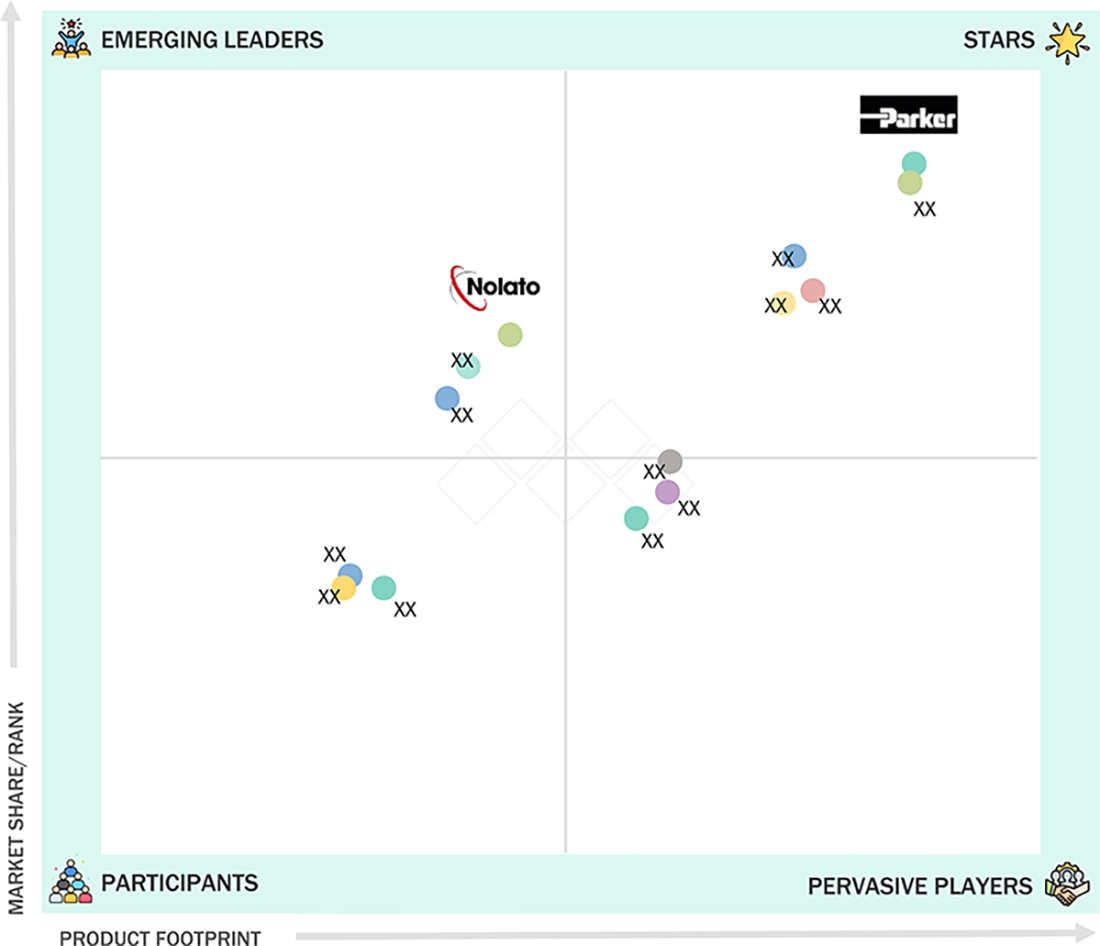
COMPETITIVE LANDSCAPE - KEY PLAYERSPARKER HANNIFIN CORP (US), PPG Industries, Inc (US), 3M (US), Hankel AG & CO KGAA (Germany), Qnity Electronics Inc (US), were identified as some of the star players in the global EMI shielding market, given their strong market share and product footprint.
-
COMPETITIVE LANDSCAPE - STARTUPS/SMESLeader Tech Inc (US), MG Chemicals (Canada), Nolato AB (Sweden), Tech Etch Inc (US), RTP Company (US) among others, have established themselves as specialized players in the EMI shielding market by focusing on high-performance materials and application-specific solutions. These companies differentiate through expertise in conductive coatings, shielding gaskets, and advanced polymer-based shielding components, catering to demanding industries such as telecommunications, automotive electronics, medical devices, and industrial systems.
The growth of the EMI shielding industry is being accelerated by the surge in digitalization and electrification across industries, leading to a sharp increase in electronic content per device and system. As frequencies rise and device architectures become more complex, traditional shielding approaches are being replaced by advanced materials such as conductive coatings, tapes, and lightweight composites, further expanding market value. Emerging applications including electric vehicles, 5G infrastructure, data centers, and smart manufacturing are creating sustained, long-term demand, while rapid industrialization in Asia Pacific and increasing investments in semiconductor manufacturing are adding momentum.
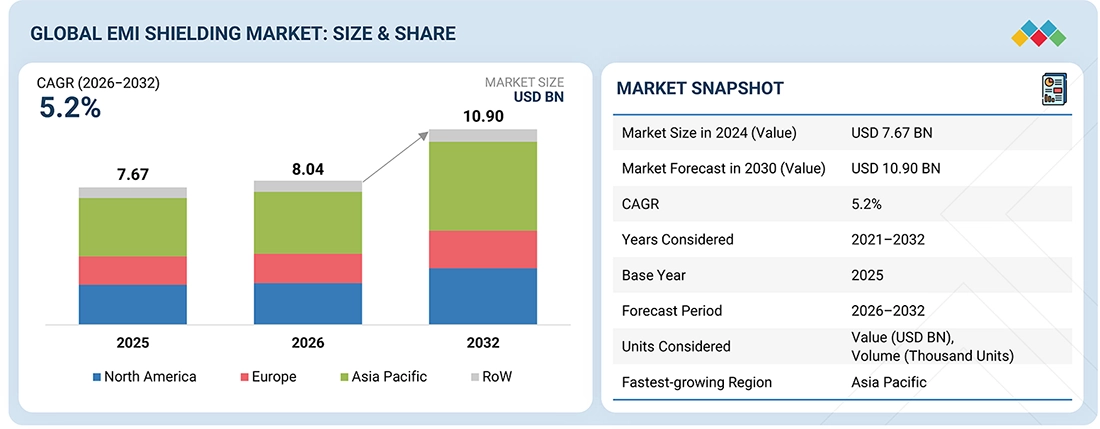
Source: Secondary Research, Interviews with Experts, MarketsandMarkets Analysis
TRENDS & DISRUPTIONS IMPACTING CUSTOMERS' CUSTOMERS
EMI shielding is being shaped by a clear shift from traditional metal-based solutions representing old revenue streams toward advanced, lightweight, and design-flexible materials such as conductive coatings, tapes, and polymer-based composites that are creating new revenue streams for market players. This transition is disrupting conventional product portfolios as increasing miniaturization, higher frequencies, and complex device architectures demand more innovative and application-specific solutions. As a result, companies are moving away from standardized offerings to highly customized shielding designs, particularly for 5G, EVs, and advanced electronics, where performance, weight reduction, and integration capabilities are critical, ultimately redefining competitive positioning and value creation in the EMI shielding market.
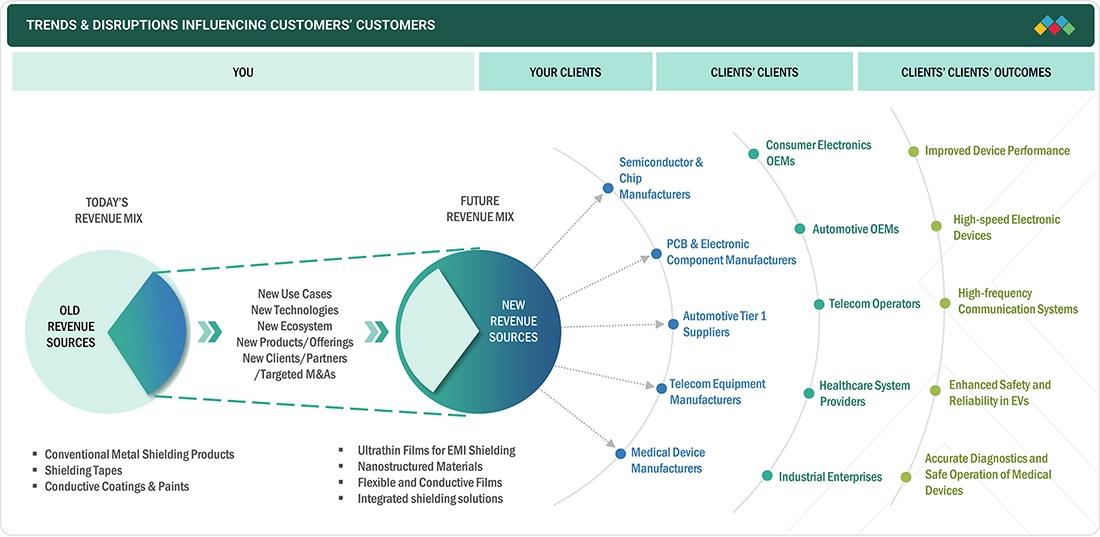
Source: Secondary Research, Interviews with Experts, MarketsandMarkets Analysis
EMI SHIELDING MARKET DYNAMICS

Level
-
Rising demand for high-speed and high-frequency devices

-
Enforcement of stringent regulations to prevent electronic equipment malfunctions


Level
-
Environmental hazards and high costs of EMI shielding metals

-
Low effectiveness of traditional EMI shielding materials


Level
-
Growing adoption of digital healthcare solutions

-
Rising consumer awareness of effects of EMI shielding


Level
-
Reducing electromagnetic interference in miniaturized devices

-
Thermal management trade-offs

Source: Secondary Research, Interviews with Experts, MarketsandMarkets Analysis
Driver: Rising demand for high-speed and high-frequency devices
The rising demand for high-speed and high-frequency devices is driving the need for advanced EMI shielding solutions, as technologies such as 5G, high-performance computing, and modern electronics operate at significantly higher frequencies and data rates. At these speeds, even minimal electromagnetic interference can lead to signal degradation, data loss, and reduced reliability, making effective shielding critical. This has increased the importance of maintaining signal integrity within compact and complex device architectures, prompting manufacturers to adopt high-performance, precision-engineered shielding materials and solutions to ensure consistent and reliable operation.
Restraint: Environmental hazards and high costs of EMI shielding metals
The EMI shielding market faces a key restraint due to the environmental hazards and high costs associated with commonly used shielding metals such as copper, aluminum, and nickel. The extraction, processing, and disposal of these metals can have significant environmental impacts, including high energy consumption and emissions while also raising concerns around recyclability and regulatory compliance. At the same time, price volatility and the relatively high cost of these materials increase the overall system cost for manufacturers, limiting widespread adoption, particularly in cost-sensitive applications. This has created pressure to develop more sustainable, cost-effective alternatives, though achieving the same level of performance remains a challenge.
Opportunity: Growing adoption of digital healthcare solutions
The growing adoption of digital healthcare solutions presents a significant opportunity for the EMI shielding market, as modern medical devices increasingly rely on advanced electronics, wireless communication, and high-speed data processing. Devices such as wearable health monitors, remote patient monitoring systems, imaging equipment, and connected diagnostic tools require reliable performance without interference, especially in critical care environments.
Challenge: Reducing electromagnetic interference in miniaturized devices
The increasing miniaturization of electronic devices presents a significant challenge in reducing electromagnetic interference, as components are packed into extremely compact spaces with minimal separation between circuits. This close proximity increases the risk of signal coupling and interference, making traditional shielding approaches less effective. Designers must balance space constraints with shielding performance, often requiring highly customized, ultra-thin, and precisely engineered solutions.
EMI SHIELDING MARKET: COMMERCIAL USE CASES ACROSS INDUSTRIES
| COMPANY | USE CASE DESCRIPTION | BENEFITS |
|---|---|---|
 |
PARKER HANNIFIN CORP provides engineered materials and sealing solutions, including conductive elastomers and EMI shielding gaskets, widely used in aerospace, defense, telecommunications, and industrial electronics to ensure electromagnetic compatibility in harsh environments. | Delivers reliable EMI shielding with excellent environmental sealing | Enhances durability under extreme conditions | Supports system reliability in mission-critical applications | Enables compliance with stringent aerospace and defense standards |
 |
PPG Industries develops conductive coatings and advanced materials used for EMI shielding in automotive electronics, aerospace components, and consumer devices, particularly where lightweight and corrosion-resistant solutions are required. | Enables lightweight shielding alternatives to metals | Improves corrosion resistance and durability | Enhances signal integrity | Supports design flexibility for complex and miniaturized electronic systems |
 |
3M offers a wide portfolio of EMI shielding tapes, conductive adhesives, and absorbers used across consumer electronics, data centers, automotive electronics, and telecommunications infrastructure for high-frequency interference mitigation. | Provides easy-to-apply and scalable shielding solutions | Supports high-frequency performance | Enhances device reliability | Enables efficient thermal and electrical management | Accelerates manufacturing through integrated material solutions |
 |
Henkel supplies conductive inks, coatings, and adhesive materials for EMI shielding in printed electronics, automotive systems, and semiconductor packaging, supporting advanced electronic integration and miniaturization. | Enables compact and lightweight shielding designs | Improves electrical conductivity and thermal management | Supports high-throughput manufacturing | Enhances performance in high-density electronic assemblies |
 |
Qnity Electronics focuses on EMI shielding components such as shielding cans, RF enclosures, and customized shielding solutions for PCB-level applications in telecommunications, IoT devices, and consumer electronics. | Provides cost-effective and customizable shielding solutions | Improves signal integrity at the board level | Supports compact device architectures |Enables efficient integration into high-volume electronic manufacturing |
Logos and trademarks shown above are the property of their respective owners. Their use here is for informational and illustrative purposes only.
EMI SHIELDING MARKET ECOSYSTEM
The EMI shielding ecosystem comprises raw material suppliers, distributors, EMI shielding manufacturers, and end users, forming a multi-layered value chain that supports product development and deployment. Raw material suppliers provide essential inputs such as conductive metals, polymers, and coatings, while distributors ensure efficient supply and availability across regions and industries. EMI shielding manufacturers convert these materials into specialized solutions, which are then integrated by end users across sectors such as consumer electronics, automotive, telecommunications, healthcare, and industrial systems.
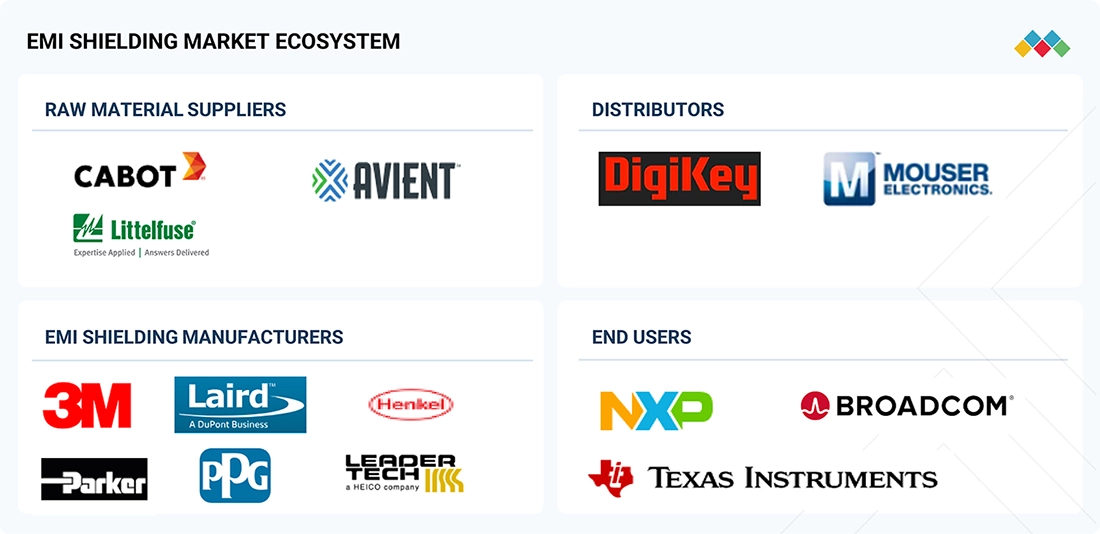
Logos and trademarks shown above are the property of their respective owners. Their use here is for informational and illustrative purposes only.
EMI SHIELDING MARKET SEGMENTS
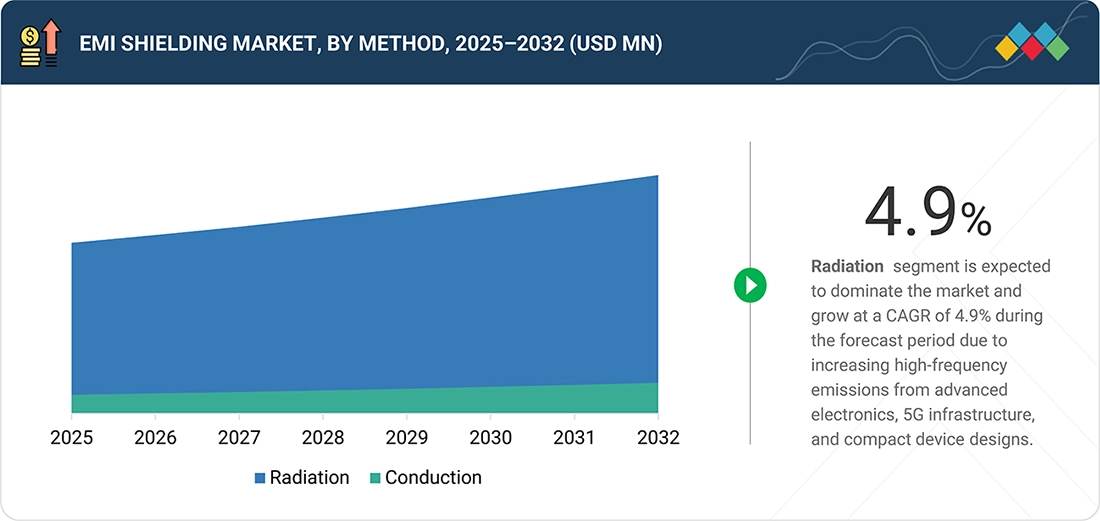
Source: Secondary Research, Interviews with Experts, MarketsandMarkets Analysis
EMI Shielding Market, By Type
Broadband EMI dominates the market due to the widespread use of high-speed digital systems and multi-frequency communication technologies that generate electromagnetic interference across a wide spectrum. Modern devices such as smartphones, data centers, and automotive electronics operate simultaneously over multiple frequencies, increasing the likelihood of broad-spectrum interference.
EMI Shielding Market, By Method
The radiation segment dominates the EMI shielding market due to the increasing prevalence of wireless communication and high-frequency electronic systems that emit electromagnetic waves through open space. Technologies such as 5G, IoT devices, and advanced automotive electronics generate radiated emissions that can interfere with nearby components and systems. As a result, there is a higher need for effective shielding solutions to control radiated interference, ensure signal integrity, and meet stringent electromagnetic compatibility (EMC) regulations, driving the dominance of the radiation segment.
EMI Shielding Market, By Material
The conductive coatings & paints segment dominates the EMI shielding market due to their ability to provide lightweight, cost-effective, and easily applicable shielding across complex geometries and miniaturized electronic designs. Unlike traditional metal shielding, they offer greater design flexibility and can be directly applied to enclosures, PCBs, and components, making them ideal for high-volume manufacturing. Additionally, they support effective shielding at high frequencies while also offering benefits such as corrosion resistance and reduced weight, driving their widespread adoption across consumer electronics, automotive, and telecommunications applications.
EMI Shielding Market, By Industry
The consumer electronics segment dominates the EMI shielding market due to the high-volume production and widespread adoption of devices such as smartphones, laptops, wearables, and smart home products, all of which require effective EMI protection to ensure performance and compliance. These devices operate at high speeds and frequencies within compact form factors, increasing susceptibility to electromagnetic interference.
EMI SHIELDING MARKET BY REGION
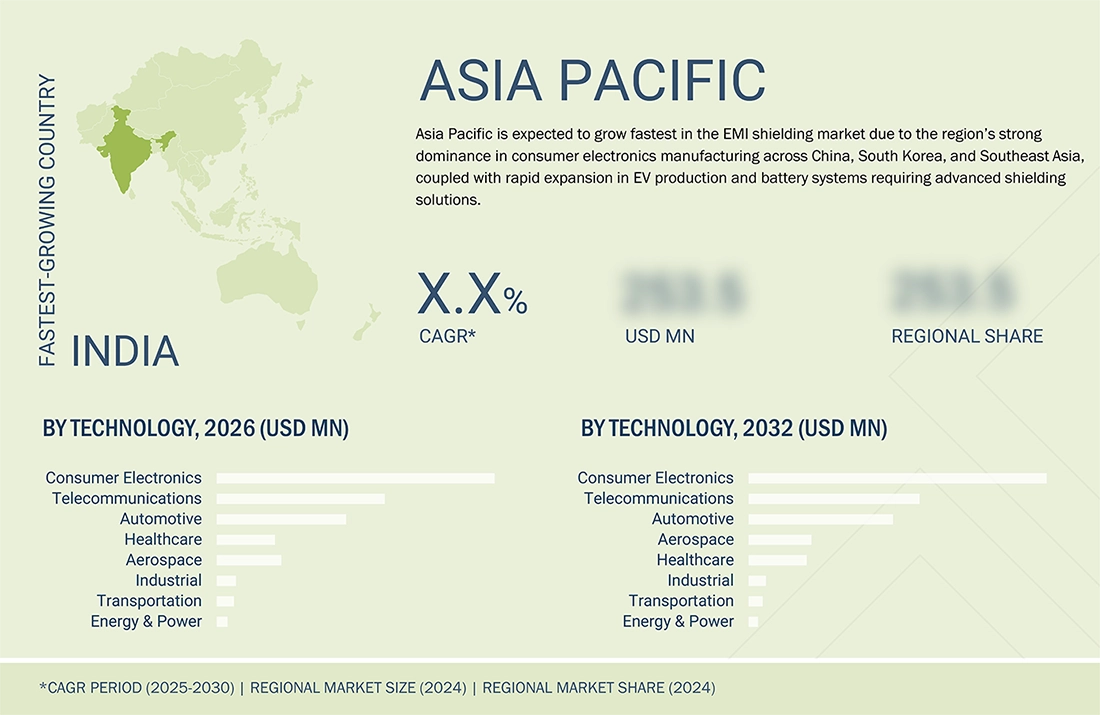
Asia Pacific is expected to be the fastest-growing region across the global EMI shielding market during the forecast period
Asia Pacific is expected to register the fastest CAGR in the EMI shielding market due to rapid industrialization, strong growth in consumer electronics manufacturing, and increasing adoption of advanced technologies such as 5G, EVs, and IoT across countries such as China, Japan, South Korea, and India. The region also benefits from a robust semiconductor ecosystem, expanding automotive production, and rising investments in digital infrastructure, all of which drive demand for high-performance EMI shielding solutions. Additionally, the presence of major electronics OEMs and cost-competitive manufacturing capabilities further accelerates market growth.
EMI SHIELDING MARKET: COMPANY EVALUATION MATRIX
In the global EMI shielding companies matrix, PARKER HANNIFIN CORP (Star) leads with a strong market presence and a comprehensive portfolio of advanced shielding solutions, including conductive elastomers, shielding gaskets, and engineered materials, driving large-scale adoption across industries such as aerospace & defense, telecommunications, automotive, industrial systems, and electronics. Nolato AB (Emerging Leader) is strengthening its market position through specialized polymer-based EMI shielding solutions tailored for applications in consumer electronics, medical devices, and telecommunications. Its focus on lightweight, high-performance, and application-specific designs supports growing adoption in miniaturized and high-frequency environments, contributing to its expanding role within the global EMI shielding market.
Source: Secondary Research, Interviews with Experts, MarketsandMarkets Analysis
EMI SHIELDING MARKET KEY PLAYERS
EMI SHIELDING MARKET SCOPE
| REPORT METRIC | DETAILS |
|---|---|
| Market Size in 2025 (Value) | USD 7.67 Billion |
| Market Forecast in 2032 (Value) | USD 10.90 Billion |
| Growth Rate | CAGR of 5.2% from 2026–2032 |
| Years Considered | 2021–2032 |
| Base Year | 2025 |
| Forecast Period | 2026–2032 |
| Units Considered | Value (USD BN), Volume (Thousand Units) |
| Report Coverage | Revenue forecast, company ranking, competitive landscape, growth factors, and trends |
| Segments Covered |
|
| Regional Scope | North America, Europe, Asia Pacific, and RoW |
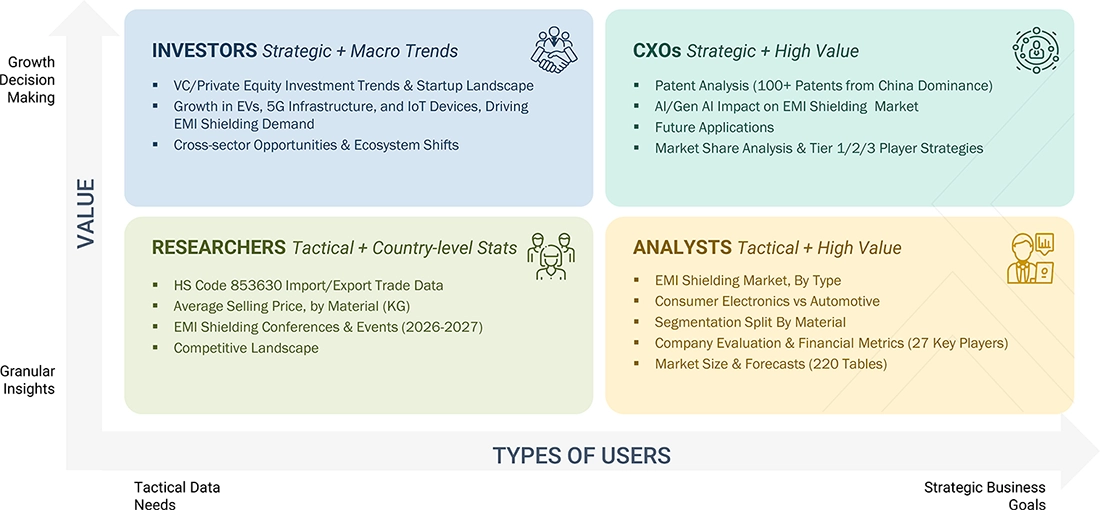
WHAT IS IN IT FOR YOU: EMI SHIELDING MARKET REPORT CONTENT GUIDE
DELIVERED CUSTOMIZATIONS
We have successfully delivered the following deep-dive customizations:
| CLIENT REQUEST | CUSTOMIZATION DELIVERED | VALUE ADDS |
|---|---|---|
| EMI Shielding Materials Manufacturer |
|
|
| EMI Shielding Component Manufacturer (Gaskets, Tapes, Enclosures) |
|
|
| EMI Shielding End-User (OEM – Automotive / Consumer Electronics / Telecom) |
|
|
RECENT DEVELOPMENTS
- December 2025 : Tech Etch introduced new enclosure shielding gaskets, designed to provide reliable, high-performance EMI/RFI shielding for demanding electronic enclosure and cabinet applications.
- August 2025 : PPG Industries announced a new authorized distributor partnership with GPA, expanding the availability of PPG TESLIN substrate for various commercial printing and labeling applications.
- February 2025 : Tech Etch launched its latest product in the metal shielding category—the 2100 Series EMI Shielding Tape. Designed to address modern electromagnetic interference challenges, this dual-layer knitted wire mesh tape delivers exceptional flexibility, strong shielding performance, and easy installation for a wide range of applications.
- July 2024 : Tech Etch, a leading provider of precision-engineered components and assemblies, partnered with DigiKey to expand access to Tech Etch's innovative products and solutions for a wider global customer base.
Table of Contents
 Exclusive indicates content/data unique to MarketsandMarkets and not available with any competitors.
Methodology
The research process for this study involved the systematic gathering, recording, and analysis of data on customers and companies operating in the EMI shielding market. This process involved the extensive use of secondary sources, directories, and databases (Factiva and Oanda) to identify and collect valuable information for the comprehensive, technical, market-oriented, and commercial study of the EMI shielding market. In-depth interviews were conducted with primary respondents, including experts from core and related industries, as well as preferred manufacturers, to obtain and verify critical qualitative and quantitative information and assess growth prospects. Key players in the EMI shielding market were identified through secondary research, and their market rankings were determined through a combination of primary and secondary research. This research involved studying the annual reports of top players and conducting interviews with key industry experts, including CEOs, directors, and marketing executives.
Secondary Research
Various sources were utilized in the secondary research process to identify and collect information relevant to this study. These include company annual reports, press releases, investor presentations, white papers, technology journals, certified publications, articles by recognized authors, directories, and databases.
Secondary research was primarily used to gather key information on the industry’s value chain, the total pool of market players, market classification by industry trends at the most detailed level, regional markets, and key developments from both market- and technology-oriented perspectives.
Primary Research
Primary research was also conducted to identify the segmentation types, key players, competitive landscape, and key market dynamics, including drivers, restraints, opportunities, challenges, and industry trends, as well as the key strategies adopted by players operating in the EMI Shielding market. Extensive qualitative and quantitative analyses were conducted across the complete market engineering process to present key information and insights throughout the report.
Extensive primary research has been conducted following the acquisition of knowledge about the EMI shielding market scenarios through secondary research. Several primary interviews were conducted with experts from the demand side (application, industry, and region) and the supply side (type, method, material, and frequency) across four major geographic regions: North America, Europe, Asia Pacific, and RoW. Approximately 60% and 40% of the primary interviews were conducted from the supply and demand sides, respectively. These primary data have been collected through questionnaires, emails, and telephonic interviews.
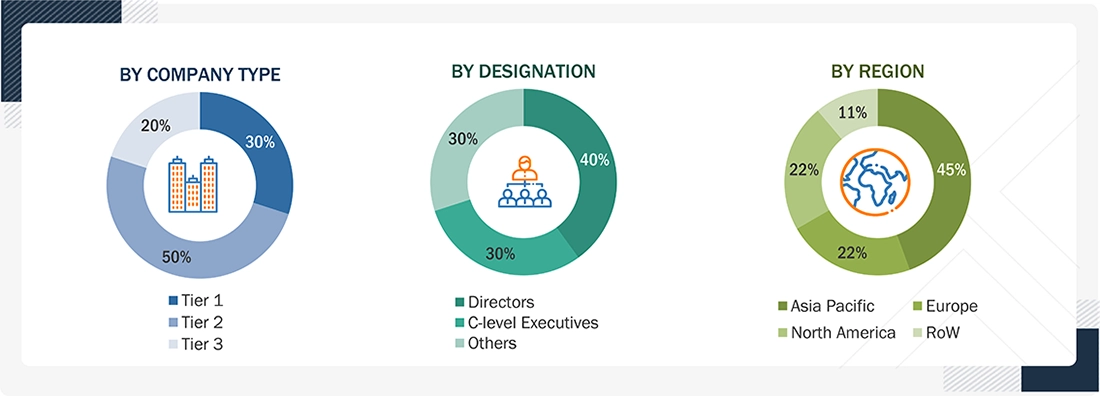
Notes: The three tiers of companies have been defined based on their total/segmental revenue as of 2025: Tier 1 = > USD 1 billion, Tier 2 = USD 1 billion–USD 500 million, and Tier 3 = < USD 500 million.
Other designations include sales, marketing, and product managers.
To know about the assumptions considered for the study, download the pdf brochure
Market Size Estimation
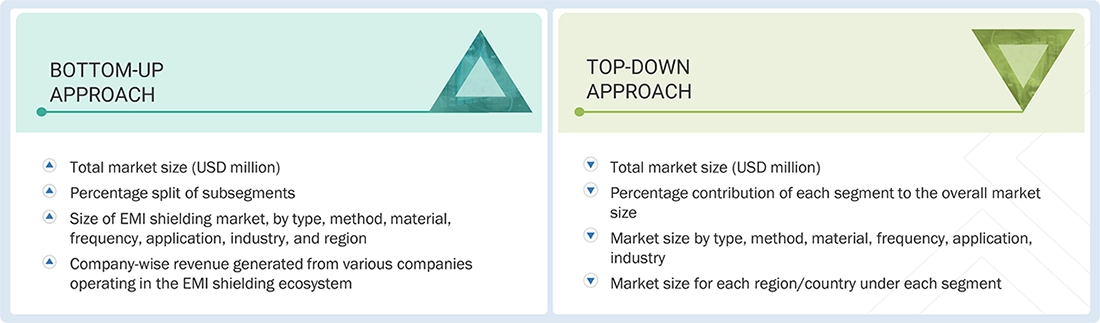
In the complete market engineering process, top-down and bottom-up approaches, along with several data triangulation methods, were used to estimate and validate the size of the EMI Shielding market and various other dependent submarkets. Key players in the market were identified through secondary research, and their market share in each region was determined through a combination of primary and secondary research. This research methodology involved analyzing the annual and financial reports of the top players and conducting interviews with experts (including CEOs, VPs, directors, and marketing executives) to gather key insights (both quantitative and qualitative).
All percentage shares, splits, and breakdowns were determined using secondary sources and verified through primary sources. All possible parameters affecting the markets covered in this study were accounted for, examined in detail, verified through primary research, and analyzed to obtain final quantitative and qualitative data. This data was consolidated and supplemented with detailed inputs and analysis from MarketsandMarkets and presented in this report.
EMI Shielding Market : Top-Down and Bottom-Up Approach
Data Triangulation
After determining the overall market size through the estimation process, as explained above, the total market was divided into several segments and subsegments. To complete the overall market engineering process and obtain precise statistics for all segments and subsegments, the data triangulation procedure was employed, as applicable. The data was triangulated by examining various factors and trends on both the demand and supply sides. Additionally, the market has been validated using both top-down and bottom-up approaches.
Market Definition
Electromagnetic interference (EMI) shielding is a protective measure used to minimize or control its impact on electronic devices and systems. EMI shielding involves using various materials and techniques to prevent unwanted electromagnetic signals from disrupting the normal functioning of electronic components. EMI shielding solutions, including tapes and laminates, conductive coatings & paints, metal shielding, conductive polymers, and EMI filters, are used across various industries to protect electronics from electromagnetic interference.
The EMI shielding ecosystem encompasses manufacturers and distributors of EMI shielding products and solutions. The EMI shielding market is diverse, with more than 25 companies vying for positions and striving to expand their market shares across the value chain. Anticipated growth in the EMI shielding market in the upcoming years is attributed to the escalating demand for consumer electronics that necessitate EMI shielding.
Key Stakeholders
- EMI shielding solution suppliers
- EMI shielding component suppliers
- EMI shielding regulatory bodies
- EMI testing companies
- Semiconductor component manufacturers
- Advanced chemical material suppliers
- Analysts and strategic business planners
Report Objectives
- To describe and forecast the EMI shielding market size, by type, method, material, frequency, application, industry, and region, in terms of value
- To describe and forecast the market for various segments across four main regions, namely, North America, Europe, Asia Pacific, and RoW, in terms of value
- To describe and forecast the market for EMI shielding, by material, in terms of volume
- To strategically analyze micromarkets with regard to individual growth trends, prospects, and contributions to the market
- To provide detailed information regarding drivers, restraints, opportunities, and challenges influencing market growth
- To analyze opportunities for stakeholders by identifying high-growth segments in the market
- To provide a detailed overview of the EMI shielding value chain
- To strategically analyze key technologies, average selling price trends, trends impacting customer business, ecosystem, regulatory landscape, patent landscape, Porter’s five forces, import and export scenarios, trade landscape, and case studies pertaining to the market under study
- To analyze the impact of AI on the EMI shielding market
- To strategically profile key players in the EMI shielding market and comprehensively analyze their market share and core competencies
- To analyze competitive developments such as partnerships, acquisitions, expansions, collaborations, product launches, and R&D in the EMI shielding market
Available customizations:
With the given market data, MarketsandMarkets offers customizations according to the company’s specific needs. The following customization options are available for the report:
Key Questions Addressed by the Report
Who are the major players in the EMI shielding market? What strategies do they adopt to strengthen their market presence?
Parker Hannifin Corp (US), PPG Industries Inc (US), 3M (US), Henkel AG & CO. KGAA (Germany), and Laird Technologies, Inc. (US) are among the few major players in the EMI shielding market. These players adopt product launches, developments, collaborations, acquisitions, and expansions as their key growth strategies.
Which region has the maximum potential for the EMI shielding market?
Asia Pacific is expected to dominate the EMI shielding market due to the presence of major electronic manufacturing companies.
What factors create opportunities for new entrants in the market?
Shifting preference toward electric vehicles to mitigate carbon emissions and increasing adoption of digital healthcare solutions create significant opportunities for the players in the EMI shielding market.
What are the factors driving the growth of the EMI shielding market?
Rapid industrialization and deployment of automation technologies, as well as the increasing proliferation of wireless communication technologies, are fueling EMI shielding market growth.
What applications of EMI shielding are expected to contribute to market growth in the next five years?
Major applications, including consumer electronics, telecommunication, automotive, and healthcare, are expected to contribute most to the rising demand for EMI shielding. These applications are expected to account for a significant market share in the near future.
Need a Tailored Report?
Customize this report to your needs
Get 10% FREE Customization
Customize This ReportPersonalize This Research
- Triangulate with your Own Data
- Get Data as per your Format and Definition
- Gain a Deeper Dive on a Specific Application, Geography, Customer or Competitor
- Any level of Personalization
Let Us Help You
- What are the Known and Unknown Adjacencies Impacting the EMI Shielding Market
- What will your New Revenue Sources be?
- Who will be your Top Customer; what will make them switch?
- Defend your Market Share or Win Competitors
- Get a Scorecard for Target Partners

Custom Market Research Services
We Will Customise The Research For You, In Case The Report Listed Above Does Not Meet With Your Requirements
Get 10% Free CustomisationTESTIMONIALS

Tetsuya Ohhira
Business Development Manager-Technology Business
Nikon Corporation,
Leading Japanese MNC specializing in optics and imaging productswww.nikon.com
MarketsandMarkets™ response
is quick. Their attitude is flexible and positive. Analyst Insights are globally considered and
significant. Client Services quickly respond to our inquiry and demand. Their wide range of global
surveys help us make our strategic plan.
We hope Knowledge Store will be easier to search
for a report.
VP - Marketing & Business Development
Leading Provider of Process Control Solutions
We engaged with MarketsandMarkets on a study to perform an analysis and recommend a Go-To-Market strategy for metrology and process control in the semiconductor market. The study was tailored to our targets and needs with well-defined milestones. Our overall experience with the MarketsandMarkets team was very good throughout the project in all aspects including the analysis methodologies used, the quality and depth of primary and secondary data sets, the professionalism and flexibility of the team and the ability to meet the target schedule and milestones. We want to thank MarketsandMarkets team for a job well done.
Growth opportunities and latent adjacency in EMI Shielding Market

Still Researching the
EMI Shielding Ecosystem?
See the competitors, opportunity evaluation, and growth signals shaping it - Instantly!
Generate 15+ consulting-grade strategic intelligence outputs - from competitor analysis to board-ready strategy decks, tailored to your EMI Shielding growth question.






Shannigrahi
Jul, 2022
I am more interested to know the frequency band to be adopted in 5G devices, the current state-of-the art EMI shielding, and the current pain point if any together with the list of MNCs involved in this and the overall market size.Also, Can you please share a bit more on the EMI shielding value chain? Does your full report contain information on the value chain in terms of OEM/manufacturers, EMS/Sub-cons, component makers/assemblers, module assemblers?.