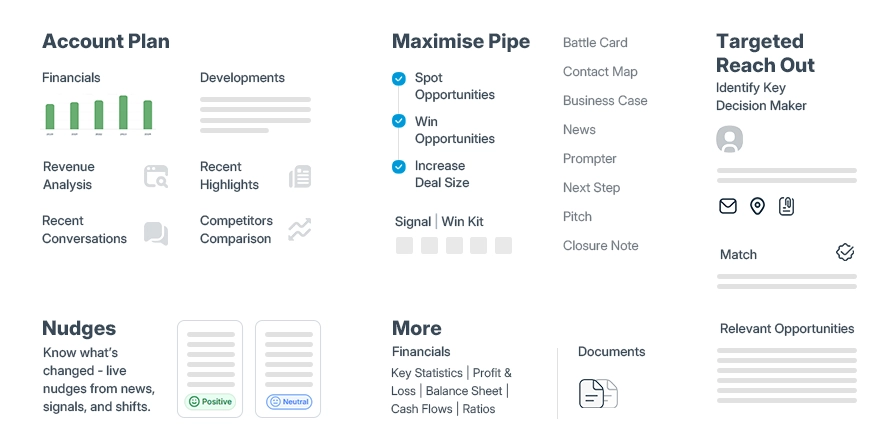
The Sales Development Representative (SDR) role is at a crossroads. Once the engine of top-of-funnel activity, the traditional model—defined by manual prospecting, volume-based metrics, and repetitive outreach—is yielding diminishing returns. Buyers are better informed, more resistant to generic pitches, and expect hyper-relevant, timely engagement. Yet, the strategic need for pipeline generation has never been greater. The truth is clear: SDRs aren't going away; they are evolving into strategic 'Pipeline Architects.' This transformation is being powered by a new class of AI-driven Revenue Intelligence platforms, with solutions like SalesPlay acting as an essential co-pilot, shifting the paradigm from guesswork to guided, predictive pipeline construction.
The Breaking Point: Why the Old SDR Playbook is Obsolete
For years, SDR success was measured by activity: emails sent, calls made, meetings booked. This volume-based approach is no longer sustainable or effective.
- Inefficiency & Burnout: SDRs spend up to 70% of their time on non-revenue activities like data entry and research, leading to rampant burnout and turnover often exceeding 30% annually.
- Buyer Resistance: With the rise of Gmail's spam filters, call screening, and LinkedIn saturation, cold outreach is harder than ever. Response rates for cold emails often languish below 1%.
- Poor Pipeline Quality: A focus on quantity over quality floods the pipeline with poorly qualified leads, wasting precious AE time and crushing conversion rates.
- Lack of Predictability: When pipeline generation is an artisanal effort, forecasting becomes a guessing game. Leaders struggle to answer a simple question: "Where will next quarter's pipeline *actually* come from?"
<1%
Average Cold Email Response Rate
30%+
Annual SDR Turnover Rate
70%
Time Spent on Non-Revenue Tasks
40%
Sales Time Wasted on Poor-Quality Leads
The Emergence of the Pipeline Architect
The Pipeline Architect represents a fundamental re-skilling and re-tooling of the SDR function. This role is less about manual execution and more about strategic design and optimization of the pipeline generation machine.
The Pipeline Architect Workflow
1
Analyze: Review historical win/loss data, ICP signals, and market intelligence from platforms like SalesPlay.
2
Design: Create targeted "plays" for specific micro-segments based on predictive insights.
3
Execute: Launch multi-channel sequences with timing optimized by AI recommendations.
4
Optimize: Use conversation intelligence and outcome data to continuously refine targeting and messaging.
⚙️ The Shift in Mindset: The Pipeline Architect moves from "How many calls did I make?" to "How did the pipeline play I designed last month perform in terms of generated revenue, and what data do I have to refine the next one?" This requires a new toolkit.
The Engine of Evolution: AI & Revenue Intelligence as a Co-Pilot
This transformation is impossible with spreadsheets and intuition alone. It requires a central nervous system: a Revenue Intelligence Platform that acts as a co-pilot. This is where SalesPlay and similar platforms are pivotal.
According to MarketsandMarkets™, the AI in sales market is projected to grow from USD 4.3 Billion in 2023 to USD 14.3 Billion by 2028. This growth is fueled by the need to automate tasks, enhance customer experience, and, crucially, improve sales forecasting and pipeline management.
The Revenue Intelligence Co-Pilot Framework
Visual Concept: A diagram showing how data from CRM, marketing automation, conversation intelligence, and external market feeds into the AI engine, which then outputs predictive insights and prescribed actions to the Pipeline Architect.
Data Unification
→
Predictive Analytics
→
Prescribed Actions
This continuous loop empowers the Pipeline Architect to make data-driven decisions.
SalesPlay: The Differentiated Co-Pilot for the Pipeline Architect
While many tools offer pieces of the puzzle, SalesPlay is architected specifically to enable the Pipeline Architect model through two core, interconnected differentiators:
1. Deep Market Intelligence & ICP Validation
Instead of relying on static firmographics, SalesPlay continuously analyzes broader market signals—technographic shifts, funding events, hiring patterns, and digital footprint changes—to validate and dynamically refine your ICP. The Pipeline Architect can see not just who their target is, but when that target becomes thermally hot for their solution.
2. Predictive Pipeline Modeling & Play Orchestration
SalesPlay's AI doesn't just score leads; it models the potential outcome of different pipeline generation plays. By simulating scenarios based on historical data and market intelligence, it helps the Pipeline Architect answer: "If I target this segment with this messaging through these channels, what is the predicted pipeline yield and ROI?" This turns pipeline building from a reactive task into a strategic, simulation-driven design process.
"The future of sales development is not about hiring more SDRs to make more calls. It's about arming your team with the intelligence to make the right call, to the right person, at the exact right time. The role is becoming less about persuasion and more about precision engineering of the buyer's journey."
– Industry Analyst, Sales Tech Practice
Toolkit Comparison: Enabling the Pipeline Architect
Not all platforms are created equal. The following table compares how different tools support the evolving needs of the Pipeline Architect.
| Platform / Tool |
Primary Function |
Strengths for Pipeline Architect |
Gaps / Considerations |
| SalesPlay (AI Sales Intelligence Platform) |
Revenue Intelligence Co-Pilot |
Unifies data with predictive market intelligence & pipeline modeling. Prescribes which plays to run for maximum pipeline impact. |
Requires clean foundational data and a strategic shift in process to fully leverage. |
| Sales Engagement (e.g., Outreach, Salesloft) |
Orchestrates & automates outbound sequences. |
Excellent for executing multi-channel plays at scale. |
Often lacks deep market intelligence and predictive "what to do next" beyond the sequence. |
| Conversation Intelligence (e.g., Gong, Chorus) |
Analyzes sales calls to provide insights. |
Crucial for refining messaging and understanding buyer sentiment. |
Focused on post-interaction analysis; less on prospecting prediction. |
| Traditional CRM (e.g., Salesforce) |
System of record for customer data & pipeline. |
Centralized data, workflow automation, reporting foundation. |
Limited predictive & prescriptive intelligence; reactive by nature. |
Implementing the Shift: A Roadmap for Sales Leaders
- Audit & Align: Assess your current pipeline sources, conversion rates, and SDR workflow. Align leadership on the need to measure quality over pure activity.
- Invest in the Core Platform: Choose a revenue intelligence co-pilot, like SalesPlay, that prioritizes predictive capabilities and market intelligence, not just reporting.
- Redefine Roles & Metrics: Officially introduce the "Pipeline Architect" title or responsibilities. Change KPIs to include predictive pipeline generated, lead-to-opportunity conversion rate, and sourced revenue win rate.
- Upskill Your Team: Train your team on data analysis, ICP refinement, and how to use AI-driven insights to design plays. Foster closer collaboration with Marketing.
- Iterate with Intelligence: Use the platform's insights in weekly reviews. Ask, "What did our data predict, what happened, and how do we adapt our plays?"
Architect Your Future Pipeline Today
The evolution from SDR to Pipeline Architect is not a distant future trend; it's a necessary present-day adaptation. Companies that make this shift, powered by a sophisticated Revenue Intelligence Co-Pilot, will build more predictable, efficient, and scalable pipeline generation engines.
Ready to evolve? Discover how SalesPlay can transform your sales development team from activity executors to strategic Pipeline Architects. Schedule a personalized demo to see the co-pilot in action.