How to Compare Lead Enrichment Tools & Vendors (Without the Marketing Spin)
August 21, 2025
Did you know that 40% of B2B organizations waste resources on incorrect lead data?
Choosing the right lead enrichment tools comparison can feel like navigating a minefield of marketing claims and vague promises. I've been there - demos that show perfect data matches, case studies with suspiciously high success rates, and pricing pages that require a decoder ring to understand.


Unfortunately, most B2B lead enrichment tools pitch themselves as the "ultimate solution" without addressing their actual limitations. The reality? Each platform has specific strengths and weaknesses that matter differently depending on your company's needs.
That's why I created this no-nonsense guide. Instead of recycling vendor talking points, I'll show you exactly how to evaluate these tools on your terms. We'll cut through the marketing spin, examine what really matters, and give you a framework to make decisions based on facts - not flashy sales pitches.
Ready to find the lead enrichment tool that actually delivers what your business needs? Let's get started!
Lead enrichment is the process of enhancing your existing lead data with additional relevant information to create more complete profiles of potential customers. It involves gathering and appending valuable details about prospects beyond basic contact information. When properly implemented, this systematic approach transforms sparse lead data into rich, actionable profiles that drive smarter decisions.
At its core, lead enrichment fills critical gaps in your customer data. According to The State of CRM Data Management Study in 2023, 58% of respondents indicated data accuracy remains a significant problem. This highlights why enriching your lead information has become essential for modern sales and marketing operations.
Lead enrichment provides valuable insights about potential customers that dramatically improve how sales teams identify and engage prospects. With enriched data, sales representatives gain access to key details like:
Firmographic data: Company size, industry, revenue, locations
Demographic data: Job titles, roles, purchasing power
Technographic data: Technology stack, software usage
Behavioral data: Website interactions, content consumption, buying signals
This enhanced information allows for significantly more precise targeting. When sales teams understand company structures, decision-maker roles, and specific pain points, they can personalize their approach accordingly. Furthermore, studies show enriched leads are 2-3 times more likely to convert into customers compared to basic contact information.
Lead enrichment enables teams to assess lead fit more accurately, ensuring sales efforts focus exclusively on the most promising prospects. Consequently, teams using enrichment often report 25 percent more output and deals closing 30 percent faster. Similarly, a Forrester study found that using lead enrichment tools can result in a 25% increase in sales productivity and a 15% increase in customer satisfaction.
Beyond improving conversion rates, enriched data helps sales teams craft personalized messages that directly address prospect challenges. Rather than sending generic pitches, representatives can develop communications that speak directly to specific needs, significantly boosting response rates.
Your CRM system serves as the central hub for customer information, though it's only as valuable as the data it contains. Lead enrichment transforms your CRM from a basic contact repository into a powerful strategic asset.
When integrated with your CRM, lead enrichment automatically appends missing information and keeps existing data current. This process ensures that your database remains accurate and relevant over time. Moreover, enriched CRM data enables more precise customer segmentation, allowing teams to target the right prospects with the right products more effectively.
The enrichment process extends beyond simply filling in contact details. It creates a unified view of each lead by pulling together firmographic, demographic, and behavioral insights. This comprehensive picture helps teams understand not just who prospects are, but what they need and where they are in their buyer journey.
For sales operations, enriched CRM data automates lead scoring and routing processes. The system can automatically qualify leads based on predetermined criteria and assign them to the appropriate representatives without manual intervention. This automation eliminates delays in response time, allowing teams to engage hot leads quickly and move them through the sales funnel efficiently.
Additionally, companies implementing lead enrichment into their CRM systems report significant improvements in business outcomes. According to a study by Gartner, companies using lead enrichment tools see a 30% increase in sales revenue and a 25% decrease in sales cycle length.
By enhancing your CRM with enriched data, you establish the foundation for data-driven decision making throughout your organization, ultimately driving more predictable revenue growth.

When evaluating B2B lead enrichment tools, finding objective information feels like searching for a needle in a haystack. After testing dozens of these platforms, I've identified three major roadblocks that consistently frustrate buyers trying to make informed decisions.
The gap between marketing promises and reality is particularly wide in the lead enrichment industry. Vendors often present their capabilities in the most favorable light while downplaying limitations:
Some tools claim high data accuracy rates (like 80% for phone/mobile data) yet users report actual coverage closer to just 10% of potential contacts
Many platforms advertise "unlimited" features that come with hidden restrictions – such as Apollo's email sending capability that, despite being marketed as unlimited, recommends limiting to 50 emails per day per mailbox to maintain deliverability
Vendors frequently highlight positive outcomes while obscuring negative ones, creating an incomplete picture of performance
Unfortunately, the sales tech space has seen companies misreporting annual recurring revenue by 3-4 times the actual figures. This culture of exaggeration makes objective evaluation particularly difficult.
Pricing opacity remains one of the most frustrating aspects of comparing lead enrichment solutions:
Many vendors require sales calls before revealing any pricing information – including Demandbase, LeadGenius, and others
When pricing is available, it often comes with complex credit systems that limit actual usage. For instance, some platforms structure pricing around strict credit limits that prove inconvenient for sales teams with high lead volumes
Hidden costs abound, with advanced features frequently locked behind higher-tier plans or requiring additional payment
Enterprise-level pricing is particularly obscure, with some reports indicating Clearbit costs between $18,000 to $80,000 annually for larger implementations
Even when pricing information is accessible, the true cost per contact varies significantly based on subscription tier, number of users, credit volume, add-on features, and integration requirements. This complexity makes direct comparison between tools nearly impossible without extensive research.
STOP CHASING PROSPECTS
START CLOSING DEALS!!
Perhaps most concerning is how challenging it becomes to verify vendors' claims about their data quality:
The vast size of payer price transparency data (over 6 trillion rates and counting) requires cloud-based processing capabilities unavailable to most organizations
Reported data often contains massive amounts of duplication, inconsistent or incomplete reporting practices, and prices unassociated with actual provider volume
Most tools claim exceptional accuracy but provide little verifiable evidence, leaving buyers to discover data quality issues only after purchase
These verification challenges raise important questions: How are outliers and duplicate rates handled? How are negotiated rates unassociated with actual utilization removed? How should missing provider and rate information be communicated?
Despite published studies on the effectiveness of transparency measures, most results remain theoretical rather than proven. The small number of studies reporting on the effectiveness of price transparency measures stems from the complexity inherent in performing this research.
To further complicate matters, data accuracy issues represent a significant concern, with some information potentially outdated by several months, leading to bounced emails and wasted outreach efforts. Some users report contacts appearing in databases who left companies years ago or incorrect personal versus business contact information.
These challenges make the task of comparing lead enrichment tools objectively a significant undertaking requiring careful planning and testing methodology.
Selecting the right lead enrichment solution requires a structured evaluation approach based on key performance criteria. After working with dozens of tools, I've identified four essential factors that truly matter when comparing B2B lead enrichment tools.
Data accuracy stands as the foundation of any effective lead enrichment tool. Studies show that 30 to 50% of CRM data becomes outdated quickly, making verification methods crucial. Quality tools employ multiple validation techniques:
Cross-referencing collected information with multiple sources (Cognism checks against 150 sources)
Email and phone number verification to confirm contactability
Regular data cleansing processes to remove outdated information
The verification process should be transparent—ask potential vendors how they validate data and what accuracy rates they actually achieve. While some vendors claim accuracy rates up to 95%, actual performance often varies significantly. Therefore, request sample data sets to verify claims before committing to any solution.
The timeliness of data directly impacts your sales outcomes. Since business information changes constantly, effective lead enrichment tools must provide:
Automated data refreshing at scheduled intervals to maintain accuracy
Real-time enrichment capabilities for immediate use in sales outreach
Instant updates when new information becomes available
Clearbit, for example, automatically refreshes records as soon as changes are detected. This ensures your team always works with current information. When evaluating tools, look specifically for how often the database is updated and whether the vendor employs machine learning to improve data quality over time.
Even exceptional data becomes useless if it exists in isolation. Effective tools must seamlessly connect with your existing tech stack. According to Salesforce, 75% of companies consider CRM integration a key factor when selecting enrichment tools.
Strong integration capabilities allow for:
Automated data flow between systems without manual intervention
Real-time synchronization of enriched data across platforms
Unified reporting across marketing and sales tools
Integration quality affects everything from lead response time to team collaboration. Tools with robust API connections and pre-built integrations with popular CRMs like Salesforce, HubSpot, and Zoho provide immediate value without custom development.
Make Every Rep Speak
Like Your Top 1%
Privacy regulations have fundamentally changed how lead data can be collected and used. Non-compliance risks significant penalties—up to 20 million euros or 4% of global annual revenue under GDPR.
Essential compliance features include:
Transparent data collection and storage practices
Mechanisms for handling data subject access requests
Proper consent management for collected information
Clear audit trails for all data processing activities
Some vendors take a compliance-first approach. Cognism, for instance, emphasizes GDPR and CCPA compliance for European and UK-based data. Similarly, Clearbit integrates privacy controls directly into their enrichment processes.
When comparing tools, verify they have appropriate certifications (SOC 2, ISO 27001, etc.) and ask specifically how they handle data from protected regions. This prevents potential legal issues that could arise from using improperly sourced lead data.
By focusing your evaluation on these four critical factors—data accuracy, update frequency, integration capabilities, and compliance—you'll be better positioned to select a lead enrichment tool that delivers actual value rather than just marketing promises.
Successful lead targeting depends entirely on the quality and variety of data at your disposal. Each type of enrichment data serves a unique purpose in building a clear picture of your prospects, allowing for more precise targeting and personalization in your sales approach.
Firmographic data functions as the foundation of B2B lead enrichment, offering critical company-level information that helps identify ideal organizational fits. This information includes:
Industry classification
Company size (employee count)
Annual revenue range
Geographic locations
Years in business
Company structure and ownership type
B2B companies primarily use firmographic data for effective market segmentation and targeting. This data allows teams to tailor marketing campaigns based on specific industry needs or company size, ensuring messages resonate with particular business segments.
Alongside firmographic data, demographic information focuses on individual attributes of the contacts within target organizations. While firmographic data helps you understand which companies to target, demographic data reveals who specifically to approach within those companies. Key demographic data points include:
Job title and department
Seniority level
Role responsibilities
Education background
Age and gender (where legally permissible)
Together, these two data types create the basic profile framework that other enrichment data builds upon. Organizations using demographic and firmographic data effectively can tailor their messaging to address both company-wide challenges and individual stakeholder concerns simultaneously.
Your SDRs work 9–5
AI Sales works 24/7!!
Technographic data provides insights into the technology stack and tools that target companies currently utilize. This information proves especially valuable for software and service providers looking to identify compatibility or replacement opportunities. Key technographic data includes:
Software platforms and solutions currently in use
Hardware infrastructure
Content management systems
Programming languages
Payment systems and communication tools
By understanding a prospect's existing technology ecosystem, sales teams can position their offerings as complementary additions or effective replacements for current systems.
Intent data, alternatively, captures signals indicating a prospect's interest in purchasing products or services related to your offering. Unlike other data types that describe who the prospect is, intent data reveals what they're actively looking for. It tracks behaviors such as:
Topic-specific web searches
Content consumption patterns
Website visits related to specific solutions
Engagement with competitor offerings
Studies show that blending technographic data with intent signals provides a much clearer picture of prospect intentions, enabling more strategic outreach. This combination helps teams prioritize prospects based on both technology fit and likelihood to buy.


Social signals represent a newer yet increasingly important category of enrichment data. These signals come from prospects' social media activity and online conversations, offering real-time insights into interests and pain points. Key social signals include:
Brand mentions on platforms like Twitter
Comments on industry-relevant content
Engagement with your company updates
Conversations happening outside your website
As many as 86% of B2B companies now use some form of lead scoring, with social signals becoming an essential component of this evaluation. These signals help determine a prospect's position in their buying journey more accurately than traditional data alone.
Behavioral data focuses on tracking specific actions prospects take across your marketing channels and website. This information creates a timeline of engagement that indicates interest level and buying readiness. Important behavioral indicators include:
Email opens and clicks
Website page visits
Content downloads
Event registrations
Form submissions
Together, social signals and behavioral data provide the context needed to understand not just who a prospect is or what technology they use, but where they currently stand in their buying journey. This insight allows sales teams to time their outreach perfectly and personalize conversations based on demonstrated interests.
When comparing B2B lead enrichment tools, evaluate which data types each platform specializes in gathering and maintaining. The ideal solution should provide access to multiple data categories, enabling a truly holistic view of your potential customers.
Marketing claims often paint a rosy picture that rarely matches reality when it comes to lead enrichment tools. Based on my experience with various platforms, I've developed practical methods to test these tools without falling prey to vendor hype.
The most reliable way to assess data quality is testing it against information you already know is accurate. Start by preparing a sample list of 100-200 contacts from your existing database, making sure it includes:
Contacts with complete, verified information
A mix of recent and older contacts
Representatives from different industries and company sizes
Some deliberately incomplete records to test enrichment capabilities
When requesting sample enrichment from vendors, ask them to process this list without revealing that you already have the correct information. This approach allows you to:
Calculate actual match rates (not just what vendors claim)
Identify specific fields where enrichment is strongest or weakest
Detect any data accuracy issues before committing
"I always tell my team to test new tools against their existing contact list. That way, you'll know exactly what you're getting before making a long-term commitment".
Never evaluate a single tool in isolation. Instead, run multiple tools simultaneously against identical data sets. This parallel testing reveals relative strengths that marketing materials often obscure.
When I tested LeadGenius, their hybrid model with actual targeting specialists stood out compared to fully automated alternatives. Unlike tools that rely solely on automation, LeadGenius assigns human researchers who offer strategic input beyond just data.
During side-by-side testing, evaluate each tool based on:
Data completeness across all fields (not just the ones vendors highlight)
Accuracy of international data (particularly important for global campaigns)
Integration smoothness with your existing tech stack
Support responsiveness during the testing process
This comparative approach reveals nuances in data quality that might otherwise remain hidden. For example, during testing, I found LeadGenius offered exceptional international data accuracy—especially in regions like Europe and Asia—while other tools showed significant gaps.
"Want my honest advice? Don't get caught up in fancy features or flashy AI promises. Start small – grab free trials from 2-3 tools that match your budget and needs". Trial periods offer invaluable opportunities to validate vendor claims, yet most teams fail to extract maximum value from these limited windows.
To optimize trial periods:
Prepare thoroughly – Define specific use cases and success criteria before starting any trial
Test real workflows – Don't just browse features; run actual enrichment processes
Document limitations – Note any restrictions on trial accounts (like credit limits or API call caps)
Involve actual users – Have your sales and marketing teams test the tool in realistic scenarios
Test edge cases – Try enriching challenging records like international contacts or companies with complex structures
During my LeadGenius trial, I noticed their custom data projects went beyond basic firmographics. Additionally, their support team helped with campaign strategy, not just technical issues—something that wouldn't have been apparent without thorough testing.
However, be vigilant about limitations that only become apparent during trials. With LeadGenius, I discovered pricing required multiple calls to understand, setup was slower than self-serve tools, and some data came back outdated. The human touch, while valuable, also introduced occasional delays.
By following these testing methods, you'll cut through marketing claims and identify which lead enrichment tools truly meets your specific needs based on actual performance, not promises.
After testing numerous lead enrichment platforms, I've identified eight standout tools that excel in specific areas. Each offers unique advantages depending on your business requirements and budget considerations.
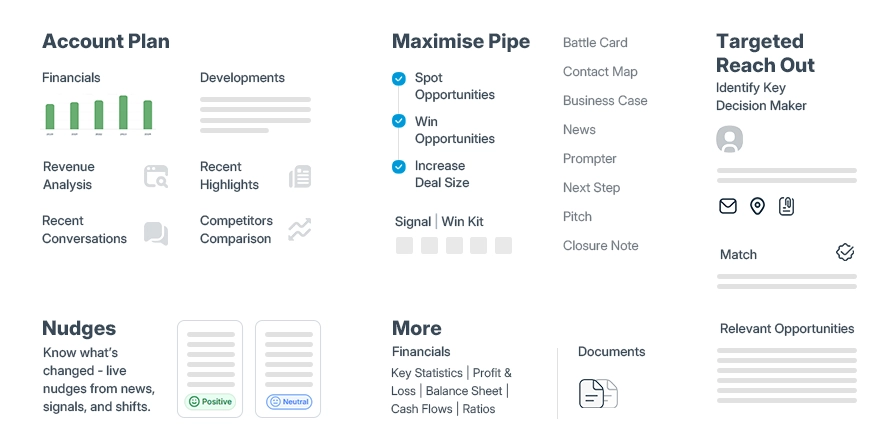
SalesPlay is the world's first AI-powered sales intelligence platform that transforms sales execution speed and precision through its revolutionary suite of 7 AI Agents. Unlike competitors offering fragmented data, SalesPlay delivers pitch-ready opportunity ecosystems—hyper-personalized sales kits, mapped buying centers, and conversion-ready outreach sequences that eliminate 80% of manual work while consistently closing deals others can't identify. Built on exclusive MarketsandMarkets intelligence and thousands of premium data sources, and exclusive vendor partnerships, the platform creates a competitive moat that drives 3x productivity gains by enabling every rep to execute with the precision of your organization's elite performers.
ZoomInfo dominates the enterprise market with a massive database containing over 250 million contacts and 100 million companies. The platform excels at CRM data enrichment, enabling sales teams to qualify leads using complete profiles. ZoomInfo's enrichment automatically fills missing contact fields, fixes duplicate entries, and corrects name misspellings.
Nevertheless, ZoomInfo has notable limitations. While it adds email addresses to contact records, it doesn't verify if those emails still work. Users report data that isn't always current—key details like company size or funding may be outdated. Pricing starts around $15,000 annually, making it primarily suitable for larger organizations.
Clearbit stands out for its real-time data updating capabilities. The platform automatically refreshes records whenever changes are detected, ensuring your information remains current. With access to 100+ B2B attributes drawn from 250+ data sources, Clearbit provides substantial company and contact enrichment.
Equally impressive is Clearbit's powerful API and webhook infrastructure, which integrates seamlessly with existing tools. However, pricing begins at approximately $20,000 annually based on user reviews, positioning it as a premium solution.
Apollo.io combines lead enrichment with sales automation, offering access to 275+ million verified B2B contacts. What makes Apollo unique is its AI-powered sales automation platform that helps identify prospects' pain points, craft personalized messages, and set up custom workflows.
Undeniably, Apollo's strongest feature is its workflow automation that saves time on manual processes like list building and cold outreach. The platform allows users to customize outreach sequences for each lead based on available information.
Cognism prioritizes compliance above all else. The platform is fully GDPR and CCPA compliant, ISO 27001 & SOC 2 Type II certified. This makes it ideal for companies targeting European markets where data regulations are strict.
Their mobile phone data undergoes extensive verification—they manually verify numbers and claim 98% accuracy. Cognism screens telephone databases against multiple Do Not Call registries worldwide, including lists in the UK, US, Germany, France, and several other countries.
Hunter.io excels specifically at email verification, offering a confidence score system that indicates the likelihood of email deliverability. When performing verification, Hunter provides clear results that help users decide whether to use certain email addresses.
For emails marked as "accept-all" (when servers accept all emails regardless of existence), Hunter recommends using only those with confidence scores above 80% to maintain quality. The tool is particularly effective for single lookups and targeted lists rather than bulk operations.
UpLead offers a 95% accuracy guarantee for its data enrichment services. The platform allows users to upload lists of names and companies to append key contact data including email addresses, phone numbers, and social links.
What makes UpLead attractive for smaller businesses is its transparent pricing model—you only pay for verified matches, with no charges for data that can't be verified. The free trial includes 5 credits for 7 days, while paid plans start at $99/month for 170 credits.
Demandbase specializes in intent data tracking, monitoring over 1 trillion monthly interactions across the web from B2B companies. The platform captures both third-party and proprietary intent signals to inform account prioritization.
Its key strength lies in account-based marketing capabilities. Demandbase tracks over 12,000 customizable topics across the web, identifying accounts researching content aligned with your solutions. The platform can automatically move accounts between funnel stages based on changing intent behavior.
Highperformr focuses on social signals and real-time buyer intent data. The platform tracks engagement with social content, helping identify leads that align with your ideal customer profile. It provides clear audience insights by revealing exactly who engages with your content.
Initially designed for social selling, Highperformr has expanded to offer AI-enriched company and decision-maker data that syncs directly with your CRM. Pricing is relatively accessible with a free version available and paid plans starting at $59 for lifetime access.
Lead enrichment pricing structures vary substantially between vendors:
Credit-based systems: Most tools (Clearbit, UpLead, Datanyze) use credit systems where each enriched contact costs 1+ credits. UpLead charges $99/month for 170 credits, primarily making it suitable for smaller teams.
User-based pricing: Tools like Apollo ($59-$149/user/month) and ZoomInfo scale costs based on seat count, making them more expensive for larger teams.
Tiered functionality: Cognism offers "Grow" and "Elevate" packages with significant feature differences between tiers. Higher tiers typically include advanced features like intent data.
Free options: Some tools offer limited free tiers—Apollo provides 100 credits monthly with basic features, while Lusha offers 5 credits per user on its free plan.
After testing these platforms with real data sets, I identified their optimal use cases:
ZoomInfo works best for enterprise teams needing deep B2B data and buyer intent signals. Clearbit excels in environments requiring real-time data enrichment through APIs. For teams prioritizing European lead generation with GDPR compliance, Cognism delivers superior results.
Small businesses with limited budgets should consider UpLead for its accuracy guarantee and straightforward pricing. Teams focused on outbound sales will benefit from Apollo's integrated dialer and email tools. Furthermore, companies emphasizing account-based marketing strategies gain most from Demandbase's intent monitoring capabilities.
The right choice ultimately depends on your specific enrichment needs, budget constraints, and existing tech stack—not vendor marketing claims.
Making the right choice among B2B lead enrichment tools requires thoughtful consideration beyond feature comparisons. Let me share practical advice from my years evaluating these platforms.
First, match your enrichment tool to your sales approach. If email outreach dominates your strategy, prioritize tools with superior email verification. Conversely, teams focused on phone sales should select vendors with high-accuracy direct dial data. Consider geographic coverage as well—many providers offer stronger US data than European information.
Additionally, integration capabilities should guide your decision. Determine exactly which systems need to connect with your enrichment tool beforehand, as this often becomes the deciding factor for successful implementation.
Remember, the objective isn't finding the cheapest solution but investing wisely. Most vendors use per-seat pricing with tiered functionality packages. Yet hidden costs exist in limit-based pricing models where sales teams develop a "scarcity mindset" that hinders outreach effectiveness.
Evaluate whether higher costs justify superior data quality by calculating your average customer value. This calculation provides the framework for understanding what a quality lead is truly worth to your organization.
Finally, include both sales and marketing stakeholders in your evaluation process. Provide comprehensive training during trials to accurately assess tool usability. The right solution should seamlessly integrate with existing systems while ensuring data remains accessible to all team members.
Choosing the right lead enrichment tool requires looking beyond flashy marketing claims and focusing on what actually matters for your business. Throughout this article, we've seen how data accuracy, update frequency, integration capabilities, and compliance form the foundation of an effective evaluation process.
Undoubtedly, each tool offers distinct advantages - ZoomInfo provides enterprise-level data depth, Clearbit excels at real-time API enrichment, while Cognism prioritizes GDPR compliance. Therefore, your selection should align specifically with your sales approach and target market rather than simply following popular trends.
Remember that testing remains your most powerful defense against misleading vendor claims. Request sample data sets, run parallel comparisons across multiple tools, and maximize trial periods to verify actual performance. This hands-on approach will reveal the truth behind marketing promises and help you identify which solution truly fits your needs.
Additionally, consider the various types of enrichment data each tool specializes in gathering. Some excel at firmographic data while others focus on intent signals or social engagement. Your ideal solution should deliver the specific data types most relevant to your target audience and sales strategy.
Most importantly, involve your sales and marketing teams in the decision process. After all, they'll use these tools daily, and their input proves invaluable when assessing usability and practical benefits. Their front-line perspective often reveals insights that technical evaluations might miss.
The landscape of lead enrichment tools continues to evolve rapidly. However, by applying the framework outlined in this guide, you'll cut through the marketing spin and make decisions based on facts rather than promises. Your investment in the right tool will ultimately translate into more accurate targeting, improved conversion rates, and sustainable revenue growth.
A. Lead enrichment is the process of enhancing existing lead data with additional relevant information to create more complete customer profiles. It's important because it improves sales targeting, enables more precise customer segmentation, and helps teams understand prospects' needs and buying journey better.
A. To evaluate accuracy, prepare a sample list of 100-200 contacts with verified information and ask vendors to enrich it without revealing you have the correct data. Compare the results to calculate actual match rates and identify strengths and weaknesses in specific data fields.
A. Lead enrichment tools typically provide firmographic data (company information), demographic data (individual contact details), technographic data (technology stack information), intent data (buying signals), and social signals (online engagement indicators).
A. Pricing models vary, including credit-based systems (pay per enriched contact), user-based pricing (cost per seat), tiered functionality packages, and some tools offering limited free options. It's important to understand these models to determine the most cost-effective solution for your needs.
A. Consider factors such as data accuracy, real-time update capabilities, integration with your existing CRM and marketing tools, compliance with data protection regulations, alignment with your go-to-market strategy, and the specific types of enrichment data most relevant to your business needs.
Ready to turn your Rep
INTO BEST PERFORMER ?

Category: Uncategorized Tags: ai, AIOps, Artificial Intelligence, cloud, cloud platform, Cybersecurity, Information and Communications Technology , VR