Predictive Sales Intelligence: Forecasting with AI Accuracy
August 21, 2025
Have you ever noticed how Sales Intelligence tools can be surprisingly inaccurate when predicting future performance? I've seen countless sales teams rely on gut feelings and basic CRM data, only to miss their targets by wide margins. But that's changing fast.


Today, predictive sales intelligence is transforming how we forecast sales outcomes and drive intelligent revenue growth. AI algorithms now analyze thousands of data points to identify patterns humans simply can't see. The difference between traditional forecasting and AI-powered predictions is like comparing a weather vane to a modern meteorological system—both tell you which way the wind blows, but only one can accurately predict tomorrow's storm.
In this article, I'll walk you through how AI is revolutionizing sales forecasting, the key benefits of adopting these technologies, and real-world examples of companies achieving remarkable results. Additionally, I'll share practical steps to implement these tools in your own sales processes, helping you move from reactive to proactive revenue management.
Whether you're struggling with pipeline visibility or seeking more accurate forecasts, understanding how AI enhances sales intelligence will give you a competitive edge in today's data-driven marketplace.
Traditional sales forecasting has become increasingly problematic in today's fast-paced business environment. Looking at the hard numbers reveals a concerning reality: less than 20% of sales teams achieve forecast accuracy above 75%. Furthermore, less than 50% of sales leaders and managers report high confidence in their organization's forecast accuracy. These statistics highlight a significant gap between expectations and results.
The consequences of inaccurate forecasts extend far beyond missed targets. Companies experiencing poor forecasting typically face an average revenue shortfall of 10-15%. This directly impacts business planning, resource allocation, and growth potential. One primary culprit is human bias, which can lead to forecasting errors of up to 20-30%. These biases creep in through personal opinions, emotions, and limited perspectives.
Time constraints represent another major hurdle. A Salesforce survey found that 61% of sales teams spend more than 5 hours weekly on data entry and analysis. This administrative burden takes away from strategic selling activities. Moreover, inconsistent methodologies across departments can reduce forecast accuracy by 15-20%, as different teams often use varying approaches that create conflicting results.
Traditional forecasting typically relies on:
Historical data that may not reflect current market conditions
Manual processes prone to human error
Limited data sources that miss critical market signals
Subjective assessments influenced by personal biases
Consequently, 71% of companies now consider improving sales forecasting accuracy a high or critical priority. The business landscape of 2025 demands greater precision than traditional models can provide.
Artificial Intelligence has emerged as the solution to these longstanding challenges. In fact, AI use in sales forecasting has increased by 25% in just the past year alone. This rapid adoption stems from tangible results—60% of businesses report improved forecasting accuracy after implementing AI solutions.
The AI in sales market is projected to reach USD 1.40 billion by 2025, demonstrating the significant shift toward data-driven sales intelligence. Unlike conventional methods, AI-powered forecasting can analyze vast datasets from multiple sources simultaneously, identifying patterns that would otherwise remain hidden.
AI eliminates human bias by relying on objective data-driven insights rather than intuition. Through machine learning, these systems continuously improve their accuracy with each new data point. This creates a virtuous cycle where forecasts become increasingly reliable over time.
Perhaps most importantly, AI transforms forecasting from a periodic exercise into a real-time strategic advantage. Instead of quarterly or monthly forecasts that quickly become outdated, AI provides continuous monitoring and instant updates on pipeline health. This allows sales teams to identify emerging opportunities or risks almost immediately.
The technology also automates data preparation, eliminating the time-consuming process of manually aggregating sales records from disparate sources. This frees up valuable time for sales professionals to focus on relationship building and closing deals rather than administrative tasks.
For companies struggling with forecasting in 2025's complex market environment, the shift toward AI-powered predictive sales intelligence represents not just an improvement but a necessary evolution. The ability to process unstructured data—including social media trends, customer satisfaction metrics, and economic indicators—gives businesses unprecedented insight into future performance.
The concrete advantages of AI-driven sales forecasting extend far beyond basic prediction. Companies implementing these technologies report tangible improvements across multiple dimensions of their sales operations. According to Salesforce, 83% of sales teams using AI experienced revenue growth compared to just 66% of teams without AI. Let's examine the four key benefits driving this transformation.

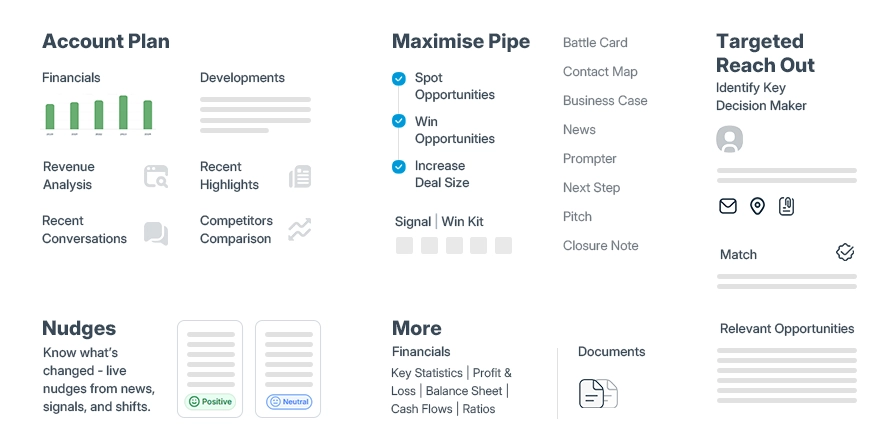
Traditional forecasting often provides a static snapshot that quickly becomes outdated. AI changes this fundamentally by continuously monitoring pipeline activity and market conditions, delivering instant updates on deal health and potential risks.
Sales teams gain a bird's-eye view of their pipeline through organized layouts with real-time synchronized data. This visibility allows managers to quickly understand which deals are moving, stalled, or at risk without having to dive into each opportunity or interrogate their team. The system automatically captures and syncs relevant customer and sales information from email and calendar, keeping CRM records and metrics current with minimal effort.
Most significantly, AI pipeline management identifies potential revenue leaks at a glance. Teams can understand what has changed since the previous weekly, monthly, quarterly, or yearly pipeline review with a single click, enabling proactive adjustments before issues impact the bottom line.
AI algorithms excel at analyzing both historical data and current trends to generate highly accurate pipeline predictions. By identifying patterns in sales data that humans might miss, machine learning minimizes errors and enhances reliability.
This increased accuracy isn't marginal—it's substantial. A McKinsey study indicates that AI-based forecasting improves accuracy by 10–20 percent, which translates to revenue increases of 2–3 percent. Similarly, companies using Salesforce's Einstein Opportunity Scoring reported improved win rates by 14%.
Machine learning models continuously adapt to changing market conditions, allowing sales managers to make proactive decisions rather than reacting to outdated information. The technology analyzes hundreds of variables simultaneously, bringing a new level of precision that traditional methods simply cannot match.
Predictive lead scoring represents one of the most valuable applications of sales intelligence. AI models assess leads based on their likelihood to convert, allowing teams to focus resources on high-potential opportunities.
The Dynamics 365 Sales predictive lead scoring system illustrates this perfectly, assigning scores between 0 and 100 to leads based on various signals. This scoring helps sales teams:
Identify leads with higher chances of converting to opportunities
Analyze why certain leads score lower by examining influencing factors
Prioritize follow-up activities based on conversion probability
Save time by focusing on the most promising prospects
A survey of sales teams using AI revealed that 98% of them believe it improves lead prioritization. This represents a significant shift from traditional methods that often rely on intuition or basic engagement metrics.
AI eliminates the guesswork in sales decision-making by automating data analysis and generating actionable insights. As documented by Tellius, their decision intelligence platform empowers business users with a faster way to answer "what" happened and "why" business metrics are changing.
The impact on decision speed is substantial. AI tools handle massive datasets with ease, streamlining tasks like lead scoring, forecasting, and resource allocation. This sales automation of time-consuming tasks allows sales teams to focus on high-value activities, enhancing productivity and profitability.
These automated insights help business users make decisions based on data without requiring expertise in data science or statistics. For example, AI can automatically flag deals in the pipeline that pose financial risks, such as prospects with unpaid invoices or inconsistent transaction histories, enabling sales leaders to focus efforts where deals are both promising and financially sound.
By shifting from reflective to reflexive decision-making, leveraging real-time data and AI to enable immediate, context-aware responses, sales teams can stay ahead of rapidly evolving market conditions and customer needs.
Selecting the right predictive sales intelligence platform requires understanding which features actually drive sales performance. In essence, the most effective platforms combine powerful data processing with intuitive interfaces that sales teams actually want to use. Four critical capabilities stand out in today's leading solutions.
STOP CHASING PROSPECTS
START CLOSING DEALS!!
The foundation of any effective sales intelligence platform is seamless CRM integration. Top solutions offer native connections with popular CRM systems like Salesforce and HubSpot through certified integrations that maintain data integrity across systems. This two-way data synchronization eliminates the need for manual data entry, reducing errors while ensuring consistency of information throughout your sales technology stack.
For Salesforce users, platforms like Clari and InsightSquared provide robust enterprise capabilities that leverage existing CRM data. Sales Cloud, an integral component of Salesforce, includes dynamic features such as lead management, contact management, sales opportunity management, and customizable dashboards.
HubSpot users typically gravitate toward solutions like Forecastio, which offers the most seamless integration and functionality for this CRM. HubSpot's Sales Hub combines lead management software with pipeline management tools, allowing users to view their entire process through sales intelligence data and adjust lead-generation processes accordingly.
Despite varied business requirements, the best platforms offer multiple forecasting methodologies that can be tailored to specific needs. These typically include:
Pipeline-based forecasting weighted by stage or probability
Historical analysis using time-series forecasting for trend identification
AI prediction utilizing machine learning for pattern recognition
Bottom-up versus top-down approaches providing flexibility for different scenarios
This flexibility allows sales teams to create territory-based, product-based, or time-based forecasts, enabling planning from multiple angles. HubSpot's AI forecasting tool, for instance, uses Breeze to project future sales based on closed won deals from the past three months, providing an additional perspective to calibrate accurate forecasts.
Effective dashboards transform complex data into actionable insights through intuitive visualization. The most valuable platforms provide instant understanding of forecast status and required actions. These visual tools allow teams to quickly identify pipeline gaps and mitigate risks.
A well-designed pipeline health dashboard typically includes:
KPI widgets showing open pipeline value, running win rate percentages, and average deal sizes
Custom charts breaking down pipeline by team, opportunity type, forecast category, and stage
Deal widgets highlighting highest value deals with warnings and open deals with low scores
Trend widgets displaying quarterly pipeline trends and future pipeline development
These visual elements enable sales leaders to understand at a glance which deals are moving, stalled, or at risk without diving into each opportunity. Monday CRM, for example, allows teams to customize dashboards and sales reports to keep the most important data front and center.
Primarily, effective collaboration features ensure everyone works from the same data and forecasts. Quality platforms offer shared forecasts across teams and regions with real-time updates, helping maintain alignment throughout the organization.
Collaboration tools within these platforms typically enable forecast sharing, team-wide discussion, and unified views of customer information across the entire pipeline. This collaborative approach ensures that sales teams, managers, and executives all work from the same data, reducing discrepancies in expectations and improving overall forecast accuracy.
HubSpot's forecasting tools specifically offer timely business forecasts on monthly or quarterly cadences, an easy-to-use interface for painless forecast planning, and efficient one-on-one meetings for sales, service, and success teams. Meanwhile, Salesforce Sales Cloud provides collaboration tools that allow teams to share forecasts and provide feedback, ensuring everyone stays aligned.
The best platforms don't just generate forecasts—they create a shared understanding of sales expectations, helping teams coordinate their efforts toward common goals.
Make Every Rep Speak
Like Your Top 1%
Despite the promise of AI-powered sales forecasting, many organizations encounter significant barriers during implementation. An uncomfortable truth exists: even the most sophisticated AI tools can fall short when fundamental issues remain unaddressed.
The effectiveness of predictive sales intelligence hinges primarily on data quality. A stark reality confirms this: 81% of AI professionals report their companies still face significant data quality issues. Even more concerning, 85% believe leadership isn't addressing these problems.
The gap between perception and reality widens at different organizational levels. Those closest to implementation—directors and managers (90%)—are more likely than executives (76%) to agree that company leaders aren't paying adequate attention to data quality concerns.
"Garbage in, garbage out" perfectly describes AI's relationship with data. When a CRM contains outdated, inconsistent, or incomplete information, the resulting forecasts become unreliable. Poor data quality leads to several critical issues:
Inflated revenue expectations when stalled deals remain marked as "likely to close"
Underestimated demand when important leads are missing
Poor resource allocation due to inaccurate deal timelines
Unfortunately, sales reps often neglect CRM updates because of time constraints or lack of motivation. A perpetual cycle emerges: reps prioritize closing deals over data entry, thinking "I'll update that later," but later never arrives. This problem intensifies with manual entry, which introduces typos, inconsistencies, and outdated information.
Even with quality data, misinterpreting AI outputs presents another major hurdle. Sales professionals may resist AI forecasting tools because they don't understand how predictions are generated. This skepticism intensifies when AI downgrades forecasts that reps strongly believe in.
Many organizations incorrectly assume that Gen AI requires perfectly structured datasets before implementation. This misconception leads to hesitation in adoption, as businesses believe extensive data cleaning must precede any AI implementation.
In reality, modern generative AI models can handle unstructured, noisy, and even incomplete datasets. These systems work to transform overwhelming volumes of unstructured data into actionable intelligence. Still, without proper training, teams struggle to extract maximum value from these capabilities.
The "black box" nature of many AI forecasting tools creates fundamental trust issues. Complex AI models, particularly deep learning algorithms, operate through processes that aren't easily explained or understood. When users can't comprehend how a model produces its results, justifying these outcomes to stakeholders becomes virtually impossible.
This lack of transparency leads to skepticism and mistrust among users and stakeholders alike. Without trust, teams hesitate to implement AI recommendations, negating potential benefits.
The problem extends beyond basic understanding. Black-box models are prone to overfitting (learning noise rather than patterns) and underfitting (failing to capture data complexity). Both scenarios result in unreliable predictions that damage forecast credibility.
As noted by one industry expert, "one common mistake is defaulting to complex black-box models like neural networks, even when data is limited". Indeed, over-reliance on black-box models creates particular issues in sales contexts where explaining forecast changes to executives remains essential.
Teams achieving the best results focus on explainable AI—models that reveal why a price or forecast is suggested. Techniques like decision trees, attention mechanisms, or feature importance tools help reveal the reasoning behind AI-generated predictions.


Successful adoption of AI forecasting demands careful planning and execution across four key phases. By following a structured approach, sales teams can maximize the return on their predictive intelligence investments while avoiding common implementation pitfalls.
Initially, examine your existing sales forecasting methods to identify strengths and weaknesses. According to research, 67% of sales operations leaders find creating accurate forecasts more difficult now than three years ago. This difficulty stems from fundamental issues that must be addressed before implementing new technology.
A thorough audit should evaluate:
Accuracy of recent forecasts compared to actual results
Time spent by sales teams on manual forecasting (61% spend more than 5 hours weekly on data entry and analysis)
Data quality in your current CRM (78% of RevOps leaders report lacking correct data for accurate forecasts)
Integration capabilities of existing tools
Proper analysis helps establish a baseline against which to measure future improvements. A sales audit also allows you to answer critical questions about your company, including average sales cycle length, conversion rates, and which products and services generate the most profit.
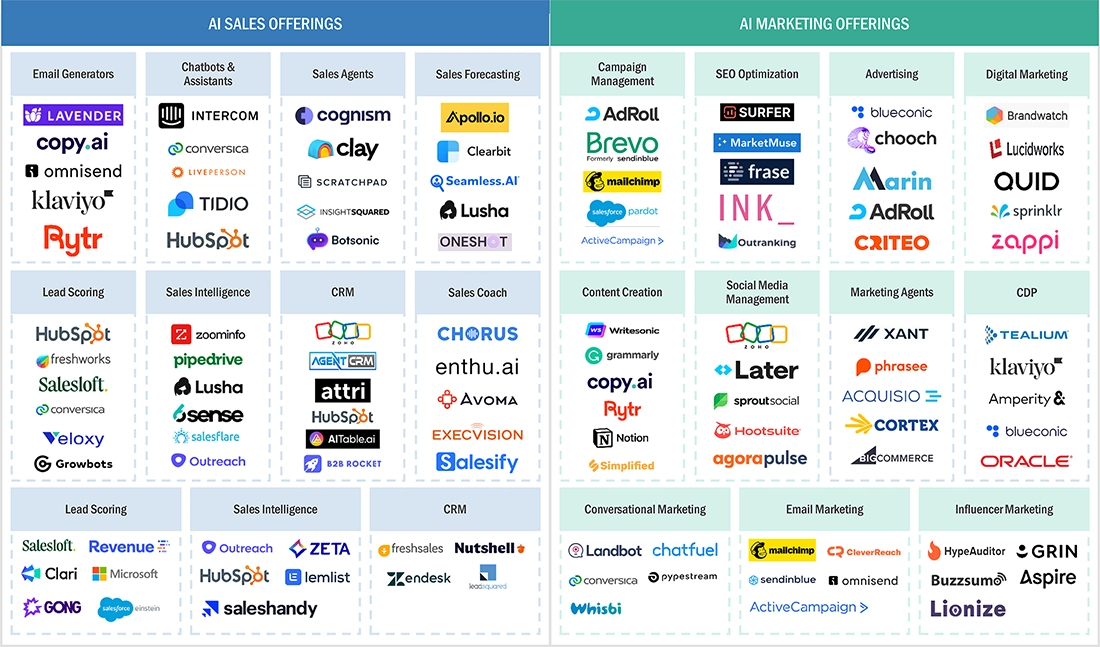
Subsequently, choose AI solutions that address your specific forecasting challenges. Evaluate potential tools based on:
Integration capabilities with existing systems, especially your CRM
Scalability to grow with your business
Customization options for different sales cycles
User-friendliness and adoption potential
Carefully define your objectives before selecting tools. "Identify specific challenges AI training should solve. Your managers might have no time to train their teams, or new reps might have a slow ramp-up, or have difficulty preparing complex negotiations".
First, gather input from reps, leaders, and other teams like operations and IT to align on goals. Then, establish clear criteria for success by defining what specific improvements you expect from the implementation.
Even the most powerful AI tools fail without proper adoption. Training should focus not just on technical operation but also on understanding and trusting AI-generated insights.
To ensure successful adoption:
Break training into basic and advanced phases rather than cramming everything into one session
Provide guided onboarding with step-by-step user guides
Establish "power users" who can serve as internal champions
Demonstrate how AI saves time on routine tasks, freeing reps to focus on selling
Remember that 86% of reps get confused about which tool to use for which task. Therefore, training must clearly establish when and how to use new AI forecasting tools within existing workflows.
Finally, continuous improvement is essential for long-term success. Set up a regular cadence to track improvements in forecast accuracy, identify areas where AI might be struggling, and gather feedback from users at all levels.
For optimal results, continuously optimize your data by removing duplicates and standardizing inputs. Additionally, run tests using historical data sets and compare them against what occurred in the last year to validate model accuracy.
As noted in the Salesforce documentation, "With AI sales training a part of your workflows, track the changes you see against your initial goals. If you're seeing high adoption rates, faster ramp-up times, improved closing rates and fewer face-to-face coaching sessions higher up the funnel, you're already seeing an impact".
Above all, remember that predictive sales intelligence isn't a one-time implementation but an ongoing process requiring regular refinement as your business evolves.
Your SDRs work 9–5
AI Sales works 24/7!!
Modern sales forecasting has evolved beyond basic spreadsheets and historical averages. Behind every effective predictive sales intelligence platform lies sophisticated AI models that process data in unique ways. Each model offers distinct advantages depending on your sales cycle and data structure.
Regression models form the backbone of many sales forecasting systems by establishing relationships between variables to predict outcomes. These models excel at recognizing patterns and trends in large amounts of financial information, primarily for cash flow predictions, cost evaluation, and profitability analysis.
Traditional time-series forecasting frequently employs regression-based approaches like ARIMA (Autoregressive Integrated Moving Average), which analyzes historical data to identify patterns. However, research shows that static models often fall short because they don't address time lags in data. This limitation prompted the development of more sophisticated approaches:
ARIMAX models incorporate external variables for improved results
ARDL (Autoregressive Distributed Lag) models capture relationships between time series
Traditional regression remains valuable for straightforward deal timing prediction
Fundamentally, regression models work by identifying how sales outcomes relate to various inputs like marketing spend, seasonality, or economic indicators. Their advantage lies in interpretability—sales teams can understand why a particular deal timing prediction was made, unlike with more complex models.
Neural networks represent a significant advancement in sales intelligence through their ability to detect highly complex patterns in data and efficiently capture non-linear relationships between variables. Research demonstrates that Multilayer Perceptron (MLP) models often deliver the highest accuracy with minimal errors when predicting sales outcomes.
Deep learning, a subset of neural networks, processes vast amounts of data through complex neural architectures. Sales teams equipped with these tools can predict market trends, understand customer preferences, and optimize pricing strategies with remarkable precision.
Long Short-Term Memory (LSTM) networks, a specialized type of neural network, excel in sales forecasting by training sequentially for each timestep. They achieve this through a series of gates—input, output, and forget gates—that regulate information flow between states. This architecture makes LSTMs particularly effective at capturing temporal dependencies in sales cycles.
In practical applications, neural networks have proven more accurate than traditional methods, especially when sales relationships lack linearity. Their ability to process unstructured data like customer interactions and market sentiment provides a significant edge over conventional approaches.
Support Vector Machines (SVMs) offer powerful capabilities for lead classification and segmentation. Research confirms that SVM approaches outperform other methods in marketing segmentation, making them valuable for sales intelligence applications.
SVMs work by mapping input data to a higher-dimensional feature space where different categories can be more easily separated. This technique allows sales teams to:
Efficiently segment leads based on conversion likelihood
Identify anomalies in purchasing patterns
Detect unusual events that might represent opportunities or risks
Primarily, SVMs excel in noisy environments—a common challenge in sales data. By converting noise into a classifiable characteristic, specialized SVMs can operate on distributions rather than scalar values, enabling more robust lead scoring and segmentation.
Whereas regression models and neural networks focus on prediction, SVMs provide critical classification capabilities that help sales teams organize their pipeline and prioritize efforts. This targeted approach ensures resources are allocated to leads with the highest conversion potential.
Real-world results demonstrate AI forecasting's tangible impact on business performance. Across various industries, organizations are reporting measurable improvements after implementing predictive sales intelligence tools.
A leading SaaS company faced persistent forecasting challenges despite having an established sales process. Nonetheless, after implementing an AI-powered forecasting platform, they reduced forecast errors by 25% in just 90 days. This improvement came primarily through automated analysis of historical deal data combined with real-time pipeline activity.
The results were impressive:
Forecasting accuracy improved from under 60% to over 85%
Leadership gained confidence in resource allocation decisions
Sales teams reduced time spent on manual forecasting by approximately 2 hours daily
What made this successful was the AI system's ability to identify patterns in win/loss data that humans had missed. Furthermore, the platform continuously refined its predictions by analyzing successful deal attributes against ongoing pipeline opportunities.
A mid-market B2B software provider implemented an AI analytics stack that combined predictive scoring with automated nurturing. The transformation was remarkable—their average sales cycle length decreased by 28%. Equally important, this acceleration occurred while maintaining deal quality.
Key velocity improvements included:
Lead quality improved 37% through AI-powered qualification
Sales development representative response times improved 64%
Engagement rates tripled through precisely timed interactions
The breakthrough insight was that AI didn't just identify when accounts were ready to buy—it actively created readiness by orchestrating perfectly timed touchpoints based on behavioral signals.
A B2B consulting firm implemented AI-driven lead scoring to address low conversion rates despite steady lead flow. Their traditional scoring system based on simplistic criteria like job title and company size failed to capture nuanced buying signals.
After implementation, they achieved:
45% improvement in pipeline efficiency
27% reduction in unqualified leads
18-day decrease in average sales cycle
Noticeable reduction in "ghost meetings" where prospects failed to attend
Notably, the team's time spent per lead halved, allowing more focus on prospects with genuine buying intent. Although initial setup required careful integration with their CRM, the automated scoring system quickly identified high-potential leads based on both explicit and implicit signals.
By analyzing data from multiple sources, the AI model determined which behavioral patterns indicated genuine purchase intent versus casual interest, hence eliminating wasted effort pursuing unlikely conversions.
As predictive intelligence matures, three major innovations are reshaping the landscape of sales forecasting tools. These advancements will soon enhance how organizations leverage data for sales planning and execution.
Autonomous AI agents represent a fundamental shift from traditional sales tools. Unlike simple automation, these agents can learn from data, formulate plans, and act independently with minimal human input. Their ability to handle high volumes of tasks without requiring additional human resources makes them particularly valuable for scaling sales operations.
Soon, these agents will become increasingly sophisticated, capable of managing complex workflows across multiple channels. They'll continuously learn from feedback and new data, becoming more effective over time. Key capabilities include:
Real-time data analysis and scenario modeling
Simulation of various market conditions for better preparation
Integration of multiple data sources for holistic forecasting
Natural language processing is transforming how sales teams interact with forecasting tools. Rather than navigating complex dashboards, users will simply ask questions in everyday language. This conversational approach enables sales professionals to request specific information about sales records without exporting and analyzing data manually.
Eventually, these interfaces will evolve to include more advanced agent-based querying, where AI systems handle multi-step analytical workflows and proactively suggest relevant follow-up questions. This capability will allow users to ask forward-looking questions like "What will our sales look like next quarter?".
Presently, the integration between CRM and ERP systems is creating powerful synergies for sales intelligence. This connection allows businesses to leverage customer and operational data for deeper, richer insights. In the context of Sales Intelligence vs CRM vs Revenue Intelligence, sales intelligence software typically offers basic synchronization with popular CRMs, while platforms provide a more advanced two-way data flow.
By synchronizing these systems, companies gain visibility into customer behavior, inventory trends, and financial performance—enabling more accurate forecasting and strategic planning. As this integration advances, AI will increasingly identify upsell and cross-selling opportunities while improving forecast accuracy through combined datasets.
Ready to turn your Rep
INTO BEST PERFORMER ?
Throughout this article, we've explored how predictive sales intelligence is transforming revenue forecasting from an educated guess into a data-driven science. AI-powered tools now offer unprecedented accuracy compared to traditional methods, therefore solving the persistent challenge where less than 20% of sales teams achieve reliable forecasts.
Sales teams previously relied on historical data and subjective assessments, consequently facing significant revenue shortfalls and wasted resources. However, AI algorithms have changed this equation by analyzing thousands of data points simultaneously, identifying patterns humans simply cannot detect.
The benefits extend far beyond basic prediction. Real-time pipeline visibility allows teams to spot opportunities and risks immediately. Machine learning continuously improves forecast accuracy, while predictive lead scoring focuses resources on high-potential prospects. Additionally, automated insights accelerate decision-making across sales operations.
Organizations looking to implement these technologies should follow a structured approach: first, audit current processes; second, select tools aligned with specific sales goals; third, train teams to properly interpret AI outputs; finally, continuously monitor and refine model performance.
Though implementation challenges exist—particularly around data quality, interpretation of results, and overreliance on opaque models—companies that address these issues see remarkable results. Case studies across industries demonstrate forecast error reductions of 25%, significant pipeline velocity improvements, and substantial boosts in lead-to-close rates.
The future promises even greater capabilities with autonomous forecasting agents, natural language interfaces for asking questions about sales data, and deeper integrations between CRM and ERP systems. These advancements will make predictive intelligence more accessible and powerful for sales teams of all sizes.
Sales forecasting no longer needs to be a mystery. AI-powered predictive intelligence now offers a clear path toward forecast accuracy, efficient resource allocation, and ultimately, predictable revenue growth. Your journey toward data-driven sales excellence starts with embracing these powerful tools and techniques.
A. AI analyzes vast amounts of data to identify patterns humans might miss, leading to more precise predictions. Machine learning models continuously adapt to changing market conditions, improving forecast accuracy by 10-20% on average.
A. The main benefits include real-time pipeline visibility, improved forecast accuracy, better lead prioritization through predictive scoring, and faster decision-making with automated insights. These advantages help sales teams focus on high-potential opportunities and respond quickly to market changes.
A. Implementation involves auditing current processes, selecting AI tools aligned with sales goals, training teams to interpret AI outputs, and continuously monitoring and refining model performance. It's crucial to address data quality issues and ensure proper integration with existing CRM systems.
A. Common challenges include data quality issues, misinterpretation of AI-generated insights, and overreliance on black-box models. Addressing these issues requires improving data management practices, providing proper training, and selecting AI tools that offer explainable results.
A. The future of predictive sales intelligence includes the rise of autonomous forecasting agents, natural language interfaces for querying sales data, and deeper integrations between CRM and ERP systems. These advancements will make AI-powered forecasting more accessible and powerful for sales teams of all sizes.

Category: Uncategorized Tags: ai, AIOps, Artificial Intelligence, cloud, cloud platform, Cybersecurity, Information and Communications Technology , VR