Let's face it—selling ain't what it used to be.
Gone are the days when a firm handshake, a winning smile, and a well-rehearsed pitch could seal the deal. Today's buyers? They're savvier, more informed, and frankly, they've got zero patience for sales reps who aren't bringing their A-game. That's where sales enablement tools swoop in like superheroes, cape and all. Think of these tools as your sales team's secret weapon—the difference between stumbling through presentations and delivering knockout performances every single time. Whether you're a scrappy startup or an enterprise giant, the right technology stack can transform your sales organization from "meh" to magnificent.
But here's the thing: with hundreds of platforms flooding the market, choosing the right sales enablement platform feels like finding a needle in a haystack. Which ones actually move the needle? What features separate the game-changers from the time-wasters? And more importantly, how do you implement them without causing an organizational meltdown?
Buckle up, because we're about to dive deep into the world of sales enablement technology, exploring everything from core functionalities to real-world implementation strategies. By the time you finish reading, you'll know exactly how to supercharge your sales operation with the tools that actually matter in 2026 and beyond.
What Exactly Are Sales Enablement Tools, Anyway?
Before we jump into the nitty-gritty, let's get our definitions straight.
Sales enablement tools are software platforms designed to equip sales teams with everything they need to engage buyers effectively throughout the entire sales cycle. We're talking content, training, coaching, analytics, and automation—all wrapped up in packages that make your sales reps unstoppable. Think of it this way: if your sales team is an orchestra, these tools are the sheet music, instruments, and conductor all rolled into one. They ensure everyone's playing the same tune, hitting the right notes, and creating harmony instead of chaos.
The Evolution of Sales Technology
Remember when "sales technology" meant a Rolodex and a landline? Yeah, we've come a long way. The sales tech landscape has exploded over the past decade, driven by:
-
Cloud computing making software accessible anywhere, anytime
-
Big data analytics revealing patterns humans could never spot
-
Artificial intelligence predicting outcomes with scary accuracy
-
Mobile technology putting entire offices in salespeople's pockets
-
Integration capabilities connecting previously siloed systems
This evolution hasn't just changed how we sell—it's fundamentally transformed what's possible in sales organizations. And as we head into 2026, we're seeing even more radical innovations reshape the landscape.
Why Your Sales Team Desperately Needs These Tools
Still on the fence about investing in sales enablement technology? Let me paint you a picture.
Your sales rep, let's call her Maria, is preparing for a meeting with a high-value prospect. Without proper tools, she's scrambling through shared drives, hunting for the latest product deck, guessing at pricing configurations, and winging her value proposition. The result? A lukewarm presentation that leaves money on the table.
Now imagine Maria armed with modern sales enablement tools. She instantly accesses tailored content based on the prospect's industry. She receives coaching reminders about objection handling. Real-time analytics guide her conversation. Automated follow-up sequences ensure nothing falls through the cracks. The result? A confident, personalized pitch that closes deals.
The Tangible Benefits
Organizations implementing robust sales enablement strategies report:
-
Shorter sales cycles – Buyers move through pipelines 15-20% faster
-
Higher win rates – Conversion rates jump by 10-15% on average
-
Improved quota attainment – More reps hitting their numbers consistently
-
Better customer experiences – Buyers receive relevant, timely information
-
Increased rep productivity – Less time searching, more time selling
-
Enhanced visibility – Leadership actually knows what's happening in the field
Core Categories of Sales Enablement Tools
The sales enablement ecosystem is vast, but most tools fall into several key categories. Let's break 'em down.
Content Management and Delivery Systems
Ever watched a sales rep frantically searching for that "perfect case study" during a live presentation? Painful, right?
Content management platforms solve this headache by organizing, storing, and delivering sales materials exactly when and where they're needed. These systems:
-
Centralize all sales content in searchable repositories
-
Track which materials actually drive results
-
Provide mobile access for on-the-go selling
-
Ensure reps always use the most current versions
-
Personalize content recommendations based on deal context
Training and Onboarding Platforms
Here's a sobering stat: the average sales rep takes 10 months to reach full productivity. In that time, you're hemorrhaging money on salaries while getting minimal returns.
Modern training platforms slash this ramp-up time by offering:
-
Interactive learning modules that beat boring PowerPoints any day
-
Microlearning for bite-sized knowledge that actually sticks
-
Skill assessments identifying gaps before they become problems
-
Certification tracking ensuring everyone meets standards
-
Ongoing reinforcement because learning isn't a one-and-done deal
Communication and Collaboration Tools
Sales doesn't happen in a vacuum. Your reps need seamless coordination with marketing, product teams, and customer success.
Collaboration platforms create unified workflows through:
-
Shared workspaces for deal strategy sessions
-
Real-time messaging that beats endless email chains
-
Video capabilities for remote and hybrid presentations
-
Document co-editing for proposal development
-
Integration with existing tools to avoid platform-hopping
Analytics and Intelligence Platforms
Knowledge is power, and data is knowledge. Analytics tools transform raw numbers into actionable insights.
These platforms provide:
-
Deal intelligence predicting which opportunities need attention
-
Performance metrics showing what's working (and what's not)
-
Competitive intelligence revealing how you stack up
-
Forecasting accuracy so leadership can actually plan
-
Behavioral analytics highlighting coaching opportunities
The Rise of AI-Powered Sales Enablement in 2026
Alright, let's talk about the elephant in the room—artificial intelligence. It's not just buzzword bingo anymore; AI is genuinely transforming sales enablement, and 2026 is shaping up to be the year where AI moves from "nice to have" to "absolutely essential."
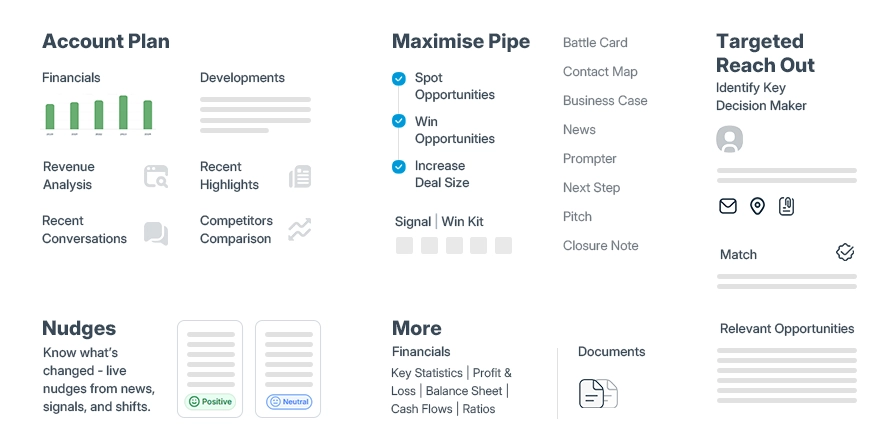
Platforms like SalesPlay - AI Sales Platform by MarketsandMarkets exemplify this new generation of intelligent tools. They're not just storing information or tracking activities—they're actively making your sales team smarter and more effective through advanced machine learning and predictive capabilities.
How AI Changes the Game in 2026
Predictive Lead Scoring: Instead of treating all leads equally (spoiler alert: they're not), AI algorithms analyze hundreds of data points to identify which prospects are actually likely to buy. Your reps stop wasting time on tire-kickers and focus on real opportunities.
Intelligent Content Recommendations: Imagine having a seasoned sales director whispering in every rep's ear, suggesting exactly the right content for each situation. That's what AI-powered recommendations deliver, analyzing deal characteristics and recommending materials that have historically driven success in similar scenarios.
Conversation Intelligence: AI now listens to sales calls, analyzes the dialogue, and provides coaching feedback. It identifies successful talk patterns, flags risky moments, and helps reps continuously improve their approach. In 2026, these systems have become sophisticated enough to detect emotional cues and buyer sentiment in real-time.
Automated Personalization: Creating personalized outreach used to take hours. AI now generates customized messages, proposals, and presentations in seconds—maintaining the human touch while eliminating the grunt work.
Generative AI for Content Creation: The latest wave of generative AI can now create sales materials, presentations, and even video content tailored to specific prospects—all while maintaining brand consistency and compliance standards.
Why SalesPlay Stands Out
SalesPlay - AI Sales Platform by MarketsandMarkets takes these AI capabilities to the next level by combining market intelligence with sales enablement. The platform doesn't just help you sell better—it helps you understand your market landscape, identify opportunities, and position against competitors with precision that manual research could never match.
What makes it particularly powerful heading into 2026 is its ability to synthesize market trends, competitive movements, and customer behavior patterns into actionable sales strategies. It's like having a team of market analysts, sales strategists, and competitive intelligence experts working 24/7 for your sales organization.
Essential Features to Look For in Sales Enablement Tools
Shopping for sales enablement technology? Don't get dazzled by flashy demos. Focus on these must-have features:
User-Friendly Interface
If your sales team needs a PhD to use the platform, it's not the right platform. Period. Look for:
-
Intuitive navigation that feels natural
-
Mobile responsiveness for selling on-the-go
-
Minimal clicks to access critical functions
-
Visual dashboards that communicate at a glance
Robust Integration Capabilities
Your new tool should play nice with existing systems—CRM, marketing automation, communication platforms. Standalone solutions create silos, and silos kill productivity.
Customization and Flexibility
Every sales organization is unique. Cookie-cutter solutions lead to cookie-cutter results. Ensure your chosen platform allows:
-
Custom workflows matching your sales process
-
Configurable dashboards showing metrics that matter to YOU
-
Adaptable content structures reflecting your materials
-
Scalability as your organization grows
Comprehensive Analytics
"What gets measured gets managed," as the saying goes. Your platform should provide:
-
Real-time performance tracking
-
Historical trend analysis
-
Drill-down capabilities from high-level to granular
-
Exportable reports for stakeholder updates
-
Benchmarking against industry standards
Strong Security and Compliance
Sales materials often contain sensitive information—pricing strategies, customer data, proprietary methodologies. Don't compromise on:
-
Data encryption both in transit and at rest
-
Role-based access controls limiting who sees what
-
Audit trails tracking all user activities
-
Compliance certifications for relevant regulations (GDPR, CCPA, etc.)
-
AI governance ensuring ethical use of artificial intelligence
Implementation Strategies That Actually Work
So you've chosen your sales enablement tools. Congrats! Now comes the hard part—getting your team to actually use them.
Too many organizations treat implementation like flipping a light switch. They announce the new platform, provide a 30-minute training session, and expect magic. Then they wonder why adoption rates hover around 20%.
Here's how to do it right:
Start with Your Champions
Every sales team has natural leaders—those reps others look to for guidance. Identify these champions early and get them invested in the new tools before the official rollout.
These early adopters become your internal evangelists, demonstrating value and helping skeptics overcome resistance. Their peer influence is worth more than any executive mandate.
Create a Phased Rollout Plan
Don't boil the ocean. Instead:
-
Phase 1: Launch core features to a pilot group
-
Phase 2: Gather feedback and refine based on real-world usage
-
Phase 3: Expand to broader teams with improved processes
-
Phase 4: Introduce advanced features once basics are mastered
Invest in Proper Training
And we're not talking about death-by-PowerPoint sessions. Effective training includes:
-
Role-specific scenarios showing how each person benefits
-
Hands-on practice with real (or realistic) data
-
Just-in-time support when users hit roadblocks
-
Ongoing education as features evolve
-
Gamification elements making learning actually enjoyable
Connect Tools to Compensation
Want guaranteed adoption? Tie platform usage to compensation metrics. When hitting quota depends partly on leveraging the tools, suddenly everyone becomes very motivated to learn the system.
Measure and Optimize Continuously
Track adoption metrics religiously:
-
Login frequency and duration
-
Feature utilization rates
-
Content download/usage statistics
-
Time-to-productivity for new hires
-
Impact on key sales metrics
Use this data to identify bottlenecks, celebrate wins, and continuously improve your enablement strategy.
Common Pitfalls to Avoid with Sales Enablement Tools
Let's talk about what NOT to do, because sometimes learning from mistakes is the best teacher.
The "Shiny Object" Syndrome
Stop chasing every new tool that promises to revolutionize your sales org. Technology fatigue is real, and constantly switching platforms destroys productivity. Choose carefully, commit fully, and give things time to deliver results.
Ignoring Change Management
Tools don't fail—implementation strategies do. If you're not investing as much in change management as you are in software licenses, you're setting yourself up for disappointment.
Overcomplicating Things
Just because a platform has 47 features doesn't mean you should use all 47 on day one. Start simple, master the basics, then layer in complexity as your team's sophistication grows.
Neglecting Content Quality
The fanciest content management system in the world won't help if your content sucks. Invest in creating materials that actually resonate with buyers—relevant, valuable, and easy to consume.
Forgetting About Mobile
In 2026, your sales reps are meeting clients at coffee shops, airports, and co-working spaces. If your tools don't work seamlessly on mobile devices, they're basically useless.
The Future of Sales Enablement Tools: What's Coming Next?
As we move through 2026 and beyond, here's what's on the horizon:
Hyper-Personalization at Scale
AI will enable truly one-to-one selling at massive scale. Every prospect receives completely customized experiences—not just personalized emails, but tailored pricing models, customized product configurations, and unique value propositions.
Immersive Technologies
Virtual and augmented reality are moving from gimmick to genuine sales tools. Imagine conducting product demonstrations in virtual showrooms or overlaying technical specifications onto physical products during site visits.
Deeper Ecosystem Integration
The lines between sales enablement, CRM, marketing automation, and customer success platforms will blur. We're heading toward unified revenue operations platforms that manage the entire customer lifecycle seamlessly.
Ethical AI and Transparency
As AI becomes more powerful, buyers will demand transparency about how it's being used. Tools that provide explainable AI—showing why recommendations are made—will win market share.
Voice and Conversational Interfaces
Why type when you can talk? Voice-activated sales assistants will let reps update CRMs, search for content, and get coaching—all hands-free while driving to their next meeting.
Building Your Sales Enablement Tech Stack
Here's a framework for assembling your ideal toolkit:
The Foundation Layer
Start with essentials that every sales org needs:
-
CRM system (Salesforce, HubSpot, Microsoft Dynamics)
-
Communication platform (Slack, Microsoft Teams)
-
Content repository (SharePoint, Google Drive, or dedicated sales content management)
The Enablement Layer
Add specialized sales enablement tools like:
-
Training and coaching platforms for skill development
-
Sales intelligence tools like SalesPlay - AI Sales Platform by MarketsandMarkets for market insights
-
Conversation intelligence for call analysis and coaching
-
Proposal automation for faster, better proposals
The Optimization Layer
Finally, advanced tools for competitive advantage:
-
Predictive analytics identifying opportunities and risks
-
Revenue intelligence forecasting with accuracy
-
Digital sales rooms creating personalized buyer experiences
-
Compensation management aligning incentives with results
Measuring ROI from Sales Enablement Tools
Your CFO will eventually ask: "Are these tools worth the investment?" Here's how to answer confidently.
Track Leading Indicators
Monitor metrics that predict future success:
-
Ramp time for new hires
-
Activity levels (calls, meetings, demos)
-
Pipeline velocity
-
Content engagement rates
-
Training completion rates
Measure Lagging Indicators
Ultimately, tools should drive business results:
-
Revenue per rep
-
Win rates
-
Average deal size
-
Customer acquisition cost
-
Sales cycle length
-
Quota attainment percentage
Calculate Total Cost of Ownership
Don't just look at software fees. Include:
-
Implementation costs
-
Training expenses
-
Ongoing administration
-
Integration maintenance
-
Opportunity cost of alternatives
Then compare against tangible benefits like reduced sales cycles, improved win rates, and increased productivity. Most organizations see 3:1 to 5:1 ROI within 12-18 months when implementation is done properly.
Conclusion
Look, nobody said sales was easy. But in 2026, it doesn't have to be as hard as many organizations make it.
The right sales enablement tools transform struggling teams into revenue-generating machines. They turn average performers into top producers. They replace guesswork with data-driven decisions and chaos with coordinated execution.
But—and this is crucial—tools alone aren't magic bullets. Success requires:
-
Strategic selection of platforms that genuinely fit your needs
-
Thoughtful implementation that respects the realities of change management
-
Consistent optimization based on real-world results and feedback
-
Leadership commitment from the top down and bottom up
-
Cultural alignment where enablement becomes part of your DNA
Whether you're just starting your sales enablement journey or looking to level up your existing stack, the principles remain the same. Start with clear objectives, choose tools that solve real problems, invest in adoption, and measure relentlessly.
The sales landscape will keep evolving. Buyer expectations will keep rising. Competition will keep intensifying. But with the right sales enablement tools—including innovative platforms like SalesPlay - AI Sales Platform by MarketsandMarkets—your team won't just keep pace. They'll set the pace.
So what're you waiting for? Your competitors aren't standing still. Neither should you.
The future of selling is here, powered by tools that make your team faster, smarter, and more effective than ever before. The only question left is: are you ready to embrace it?
Frequently Asked Questions (FAQs) About Sales Enablement Tools Guide:
Q1. What are sales enablement tools?
Sales enablement tools are software platforms that provide sales teams with the content, training, coaching, analytics, and resources they need to engage buyers effectively throughout the sales process. They help reps sell more efficiently and close deals faster.
Q2. How much do sales enablement tools typically cost?
Pricing varies dramatically based on features and company size. Small business solutions might start around $50-100 per user per month, while enterprise platforms can range from $150-300+ per user monthly. Custom solutions and AI-powered platforms like SalesPlay may have different pricing models based on usage and feature sets.
Q3. What's the difference between CRM and sales enablement tools?
CRMs manage customer relationships and track sales activities—they're the system of record. Sales enablement tools provide the content, training, and insights that help reps actually execute those activities effectively—they're the system of engagement. Both are essential, and they work best when integrated.
Q4. How long does it take to implement sales enablement tools?
Basic implementations might take 4-8 weeks, while comprehensive enterprise deployments can span 3-6 months. However, reaching mature adoption where most reps use tools effectively typically takes 6-12 months. Phased rollouts tend to be more successful than "big bang" launches.
Q5. Can small businesses benefit from sales enablement tools?
Absolutely! While enterprise organizations pioneered sales enablement, today's cloud-based tools make sophisticated capabilities accessible to businesses of all sizes. In fact, smaller teams often see faster ROI because they can implement and adapt more quickly than large enterprises.
Q6. What's the most important feature in sales enablement tools?
There's no single "most important" feature—it depends on your specific needs. However, ease of use is universally critical. The most powerful tool is worthless if your team won't use it. Focus on platforms that match your sales process and actually solve problems your reps face daily.
Q7. How do AI-powered sales enablement tools work?
AI tools analyze vast amounts of data—past deals, customer interactions, content usage, market trends—to identify patterns and make predictions. They can recommend which leads to prioritize, what content to share, when to follow up, and how to position against competitors. Platforms like SalesPlay combine AI with market intelligence for even more powerful insights.
Q8. Do sales enablement tools replace sales managers?
Not at all! These tools augment human judgment, not replace it. They handle data analysis, administrative tasks, and routine recommendations, freeing managers to focus on high-value activities like strategic coaching, relationship building, and complex deal strategy.