Sales enablement platforms by industry: Which works best for your sector
September 01, 2025
The right sales enablement platforms can reshape your revenue picture completely. Sales leaders know this well - 88% see sales enablement as vital to improving efficiency, yet barely half have put it into action. This gap creates a real chance for forward-thinking companies.
Sales teams are the backbone of business revenue and company profitability. They face a tough challenge because they get just a brief moment to reach buyers and make an impact. Companies that make sales enablement tools a priority are 65% more likely to hit their revenue targets. Each industry needs different tools that work best for their unique situation.


Revenue has become a team sport. Marketing, sales, and customer success now share this responsibility. Your industry's perfect sales enablement solution matters more than ever. This piece shows you how different sectors use these powerful platforms. You'll learn which sales enablement platform fits your business needs best.

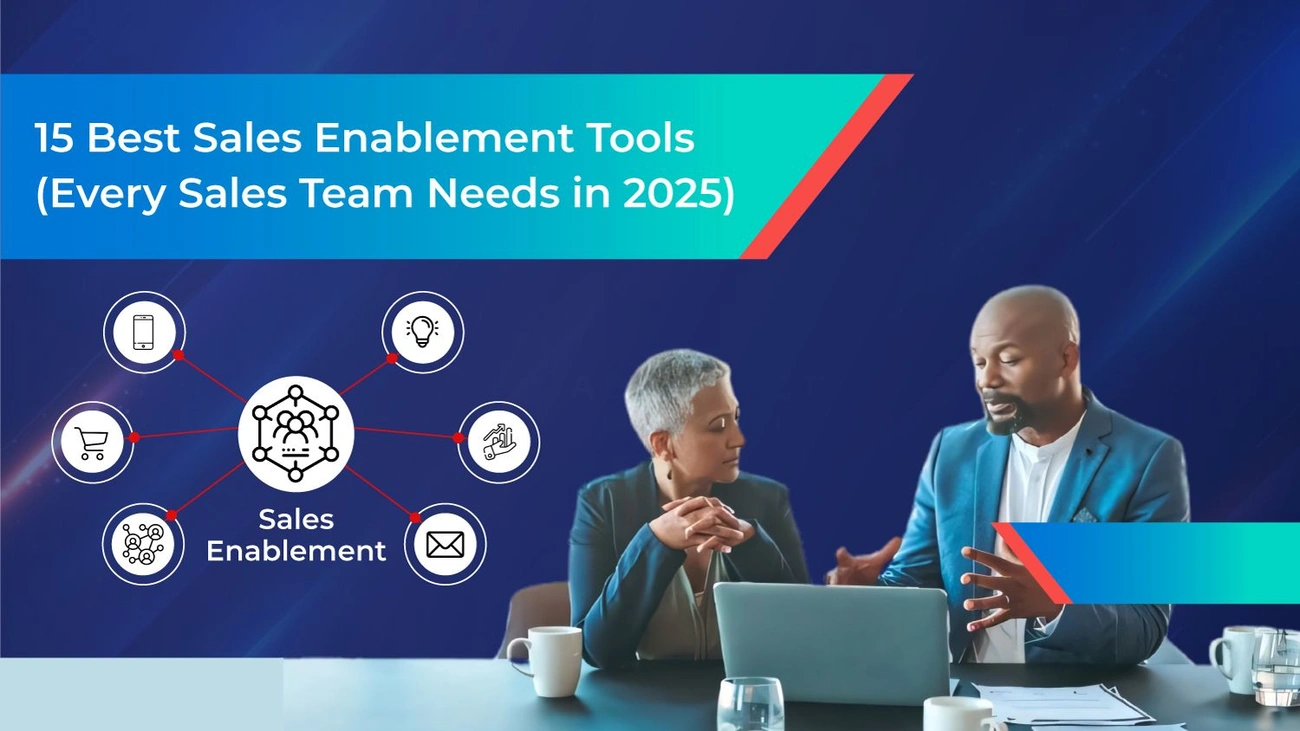
Image Source: salesdrive.info
Modern sales enablement platforms do much more than store content. They work as detailed ecosystems that help sales teams throughout their entire sales process. Research shows sales representatives spend only 28% of their time selling. They use the rest on administrative tasks and looking for resources. Here are four core functions that make top sales enablement platforms essential in today's competitive sales world.
Every effective sales enablement platform needs strong content management capabilities. These systems create a central hub where teams can store and organize all sales materials. Sales representatives spend about 10 hours each week as they search, compare, or update content.
A reliable content management system offers several benefits:
Improved productivity: Sales teams can find materials quickly and spend more time with prospects
Enhanced messaging consistency: Teams use approved, current content to keep customer communications on-brand and compliant
Accelerated sales cycles: Quick access to relevant, personalized content helps prospects make decisions faster
Content management systems also track how materials get used and give an explanation of which ones work best. This helps solve a big problem - about 65% of marketing-created content never gets used by sales teams.
Good sales enablement software includes reliable learning and development tools made for sales professionals. These platforms differ from regular learning systems. They offer custom training paths that focus on product knowledge, sales methods, and ways to close deals.
Companies that have well-laid-out enablement practices are 36% more likely to reduce training time for new hires through evidence-based training. Today's platforms achieve this by combining:
Formal instruction about key topics like sales strategies and customer insights with self-paced modules that let learners use resources like tutorials and quizzes whenever they want.
The best sales enablement tools also aid peer learning. Representatives learn directly from top performers through real examples and success stories. This helps create a culture where teams work together and share knowledge freely.
Sales enablement platforms now use advanced analytics and artificial intelligence to change how teams sell. Sales intelligence tools collect, analyze, and show data about prospects, markets, and competitors to help make strategic choices.
Gartner says by 2026, 65% of B2B sales organizations will move from gut-based to data-driven decision making. They'll use technology that combines workflow, data, and analytics. We can already see this in features like:
Conversation intelligence that uses AI to record, transcribe, and study sales calls to coach teams and find winning patterns.
Content analytics that show which materials help close deals based on buyer engagement.
Prescriptive recommendations that suggest next steps or relevant content to share with prospects at key moments.
These tools help sales teams work proactively instead of reactively, using real data rather than instinct.
Digital sales rooms (DSRs) represent the latest development in sales enablement platforms. These secure, central spaces let buyers and sellers work together throughout the sales process. Virtual environments speed up deals by giving all stakeholders one source of truth.
Digital sales rooms solve key challenges in modern B2B selling:
Complex stakeholder management: DSRs help multiple decision-makers access materials, ask questions, and give feedback on their own time.
Content organization: Instead of searching through emails and attachments, teams keep all documents in one secure place.
Engagement tracking: Sellers see which materials buyers use most, which leads to better follow-up conversations.
These virtual workspaces excel in complex sales cycles that involve multiple decision-makers or remote stakeholders. They keep deals moving forward by providing structured ways to work together, even when direct communication isn't possible.
Ready to turn your Rep
INTO BEST PERFORMER ?
Sales enablement platforms have common core functions, but companies use them differently based on their industry. Each sector faces its own challenges that determine how these powerful tools help achieve results.
B2B and B2C sales enablement differ mainly in their decision-making process. B2C sales rely on quick, emotional decisions. B2B sales take longer and need multiple stakeholders who base decisions on logic, ROI, and business effects.
Price points create a clear difference. B2B products cost much more—often reaching six or seven figures for enterprise solutions—compared to B2C products. These price differences directly affect how sales teams approach prospects and which enablement tools provide the most value.
B2B sales teams must prepare for:
Multiple stakeholders: Different decision-makers with varying concerns require tailored content and approaches
Complex products: Solutions often need customization for each client's specific needs
ROI-focused messaging: B2B buyers need rational justification through data and cost savings evidence
Partnership-building: Unlike B2C's transactional nature, B2B sales create long-term relationships where losing a single client can be devastating
B2C enablement focuses on speed, emotional connection, and handling higher volumes of simpler transactions. This key difference determines which sales enablement platforms work best for each business model.
Compliance is crucial in highly regulated sectors like finance, healthcare, and life sciences. The Ponemon Institute reports that non-compliance costs life sciences companies an average of $5.20 million yearly. This makes compliance-focused enablement capabilities essential.
Financial organizations faced $61 million in regulatory fines in 2018 alone. These organizations need sales enablement platforms that maintain strict control over content distribution while supporting sales effectiveness.
Healthcare and life sciences organizations face extra challenges. Misalignment poses not just a business risk but potentially threatens patient safety. Communications must be accurate and compliant because products affect human health.
Sales enablement platforms in regulated industries must provide:
Centralized content control with automatic removal of outdated versions
Clear approval workflows for all customer-facing materials
Secure, access-controlled environments for sharing sensitive information
Compliance training capabilities that keep teams updated on regulations
Your typical sales cycle length greatly affects which sales enablement platform will work best. This metric helps organizations find bottlenecks and inefficiencies in their sales process.
B2B sales cycles usually last weeks or months and need multiple meetings with various stakeholders. These longer timelines require enablement platforms with robust content management, stakeholder mapping, and deal tracking capabilities.
B2C cycles move faster—often lasting only days or hours. Enablement tools must prioritize quick access to product information, competitive comparisons, and efficient customer interaction support.
Organizations with longer sales cycles get the most value from platforms offering:
Deal collaboration rooms where stakeholders can work together asynchronously
Advanced analytics tracking prospect engagement over extended periods
Detailed ROI calculators and business case builders
Content sequencing tools that deliver the right materials at each cycle stage
The ideal sales enablement platform choice depends on your industry category, sales cycle characteristics, compliance requirements, and customer interaction patterns.

Tech and SaaS companies exist in an environment shaped by faster innovation and fierce competition. Traditional sales approaches fall short when products change weekly and market conditions change overnight. Companies just need specialized sales enablement solutions that address technology companies' unique challenges.
Tech and SaaS companies face a unique challenge - B2B sales organizations achieve quota only 47% of the time. Poor performance comes from several industry-specific obstacles:
Products change faster, so sales teams must update their knowledge and messaging continuously. Traditional enablement methods cannot match the pace of weekly feature releases or quarterly roadmap changes.
Modern tech buyers research extensively before they talk to sales. They expect representatives to provide value immediately rather than simple product information.
Complex tech solutions mean sales cycles involve multiple stakeholders who each require different content and approaches. Sales enablement platforms help direct these complex buyer experiences by delivering context-specific materials at the right time.
Companies using effective sales enablement tools see 19% higher win rates each year. The right enablement platform strengthens tech sales teams' capabilities significantly.
Four platforms consistently show exceptional results for tech and SaaS companies looking to maximize their impact:
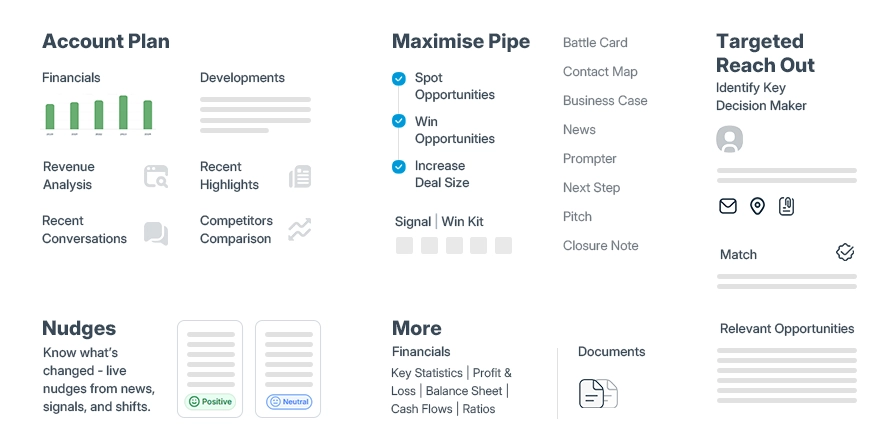
MarketsandMarkets SalesPlay is the world's first AI-powered sales and revenue intelligence co-pilot that transforms sales execution speed and precision through its revolutionary suite of 7 AI Agents.
Unlike competitors offering fragmented data, SalesPlay delivers pitch-ready opportunity ecosystems—hyper-personalized sales kits, mapped buying centers, and conversion-ready outreach sequences that eliminate 80% of manual work while consistently closing deals others can't identify.
Built on exclusive MarketsandMarkets intelligence and thousands of premium data sources, and exclusive vendor partnerships, the platform creates a competitive moat that drives 3x productivity gains by enabling every rep to execute with the precision of your organization's elite performers.
Dock excels as a modern revenue enablement platform built specifically for today's buyer-driven world. Before Dock, most sales enablement platforms were built for seller-controlled processes, which didn't reflect modern tech purchases.
Dock's key strengths for tech companies include:
Client-facing workspaces that help buyers and sellers work together throughout complex deals
Templated customer-facing sales processes that ensure consistency across the entire team
Strong content management supporting the entire customer experience from sales to onboarding
Gong provides an AI-powered approach to sales intelligence that particularly benefits evidence-based tech companies. This revenue intelligence platform analyzes customer-facing interactions across email, phone, and web conferencing.
Tech teams value Gong because it:
Analyzes sales conversations objectively and highlights likely-to-close deals
Shows specific behaviors that distinguish top-performing reps
Provides evidence-based insights about closing deals effectively
STOP CHASING PROSPECTS
START CLOSING DEALS!!
Highspot combines content management, guided selling, and training in one platform. Its AI-powered features suggest relevant content based on selling scenarios, making it perfect for tech companies with large product portfolios.
Tech sales teams appreciate Highspot's:
Content analytics that reveal successful sales approaches through engagement data
Cross-system content management that syncs across existing repositories
Sales-specific organization that makes finding relevant materials easy
Your specific needs determine the ideal platform. Dock stands out for buyer collaboration. Gong excels at conversation intelligence. Highspot offers complete content management and guided selling capabilities.
The right choice depends on which challenges affect your tech sales process most. Any of these specialized platforms can significantly improve how your team directs technology solution sales.

Healthcare and pharmaceutical industries face strict regulatory oversight, which makes their sales enablement requirements unique compared to other sectors. Sales representatives must explain complex scientific information while following compliance standards. This makes specialized sales enablement tools a necessity.
The healthcare and pharmaceutical sectors struggle with a major training issue. New sales representatives spend 62 days in training during their first year. This drops to just 2 days annually after that. Such a sharp decline affects performance in an industry where product knowledge can influence patient outcomes.
Sales enablement software helps close this gap by offering continuous learning through:
Mobile-friendly platforms that let representatives learn during territory travel
Short, engaging content in various formats to help retention
Gamification elements like leaderboards and badges that keep representatives interested
Sales enablement must give pharmaceutical teams compliant, relevant content while making stakeholder interactions smoother. Life sciences companies lose an average of $5.20 million yearly due to non-compliance. The challenge lies in balancing compliance with effective selling.
Sales representatives must quickly access pre-approved, regulation-specific content libraries. This approach helps them connect with healthcare professionals effectively without risking regulatory issues that could harm brand reputation or lead to heavy fines.
Allego and Bigtincan stand out among sales enablement platforms for healthcare and pharmaceutical companies.
Allego excels as a sophisticated solution built for industries that rely on continuous learning and clear communication. Healthcare sales teams benefit from:
Video coaching and peer collaboration that promotes knowledge sharing
Quick access to training materials before important healthcare provider meetings
Immediate feedback from managers about compliance-sensitive presentations
Analytics that show which training methods work best with medical professionals
Allego's quality of support rating of 9.5 beats Bigtincan's 9.2.
Bigtincan serves as a detailed sales enablement platform that fits healthcare environments perfectly. Key features include:
AI-driven content suggestions that find compliant materials for specific healthcare stakeholders
Strong analytics that reveal which content influences healthcare decision-makers
Easy integration with existing healthcare-specific CRM systems
Content governance that creates reliable information sources for representatives
Both platforms create content approval workflows for audit trails, control access by team or role, and show real-time content usage insights. These features matter greatly to pharmaceutical companies that must document their compliance efforts.
Companies should match their specific needs when choosing between these platforms. Teams focused on training and coaching might prefer Allego's learning-centered approach. Those who want strong content management and buyer engagement could find Bigtincan more suitable.
These platforms help healthcare and pharmaceutical sales teams handle their regulated environment while delivering tailored experiences that modern buyers expect.
STOP GUESSING YOUR PIPELINE
START GROWING IT WITH AI SALES!!
Financial institutions and insurance companies have specific challenges in implementing sales enablement solutions. Strict regulatory requirements and sensitive client data handling require specialized tools that balance security with sales effectiveness. The stakes are high—financial services firms noted that British Airways received a £20 million fine in 2020 after a data breach exposed customers' personal information.
Data security forms the foundation of client trust and business continuity in financial services and insurance companies. The industry's enablement centers around quality data, which makes its protection vital.
Sales enablement platforms in this sector need to address several security challenges:
Regulatory compliance: Financial institutions must follow strict data protection laws including GDPR in Europe and various regional regulations. Breaking these rules can get pricey.
Protection against breaches: Cybersecurity threats like unauthorized access and data breaches hurt customer trust and disrupt operations.
Safeguarding sensitive information: Data leaks of contact details, purchase history and financial reports can lead to serious problems.
Top sales enablement platforms for finance have built resilient security measures to handle these issues. They use role-based access controls with multi-factor authentication so only authorized employees can see sensitive data. The platforms also encrypt data during transmission and storage to keep information safe without proper decryption keys.
Human error remains the main cause of data breaches according to sales enablement experts. This makes employee training on cybersecurity best practices a vital part of these solutions. Financial firms need to find the right balance between tight security and smooth operations—security measures shouldn't stop sales teams from accessing important information while working with clients.
Seismic Enablement Cloud and Salesforce stand out among sales enablement software options for finance and insurance companies.
Seismic Enablement Cloud provides detailed solutions built for financial services. The platform serves more than 400 financial firms to improve client interactions. The platform offers:
AI-powered enablement that helps advisors, bankers, and relationship managers create personalized client experiences
Compliance-focused content management that simplifies production while meeting regulations
Advanced data security with enterprise-grade protection for customer information
Client-facing professionals can prepare, present, and follow up confidently with Seismic—a must-have for high-stakes financial consultations. To cite an instance, Royal London Asset Management uses Seismic's AI-powered enablement to understand clients better and improve engagement.
Salesforce Enablement serves as a strong alternative, especially for organizations that already use Salesforce's ecosystem. The platform combines data from multiple systems to learn about growth opportunities. Financial institutions get:
Open API architecture that combines with core policy and claims systems
AI capabilities through Einstein that help customer service representatives predict client needs
Simplified processes and automated policy administration
Salesforce and Seismic work together to create a powerful system for financial institutions. Teams can deliver personalized, compliant content right inside Salesforce. Representatives can share content, edit and work together on opportunities, and send materials to customers without switching applications.
Your specific needs determine the best choice between these platforms—Seismic specializes in financial services while Salesforce gives you broader ecosystem integration.
Retail and eCommerce businesses succeed through customer connections that shape buying decisions. These industries face unique challenges with high transaction volumes, shorter sales cycles, and the need to keep customers engaged across multiple touchpoints. Their sales enablement needs heavily emphasize visual experiences and customized interactions that boost conversions.
Make Every Rep Speak
Like Your Top 1%
The biggest warning sign for customer churn in retail shows when customers stop engaging with your product and company. Customers quickly cut ties once they feel disconnected from your brand. You can prevent this by building consistent, meaningful interactions throughout the customer's experience.
Content rules today's virtual retail environment—80% of the sales process finishes before customers contact a sales representative. Modern shoppers do extensive research online before they reach out to retailers. Quality content delivery matters at every stage of their buying process.
Retail and eCommerce sales enablement tools should support:
Content customization that aligns with different stages of the customer's experience and educates buyers with the right information at the right time
Community building through online spaces where customers cooperate and share solutions
Educational resources that help customers understand products better, which increases their value
Retail sales enablement must turn training from a one-time event into ongoing support for store associates' daily work. Well-enabled associates become knowledgeable, confident, and ready to help every customer who visits.
Retail sales enablement focuses more on visual experiences that showcase products digitally, unlike finance or healthcare sectors. This becomes crucial when physical demonstrations aren't possible or when enhancing in-store experiences.
Showpad excels as a powerful solution built for retail and consumer goods companies. Sales teams can showcase physical products through digital experiences with its user-friendly interface, from 3D models to 360° immersive showrooms. Retailers selling complex or visual products find this capability particularly valuable.
Note that Showpad takes a complete approach. The platform combines:
eOS® - an AI-powered solution where marketing and sales teams cooperate to strengthen sellers with relevant content
Shared Spaces - custom digital sales rooms that speed up deals through cooperation
Analytics and Insights - offering comprehensive performance views for strategic decisions
Showpad offers flexibility with 65+ pre-configured integrations and an open API. Users give it high marks for ease of use and customization options.
Salesmate CRM enhances retail enablement strategies by connecting customer data across touchpoints. Store associates can access complete history, priorities, and AI-powered insights in one place through its 360° view of each customer's in-store and online activity.
Salesmate helps retailers focus on clienteling with:
Smart segmentation tools that group customers by behavior, purchase history, and location
Custom marketing campaigns that target customers based on their priorities and buying patterns
AI-powered customer service tools that solve common questions instantly
Both platforms deliver the consistent, customized experiences retail customers expect today. Your choice between them depends on your main challenge - content delivery and visual engagement (Showpad) or customer data unification and targeted marketing (Salesmate).
Your choice of a sales enablement platform depends on key factors that shape its success over time. These universal guidelines will help you get the most value from your investment, beyond what your industry specifically needs.
A strong connection between your sales enablement platform and existing CRM systems builds a foundation for better sales results. This link helps you track if your content and training investments work by connecting them to real outcomes like pipeline growth and sales activities.
Your platform should easily merge with:
Core CRM systems that store customer data and sales activities
Marketing automation tools for content synchronization
Cloud storage platforms and communication tools
Systems that don't connect well create gaps in your customer data. One expert puts it well: "B2B sales enablement is the practice of equipping sales teams with necessary tools, content, data, and training to close deals more effectively and efficiently". A CRM-centered sales enablement approach creates a hub for many functions.
Simple interfaces work best for new sales enablement tools. Your team should try potential platforms through demos or free trials to see if they fit your needs.
Low adoption poses a major risk—CRM failure rates stay around 50% but can reach 70%. End users should take part in finding and testing new technology to understand how it fits their daily work.
Too many features often kill usage, so keep your solution simple. Teams that get sales enablement tools right see up to 90% weekly usage.
Scalable enablement means reaching more people without needing extra resources. This becomes crucial as your organization grows.
Your enablement team should start with:
A production process for content and training services
A defined collaboration model based on RACI (Responsible, Accountable, Consulted, Informed)
Technology investments that automate these capabilities
The best platforms include learning management systems, content distribution tools, and analytics that grow with your company.
AI has changed how sales enablement works by making it more available, expandable, and easier to use. The best AI-powered tools work quietly behind the scenes, built into systems you already use.
Look for AI tools that improve existing workflows instead of replacing them. Choose solutions that offer strong AI integration while adapting to new needs.
Modern sales enablement platforms use AI to grasp conversation context and find relevant content that sales teams might need during customer talks. These tools help change reactive sales approaches into proactive, analytical strategies.
Sales enablement continues to grow at an unprecedented pace. The future holds several groundbreaking trends that will reshape how industries connect with customers and generate revenue.
AI has become the backbone of sales enablement. Currently, 49% of go-to-market teams use AI sales tools, and another 41% plan to implement them by 2025. Companies that make use of AI achieve up to 20% better revenue outcomes. These AI assistants transform team operations by:
Automating repetitive tasks like data entry and follow-ups
Analyzing conversations to assess tone and potential objections
Delivering predictive insights that recommend specific actions
B2B sales organizations will adopt AI-driven sales strategies instead of experience-based selling by 2025, reaching 60% adoption. This change transforms teams from reactive to proactive selling models.
Hyper-personalization stands as the next frontier in customer engagement. The combination of AI, advanced algorithms, and detailed customer data creates truly tailored experiences. This method surpasses traditional personalization through simultaneous analysis of behavioral, transactional, contextual, and social data points.
Modern consumers expect personalized interactions, with 71% demanding it and 76% feeling frustrated when businesses fall short. AI-powered hyper-personalization meets these expectations by anticipating needs before customers express them.
Sales enablement has grown into detailed revenue enablement. These unified platforms support all customer-facing roles including sales, marketing, customer success, and partners.
Vendors increasingly use AI to streamline enablement across multiple areas—from content generation and learning pathway optimization to AI-guided pitch practice. CRM data integration helps organizations connect enablement activities with ground sales results, which delivers measurable ROI for enablement investments.
STOP GUESSING YOUR PIPELINE
START GROWING IT WITH AI SALES!!
Your specific industry challenges must match with the right solution when you pick a sales enablement platform. Different sectors need custom approaches, as we've seen in this piece. Tech companies do well with agile tools like Dock and Gong. Healthcare organizations perform better with compliance-focused platforms such as Allego and Bigtincan. Security remains the top priority for financial institutions with solutions like Seismic. Retail businesses excel when they use visually engaging platforms like Showpad.
Sales enablement keeps changing faster than ever. AI-powered assistants now turn reactive selling into proactive strategies. Hyper-personalization builds deeper customer connections than any that ever spread before. The move toward unified revenue enablement platforms points to a future where sales, marketing, and customer success teams work naturally together. They share tools and insights to achieve better results.
Your team should assess potential platforms by looking at how well they integrate, how easy they are to use, and what AI features they offer. Remember, even the best platform won't help much if your team doesn't use it. The right solution should tackle your current challenges and grow with your organization as your needs change.
Sales enablement has grown way beyond the reach and influence of simple content storage. Companies that use these platforms strategically gain a strong edge over competitors. Your industry's specific needs should guide your choice to pick a platform that enables your customer-facing teams to succeed.
The facts speak for themselves. Companies that utilize sales enablement tools consistently beat their competitors in revenue growth, deal speed, and customer satisfaction. You just need sales enablement - the real question is which platform will magnify your team's strengths in your industry.
Choosing the right sales enablement platform can transform your revenue outcomes, but success depends on matching industry-specific needs with appropriate solutions.
• Industry-specific platforms deliver better results: Tech companies need agile tools like Dock and Gong, while healthcare requires compliance-focused solutions like Allego and Bigtincan.
• Integration capabilities determine long-term success: Platforms must seamlessly connect with existing CRM and marketing tools to create unified customer data and measurable ROI.
• AI is reshaping sales enablement across all industries: 49% of teams already use AI sales tools, with predictive insights and automated workflows driving up to 20% better revenue outcomes.
• Security and compliance requirements vary dramatically by sector: Financial services need enterprise-grade protection like Seismic offers, while retail focuses on visual engagement through platforms like Showpad.
• User adoption makes or breaks platform success: Simple interfaces and team involvement in selection prevent the 50-70% failure rates common with complex sales tools.
The future belongs to unified revenue enablement platforms that support sales, marketing, and customer success teams with AI-powered personalization and predictive insights. Organizations that strategically implement industry-appropriate platforms consistently outperform competitors in revenue growth and customer satisfaction.
A sales enablement platform is a comprehensive software solution that equips sales teams with the tools, content, data, and training needed to engage buyers more effectively throughout the sales process. It typically includes features like content management, learning and training modules, sales intelligence, and collaboration tools.
Sales enablement platforms vary by industry due to unique challenges and requirements. For example, tech companies need agile tools for fast-paced environments, healthcare industries require strict compliance features, financial services prioritize data security, and retail focuses on visual engagement and personalization capabilities.
When selecting a sales enablement platform, consider its integration capabilities with existing CRM and marketing tools, ease of use for team adoption, scalability to grow with your organization, and AI features for automation and insights. Additionally, evaluate industry-specific requirements and the platform's ability to address your unique challenges.
AI and automation are transforming sales enablement by providing predictive insights, automating repetitive tasks, analyzing conversations for better coaching, and enabling hyper-personalization of content. AI-powered tools are helping sales teams shift from reactive to proactive selling strategies, leading to improved revenue outcomes.
The future of sales enablement is moving towards unified revenue enablement platforms that support all customer-facing roles, including sales, marketing, and customer success. These platforms will increasingly leverage AI for content generation, learning optimization, and performance analytics, while providing measurable ROI by correlating enablement activities with real-world sales results.
Your SDRs work 9–5
AI Sales works 24/7!!

Category: Uncategorized Tags: ai, AIOps, Artificial Intelligence, cloud, cloud platform, Cybersecurity, Information and Communications Technology , VR