Immersive Simulator Market by Simulation Environment (Console Operator, Field Operator), Offering (Hardware, Software & Services), Application (Training, Product Development, Emergency Services), Industry, and Geography - Global Growth Driver and Industry Forecast to 2035


Immersive Simulator Market Summary
The global Immersive Simulator Market is expanding rapidly as organizations replace conventional classroom-based and equipment-dependent training with realistic, repeatable, data-driven simulation environments. The market is estimated at approximately USD 17-20 billion in 2025 and is projected to reach around USD 65-85 billion by 2035, representing an estimated 13-16% CAGR during the forecast period. Published estimates vary considerably because the market may include hardware, software, services, virtual reality (VR), augmented reality (AR), mixed reality (MR), simulation platforms, and industry-specific training systems. For example, one recent market assessment estimates the global immersive simulator market at USD 17.62 billion in 2025, while broader immersive simulation research places the 2024 market at approximately USD 9.6 billion and forecasts exceptionally rapid expansion through 2030.
The central growth drivers are the rising cost of physical training, demand for safer workforce development, increasing adoption of VR and AR, expansion of autonomous systems, and the digital transformation of industrial, healthcare, defense, aviation, and education environments. Immersive simulators allow users to practice complex tasks in controlled virtual or mixed-reality environments while collecting performance data for assessment and improvement. AI is accelerating this transformation by enabling adaptive scenarios, intelligent virtual instructors, automated performance evaluation, predictive skill-gap analysis, and dynamic simulation environments. IoT adds real-time equipment and environmental data, while cloud platforms enable remote access, centralized content management, and analytics across distributed training operations.
The market is also benefiting from the growing adoption of digital twins, extended reality (XR), high-fidelity visualization, haptic technologies, and real-time 3D engines. These technologies are making simulations more realistic while reducing dependence on physical training assets. Aviation, aerospace and defense, healthcare, automotive, manufacturing, energy, emergency services, and education are becoming major application areas. Training and learning represent a particularly important opportunity; Grand View Research estimates the training and learning segment of immersive simulation at approximately USD 3.8 billion in 2024, with a projected CAGR of more than 30% through 2030.
Key Market Trends & Insights
North America remains the leading regional market. The region benefits from high defense and aerospace spending, advanced healthcare simulation, mature enterprise technology infrastructure, strong adoption of VR/AR, and extensive investment in professional training. Grand View Research estimates that North America accounted for approximately 42% of immersive simulation revenue in 2024.
Asia Pacific is expected to be the fastest-growing major region. China, Japan, South Korea, India, and Southeast Asian economies are investing in industrial automation, defense modernization, aviation infrastructure, healthcare training, and digital education. Growing manufacturing capacity and expanding technology ecosystems are creating additional demand for immersive simulation.
Training and learning represent a dominant application opportunity. Aviation, military, healthcare, industrial safety, technical education, and corporate workforce training increasingly use simulators to reproduce high-risk or expensive scenarios. This allows organizations to increase training frequency while reducing operational disruption.
VR is a major technology segment. VR immersive simulation generated approximately USD 4.4 billion in 2024 according to Grand View Research and is projected to expand at a CAGR of about 31% through 2030.
AI is changing simulation from static to adaptive. AI can alter scenarios according to trainee behavior, generate realistic virtual characters, identify errors, provide automated feedback, and determine when a learner has achieved competency.
Digital twins and IoT are expanding industrial use cases. Simulators can increasingly connect with real equipment, operational data, and digital-twin models, enabling organizations to rehearse maintenance, production, emergency, and operational scenarios before implementing them in physical environments.
Market Size & Forecast
- Base year market size: Approximately USD 17-20 billion in 2025, based on a broad market scope covering immersive simulator hardware, software, and services.
- Forecast value by 2035: Approximately USD 65-85 billion, supported by expanding XR adoption, AI-enabled simulation, industrial digital twins, and high-value training applications.
- CAGR: Approximately 13-16% through 2035, with individual segments such as VR-based training potentially growing substantially faster.
- Growth factors: Increasing training costs, safety requirements, defense modernization, healthcare simulation, industrial automation, AI, IoT, cloud computing, digital twins, and demand for remote and repeatable training environments.
Immersive Simulator Market Top 10 key takeaway
- The global Immersive Simulator Market is estimated at approximately USD 17-20 billion in 2025.
- The market is expected to reach approximately USD 65-85 billion by 2035.
- Overall market growth is projected at approximately 13-16% CAGR during the forecast period.
- North America currently represents the leading regional market.
- Asia Pacific is expected to record the fastest growth.
- VR-based simulation remains one of the largest technology opportunities.
- Training and learning are major applications across aviation, healthcare, defense, and industry.
- AI is enabling adaptive scenarios, intelligent assessment, and automated feedback.
- IoT and digital twins are expanding simulation into real-world industrial operations.
- Hardware, software, content, and managed services will increasingly converge into integrated simulation platforms.
Product Insights
The hardware segment remains a fundamental component of the Immersive Simulator Market because high-quality simulation depends on capable computing, displays, sensors, tracking equipment, motion platforms, and human-machine interfaces. Hardware offerings range from standalone VR headsets and AR glasses to sophisticated full-motion aircraft simulators, vehicle platforms, haptic interfaces, immersive projection environments, and specialized control systems.
Within consumer-accessible and enterprise training environments, VR-based head-mounted displays are emerging as one of the most scalable product categories. VR enables organizations to deploy realistic simulations without constructing full physical replicas. Modern headsets combine high-resolution displays, inside-out tracking, spatial audio, hand tracking, and increasingly sophisticated passthrough capabilities.
High-end simulators remain important for aviation, defense, automotive, and specialized industrial applications. Full-motion platforms replicate physical movement and acceleration, providing a higher level of realism for pilots, vehicle operators, and specialized personnel. Although these systems have higher upfront costs, their ability to reproduce expensive or dangerous operating conditions creates strong value for organizations with intensive training requirements.
Software is becoming increasingly strategic. Simulation engines, scenario-management systems, learning platforms, digital-twin applications, analytics tools, and content libraries determine how effectively hardware can be used. AI-enabled software is allowing training scenarios to respond dynamically to user actions rather than following predetermined sequences.
Emerging product categories include AI-powered virtual instructors, wearable haptic systems, MR training platforms, cloud-based simulators, collaborative multi-user environments, and digital-twin-enabled simulation platforms. The competitive advantage is therefore shifting from hardware specifications alone toward integrated ecosystems combining hardware, software, content, analytics, and services.
Technology / Component Insights (Rename based on keyword if needed)
The technology landscape of the Immersive Simulator Market is built around VR, AR, MR, real-time 3D graphics, motion tracking, sensors, haptics, artificial intelligence, cloud computing, and digital twins. VR currently provides the most established immersive environment for many training applications because it can completely isolate the learner from the physical environment.
AR and MR are gaining importance where trainees need digital information while still seeing physical equipment. This is particularly relevant for maintenance, healthcare, manufacturing, field service, and emergency response. Mixed-reality systems can overlay instructions, diagnostic information, or simulated components onto real-world environments.
AI is becoming one of the most important technological differentiators. Intelligent algorithms can evaluate user actions, detect mistakes, generate scenario variations, and customize training difficulty. Instead of giving every trainee the same sequence, AI-enabled simulators can create individualized learning paths based on performance data.
IoT provides another important layer. Connected sensors can stream information from physical machinery, vehicles, medical devices, or industrial environments into simulation platforms. This creates opportunities for simulations based on real operational conditions rather than generic models.
Digital twins further connect simulation with physical assets. A digital twin can represent a machine, factory, aircraft, vehicle, or other complex system and allow operators to evaluate potential actions in a virtual environment. The integration of IoT, AI, and digital twins is particularly valuable for predictive maintenance and operational planning.
Cloud computing is enabling centralized deployment and content updates. Organizations can manage simulation libraries, user profiles, performance data, and software remotely. Future innovation will focus on edge AI, photorealistic rendering, spatial computing, tactile feedback, biometric analytics, autonomous scenario generation, and interoperable simulation standards.
Application Insights
Training and learning represent the leading application opportunity within the Immersive Simulator Market. Aviation schools, military organizations, healthcare institutions, technical training centers, universities, and enterprises use immersive simulation to develop skills without exposing trainees to unnecessary operational risks. The ability to repeat scenarios and objectively measure performance makes simulation particularly attractive for competency-based training.
Aviation remains one of the most mature applications. Flight simulators allow pilots to practice emergency procedures, adverse weather conditions, navigation, aircraft failures, and unusual operating situations. The same principles are increasingly being applied to commercial driving, maritime operations, railways, and industrial vehicle training.
Healthcare is another high-growth opportunity. Medical simulation can reproduce surgical procedures, emergency scenarios, patient interactions, and clinical decision-making. VR and MR systems can provide learners with repeatable environments while AI can evaluate procedural performance and decision-making.
Aerospace and defense applications include pilot training, mission rehearsal, vehicle operation, battlefield simulation, maintenance training, and command-and-control exercises. Defense organizations can use synthetic environments to prepare personnel for scenarios that would be expensive or impossible to reproduce physically.
Manufacturing and industrial applications are expanding as factories adopt automation and connected machinery. Immersive simulation allows workers to rehearse machine operation, maintenance, safety procedures, and emergency response. Digital twins can further connect these simulations to actual production environments.
Automotive companies are also using simulation for vehicle design, autonomous-driving development, manufacturing training, and human-machine interaction testing. As automated systems become more complex, simulation provides a practical method for testing edge cases at scale.
Regional Insights
North America leads the Immersive Simulator Market because of strong investment in aerospace and defense, advanced healthcare infrastructure, enterprise training, autonomous technology, and VR/AR development. The United States accounts for a particularly significant share of demand due to defense simulation programs, commercial aviation, medical education, and technology-sector investment. Grand View Research estimates North America held approximately 42% of the immersive simulation market in 2024.
Europe represents a substantial market supported by aviation, automotive manufacturing, industrial automation, healthcare, and defense modernization. Germany, France, the United Kingdom, and other European markets are adopting immersive simulation for workforce development and industrial training. The region's emphasis on workplace safety and advanced manufacturing also supports demand.
Asia Pacific is projected to experience the fastest growth. China is expanding immersive technologies across manufacturing, education, defense, and transportation, while Japan and South Korea have strong capabilities in robotics, electronics, and industrial automation. India is emerging as a significant opportunity due to its large workforce, expanding aviation and defense sectors, healthcare modernization, and digital education initiatives.
The region's large manufacturing base provides a particularly strong opportunity for digital-twin-driven simulation. As factories become increasingly automated, training workers to interact with robots, autonomous equipment, and connected production systems will require more sophisticated immersive environments.
- North America: Leading market with strong aerospace, defense, healthcare, and enterprise demand.
- Europe: Strong adoption across automotive, industrial training, healthcare, and aviation.
- Asia Pacific: Fastest-growing region driven by manufacturing and digitalization.
- China: Major opportunity from industrial simulation, defense, education, and smart manufacturing.
- India and Japan: Growing demand from aviation, healthcare, manufacturing, robotics, and workforce training.
[Country]-Specific Market Trends
In APAC, China is estimated to grow at approximately 16-19% CAGR, while Japan is expected to expand at approximately 12-15% CAGR through the forecast period. China's growth is being supported by smart manufacturing, industrial automation, defense modernization, aviation development, and digital education. Japan's mature industrial base and advanced robotics sector make immersive simulation increasingly relevant for factory training, maintenance, healthcare, and transportation.
In North America, the United States is estimated to grow at approximately 13-15% CAGR, Canada at around 11-14%, and Mexico at approximately 13-16%. The United States remains the region's largest opportunity because of defense simulation, commercial aviation, healthcare training, autonomous systems, and enterprise adoption. Canada benefits from aerospace, healthcare, mining, and industrial applications, while Mexico is gaining opportunities through automotive manufacturing and workforce development.
In Europe, Germany is estimated to expand at approximately 12-15% CAGR, while France is expected to grow at approximately 11-14%. Germany's advanced manufacturing sector creates strong demand for simulation-based training, digital twins, robotics, and industrial safety. France benefits from aerospace, defense, transportation, healthcare, and government investment in advanced digital technologies.
Government support for workforce development, defense preparedness, healthcare modernization, digital education, and advanced manufacturing will continue influencing country-level adoption.
- China: Industrial automation and digital manufacturing provide major simulation opportunities.
- Japan: Robotics and advanced manufacturing support sophisticated training platforms.
- United States: Defense, aviation, healthcare, and enterprise applications drive high-value demand.
- Germany: Industry 4.0 and automotive manufacturing accelerate immersive training adoption.
- France: Aerospace, defense, healthcare, and transportation provide diversified demand.
Key Immersive Simulator Company Insights
The competitive landscape includes CAE Inc., L3Harris Technologies, The Boeing Company, Thales Group, Lockheed Martin, Rheinmetall, Northrop Grumman, Varjo Technologies, VirTra, and Loft Dynamics. Recent market research covering the Immersive Simulator Market identifies these companies among the major participants across aviation, defense, industrial, and specialized simulation applications.
CAE maintains a strong position in aviation and healthcare simulation, combining high-fidelity hardware with sophisticated training software and services. Its strategy increasingly centers on connected training ecosystems, analytics, and simulation-based learning rather than individual simulator hardware.
L3Harris, Lockheed Martin, Boeing, Thales, Rheinmetall, and Northrop Grumman have strong positions in defense and aerospace simulation. Their solutions emphasize mission rehearsal, pilot training, tactical environments, and high-fidelity synthetic scenarios.
Varjo is focused on high-resolution XR hardware and professional immersive applications, while VirTra specializes in simulation-based training for law enforcement and public safety. Loft Dynamics focuses on immersive helicopter training systems, demonstrating the continued expansion of specialized simulator categories.
AI is increasingly becoming a strategic capability across the competitive landscape. Companies are incorporating intelligent analytics, scenario automation, digital twins, and adaptive training technologies to differentiate their offerings.
- CAE: Focuses on integrated simulation, training services, analytics, and high-fidelity environments.
- L3Harris: Emphasizes aerospace, defense, mission systems, and advanced training simulation.
- Boeing and Lockheed Martin: Leverage aerospace and defense expertise for high-fidelity simulation.
- Thales and Rheinmetall: Target defense, aviation, transportation, and mission-training environments.
- Varjo, VirTra, and Loft Dynamics: Differentiate through specialized XR and professional simulation platforms.
Recent Developments
Recent industry development has centered on the expansion of AI-enabled simulation environments, in which virtual instructors, automated assessment, adaptive scenarios, and analytics can personalize training. This represents a shift from static simulation content toward systems that can actively respond to trainee behavior.
The market is also seeing increasing integration between immersive simulators and digital twins. By connecting virtual environments with real-world equipment and IoT data, organizations can create simulations that better reflect current operational conditions. This is particularly relevant to manufacturing, energy, transportation, and industrial maintenance.
Another major development is the growth of high-fidelity professional XR hardware. Advances in display resolution, eye tracking, hand tracking, passthrough, spatial audio, and lightweight headsets are making immersive environments more practical for professional use. The expansion of VR and mixed-reality technologies is a major contributor to immersive simulation growth.
Market Segmentation
The Immersive Simulator Market can be segmented By Product into hardware, software, and services. Hardware includes head-mounted displays, motion platforms, sensors, tracking systems, controllers, haptic equipment, displays, and computing systems. Software encompasses simulation engines, digital-twin platforms, content management, analytics, AI systems, and training applications. Services include implementation, maintenance, integration, consulting, and managed training.
By Technology / Component, the market includes virtual reality, augmented reality, mixed reality, projection-based simulation, marker-based and markerless tracking, motion capture, haptics, spatial computing, AI, cloud platforms, and digital twins. VR currently represents one of the most significant technology segments, while MR and AI-enabled systems are gaining momentum.
By Application, the market covers training and learning, product development, emergency services, healthcare, aerospace and defense, automotive, manufacturing, education, media and entertainment, and other industrial applications. Training remains a central revenue generator, while product development and operational simulation offer strong future opportunities.
By Region, the market is divided into North America, Europe, Asia Pacific, Latin America, and the Middle East & Africa. North America currently leads, Europe maintains a strong industrial and defense base, and Asia Pacific is expected to demonstrate the fastest growth.
- By Product: Hardware remains foundational, while software and services capture increasing recurring value.
- By Technology: VR leads established applications, with MR, AI, and digital twins expanding rapidly.
- By Application: Training and learning remain major demand centers across multiple industries.
- By End User: Aerospace, defense, healthcare, manufacturing, automotive, and education are key users.
- By Region: North America leads current adoption while Asia Pacific provides strong future growth potential.
Conclusion
The global Immersive Simulator Market is entering a high-growth phase as organizations seek safer, more measurable, and more cost-effective ways to train people and test complex systems. With a broad estimated market size of USD 17-20 billion in 2025 and a potential value of USD 65-85 billion by 2035, the market could maintain approximately 13-16% CAGR over the forecast period. The wide range reflects differences in market definitions, particularly between immersive simulators and the broader immersive simulation ecosystem.
AI will be one of the most important forces shaping the market. Intelligent simulation platforms can assess performance in real time, adapt scenario difficulty, generate realistic events, and provide individualized feedback. This capability changes simulation from a fixed training environment into an adaptive learning system.
IoT and digital twins will further increase the market's strategic importance. Connected industrial equipment can provide real operational information to simulation platforms, allowing organizations to model maintenance requirements, safety scenarios, production changes, and equipment behavior. This creates a bridge between simulation and operational technology.
The strongest long-term opportunities will likely occur where AI, VR/AR/MR, digital twins, cloud computing, IoT, analytics, and automation converge. Organizations will increasingly evaluate immersive simulators not simply on graphical realism but on measurable outcomes such as reduced training time, improved safety, lower equipment downtime, higher workforce productivity, and better decision-making.
Through 2035, businesses that combine high-fidelity simulation hardware with intelligent software, reusable content, analytics, and managed services should be well positioned to capture market value. The strategic importance of immersive simulation will extend beyond training into product development, operational planning, maintenance, emergency response, autonomous-system testing, and workforce transformation.
FAQs
1. What is the market size of the Immersive Simulator Market?
The global Immersive Simulator Market is estimated at approximately USD 17-20 billion in 2025, although reported figures vary substantially depending on whether the market includes broader immersive simulation technologies, XR platforms, and associated services. One recent market assessment estimates the 2025 market at USD 17.62 billion.
2. What is the growth rate of the Immersive Simulator Market?
The market is expected to grow at approximately 13-16% CAGR through 2035 under a broad market definition. Individual segments can grow considerably faster; for example, immersive simulation training and VR segments have been forecast at growth rates above 30% in some recent studies.
3. What are the key drivers of the Immersive Simulator Market?
Major drivers include rising training costs, workplace safety requirements, defense modernization, aviation training, healthcare simulation, industrial automation, AI, VR and AR adoption, digital twins, IoT, cloud computing, remote training, and demand for measurable workforce-development outcomes.
4. Which region leads the Immersive Simulator Market?
North America is currently the leading regional market, supported by aerospace, defense, healthcare, enterprise training, and advanced technology adoption. Asia Pacific is expected to be the fastest-growing major region because of industrial automation, manufacturing, defense investment, digital education, and expanding XR adoption.
5. Who are the key companies in the Immersive Simulator Market?
Major companies include CAE Inc., L3Harris Technologies, The Boeing Company, Thales Group, Lockheed Martin, Rheinmetall, Northrop Grumman, Varjo Technologies, VirTra, and Loft Dynamics. These companies compete through high-fidelity hardware, VR/XR technologies, simulation software, AI-enabled training, digital twins, analytics, and specialized industry solutions.
To speak to our analyst for a discussion on the above findings, click Speak to Analyst
 Exclusive indicates content/data unique to MarketsandMarkets and not available with any competitors.
Table of Contents
1 Introduction (Page No. - 14)
1.1 Objectives of the Study
1.2 Market Definition
1.3 Study Scope
1.3.1 Markets Covered
1.3.2 Years Considered for the Study
1.4 Currency & Pricing
1.5 Limitations
1.6 Stakeholders
2 Research Methodology (Page No. - 18)
2.1 Research Data
2.1.1 Secondary Data
2.1.1.1 Key Data From Secondary Sources
2.1.2 Primary Data
2.1.2.1 Key Data From Primary Sources
2.1.2.2 Key Industry Insights
2.1.2.3 Breakdown of Primaries
2.2 Market Size Estimation
2.2.1 Bottom-Up Approach
2.2.1.1 Approach for Capturing the Market Share By Bottom-Up Analysis (Demand Side)
2.2.2 Top-Down Approach
2.2.2.1 Approach for Capturing the Market Share Top-Down Analysis (Supply Side)
2.3 Market Breakdown & Data Triangulation
2.4 Research Assumptions
3 Executive Summary (Page No. - 27)
4 Premium Insights – Immersive Simulator Market (Page No. - 32)
4.1 Immersive Simulator Market, 2016–2022 (USD Million)
4.2 Market, By Simulation Environment (2016–2022)
4.3 Immersive Simulator Market, By Application (2016)
4.4 Market, By Industry and Region (2016)
4.5 Market, By Geography (2016)
5 Market Overview (Page No. - 36)
5.1 Introduction
5.2 Market Segmentation
5.2.1 Immersive Simulation Market, By Simulation Environment
5.2.2 Immersive Simulation Market, By Offering
5.2.3 Immersive Simulation Market, By Application
5.2.4 Immersive Simulation Market, By Industry
5.3 Market Dynamics
5.3.1 Drivers
5.3.1.1 Increasing Applications in the Medical Industry
5.3.1.2 Risk Mitigation in Oil & Gas Industries Through Training in Immersive Simulator
5.3.1.3 Ability to Transfer Knowledge Quickly Through Training in Immersive Simulator
5.3.2 Restraints
5.3.2.1 Lack of Integration Between Providers of Immersive Simulator Hardware, Software, and Services
5.3.2.2 Low Adoption and Acceptance Due to Lack of Awareness
5.3.3 Opportunities
5.3.3.1 High Demand for Immersive Simulation in the Tourism Sector
5.3.3.2 Use of Complete Immersive Training in Defense
5.3.4 Challenges
5.3.4.1 Technical Challenges Related to Configuration of Immersive Simulator Applications for Different Industrial Platforms
5.3.4.2 Head and Eye Tracking Difficulties in Head-Mounted Display During Immersive Simulation
6 Industry Trends (Page No. - 44)
6.1 Introduction
6.2 Value Chain Analysis
6.3 Porter’s Five Forces Model
6.3.1 Threat of New Entrants
6.3.2 Threat of Substitutes
6.3.3 Bargaining Power of Suppliers
6.3.4 Bargaining Power of Buyers
6.3.5 Intensity of Competitive Rivalry
7 Market, By Offering (Page No. - 51)
7.1 Introduction
7.2 Software and Services
7.2.1 Graphics Interface
7.2.2 Haptics Control
7.2.3 Performance Tracker
7.3 Hardware
7.3.1 Head-Mounted Display
7.3.2 Monitor/Display
7.3.3 Audio Hardware
7.3.4 Interaction Devices
7.3.4.1 Exoskeleton
7.3.4.2 Data Glove
7.3.4.3 3d Mouse
7.3.4.4 Haptic Technology
7.3.4.4.1 Locomotion Interface
7.3.4.4.2 Tactile Feedback
7.3.4.4.3 Force Feedback
8 Market, By Simulation Environment (Page No. - 57)
8.1 Introduction
8.2 Field Operator Training
8.2.1 Industrial Outlook of Field Operator Training
8.2.2 Advantages of Field Operator Training
8.2.3 Disadvantages of Field Operator Training
8.3 Console Operator Training
8.3.1 Industrial Outlook of Console Operator Training
8.3.2 Advantages of Console Operator Training
8.3.3 Disadvantages of Console Operator Training
9 Market, By Application (Page No. - 61)
9.1 Introduction
9.2 Training
9.3 Emergency Services
9.4 Product Development
9.4.1 Product Design
9.4.2 Error Detection
10 Market, By Industry (Page No. - 66)
10.1 Introduction
10.2 Oil and Gas
10.3 Metals and Mining
10.4 Power and Energy
10.5 Medical and Biotech
10.6 Aerospace and Defense
10.7 Automotive and Marine
10.8 Chemicals
10.9 Water and Wastewater
10.10 Pulp and Paper
10.11 Food and Beverages
10.12 Others
11 Geographical Analysis (Page No. - 87)
11.1 Introduction
11.2 North America
11.2.1 U.S
11.2.2 Canada
11.2.3 Mexico
11.3 Europe
11.3.1 Germany
11.3.2 U.K.
11.3.3 France
11.3.4 Italy
11.3.5 Rest of Europe
11.4 Asia-Pacific
11.4.1 China
11.4.2 Japan
11.4.3 India
11.4.4 Rest of Asia-Pacific
11.5 Rest of the World
11.5.1 Middle East & Africa
11.5.2 South America
12 Competitive Landscape (Page No. - 103)
12.1 Overview
12.2 Market Ranking Analysis of Immersive Simulator
12.3 Competitive Situation and Trends
12.3.1 New Product Developments
12.3.2 Partnerships and Agreements
12.3.3 Acquisitions
13 Company Profiles (Page No. - 109)
(Company at A Glance, Recent Financials, Products & Services, Strategies & Insights, & Recent Developments)*
13.1 Introduction
13.2 Aveva Group PLC
13.3 ESI Group
13.4 Schneider Electric SE
13.5 Siemens AG
13.6 Applied Research Associate, Inc.
13.7 Designing Digitally, Inc.
13.8 Immerse Learning
13.9 Mass Virtual Inc.
13.10 Samahnzi (Pty) Ltd.
13.11 Talent Swarm
*Details on Company at A Glance, Recent Financials, Products & Services, Strategies & Insights, & Recent Developments Might Not Be Captured in Case of Unlisted Companies.
14 Appendix (Page No. - 135)
14.1 Insights of Industry Experts
14.2 Discussion Guide
14.3 Knowledge Store: Marketsandmarkets’ Subscription Portal
14.4 Introducing RT: Real-Time Market Intelligence
14.5 Available Customizations
14.6 Related Reports
14.7 Author Details
List of Tables (43 Tables)
Table 1 Immersive Simulation Market, By Simulation Environment
Table 2 Immersive Simulation Market, By Offering
Table 3 Immersive Simulation Market, By Application
Table 4 Immersive Simulation Market, By Industry
Table 5 Immersive Simulator Market, By Offering, 2013–2022 (USD Million)
Table 6 Market, By Simulation Environment, 2013–2022 (USD Million)
Table 7 Market, By Application, 2013–2022 (USD Million)
Table 8 Market, By Industry, 2013–2022 (USD Million)
Table 9 Immersive Simulator Market for the Oil and Gas Industry, By Application, 2013–2022 (USD Million)
Table 10 Market for the Oil and Gas Industry, By Region, 2013–2022 (USD Million)
Table 11 Market for the Metal and Mining Industry, By Application, 2013–2022 (USD Million)
Table 12 Market for the Metals and Mining Industry, By Region, 2013–2022 (USD Million)
Table 13 Market for the Power and Energy Industry, By Application, 2013–2022 (USD Million)
Table 14 Market for the Power and Energy Industry, By Region, 2013–2022 (USD Million)
Table 15 Immersive Simulator Market for the Medical and Biotech Industry, By Application, 2013–2022 (USD Million)
Table 16 Immersive Simulator Market for the Medical and Biotech Industry, By Region, 2013–2022 (USD Million)
Table 17 Market for the Aerospace and Defense Industry, By Application, 2013–2022 (USD Million)
Table 18 Market for the Aerospace and Defense Industry, By Region, 2013–2022 (USD Million)
Table 19 Market for the Automotive and Marine Industry, By Application, 2013–2022 (USD Million)
Table 20 Market for the Automotive and Marine Industry, By Region, 2013–2022 (USD Million)
Table 21 Immersive Simulator Market for the Chemical Industry, By Application, 2013–2022 (USD Million)
Table 22 Market for the Chemical Industry, By Region, 2013–2022 (USD Million)
Table 23 Immersive Simulator Market for the Water and Wastewater Industry, By Application, 2013–2022 (USD Million)
Table 24 Market for the Water and Wastewater Industry, By Region, 2013–2022 (USD Million)
Table 25 Immersive Simulator Market for the Pulp and Paper Industry, By Application, 2013–2022 (USD Million)
Table 26 Market for the Pulp and Paper Industry, By Region, 2013–2022 (USD Million)
Table 27 Market for the Food and Beverages Industry, By Application, 2013–2022 (USD Million)
Table 28 Market for the Food and Beverages Industry, By Region, 2013–2022 (USD Million)
Table 29 Market for the Other Industries, By Application, 2013–2022 (USD Million)
Table 30 Market for the Other Industries, By Region, 2013–2022 (USD Million)
Table 31 Immersive Simulator Market, By Region, 2013–2022 (USD Million)
Table 32 Market in North America, By Country, 2013–2022 (USD Million)
Table 33 Market in North America, By Industry, 2013–2022 (USD Million)
Table 34 Market in Europe, By Country, 2013–2022 (USD Million)
Table 35 Market in Europe, By Industry, 2013–2022 (USD Million)
Table 36 Market in Asia-Pacific, By Country, 2013–2022 (USD Million)
Table 37 Immersive Simulator Market in Asia-Pacific, By Industry, 2013–2022 (USD Million)
Table 38 Market in RoW, By Region, 2013–2022 (USD Million)
Table 39 Immersive Simulator Market in RoW, By Industry, 2013–2022 (USD Million)
Table 40 Ranking of Key Players in the Immersive Simulator Market, 2015
Table 41 New Product Launches and Developments, 2014–2016
Table 42 Partnerships and Agreements, 2015–2016
Table 43 Acquisitions, 2014–2016
List of Figures (61 Figures)
Figure 1 Markets Covered in the Market
Figure 2 Immersive Simulator Market: Research Design
Figure 3 Immersive Simulator Market: Bottom-Up Approach
Figure 4 Top-Down Approach
Figure 5 Data Triangulation
Figure 6 Assumptions of the Research Study
Figure 7 Immersive Simulator Market Segmentation
Figure 8 Software & Services Segment Expected to Hold A Major Share of the Market During the Forecast Period
Figure 9 Console Operator Expected to Hold A Major Share of the Market During the Forecast Period
Figure 10 Immersive Simulator Market for Training Application Expected to Grow at the Highest Rate During the Forecast Period
Figure 11 Oil & Gas Industry to Hold the Largest Size of the Market During the Forecast Period
Figure 12 Immersive Simulator Market, By Geography, 2016
Figure 13 Attractive Growth Opportunities in the Immersive Simulator Market
Figure 14 Console Operator Training Market Expected to Grow at A Higher CAGR Between 2016 and 2022
Figure 15 Training Application Expected to Lead the Market in 2016
Figure 16 Oil & Gas Industry Expected to Hold the Largest Share of the Immersive Simulator Market in 2016
Figure 17 The U.S. to Hold the Largest Share of the Market in 2016
Figure 18 Immersive Simulation Market, By Region
Figure 19 Drivers, Restraints, Opportunities, and Challenges in the Market
Figure 20 Value Chain Analysis: Major Value Addition Done During the Manufacturing & Assembly Phase
Figure 21 Porter’s Five Forces Analysis - 2015
Figure 22 Impact Analysis: Immersive Simulator Market
Figure 23 Medium Impact of Threat of New Entrants on the Market
Figure 24 Medium Impact of Threat of Substitutes in the Immersive Simulator Market
Figure 25 Medium Impact of Bargaining Power of Suppliers in the Market
Figure 26 Low Impact of Bargaining Power of Buyers in the Immersive Simulator Market
Figure 27 High Impact of Intensity of Competitive Rivalry in the Market
Figure 28 Immersive Simulator Market, By Offering
Figure 29 Market for Hardware Expected to Grow at A Higher Rate Between 2016 and 2022
Figure 30 Market, By Simulation Environment
Figure 31 Market for Console Operator Training Expected to Grow at A Higher Rate Between 2016 and 2022
Figure 32 Immersive Simulator Market, By Application
Figure 33 Market for Training Expected to Grow at the Highest Rate Between 2016 and 2022
Figure 34 Market, By Industry
Figure 35 Oil and Gas Industry Expected to Hold the Largest Size of the Market Between 2016 and 2022
Figure 36 North America to Hold the Largest Size of the Immersive Simulator Market for the Oil and Gas Industry in 2016
Figure 37 Training Applications to Lead the Immersive Simulator Market for the Metal and Mining Industry Between 2016 and 2022
Figure 38 North America Expected to Hold the Largest Size of the Market for the Power and Energy By 2022
Figure 39 Immersive Simulator Market for the Aerospace and Defense Industry in North America Expected to Grow at A Highest Rate Between 2016 and 2022
Figure 40 Training Applications Likely to Dominate the Market for the Chemical Industry During the Forecast Period
Figure 41 North America Expected to Dominate the Immersive Simulator for the Pulp and Paper Industry During the Forecast Period
Figure 42 Training Expected to Lead the Immersive Stimulator Market for the Food and Beverages Industry During the Forecast Period
Figure 43 Immersive Simulator Market in Europe to Grow at the Highest Rate During the Forecast Period
Figure 44 Snapshot of Immersive Simulator Market in North America
Figure 45 Snapshot of Market in Europe
Figure 46 Germany Likely to Dominate the European Market During the Forecast Period
Figure 47 Snapshot of Immersive Simulator Market in Asia-Pacific
Figure 48 Immersive Simulator Market in South America to Grow at the Highest Rate During the Forecast Period
Figure 49 New Product Development as the Key Growth Strategy Adopted By the Companies Between 2014 and 2016
Figure 50 Market Evolution Framework: New Product Developments Fuelled the Growth of the Market
Figure 51 Battle for Market Share: New Product Launches & Developments—The Key Strategies Adopted By Players Between 2014 and 2016
Figure 52 Geographic Revenue Mix of Top Immersive Simulator Market Players
Figure 53 Aveva Group PLC: Company Snapshot
Figure 54 Aveva Group PLC: SWOT Analysis
Figure 55 ESI Group: Company Snapshot
Figure 56 ESI Group: SWOT Analysis
Figure 57 Schneider Electric SE: Company Snapshot
Figure 58 Schneider Electric SE: SWOT Analysis
Figure 59 Siemens AG: Company Snapshot
Figure 60 Siemens AG: SWOT Analysis
Figure 61 Applied Research Associate, Inc.: SWOT Analysis
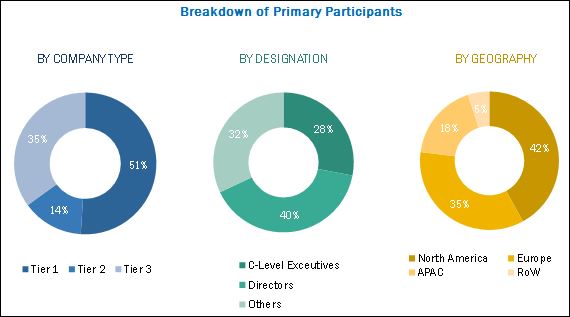
The research methodology used to estimate and forecast the immersive simulator market begins with capturing data on key vendor revenue through the secondary research such as BP Energy Outlook 2035, Current Market Outlook 2016–2035 Boeing, International Association of Medical Science Educators (IAMSE), International Energy Agency (IEA), North American Simulation and Gaming Association, Organisation Internationale des Constructeurs d'Automobiles (OICA), Simulation Australasia, Stockholm International Peace Research Institute, U.S. Energy Information Administration, press releases, investor relation presentations, and annual reports. The vendor offerings are also taken into consideration to determine the market segmentation. The bottom-up procedure has been employed to arrive at the overall size of the global immersive simulator market from the revenue of key players. After arriving at the overall market size, the total market has been split into several segments and subsegments, which have been verified through primary research by conducting extensive interviews of people holding key positions such as CEOs, VPs, directors, and executives. The market breakdown and data triangulation procedures have been employed to complete the overall market engineering process and arrive at the exact statistics for all segments and subsegments. The breakdown of the profiles of primaries is depicted in the figure below:
To know about the assumptions considered for the study, download the pdf brochure
The immersive simulator ecosystem comprises component providers, system integrators, software providers, and distributors. The players involved in the development of immersive simulator include Applied Research Associate Inc. (U.S.), Aveva Group Plc, (U.K.), ESI Group (France), Immerse Learning, (U.S.), Schneider Electric SE. (France), and Siemens AG (Germany), among others.
Target Audience of the Report:
- Associations, organizations, forums, and alliances
- Component manufacturers
- Distributors and traders
- Original equipment manufacturers
- Process industries such as oil and gas, power, chemical, and entertainment, among others
- Research organizations and consulting companies
- Software and service providers
- System integrators
- Technology investors
- Technology solution providers
“This study answers several questions for the stakeholders, primarily which market segments to focus on in the next two to five years for prioritizing efforts and investments.”
Scope of the Report:
This research report categorizes the global immersive simulation market on the basis of simulation environment, offering, application, industry, and geography.
Immersive Simulator Market, by Simulation Environment
- Console Operator Training
- Field Operator Training
Immersive Simulator Market, by Offering:
- Hardware
- Software & Services
Immersive Simulator Market, by Application:
- Training
- Emergency Services
- Product Development
Immersive Simulator Market, by Industry:
- Oil & Gas
- Metals & Mining
- Power & Energy
- Medical & Biotech
- Aerospace & Defense
- Automotive & Marine
- Chemicals
- Water & Wastewater
- Pulp & Paper
- Food & Beverages
- Others (Cement and Textile, Education, Tourism, and Entertainment)
Immersive Simulator Market, by Geography:
- North America
- Europe
- Asia-Pacific (APAC)
- Rest of the World (RoW)
Available Customizations:
With the given market data, MarketsandMarkets offers customizations according to the companies’ specific needs. The following customization options are available for the report:
Company Information:
Detailed analysis and profiling of additional market players (up to five)












Growth opportunities and latent adjacency in Immersive Simulator Market