mHealth Solutions Market

mHealth Solutions Market by Offering [Apps (Chronic Care, Mental Health, Women's Health, Medication Management, Fitness, CDS), Devices (Sleep, Drug Delivery)], Use Case (Preventive, Monitoring), End User (Providers, Patients) - Global Forecast to 2031



MHEALTH SOLUTIONS MARKET SIZE, SHARE & GROWTH SNAPSHOT
Source: Secondary Research, Interviews with Experts, MarketsandMarkets Analysis
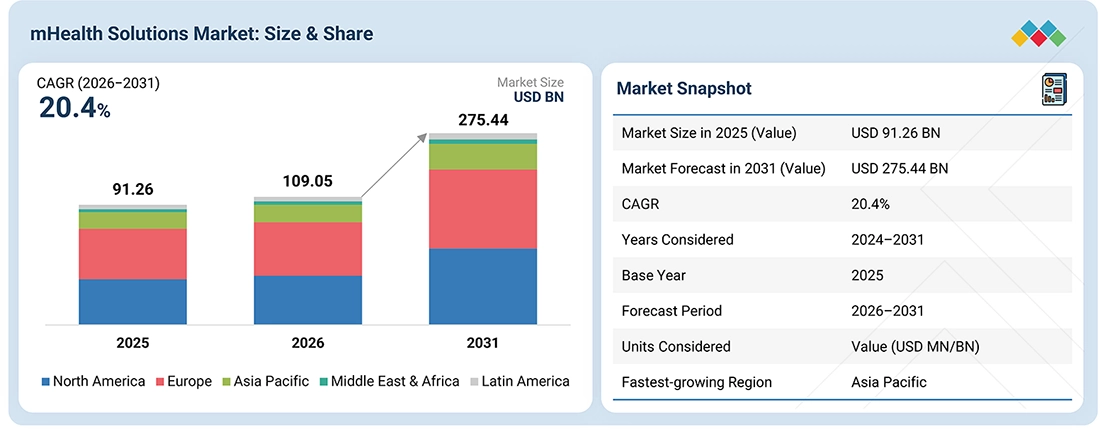
The global mHealth solutions market is projected to grow from USD 109.05 billion in 2026 to USD 275.44 billion by 2031, at a CAGR of 20.4% during the forecast period. The market was valued at USD 91.26 billion in 2025. The market is growing as mobile computing, connected medical devices, cloud platforms, and healthcare information systems converge. Technological advances in IoT-enabled sensors, Bluetooth Low Energy (BLE), cellular connectivity, cloud computing, edge computing, and AI/ML algorithms are enabling continuous acquisition, transmission, and analysis of physiological and behavioral data outside conventional clinical settings.
KEY TAKEAWAYS
-
MARKET SNAPSHOT:
Base Year Market Size (2025): USD 91.26 Billion
Current Market Size (2026): USD 109.05 Billion
Forecast Market Size (2031): USD 275.44 Billion
CAGR (2026–2031): 20.4% -
SEGMENT LEADERSHIP:
Regional Leader: North America accounted for the largest share of 40–43% in 2025.
Fastest-Growing Offering: mHealth apps are projected to grow at the fastest rate of 21.2% during the forecast period.
Use Case Leader: Patient monitoring held the largest share in the mHealth solutions market.
Fastest-Growing End User: Patients/consumers will grow the fastest during the forecast period. -
MARKET OUTLOOK & COMPETITIVE LANDSCAPE:
Philips, Medtronic, and Resmed were identified as some of the star players in the mHealth solutions market, given their strong market share and product footprint.
Sidekick Health, Buoy Health, and VisualDx have distinguished themselves among startups and SMEs by securing strong footholds in specialized niche areas, underscoring their potential as emerging market leaders.
Modern mHealth platforms are moving beyond standalone mobile applications toward integrated architectures in which data from smartphones, wearable sensors, connected medical devices, and home-monitoring systems are continuously collected and exchanged through APIs, cloud platforms, and interoperable health-data standards such as HL7 FHIR. Advances in sensor technologies are enabling compact devices to continuously capture physiological parameters such as heart rate, ECG, blood oxygen saturation, glucose levels, respiratory rate, body temperature, and blood pressure, while activity patterns are also being captured, boosting market growth.
TRENDS & DISRUPTIONS IMPACTING CUSTOMERS' CUSTOMERS
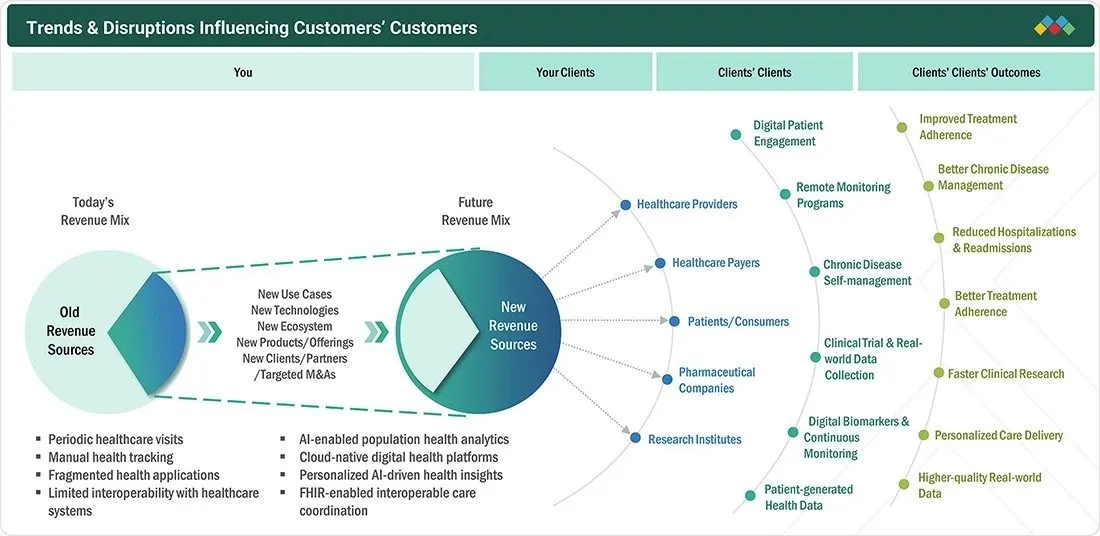
The mHealth solutions industry is evolving towards continuous, connected, and personalized healthcare, spurred by remote patient monitoring, wearables, AI-powered analytics, and interoperable digital health platforms. Patient-generated data, digital biomarkers, and cloud solutions support real-time monitoring and proactive disease management. Simultaneously, advancements like FHIR interoperability, AI, and decentralized care models are transforming traditional healthcare workflows and opening new possibilities such as hospital-at-home programs and virtual care. These trends are broadening mHealth applications, enhancing care efficiency, and shifting focus from standalone apps to comprehensive digital health ecosystems.
Source: Secondary Research, Interviews with Experts, MarketsandMarkets Analysis
MARKET DYNAMICS

Level
-
Increasing penetration of smartphones, tablets, and other mobile platforms

-
Rising focus on patient-centric healthcare delivery


Level
-
Regulatory complexity

-
Fragmentation of mHealth ecosystem


Level
-
AI and predictive analytics expand mHealth capabilities

-
Growing adoption across emerging markets


Level
-
Reimbursement barriers restrict wider mHealth adoption

-
Concerns associated with data security

Source: Secondary Research, Interviews with Experts, MarketsandMarkets Analysis
Driver: Increasing penetration of smartphones, tablets, and other mobile platforms
Increasing penetration of smartphones and mobile platforms is expanding the addressable user base for mHealth solutions worldwide. According to GSMA, 4.4 billion people, equivalent to 54% of the global population, used their own smartphones to access mobile internet at the end of 2024, an increase of approximately 250 million users from the previous year. More than 80% of mobile internet subscribers accessed mobile internet through 4G or 5G smartphones, while around 1.5 billion people were using 5G smartphones. The growing availability of capable smartphones and high-speed mobile connectivity provides the underlying infrastructure for health applications, wearable-device connectivity, telehealth, remote monitoring, and transmission of patient-generated health data, thereby supporting the wider adoption and scalability of mHealth solutions.
Restraint: Regulatory complexity
Regulatory complexity is a key restraint on the mHealth solutions market, particularly as mobile applications increasingly incorporate diagnostic, monitoring, therapeutic, and clinical decision-support functions. Regulatory requirements vary by the technology's intended use and risk profile, creating additional compliance obligations for developers operating across multiple markets. In the US, the FDA applies a risk-based approach to software functions and mobile medical applications, with higher-risk functions potentially requiring regulatory review, while certain lower-risk wellness and self-management functions may fall outside active FDA oversight. In Europe, software intended for medical purposes can fall under the EU Medical Device Regulation (MDR), requiring manufacturers to address classification, clinical evaluation, safety, performance, and post-market requirements.
Opportunity: AI and predictive analytics expand mHealth capabilities
The growing integration of AI and predictive analytics is creating significant opportunities for the mHealth solutions market by enabling mobile applications and connected devices to move beyond simple data collection toward predictive and personalized healthcare. AI/ML algorithms can analyze continuous data from smartphones, wearables, and connected medical devices to identify abnormal patterns, predict potential health risks, generate personalized recommendations, and support earlier clinical intervention. For example, the FDA's current list includes AI-enabled devices such as VitalRhythm, which uses AI for cardiovascular monitoring, and ECG-AI Pulmonary Hypertension, which applies an AI algorithm to 12-lead ECG data. In January 2025, the FDA reported that more than 1,000 AI-enabled medical devices had been authorized in the US, underscoring the growing integration of AI into clinically oriented digital and connected technologies.
Challenge: Reimbursement barriers restrict wider mHealth adoption
Reimbursement barriers remain a challenge for the mHealth solutions market, particularly for remote patient monitoring, digital therapeutics, and other provider-facing digital services. Although Medicare covers remote patient monitoring in the US, reimbursement is subject to specific requirements related to the type of connected medical device, data collection, medical necessity, patient consent, and provider billing. Reimbursement policies also vary across Medicaid programs and private insurers, creating uncertainty for healthcare providers and mHealth companies seeking to scale solutions across markets. The complexity of billing requirements and ongoing scrutiny of RPM utilization further increase the administrative burden for providers; for example, the HHS Office of Inspector General has called for stronger oversight of Medicare RPM billing.
MHEALTH SOLUTIONS MARKET: COMMERCIAL USE CASES ACROSS INDUSTRIES
| COMPANY | USE CASE DESCRIPTION | BENEFITS |
|---|---|---|
 |
Connects patient-monitoring devices and digital platforms for remote and virtual care | Remote patient monitoring, virtual care, chronic disease management, home-based care, connected patient monitoring, telehealth |
 |
Uses smartphone-connected cardiac devices to transmit patient data to clinicians remotely | Remote cardiac monitoring, implantable device monitoring, arrhythmia monitoring, symptom tracking, patient-clinician connectivity |
 |
Connects FreeStyle Libre CGM sensors with mobile apps for real-time glucose monitoring | Diabetes management, continuous glucose monitoring, glucose trend analysis, food and lifestyle management, data sharing with caregivers and providers |
 |
Provides mobile applications integrated with CGM systems for continuous glucose monitoring | Diabetes management, continuous glucose monitoring, glucose alerts, trend tracking, caregiver monitoring, provider data sharing, connected digital health |
 |
Connects sleep and respiratory devices with digital platforms for remote therapy monitoring | Sleep apnea management, respiratory monitoring, therapy monitoring, treatment adherence, remote troubleshooting, patient engagement, personalized therapy support |
Logos and trademarks shown above are the property of their respective owners. Their use here is for informational and illustrative purposes only.
MARKET ECOSYSTEM
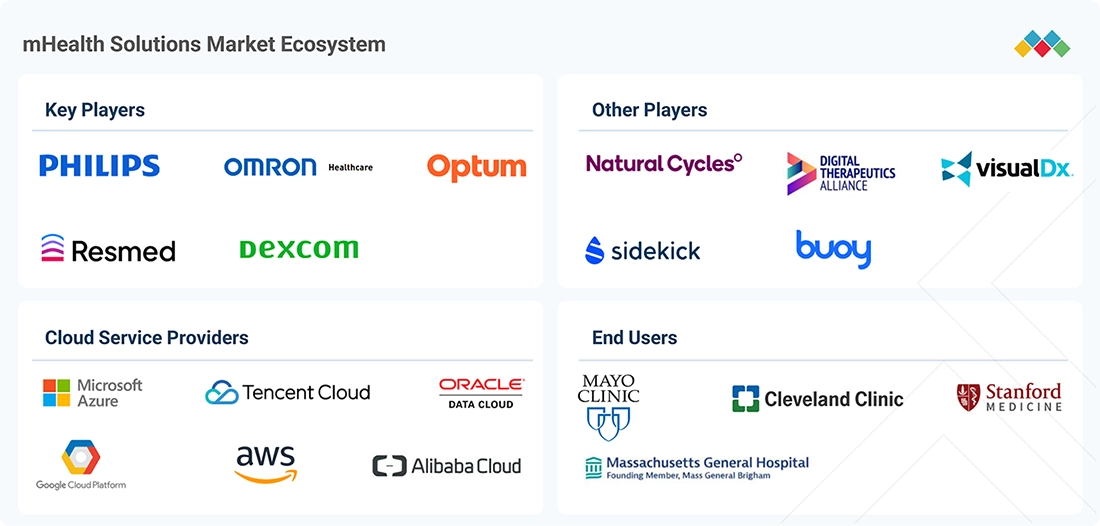
mHealth connects patients and healthcare providers through apps and connected medical devices, with cloud and technology providers such as AWS, Microsoft Azure, and Google Cloud enabling data storage, connectivity, analytics, and interoperability. mHealth companies and digital-health platforms, including Philips, Dexcom, OMRON Healthcare, ResMed, WellDoc, and others, provide applications and services that support remote monitoring, chronic disease management, and virtual care. Healthcare providers such as Mayo Clinic, Cleveland Clinic, Stanford Medicine, and others use these solutions to deliver more continuous and personalized care. This multi-stakeholder ecosystem brings together device manufacturers, software and digital-health platforms, technology providers, healthcare organizations, payers, and patients to enable connected, data-driven healthcare.
Logos and trademarks shown above are the property of their respective owners. Their use here is for informational and illustrative purposes only.
MARKET SEGMENTS
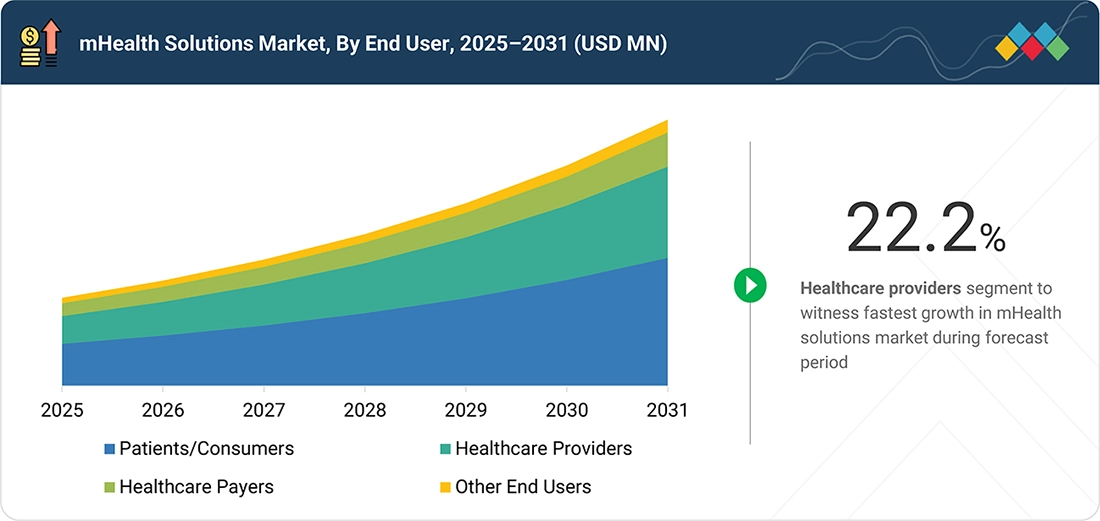
Source: Secondary Research, Interviews with Experts, MarketsandMarkets Analysis
mHealth Solutions Market, By Offering
Market segmentation based on offerings includes mHealth apps, connected medical devices, and mHealth services. In 2025, the mHealth apps sector dominated the market share, due to their extensive use in health monitoring, chronic disease management, medication adherence, fitness, wellness, women's health, telehealth, and patient engagement. Their smartphone-based design ensures easy access for consumers and facilitates continuous monitoring and sharing of health data. CMS is creating the Medicare App Library within its Digital Health Tech Ecosystem. This initiative enables trusted patient-facing apps to connect with CMS-integrated networks, offering services like personalized health advice, chronic disease support, diabetes and obesity management, reminders, alerts, and access to health information.
mHealth Solutions Market, By Use Case
The market segmentation based on use case includes preventive care & wellness, screening & diagnosis, treatment & disease management, patient monitoring, medication management & adherence, consultation & care coordination, rehabilitation & recovery, and others. In 2025, the patient monitoring segment dominated the mHealth solutions market, driven by increased demand for continuous monitoring of chronic conditions, vital signs, and post-acute patients outside traditional healthcare environments. Mobile monitoring solutions facilitate the collection of health data via smartphones and connected devices, enabling real-time sharing with healthcare providers for prompt interventions. For instance, remote patient monitoring platforms like Dexcom can track blood pressure, glucose levels, heart rate, and oxygen saturation, aiding in managing diabetes, hypertension, cardiovascular diseases, and respiratory conditions.
mHealth Solutions Market, By End User
Based on end users, the market is segmented into patients/consumers, healthcare providers, healthcare payers, and other end users. In 2025, patients/consumers held the largest share, primarily because they are the direct users of a wide range of mHealth applications and connected health solutions, including health and wellness apps, chronic disease management tools, medication reminders, remote monitoring, fitness tracking, and digital access to health records. The growing use of smartphone-based healthcare further supports this segment; for example, US government data shows that 65% of individuals accessed their online medical records or patient portal in 2024, and app-based access increased to 57%. The increasing availability of smartphone-based applications and connected devices is also making healthcare more accessible and convenient.
REGION
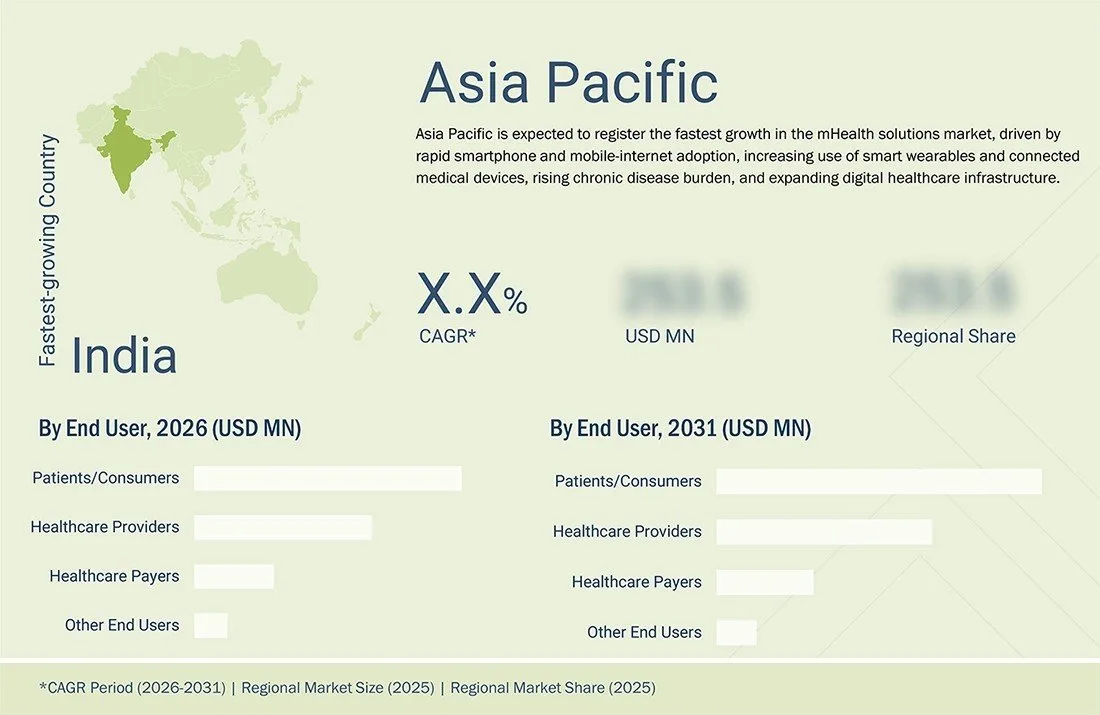
Asia Pacific will be the fastest-growing region in the mHealth solutions market
The Asia Pacific region is projected to have the highest growth rate in the mHealth solutions market over the forecast period. Government initiatives across Asia Pacific are strengthening the digital health infrastructure needed for mHealth adoption. In Singapore, the Ministry of Health announced plans in 2025 to consolidate HealthHub and public healthcare cluster applications into a single digital health platform by 2027, improving access to digital health services and interoperability. Singapore's Healthcare Industry Transformation Map 2025 also promotes digitalization, telemedicine, and telehealth to extend care into non-traditional settings, such as patients' homes. In addition, the government plans to introduce an AI assistant within the consolidated HealthHub application and progressively deploy AI for predictive and preventive care. These government-led initiatives are creating a stronger ecosystem for mobile health applications, remote monitoring, digital patient engagement, and AI-enabled healthcare across the Asia Pacific region.
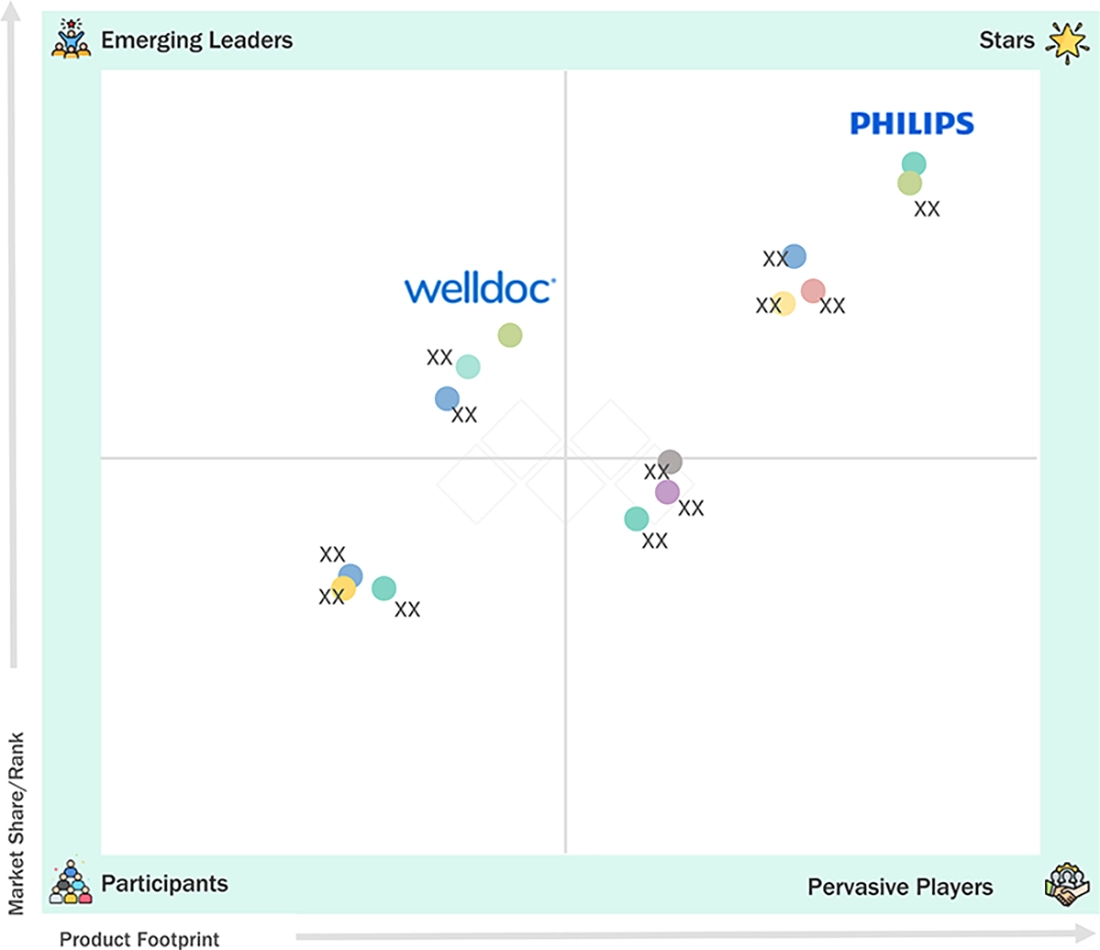
MHEALTH SOLUTIONS MARKET: COMPANY EVALUATION MATRIX
Philips is positioned as a Star player in this market, offering a broad portfolio of connected healthcare solutions spanning remote patient monitoring, virtual care, connected patient-monitoring devices, mobile applications, and cloud-based health-data platforms. WellDoc is an emerging player in the mHealth Solutions market, offering digital health and digital therapeutic solutions focused on chronic disease management such as diabetes and others.
Source: Secondary Research, Interviews with Experts, MarketsandMarkets Analysis
KEY MARKET PLAYERS
- Koninklijke Philips N.V. (Netherlands)
- Medtronic (Ireland)
- Abbott (US)
- Resmed (US)
- Dexcom, Inc. (US)
- GE HealthCare (US)
- athenahealth (US)
- Optum (US)
- Teladoc Health (US)
- AliveCor, Inc. (US)
- Garmin Ltd (US)
- Airstrip Technologies, Inc
- Welldoc (US)
- Boston Scientific Corporation (US)
- Siemens Healthineers (Germany)
- Biofourmis (US)
- Empatica (US)
- Tunstall Group (UK)
- Omron Healthcare (Japan)
- Oracle (US)
MARKET SCOPE
| REPORT METRIC | DETAILS |
|---|---|
| Market Size in 2025 (Value) (Base Year) | USD 91.26 Billion |
| Market Size in 2026 (Value) (Estimated Year) | USD 109.05 Billion |
| Market Forecast in 2031 (Value) (Forecast Year) | USD 275.44 Billion |
| Growth Rate | CAGR of 20.4% from 2026 to 2031 |
| Years Considered | 2024–2031 |
| Base Year | 2025 |
| Forecast Period | 2026–2031 |
| Units Considered | USD Billion |
| Report Coverage | Revenue forecast, company ranking, competitive landscape, growth factors, and trends |
| Segments Covered |
|
| Regions Covered | North America, Asia Pacific, Europe, Latin America, Middle East & Africa |
WHAT IS IN IT FOR YOU: MHEALTH SOLUTIONS MARKET REPORT CONTENT GUIDE
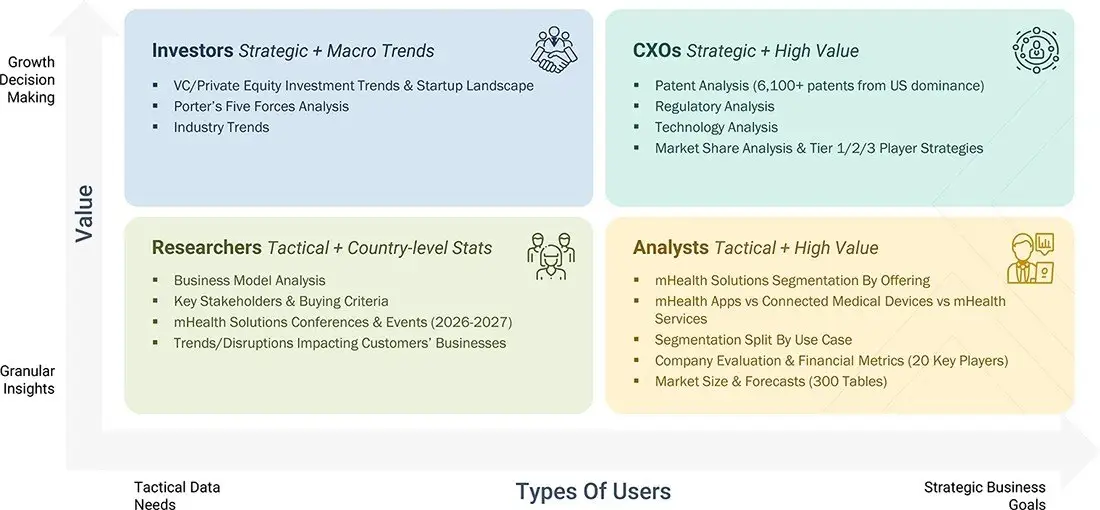
DELIVERED CUSTOMIZATIONS
We have successfully delivered the following deep-dive customizations:
| CLIENT REQUEST | CUSTOMIZATION DELIVERED | VALUE ADDS |
|---|---|---|
| Map the mHealth solutions ecosystem | Mapping of apps, connected devices, wearables, services, providers, payers, and technology vendors | Identifies market opportunities and strategic partnerships |
| Assess high-growth mHealth technologies | Analysis of AI, remote monitoring, wearables, telehealth, and connected medical devices | Supports technology prioritization and investment decisions |
| Identify high-ROI use cases | Evaluation of patient monitoring, disease management, diagnosis, wellness, and medication adherence | Enables focused product development and go-to-market strategies |
| Understand provider and payer adoption | Assessment of mHealth adoption across providers, payers, patients, pharma, and research institutes | Identifies key adoption drivers and customer opportunities |
RECENT DEVELOPMENTS
- August 2026 : Abbott and Google Health announced a multi-year collaboration integrating Lingo CGM glucose insights into the Google Health app and combining them with AI-powered Health Coach recommendations covering nutrition, activity, sleep and recovery.
- March 2026 : Withings Health Solutions partnered with 9amHealth to integrate Body Pro 2 cellular scales and, where clinically appropriate, BPM Pro 2 blood-pressure monitors into 9amHealth's virtual cardiometabolic care program.
- August 2025 : Abbott launched the FreeStyle Libre 2 Plus sensor in India, providing automatic glucose readings every minute, optional high/low glucose alarms, and smartphone connectivity for real-time diabetes monitoring and management.
Table of Contents
 Exclusive indicates content/data unique to MarketsandMarkets and not available with any competitors.
Methodology
The study involved significant efforts to estimate the current size of the mHealth solutions market. Exhaustive secondary research was conducted to gather information on the mHealth solutions market. The next step was to validate these findings, assumptions, and sizing with industry experts across the value chain through primary research. Different approaches, such as top-down and bottom-up, were employed to estimate the total market size. After that, the market breakup and data triangulation procedures were used to estimate the market size of the segments and subsegments of the mHealth solutions market.
Secondary Research
This research study relied extensively on secondary sources, including directories and databases such as Dun & Bradstreet, Bloomberg Businessweek, and Factiva; white papers, annual reports, and companies’ house documents; investor presentations; and SEC filings of companies. The market for companies offering mHealth solutions was estimated using secondary data from paid and unpaid sources, analyzing the product portfolios of the major companies in the ecosystem, and rating the companies by their performance and quality. A wide range of sources was consulted during the secondary research process to identify and collect information for this study. These sources include annual reports, press releases, investor presentations of companies, white papers, journals, certified publications, and articles from recognized authors, as well as directories and databases.
Various secondary sources were consulted during the secondary research process to identify and collect information relevant to the study. These sources included annual reports, press releases, investor presentations from mHealth solutions vendors, forums, certified publications, and whitepapers. The secondary research was used to obtain critical information on the industry’s value chain, the total pool of key players, market classification, and segmentation from market- and technology-oriented perspectives.
Primary Research
In the primary research process, interviews were conducted with sources from both the supply and demand sides to gather qualitative and quantitative information for this report. Primary sources include industry experts from core and related industries, as well as preferred suppliers, manufacturers, distributors, technology developers, researchers, and organizations across all segments of this industry’s value chain. In-depth interviews were conducted with key industry participants, subject-matter experts (SMEs), C-level executives of key market players, and industry consultants, among other experts, to obtain and verify critical qualitative and quantitative information and to assess prospects.
Primary research was conducted to identify segmentation types; industry trends; key players; and key market dynamics such as drivers, restraints, opportunities, challenges, industry trends, and strategies adopted by key players.
After the complete market engineering (calculations for market statistics, market breakdown, market size estimates, market forecasting, and data triangulation), extensive primary research was conducted to gather information and verify and validate the critical numbers arrived at.
Throughout the complete market engineering process, the top-down and bottom-up approaches, along with several data triangulation methods, were extensively used to estimate and forecast the overall market segments and subsegments listed in this report. Extensive qualitative and quantitative analysis was conducted throughout the process to present key information and insights throughout the report.

Note: Other designations include sales managers, marketing managers, and product managers.
Note: Tiers are defined based on a company’s total revenue as of 2025: Tier 1 = >USD 1 billion, Tier 2 = USD 500 million to USD 1 billion, and Tier 3 = <USD 500 million.
To know about the assumptions considered for the study, download the pdf brochure
Market Size Estimation
The market size estimates and forecasts provided in this study are derived from a mix of the bottom-up approach (revenue share analysis of leading players) and the top-down approach (assessment of utilization, adoption, and penetration trends by offering, use case, end user, and region).

Data Triangulation
After determining the overall market size using the market size estimation processes, the market was divided into several segments and subsegments. To complete the overall market engineering process and arrive at the exact statistics for each market segment and subsegment, data triangulation and market breakdown procedures were employed wherever applicable. The data was triangulated by analyzing various factors and trends from both the demand and supply sides in the mHealth solutions market.
Market Definition
The mHealth solutions market comprises mobile-enabled healthcare technologies and services that use smartphones, tablets, wearable devices, connected medical devices, wireless connectivity, and digital platforms to support the delivery, management, monitoring, and coordination of healthcare. The market includes mHealth applications, connected medical devices, and mHealth services for activities such as preventive care and wellness, diagnosis and screening, treatment and chronic disease management, patient monitoring, medication management and adherence, teleconsultation, and care coordination.
Key Stakeholders
- mHealth solutions vendors
- Independent software vendors (ISVs)
- Platform providers
- Technology providers
- System integrators
- Patients
- Healthcare payers
- Cloud service providers
- Healthcare IT service providers
- Hospitals & clinics
- Certified community behavioral health clinics
- Academic institutes and research centers
- Pharmaceutical companies
- Forums, alliances, and associations
- Government organizations
- Institutional investors and investment banks
- Investors/Shareholders
- Venture capitalists
Report Objectives
- To define, describe, and forecast the global MHealth solutions market based on offering, use case, end user, and region
- To provide detailed information regarding the factors influencing the growth of the market (such as the drivers, restraints, opportunities, and challenges)
- To strategically analyze micromarkets with respect to individual growth trends, prospects, and contributions to the overall mHealth solutions market
- To analyze market opportunities for stakeholders and provide details of the competitive landscape for market leaders
- To forecast the size of the mHealth solutions market in five main regions (along with their respective key countries): North America, Europe, Asia Pacific, Latin America, and Middle East & Africa
- To profile key players and comprehensively analyze their product portfolios, position, and core competencies in the market
- To analyze competitive developments such as offering launches; expansions; partnerships, agreements, and collaborations; and acquisitions in the mHealth solutions market
- To benchmark players within the mHealth solutions market using the Company Evaluation Matrix framework, which analyzes market players on various parameters within the broad categories of business strategy, market share, and product offering
Available customizations:
With the given market data, MarketsandMarkets offers customizations as per your company’s specific needs. The following customization options are available for the report:
Company Information
- Detailed analysis and profiling of additional market players (up to 5)
Geographic Analysis
- Further breakdown of the Rest of Europe’s mHealth solutions Market into Denmark, Norway, and others
- Further breakdown of the Rest of Asia Pacific mHealth solutions Market into Vietnam, New Zealand, and others


Personalize This Research
- Triangulate with your Own Data
- Get Data as per your Format and Definition
- Gain a Deeper Dive on a Specific Application, Geography, Customer or Competitor
- Any level of Personalization
Let Us Help You
- What are the Known and Unknown Adjacencies Impacting the mHealth Solutions Market
- What will your New Revenue Sources be?
- Who will be your Top Customer; what will make them switch?
- Defend your Market Share or Win Competitors
- Get a Scorecard for Target Partners

Custom Market Research Services
We Will Customise The Research For You, In Case The Report Listed Above Does Not Meet With Your Requirements
Get 10% Free CustomisationTESTIMONIALS

JAYANT RAJPUROHIT
Director of Market Insights, Data and Analytics
SFI Health,
Leading Pharmaceutical Companywww.sfihealth.com/

We at SFI Health approached MarketsandMarkets for an Opportunity Assessment on "Incidence and Prevalence of Focus Indications" as we wanted to know the most attractive HCPs like Physician, Functional MD, Naturopath and Pharmacist. The project was critical for us to ensure our focus on the right target which would enable sustainable growth and profitability for SFI Health. The business insights provided exceeded our expectations and we were extremely impressed. The team at MarketsandMarkets is highly professional and detail oriented and very well understood our business needs. MarketsandMarkets offers a unique combination of expertise and dedicated engagement model. We identified 2 new products to be launched in coming months, based on the research findings provided by MarketsandMarkets. We are happy with the services and would strongly recommend MarketsandMarkets to my peers in the industry.

BEATRIZ DE LA CALLE
Head of Commercial Analytics
Qualicaps,
Leading Pharmaceutical Companywww.qualicaps.com/

We partnered with MarketsandMarkets for an assessment study on hard empty capsules. The team was extremely professional in understanding our business requirements and we received timely responses to all our queries. The market intelligence and the recommendations has met our business requirements. We were extremely impressed to see the final study results; it really exceeded our expectations. The market intelligence offered by MarketsandMarkets, and clarity on next steps will help us achieve our business objective for the Year 2021. We are happy with the services and would strongly recommend MarketsandMarkets to my peers in the industry.

Bob Williams,
Senior Director Business Development & Innovation
Bracco Diagnostics Inc.,
Italian Multinational in life sciences sector and a World Leader in imaging diagnosticsimaging.bracco.com/us-en
We were pleased with targeted insights that MarketsandMarkets identified from a custom study on the 'Radiation Dose Management Solutions Market'. Your team identified and characterized the market participants as well as underlying trends accurately. This study was useful to Bracco in formulating business strategies for our dose monitoring product lines and we thank MarketsandMarkets for the job well done.
Cody Coonradt,
Market Development and Strategy Manager
3M Health Information Systems,
Leader in Health care Coding, Payment & Analytics Solutions.www.3m.com/3M/en_US/health-information-systems-us
The value for our organization comes from three things: depth of research, specificity of segments and being easy to work with. As important as the first two are, the third can't be underestimated. MarketsandMarkets, maybe more than any other research vendor, wants to know what is top of mind for our team and what big questions we are grappling to answer.
Their customer first approach and high value engagement model, have given us great analysis and excellent value for money
Growth opportunities and latent adjacency in mHealth Solutions Market






Marie
Feb, 2020
Thanks for the extensive information. The healthcare-based mobile app market is multiplying. Experts are integrating new technologies into mobile applications to offer advanced levels of client interface and experience. As of 2019, most connected mHealth solutions market uses mobile apps to provide better client services..