How to Implement Revenue Intelligence in Your Sales Process
August 21, 2025
Did you know that Revenue Intelligence can boost win rates by up to 28% for sales teams that implement it correctly?
Most sales teams still rely on gut feelings and outdated reports when making critical business decisions. This approach leaves money on the table and creates frustrating blind spots in your sales process. Revenue Intelligence changes this paradigm by transforming how you collect, analyze, and act on customer data.
We've seen firsthand how the right revenue intelligence platform can revolutionize sales performance. These tools capture every customer interaction across channels, analyze patterns using AI, and deliver actionable insights that help close more deals. Additionally, a quality revenue intelligence tool integrates seamlessly with your existing tech stack, making adoption surprisingly straightforward.
Throughout this article, we'll walk you through exactly how to implement Revenue Intelligence in your sales organization, from selecting the right solution to training your team and measuring results. Whether you're struggling with forecast accuracy or looking to scale your sales operation, these proven strategies will help you leverage data to drive predictable revenue growth.
Let's explore how Revenue Intelligence can transform your sales process and boost your bottom line!
Ready to turn your Rep
INTO BEST PERFORMER ?
Revenue Intelligence is the process of gathering, analyzing, and interpreting sales data to make informed business decisions that drive revenue growth. This data-driven approach uses AI to extract insights from various customer touchpoints across the entire sales journey. At its core, Revenue Intelligence integrates information from sales, marketing, customer success, and support teams into a single source of truth.
I've seen how Revenue Intelligence has transformed the sales landscape by moving teams away from intuition-based selling. Many organizations previously relied on gut feelings and subjective assessments when forecasting or evaluating deal health. Revenue Intelligence changes this paradigm by providing objective, data-backed insights that reveal the true state of your pipeline.
For teams implementing Revenue Intelligence, the benefits are substantial:
Improved forecasting accuracy through AI-powered prediction models
Real-time visibility into deal risks and opportunities
Enhanced sales team efficiency and productivity
Better lead prioritization based on objective data
Faster, more informed decision-making
Revenue Intelligence tools work by continuously monitoring sales metrics and KPIs, showing whether you're moving closer to or further from your targets. These platforms analyze customer data and measure progress toward specific goals, surfacing insights directly within your CRM where sales teams already work.
Traditional sales analytics primarily focuses on lagging indicators—what happened in the past. In contrast to this retrospective approach, Revenue Intelligence provides forward-looking insights by capturing real-time data across all customer interactions.
Furthermore, conventional analytics often relies heavily on manual data entry, which introduces human error and creates incomplete records. Revenue Intelligence solves this problem through automatic data collection, capturing everything from site visits and content downloads to email engagement and conversation details.
The most significant difference lies in the scope and integration. While traditional analytics typically examines isolated metrics within specific departments, Revenue Intelligence takes a holistic view, connecting data points across the entire customer journey. This eliminates the silos that traditionally separate sales, marketing, and customer success teams.
Another key distinction is that Revenue Intelligence democratizes insights. Instead of requiring specialized data analysis skills, these platforms present actionable, data-centric insights in real-time formats that anyone on the team can understand and act upon.
Artificial intelligence and machine learning form the backbone of effective Revenue Intelligence platforms. These technologies enable the system to analyze vast amounts of data, identify patterns, and generate predictions that would be impossible for humans to accomplish manually.
AI algorithms aggregate and analyze data from various sources—CRM systems, emails, call logs, and more—to provide insights into both sales processes and customer behaviors. Through natural language processing, Revenue Intelligence systems can even analyze conversation data to identify trends in customer interactions.
Machine learning algorithms continuously improve as they process more data, making the system increasingly accurate over time. These algorithms can identify inefficiencies, detect anomalies, and suggest improvements to streamline operations and increase productivity.
Essentially, AI transforms raw data into practical recommendations. For example, sales reps receive alerts when deals are stalled or when sale amounts change, along with AI-powered predictions about a deal's likelihood to close and specific reasons why. This allows teams to focus on the right deals at the right time.
AI and machine learning also power the predictive capabilities that make Revenue Intelligence so valuable. These technologies forecast sales trends, customer behaviors, and potential revenue outcomes with increasing accuracy as they learn from each interaction.
Revenue Intelligence offers concrete, measurable benefits that directly impact your bottom line. According to research, organizations implementing these tools have achieved an impressive 96% forecast accuracy, demonstrating the tangible value these platforms bring to sales operations.

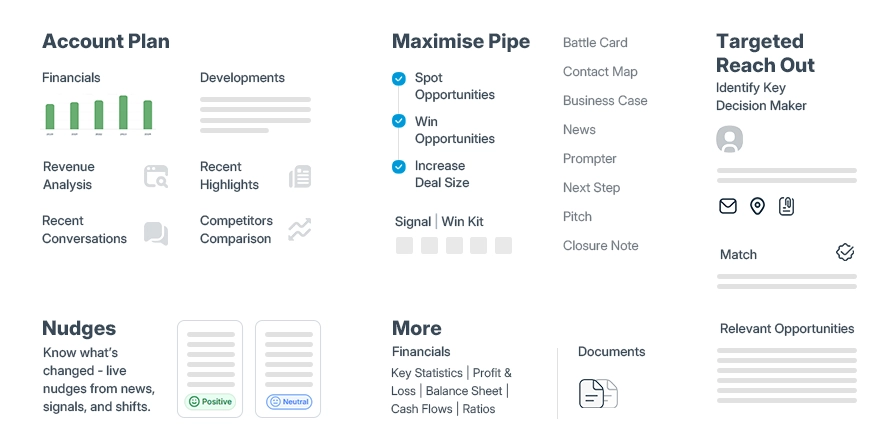
Accurate sales forecasting forms the foundation of effective business planning. Revenue Intelligence platforms enhance forecasting precision by integrating data from multiple sources, including CRM systems, sales engagements, financial records, and even recorded conversations. This holistic approach provides a clearer picture of current trends and future outcomes.
The impact is substantial. One tech company reduced forecasting errors by 25% after implementing Revenue Intelligence. This improved accuracy enables better:
Financial planning and resource allocation
Inventory and staffing management
Risk mitigation and opportunity identification
Strategic decision-making across departments
Revenue Intelligence tools achieve this through AI-powered analytics that study historical patterns alongside current market conditions. The technology uses machine learning to analyze thousands of data points from actual conversations, delivering unbiased predictions about which deals will close and when.
As a result, your forecasts become increasingly reliable over time. This reliability builds trust with leadership, investors, and other departments by demonstrating a clear understanding of your market and sales capabilities.
One of the most significant challenges sales teams face is determining where to focus their limited time and resources. Revenue Intelligence solves this by ensuring reps spend more time with leads most likely to convert into customers.
The technology enables sophisticated lead prioritization through:
Firstly, real-time alerts that notify reps the moment high-value leads come in, allowing for immediate follow-up. Considering that 78% of customers buy from the vendor that responds first, this capability alone can dramatically increase conversion rates.
Secondly, Revenue Intelligence identifies high-potential accounts based on factors like account size, content engagement, and lead scoring best practices. This allows sales teams to focus on prospects with the highest probability of closing.
Moreover, the technology helps identify opportunities that might otherwise be overlooked. By analyzing data, Revenue Intelligence highlights which lead types have the best chance of closing, enabling teams to concentrate their efforts where they're most effective.
Perhaps most importantly, Revenue Intelligence equips sales leaders with real-time insights that accelerate decision-making. The technology provides up-to-the-minute data about pipeline health, deal status, and team performance.
This real-time visibility allows sales managers to:
Quickly identify deals that are neglected, stalled, or pushed Spot red flags and opportunities in the pipeline before they impact targets. Monitor key metrics like deal velocity and open pipeline. Make data-driven adjustments to strategy when market conditions change
A manufacturing firm implementing Revenue Intelligence noticed a sudden drop in regional sales, quickly identified the cause—a competitor's new product launch—and adjusted their strategy accordingly. This swift decision-making helped them regain market share within a month.
Revenue Intelligence platforms provide customizable dashboards that visualize critical information, making it easy to understand sales progress, deal volume, and projections at a glance. Consequently, sales leaders can make informed decisions in minutes rather than waiting days or weeks for reports to be compiled.
In today's fast-paced market, this speed creates a significant competitive advantage. By enabling quicker responses to changing conditions, Revenue Intelligence helps sales teams capitalize on emerging opportunities and address potential problems before they escalate.
Effective Revenue Intelligence platforms are built on three foundational pillars that work together to transform raw data into actionable sales insights. Unlike traditional analytics tools, these sophisticated platforms go beyond basic reporting to provide dynamic, AI-powered guidance throughout the sales process.
The foundation of any Revenue Intelligence platform lies in its ability to collect and integrate data from multiple sources seamlessly. These platforms connect disparate systems to create a unified view of all customer interactions and sales activities. This integration process tackles a common challenge for sales organizations—data fragmentation across different tools and departments.
A properly configured Revenue Intelligence tool pulls information from:
Customer Relationship Management (CRM) systems that track interactions, contact details, and deal stages
Sales engagement platforms capturing emails, calls, and meeting data
Financial systems with revenue, costs, and profitability metrics
Conversation intelligence from recorded sales calls and meetings
By connecting these data sources, Revenue Intelligence creates a holistic view of each customer and prospect. This unified data environment eliminates the need for manual data entry, significantly reducing human error while ensuring all team members work from the same information.
Indeed, this centralization serves as what many experts call a "single source of truth" for the entire revenue team. For example, a sales rep can simultaneously access a prospect's communication history, deal stage, and financial data without switching between multiple applications.
STOP CHASING PROSPECTS
START CLOSING DEALS!!
Once data is integrated, Revenue Intelligence platforms transform it into actionable insights through real-time analytics and intuitive dashboards. Unlike traditional reporting that offers a backward-looking view, these platforms provide up-to-the-minute information about deal status, pipeline health, and team performance.
The real-time capabilities enable sales teams to:
Identify potential roadblocks as they emerge
Capitalize on opportunities before competitors
Adapt strategies based on current market conditions
Visually, these insights are presented through customizable dashboards embedded directly within CRM interfaces. This tight integration means sellers can access critical insights without disrupting their workflow. Modern Revenue Intelligence dashboards typically feature:
Visual representations of sales and forecast trends
Team performance leaderboards for key metrics
Alerts for stalled deals or changing sale amounts
Through these interfaces, sales teams can track essential KPIs such as conversion rates, sales cycle length, and average deal size in real time. Subsequently, this visibility enables faster, more informed decision-making throughout the organization.
Perhaps the most powerful component of modern Revenue Intelligence platforms is their predictive modeling functionality. These systems employ sophisticated AI algorithms and machine learning models to analyze historical data patterns and forecast future outcomes.
The predictive capabilities extend across multiple dimensions:
Deal-level predictions about which opportunities are likely to close or stall
Pipeline forecasts based on current activities and historical patterns
Next-best-action recommendations for individual sales reps
Behind the scenes, these predictions rely on advanced algorithms like regression analysis, decision trees, and clustering to identify patterns and trends. As one expert notes, "Where early systems might consider a dozen variables in their calculations, today's platforms can analyze hundreds or even thousands of data points".
Primarily, these predictive models help sales teams focus their efforts on the most promising opportunities. For instance, lead scoring algorithms identify high-potential prospects, increasing conversion rates and sales efficiency. At the same time, AI-powered predictions about deal stagnation help sales managers address potential problems before they impact forecasts.
Importantly, these predictive models continuously learn and improve from new data. This ongoing refinement means the system becomes increasingly accurate over time, adapting to changing market conditions and evolving buyer behaviors.
The power of Revenue Intelligence lies in how it transforms raw data into actionable insights. NewtonX, a business intelligence company, experienced a 45% increase in forecast accuracy after implementing a Revenue Intelligence platform. This practical success demonstrates how these systems operate in real business environments.
Revenue Intelligence systems collect data from numerous touchpoints throughout the customer journey. These platforms systematically capture and integrate information from:
CRM systems containing contact details and opportunity records
Email communications and engagement metrics (opens, reads, clicks)
Call recordings and transcripts from sales conversations
Meeting data including attendance and engagement levels
Site data and user behavioral interactions
Form submissions and content downloads
Social media engagements and interactions
This multi-source approach creates what experts call "a unified data repository" providing a complete view of customer interactions across the entire sales cycle. Unlike traditional analytics that rely primarily on manually entered CRM data, Revenue Intelligence captures both structured and unstructured information, often automatically.
Once data is aggregated, Revenue Intelligence transforms it into valuable insights through a three-stage process:
First, advanced AI and machine learning algorithms analyze the consolidated data to identify patterns, trends, and anomalies. These algorithms examine hundreds of variables simultaneously to uncover correlations that would remain hidden to human analysts.
Next, AI models apply predictive analytics to forecast future outcomes based on historical patterns. These predictions range from identifying which deals are likely to close to estimating potential revenue from specific customer segments.
Finally, the system translates complex analysis into user-friendly, actionable recommendations. For instance, a Revenue Intelligence tool might alert a sales rep about a stalled deal and suggest specific next steps based on similar historical situations.
This entire process happens continuously in real-time, allowing sales teams to respond immediately to changing conditions rather than waiting for quarterly reviews.
Revenue Intelligence delivers practical value through numerous real-time applications. Consider these specific examples:
Deal health monitoring: The technology identifies deals at risk by analyzing factors like engagement patterns and communication frequency. If a key decision-maker hasn't been contacted, the system flags this risk factor and recommends corrective action.
Pipeline management: Sales managers receive alerts when deals stall or amounts change unexpectedly. The system provides AI-powered predictions about closure likelihood along with specific reasons why certain deals might be delayed.
Lead prioritization: Through AI analysis, sales teams receive automated alerts when a prospect's variables indicate high win potential. The system considers factors like timeline to purchase, position in the selling cycle, and previous buying activity to identify the most promising opportunities.
Conversation intelligence: By analyzing sales calls, Revenue Intelligence identifies effective selling techniques and uncovers customer concerns. This helps reps understand what customers care about and how to address their needs more effectively.
Forecasting and planning: Leaders can use commit calculators within their CRM to set revenue goals and measure the impact of adding or removing deals from the pipeline. This helps teams adapt to last-minute changes while still reaching targets.
Coaching and development: Managers can identify which reps are succeeding and which need support by analyzing conversation data and engagement metrics. This enables personalized coaching plans based on objective performance data.
The practical impact of these applications is substantial. Organizations implementing Revenue Intelligence report not only improved forecast accuracy but typically enjoy faster sales cycles and higher win rates across their teams.
Make Every Rep Speak
Like Your Top 1%
Implementing Revenue Intelligence requires strategic planning and systematic execution. The global Revenue Intelligence Platform market is projected to reach USD 3.95 billion by 2033, growing at a CAGR of 12.1% from 2024 to 2033. Let me walk you through the practical steps to successfully introduce this technology into your sales organization.
Before selecting any technology, conduct a thorough evaluation of your existing systems and processes. This assessment should examine multiple dimensions of your sales organization:
Technology inventory: Create a complete list of your current CRM, sales tools, and integration capabilities
Data quality: Evaluate the accuracy, completeness, and consistency of your data across systems
Process maturity: Assess how well your current sales methodologies and procedures are documented and followed
Team capabilities: Gage your team's technology comfort level and readiness for change
During this phase, identify potential challenges such as disconnected systems and poor data quality that could undermine your implementation. Companies with high-quality data are 2.5 times more likely to exceed their sales targets, highlighting why this assessment is crucial.
Selecting the appropriate revenue intelligence platform requires evaluating several key factors:
Integration capabilities - The solution should connect seamlessly with your existing systems to provide unified data flow
AI-powered features - Prioritize platforms offering real-time analytics and predictive capabilities
User experience - A user-friendly interface simplifies navigation and encourages adoption
Scalability - Your chosen platform should grow alongside your business needs
Security and compliance - Ensure the platform meets your data protection requirements
Throughout the selection process, take advantage of free trials or demos to test how well the platform addresses your specific challenges. Read reviews on sites like G2 or Capterra to understand how similar businesses use the tool.
Breaking down data silos is perhaps the most challenging yet critical aspect of implementation. Revenue intelligence tackles this by integrating data from various sources into a unified platform.
Consider implementing a "hub-and-spoke model" where a central data office governs standards while teams execute locally. This approach helps maintain consistency while providing flexibility for different departments.
Properly integrated, your revenue intelligence platform should create what experts call "a single source of truth" that provides sales managers consolidated data for better strategies, helps RevOps managers streamline operations, and gives revenue leaders a holistic view of performance metrics.
Even the most sophisticated platform delivers minimal value without proper user adoption. Comprehensive training programs and ongoing support are essential to ensure successful implementation.
Yet, effective training goes beyond basic software instruction. Your program should cover:
How to interpret the data the platform provides
Applying insights to real sales scenarios
Using predictive capabilities for proactive decision-making
Establish adoption strategies that include regular feedback and incentives to ensure that your team is engaged and utilizing the system to its full potential. Recognize and reward early adopters as this can motivate the entire team.
Remember that AI features should complement human talent and judgment, not replace them. Identify which revenue intelligence software features help your team succeed and train people how to use them effectively.
By following these systematic steps, you'll be well-positioned to maximize the return on your revenue intelligence investment while avoiding common implementation pitfalls.
Successfully implementing Revenue Intelligence involves navigating several challenges that can impact adoption. Workers lose approximately 12 hours per week searching for information trapped in data silos, highlighting how these obstacles directly affect productivity.
Your SDRs work 9–5
AI Sales works 24/7!!
Data silos present major roadblocks to Revenue Intelligence success. These isolated pockets of information prevent teams from accessing a complete picture of customer relationships and sales performance. Poor data quality stemming from silos costs businesses an average of USD 12.90 million annually, whereas data silos themselves result in approximately USD 3.10 trillion in lost revenue and productivity each year.
To overcome data silos effectively:
Implement a hub-and-spoke governance model where a central data office establishes standards while teams execute locally
Develop automation for data integration rather than relying on manual processes that often fail when source schemas change
Create clear data ownership roles and responsibilities across departments
Establish standardized metrics to define data quality expectations throughout the organization
The goal isn't simply connecting systems – it's creating what experts call "a single source of truth" where all customer and sales data becomes accessible across the entire organization.
Despite having integrated systems, many companies struggle with data quality issues that undermine Revenue Intelligence effectiveness. Without reliable information, even the most sophisticated platform will generate inaccurate insights.
Data quality depends on six essential dimensions:
Accuracy: Ensuring data correctly represents real-world values
Completeness: Having all necessary records without gaps
Timeliness: Maintaining up-to-date information
Consistency: Keeping data uniform across systems
Uniqueness: Eliminating duplicate records
Relevance: Aligning data detail level with business needs
To maintain these standards, establish strong data validation processes that identify errors through automated tools comparing inputs against predefined rules or patterns. Additionally, implement regular data cleaning procedures to remove duplicates and correct inaccuracies.
Data governance policies play a vital role by outlining roles, responsibilities, and processes related to data management. These policies ensure uniformity in handling information throughout your organization, significantly improving overall data quality over time.
Perhaps the most challenging aspect of Revenue Intelligence adoption is the human element. Resistance to new technologies and processes can derail even technically sound implementations.
Effective change management requires several approaches:
Firstly, clearly communicate benefits to all stakeholders. Teams need to understand how Revenue Intelligence will make their jobs easier and more effective. This includes demonstrating how it eliminates tedious manual work while providing valuable insights.
Secondly, provide comprehensive training and ongoing support. Your training program should cover both technical aspects of using the platform and how to apply insights to real sales scenarios.
Thirdly, create feedback mechanisms like an enablement steering committee where representatives from different teams can voice concerns and provide input. This approach builds trust and gives teams ownership in the implementation process.
Ultimately, managing this organizational change requires acknowledging that Revenue Intelligence necessitates major revisions to existing workflows. Yet this change is necessary, as proper implementation provides significant advantages over competitors.
One of the greatest challenges in today's business environment is the persistent disconnection between sales, marketing, and customer success teams. Revenue Intelligence specifically addresses this issue by creating alignment across these traditionally siloed departments.
Revenue Intelligence platforms eliminate the infamous segregation of data stored in silos that typically inhibits communication between sales and marketing groups. These tools create what experts call "a single source of truth" by centralizing data across all functions throughout the customer lifecycle.
Through this unified approach, Revenue Intelligence platforms give teams holistic access to critical data across the entire selling pipeline. Unlike traditional systems where information gets trapped in different departments—sometimes even stored in spreadsheets in customer success reps' inboxes—Revenue Intelligence creates visibility that benefits everyone.
The practical impact is substantial: teams no longer depend on sales representatives to bring them up to speed on customer situations. This visibility means other departments can access information without contacting your reps, freeing up valuable selling time.
Most importantly, this shared view provides a complete picture of customer interactions from initial contact through ongoing support. By integrating CRM, sales engagement, financial, and conversation data, Revenue Intelligence creates a 360-degree view of each customer and prospect.
Beyond visibility, Revenue Intelligence fosters genuine cross-functional collaboration. The technology aligns marketing, sales, and customer success teams around shared data-driven goals, which streamlines operations and enhances strategic planning.
This alignment produces tangible results. One SaaS company that implemented Revenue Intelligence across its sales, marketing, and customer support teams experienced a 15% increase in customer satisfaction. Additionally, Revenue Intelligence tools offer:
Shared dashboards that enhance team collaboration by tracking performance in real-time
Automated notifications that include relevant call recordings or snippets that can be sent to appropriate team members
Searchable libraries of customer interactions that eliminate the need to contact sales reps for information
Ultimately, Revenue Intelligence platforms enable teams to comment, tag, and ask questions within recorded conversations between reps and customers. This collaborative capability creates a more customer-centric experience throughout the entire relationship, ensuring continuity from marketing through sales to ongoing support.
Understanding revenue intelligence fundamentals: when all departments work from the same accurate data, they develop aligned strategies and deliver better overall performance. This alignment leads to what truly matters—revenue growth through a superior customer experience.
The Revenue Intelligence landscape is rapidly evolving with emerging technologies set to reshape how businesses utilize data for growth. As AI capabilities advance and integration deepens, several key trends are emerging that will define the next generation of these powerful platforms.
Conversational AI represents one of the most promising developments in Revenue Intelligence. These sophisticated systems transcribe and analyze sales calls, identifying patterns, buyer signals, and red flags in real time. Modern conversational intelligence tools use natural language processing to evaluate what's said during sales calls and demos, providing sales teams with genuine understanding of customer expectations.
Beyond basic transcription, these systems now offer:
Real-time guidance during live customer interactions
Automatic extraction of action items and next steps
Sentiment analysis to gage customer reactions
Companies implementing AI-powered sales processes have experienced an average 50% increase in leads and up to 70% reduction in call times. This technology continues to mature, enabling more personalized customer interactions through increasingly sophisticated pattern recognition.
The future of Revenue Intelligence moves beyond dashboards toward proactive systems that trigger immediate action. Modern sales teams need tools that automatically surface AI-driven insights, update records, and orchestrate responses directly inside their CRM systems.
These automated workflows will transform how teams operate by:
Instantly pushing updates into CRMs without manual input
Triggering follow-ups based on conversation analysis
Alerting teams via Slack when deals show risk factors
As one expert notes, "Insights won't live in dashboards anymore, they'll be pushed into tools where work happens. Think Slack alerts, automated playbooks, and decision-ready insights".
The next frontier extends beyond traditional boundaries to create comprehensive ecosystems incorporating data from across the enterprise. This expanded integration captures insights from marketing automation, ERP systems, customer service platforms, and external data sources.
Forward-thinking organizations are creating what experts call "digital twins" of their customer ecosystems, enabling simulation and prediction across the entire customer experience. These integrated systems facilitate true end-to-end customer journey analysis while breaking down persistent data silos.
The evolution of Revenue Intelligence points toward increasingly connected, automated, and predictive platforms that transform raw data into immediate, actionable guidance for sales success.
Revenue Intelligence represents a fundamental shift in how sales organizations operate. Throughout this article, we've seen how this technology transforms raw data into actionable insights that directly impact your bottom line. Most importantly, Revenue Intelligence creates a unified view of customer interactions that was previously impossible with traditional analytics tools.
The benefits of implementing Revenue Intelligence are clear and measurable. Teams using these platforms experience significantly improved forecasting accuracy, better lead prioritization, and faster decision-making. Additionally, the AI-powered capabilities help sales representatives focus their efforts on the most promising opportunities rather than wasting time on deals unlikely to close.
Successful implementation requires careful planning and execution. First, assess your current data infrastructure to identify potential challenges. Then, select a platform that integrates seamlessly with your existing systems. Training your team thoroughly ensures they understand not just how to use the software but how to apply the insights effectively in their daily work.
Breaking down data silos remains one of the biggest challenges when adopting Revenue Intelligence. However, companies that overcome this hurdle create a shared view of the customer that aligns sales, marketing, and customer success teams around common goals and metrics. This alignment ultimately delivers a superior customer experience throughout the entire relationship.
The future of Revenue Intelligence looks promising with advancements in conversational AI, automated workflows, and deeper system integration. These technologies will make insights more accessible and actionable for everyone in the organization.
Revenue Intelligence has evolved from a competitive advantage to a business necessity for sales teams seeking to thrive in today's data-driven marketplace. Teams that embrace these tools now will position themselves to outperform competitors while delivering the personalized experiences customers expect. After all, accurate data and actionable insights form the foundation of predictable revenue growth in the modern sales environment.
A. Revenue Intelligence is a data-driven approach that uses AI to analyze sales data from multiple sources, providing actionable insights to improve sales performance. It benefits sales teams by enhancing forecasting accuracy, enabling better lead prioritization, and facilitating faster decision-making based on real-time data.
A. Unlike traditional sales analytics that focus on historical data, Revenue Intelligence provides real-time, forward-looking insights by capturing data across all customer interactions. It uses AI and machine learning to analyze patterns and generate predictions, offering a more comprehensive and proactive approach to sales management.
A. The core components of a Revenue Intelligence platform include data integration and centralization, real-time analytics and dashboards, and predictive modeling capabilities. These elements work together to transform raw data into actionable sales insights and forecasts.
A. To implement Revenue Intelligence, organizations should first assess their current data infrastructure, choose the right platform that integrates with existing systems, ensure cross-functional data integration, and provide comprehensive training for their sales team on using the insights effectively.
A. Emerging trends in Revenue Intelligence include advancements in conversational AI for analyzing sales calls, automated insight-to-action workflows that trigger immediate responses, and deeper integration with various business systems to create a more comprehensive view of the customer journey.


Category: Uncategorized Tags: ai, AIOps, Artificial Intelligence, cloud, cloud platform, Cybersecurity, Information and Communications Technology , VR