Revenue Intelligence Tool Selection: Performance & Accuracy Focus
September 03, 2025

Revenue intelligence tools are everywhere these days, but finding one that actually delivers on its promises? That's like searching for a unicorn in a tech forest.
I've spent countless hours testing different platforms, and I've learned that the right tool can transform your entire sales process. Business process automation through these platforms saves time, while proper revenue intelligence gives you insights that actually drive growth. The best revenue operations platform will connect your team's efforts across departments, turning scattered data into actionable strategies.
After all, what good is fancy AI if it can't accurately predict which deals will close? Or if your team finds the interface so confusing they avoid using it altogether?
That's why I've put together this breakdown of five leading solutions—Clari, Gong, Revenue.io, Salesloft, and InsightSquared. I'll share the honest truth about each platform's strengths, weaknesses, pricing, and ideal use cases so you can make a decision based on performance and accuracy rather than marketing hype.
Let's cut through the noise and find the tool that will actually boost your bottom line.
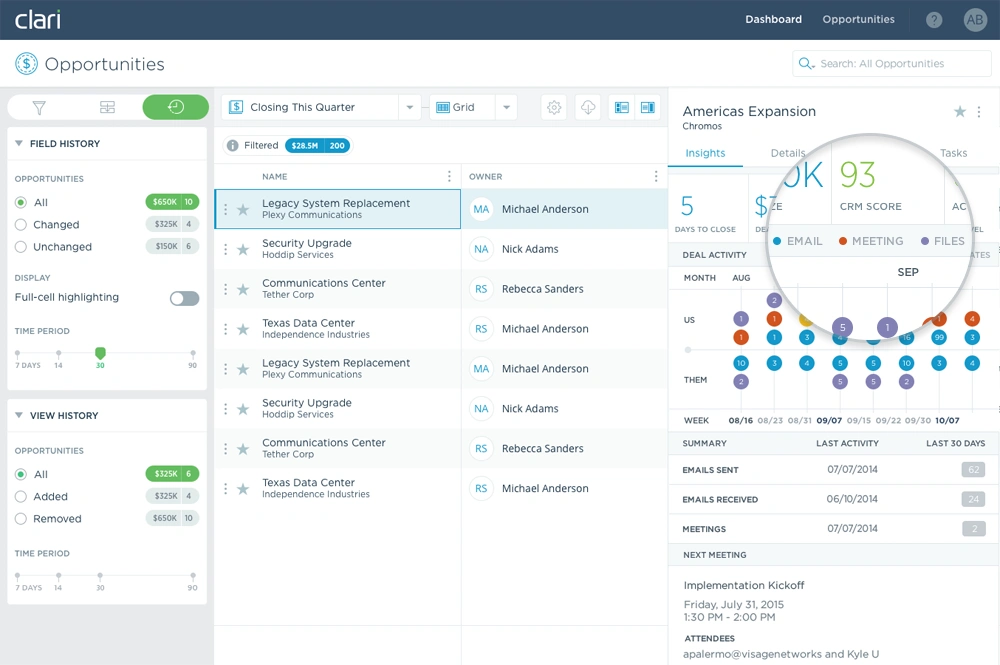
Image Source: Clari
Clari stands as a key player in the revenue intelligence market, offering a platform that goes beyond simple data collection. The platform unifies data, workflows, and cadences to help revenue teams predict and manage their pipelines with precision.
At its core, Clari functions as a Revenue Orchestration Platform that uses AI and what they call "Revenue Context" to transform business signals into actionable insights. This approach creates a more intelligent revenue process through several standout capabilities:
AI-powered forecasting that achieves 98% accuracy by week two of the quarter, helping teams predict outcomes with significantly greater reliability than traditional methods.
Pipeline management tools that automatically flag risks and opportunities, giving sales leaders visibility from top-line metrics down to individual deals with just one click.
Revenue conversation intelligence through Clari Copilot (formerly Wingman), which records, transcribes, and analyzes sales calls to ensure reps respond effectively in critical moments.
Sales engagement workflows via Groove integration, which helps teams scale prospecting, work deals, and expand accounts with engagement automation.
Automated data capture across email, calendar, calls, and other touchpoints, eliminating manual entry and improving data quality throughout your revenue process.
Furthermore, Clari's platform includes mutual action plans that connect your team with buyers, helping align business objectives and manage stakeholders more effectively. The system also provides tailored analytics with visuals that are practical for everyone—getting insights in "two clicks instead of waiting two weeks in an analyst queue".
STOP GUESSING YOUR PIPELINE
START GROWING IT WITH AI SALES!!
Pros:
Superior forecasting capabilities that combine historical trends, pipeline context, and AI-powered projections to deliver highly reliable predictions.
Real-time deal inspection that spots slipping deals, stalled opportunities, and quiet reps before they impact your quarterly targets.
Structured revenue cadences that keep reviews consistent and reinforce accountability across teams.
Easy adoption for new reps, as many companies already use the platform, enabling quick onboarding.
Seamless integration with Salesforce and other revenue-critical tools, ensuring data integrity across systems.
Time efficiency through automated forecast roll-ups and one-click visibility from high-level views to individual deals.
Cons:
Complex implementation requiring significant technical resources, with services ranging from $15,000-$75,000 depending on organizational complexity.
Steep learning curve for advanced features, demanding substantial onboarding and training investment.
Limited customization options compared to some alternatives, as Clari is built for specific use cases and doesn't allow for predictions outside its core objects.
English-only platform with limited language support, creating challenges for multilingual teams (though Clari Copilot can translate meeting transcripts in 15 languages).
Occasional transcription inaccuracies in the conversation intelligence features as noted by several reviewers.
Fragmented workflow resulting from Clari's modular approach, which can require users to navigate between different interfaces.
Clari employs a modular pricing structure that varies based on the components you select. Unlike some competitors, the company doesn't publish standard pricing on their website—instead offering tailored quotes. Based on industry benchmarks, here's what you can expect:
Core forecasting platform: $100-$120 per user per month (approximately $1,200-$1,500 annually)
Clari Copilot (conversation intelligence):
Growth tier: $60 per user/month ($720 annually)
Accelerator tier: $90 per user/month ($1,080 annually)
Enterprise tier: $110 per user/month ($1,320 annually)
Groove (sales engagement): Additional $50-$80 per user/month or bundled with higher-tier packages
Notably, while Clari emphasizes "no extra platform fees for integrations or continuous support", implementation services often add significant costs to the initial investment. For enterprise deployments, you should budget for professional services ($15K-$75K), training costs, and potential productivity impacts during onboarding.
Contracts typically involve multi-year commitments ranging from 2-3 years, which helps provide pricing predictability but requires longer-term organizational buy-in.
Based on its capabilities and structure, Clari performs best in specific organizational contexts:
Large enterprises with complex hierarchical structures benefit most from Clari's ability to digitize traditional spreadsheet-based forecasting workflows. The platform excels at handling multi-layered management hierarchies and regional teams across global operations.
Organizations already following structured quarterly business reviews and using commit/upside/pipeline categorization find Clari particularly valuable, as it essentially automates existing manual processes.
Fortune 500 companies requiring precise forecasting appreciate Clari's enterprise-grade data architecture that unifies complex models into one clear view. Many top-tier companies like Adobe, Okta, Zoom, and Workday use Clari to manage their multi-million-dollar revenue operations.
Teams managing diverse revenue models across subscription, usage-based, and enterprise sales find value in Clari's ability to standardize forecasting across all models in a single platform.
Companies experiencing pipeline visibility challenges with 20-100 salespeople that need to enforce consistent forecasting cadences can gain significant value from Clari's core platform.
For smaller teams or those without established forecasting processes, however, the implementation complexity and cost structure may outweigh the benefits compared to more flexible alternatives.
Image Source: gong.io
As a pioneer in the conversational intelligence space, Gong has built a revenue intelligence tool that captures and analyzes customer interactions in real-time. The platform serves over 4,500 customers worldwide, including major corporations like Microsoft, LinkedIn, and Zillow.
Gong's revenue intelligence platform sits at the intersection of AI analysis and sales productivity. At its foundation is what Gong calls a "conversational repository" - a library of all customer interactions that gets analyzed through advanced AI. The platform delivers several core capabilities:
Automatic data capture across multiple channels including video conferences, phone calls, emails, and text messages, eliminating manual data entry.
AI-powered analysis using conversational AI, machine learning, and natural language processing to extract valuable insights from customer interactions.
Deal intelligence that provides visibility into pipeline health, flags risks, and identifies opportunities based on actual customer conversations rather than subjective input.
Conversation intelligence that records, transcribes, and analyzes sales calls to identify successful tactics, understand customer concerns, and improve sales strategies.
Revenue intelligence that combines all these insights to help teams forecast more accurately and make data-driven decisions.
Smart Trackers that analyze sales conversations for managers, automatically detecting positive and negative signals within the context of discussions.
Gong AI Agents designed specifically for sales teams with capabilities including advanced detection, generative AI, intelligent guidance, automation, and predictive intelligence.
Gong integrates with popular CRMs like Salesforce, HubSpot, and Microsoft Dynamics 365, allowing teams to pull conversation data directly into their existing systems. Additionally, the platform supports over 250 business applications, creating a connected ecosystem for revenue team.
Pros:
Measurable performance improvements including 16% higher win rates, 11% stronger revenue growth year-over-year, and up to 481% return on investment in just six months.
Accelerated ramp time for new sales representatives, with companies reporting up to 50% reduction in time to productivity and a 3-month reduction in overall ramp time.
Multilingual support with transcription available in over 70 languages, making Gong suitable for international operations.
Increased forecast accuracy with teams reporting up to 95% forecast accuracy through AI-powered pipeline management.
Enhanced customer experience leading to 48% improvement in customer ratings for teams using conversation intelligence.
Automated coaching measurements that track performance improvement without requiring managers to listen to every call.
Time efficiency through automatic analysis of calls, identification of key moments, and AI-generated summaries.
Cons:
Complex implementation requiring technical resources and extensive user training, with many organizations reporting months-long adoption periods.
Steep learning curve that can create adoption challenges, particularly for smaller teams without dedicated resources for training.
High costs and hidden pricing with complex pricing structure and potential additional costs not initially apparent.
Limited data export options making it difficult to justify the platform's cost for some teams.
Occasional inaccurate speaker transcription during calls, which can affect analysis quality.
User interface challenges with some users reporting difficulties in searching for calls, navigating recordings, and understanding pipeline management features.
Ready to turn your Rep
INTO BEST PERFORMER ?
Gong employs a three-component pricing model that isn't publicly disclosed on their website - prospects must contact sales for a custom quote. Based on multiple sources, here's what potential buyers can expect:
Platform Fee (Annual): $5,000-$50,000 depending on organization size and requirements
Per-User License (Annual) with tiered pricing:
Up to 49 users: $1,600 per user ($133/month equivalent)
50-99 users: $1,520 per user ($127/month equivalent)
100-249 users: $1,440 per user ($120/month equivalent)
250+ users: $1,360 per user ($113/month equivalent)
Onboarding & Training: $7,500-$28,500 for professional services and setup
For context, here are example costs for different team sizes:
A 10-person team might pay approximately $21,000 for the first year ($5,000 platform fee + $16,000 in user licenses)
A 50-person team could expect to pay around $93,500 ($10,000 platform fee + $76,000 in user licenses + $7,500 onboarding)
A 100-person team might see costs of approximately $179,000 ($35,000 platform fee + $144,000 in user licenses + $15,000 onboarding)
Moreover, Gong typically requires multi-year commitments, often 2-3 years upfront, with no monthly option. Enterprise customers may negotiate volume discounts of 15-25% through aggressive negotiation and multi-year commitments.
Given its capabilities and cost structure, Gong works best in specific organizational contexts:
Large enterprises with dedicated RevOps resources and budgets exceeding $150,000 annually get the most value from Gong's comprehensive capabilities. These organizations can justify the investment through scale and have the resources to manage implementation and adoption.
Sales teams focused on improving live sales interactions benefit from Gong's ability to record, analyze, and provide insights into customer conversations. This makes it particularly valuable for organizations with complex sales cycles or high-value deals where conversation quality matters.
Companies with established coaching and training programs can leverage Gong to scale these initiatives by creating libraries of successful calls and identifying best practices across the organization.
Organizations with international operations appreciate Gong's multilingual capabilities, which support global teams working across different regions and languages.
Teams seeking data-driven sales strategies rather than relying on gut feelings find value in Gong's ability to identify what actually works in sales conversations based on real data.
Conversely, smaller teams with limited budgets or those seeking straightforward sales management tools may find Gong's complexity and cost structure challenging compared to more accessible alternatives. The platform requires significant investment not just in licensing but in implementation, training, and ongoing optimization to realize its full potential.
Image Source: www.revenue.io
Formerly known as ringDNA, Revenue.io functions as a unified revenue operations platform that powers sales teams with AI-driven insights and automated workflows. The system's core strength lies in its ability to transform raw sales engagement data into actionable intelligence that guides revenue teams toward better outcomes.
Revenue.io combines several powerful capabilities into a single platform built specifically for Salesforce environments:
Real-time conversation guidance that provides reps with actionable insights during live customer interactions, helping them respond effectively to objections and opportunities
AI-powered coaching that automatically identifies strengths, risks, and coaching moments within sales conversations, making it easier for managers to provide targeted feedback
Automated activity capture across calls, emails, texts, and video meetings, eliminating manual data entry and ensuring comprehensive visibility into customer interactions
Intelligent opportunity analytics that flag at-risk deals, measure deal health, and provide clear next steps to keep opportunities moving forward
Revenue forecasting tools that improve prediction accuracy by analyzing historical data and current pipeline metrics
Conversation intelligence capabilities that record, transcribe, and analyze sales calls to identify what makes top performers successful
First and foremost, Revenue.io stands out for its Salesforce-native architecture, which ensures automatic logging, clean data objects, and real-time visibility within your CRM. This integration is central to the platform's value proposition, allowing it to function as an extension of your existing Salesforce environment rather than a separate system.
Beyond technical integration, the platform focuses on making salespeople more efficient. According to the company, customers save approximately 18 hours monthly per rep on manual deal tracking. Simultaneously, organizations implementing Revenue.io have reported a 34% increase in sales velocity and up to 400% more opportunities generated, as in the case of Hewlett Packard Enterprise.
Pros:
Time efficiency - Saves approximately 18 hours monthly per rep through automation of manual tasks like data entry and deal tracking
Accelerated onboarding - Reduces new hire onboarding time by 50%+ according to company data
Pipeline growth - Customers report substantial increases in opportunities, with HPE achieving 400% more opportunities after implementation
Real-time guidance - Provides actionable insights during live conversations rather than just post-call analysis
Salesforce-native design - Functions as a seamless extension of Salesforce, ensuring data integrity and simplifying adoption
Compliance support - Offers call compliance features that help teams meet regulatory requirements
Cons:
Limited third-party integrations - Primarily focuses on Salesforce integration with minimal options for other platforms
No mobile app - Lacks dedicated mobile application support, limiting on-the-go functionality
Interface challenges - Some users report the interface can be unintuitive and difficult to navigate initially
Data reliability issues - Occasional syncing problems with CRM fields can affect data quality
Dashboard limitations - Reporting and dashboard customization options are more restricted compared to competitors
Revenue.io employs a modular pricing structure that isn't publicly disclosed on their website. Nevertheless, based on the available information, here's what potential customers can expect:
The platform offers four pricing packages based on functionality needs, with specific pricing available only upon request. This tiered approach allows organizations to select the components most relevant to their sales processes.
Implementation typically involves expert-led guidance from certified Revenue.io and Salesforce specialists. Indeed, the company emphasizes its "top-rated support" and "dedicated success" approach, providing each customer with a dedicated Customer Success Manager who supports them post-launch.
According to limited public data, Revenue.io's median contract value appears to be approximately $42,600, still lower than Clari's median of $77,830. Still, pricing will vary significantly based on team size, selected modules, and specific organizational requirements.
When evaluating Revenue.io's cost structure, potential customers should consider not just the licensing fees but the promised business impact: 34% increase in sales velocity, 50%+ reduction in onboarding time, and 18 hours of monthly time savings per rep. These efficiency gains factor into the platform's overall return on investment calculation.
Based on its capabilities and design, Revenue.io delivers optimal value in specific organizational contexts:
Enterprise sales teams using Salesforce benefit most from Revenue.io's native Salesforce integration and focus on complex B2B sales processes. The platform is especially valuable for organizations heavily invested in the Salesforce ecosystem who want to enhance their CRM's capabilities without replacing it.
Teams focused on call-based selling appreciate Revenue.io's roots as a dialing platform (formerly ringDNA) and its strong conversation intelligence capabilities. The system excels at analyzing call data, providing real-time guidance during conversations, and helping managers coach more effectively.
Organizations managing high lead volumes find significant value in Revenue.io's lead prioritization and engagement tracking features. The platform helps reps identify which prospects to contact first and through which channels to maximize productivity.
Companies prioritizing rep productivity over analytics depth see strong returns from Revenue.io's focus on automation and real-time guidance. The platform aims to "free your team from the mundane email work that Salesforce research shows drains 31% of the average sales rep's time".
Sales organizations with established methodologies seeking implementation tools gain from Revenue.io's ability to systematize processes. As the company notes, the platform "easily achieves complete adoption of your playbook and ramps new reps faster than ever before".
In summary, Revenue.io works best for Salesforce-centric organizations seeking to enhance rep productivity, improve coaching effectiveness, and maintain high data quality standards. Its focus on real-time guidance and activity automation addresses common sales challenges around time management and deal execution.
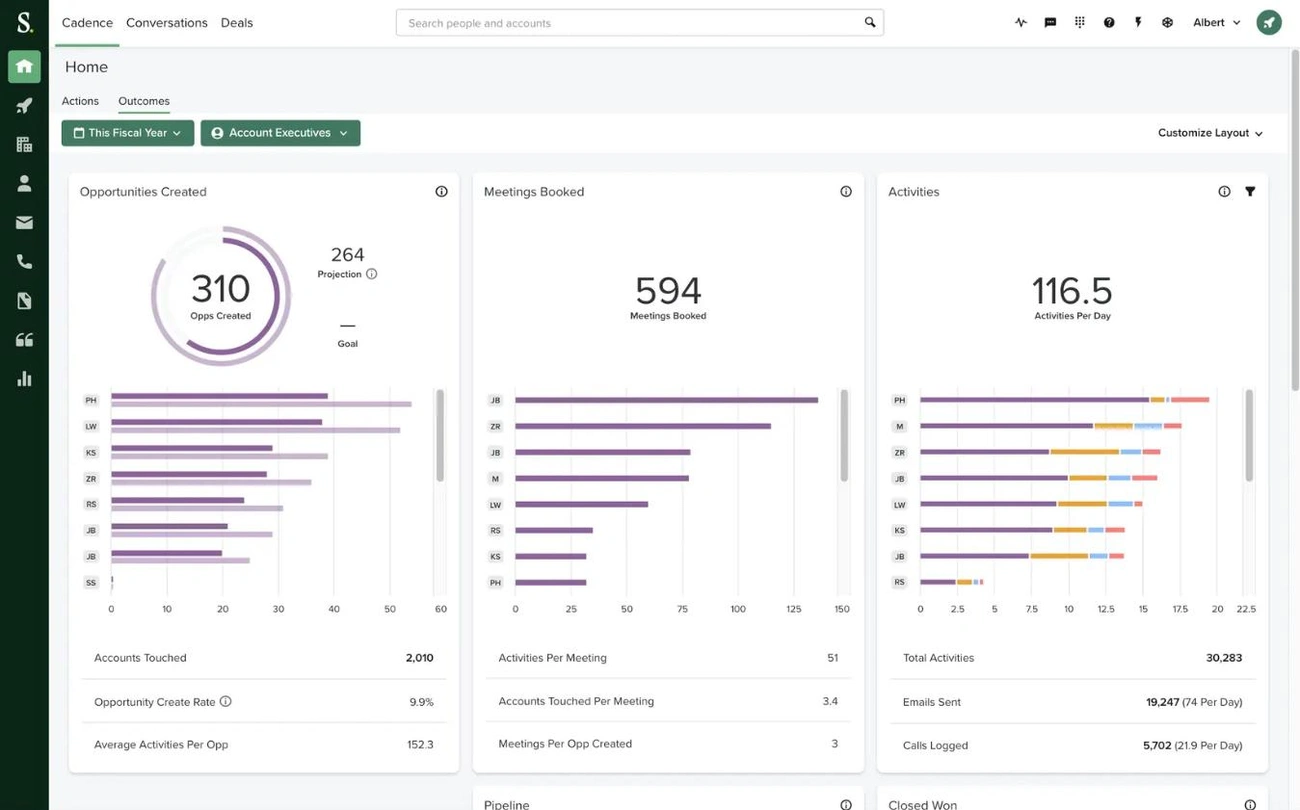
Image Source: Salesloft
Salesloft positions itself as a Revenue Orchestration Platform that unifies previously disconnected technologies across the entire buyer-seller journey. The platform streamlines every part of the revenue process by leveraging data ecosystems, AI agents, and automation to guide teams toward success.
Salesloft's platform tackles common revenue roadblocks through several interconnected components:
Salesloft Cadence removes guesswork from pipeline generation, lead nurturing, and renewals by helping teams prioritize buyers while providing insights to improve interactions.
Salesloft Forecast transforms sales forecasting into strategic action plans by combining real-time deal data, AI, and user insights to improve forecast accuracy.
Salesloft Conversations enables managers to identify coaching opportunities and scale best practices through real-time, data-driven AI insights based on seller activities, customer conversations, and deal status.
Salesloft Deals gives sellers clarity on deal status, risks, and next steps to accelerate deal cycles and close more business
Salesloft Rhythm turns buyer signals into seller action by using AI to prioritize high-value activities, helping sellers work smarter.
Salesloft AI Agents function as team extensions, proactively handling routine tasks, surfacing critical insights, and anticipating next moves.
Salesloft Analytics centralizes reporting across the buyer and customer lifecycle, providing visibility and insights into sales performance for data-driven decisions.
Beyond these core features, Salesloft integrates seamlessly with popular CRMs like Salesforce, Microsoft Dynamics 365, and HubSpot, ensuring all revenue-generating teams work with a single source of truth. The platform received the highest possible score in 26 of 30 criteria in The Forrester Wave™: Sales Engagement Platforms, Q3 2022, outranking all other evaluated vendors.
Pros:
Superior AI capabilities with purpose-built intelligence that helps market-facing teams prioritize actions from first touch to expansion and renewal.
Unified workflow platform that eliminates the "toggle tax" where reps jump between systems to get work done.
Strong multi-channel coordination across call, email, social, and other communication channels.
Excellent customization capabilities for different sales motions and team structures.
Substantial ROI with customers reporting a 60% improvement in response-to-opportunity rate resulting in $4.60M of incremental profits over three years.
Productivity gains with a 10% increase in productivity resulting in $1.40M in time savings over three years.
Technology consolidation benefits with $744K savings reported by customers who consolidated their sales technology.
Cons:
Requires full platform adoption to realize maximum value from the integrated approach.
Some advanced intelligence features require premium tiers, limiting access for basic subscribers.
Can feel overwhelming for teams with simpler sales processes due to the comprehensive nature of the platform.
Occasional performance issues including glitches and poor call quality reported by some users.
No free trial option available for prospective customers to test before purchasing.
May lack depth in specialized areas compared to best-of-breed intelligence platforms.

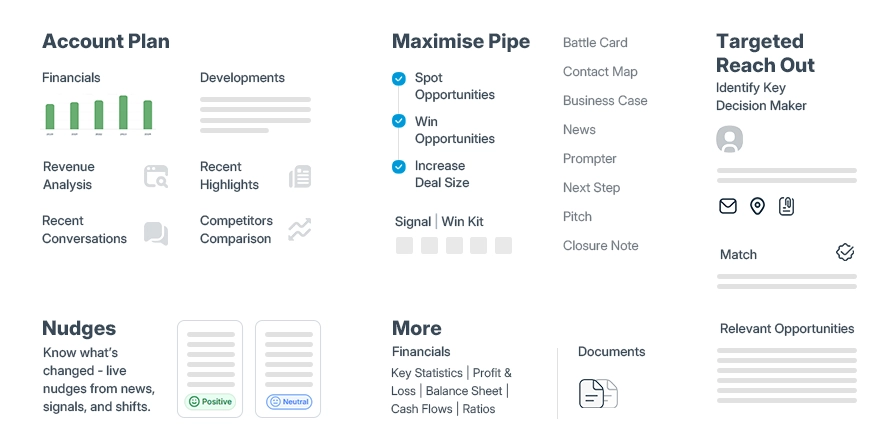
Salesloft offers a tiered pricing structure with packages designed for specific business needs:
Essentials: Focused on pipeline generation and engagement analytics, including structured workflows and tailored insights.
Advanced: Adds conversation intelligence, opportunity management, and lifecycle workflows to support customer retention and growth.
Premier: The most comprehensive option, offering forecasting tools, revenue management, and AI-driven recommendations.
For enterprise customers, additional features include sandbox environments, multi-team/multi-org management, and no-code custom object signals. Pricing details are available upon request, as Salesloft doesn't publish standard rates publicly.
Unlike some competitors, Salesloft doesn't offer a free trial or freemium version. Customers typically purchase based on specific use cases such as pipeline generation, seller coaching, full customer lifecycle workflows, conversation intelligence, or opportunity management.
Salesloft delivers optimal value in several key scenarios:
First, for enterprise sales teams looking to standardize their entire sales motion while embedding intelligence throughout the process. The platform's ability to handle organizational complexity makes it suitable for larger companies with multiple revenue-generating teams.
Second, for organizations seeking signal-based selling approaches where buyer and customer signals drive sales efficiency. Salesloft's Revenue Orchestration Platform brings buyer signals directly into sellers' workflows, highlighting buyers most likely to convert based on engagement.
Third, for companies struggling with scattered data and siloed teams. Salesloft removes these common revenue roadblocks by unifying previously disconnected technologies across the entire buyer-seller journey.
Fourth, for businesses wanting to leverage AI for revenue growth. Studies show sellers using AI are 3.7x more likely to hit quota than those who don't, and Salesloft's purpose-built AI helps teams prioritize and take action on what matters most.
Finally, for organizations needing enterprise-grade security and compliance. Salesloft is built to handle enterprise-level complexity with complete visibility and customized governance on a platform that meets top security standards.
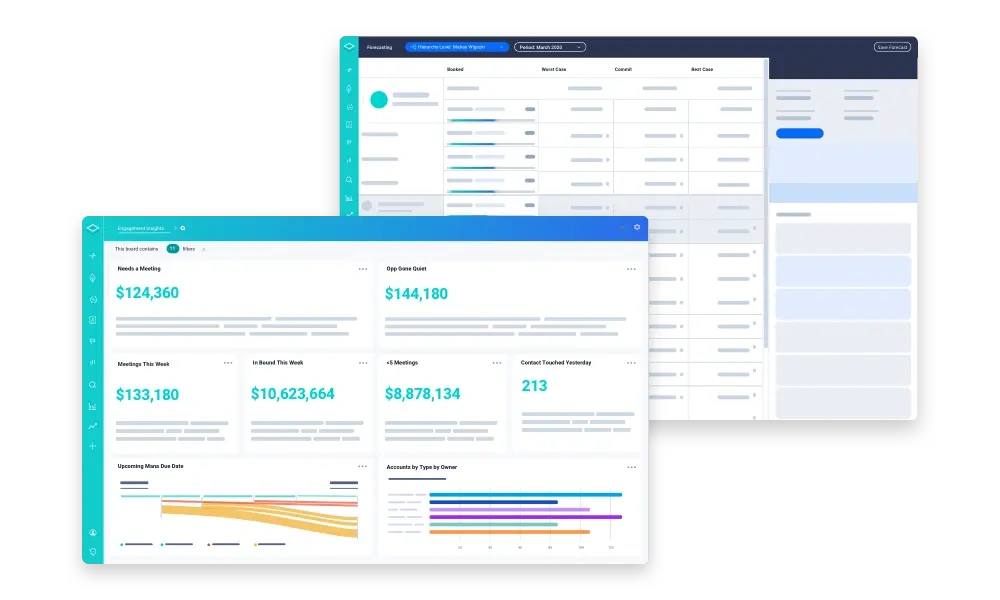
Image Source: Insightsquared
InsightSquared excels in transforming raw CRM data into actionable intelligence through its powerful analytics-focused approach. Recently acquired by Mediafly, this revenue intelligence tool offers a unified view of sales performance and pipeline health for data-driven decision making.
At the core of InsightSquared is its AI sales forecasting capability that combines machine learning with human inputs to produce highly accurate predictions. The platform offers 350+ out-of-the-box RevOps reports that provide fast time-to-value without requiring coding skills. This extensive library includes pre-built dashboards that cater to different roles within revenue teams.
The platform's real-time analytics provides visibility into sales trends, allowing teams to respond quickly to changes in the market. Users can track results with precision through high-level dashboards that offer data-backed answers to every sales question. These intuitive visualizations help identify patterns that improve sales efficiency.
InsightSquared's interactive pipeline management brings all data sources together for a complete view across any dimension. Teams can drill into their pipeline at any level to understand changes and risks before it's too late. Furthermore, the platform's activity capture automatically syncs deal activities and engagement levels, writing the full team's activities back to your CRM.
Amid its many capabilities, InsightSquared also offers conversation intelligence that records, transcribes, and analyzes customer calls. This feature captures transcripts, keywords, trends, and talk time data to enrich forecasts, reporting, and competitive positioning.
Pros:
Customizable dashboards that display relevant metrics tailored to specific roles and functions
No-code platform with flexible configurations that can be quickly adjusted on-demand
Efficient forecasting that rolls up team forecasts in minutes with opportunity-level scoring
Machine learning enrichment that identifies inflection points where teams win or lose deals
Pre-built templates that make pipeline management easy and help identify trends down to individual sales reps
Cons:
Learning curve as the platform isn't initially intuitive and requires training
Data synchronization delays with several hours sometimes needed for CRM changes to reflect in reports
Limited chart customization as users can't build their own custom charts independently
Higher price point compared to some competitors offering similar insights
Occasional data issues that can affect the reliability of reports
InsightSquared doesn't readily display pricing on their website, preferring to offer customized quotes based on specific needs. According to some sources, the basic cost ranges between $65 and $95 per month per user. Yet other sources suggest higher pricing, with plans starting at $1000 per month for small teams and scaling up to $5000 per month for larger enterprises.
The platform employs flexible, role-based licensing that makes it easier for organizations to standardize their teams on a single platform. This approach helps improve cross-functional decision-making and collaboration while potentially reducing the sales tech stack by 50 percent or more.
InsightSquared works most effectively for organizations with complex sales processes and advanced analytics needs. Specifically, enterprise software companies with long sales cycles and multiple stakeholders in the decision-making process benefit from its robust reporting capabilities.
The platform is also ideal for SaaS businesses with subscription-based models that need to monitor and optimize their revenue streams. Sales teams using Salesforce find particular value in InsightSquared's analytics capabilities for transforming CRM data into actionable intelligence.
Financial services companies with complex regulatory requirements and advanced reporting needs can leverage InsightSquared's customizable dashboards and detailed analysis. Consequently, any organization seeking to drive revenue growth through data-driven decisions will find value in InsightSquared's ability to unlock hidden insights from their CRM data.
STOP CHASING PROSPECTS
START CLOSING DEALS!!
Selecting the right revenue intelligence tool ultimately comes down to matching your specific organizational needs with the strengths of each platform. Throughout this analysis, we've seen how each solution addresses different aspects of the revenue process. Clari stands out for its exceptional forecasting capabilities and structured revenue cadences, making it ideal for large enterprises with complex hierarchical structures. Gong, meanwhile, excels at conversation intelligence, offering measurable performance improvements and multilingual support for teams focused on improving live sales interactions.
Revenue.io distinguishes itself through its Salesforce-native design and real-time conversation guidance, perfectly suited for call-based selling teams already invested in the Salesforce ecosystem. Additionally, Salesloft's unified workflow platform eliminates the "toggle tax" between systems, benefiting enterprise sales teams looking to standardize their entire sales motion. Finally, InsightSquared transforms raw CRM data into actionable intelligence with its powerful analytics-focused approach and extensive pre-built dashboards.
Although these platforms share similar core functionalities, their implementations vary significantly. Therefore, your selection should align with your team's specific workflow, organizational structure, and budget constraints. Consider factors such as implementation complexity, learning curves, customization options, and integration capabilities before making your decision.
Remember that the most expensive or feature-rich solution isn't necessarily the best fit for your organization. Instead, focus on how effectively the platform addresses your specific revenue challenges and whether it will actually drive adoption among your team members. After all, even the most powerful AI can't help if your team finds the interface too confusing to use regularly.
The right revenue intelligence tool should save time through automation while providing insights that genuinely drive growth. Your goal isn't just collecting data but transforming it into actionable strategies that boost your bottom line. Undoubtedly, when you match the right tool to your organization's needs, you'll unlock new levels of efficiency and effectiveness across your entire revenue process.
The most important features include AI-powered forecasting, conversation intelligence, automated data capture, deal analytics, and seamless CRM integration. Look for tools that offer real-time insights, customizable dashboards, and the ability to unify data across your sales process.
Revenue intelligence tools can significantly boost sales performance by providing data-driven insights, automating manual tasks, identifying risks and opportunities in the pipeline, and offering real-time guidance during customer interactions. They also enable more accurate forecasting and help standardize best practices across teams.
For large enterprises with complex hierarchical structures, Clari and Gong are often top choices. Clari excels in forecasting and structured revenue cadences, while Gong offers powerful conversation intelligence and multilingual support. The best fit depends on specific organizational needs and existing tech stack.
While some revenue intelligence tools can be costly for smaller teams, platforms like Revenue.io or Salesloft offer scalable solutions that can provide significant ROI even for growing businesses. The key is to choose a tool that aligns with your specific needs and can demonstrate clear value in terms of time savings and revenue growth.
Most revenue intelligence tools offer integrations with popular CRMs like Salesforce, HubSpot, and Microsoft Dynamics. Some, like Revenue.io, are built natively for specific CRMs. The level of integration varies, but typically includes automatic data syncing, activity logging, and the ability to surface insights directly within the CRM interface.

Category: Uncategorized Tags: ai, AIOps, Artificial Intelligence, cloud, cloud platform, Cybersecurity, Information and Communications Technology , VR