AI Revenue Intelligence: Technical Implementation Guide
September 02, 2025
Revenue intelligence software is revolutionizing how sales teams turn data into dollars. In my experience, most companies are sitting on goldmines of customer interaction data but lack the tools to extract actionable insights from it. Sound familiar? You're not alone—according to recent studies, sales teams using AI-powered analytics see up to 21% higher quota attainment rates and 15% improvement in forecast accuracy.
Today, I'm excited to walk you through the technical side of implementing these game-changing systems. The best revenue intelligence tools go beyond basic analytics by applying artificial intelligence to your sales processes. Furthermore, modern revenue intelligence platforms integrate seamlessly with existing tech stacks while providing real-time insights. Unlike traditional CRM systems that simply store data, AI Sales Tools actively analyze patterns, predict outcomes, and identify risks before they derail your deals. Throughout this guide, I'll break down the architecture, data sources, and implementation strategies you need to successfully deploy this technology in your organization—without getting lost in technical jargon or overwhelming your teams.


AI-powered revenue intelligence marks a significant advancement in how businesses capture and utilize customer data. At its core, revenue intelligence serves as a strategic approach that leverages artificial intelligence to analyze sales and product data, transforming raw information into actionable insights that directly impact revenue growth.

Revenue intelligence represents the process of gathering, analyzing, and leveraging data to maximize revenue potential. This technology-driven approach involves not just understanding current sales performance, nevertheless also predicting future trends and identifying opportunities for growth. Essentially, it's an AI-driven system that examines sales and product data to offer actionable insights into your sales organization, processes, buyers, and customers.
The scope of revenue intelligence extends beyond basic sales tracking. Modern revenue intelligence software constantly monitors sales metrics and KPIs, showing whether you're moving closer or farther from your targets. These platforms integrate data from various sources, including:
CRM systems and sales interactions
Email communications and call logs
Financial and billing information
Customer behavior signals
Through advanced AI algorithms, revenue intelligence tools analyze this data to identify patterns, detect anomalies, and generate predictive insights. Organizations adopting AI-powered sales forecasting have seen an average improvement in forecast accuracy of 10-20%. Moreover, companies using AI in their sales processes have experienced an average increase in leads of 50% and reduction in call times of up to 70%.
The market for these solutions is growing rapidly, with the global revenue intelligence market expected to expand from $6.9 billion in 2020 to $13.4 billion by 2025, representing a 14.2% compound annual growth rate. Additionally, Gartner predicts that 65% of B2B sales organizations will leverage data-driven decisions by 2026 due to emerging AI technology.
Traditional sales analytics primarily focus on historical data, typically sourced from CRM systems, to provide insights into past performance. In contrast, revenue intelligence takes a more comprehensive approach by integrating multiple data sources for a 360-degree view of the sales pipeline.
The key differences between revenue intelligence and traditional sales analytics include:
Data Sources and Integration: Traditional analytics rely primarily on internal data and manual entry. Conversely, revenue intelligence gathers information from multiple teams—sales, marketing, success, and support—and integrates them into a single source of truth. This integrated approach eliminates data silos, a common pain point in organizations.
Real-time vs. Retrospective Analysis: Traditional analytics often provide periodic reports that offer retrospective insights at the end of a week, month, or quarter. In comparison, revenue intelligence delivers real-time insights, allowing sales teams to make informed decisions on the fly and react quickly to changes. This real-time capability helps teams spot red flags and opportunities in the pipeline before issues derail deals.
Predictive Capabilities: Traditional forecasting takes historical data and predicts future outcomes based solely on that information, producing limited insights and struggling with unforeseen events. Revenue intelligence, meanwhile, leverages advanced algorithms, AI, and machine learning to deliver robust predictive analytics with significantly higher accuracy. Companies using traditional forecasting methods experience an average 15% error rate, whereas those using revenue intelligence platforms can reduce forecast errors by up to 50%.
Automation Level: Revenue intelligence software automatically collects, analyzes, and disseminates data through integrated platforms. Traditional methods typically involve significant manual work, with the average organization using close to 1,000 different applications but only integrating about 28% of them.
Conversation Intelligence: Traditional analytics typically don't incorporate data from recorded conversations. Revenue intelligence includes conversation analysis through natural language processing, examining recorded sales calls and meetings to extract insights about customer sentiment, preferences, and objections.
As a result of these enhancements, revenue intelligence saves revenue operations teams an average of 30 hours per week on manual work and helps achieve over 95% forecast accuracy. This shift from intuition-based sales to data-driven decision-making represents a fundamental transformation in how organizations approach revenue generation.
The foundation of effective revenue intelligence systems lies in the quality and variety of data they process. Successful implementation requires tapping into multiple data streams that collectively provide a complete picture of customer interactions and sales performance.
Ready to turn your Rep
INTO BEST PERFORMER ?
CRM systems serve as the central repository for customer information, yet the raw data often requires extensive normalization to become actionable. Data normalization transforms raw numbers into standardized formats that drive value. This process organizes information to fit specific ranges or standard forms, helping analysts acquire new insights, minimize redundancy, and eliminate duplicates.
When implementing a revenue intelligence platform, you'll face several normalization challenges. First, unifying naming conventions across disparate systems—analysts frequently encounter identical metrics labeled differently across marketing channels, causing difficulties when mapping data. Second, consolidating heterogeneous data types such as currencies, time zones, and date formats into a single source of truth.
Manually normalizing data through SQL queries or Python scripts is possible, yet automated tools like Oracle Integration Cloud or Improvado's Marketing Common Data Model (MCDM) offer significant advantages. These solutions unify disparate naming conventions and bridge gaps between data sources with minimal manual intervention.
Beyond CRM records, revenue intelligence demands data from every customer touchpoint. Sales engagement data encompasses all interactions between your team and prospects, including emails, phone calls, and meetings. This information provides critical insights into how prospects respond to your sales efforts, what resonates with them, and where gaps exist.
A typical B2B buying journey now involves 27 different interactions according to Forrester Research, highlighting the complexity of modern sales engagement. Capturing these interactions systematically enables you to:
Track engagement metrics across channels in real-time
Identify patterns in successful interactions
Generate detailed performance reports
Receive data-driven recommendations for improving strategies
Revenue intelligence platforms automatically collect this engagement data, eliminating the manual entry burden that plagues traditional CRM systems—over 50% of salespeople admit forgetting to enter lead and customer data into their CRM.
Financial data forms another crucial pillar of revenue intelligence, encompassing monetary aspects related to sales, costs, and profitability. Integrating this information allows you to align sales strategies with financial goals, monitor performance in real-time, and make adjustments to maximize revenue.
Effective revenue intelligence systems pull data from accounting software and billing systems, creating connections between customer purchase history and deal stages. This comprehensive view empowers sales teams with the context needed to close deals faster.
Perhaps the most powerful yet traditionally underutilized data source comes from actual conversations. Conversation intelligence uses analytics and data science to gather information from sales call recordings and automatically analyze them. This technology applies Natural Language Processing (NLP) to extract actionable insights from call transcripts.
During implementation, ensure your system captures these key conversation elements:
Customer sentiment and buying signals
Competitive mentions and objections raised
Pricing discussions and negotiation patterns
Action items and follow-up commitments
Modern conversation intelligence tools like Microsoft Dynamics 365 Sales Insights automatically analyze calls to display relevant KPIs by team, seller, and individual call. They provide transcripts, possible action items, and business-critical insights that occurred during conversations.
The technology identifies critical patterns that even experienced reps might overlook, flagging opportunity risks such as competitive threats while highlighting top-performing talk tracks. Subsequently, managers gain visibility into what's working and where coaching is needed, resulting in faster onboarding and more predictable pipeline growth.

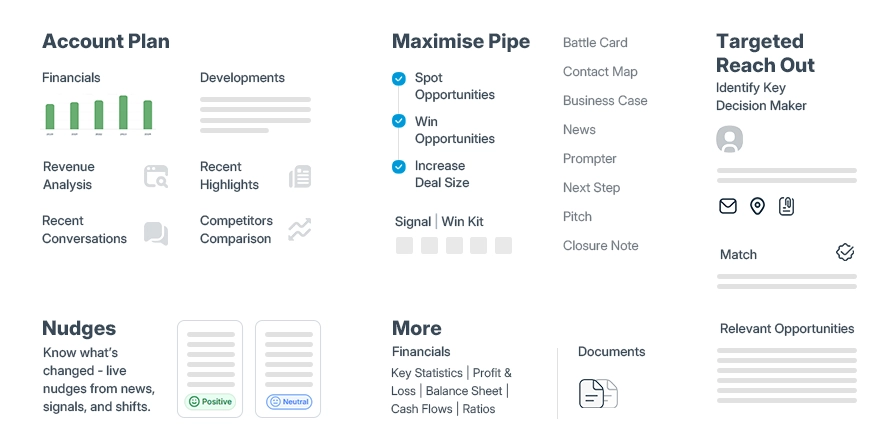
Modern AI technologies form the backbone of effective revenue intelligence platforms, transforming raw data into actionable insights that drive sales performance. These technologies work behind the scenes to analyze conversations, score deals, and identify pipeline risks with a level of precision impossible through manual methods.
Natural Language Processing (NLP) enables revenue intelligence software to extract valuable insights from sales conversations, fundamentally changing how teams understand customer interactions. This technology allows computers to understand and process human language, transforming sales operations through detailed analysis of customer conversations.
Companies implementing NLP-based revenue intelligence tools experience cost savings of 20-30% and improvements in customer satisfaction scores of 10% or more. Notably, these systems perform several critical functions:
Real-time transcription and analysis: NLP converts spoken language into text while detecting emotional cues that help sales representatives adapt their approach
Sentiment analysis: Advanced algorithms identify subtle emotional signals in customer communications, revealing how prospects truly feel about offerings
Intent recognition: The system identifies buying signals that human analysts might miss, enabling timely sales interventions
Objection identification: AI automatically flags potential concerns before they become deal-breakers
Beyond analyzing individual conversations, NLP also drives broader sales intelligence by uncovering patterns across all customer interactions. This capability helps organizations understand customer needs, preferences, and pain points at scale, ultimately refining sales messaging and improving product development strategies.
Predictive modeling represents another powerful application of AI in revenue intelligence platforms. These sophisticated algorithms assign probability scores to deals based on hundreds of variables simultaneously, helping sales teams prioritize opportunities effectively.
In 2025, modern revenue intelligence systems evaluate factors far beyond basic metrics like deal size or time in pipeline. Instead, they analyze complex patterns including communication frequency, stakeholder involvement, competitive positioning, and even external economic indicators. Consequently, sales representatives can focus their efforts on deals most likely to close while proactively addressing potential risks.
Specifically, predictive deal scoring evaluates key factors like total activity count, future scheduled activities, deal probability, time in stage, close date changes, and more. Unlike manual scoring methods based on intuition or incomplete information, this approach provides a clear, unbiased ranking of deals that eliminates the pitfalls of subjective judgment.
Organizations implementing predictive deal scoring have seen remarkable results. Companies using AI-powered forecasting experience average improvements in forecast accuracy of 10-20%, certainly a significant advantage in today's competitive markets.
Anomaly detection algorithms serve as an early warning system for your sales pipeline, identifying potential problems before they impact revenue. This technology uses machine learning to spot unusual patterns that might indicate risk or opportunity.
The financial implications of undetected anomalies can be severe—70% of companies that experienced data anomalies reported significant impact on revenue, with some losing up to 20% of annual sales. Indeed, traditional methods of detecting anomalies through manual audits and rule-based systems often fail to identify complex patterns in sales data, with companies using only manual methods being 30% less likely to detect significant anomalies.
AI-powered anomaly detection addresses these challenges by identifying patterns that might be missed by human analysts. These systems can detect patterns with up to 90% more accuracy than traditional rule-based approaches. Generally, they excel at recognizing subtle changes in customer behavior or market trends that significantly impact sales performance.
Ultimately, this capability allows sales teams to reduce the risk of revenue loss, improve decision-making, and maintain competitive advantage. Companies using time-series models for sales data analysis have seen forecast error reductions of up to 20%, highlighting the practical value of this technology in real-world sales environments.

Building an effective revenue intelligence system requires a robust technical foundation. The infrastructure behind these tools determines how quickly and effectively your organization can process and utilize sales data.
The cornerstone of modern revenue intelligence software lies in its ability to process information as it's created. Real-time data pipelines detect new data the moment it appears, encode it as a message, and immediately send it to its destination. Unlike batch processing that collects data at preset intervals, real-time pipelines transform your sales intelligence from periodic snapshots to continuous insights.
Designing these pipelines requires both logical and platform-level planning. The logical design outlines how data flows from source to target, regardless of the technology used. The platform design, however, focuses on specific implementation tools available in your environment. For revenue intelligence platforms, this typically involves:
Source connectors that tap into CRM, marketing automation, and communication platforms
Data transfer mechanisms like cloud storage or message busses
Processing engines that cleanse and normalize the information
Target systems where analytics occur
Real-time pipelines often operate on message bus architectures like Apache Kafka, though managed solutions have simplified implementation in recent years. This architecture forms what many vendors call a "revenue orchestration platform" - centralizing data for cohesive, AI-driven analytics.
The sequence of operations in your data pipeline dramatically impacts system performance. Traditional Extract-Transform-Load (ETL) processes have been the standard approach since the 1970s, primarily moving data from source to staging before reaching the data warehouse. This method works well for structured data requiring complex transformations.
Extract-Load-Transform (ELT), however, emerged with cloud computing advancements in the 2010s. This approach loads raw data directly into the target data warehouse first, then transforms it as needed. The differences are significant:
First, ETL transforms data on a secondary processing server, therefore performing intricate manipulations before storage. ELT, alternatively, leverages the processing power of modern cloud warehouses, delivering near real-time transformation.
Second, ETL works best with structured data represented in tables, whereas ELT handles all data types - including unstructured data like images, documents, or call recordings. This flexibility is particularly valuable for revenue intelligence tools that analyze varied communication formats.
Third, ELT typically offers faster performance since it eliminates the additional step before loading. It uses cloud data warehouses' parallelization capabilities to transform data simultaneously rather than sequentially.
Finally, ELT provides greater analytical flexibility. Since raw data is preserved, analysts can create tailored transformations on demand without rebuilding entire data pipelines.
The storage strategy you choose affects how quickly your revenue intelligence platform can deliver insights. Data warehouses store highly structured, processed historical data that has been organized for specific business intelligence purposes. They excel at standardized reporting and historical analysis.
Data lakes, in contrast, contain all organizational data in its raw, unstructured form. This approach offers several advantages for revenue intelligence applications:
Flexibility: Data lakes store structured, semi-structured, and unstructured data, supporting both analytics and machine learning applications
Cost-effectiveness: Storage costs are lower than data warehouses, and they require less management time
Scalability: The architecture easily handles massive volumes from multiple sources
Many organizations implement hybrid approaches. A data lakehouse combines capabilities of both systems, supporting traditional warehousing functions alongside machine learning directly on the data lake. This approach is gaining popularity for revenue intelligence platforms that need both structured reporting and advanced predictive capabilities.
In practice, revenue intelligence systems often implement closed-loop learning—continuously feeding user actions back into the data collection process, allowing AI models to improve over time. This ongoing cycle requires architecture that supports both historical analysis and real-time processing.
STOP GUESSING YOUR PIPELINE
START GROWING IT WITH AI SALES!!
Revenue intelligence platforms deliver tangible business value through three primary use cases that directly impact sales performance. As organizations implement these AI-powered systems, they unlock capabilities that were previously impossible with traditional analytics tools.
AI-driven forecasting represents a major advancement over traditional methods that often rely on subjective assessments from sales representatives. According to Gartner research, only 7% of sales organizations achieve forecast accuracy of 90% or higher, while 69% of sales operations leaders report that forecasting is becoming increasingly challenging. The median forecast accuracy among surveyed organizations falls between 70% and 79%.
Revenue intelligence software addresses these challenges by analyzing buyer engagement data across multiple channels. Unlike traditional forecasting that examines only historical performance, AI examines subtle patterns in customer interactions to predict outcomes with greater precision. Organizations using AI-powered sales forecasting experience average improvements in forecast accuracy of 10-20%.
The technology works by monitoring real-time signals that human forecasters might miss. For example, AI can quickly analyze past sales records for specific products, recognizing trends and creating more accurate predictions. This capability allows sales leaders to make proactive decisions rather than reacting to outdated information.
AI conversation summaries fundamentally change how sales teams learn and improve. These summaries extract key takeaways from every call, highlighting objections, decisions, and action items without requiring managers to review full recordings.
Initially, the technology automatically transcribes and analyzes sales conversations, identifying critical moments such as objections, pain points, and decision-maker mentions. AI then categorizes these insights, making them accessible for coaching and follow-up. For example, the system can tag conversations with specific issues like "porting status" or "system access problems".
The practical benefits extend beyond efficiency. Sales managers can review summaries to coach representatives and assess deals without listening to full recordings. This capability helps identify coachable moments and performance issues. As a result, organizations using AI-powered conversation intelligence see 25% higher closing rates and 30% faster sales cycles.
AI-powered risk detection provides early warning of potential deal failures, enabling proactive intervention. Through analysis of hundreds of variables, these systems can identify at-risk deals 60+ days before traditional indicators would surface problems.
The most sophisticated systems examine several critical dimensions:
Stakeholder engagement patterns
Communication quality metrics
Timeline adherence indicators
Budget alignment signals
Technical evaluation progress
Competitive positioning strength
Decision-making momentum
This multi-dimensional analysis yields impressive results. AI-powered risk assessment identifies 89% of deal failures before they occur, giving sales teams crucial intervention windows that transform potential losses into successful closures. Organizations using systematic risk prevention strategies report 67% fewer late-stage deal failures and 31% shorter sales cycles compared to those relying on reactive problem-solving.
Revenue intelligence tools continuously monitor pipeline health, spotting opportunities for intervention. For instance, Spiky's platform analyzes live sales conversations to flag deal risks, opportunity signals, and buyer objections in real-time. Similarly, tools like Avoma provide deal risk scores and health alerts that allow sales leaders to address issues before they derail opportunities.
Make Every Rep Speak
Like Your Top 1%
Choosing an effective revenue intelligence platform requires careful assessment of vendor capabilities against your organization's specific needs. Starting your selection process with clear objectives will help you identify the right tool that aligns with your strategic goals.
When evaluating revenue intelligence software, focus on several essential criteria. AI capabilities should be at the forefront, as they determine how effectively the platform can analyze data and provide actionable insights. Look for systems that offer predictive analytics for sales forecasting and AI-powered recommendations that help discover opportunities and optimize your sales process.
Integration capabilities form another critical factor in platform selection. The ideal solution should connect seamlessly with your existing CRM and other tools, enabling data to flow without manual intervention. This integration creates a unified view of customer interactions across touchpoints, helping teams make informed decisions. Given that the average organization uses close to 1,000 different applications but only integrates about 28% of them, prioritizing platforms with robust integration frameworks is essential.
Scalability ensures your chosen platform grows alongside your business. The software should accommodate increasing data volumes, additional users, and evolving business needs. In essence, your revenue intelligence tools should adapt to your specific workflows through customization options like custom reports and automated sales processes.
Among the leading platforms, each offers distinct advantages based on organizational needs:
Gong excels in conversation intelligence, earning a 9.1 rating against Clari's 7.1 in this category. The platform provides AI transcription, keyword detection, coaching dashboards, and basic forecasting capabilities. Ideal for teams focused on deep conversation analysis and call coaching, Gong delivers market-leading conversation intelligence albeit at higher cost.
Clari focuses on forecasting and pipeline reviews with predictive pipeline insights, historical deal analysis, and custom dashboards. The platform connects sales, marketing, and customer success data for a unified view, helping companies improve forecasting accuracy by 25%. Despite its enterprise-scale strengths, Clari offers limited real-time rep-facing insights.
Outreach primarily serves as a sales engagement platform with sequences, cadences, deal management workflows, and conversation summaries. It has transformed from a basic engagement tool into a comprehensive revenue intelligence solution with AI-guided selling features. Although strong in execution, it lacks robust forecasting capabilities.
Data security remains paramount when selecting revenue intelligence platforms, especially with sensitive customer information at stake. Look for providers with robust security measures including encryption, access controls, and regular security audits.
Compliance with regulatory frameworks is equally important depending on your business model and jurisdiction. These may include SOX for revenue recognition practices, GDPR and CCPA for customer data handling, PCI-DSS for payment processing, and ISO/IEC 27001 for information security management.
Beyond compliance, transparency builds customer trust. Clear communication about your security posture through certifications and breach response protocols reinforces customer confidence. Features like multi-factor authentication, secure payment flows, and privacy controls should be embedded in the product experience to maintain a security-first culture.
Successful implementation of revenue intelligence requires a phased approach that prioritizes adoption and minimizes disruption. Many organizations start too ambitiously, yet a structured rollout yields superior results over time.
Begin by selecting a sales pod or region with strong leadership and willingness to experiment. First, establish an AI Council to oversee intake, risk review, and prioritization of use cases. Conduct a data audit to fix quality gaps and ensure critical events are tracked with at least 95% accuracy. Focus on just 2-3 key performance indicators such as forecast accuracy, meeting-to-close ratio, or CRM hygiene score. This targeted approach provides measurable wins that build momentum for wider adoption.
After validating results with your pilot team, expand across additional departments in controlled waves. During this phase, connect systems and implement dashboards while shipping 2-3 weekly releases. According to structured implementation plans, you should aim for at least 70% playbook adoption among teams. This stage typically requires 0.5 FTE from RevOps, 0.3 FTE from Marketing Ops, and 0.2 FTE each from Data/Analytics and Product Management.
The final implementation phase involves complete integration with existing tools. Organizations using revenue intelligence effectively connect nearly 1,000 different applications, far exceeding the industry average integration rate of 28%. Prepare a 12-month scaling plan with regular value reviews and monthly governance meetings. This phase should yield documented ROI including metrics like reduced sales cycles and improved win rates.
Effective change management transforms adoption rates from the industry average of 65% over 12 months to 92% within 90 days. Start by securing executive buy-in—leadership alignment ensures the rollout remains prioritized. Implement role-based training with specific enablement for SDRs, AEs, and Customer Success teams. Create feedback loops through an enablement steering committee with representatives from each regional sales team. This approach gives representatives a voice while avoiding an "us versus them" mentality when implementing new revenue intelligence tools.
Measuring the return on investment for revenue intelligence software requires tracking specific metrics that reveal tangible business impact. Let's examine the key performance indicators that demonstrate value.
Evaluating forecast precision involves comparing error rates before and after deployment. Organizations implementing AI-powered forecasting typically reduce errors by 10-20%. One standard measurement method is Mean Absolute Percentage Error (MAPE): (Actual Demand – Forecasted Demand) / Actual Demand × 100. In practice, companies using traditional forecasting methods experience an average 15% error rate, whereas revenue intelligence platforms can reduce forecast errors by up to 50%.
After deployment, track changes in deal velocity - how quickly leads move through your pipeline. Companies utilizing systematic risk prevention through AI report 31% shorter sales cycles. Additional metrics worth monitoring include average opportunity age, pipeline value, and conversion by deal stage. Organizations using AI-powered conversation intelligence often see 30% faster sales cycles overall.
Productivity improves when reps focus on high-impact activities. According to Salesforce, sales reps typically spend only 28% of their workweek actually selling. Revenue intelligence tools free up valuable time by automating tedious tasks. Effective coaching programs show impact through improved win rates, stage conversion improvements, and reduced CRM update time. Track coaching ROI by comparing metrics like close rates before and after specific coaching interventions.
STOP GUESSING YOUR PIPELINE
START GROWING IT WITH AI SALES!!
AI-powered revenue intelligence represents a fundamental shift in how sales organizations transform data into actionable insights. Throughout this guide, we've explored the technical underpinnings of these powerful systems that go far beyond traditional sales analytics. Instead of simply storing data, modern revenue intelligence tools actively analyze patterns, predict outcomes, and identify risks before they impact your bottom line.
The foundation of any effective revenue intelligence system lies in diverse data sources. CRM data provides the baseline, while sales engagement metrics, financial information, and conversation intelligence add crucial dimensions that create a complete picture of customer relationships. Without question, the integration of these varied data streams enables the powerful insights that drive revenue growth.
Advanced AI technologies subsequently turn this raw data into valuable intelligence. Natural language processing extracts insights from sales conversations, predictive modeling scores deals with remarkable accuracy, and anomaly detection spots pipeline risks before they derail opportunities. These capabilities function as the brain of your revenue intelligence system, making connections humans might miss.
Building such systems requires thoughtful architecture decisions. Real-time data pipelines, appropriate processing strategies, and scalable storage solutions form the technical backbone that determines how quickly and effectively your organization can analyze sales data. The right foundation makes all the difference between sluggish reporting and instantaneous insights.
The business impact of these systems manifests through three primary use cases. First, AI dramatically improves forecast accuracy by analyzing engagement signals across channels. Second, AI-generated call summaries transform sales coaching, helping teams learn and improve continuously. Third, deal risk scoring provides early warning of potential failures, enabling proactive intervention that salvages at-risk opportunities.
Selecting the right platform depends on your organization's specific needs. Evaluation criteria should include AI capabilities, integration potential, and scalability—alongside security and compliance considerations that protect sensitive customer data. Therefore, careful assessment of vendor strengths against your strategic priorities will guide you toward the optimal solution.
Successful implementation follows a phased approach that builds momentum through early wins. Starting with a pilot team, then expanding cross-functionally, and finally integrating fully with existing systems creates a path of least resistance. Additionally, effective change management transforms adoption rates from industry averages to near-universal acceptance.
Finally, measuring success requires tracking specific metrics that reveal tangible business impact. Improvements in forecast accuracy, reductions in sales cycle length, and enhanced rep productivity provide concrete evidence of return on investment. These metrics tell the story of how AI-powered revenue intelligence transforms not just your data but your entire sales organization.
As AI continues to evolve, revenue intelligence platforms will undoubtedly offer even more powerful capabilities. Organizations that implement these systems today position themselves at the forefront of data-driven sales—ready to turn every customer interaction into an opportunity for growth and every insight into a competitive advantage.
AI-powered revenue intelligence uses artificial intelligence to analyze sales and customer data from multiple sources, providing real-time insights and predictive capabilities. Unlike traditional analytics that focus on historical data, revenue intelligence offers a more comprehensive view of the sales pipeline, integrates data from various teams, and delivers actionable insights in real-time.
Core data sources for revenue intelligence systems include CRM data, sales engagement data from emails and calls, financial and billing system information, and conversation intelligence from call transcripts. Integrating these diverse data streams provides a complete picture of customer interactions and sales performance.
AI-powered revenue intelligence analyzes engagement signals across multiple channels, examining subtle patterns in customer interactions to predict outcomes with greater precision. This approach typically results in a 10-20% improvement in forecast accuracy compared to traditional methods, allowing sales teams to make more informed decisions.
Key benefits include improved forecast accuracy, shorter sales cycles, enhanced rep productivity, and better coaching effectiveness. Organizations using these platforms often see 25% higher closing rates, 30% faster sales cycles, and can identify up to 89% of potential deal failures before they occur.
A phased approach is recommended, starting with a pilot program for a single sales team, then expanding cross-functionally, and finally integrating fully with existing CRM and BI tools. This gradual rollout, combined with effective change management strategies, helps ensure successful adoption and maximizes the return on investment.
Your SDRs work 9–5
AI Sales works 24/7!!


Category: Uncategorized Tags: ai, AIOps, Artificial Intelligence, cloud, cloud platform, Cybersecurity, Information and Communications Technology , VR