
Customer Experience Management Market

Customer Experience Management Market by Offering (Solutions and Services), Deployment Mode, Vertical (BFSI, IT & Telecom, Retail & eCommerce, Healthcare & Life Sciences, Travel & Hospitality, Media & Entertainment) - Global Forecast to 2032




OVERVIEW
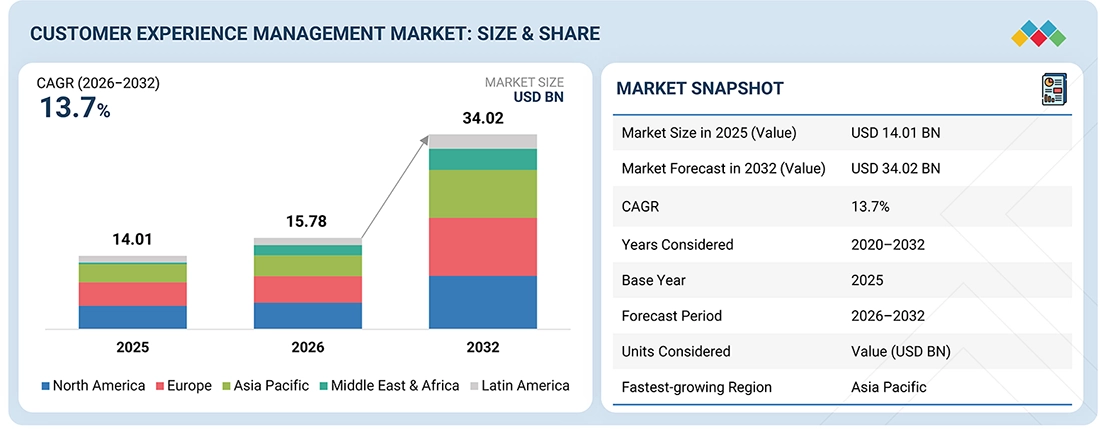
Source: Secondary Research, Interviews with Experts, MarketsandMarkets Analysis
The customer experience management market is projected to grow from USD 15.78 billion in 2026 to USD 34.02 billion by 2032, registering a CAGR of 13.7% during the forecast period. The explosion of customer data, combined with advances in analytics and artificial intelligence, further accelerates adoption. Organizations can now capture and interpret feedback, behavior, and sentiment in real time, and use AI-driven tools such as chatbots, predictive personalization, and sentiment analysis to respond at scale. For organizations, this translates into faster, smarter decision-making and the ability to anticipate needs rather than merely react to them. A major reason CEM has become a strategic priority is the direct and measurable link between experience and business outcomes. Improved satisfaction reduces churn, lowers service costs, and drives revenue, making CX a tangible lever for profitability rather than a soft, intangible goal.
Market Size and Forecast:
- Market Size Value in 2025: USD 14.01 Billion
- Market Size Value in 2026: USD 15.78 Billion
- Revenue Forecast in 2032: USD 34.02 Billion
- Growth Rate: CAGR of 13.7% from 2026 to 2032
- Forecast period: 2026–2032
- The Asia Pacific region is projected to witness the fastest growth rate from 2026 to 2032.
- The services segment is expected to register a higher CAGR (14.2%) than the solutions segment.
Key Market Trends and Insights
- By Offering: The Solutions segment holds the largest share of the customer experience management market, driven by increasing adoption of customer journey management, customer analytics, feedback management, and omnichannel engagement solutions that help organizations deliver personalized and seamless customer experiences.
- Growing Trends: Businesses are increasingly adopting AI-powered customer experience platforms, predictive analytics, real-time customer insights, hyper-personalization, and cloud-based CEM solutions to enhance customer engagement across multiple touchpoints.
- Growth Factors: Rapid digital transformation, rising customer expectations for personalized experiences, expanding omnichannel customer interactions, and increasing adoption of artificial intelligence, machine learning, big data analytics, and cloud computing are driving sustained growth in the customer experience management market.
- Opportunities: Growing adoption of cloud-based CEM platforms among small and medium-sized enterprises (SMEs), expanding digital commerce, increasing investments in AI-driven customer engagement, and rising demand for industry-specific customer experience solutions across BFSI, retail, healthcare, and telecommunications are creating significant growth opportunities for market participants.
KEY TAKEAWAYS
-
By OfferingThe services segment is expected to register a higher CAGR (14.2%) than the solutions segment.
-
By Deployment ModeThe cloud segment is expected to grow at a faster rate than the on-premises segment from 2026 to 2032.
-
By VerticalThe BFSI segment is estimated to account for the largest market share in 2026.
-
By RegionThe Asia Pacific region is projected to witness the fastest growth rate from 2026 to 2032.
-
Competitive Landscape - Key PlayersCompanies such as Oracle, Adobe, SAP, IBM, and Medallia were identified as some of the star players in the customer experience management market, given their strong market share and product footprint.
-
Competitive Landscape - Startups/SMEsCompanies such as Skyvera, Amperity, Sogolytics, Twilio, and Algonomy were identified as some of the Startups/SMEs in the customer experience management market, given their strong market share and product footprint.
Customer experience management solutions are increasingly vital for enterprises because they directly influence retention, loyalty, and customer lifetime value, turning experience into a measurable driver of revenue and profitability. They enable enterprises to unify interactions across multiple channels and touchpoints, ensuring consistency that builds trust and strengthens brand reputation. By leveraging data, analytics, and AI, these solutions help enterprises anticipate customer needs, personalize engagement, and respond quickly at scale. In markets where products and prices are increasingly similar, superior customer experience becomes a key competitive differentiator. Ultimately, CEM solutions help enterprises reduce churn, lower service costs, protect their reputation, and sustain long-term growth.
TRENDS & DISRUPTIONS IMPACTING CUSTOMERS' CUSTOMERS
The customer experience management market is evolving from fragmented, single-channel feedback tools to cloud-based, data-led experience platforms. Earlier deployments focused mainly on survey collection, complaint tracking, and basic satisfaction scoring. Current use cases are broader and include artificial intelligence-driven sentiment analysis, omnichannel journey mapping, personalized engagement, regulatory and data-privacy compliance, and centralized management of customer interactions. This shift is creating new revenue opportunities for retail and e-commerce businesses, financial services, telecom and internet service providers, healthcare organizations, travel and hospitality venues, and technology and media companies. Customer experience management solutions are now being used to reduce churn, support faster and more personalized service delivery, strengthen brand reputation, and increase customer loyalty and engagement.
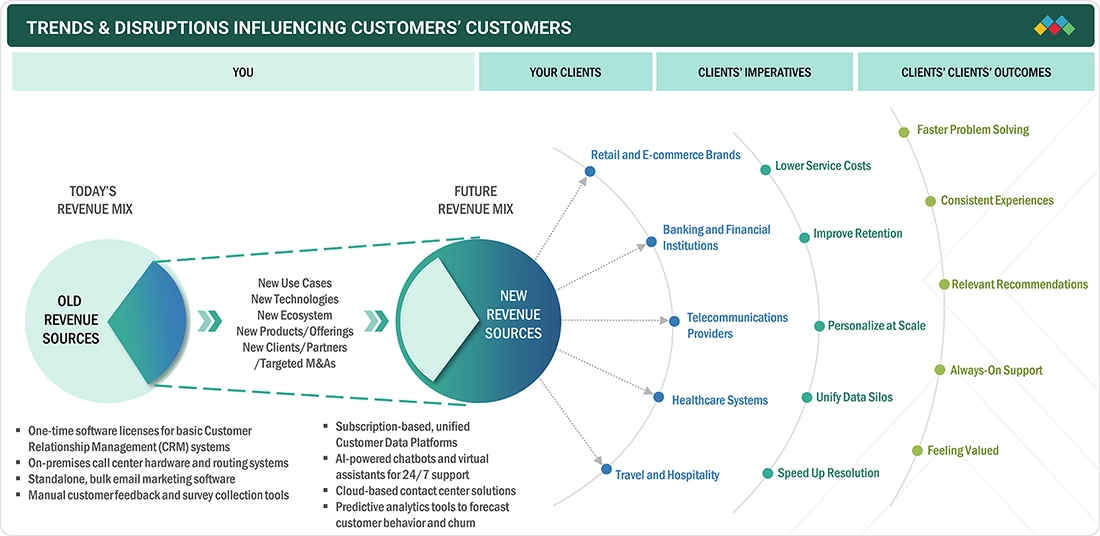
Source: Secondary Research, Interviews with Experts, MarketsandMarkets Analysis
MARKET DYNAMICS

Level
-
Growing Demand for Personalized Customer Experiences

-
Focus on Customer Retention and Loyalty


Level
-
Integration Challenges with Legacy Systems

-
High Implementation and Maintenance Costs


Level
-
AI-powered Predictive Customer Intelligence

-
Unified Customer Data Platforms


Level
-
Difficulty in Measuring Return on Investment (ROI)

-
Shortage of Skilled Professionals

Source: Secondary Research, Interviews with Experts, MarketsandMarkets Analysis
Driver: Growing Demand for Personalized Customer Experiences
Customers increasingly expect brands to understand their preferences, behavior, and purchase history and provide tailored interactions accordingly. Customer experience management (CEM) solutions enable organizations to collect and analyze customer data from multiple touchpoints to deliver personalized recommendations, offers, and communications. Personalization enhances customer satisfaction, engagement, and conversion rates while strengthening brand loyalty. As competition intensifies across industries, businesses are investing heavily in CEM platforms to create differentiated experiences. The ability to deliver individualized experiences at scale has become a major driver for CEM adoption.
Restraint: Integration Challenges with Legacy Systems
Many organizations continue to operate legacy customer relationship management (CRM), enterprise resource planning (ERP), and data management systems that were not designed to support modern customer experience initiatives. Integrating CEM platforms with these older systems can be technically complex and time-consuming. Data inconsistencies, compatibility issues, and fragmented customer records often hinder implementation efforts. Organizations may face delays, increased costs, and operational disruptions during integration projects. These challenges can limit the effectiveness of CEM deployments
Opportunity: AI-powered Predictive Customer Intelligence
The growing availability of customer data and advances in artificial intelligence create significant opportunities for predictive customer intelligence. CEM platforms can leverage machine learning algorithms to anticipate customer needs, identify potential churn risks, and recommend proactive engagement strategies. Predictive insights help businesses improve customer satisfaction and optimize marketing campaigns. Organizations can also use predictive analytics to personalize interactions and increase conversion rates. This trend is expected to create substantial growth opportunities for CEM vendors
Challenge: Difficulty in Measuring Return on Investment
While customer experience initiatives often improve satisfaction and loyalty, quantifying their direct financial impact can be challenging. Many organizations struggle to establish clear metrics that link customer experience improvements to revenue growth, profitability, or customer retention. The benefits of CEM investments may take time to materialize, making performance evaluation difficult. This uncertainty can create hesitation among decision-makers when allocating budgets for customer experience projects
CUSTOMER EXPERIENCE MANAGEMENT MARKET: COMMERCIAL USE CASES ACROSS INDUSTRIES
| COMPANY | USE CASE DESCRIPTION | BENEFITS |
|---|---|---|
 |
Abanca, a Spanish banking group, used Medallia's experience management platform to capture and act on customer feedback across its physical branches and digital channels. The customer experience management supported real-time voice-of-the-customer collection, feedback routing to relevant branches and teams, and closed-loop follow-up with customers to drive service improvements. | Real-time customer sentiment visibility | Centralized voice-of-the-customer program | Faster issue resolution | Improved customer satisfaction and loyalty |
 |
Starbucks used customer experience management to deliver a consistent and personalized experience across all its global locations. The customer experience management leveraged data-driven personalization to remember customer preferences and suggest tailored offers, ensured uniform service quality across every store worldwide, and powered its Starbucks Rewards loyalty program with personalized rewards and incentives to drive repeat business. | Personalized customer interactions | Consistent global experience | Stronger customer engagement | Increased loyalty and repeat business | Sustained customer base and growth |
 |
Tbaytel, a Canadian telecommunications provider, used NICE CXone to capture and act on customer feedback across its contact center operations. The customer experience management supported centralized feedback collection, agent performance insights, and streamlined omnichannel customer interactions to improve service delivery. | Improved customer feedback capture | Centralized contact center management | Better agent performance visibility | Enhanced customer satisfaction and service quality |
Logos and trademarks shown above are the property of their respective owners. Their use here is for informational and illustrative purposes only.
MARKET ECOSYSTEM
The customer experience management ecosystem includes platform providers, service providers, data and analytics providers, and system integrators. Platform providers such as Medallia, Qualtrics, Adobe, Zendesk, and Sprinklr offer customer experience management software, feedback and survey tools, journey mapping, and AI-driven analytics features. Service providers support deployment, monitoring, customization, and managed CX program operations. Data and analytics providers such as SAS Institute, Teradata, IBM, and Oracle supply customer data platforms, sentiment analysis engines, predictive modeling, and cloud data management systems that enable customer experience management deployment. System integrators connect customer experience management solutions with CRM systems, customer databases, marketing tools, and enterprise application environments.
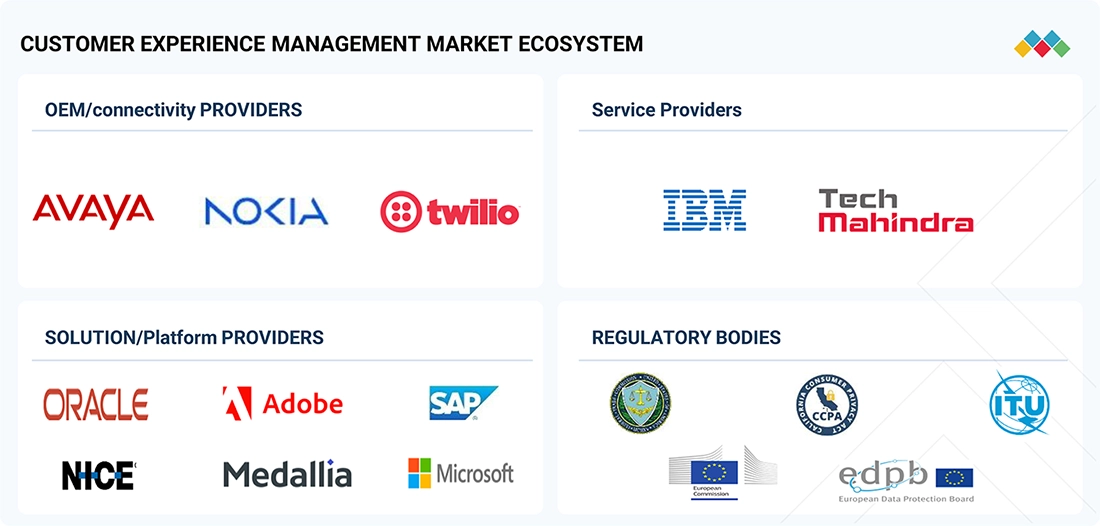
Logos and trademarks shown above are the property of their respective owners. Their use here is for informational and illustrative purposes only.
MARKET SEGMENTS
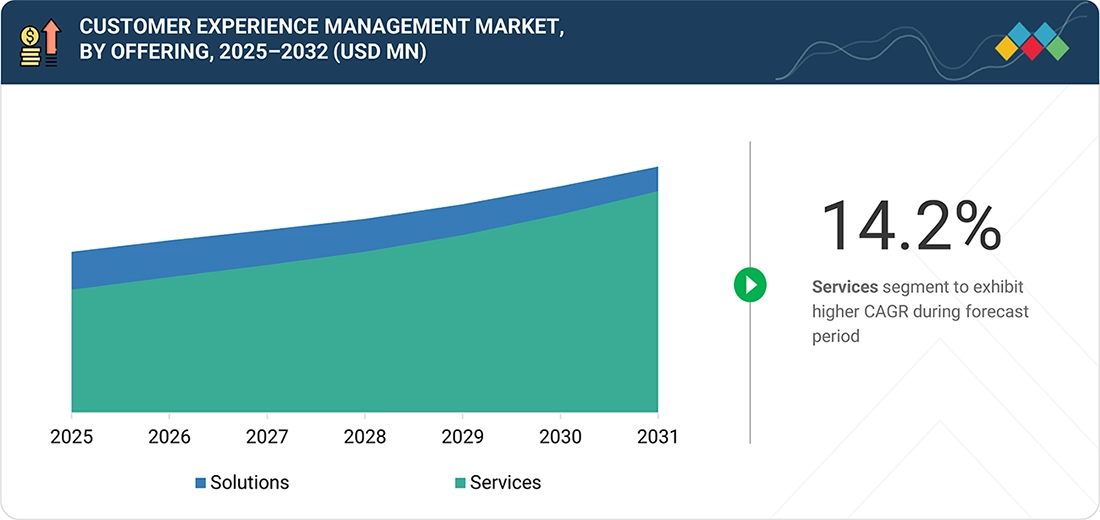
Source: Secondary Research, Interviews with Experts, MarketsandMarkets Analysis
Customer Experience Management Market, By Offering
The solutions segment is expected to lead the market during the forecast period. Customer journey management is a critical component of customer experience management because it shifts the focus from isolated, individual interactions to the complete, end-to-end experience a customer has with an organization. It provides a holistic view of the customer, mapping every touchpoint across channels—web, mobile, contact center, in-store, and social—so organizations understand how experiences connect rather than viewing them in silos. This reveals how one interaction influences the next and where the overall journey succeeds or breaks down. It helps identify pain points and friction that may not be visible at the level of a single transaction. By analyzing the full journey, organizations can pinpoint where customers struggle, drop off, or become frustrated, and prioritize improvements that have the greatest impact on satisfaction and retention.
Customer Experience Management Market, By Vertical
The BFSI (banking, financial services, and insurance) sector holds significant importance in customer experience management because it operates in a highly competitive, trust-driven environment where customer loyalty directly impacts revenue and retention. With products and interest rates often similar across providers, superior customer experience becomes a key differentiator that helps institutions attract and retain customers. CEM solutions enable BFSI firms to deliver personalized, seamless service across digital and physical channels while meeting strict regulatory and data-privacy requirements. They also help reduce churn, build long-term relationships, and improve satisfaction at critical moments such as onboarding, loan processing, and claims handling. Given the high customer lifetime value in this sector, even small improvements in experience translate into substantial financial gains, making BFSI one of the largest adopters of customer experience management solutions.
REGION
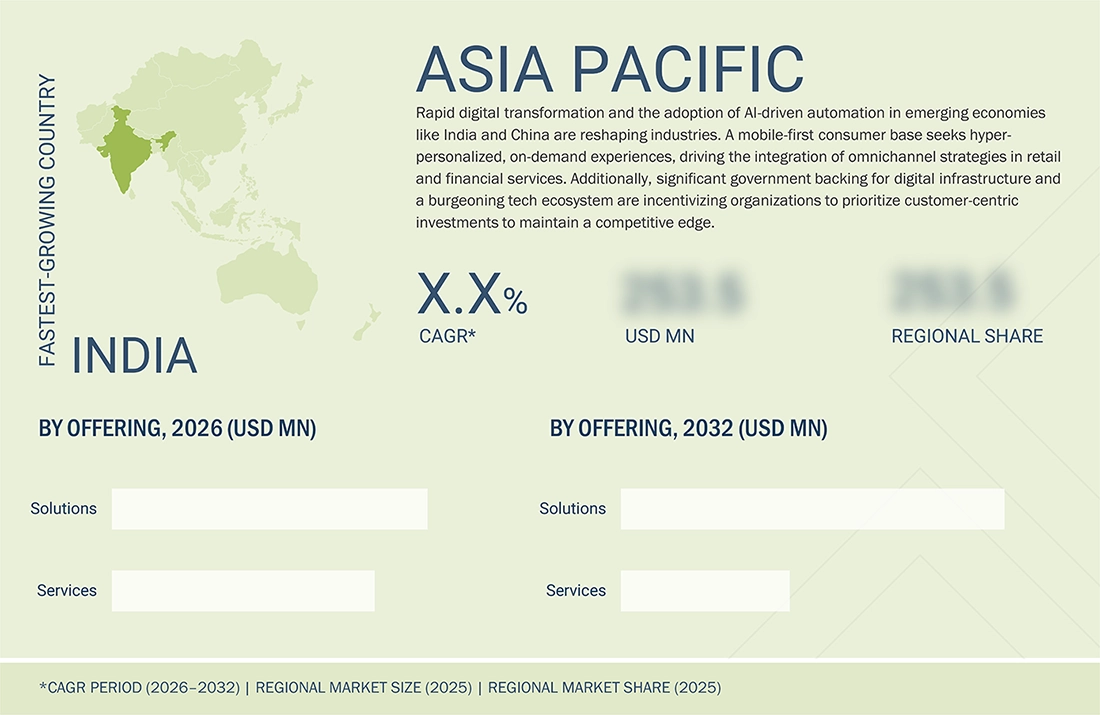
Asia Pacific to be fastest-growing region in global customer experience management market during forecast period
The Asia Pacific region holds growing importance in customer experience management due to its large, rapidly digitizing population and fast-expanding consumer markets. With high smartphone penetration and widespread adoption of digital and mobile-first services, businesses across the region are increasingly investing in CEM solutions to engage tech-savvy customers across multiple channels. Rising middle-class incomes and intensifying competition in sectors such as retail, banking, telecom, and e-commerce make superior customer experience a critical differentiator for capturing and retaining customers. The region's diverse cultures, languages, and consumer preferences also drive demand for personalized, localized experiences that CEM platforms can enable. Rapid economic growth and digital transformation initiatives, particularly in markets like China, India, and Southeast Asia, are accelerating the adoption of cloud-based and AI-driven CEM tools. Additionally, growing awareness of data privacy and evolving regulatory frameworks are pushing organizations to adopt well-governed, compliant experience management platforms. Together, these factors make Asia Pacific one of the fastest-growing markets for customer experience management solutions globally.
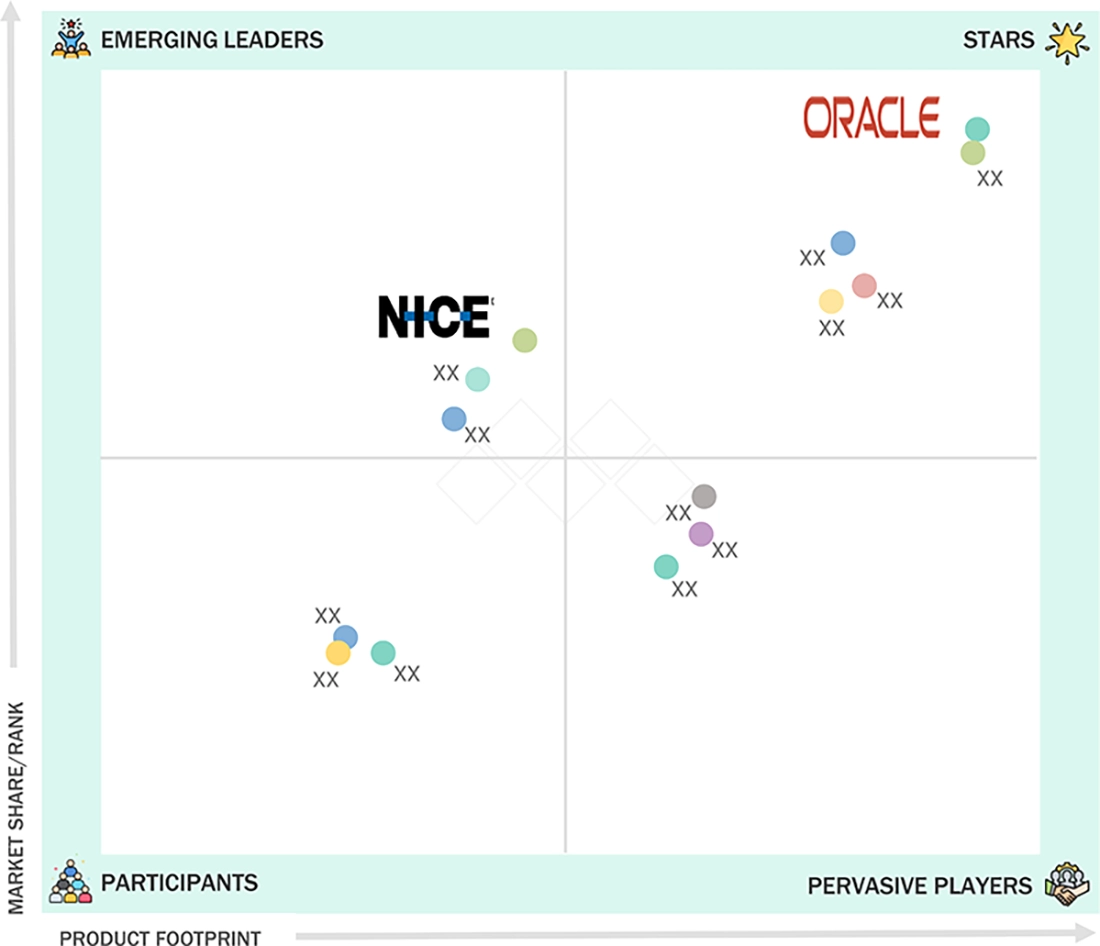
CUSTOMER EXPERIENCE MANAGEMENT MARKET: COMPANY EVALUATION MATRIX
In the customer experience management market matrix, Oracle (Star) holds a leading position, supported by its strong enterprise software base, broad customer experience management capabilities through Oracle CX Cloud, and wide adoption across enterprise, retail, finance, telecom, and public sector organizations. Its strength lies in unified customer data management, centralized analytics, and scalable deployment across large, complex customer environments. NICE is positioned as an Emerging Leader, supported by its strong contact center and customer engagement portfolio and growing relevance in AI-driven customer interaction management. Its customer experience management capabilities show potential to move upward as demand increases for intelligent, omnichannel engagement across BFSI, telecom, and enterprise service operations.
Source: Secondary Research, Interviews with Experts, MarketsandMarkets Analysis
KEY MARKET PLAYERS
- Oracle (US)
- Adobe (US)
- SAP (Germany)
- IBM (US)
- Medallia (US)
- Qualtrics (US)
- NICE (Israel)
- Verint Systems (US)
- Zendesk (US)
- Sprinklr (US)
- OpenText (Canada)
- SAS Institute (US)
- Teradata (US)
- Tech Mahindra (India)
- Nokia (Finland)
- Avaya (US)
- InMoment (US)
- Sitecore (US)
- Mixpanel (US)
- NGDATA (Belgium)
- Skyvera (US)
- Amperity (US)
- Sogolytics (US)
- Twilio (US)
- Algonomy (US)
- Duve (Israel)
- Mize (Israel)
- Appier (Taiwan)
MARKET SCOPE
| REPORT METRIC | DETAILS |
|---|---|
| Market Size in 2025 (Value) | USD 14.01 Billion |
| Market Size in 2026 (Value) | USD 15.78 Billion |
| Market Forecast in 2032 (Value) | USD 34.02 Billion |
| Growth Rate | CAGR of 13.7% from 2026 to 2032 |
| Years Considered | 2020-2032 |
| Base Year | 2025 |
| Forecast Period | 2026-2032 |
| Units Considered | Value (USD Billion) |
| Report Coverage | Revenue forecast, company ranking, competitive landscape, growth factors, and trends |
| Segments Covered |
|
| Regions Covered | North America, Europe, Asia Pacific, Middle East & Africa, Latin America |
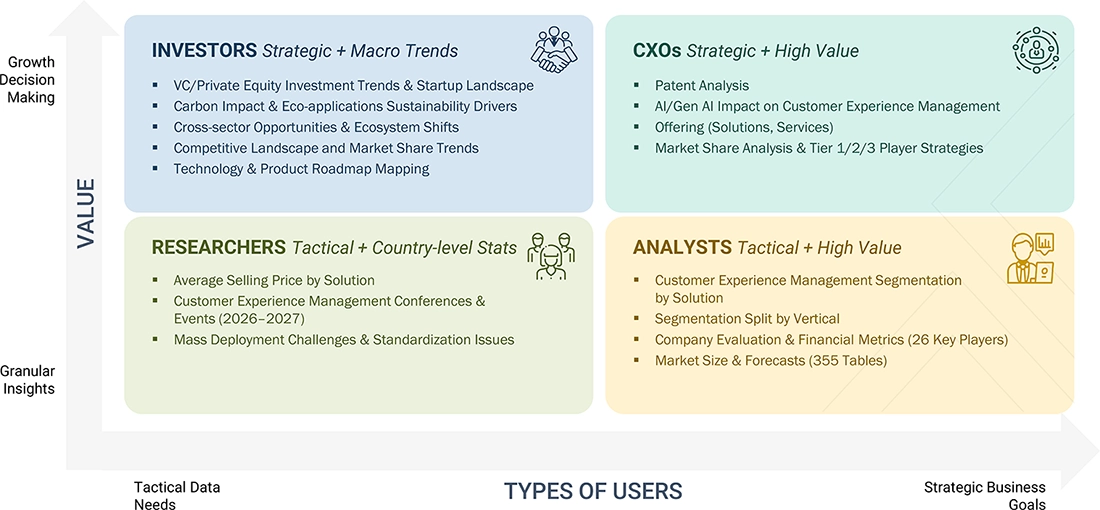
WHAT IS IN IT FOR YOU: CUSTOMER EXPERIENCE MANAGEMENT MARKET REPORT CONTENT GUIDE
DELIVERED CUSTOMIZATIONS
We have successfully delivered the following deep-dive customizations:
| CLIENT REQUEST | CUSTOMIZATION DELIVERED | VALUE ADDS |
|---|---|---|
| Leading Service Provider (US) | Regional Analysis: • Further breakdown of the North America customer experience management market • Further breakdown of the Europe customer experience management market • Further breakdown of the Asia Pacific customer experience management market • Further breakdown of the Middle East & Africa customer experience management market • Further breakdown of the Latin America customer experience management market | • Identifies high-growth regional opportunities, enabling tailored market entry strategies. • Optimizes resource allocation and investment based on region-specific demand and trends. |
| Company Information | Detailed analysis and profiling of additional market players (up to 5) | • Broadens competitive insights, helping clients make informed strategic and investment decisions. • Reveals market gaps and opportunities, supporting differentiation and targeted growth initiatives. |
RECENT DEVELOPMENTS
- June 2026 : Oracle announced four new Fusion Agentic Applications that will help organizations improve supply chain performance by increasing inventory visibility, reducing supplier and operational impact, and improving manufacturing efficiency.
- May 2026 : SAP introduced SAP Customer Experience (CX) AI agents and assistants that aim to enable customer service workers to perform more detailed case management. The AI tools will enable marketers to activate campaigns based on operational data, e-commerce teams to understand inventory flows, and sales teams to analyze more deals and identify the elements needed to complete them.
- April 2026 : Adobe unveiled Adobe CX Enterprise, a new end-to-end agentic AI system that will simplify how businesses manage their entire customer lifecycle, from acquiring and engaging prospects to driving conversion and lasting loyalty.
- January 2026 : Medallia and Ada announced a strategic partnership to unite customer intelligence with Agentic AI to elevate customer experiences and operational intelligence
Table of Contents
 Exclusive indicates content/data unique to MarketsandMarkets and not available with any competitors.
Methodology
This research study involved the extensive use of secondary sources, directories, and databases, such as Dun & Bradstreet (D&B) Hoovers and Bloomberg BusinessWeek, to identify and collect information useful for a technical, market-oriented, and commercial study of the customer experience management market. The primary sources were mainly industry experts from the core and related industries and preferred suppliers, manufacturers, distributors, service providers, technology developers, alliances, and organizations related to all segments of the value chain of this market. In-depth interviews were conducted with various primary respondents, including key industry participants, subject matter experts, C-level executives of key market players, and industry consultants, to obtain and verify critical qualitative and quantitative information.
Secondary Research
The market for companies offering customer experience management solutions and services to different verticals was estimated and projected based on the secondary data made available through paid and unpaid sources, and by analyzing their product portfolios in the ecosystem of the customer experience management market. It also involved rating company products based on their performance and quality. In the secondary research process, various sources, including several journals, such as the Institute of Electrical and Electronics Engineers (IEEE), ScienceDirect, ResearchGate, Academic Journals, Scientific.Net, and various associations/forums, were referred to for identifying and collecting information for this study on the customer experience management market.
The secondary sources included annual reports, press releases, investor presentations of companies, white papers, journals, and certified publications and articles by recognized authors, directories, and databases. Secondary research was mainly used to obtain key information about the supply chain of the market, the total pool of key players, market classification, segmentation according to industry trends to the bottommost level, regional markets, and key developments from both market- and technology-oriented perspectives that were further validated by primary sources.
Primary Research
In the primary research process, various primary sources from the supply and demand sides were interviewed to obtain qualitative and quantitative information on the market. The primary sources from the supply side included various industry experts, including Chief Experience Officers (CXOs); Vice Presidents (VPs); directors from business development, marketing, and product development/innovation teams; related key executives from customer experience management solution vendors, professional service providers, and industry associations; and key opinion leaders
Primary interviews were conducted to gather insights, such as market statistics, revenue data collected from solutions and services, market breakups, market size estimations, market forecasts, and data triangulation. Primary research also helped in understanding various trends related to technologies, applications, deployments, and regions. Stakeholders from the demand side, such as Chief Information Officers (CIOs), Chief Technology Officers (CTOs), Chief Strategy Officers (CSOs), and end users using customer experience management solutions, were interviewed to understand the buyers’ perspective on suppliers, products, service providers, and their current usage of customer experience management solutions, which would impact the overall customer experience management market.
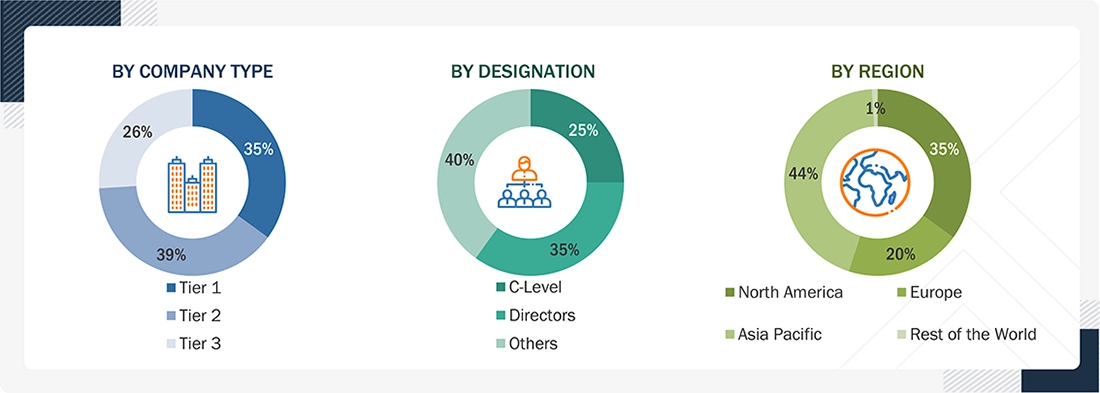
Note: Tier 1 companies’ revenue is more than USD 1 billion; Tier 2 companies’ revenue ranges between USD 500 million and USD 1 billion; and Tier 3 companies’ revenue ranges between USD 100 million and USD 500 million. Other designations include sales managers, marketing managers, and product managers.
To know about the assumptions considered for the study, download the pdf brochure
Market Size Estimation
Multiple approaches were adopted to estimate and forecast the size of the customer experience management market. The first approach involved estimating market size by summing up the revenue generated by companies through the sale of customer experience management offerings.
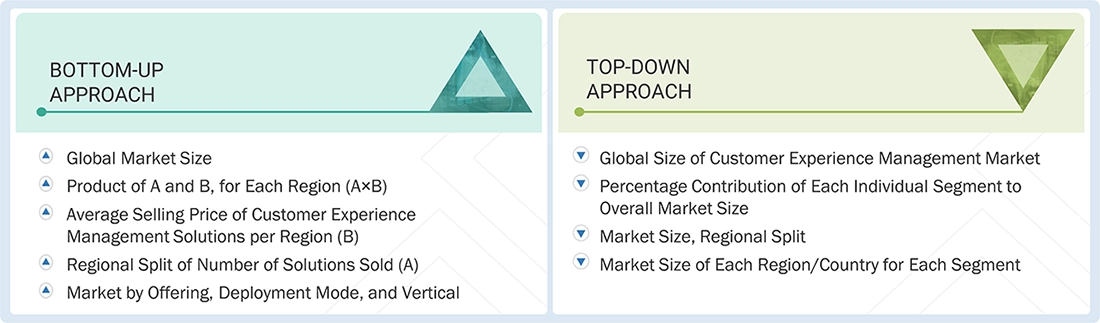
Top-down and bottom-up approaches were used to estimate and validate the total size of the customer experience management market. These methods were extensively used to estimate the size of various segments in the market. The research methodology used to evaluate the market size is listed below.
- Key players in the market were identified through extensive secondary research.
- In terms of value, the industry’s supply chain and market size were determined through primary and secondary research processes.
- All percentage shares, splits, and breakups were determined using secondary sources and verified through primary sources.
Customer Experience Management Market : Top-Down and Bottom-Up Approach
Data Triangulation
After determining the overall market size, the customer experience management market was divided into several segments and subsegments. A data triangulation procedure was used to complete the overall market engineering process and arrive at the exact statistics for all segments and subsegments, wherever applicable. The data was triangulated by studying various factors and trends from the demand and supply sides. Along with data triangulation and market breakdown, the market size was validated by the top-down and bottom-up approaches.
Market Definition
CEM is a set of processes used to track customer feedback, understand customer expectations, and improve overall customer experience (CE) to reach new markets through different touchpoints. The customer experience management (CEM) solution helps organizations interact with customers to understand their experiences related to specific products and services. New technologies such as artificial intelligence (AI) and machine learning (ML) are assisting the CEM solution to provide an intelligent, convenient, and informed CX at multiple touchpoints. CEM is performed using different tools and techniques, such as Enterprise Feedback Management (EFM), web analytics, text analysis, and speech analytics. CEM blends customer satisfaction, loyalty, retention, relationship management, user experience, experiential marketing, and customer-centricity.
Key Stakeholders
- Customer Experience Management Solution and Service Providers
- Technology Vendors
- Marketing Teams
- System Integrators (SIs)
- Resellers
- Value-added Resellers (VARs)
- Customer Service & Contact Centers
- Cloud Service Providers
- System Integrators & Consulting Firms
- Data & Analytics Providers
- Managed Service Providers (MSPs)
- Compliance Regulatory Authorities
- Government Authorities
Report Objectives
- To determine and forecast the customer experience management market by offering (solutions and services), deployment mode, vertical, and region
- To forecast the size of the market segments for North America, Europe, Asia Pacific, Latin America, and the Middle East & Africa
- To provide detailed information about the major factors (drivers, restraints, opportunities, and challenges) influencing the growth of the market
- To analyze each submarket concerning individual growth trends, prospects, and contributions to the overall market
- To analyze the opportunities in the market for stakeholders by identifying the high-growth segments of the market
- To profile the key market players; provide a comparative analysis based on business overviews, regional presence, product offerings, business strategies, and key financials; and illustrate the market’s competitive landscape
- To track and analyze competitive developments in the market, such as mergers and acquisitions, product developments, partnerships and collaborations, and research and development (R&D) activities
Available customizations:
With the given market data, MarketsandMarkets offers customizations to meet the company’s specific needs. The following customization options are available for the report:
Country-wise Information
- Analysis for additional countries (up to five)
Company Information
- Detailed analysis and profiling of additional market players (up to 5)
Key Questions Addressed by the Report
What is the projected size of the global customer experience management market?
The global customer experience management market is projected to grow from USD 15.78 billion in 2026 to USD 34.02 billion by 2032, at a CAGR of 13.7% during the forecast period. Growth is driven by increasing demand for personalized customer experiences, AI-powered analytics, and omnichannel engagement solutions.
Which segment holds the largest share of the customer experience management market?
The solutions segment holds the largest share of the customer experience management market, driven by growing enterprise adoption of customer analytics, customer journey orchestration, digital experience platforms (DXPs), and feedback management solutions to enhance customer engagement.
What are the key trends driving the customer experience management market?
Key trends include the adoption of AI-powered customer journey orchestration, cloud-based CX platforms, real-time customer analytics, omnichannel engagement strategies, predictive analytics, and personalized digital experiences to improve customer satisfaction and loyalty.
Which region is expected to witness the fastest growth in the customer experience management market?
Asia Pacific is projected to be the fastest-growing region during the forecast period, driven by rapid digital transformation, increasing cloud adoption, mobile-first consumer behavior, and rising investments in AI-driven customer engagement technologies.
Who are the key players in the customer experience management market?
Key companies operating in the customer experience management market include Oracle (US), Adobe (US), SAP (Germany), IBM (US), Avaya (US), OpenText (Canada), NICE (Israel), SAS (US), Verint Systems (US), Teradata (US), Tech Mahindra (India), Zendesk (US), Sitecore (Denmark), Sprinklr (US), and Medallia (US).
Need a Tailored Report?
Customize this report to your needs
Get 10% FREE Customization
Customize This ReportPersonalize This Research
- Triangulate with your Own Data
- Get Data as per your Format and Definition
- Gain a Deeper Dive on a Specific Application, Geography, Customer or Competitor
- Any level of Personalization
Let Us Help You
- What are the Known and Unknown Adjacencies Impacting the Customer Experience Management Market
- What will your New Revenue Sources be?
- Who will be your Top Customer; what will make them switch?
- Defend your Market Share or Win Competitors
- Get a Scorecard for Target Partners

Custom Market Research Services
We Will Customise The Research For You, In Case The Report Listed Above Does Not Meet With Your Requirements
Get 10% Free CustomisationTESTIMONIALS






Growth opportunities and latent adjacency in Customer Experience Management Market