
Biomaterials Market Size, Growth, Share & Trends Analysis

Biomaterials Market by Type [Metallic (Gold, Magnesium), Ceramic (Aluminum Oxide, Carbon), Polymer (Polyethylene, Polyester), Natural (Hyaluronic acid, Collagen, Gelatin)], Application (Orthopedic, Dental, CVD, Ophthalmology) - Global Forecast to 2030




OVERVIEW
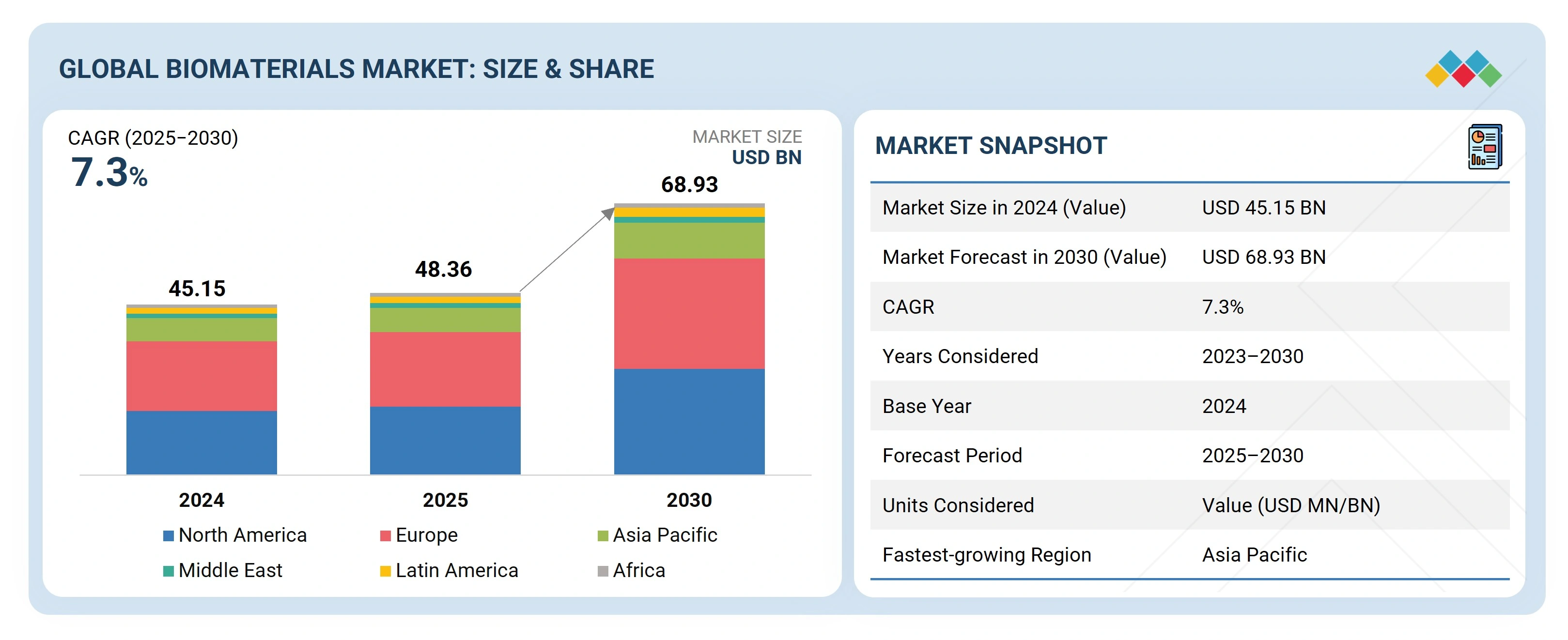
Source: Secondary Research, Interviews with Experts, MarketsandMarkets Analysis
The global biomaterials market, valued at USD 45.15 billion in 2024, stood at USD 48.36 billion in 2025 and is projected to advance at a resilient CAGR of 7.3% from 2025 to 2030, culminating in a forecasted valuation of USD 68.93 billion by the end of the period. Biomaterials are specially crafted materials designed to interact safely with biological systems for medical applications. These substances are engineered for biocompatibility with living tissues and support diverse uses, including implants, prosthetics, drug delivery systems, and tissue engineering.
KEY TAKEAWAYS
-
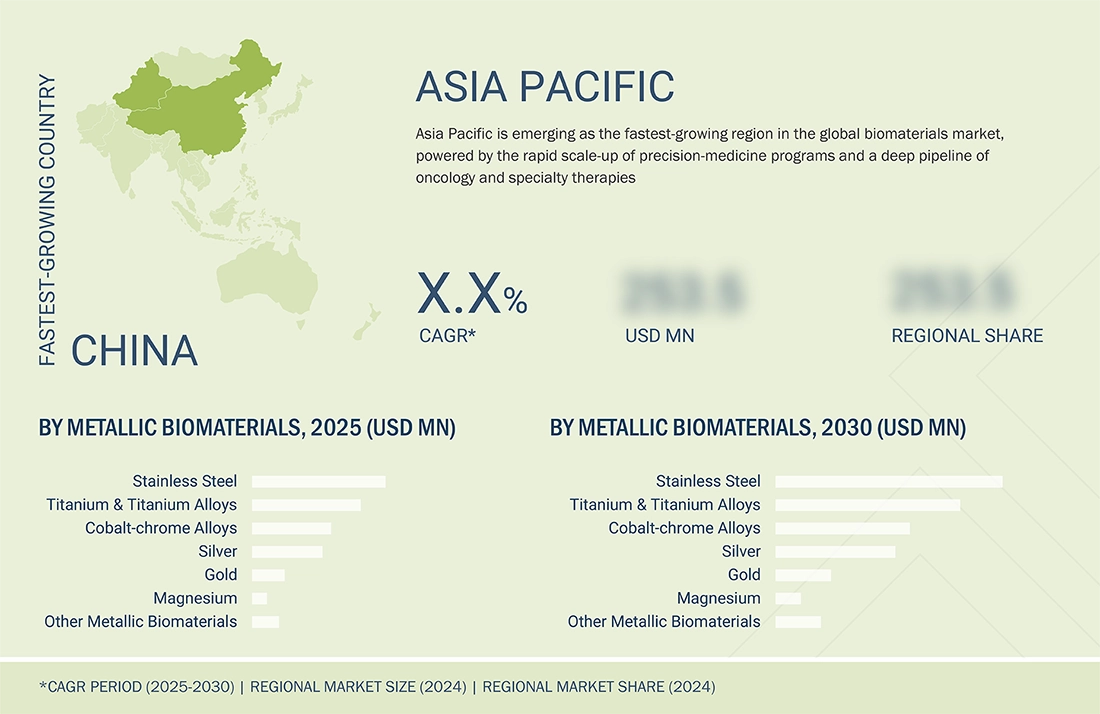
BY REGIONThe Asia Pacific is the fastest-growing regional segment with a CAGR of 7.8% during the forecast period.
-
BY TYPEBy type, metallic biomaterials are projected to show the highest CAGR of 7.6% between 2025 and 2030.
-
BY APPLICATIONBy application, the orthopedic segment is expected to dominate the global biomaterials market in 2024 with a CAGR of 34.9%.
-
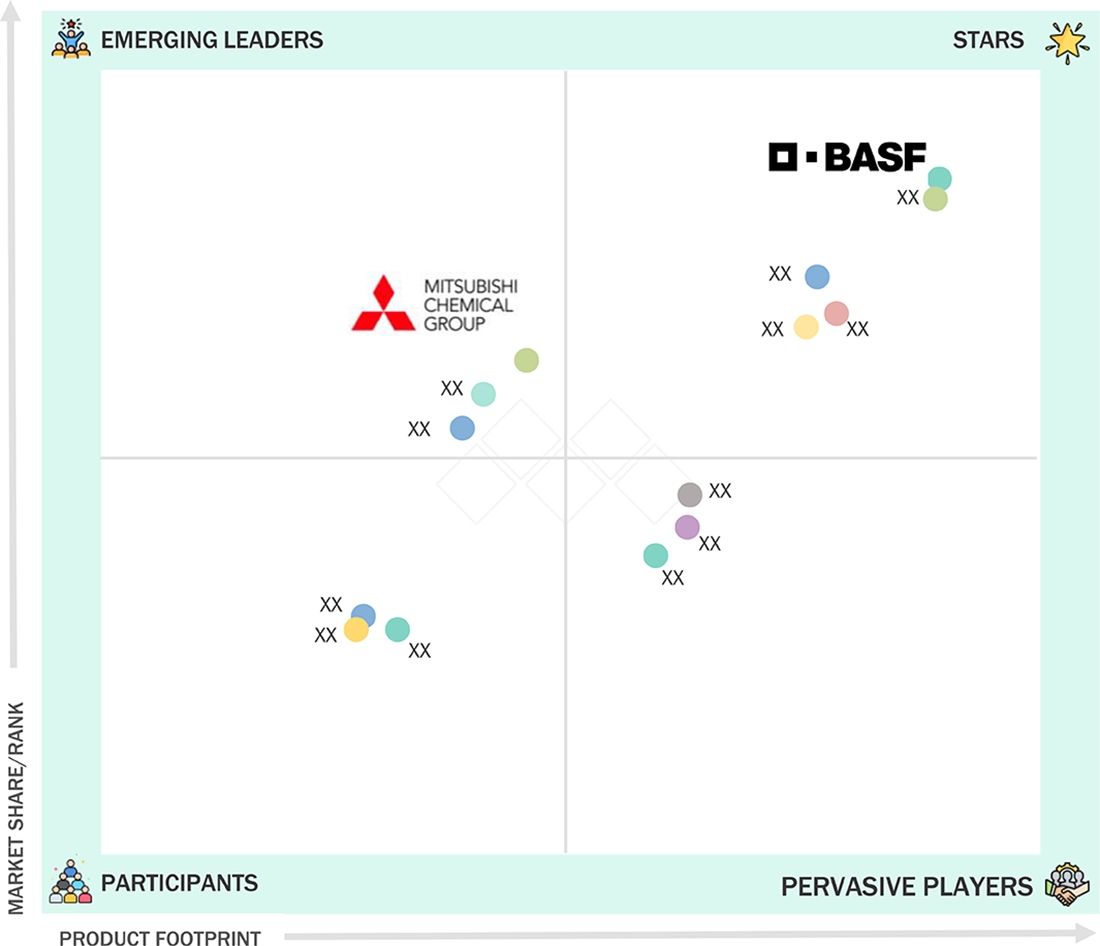
COMPETITIVE LANDSCAPEBASF SE, Celanese corporation, Carpenter technology, were identified as some of the star players in the global biomaterials market, given their strong market share and product footprint.
-
COMPETITIVE LANDSCAPECollagen Solution and Jellatech have distinguished themselves among startups and SMEs by securing strong footholds in specialized niche areas, underscoring their potential as emerging market leaders.
The global biomaterials market is expanding rapidly, driven by the surge in precision-medicine programs and the routine use of biomarker-guided tests in oncology, cardiology, and other complex diseases.
TRENDS & DISRUPTIONS IMPACTING CUSTOMERS' CUSTOMERS
The biomaterials market is emerging with innovative developments and smart applications of technology, processing, and regulations that work in perfect synchrony with precision medicine, tissue-engineered therapies, and complex biologic treatments. The large and ever-expanding patient base across the global healthcare systems, fighting cancer, cardiovascular diseases, musculoskeletal diseases requiring orthopedic interventions, and neurological disorders, is driving the need for superior biomaterials with a proven track record of reliable and durable clinical outcomes through innovative biomaterials in the form of implants, scaffolds, and drug-delivery devices. Clinically proven and automation-friendly products such as bioresorbable polymers, bioactive ceramics, and collagen bioengineered scaffolds are also gaining increasing acceptances, as they enhance procedures, help with personalized and minimally invasive procedures aligned with the regulator and payer communities in developed regions such as Asia Pacific and North America.
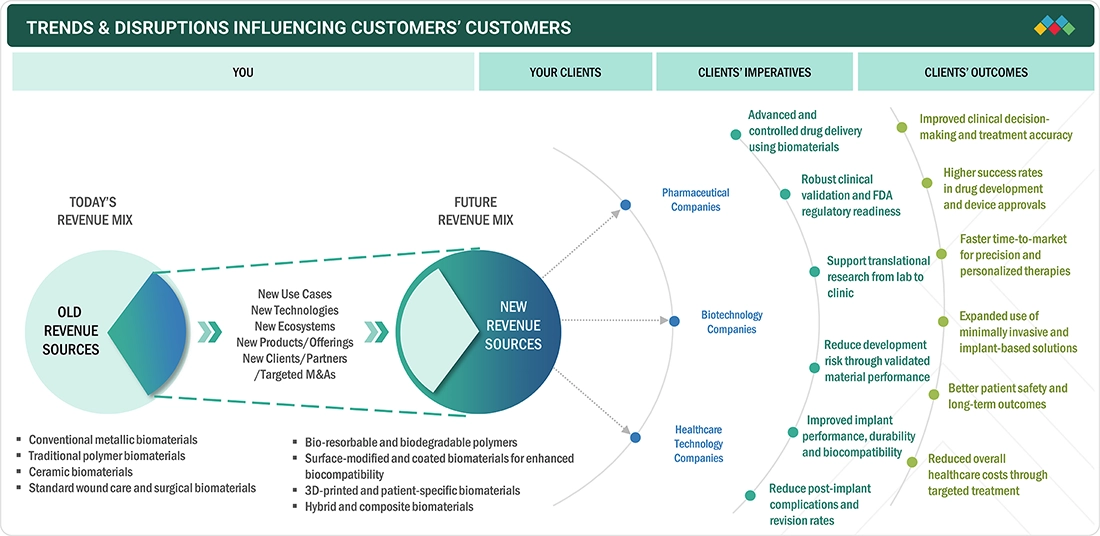
Source: Secondary Research, Interviews with Experts, MarketsandMarkets Analysis
MARKET DYNAMICS

Level
-
Rising advancements in smart, biocompatible, and 3D-printed biomaterials

-
Advancements in healthcare facilities and systems


Level
-
High development and production costs associated with advanced biomaterials


Level
-
Expanding applications in tissue engineering and regenerative medicine


Level
-
Concerns related to biocompatibility, safety, and adverse immune responses

Source: Secondary Research, Interviews with Experts, MarketsandMarkets Analysis
Driver: Rising advancements in smart, biocompatible, and 3D-printed biomaterials
Innovations in smart biocompatible and 3D-printed biomaterials are driving market growth, yielding improved clinical outcomes through bioresorbable polymers, surface-modified implants, and expanded applications.
Restraint: High development and production costs associated with advanced biomaterials
High development and production costs for advanced biomaterials, along with complex regulatory approvals, limit scalability and market penetration.
Opportunity: Expanding applications in tissue engineering and regenerative medicine
Biomaterials applications in tissue engineering, regenerative medicine, and personalized therapy represent a significant area of growth potential amidst the rising prevalence of chronic diseases.
Challenge: Concerns related to biocompatibility, safety, and adverse immune responses
Biocompatibility issues, immune reactions, and variability in long-term performance pose ongoing hurdles to the widespread adoption.
BIOMATERIALS MARKET: COMMERCIAL USE CASES ACROSS INDUSTRIES
| COMPANY | USE CASE DESCRIPTION | BENEFITS |
|---|---|---|
 |
Produces biodegradable lactic acid-based biomaterials (PLA and related polymers) used in controlled drug delivery, tissue regeneration, and resorbable implants. | Enables biodegradable implant solutions that support tissue healing and reduce long-term foreign body presence. |
 |
Manufactures specialty biomaterial polymers for applications in tissue engineering, drug delivery systems, and medical devices. | Enhances material performance with tailored degradation rates, mechanical strength, and biocompatibility for varied clinical needs. |
Logos and trademarks shown above are the property of their respective owners. Their use here is for informational and illustrative purposes only.
MARKET ECOSYSTEM
The global biomaterials market is a highly interconnected market where material researchers, device makers, biotechnology and medical technology firms, research institutions, and physicians work together for the introduction of novel solutions based on biomaterials in medicine. Manufacturers, along with specialty material suppliers, offer high-performance polymer, metal, ceramic, and natural biomaterials. Contract research organizations, contract development and manufacturing organizations, and academic research facilities assist in preclinical studies, clinical studies, and commercialization for implants, drug delivery systems, and regenerative medicine based on biomaterials. European medical facilities, reference, and reimbursement systems translate clinical confirmations for biomaterials into practical, innovative, precision medicine for Europe on a daily basis through their normal operations.
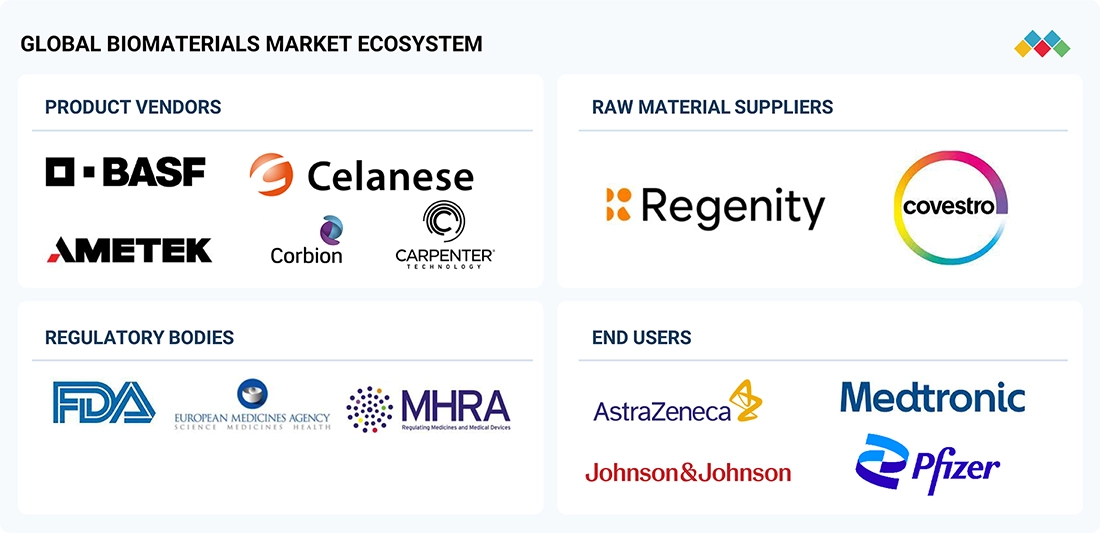
Logos and trademarks shown above are the property of their respective owners. Their use here is for informational and illustrative purposes only.
MARKET SEGMENTS
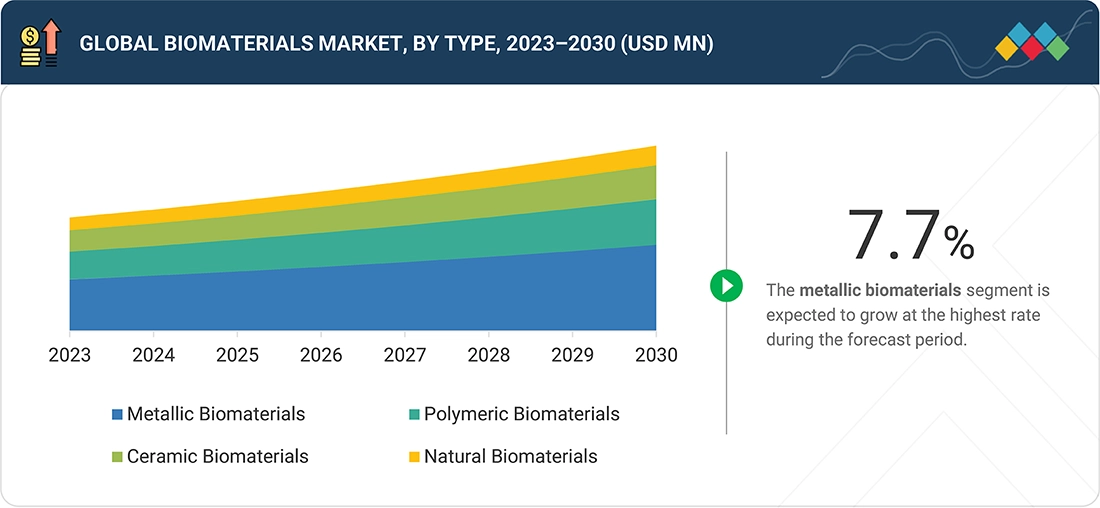
Source: Secondary Research, Interviews with Experts, MarketsandMarkets Analysis
Global Biomaterials Market, By Type
In 2024, metallic biomaterials dominated due to the wide use of metals in the manufacturing of medical devices for cardiovascular, dental, and orthopedic applications.
Global Biomaterials Market, By Application
In 2024, the orthopedic segment accounted for the largest share of the biomaterials market. Its market leadership can be attributed to the increasing prevalence of orthopedic conditions, such as osteoarthritis, osteoporosis, and musculoskeletal injuries.
REGION
APAC to be fastest-growing region in market during forecast period
In 2024, the APAC region emerged as the fastest-growing in the global biomaterials market, driven by its dense network of academic medical centers, specialized surgical hospitals, and dynamic life-science innovation hubs. A robust pipeline of orthopedic, cardiovascular, dental, and regenerative therapies, paired with significant investments in personalized medicine and extensive clinical trials, fuels this surge.
BIOMATERIALS MARKET: COMPANY EVALUATION MATRIX
In the global biomaterials market, BASF leads as the star player, leading the polymer segment with its extensive lineup of medical-grade plastics and superabsorbent materials that hospitals and device OEMs worldwide trust for wound-care dressings, surgical pads, and reliable components in drug-delivery and surgical instruments. Mitsubishi Chemical emerges as a rising leader, building momentum via its specialty metal and biomaterial units that deliver precision alloys, implantable textiles, and polymer scaffolds, enabling MedTech and biopharma partners across key regions to pioneer next-gen cardiovascular, orthopedic, and cell-therapy devices.
Source: Secondary Research, Interviews with Experts, MarketsandMarkets Analysis
KEY MARKET PLAYERS
- BASF SE (Germany)
- COVESTRO AG (Germany)
- CELANESE CORPORATION (US)?
- CARPENTER TECHNOLOGY CORPORATION (US)?
- Evonik Industries (Germany)
- DSM (Netherlands)
- Corbion NV(Netherlands)
- Victrex PLC(UK)
MARKET SCOPE
| REPORT METRIC | DETAILS |
|---|---|
| Market Size in 2024 (Value) | USD 45.15 Billion |
| Market Forecast in 2030 (Value) | USD 68.93 Billion |
| Growth Rate | CAGR of 7.3 % from 2025-2030 |
| Years Considered | 2023-2030 |
| Base Year | 2024 |
| Forecast Period | 2025-2030 |
| Units Considered | Value (USD Million/Billion) |
| Report Coverage | Revenue forecast, company ranking, competitive landscape, growth factors, and trends |
| Segments Covered |
|
| Regions Covered | North America, Europe, Asia Pacific, Latin America, Middle East & Africa |
| Related Segment & Geographic Reports |
Orthopedic Biomaterials Market North America Biomaterials Market Europe Biomaterials Market Asia Pacific Biomaterials Market Polymeric Biomaterials Market |
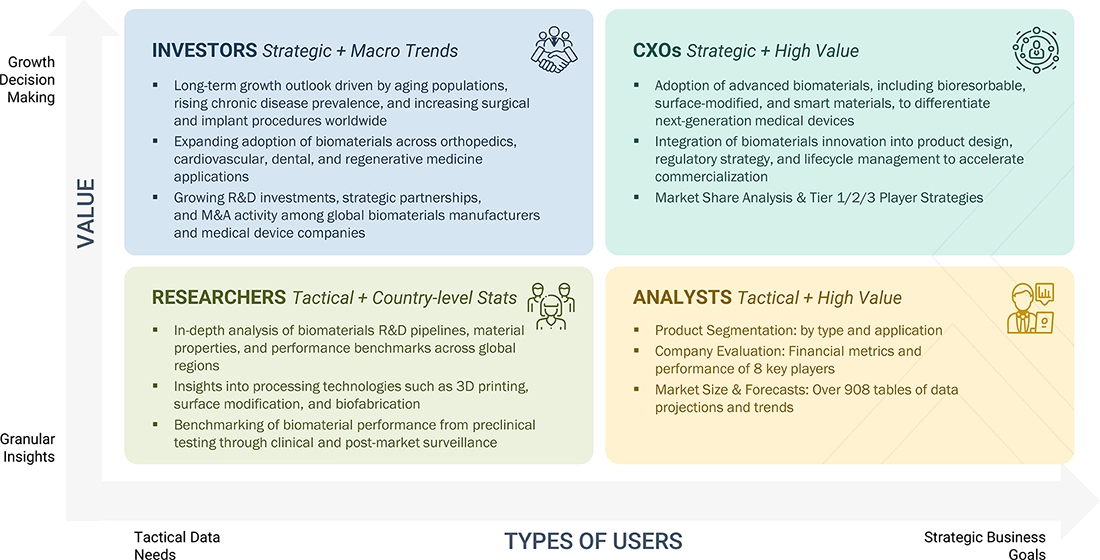
WHAT IS IN IT FOR YOU: BIOMATERIALS MARKET: REPORT CONTENT GUIDE
DELIVERED CUSTOMIZATIONS
We have successfully delivered the following deep-dive customizations:
| CLIENT REQUEST | CUSTOMIZATION DELIVERED | VALUE ADDS |
|---|---|---|
| Benchmarking end-user preferences for biomaterial types and applications | Mapped how surgeons, interventional cardiologists, and dental specialists prioritize metallic, polymeric, ceramic, and natural biomaterials across orthopedic, cardiovascular, dental, and wound-healing procedures, including trade-offs in handling, longevity, and reimbursement | Informs portfolio strategy and clinical-education efforts by showing which biomaterial families are gaining share in each specialty, enabling commercial teams to target the right KOLs, procedures, and indication expansions with differentiated value messages |
| Identifying outsourcing and partnership opportunities for biomaterial-based device development | Mapped leading biomaterials-focused CDMOs and contract manufacturers and OEMs with polymer synthesis, implant forming, sterile packaging, and regulatory-compliant scale-up, highlighting examples such as Corbion, Life Science Outsourcing, Evonik, Regenity, and specialized bioresorbable-device developers. | Helps clients prioritize high-value partners for co-development and manufacturing, shortens time-to-market for new implants and scaffolds, and reduces capex by leveraging existing GMP infrastructure purpose-built for advanced biomaterials |
RECENT DEVELOPMENTS
- March 2023 : Celanese Corporation and Alessa Therapeutics have entered a collaboration to combine Alessa’s sustained, localized drug-delivery expertise with Celanese’s VitalDose EVA platform to develop a localized, sustained-release oncology drug-delivery system aimed at reducing systemic side effects for cancer patients
- April 2023 : Celanese Corporation signed an agreement with Glaukos to supply its VitalDose drug-delivery platform as a key component of Glaukos’ iDose TR, a micro-invasive intraocular implant designed to provide long-duration glaucoma therapy by continuously reducing intraocular pressure in patients with open-angle glaucoma or ocular hypertension
Table of Contents
 Exclusive indicates content/data unique to MarketsandMarkets and not available with any competitors.
Methodology
This research study extensively used secondary sources, directories, and databases to identify and collect valuable information to analyse the global Biomaterials market. In-depth interviews were conducted with various primary respondents, including key industry participants, subject-matter experts (SMEs), C-level executives of key market players, and industry consultants, to obtain and verify critical qualitative and quantitative information and assess the growth prospects of the market. The global market size estimated through secondary research was then triangulated with inputs from primary research to arrive at the final market size.
Secondary Research
Secondary research was used mainly to identify and collect information for the extensive, technical, market-oriented, and commercial study of the Global Biomaterials market. The secondary sources used for this study includes US Food and Drug Administration (USFDA), European Medicines Agency (EMA), National Institutes of Health (NIH), National Institute of Standards and Technology (NIST), European Commission (EC), Centers for Disease Control and Prevention (CDC), National Science Foundation (NSF), World Health Organization (WHO), Journal of Biomedical Nanotechnology, Journal of Materials Science, Materials Science and Engineering, Journal of Biomedical Materials Research, Biomedical Engineering Society (BMES), American Society for Testing and Materials (ASTM) International, Society for Biomaterials (SFB), European Society for Biomaterials (ESB); corporate filings such as annual reports, SEC filings, investor presentations, and financial statements; press releases; trade, business, professional associations and among others. These sources were also used to obtain key information about major players, market classification, and segmentation according to industry trends, regional/country-level markets, market developments, and technology perspectives.
Primary Research
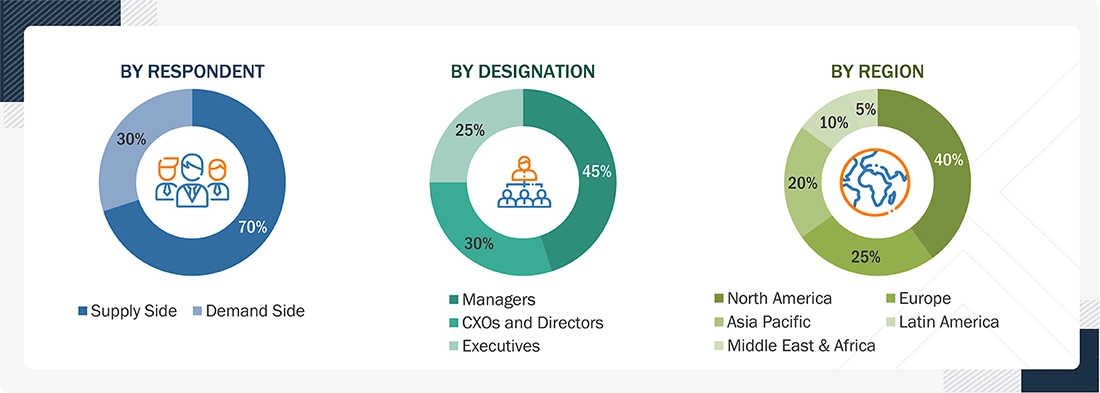
Following an initial assessment of the global biomaterials market landscape through secondary research, comprehensive primary research was undertaken. This involved conducting in-depth interviews with market experts from the demand side, including stakeholders from pharmaceutical and biotechnology firms, CROs, CMOs, and academic and research institutions. Additionally, interviews were held with key supply-side participants, such as C-suite and senior executives, product managers, and marketing and sales leaders from prominent manufacturers, distributors, and channel partners. The research covered six major geographical regions: North America, Europe, Asia Pacific, Latin America, the Middle East, and Africa. Approximately 70% of the primary interviews were conducted with supply-side participants, while 30% involved demand-side experts. Data collection methods included structured questionnaires, email correspondence, online surveys, personal interviews, and telephonic discussions to understand the market dynamics comprehensively.
The following is a breakdown of the primary respondents:
To know about the assumptions considered for the study, download the pdf brochure
Market Size Estimation
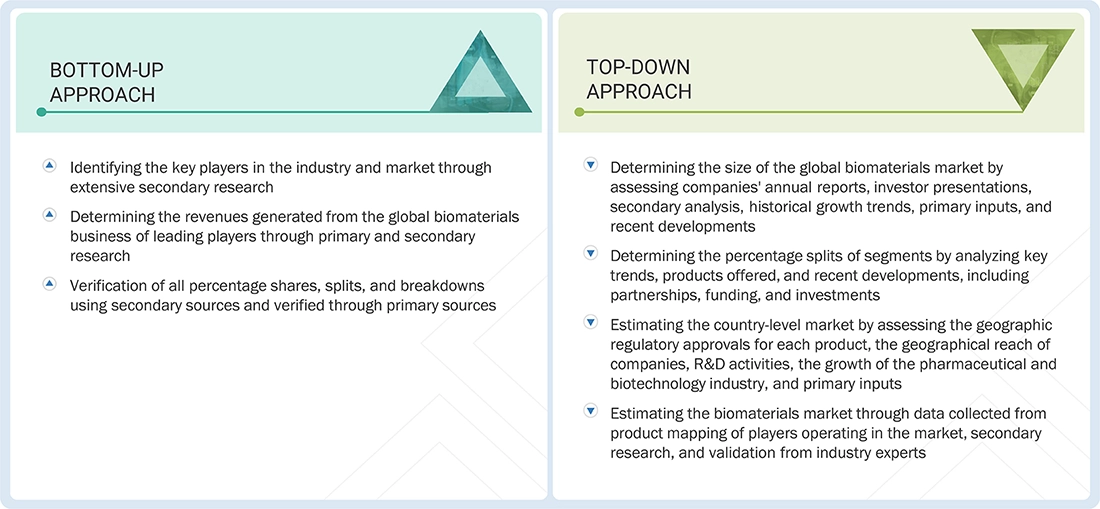
Both bottom-up and top-down approaches were used to estimate and validate the total size of the Global Biomaterials market. These methods were also used extensively to estimate the size of various subsegments in the market. The research methodology used to estimate the market size includes the following:
- A list of the major global players operating in the Biomaterials market was generated.
- The revenues generated from their Biomaterials product have been determined through annual reports and secondary sources (including paid databases)
- The products were mapped according to the segments of the market. Percentage shares and splits were determined based on the revenue contributed to each segment. This was verified using secondary sources and by industry experts.
- All assumptions, approaches, and individual shares/revenue estimates were validated through expert interviews.
Biomaterials Market : Top-Down and Bottom-Up Approach
Data Triangulation
After arriving at the market size from the estimation process explained above, the total market was divided into several segments and subsegments. To complete the overall market engineering process and arrive at the exact statistics for all segments and subsegments, data triangulation and market breakdown procedures were employed, wherever applicable. The data was triangulated by studying various factors and trends from both the demand and supply sides.
Market Definition
Biomaterials refer to substances that have been engineered to interact with biological systems for medical purposes. These materials are designed to be compatible with living tissues and can be used in various medical applications, such as implants, prosthetics, drug delivery systems, and tissue engineering.
Key Stakeholders
- Biomaterial product manufacturing companies
- Healthcare service providers (including hospitals & specialty clinics)
- National and regional research boards and organizations
- Research & development companies
- Clinical research organizations (CROs)
- Healthcare technology companies
- Biotechnology companies
- Research laboratories & academic institutes
- Market research & consulting firms
- Regulatory bodies
Report Objectives
- To define, describe, and forecast the Global Biomaterials market based on type and application.
- To provide detailed information regarding the major factors influencing market growth (such as drivers, restraints, opportunities, and challenges)
- To strategically analyze micromarkets1 concerning individual growth trends, prospects, and contributions to the Biomaterials market
- To analyze the opportunities in the market for stakeholders and provide details of the competitive landscape for market leaders
- To forecast the size of the market segments concerning six main regions—North America, Europe, the Asia Pacific, Latin America, the Middle East and Africa
- To profile the key players in the global Biomaterials market and comprehensively analyze their product portfolios, market positions, and core competencies
- To track and analyze competitive developments such as product approvals and launches, expansions, agreements, and collaborations in the Biomaterials market
- To benchmark players within the Biomaterials market using the company evaluation matrix framework, which analyzes market players based on various parameters within the broad categories of business and service strategy
Available Customizations
With the given market data, MarketsandMarkets offers customizations to meet the company’s needs. The following customization options are available for this report:
Portfolio Assessment
- Product Matrix, which gives a detailed comparison of the product portfolios of the top three companies.
Company Information
- Detailed analysis and profiling of additional market players (up to three).
Geographical Analysis
- A further breakdown of the Rest of Asia Pacific Biomaterials market into countries
- A further breakdown of the Rest of European Biomaterials market into countries
- A further breakdown of the Rest of Latin American Biomaterials market into countries
Need a Tailored Report?
Customize this report to your needs
Get 10% FREE Customization
Customize This ReportPersonalize This Research
- Triangulate with your Own Data
- Get Data as per your Format and Definition
- Gain a Deeper Dive on a Specific Application, Geography, Customer or Competitor
- Any level of Personalization
Let Us Help You
- What are the Known and Unknown Adjacencies Impacting the Biomaterials Market
- What will your New Revenue Sources be?
- Who will be your Top Customer; what will make them switch?
- Defend your Market Share or Win Competitors
- Get a Scorecard for Target Partners

Custom Market Research Services
We Will Customise The Research For You, In Case The Report Listed Above Does Not Meet With Your Requirements
Get 10% Free CustomisationTESTIMONIALS

JAYANT RAJPUROHIT
Director of Market Insights, Data and Analytics
SFI Health,
Leading Pharmaceutical Companywww.sfihealth.com/

We at SFI Health approached MarketsandMarkets for an Opportunity Assessment on "Incidence and Prevalence of Focus Indications" as we wanted to know the most attractive HCPs like Physician, Functional MD, Naturopath and Pharmacist. The project was critical for us to ensure our focus on the right target which would enable sustainable growth and profitability for SFI Health. The business insights provided exceeded our expectations and we were extremely impressed. The team at MarketsandMarkets is highly professional and detail oriented and very well understood our business needs. MarketsandMarkets offers a unique combination of expertise and dedicated engagement model. We identified 2 new products to be launched in coming months, based on the research findings provided by MarketsandMarkets. We are happy with the services and would strongly recommend MarketsandMarkets to my peers in the industry.

BEATRIZ DE LA CALLE
Head of Commercial Analytics
Qualicaps,
Leading Pharmaceutical Companywww.qualicaps.com/

We partnered with MarketsandMarkets for an assessment study on hard empty capsules. The team was extremely professional in understanding our business requirements and we received timely responses to all our queries. The market intelligence and the recommendations has met our business requirements. We were extremely impressed to see the final study results; it really exceeded our expectations. The market intelligence offered by MarketsandMarkets, and clarity on next steps will help us achieve our business objective for the Year 2021. We are happy with the services and would strongly recommend MarketsandMarkets to my peers in the industry.

Bob Williams,
Senior Director Business Development & Innovation
Bracco Diagnostics Inc.,
Italian Multinational in life sciences sector and a World Leader in imaging diagnosticsimaging.bracco.com/us-en
We were pleased with targeted insights that MarketsandMarkets identified from a custom study on the 'Radiation Dose Management Solutions Market'. Your team identified and characterized the market participants as well as underlying trends accurately. This study was useful to Bracco in formulating business strategies for our dose monitoring product lines and we thank MarketsandMarkets for the job well done.
Cody Coonradt,
Market Development and Strategy Manager
3M Health Information Systems,
Leader in Health care Coding, Payment & Analytics Solutions.www.3m.com/3M/en_US/health-information-systems-us
The value for our organization comes from three things: depth of research, specificity of segments and being easy to work with. As important as the first two are, the third can't be underestimated. MarketsandMarkets, maybe more than any other research vendor, wants to know what is top of mind for our team and what big questions we are grappling to answer.
Their customer first approach and high value engagement model, have given us great analysis and excellent value for money
Growth opportunities and latent adjacency in Biomaterials Market







Joshua
Oct, 2022
What are the recent developments in the Global Biomaterials Market?.
Alexander
Oct, 2022
Which factors are being the game changer in the global growth of Biomaterials Market?.
James
Oct, 2022
Which of the geographical segment holds the major share of the Biomaterials Market?.
Matthew
Jun, 2026
After reviewing the Biomaterials Market dynamics alongside the wound care applications covered in the report, I found the analysis useful for understanding how advanced polymers and regenerative materials are influencing product development strategies across healthcare companies..
Anthony
Jun, 2026
I went through the report to assess long-term commercial opportunities in the Biomaterials Market, and the segmentation around chronic wound management and bioactive dressings gave me a clearer perspective on future investment priorities..
Mark
Jun, 2026
The report helped me better understand how the Biomaterials Market is evolving within wound care manufacturing, especially regarding material compatibility, innovation trends, and the growing demand for cost-effective therapeutic solutions..