Orthopedic Biomaterials Market Size, Growth, Share & Trends Analysis

Orthopedic Biomaterials Market by Type (Metallic Biomaterials, Polymeric Biomaterials, Ceramic Biomaterials, Natural Biomaterials), Application (Joint Replacement, Spine Surgery, Bioresorbable Tissue Fixation, Orthobiologics, & Fracture Fixation) - Forecast to 2030




OVERVIEW
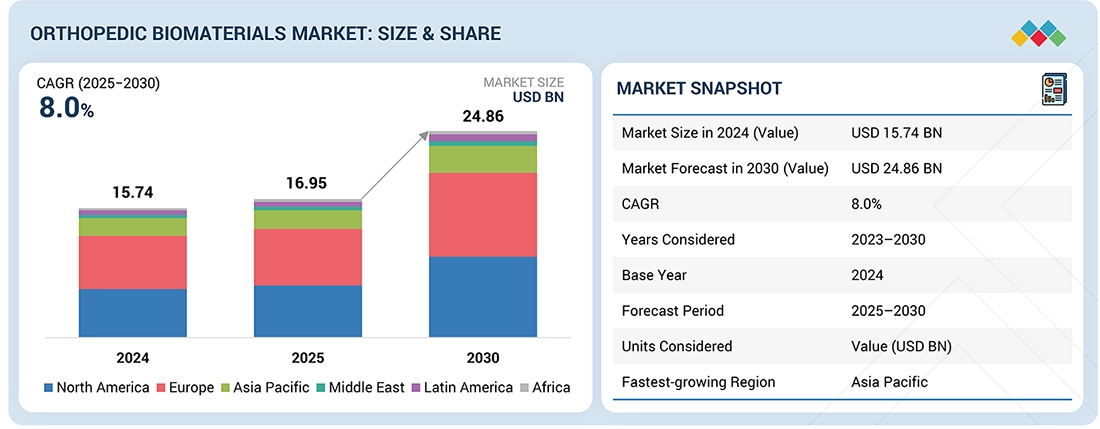
Source: Secondary Research, Interviews with Experts, MarketsandMarkets Analysis
The orthopedic biomaterials market, valued at US$15.74 billion in 2024, stood at US$16.95 billion in 2025 and is projected to advance at a resilient CAGR of 8.0% from 2025 to 2030, culminating in a forecasted valuation of US$24.86 billion by the end of the period. Orthopedic biomaterials are man-made and natural metals, polymers, ceramics, and composites that have been made for the recovery or replacement of bone, cartilage, ligament, and other musculoskeletal tissues in joint replacement, spine surgery, trauma fixation, orthobiologics, and viscosupplementation. This market encompasses load-bearing implants, bone cements, bioresorbable fixation devices, injectable viscoelastic gels, regenerative scaffolds, and specialized design-related services. These products are essential for the manufacturing and regulatory validation of orthopedic implants and biologic-device combinations utilized in hip and knee arthroplasty, spine procedures, sports medicine, and fracture management.
KEY TAKEAWAYS
-
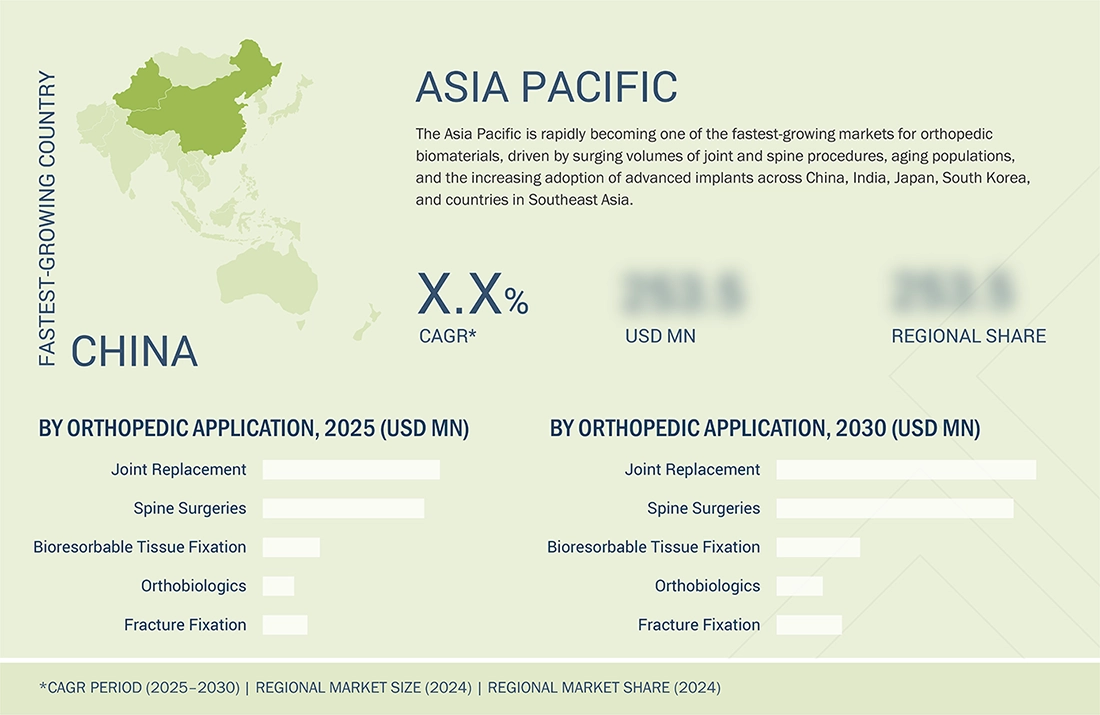
BY REGIONThe Asia Pacific is projected to register a CAGR of 7.8% in the orthopedic biomaterials market during the forecast period.
-
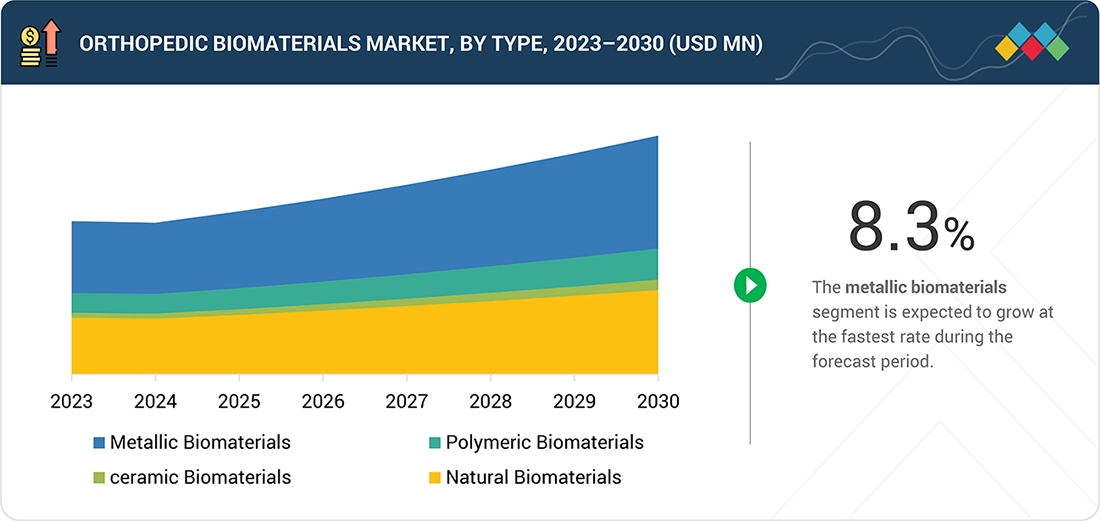
BY TypeBy type, the metallic biomaterials segment is expected to register a CAGR of 8.3% during the forecast period.
-
BY APPLICATIONBy application, the joint replacement segment is expected to register a CAGR of 8.5% in the orthopedic biomaterials market during the forecast period.
-
COMPETITIVE LANDSCAPECelanese Corporation, Carpenter Technology Corporation, and Evonik Industries were identified as some of the star players in the orthopedic biomaterials market (global), given their strong market share and product footprint.
-
COMPETITIVE LANDSCAPECollagen Solutions, SupraPolix BV, and Innovnano, among others, have distinguished themselves among startups and SMEs by securing strong footholds in specialized niche areas, underscoring their potential as emerging market leaders.
Orthopedic biomaterials are specialized metals, polymers, ceramics, and composites engineered to interface with bone, cartilage, and soft tissues for joint replacement, spine surgery, trauma fixation, and sports-medicine repairs, providing load-bearing strength, osseointegration, and controlled resorption where needed. This market spans permanent and bioresorbable implants, bone cements, coatings, bone-graft substitutes, and regenerative scaffolds, plus design, manufacturing, and regulatory services that enable safe, long-lasting orthopedic reconstruction and regeneration across hip, knee, shoulder, spine, and extremity procedures.
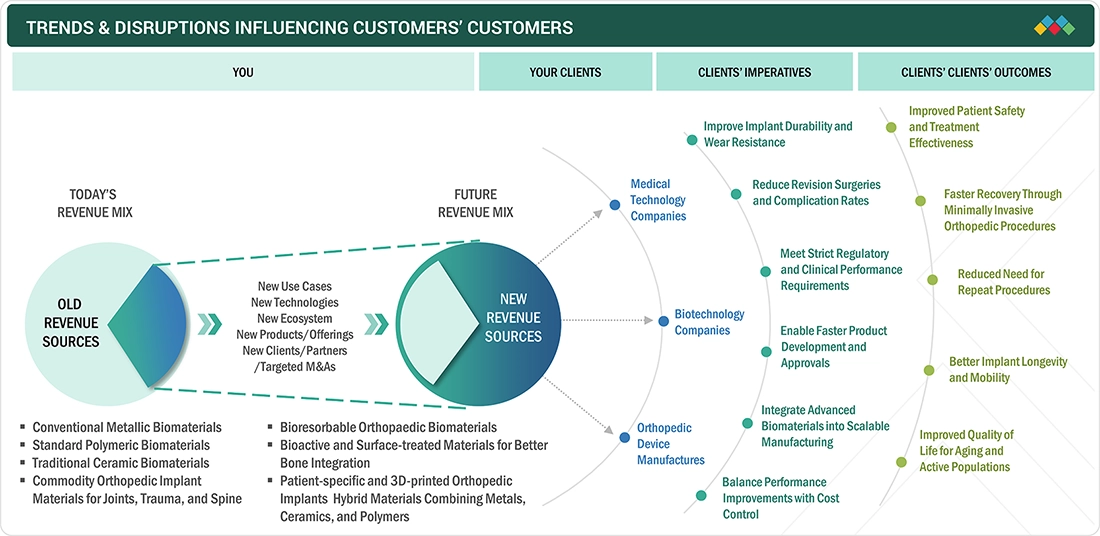
TRENDS & DISRUPTIONS IMPACTING CUSTOMERS' CUSTOMERS
The market for orthopedic biomaterials is growing rapidly as surgeons and biomaterial suppliers are increasingly using advanced materials for personalized joint replacements, spine implants, and trauma fixation systems. Orthopedic applications are fueling the demand for engineered metals and polymers with improved patient-specific fit, load-sharing benefits, and osteointegration advantages over a broad spectrum of musculoskeletal disorders. With the increasing use of bioresorbable fixation devices, 3D-printed lattice implants, and bioactive or biocidal surface coatings, there is a growing impetus to ensure standardized, clinically tested orthopedic biomaterial platforms.
Source: Secondary Research, Interviews with Experts, MarketsandMarkets Analysis
MARKET DYNAMICS

Level
-
Growing aging population and rising incidence of osteoarthritis, osteoporosis, and joint degeneration

-
Increasing number of orthopedic procedures, including hip, knee, spine, and trauma surgeries


Level
-
High cost of advanced orthopedic implants and biomaterials


Level
-
Rising demand for minimally invasive and patient-specific orthopedic procedures


Level
-
Ensuring long-term safety, durability, and biocompatibility of implants

Source: Secondary Research, Interviews with Experts, MarketsandMarkets Analysis
Driver: Growing aging population and rising incidence of osteoarthritis, osteoporosis, and joint degeneration
The rising elderly population is leading to a higher prevalence of bone and joint disorders such as osteoarthritis and osteoporosis. As people age, the likelihood of requiring joint replacements, fracture fixation, and spinal procedures increases, driving sustained demand for orthopedic implants and biomaterials that support long-term mobility and quality of life.
Restraint: High cost of advanced orthopedic implants and biomaterials
Advanced orthopedic implants made from high-performance metals, ceramics, and polymers are often expensive due to complex manufacturing processes and strict regulatory requirements. These high costs can limit adoption, particularly in cost-sensitive healthcare systems and regions with constrained reimbursement.
Opportunity: Rising demand for minimally invasive and patient-specific orthopedic procedures
There is a growing demand for minimally invasive surgeries, which is driving the need for biomaterials that facilitate quicker recovery times, shorten hospital stays, and reduce complications. Additionally, advancements in imaging and manufacturing are enabling the development of patient-specific implants, creating new growth opportunities in custom orthopedic biomaterials.
Challenge: Ensuring long-term safety, durability, and biocompatibility of implants
Orthopedic devices need to maintain their functionality for many years, even when subjected to high mechanical stress. To ensure a long lifespan, it is essential to consider factors such as safety, wear resistance, and biocompatibility. Failure of implants or adverse reactions can lead to revision surgeries and increased healthcare costs.
ORTHOPEDIC BIOMATERIALS MARKET: COMMERCIAL USE CASES ACROSS INDUSTRIES
| COMPANY | USE CASE DESCRIPTION | BENEFITS |
|---|---|---|
 |
RESOMER bioresorbable polymers from Evonik used to mold orthopedic screws, plates, pins, nails, and suture anchors that gradually resorb as bone heals, replacing traditional metal hardware in trauma and sports-medicine applications.? | Enables temporary fixation with bone-matching stiffness and predictable degradation, supporting natural load transfer, eliminating removal surgeries, and reducing long-term metal-related complications while maintaining proven biocompatibility and regulatory history.? |
 |
Dyneema Purity UHMWPE fibers from DSM supplied for ultra-strong orthopedic sutures, cerclage cables, and soft-tissue fixation devices where thin, high-strength fibers are needed to secure tendons, ligaments, and bone without bulky metal components.? | Provides fibers many times stronger than steel yet flexible and low-profile, offering excellent fatigue and abrasion resistance, radiopaque or colored options, and long-term biocompatibility that enhance implant durability, surgical handling, and visualization.? |
Logos and trademarks shown above are the property of their respective owners. Their use here is for informational and illustrative purposes only.
MARKET ECOSYSTEM
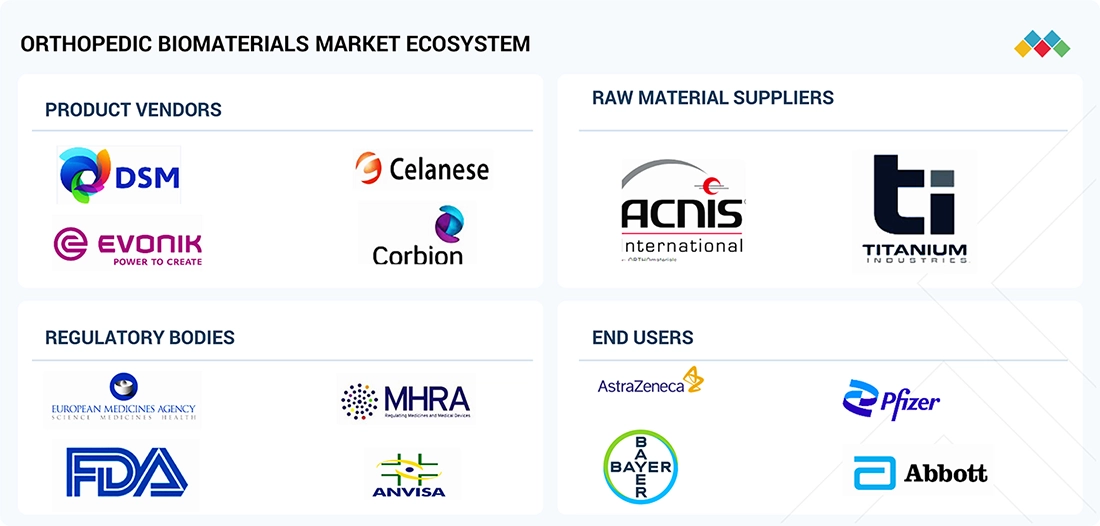
The orthopedic biomaterials market is a complex ecosystem that encompasses raw material manufacturers, orthopedic implant manufacturers, contract manufacturers, and healthcare facilities that utilize these implants for their patients. Companies that manufacture specialty materials form metals, ceramics, polymers, and other biomaterials that need rigorous ISO and government standards, while orthopedic manufacturers and contract manufacturers turn raw materials into joint replacement implants, spine implants, trauma implants, and bone graft substitutes that get implanted later on in a healthcare facility or an ambulatory surgery center, where their long-term clinical and economic outcomes are assessed for their cost-effectiveness as well.
Logos and trademarks shown above are the property of their respective owners. Their use here is for informational and illustrative purposes only.
MARKET SEGMENTS
Source: Secondary Research, Interviews with Experts, MarketsandMarkets Analysis
Orthopedic Biomaterials Market, by Type
In 2024, metallic biomaterials accounted for the largest share of the orthopedic biomaterials market, reflecting their critical role as load-bearing components in hip and knee arthroplasty, spinal instrumentation, and trauma fixation, where high strength and fatigue resistance are essential.
Orthopedic Biomaterials Market, by Application
By application, the joint replacement segment accounted for the largest share of the market, driven by growing volumes of primary and revision hip and knee procedures that rely on cobalt-chromium, titanium, and advanced bearing materials to deliver long-term implant stability and wear performance.
REGION
Asia Pacific to be fastest-growing region during forecast period
In 2024, the Asia Pacific region emerged as one of the fastest-growing markets for orthopedic biomaterials, propelled by rising volumes of hip and knee arthroplasty, spine surgeries, and trauma fixation procedures across major Asia Pacific countries. Growing investment in the local manufacturing of joint implants, bone graft substitutes, and bioresorbable fixation devices, along with supportive government programs to expand surgical capacity and upgrade hospital infrastructure, is accelerating demand for advanced metallic, polymeric, ceramic, and composite orthopedic biomaterials in both public and private healthcare systems across the region.
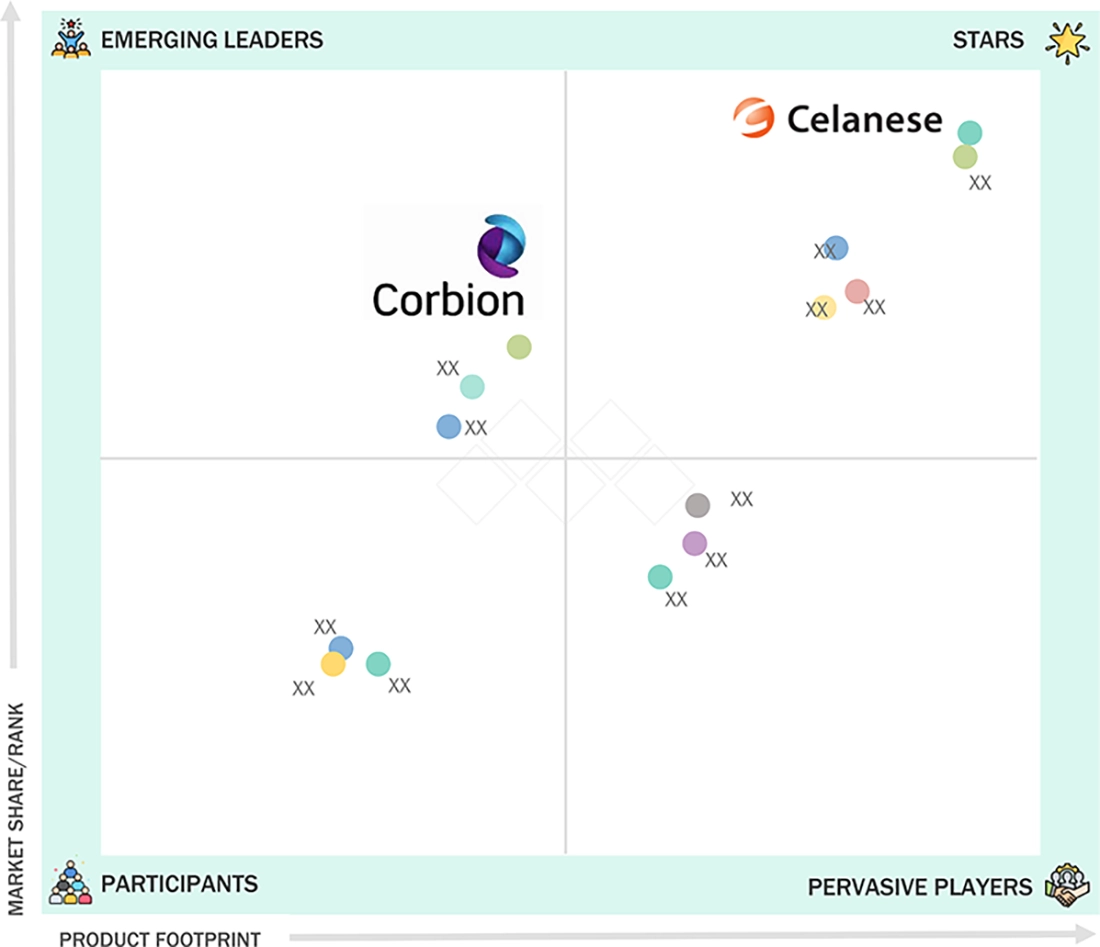
ORTHOPEDIC BIOMATERIALS MARKET: COMPANY EVALUATION MATRIX
The orthopedic biomaterials market matrix positions Celanese Corporation as the star player, capitalizing on its broad portfolio of high-performance medical-grade polymers that enable advanced spinal, trauma, and joint-replacement implants requiring durable, lightweight, and imaging-compatible components. Corbion NV is emerging as a leader, leveraging its PURASORB and other lactic-acid–based biodegradable polymers, together with device-design collaborations, to power next-generation resorbable screws, plates, and scaffolds that support bone regeneration and eliminate the need for hardware removal in orthopedic procedures.
Source: Secondary Research, Interviews with Experts, MarketsandMarkets Analysis
KEY MARKET PLAYERS
- Celanese Corporation (US)?
- Carpenter Technology Corporation (US)?
- Evonik Industries AG (Germany)?
- DSM (Netherlands)?
- Corbion NV (Netherlands)?
- CoorsTek Inc (US)?
- Berkeley Advanced Materials (US)?
- CAM Bioceramics B.V. (Netherlands)
MARKET SCOPE
| REPORT METRIC | DETAILS |
|---|---|
| Market Size in 2024 (Value) | USD 15.74 Billion |
| Market Forecast in 2030 (Value) | USD 24.86 Billion |
| Growth Rate | CAGR of 8.0% from 2025–2030 |
| Years Considered | 2023–2030 |
| Base Year | 2024 |
| Forecast Period | 2025–2030 |
| Units Considered | Value (USD Million) |
| Report Coverage | Revenue Forecast, Company Ranking, Competitive Landscape, Growth Factors, and Trends |
| Segments Covered |
|
| Regions Covered | North America, Europe, Asia Pacific, Latin America, and Middle East & Africa |
| Parent & Related Segment Reports |
Biomaterials Market North America Biomaterials Market Europe Biomaterials Market Asia Pacific Biomaterials Market Polymeric Biomaterials Market |
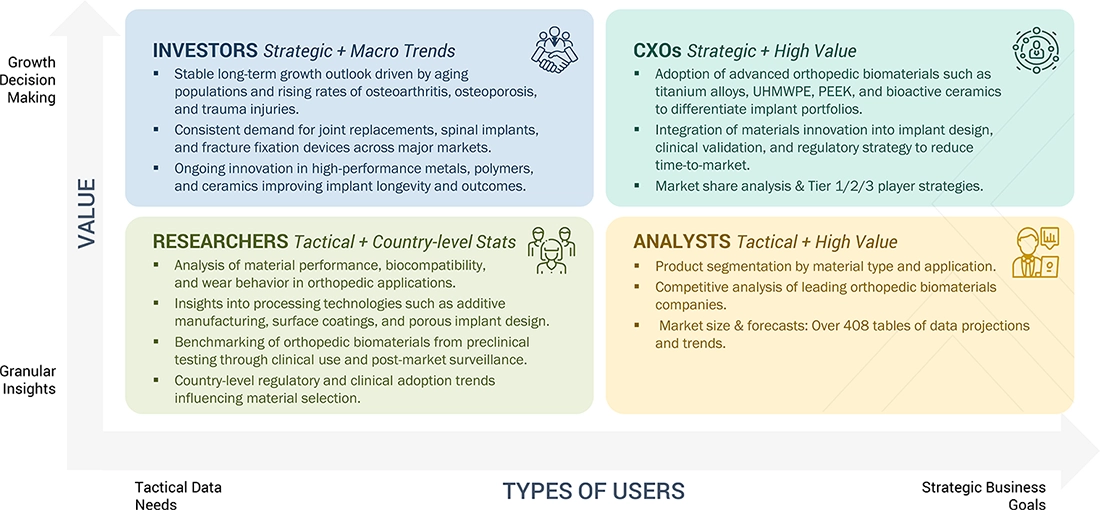
WHAT IS IN IT FOR YOU: ORTHOPEDIC BIOMATERIALS MARKET REPORT CONTENT GUIDE
DELIVERED CUSTOMIZATIONS
We have successfully delivered the following deep-dive customizations:
| CLIENT REQUEST | CUSTOMIZATION DELIVERED | VALUE ADDS |
|---|---|---|
| Optimize selection of metals, polymers, and ceramics for orthopedic implants to balance performance with environmental footprint | Compared lifecycle impacts of stainless steel, titanium, CoCr, PEEK, PLA/PLGA, magnesium alloys, and calcium-phosphate ceramics versus clinical performance requirements (load-bearing Vs non-load-bearing, wear, corrosion, degradation) | Helps clients substitute high-impact materials with lower-impact or bioresorbable options without compromising safety, improving ESG scores while maintaining regulatory-grade performance |
| Build a roadmap for shifting from permanent to bioresorbable fixation systems in sports medicine and trauma | Benchmarked degradation profiles, mechanical strength, and clinical indications for PLA/PLGA screws, pins, and magnesium-based devices, including processing and surface-modification options for predictable resorption | Enables clients to reduce secondary implant-removal surgeries and associated waste, positioning bioresorbable portfolios as both patient-friendly and sustainability-enhancing solutions. |
RECENT DEVELOPMENTS
- April 2025 : Carpenter Technology Corporation advanced its orthopedic materials offering by strengthening production of high-purity stainless steel and titanium alloys for trauma fixation and joint replacement devices, addressing growing demand for durable and fatigue-resistant implant materials.
- March 2025 : Celanese Corporation expanded its medical-grade UHMWPE portfolio for orthopedic implants, supporting improved wear resistance and longer implant life in hip and knee replacement applications, reinforcing its position as a key materials supplier to global orthopedic OEMs.
Table of Contents
 Exclusive indicates content/data unique to MarketsandMarkets and not available with any competitors.
Methodology
This study involved four major activities in estimating the current size of the orthopedic biomaterials market. Exhaustive secondary research was carried out to collect information on the market, its peer markets, and its parent market. These findings, assumptions, and sizing were then validated with industry experts across the value chain through primary research. Both top-down and bottom-up approaches were employed to estimate the complete market size. After that, market breakdown and data triangulation procedures were used to estimate the market size of segments and subsegments.
Secondary Research
Secondary research was used mainly to identify and collect information for the extensive technical, market-oriented, and commercial study of the orthopedic biomaterials market. The secondary sources used for this study include the Journal of Biomedical Nanotechnology, Journal of Materials Science, Materials Science and Engineering, Journal of Biomedical Materials Research, Biomedical Engineering Society (BMES), Annual Reports, SEC Filings, Investor Presentations, Expert Interviews, and MarketsandMarkets Analysis. These sources were also used to obtain key information about major players, global product revenues, market classification, and segmentation according to industry trends, regional/country-level markets, market developments, and technology perspectives. Secondary data was collected and analyzed to arrive at the overall size of the global orthopedic biomaterials market, which was validated through primary research.
Primary Research
In-depth interviews were conducted with various primary respondents, including key industry participants, subject-matter experts (SMEs), C-level executives of key market players, and industry consultants, among other experts, to obtain and verify the critical qualitative and quantitative information as well as assess future prospects of the market. Various primary sources from both the supply and demand sides of the market were interviewed to obtain qualitative and quantitative information. The following is a breakdown of the primary respondents:
To know about the assumptions considered for the study, download the pdf brochure
Market Size Estimation
The global size of the orthopedic biomaterials market was estimated through multiple approaches. A detailed market estimation approach was followed to estimate and validate the value of the market and other dependent submarkets. These methods were also used extensively to estimate the size of various subsegments in the market. The research methodology used to estimate the market size includes the following:
- The major players in the industry and market have been identified through extensive primary and secondary research.
- The product and company revenues generated from the orthopedic biomaterials business of players operating in the market have been determined through secondary research and primary analysis.
- All percentage shares, splits, and breakdowns have been determined using secondary sources and verified through primary sources.
Data Triangulation
After estimating the overall market size from the market size estimation process, the total market was split into several segments and subsegments. To complete the overall market engineering process and arrive at the exact statistics for all segments and subsegments, data triangulation and market breakdown procedures were employed, wherever applicable. The data was triangulated by studying various factors and trends from both the demand and supply sides.
Market Definition
Orthopedic Biomaterials refer to substances that have been engineered to interact with biological systems for medical purposes. These materials are designed to be compatible with living tissues and can be used in various medical applications, such as implants, prosthetics, drug delivery systems, and tissue engineering. The primary goal of orthopedic biomaterials is to enhance or replace the function of a body part, promote healing, and improve overall health. These materials are selected and engineered based on their biocompatibility, mechanical properties, and ability to integrate seamlessly with the biological environment. Orthopedic Biomaterials play a crucial role in advancing medical technologies and improving patient outcomes.
Key Stakeholders
- Biomaterial product manufacturing companies
- Healthcare service providers (including hospitals & specialty clinics)
- National and regional research boards and organizations
- Research & development companies
- Clinical research organizations (CROs)
- Healthcare technology companies
- Biotechnology companies
- Research laboratories & academic institutes
- Market research & consulting firms
- Regulatory bodies
The main objectives of this study are as follows:
- To define, describe, and forecast the orthopedic biomaterials market by type, application, and region
- To provide detailed information regarding the major factors influencing the market growth (such as drivers, restraints, opportunities, and challenges)
- To analyze the micromarkets1 with respect to individual growth trends, prospects, and contributions to the overall orthopedic biomaterials market
- To analyze the opportunities for stakeholders and provide details of the competitive landscape for market leaders
- To forecast the size of the market segments with respect to six regions: North America (US and Canada), Europe (Germany, France, the UK, Italy, Spain, and the Rest of Europe), Asia Pacific (Japan, China, India, South Korea, Australia, and the Rest of Asia Pacific), Latin America (Brazil, Mexico, Argentina, and the Rest of Latin America), the Middle East {GCC [Saudi Arabia (KSA), United Arab Emirates (UAE), and the Rest of GCC] and the Rest of Middle East}, and Africa
- To profile the key players and analyze their market shares and core competencies2
- To track and analyze competitive developments, such as product launches, partnerships, agreements, collaborations, and expansions
- To benchmark players within the market using the proprietary “Company Evaluation Matrix” framework, which analyzes market players on various parameters within the broad categories of business and product excellence strategy.
- To benchmark players within the market using the proprietary “Company Evaluation Matrix” framework, which analyzes market players on various parameters within the broad categories of business and product excellence strategy.
Available Customizations
With the given market data, MarketsandMarkets offers customizations as per the company’s specific needs. The following customization options are available for this report with additional efforts:
Product-Level Information
Country-wise Information:
- Analysis for additional countries (up to five)
Company Information:
- Detailed analysis and profiling of additional key market players across the globe


Personalize This Research
- Triangulate with your Own Data
- Get Data as per your Format and Definition
- Gain a Deeper Dive on a Specific Application, Geography, Customer or Competitor
- Any level of Personalization
Let Us Help You
- What are the Known and Unknown Adjacencies Impacting the Orthopedic Biomaterials Market
- What will your New Revenue Sources be?
- Who will be your Top Customer; what will make them switch?
- Defend your Market Share or Win Competitors
- Get a Scorecard for Target Partners

Custom Market Research Services
We Will Customise The Research For You, In Case The Report Listed Above Does Not Meet With Your Requirements
Get 10% Free CustomisationTESTIMONIALS

JAYANT RAJPUROHIT
Director of Market Insights, Data and Analytics
SFI Health,
Leading Pharmaceutical Companywww.sfihealth.com/

We at SFI Health approached MarketsandMarkets for an Opportunity Assessment on "Incidence and Prevalence of Focus Indications" as we wanted to know the most attractive HCPs like Physician, Functional MD, Naturopath and Pharmacist. The project was critical for us to ensure our focus on the right target which would enable sustainable growth and profitability for SFI Health. The business insights provided exceeded our expectations and we were extremely impressed. The team at MarketsandMarkets is highly professional and detail oriented and very well understood our business needs. MarketsandMarkets offers a unique combination of expertise and dedicated engagement model. We identified 2 new products to be launched in coming months, based on the research findings provided by MarketsandMarkets. We are happy with the services and would strongly recommend MarketsandMarkets to my peers in the industry.

BEATRIZ DE LA CALLE
Head of Commercial Analytics
Qualicaps,
Leading Pharmaceutical Companywww.qualicaps.com/

We partnered with MarketsandMarkets for an assessment study on hard empty capsules. The team was extremely professional in understanding our business requirements and we received timely responses to all our queries. The market intelligence and the recommendations has met our business requirements. We were extremely impressed to see the final study results; it really exceeded our expectations. The market intelligence offered by MarketsandMarkets, and clarity on next steps will help us achieve our business objective for the Year 2021. We are happy with the services and would strongly recommend MarketsandMarkets to my peers in the industry.

Bob Williams,
Senior Director Business Development & Innovation
Bracco Diagnostics Inc.,
Italian Multinational in life sciences sector and a World Leader in imaging diagnosticsimaging.bracco.com/us-en
We were pleased with targeted insights that MarketsandMarkets identified from a custom study on the 'Radiation Dose Management Solutions Market'. Your team identified and characterized the market participants as well as underlying trends accurately. This study was useful to Bracco in formulating business strategies for our dose monitoring product lines and we thank MarketsandMarkets for the job well done.
Cody Coonradt,
Market Development and Strategy Manager
3M Health Information Systems,
Leader in Health care Coding, Payment & Analytics Solutions.www.3m.com/3M/en_US/health-information-systems-us
The value for our organization comes from three things: depth of research, specificity of segments and being easy to work with. As important as the first two are, the third can't be underestimated. MarketsandMarkets, maybe more than any other research vendor, wants to know what is top of mind for our team and what big questions we are grappling to answer.
Their customer first approach and high value engagement model, have given us great analysis and excellent value for money






Growth opportunities and latent adjacency in Orthopedic Biomaterials Market