
Patient Engagement Solutions Market

Patient Engagement Solutions Market by Component (Software (Pre-Care, Post-Care)) Therapy (CVD, Diabetes, Obesity, Fitness), Function (Telehealth, ePrescribing, Scheduling, Billing), Delivery, End User (Hospital, Payer, Patient) - Global Forecast to 2031




PATIENT ENGAGEMENT SOLUTIONS MARKET SIZE, SHARE & GROWTH SNAPSHOT
Source: Secondary Research, Interviews with Experts, MarketsandMarkets Analysis
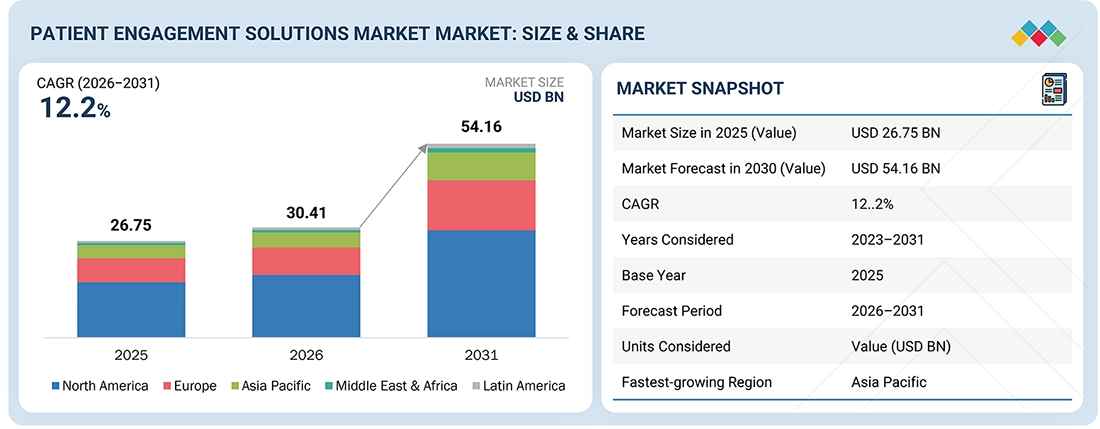
The global patient engagement solutions market is projected to grow from USD 30.41 billion in 2026 to USD 54.16 billion by 2031, at a CAGR of 12.2% during the forecast period. The market was valued at USD 26.75 billion in 2025. The patient engagement solutions market is driven by the growing shift toward patient-centric care, rising adoption of digital health technologies, increasing prevalence of chronic diseases, and the expanding use of mobile apps, portals, and remote monitoring tools to support continuous patient interaction.
KEY TAKEAWAYS
-
BY REGIONThe North America region dominates the global patient engagement solutions market, with a share of 48.5% in 2025.
-
BY COMPONENTBy component, the software segment is estimated to account for the largest market share of 59.3% in 2025.
-
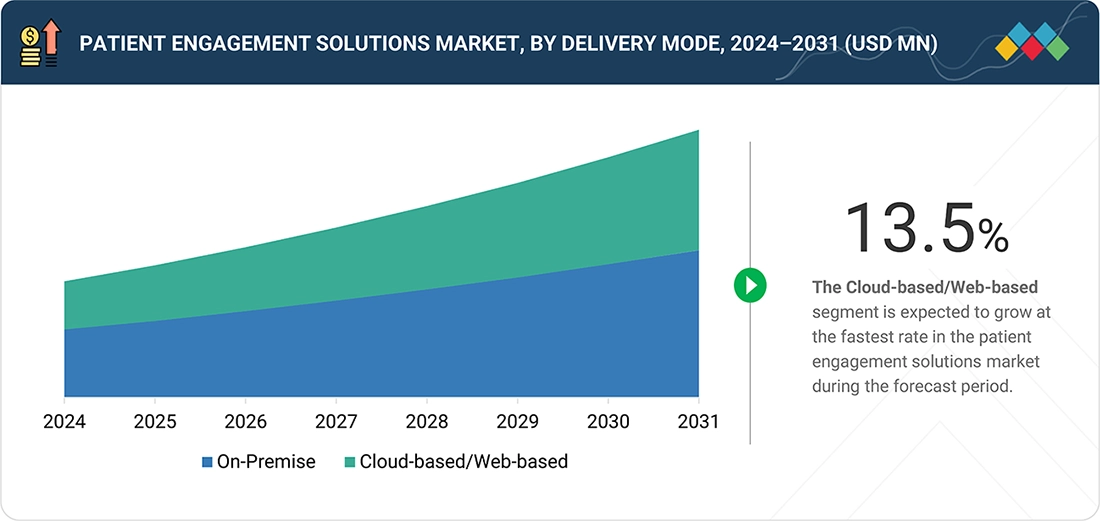
BY DELIVERY MODEBy delivery mode, the cloud-based segment is expected to register the highest CAGR of 13.5% during the forecast period.
-
BY APPLICATIONBy application, the home & remote care segment is expected to register the highest CAGR during the forecast period.
-
BY THERPAEUTIC AREABy therapeutic area, the chronic diseases segment held the largest share of the overall market in 2025.
-
BY FUNCTIONALITYBy functionality, the patient/client scheduling segment is expected to dominated the market during the forecast period.
-
BY END USERBy end user, the providers segment is estimated to account for the largest market share during the forecast period.
-
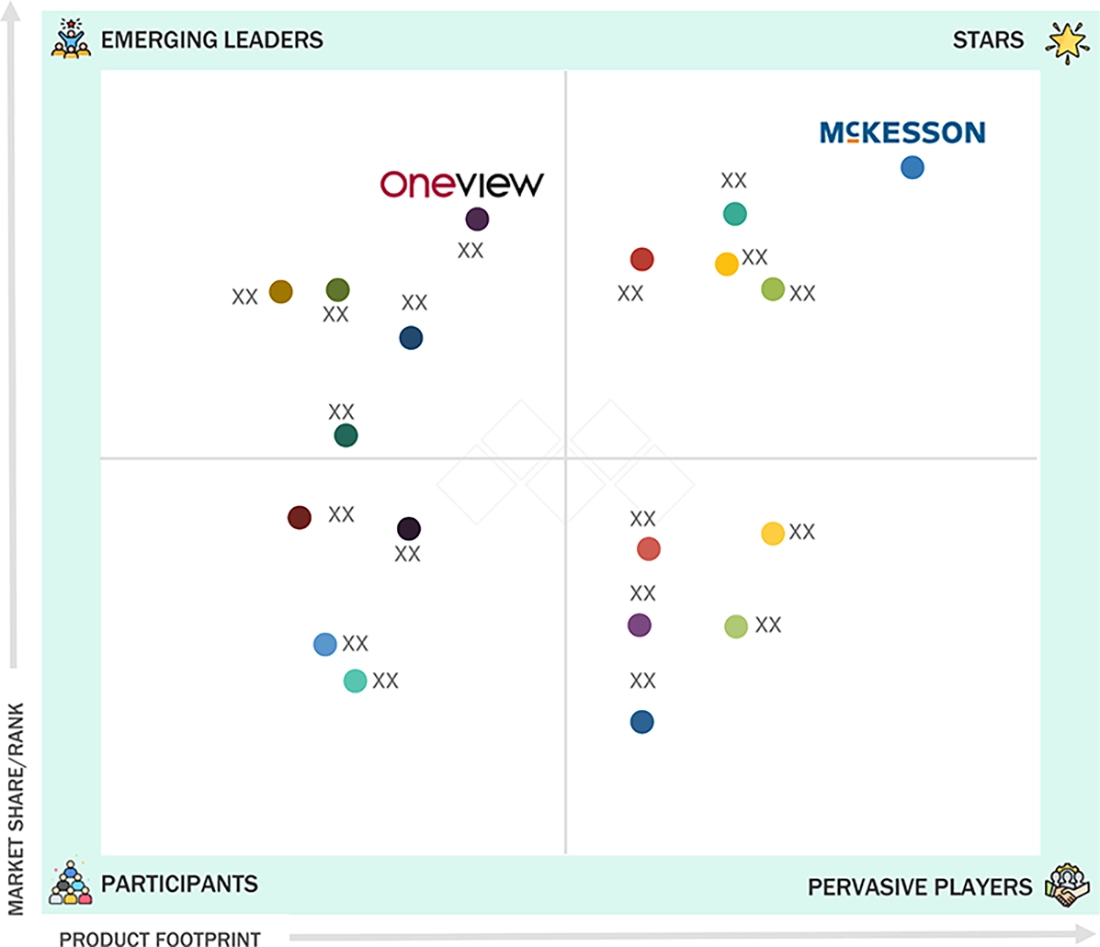
COMPETITIVE LANDSCAPE - KEY PLAYERSMcKesson Corporation, Oracle, and Medhost were identified as some of the star players in the patient engagement solutions market (global), given their strong market share and product footprint.
-
COMPETITIVE LANDSCAPE - STARTUPS/SMESWellStack, Relatient, and Xealth, among others, have distinguished themselves among startups and SMEs by securing strong footholds in specialized niche areas, underscoring their potential as emerging market leaders.
The patient engagement solutions market is fueled by the rapid digitalization of healthcare, increasing demand for personalized care experiences, and the growing emphasis on improving patient adherence and health literacy. In addition, healthcare organizations are investing heavily in platforms that enhance patient empowerment, streamline appointment and medication management, and support coordinated care.
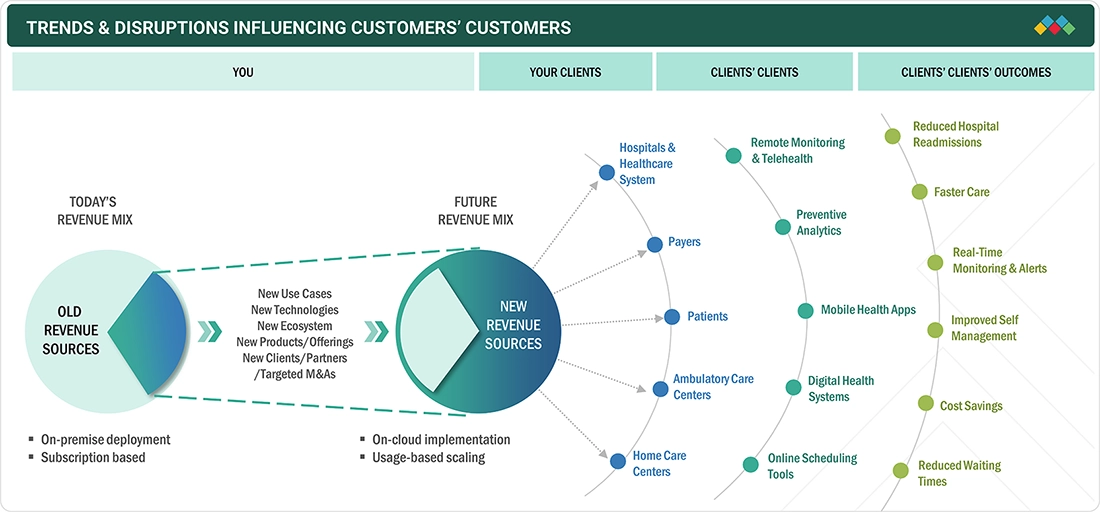
TRENDS & DISRUPTIONS IMPACTING CUSTOMERS' CUSTOMERS
The patient engagement solutions market is rapidly evolving with the rising adoption of mobile health apps, telehealth, AI-driven personalization, and cloud-based platforms. The growing demand for real-time monitoring, seamless EHR integration, and hybrid care models among hospitals, payers, patients, ambulatory care centers, and home healthcare providers is transforming care delivery, driving a shift toward more digital, accessible, and patient-centered engagement tools.
Source: Secondary Research, Interviews with Experts, MarketsandMarkets Analysis
MARKET DYNAMICS

Level
-
Implementation of government regulations and initiatives to promote patient-centric care

-
Growing adoption of telehealth & remote care


Level
-
Inadequate interoperability across healthcare providers

-
Shortage of skilled IT professionals in healthcare industry


Level
-
Expansion of remote & home-based care models

-
Integration with wearables & personalized health tech


Level
-
Low patient adoption and engagement over time

-
Fragmented data & siloed digital tools

Source: Secondary Research, Interviews with Experts, MarketsandMarkets Analysis
Driver: Implementation of government regulations and initiatives to promote patient-centric care
Across the globe, governments are increasingly making it mandatory for patients to access health information, adhere to interoperability standards, and engage in value-based care frameworks that prioritize patient involvement in decision-making. Governments' push for electronic health records, digital communication, transparency, and value-based care is encouraging healthcare providers worldwide to adopt patient engagement solutions. Governments' digital health strategies, coupled with reimbursement, are driving demand for patient engagement solutions that improve communication, shared decision-making, and care continuity, thereby fueling the patient engagement market.
Restraint: Inadequate interoperability across healthcare providers
Even though there has been an increase in the adoption of digital technology, IT infrastructure and data standardization remain hindrances to the smooth flow of data between service providers, payers, and care settings. The existence of legacy systems, software incompatibility, and the absence of integration capabilities are acting as hindrances, which are leading to data silos, thereby impacting the effectiveness of patient engagement technology. The absence of interoperability may cause a negative impact on the patient, and the advantages of patient engagement technology may not be achieved.
Opportunity: Expansion of remote & home-based care models
The emphasis on telehealth, hospital-at-home, and the management of chronic diseases outside the conventional clinical model has generated significant interest in digital engagement platforms. Remote care refers to the use of digital channels for messaging, consultation, and follow-up to continue care services. The emphasis on reducing the length of stay for patients and improving patient experience in healthcare settings has given rise to a high level of opportunities for digital engagement platforms.
Challenge: Low patient adoption and engagement over time
Though initial adoption rates on digital platforms may be high, retaining patient engagement over time can be challenging. Differences in digital literacy, age-related issues, limited access to technology, and a lack of personalized content can hinder continuous patient engagement. Moreover, if digital platforms are not user-friendly, part of routine care, or perceived as beneficial for patient health, patients can become disengaged.
PATIENT ENGAGEMENT SOLUTIONS MARKET: COMMERCIAL USE CASES ACROSS INDUSTRIES
| COMPANY | USE CASE DESCRIPTION | BENEFITS |
|---|---|---|
 |
Offers digital engagement platforms that support patient outreach, medication adherence programs, and care coordination through integrated communication tools and pharmacy connectivity | Enhances patient adherence and satisfaction, improves continuity of care, and reduces medication errors through more personalized and timely interactions |
 |
Provides AI-driven patient engagement platforms integrated with EHR and analytics systems, enabling personalized communication, automated reminders, virtual care support, and patient education workflows | Improves patient activation and self-management, supports proactive care delivery, strengthens clinical decision-making, and drives operational efficiency across care teams |
 |
Delivers patient engagement tools embedded within practice management and EHR systems, supporting appointment scheduling, messaging, chronic care management, and real-time patient insights | Increases patient-provider connectivity, enhances chronic disease management, reduces administrative burden, and improves overall clinical performance |
 |
Develops multi-channel engagement solutions, including patient portals, mobile apps, telehealth, and automated outreach tools tied to real-time clinical data | Boosts patient access and engagement, streamlines workflow automation, reduces no-shows, and strengthens quality measure performance for value-based care |
 |
Data-driven, personalized patient outreach using analytics to engage patients across the care journey (pre-visit to post-care) via automated, omnichannel communication | Improved patient experience, higher care adherence, reduced no-shows/readmissions, better population health outcomes, and stronger value-based care performance |
Logos and trademarks shown above are the property of their respective owners. Their use here is for informational and illustrative purposes only.
MARKET ECOSYSTEM
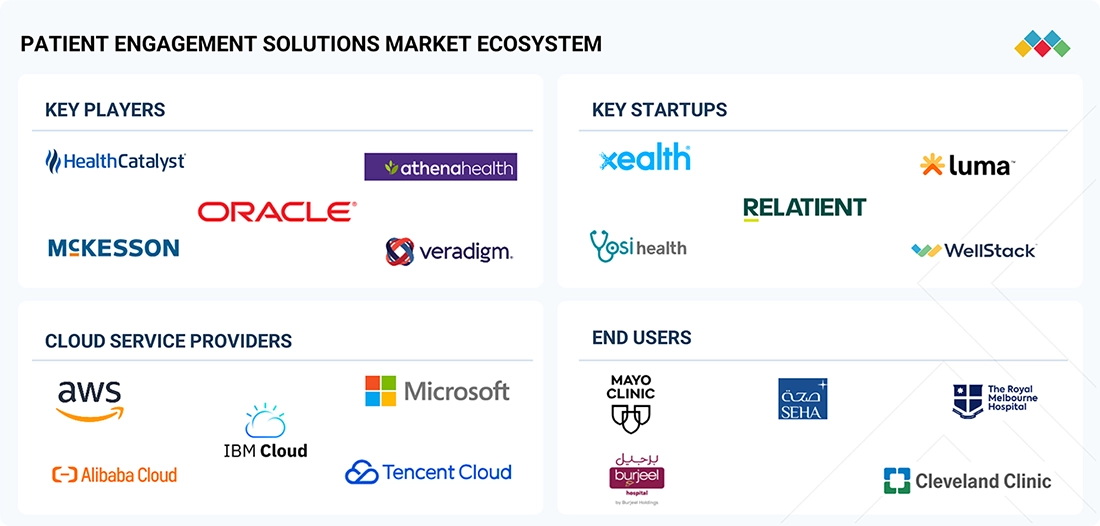
The patient engagement solutions market ecosystem consists of key players (Veradigm, Oracle, athenahealth) that offer tools like patient portals, mobile apps, telehealth platforms; startups (xealth, Yosi Health), cloud-service providers (Amazon Web Service, IBM Cloud), support scalable deployment, secure data exchange, and enterprise-wide access across multi-site healthcare networks; and end users (Mayo clinics, The Royal Melbourne Hospital, Cleveland Clinic) that rely on these platforms to improve communication, enhance care coordination, and support continuous patient involvement.
Logos and trademarks shown above are the property of their respective owners. Their use here is for informational and illustrative purposes only.
MARKET SEGMENTS
Source: Secondary Research, Interviews with Experts, MarketsandMarkets Analysis
Patient Engagement Solutions Market, By Component
In 2025, the software segment dominated the patient engagement solutions market, driven by the growing use of digital platforms that improve communication, care coordination, and patient self-management. Some of these solutions include patient engagement platforms, mHealth solutions, telecare platforms, remote monitoring software, and automated communication solutions that facilitate personalized engagement. As healthcare payers adopt value-based care delivery models and focus on digital transformation, software solutions enable instant engagement, patient education, and improved patient compliance. This growth is being fueled by the increasing use of digital platforms that make it easier for patients and providers to stay connected, coordinate care, and support patients in managing their health more confidently.
Patient Engagement Solutions Market, By Delivery Mode
In 2025, the on-premise segment held the largest share of the patient engagement solutions market, driven by healthcare institutions' preference for a higher degree of control over data security, as well as the potential for customized solutions integrated with their current IT infrastructure. Needless to say, many healthcare companies, especially those with access to valuable patient data, continue to favor on-premise solutions to maintain control over data governance. Furthermore, traditional systems of this nature, as well as a reputation for reliability, are also working in support of on-premise usage in spite of a growing adoption of cloud technology.
Patient Engagement Solutions Market, By Application
In 2025, the Care Coordination & Communication segment held the largest share of the patient engagement solutions market, market due to the increasing adoption of digital platforms that enable secure messaging, interoperable data exchange, care team collaboration, and real-time patient–provider communication. These solutions integrate with electronic health records (EHRs), health information exchanges (HIEs), and care management systems to support coordinated care delivery, improve clinical workflow efficiency, and enhance patient outcomes across multiple care settings.
Patient Engagement Solutions Market, By Therapeutic Area
In 2025, the chronic diseases segment held the largest share of the patient engagement solutions market. The increasing demand for care services related to chronic diseases, such as diabetes, cardiovascular diseases, and hypertension, requires ongoing monitoring, adherence tools, and a digital platform for their long-term management. It outpaces acute care and health & wellness, with widespread chronic illness in many adults of developed nations. The integration of digital health, along with value-based initiatives focusing on prevention and sustained engagement of patients, gives the market promising growth scenarios across the decade.
Patient Engagement Solutions Market, By Functionality
In 2025, the patient/client scheduling segment held the largest share of the patient engagement solutions market. This is attributed to the increasing use of technology that has streamlined patient appointments. The use of automated patient scheduling has become crucial for enhancing patient engagement, optimizing no-show rates, improving patient flow, and increasing patient convenience. The role of patient engagement in healthcare has become a key priority for healthcare institutions.
Patient Engagement Solutions Market, By End User
In 2025, the providers segment held the largest share of the patient engagement solutions market. An increasing number of hospitals, clinics, and health systems are integrating web-based solutions to facilitate communication, streamline operations, and drive improved outcomes. Healthcare organizations use engagement platforms for appointment scheduling, telemonitoring, portals, education solutions, and medication reminders, among others, due to an ever-increasing emphasis on leveraging provider-driven innovation in patient engagement solutions that meet performance criteria for improved patient experience and optimized clinical operating efficiency.
REGION
Asia Pacific to be fastest-growing region in patient engagement solutions market during forecast period
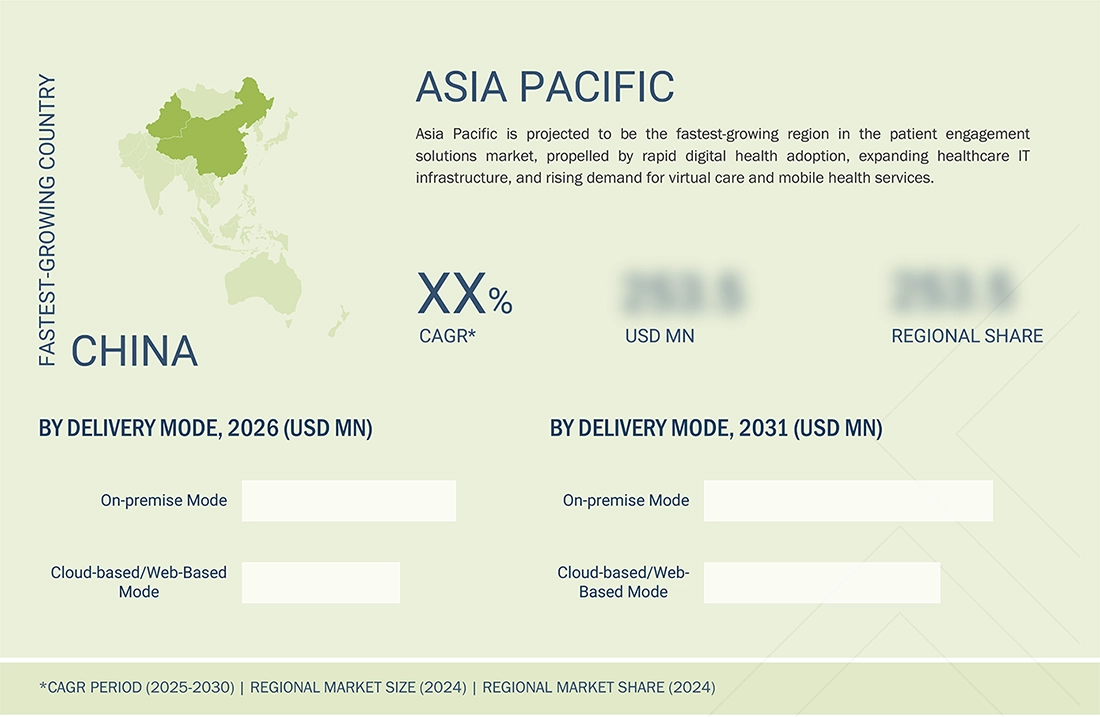
Asia Pacific is the fastest-growing region in the patient engagement solutions market due to the rapid digitalization of healthcare infrastructure, the widespread adoption of mobile and internet technology by patients, and the adoption of telehealth strategies by healthcare providers in the region. Countries in the Asia Pacific region are also heavily investing in health care information technology to ensure increased patient access, care coordination, and health care efficiency. The large population base of the countries in the region, as well as the rise of chronic diseases, are also fueling the demand for digital patient engagement solutions.
PATIENT ENGAGEMENT SOLUTIONS MARKET: COMPANY EVALUATION MATRIX
In the patient engagement solutions market matrix, McKesson Corporation (Star) leads with a dominant market position due to its strong digital health ecosystem and solutions, such as patient communication platforms, medication adherence programs, and integrated care management tools that enhance coordination among patients, providers, and pharmacies. Oneview Healthcare (Emerging Leader) provides digital care platforms that enhance inpatient experience, streamline clinical workflows, and enable real-time communication between patients and care teams.
Source: Secondary Research, Interviews with Experts, MarketsandMarkets Analysis
KEY MARKET PLAYERS
- McKesson Corporation (US)
- Veradigm LLC (US)
- Oracle (US)
- athenahealth (US)
- Health Catalyst (US)
- GetWellNetwork, Inc. (US)
- Lincata, Inc. (US)
- Cognizant (US)
- TruBridge (US)
- Oneview Healthcare (Ireland)
- AdvancedMD, Inc. (US)
- Epic Systems Corporation (US)
- Harris Healthcare (US)
- Medical Information Technology, Inc. (US)
- Tebra Technologies, Inc (US)
- Televox (US)
- Microsoft (US) (Nuance Communications, Inc.)
- Solutionreach, Inc. (US)
- Experian Information Solutions, Inc. (US)
- eClinicalWorks (US)
MARKET SCOPE
| REPORT METRIC | DETAILS |
|---|---|
| Market Size in 2025 (Value) (Base Year) | USD 26.75 BN |
| Market Size in 2026 (Value) (Estimated Year) | USD 30.41 Billion |
| Market Forecast in 2031 (Value) (Forecast Year) | USD 54.16 BN |
| CAGR | 12.20% |
| Years Considered | 2024–2031 |
| Base Year | 2025 |
| Forecast Period | 2026–2031 |
| Units Considered | Value (USD Billion) |
| Report Coverage | Revenue forecast, company ranking, competitive landscape, growth factors, and trends |
| Segments Covered |
|
| Regions Covered | North America, Asia Pacific, Europe, Latin America, Middle East & Africa |
| Related Segment & Geographic Reports |
Europe Patient Engagement Solutions Market Asia Pacific Patient Engagement Solutions Market United States Patient Engagement Solutions Market |
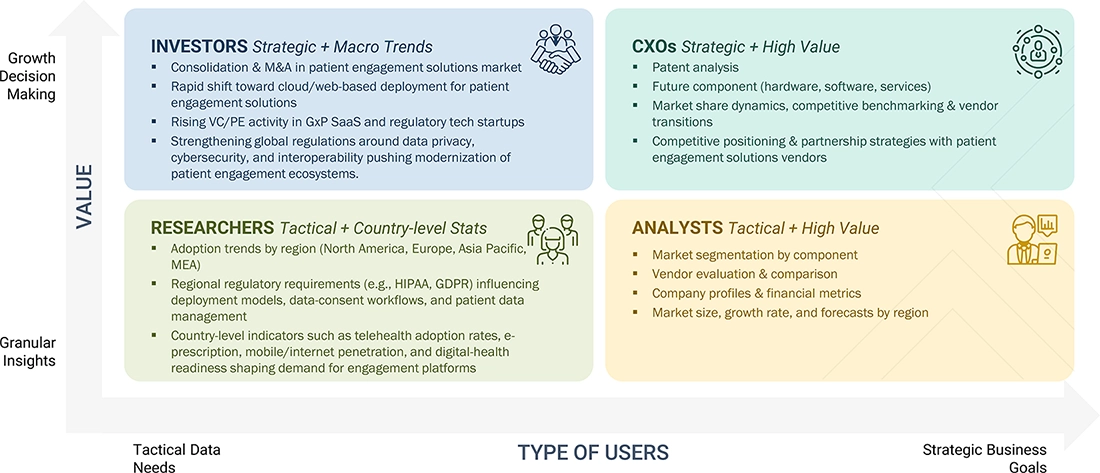
WHAT IS IN IT FOR YOU: PATIENT ENGAGEMENT SOLUTIONS MARKET REPORT CONTENT GUIDE
DELIVERED CUSTOMIZATIONS
We have successfully delivered the following deep-dive customizations:
| CLIENT REQUEST | CUSTOMIZATION DELIVERED | VALUE ADDS |
|---|---|---|
| Local Competitive Landscape | Profiling of leading patient engagement solution providers (e.g., Oracle, McKesson, Health Catalyst) covering capabilities such as patient portals, mobile apps, remote monitoring, telehealth integration, AI-driven engagement tools, deployment models (cloud/on-premise), and pricing frameworks | Enables competitive benchmarking, identifies functional and compliance gaps, and supports vendor selection, partnership evaluation, and market positioning strategies |
| Regional Market Entry Strategy | Assessment of region-wise digital health maturity, smartphone/internet penetration, provider adoption readiness, interoperability requirements with EHRs/PHRs, regulatory considerations (HIPAA, GDPR, PDPA, PIPL), and distribution/channel ecosystem across North America, Europe, Asia Pacific, and emerging markets | Reduces market entry barriers, supports localization of digital tools, accelerates compliance readiness, ensures alignment with clinical workflow standards, and helps prioritize high-growth geographies |
| Local Risk & Opportunity Assessment | Evaluation of data-privacy vulnerabilities, patient data consent regulations, cybersecurity demands, digital literacy gaps, reimbursement models for telehealth and remote monitoring, and emerging opportunities in chronic disease management, home-based care, and virtual engagement | Strengthens risk mitigation planning, informs investments in secure data governance, identifies high-opportunity use cases (e.g., chronic care, behavioral health), and highlights provider segments with strong adoption potential |
| Technology Adoption by Region | Mapping adoption trends of omnichannel engagement tools, telehealth platforms, AI-driven personalization engines, mobile health apps, remote patient monitoring, and integration maturity with EHR/CRM systems across key countries | Informs region-specific product strategy, supports targeted roll-out of advanced analytics and compliance modules, and aligns offerings with digital-transformation and safety-standard requirements |
RECENT DEVELOPMENTS
- January 2025 : Health Catalyst signed an agreement to acquire Upfront Healthcare Services, a patient engagement platform, to expand its engagement capabilities and improve personalized patient outreach and care coordination.
- September 2025 : Oneview Healthcare partnered with Children’s Hospital of Orange County (CHOC) to implement its MyStay Mobile patient engagement platform, enhancing digital access to education, information, and services for patients and families.
- June 2024 : Veradigm, Think Healthcare, and Medsien collaborated to integrate remote patient monitoring and care tools using Veradigm’s APIs, enabling real-time data sharing that helps improve patient management, reduce emergency visits, and support proactive care.
Table of Contents
 Exclusive indicates content/data unique to MarketsandMarkets and not available with any competitors.
Methodology
This market research study involved the extensive use of secondary sources, directories, and databases to identify and collect information useful for this technical, market-oriented, and financial study of the Patient Engagement Solutions market. In-depth interviews were conducted with various primary respondents, including key industry participants, subject-matter experts (SMEs), C-level executives of key market players, and industry consultants, among other experts, to obtain and verify critical qualitative and quantitative information and to assess market prospects. The size of the patient engagement solutions market was estimated through various secondary research approaches and triangulated with inputs from primary research to arrive at the final market size.
Secondary Research
The secondary sources referred to for this research study include publications from government sources, such as WHO, ATA, AHA and AAHM. Secondary sources also include corporate and regulatory filings (such as annual reports, SEC filings, investor presentations, and financial statements); business magazines and research journals; press releases; and trade, business, and professional associations. Secondary data was collected and analyzed to arrive at the overall size of the global patient engagement solutions market, which was validated through primary research.
Primary Research
Extensive primary research was conducted after acquiring basic knowledge about the global patient engagement solutions market scenario through secondary research. Several primary interviews were conducted with market experts from both the demand side (such as Individual Physicians, Physician Groups, Hospitals, Clinics and Other Healthcare Facilities, Payers- Private and Public Insurance Bodies, Other End Users- Employer Groups and Government Bodies) and supply-side (such as C-level and D-level executives, product managers, marketing and sales managers of key manufacturers, distributors, and channel partners, among others) across five major regions—North America, Europe, the Asia Pacific, Latin America, the Middle East, and Africa. Approximately 70% and 30% of primary interviews were conducted with supply-side and demand-side participants, respectively. This primary data was collected through questionnaires, e-mails, online surveys, personal interviews, and telephonic interviews.
A breakdown of primary respondents is provided below:

Notes: The tier of companies is defined based on their total revenues. As of 2025, Tier 1 = >USD 1 billion, Tier 2 = USD 500 million to USD 1 billion, and Tier 3 = <USD 500 million.
C-level executives include CEOs, COOs, CTOs, and VPs.
Other primaries include sales managers, marketing managers, and product managers.
|
COMPANY NAME |
DESIGNATION |
|
Oracle Corporation |
Product Manager |
|
Veradigm |
Director |
|
Merative |
Senior Product Manager |
To know about the assumptions considered for the study, download the pdf brochure
Market Size Estimation
Both top-down and bottom-up approaches were used to estimate and validate the total size of the global patient engagement solutions market. These methods were also used extensively to estimate the size of various subsegments in the market. The research methodology used to estimate the market size includes the following:
- The key players in the industry and markets have been identified through extensive secondary research.
- The revenue generated from the sale of patient engagement solutions products by leading players has been determined through primary and secondary research.
- All percentage shares, splits, and breakdowns have been determined using secondary sources and verified through primary sources.
Market Size Estimation- Top-Down Approach and Bottom-Up Approach

Data Triangulation
After arriving at the overall market size, from the market size estimation process explained above, the patient engagement solutions market was split into segments and subsegments. To complete the overall market engineering process and to arrive at the exact statistics for all segments and subsegments, the data triangulation and market breakdown procedures were employed, wherever applicable. The data was triangulated by studying various factors and trends from both the demand and supply sides in the patient engagement solutions market.
Market Definition
The patient engagement solutions market includes digital platforms and tools that enable patients to actively participate in their healthcare through features such as patient portals, secure messaging, appointment scheduling, telehealth, remote monitoring, and others. These solutions integrate with healthcare IT systems like EHRs to improve patient-provider communication, enhance care coordination, and support better health outcomes.
Key Stakeholders
- Healthcare institutes/providers (hospitals, medical groups, physician practices, diagnostic centers, pharmacies, ambulatory centers, and outpatient clinics)
- Healthcare insurance companies/payers
- Healthcare IT service providers
- Venture capitalists
- Government bodies
- Corporate healthcare entities
- Accountable care organizations
Report Objectives
- To define, describe, and forecast the global patient engagement solutions market based on component, delivery mode, application, therapeutic area, functionality, end user, and region
- To provide detailed information regarding the major factors (such as drivers, restraints, opportunities, and challenges) influencing the market growth
- To strategically analyze micromarkets1 with respect to individual growth trends, prospects, and contributions to the overall patient engagement solutions market
- To analyze opportunities in the market for stakeholders and provide details of the competitive landscape for market leaders
- To strategically analyze the market structure and profile the key players of the patient engagement solutions market and comprehensively analyze their core competencies2
- To forecast the size of the market segments with respect to five regions, namely, North America, Europe, Asia Pacific, Latin America and the Middle East & Africa
- To track and analyze competitive developments such as product launches, acquisitions, partnerships, agreements, and collaborations in the patient engagement solutions market during the forecast period.
Available customizations:
With the given market data, MarketsandMarkets offers customizations as per the company’s specific needs. The following customization options are available for the report:
Company information
- Detailed analysis and profiling of additional market players (up to 20)
Need a Tailored Report?
Customize this report to your needs
Get 10% FREE Customization
Customize This ReportPersonalize This Research
- Triangulate with your Own Data
- Get Data as per your Format and Definition
- Gain a Deeper Dive on a Specific Application, Geography, Customer or Competitor
- Any level of Personalization
Let Us Help You
- What are the Known and Unknown Adjacencies Impacting the Patient Engagement Solutions Market
- What will your New Revenue Sources be?
- Who will be your Top Customer; what will make them switch?
- Defend your Market Share or Win Competitors
- Get a Scorecard for Target Partners

Custom Market Research Services
We Will Customise The Research For You, In Case The Report Listed Above Does Not Meet With Your Requirements
Get 10% Free CustomisationTESTIMONIALS

JAYANT RAJPUROHIT
Director of Market Insights, Data and Analytics
SFI Health,
Leading Pharmaceutical Companywww.sfihealth.com/

We at SFI Health approached MarketsandMarkets for an Opportunity Assessment on "Incidence and Prevalence of Focus Indications" as we wanted to know the most attractive HCPs like Physician, Functional MD, Naturopath and Pharmacist. The project was critical for us to ensure our focus on the right target which would enable sustainable growth and profitability for SFI Health. The business insights provided exceeded our expectations and we were extremely impressed. The team at MarketsandMarkets is highly professional and detail oriented and very well understood our business needs. MarketsandMarkets offers a unique combination of expertise and dedicated engagement model. We identified 2 new products to be launched in coming months, based on the research findings provided by MarketsandMarkets. We are happy with the services and would strongly recommend MarketsandMarkets to my peers in the industry.

BEATRIZ DE LA CALLE
Head of Commercial Analytics
Qualicaps,
Leading Pharmaceutical Companywww.qualicaps.com/

We partnered with MarketsandMarkets for an assessment study on hard empty capsules. The team was extremely professional in understanding our business requirements and we received timely responses to all our queries. The market intelligence and the recommendations has met our business requirements. We were extremely impressed to see the final study results; it really exceeded our expectations. The market intelligence offered by MarketsandMarkets, and clarity on next steps will help us achieve our business objective for the Year 2021. We are happy with the services and would strongly recommend MarketsandMarkets to my peers in the industry.

Bob Williams,
Senior Director Business Development & Innovation
Bracco Diagnostics Inc.,
Italian Multinational in life sciences sector and a World Leader in imaging diagnosticsimaging.bracco.com/us-en
We were pleased with targeted insights that MarketsandMarkets identified from a custom study on the 'Radiation Dose Management Solutions Market'. Your team identified and characterized the market participants as well as underlying trends accurately. This study was useful to Bracco in formulating business strategies for our dose monitoring product lines and we thank MarketsandMarkets for the job well done.
Cody Coonradt,
Market Development and Strategy Manager
3M Health Information Systems,
Leader in Health care Coding, Payment & Analytics Solutions.www.3m.com/3M/en_US/health-information-systems-us
The value for our organization comes from three things: depth of research, specificity of segments and being easy to work with. As important as the first two are, the third can't be underestimated. MarketsandMarkets, maybe more than any other research vendor, wants to know what is top of mind for our team and what big questions we are grappling to answer.
Their customer first approach and high value engagement model, have given us great analysis and excellent value for money
Growth opportunities and latent adjacency in Patient Engagement Solutions Market

Still Researching the
Patient Engagement Solutions Ecosystem?
See the competitors, opportunities, and growth signals shaping it - instantly.
Generate 15+ consulting-grade strategic insights tailored to your growth question.






Ethan
Oct, 2022
What will be the value for the global Patient Engagement Solutions Market in 2030?.
Benjamin
Oct, 2022
Which of the geographical segment holds the major share of the Patient Engagement Solutions Market?.