Telehealth and Telemedicine Market

Telehealth and Telemedicine Market by Function (Teleconsultation, RPM, Diagnostics & Treatment, Analytics, Administrative), Application (TeleICU, Teleradiology, Telecardiology, Diabetes), End User (Hospital, ASC, Payer), & Region - Global Forecast to 2031



TELEHEALTH AND TELEMEDICINE MARKET SIZE, SHARE & GROWTH SNAPSHOT
Source: Secondary Research, Interviews with Experts, MarketsandMarkets Analysis
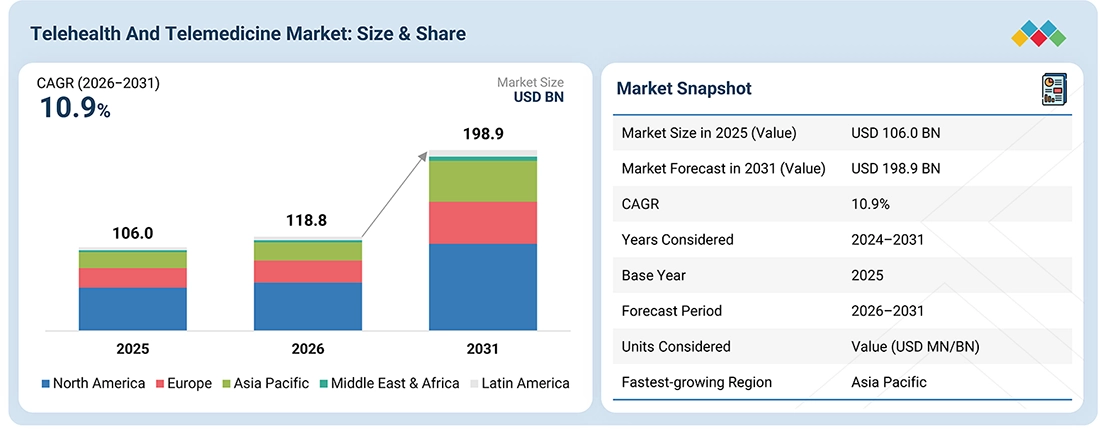
The global telehealth and telemedicine market is projected to grow from USD 118.8 billion in 2026 to USD 198.9 billion by 2031, at a CAGR of 10.9% during the forecast period. The market was valued at USD 106.0 billion in 2025. This market is growing significantly, driven by several factors: the increasing geriatric population, medically underserved communities—especially in rural areas—the rising prevalence of chronic conditions, and the benefits of telehealth and telemedicine, particularly amid a shortage of physicians and healthcare personnel. Additionally, advancements in telecommunication technologies and the expansion of remote patient monitoring (RPM) systems are contributing to market growth. The rise of cloud-based telehealth solutions, which provide scalability, data security, and interoperability, has also played a crucial role in this expansion. Moreover, the growing preference for user-friendly mobile health applications, electronic health record (EHR) integration, and AI-powered virtual assistants has improved operational efficiency and patient engagement. However, the market may face challenges during the forecast period, including regulatory variations across regions, increased fraud and abuse within healthcare systems, and reluctance among some individuals to adopt new technologies.
KEY TAKEAWAYS
-
MARKET SNAPSHOT:
Base Year Market Size (2025): USD 106.0 Billion
Current Market Size (2026): USD 118.8 Billion
Forecast Market Size (2031): USD 198.9 Billion
CAGR (2026–2031): 10.9% -
SEGMENT LEADERSHIP:
Regional Leader: North America accounted for a share of 50.8% in 2025.
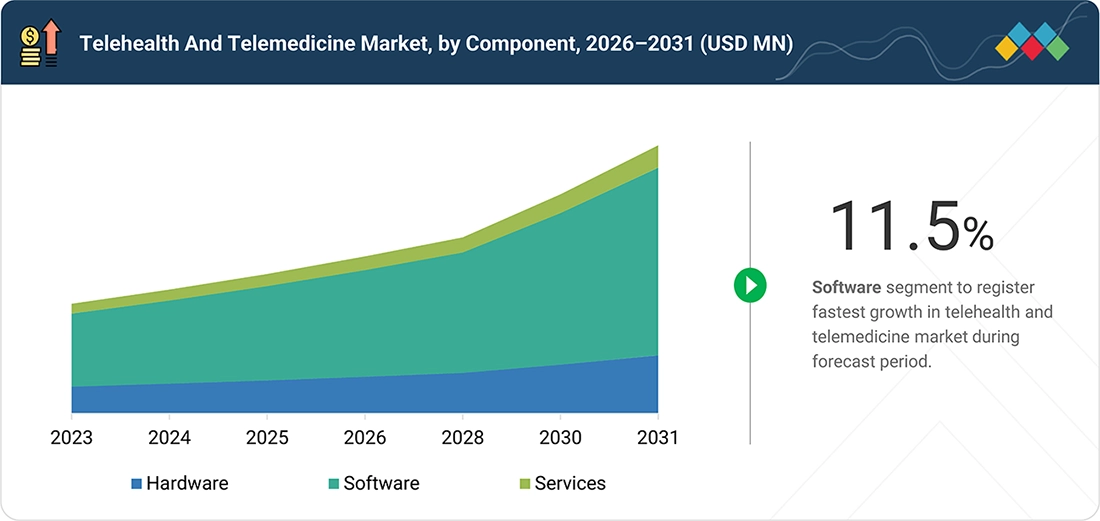
Component Leader: Software is expected to register the highest CAGR of 11.5% during the forecast period.
Function Leader: Remote patient monitoring is projected to grow at the fastest rate of 11.4% from 2026 to 2031.
Application Leader: Specialty care is expected to dominate the market.
Age Group Leader: Pediatrics will grow at the fastest rate of 12.7% during the forecast period.
End User Leader: Healthcare providers are expected to dominate the market with a market share of 46.7%. -
MARKET OUTLOOK & COMPETITIVE LANDSCAPE:
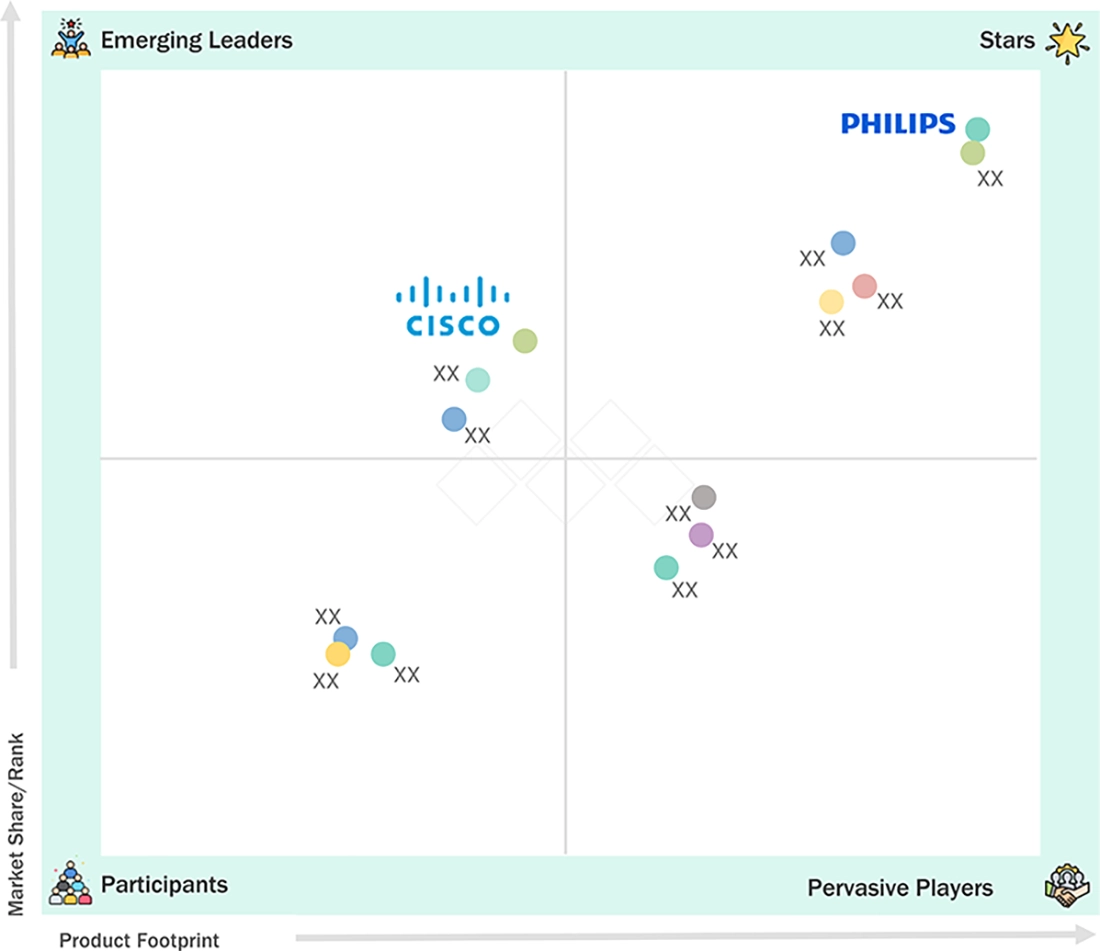
Koninklijke Philips N.V., Teladoc Health, Inc., and Oracle were identified as some of the star players in the global telehealth and telemedicine market, given their strong market share and product footprint.
Timedoc Health, Cerebral Inc., and Kindbody, among others, have distinguished themselves among startups and SMEs by securing strong footholds in specialized niche areas, underscoring their potential as emerging market leaders.
The telehealth and telemedicine market is growing rapidly, driven by rising demand for accessible, cost-effective, technology-enabled healthcare solutions to address the growing burden of chronic disease, aging populations, and the need to expand care delivery beyond traditional settings. New deals and developments, including strategic partnerships between healthcare providers and technology firms, investments in remote patient monitoring and AI-driven platforms, and innovations in cloud-based virtual care solutions and integrated digital ecosystems, are reshaping the industry landscape.
TRENDS & DISRUPTIONS IMPACTING CUSTOMERS' CUSTOMERS
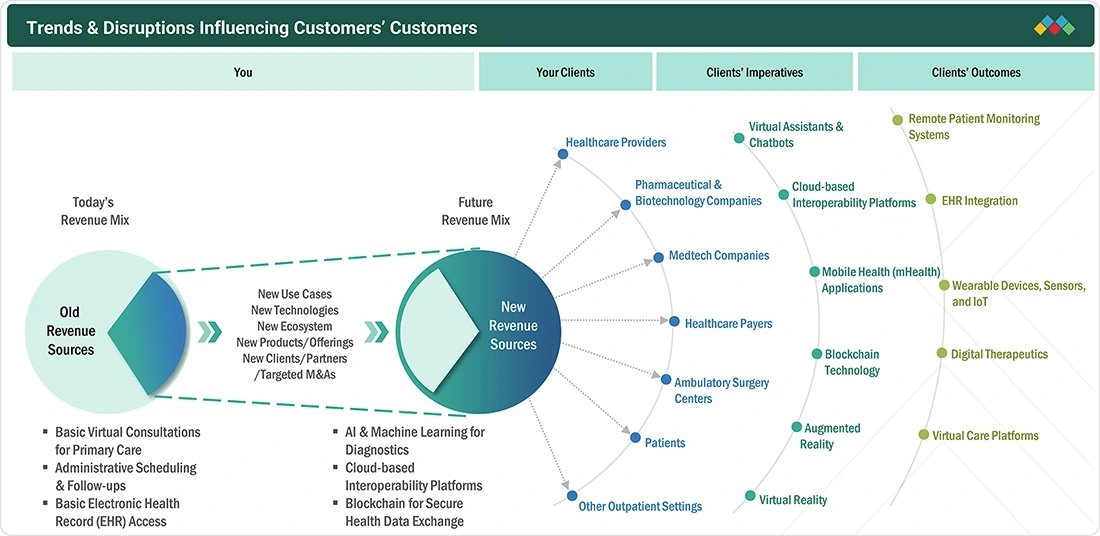
The telehealth and telemedicine market is undergoing a transformative shift, driven by advances in digital health technologies, expanding broadband access, and growing consumer demand for convenient, remote healthcare options. Industry experts emphasize that integrating AI, wearable devices, and mobile health apps has revolutionized patient care by enabling real-time monitoring, virtual consultations, and personalized treatment plans. This digital transformation has enhanced access to healthcare, particularly in underserved areas, while improving efficiency and reducing costs. As telemedicine becomes more integral to healthcare systems, it is reshaping patient-provider interactions, promoting continuous care, driving a shift toward preventive and value-based care models, and creating new opportunities and challenges for businesses in the sector.
Source: Secondary Research, Interviews with Experts, MarketsandMarkets Analysis
MARKET DYNAMICS

Level
-
Reduced time and lower out-of-pocket costs

-
Expansion of remote patient monitoring systems


Level
-
High investment costs for B2B models and lack of IT expertise

-
Rise in fraud and abuse in healthcare systems


Level
-
High utility of telemedicine against infectious communicable diseases and epidemics

-
Expansion of hospital-at-home (HaH) initiatives


Level
-
Data security and confidentiality concerns

-
Inability to maintain patient hygiene and cleanliness standards

Source: Secondary Research, Interviews with Experts, MarketsandMarkets Analysis
Driver: Reduced time and lower out-of-pocket costs
The demonstrated ability of telehealth to save time and reduce costs is a key driver in its rapid market. Healthcare systems have also seen substantial cost reductions through telehealth integration. Virtual consultations allow for better resource allocation, reducing reliance on costly in-person visits for routine check-ups and follow-ups. Telehealth enables providers to serve more patients in less time, lowering per-encounter costs and improving overall operational efficiency. Additionally, remote monitoring technologies help prevent expensive hospital readmissions by allowing for proactive management of chronic diseases. These financial and time-saving benefits can compel stakeholders to invest in telehealth, fueling market growth and adoption. Telehealth solutions eliminate the need for patients and providers to travel to physical locations, saving valuable time and minimizing transportation expenses. For employers and insurers, telehealth can reduce indirect costs, such as productivity losses from employee medical appointments. Patients benefit from lower out-of-pocket costs by avoiding facility fees and receiving earlier, more efficient care for nonemergency conditions. These savings resonate strongly in a healthcare landscape increasingly focused on affordability and convenience.
Restraint: High investment costs for B2B models and lack of IT expertise
The telehealth and telemedicine industry faces significant growth constraints because of the high initial cost of building infrastructure. The industry requires expensive advanced hardware, including diagnostic devices, video conferencing systems, and secure servers, along with software for patient management, data analytics, and compliance with data security regulations such as HIPAA, GDPR, and more. For smaller health service providers, these costs can be a burden, particularly in rural or less developed settings. Such expenses deter widespread adoption and limit market penetration, particularly in LMICs. Moreover, insufficient IT knowledge in the healthcare sector worsens the situation. Telemedicine also relies on complex software that requires experienced staff to manage, ensure cybersecurity, and resolve technical issues. These skill gaps may also lead to operational inefficiencies, patient dissatisfaction and increased cybersecurity risks for providers, slowing adoption and eroding trust in telehealth solutions. To address these challenges, there is a growing need for scalable, cost-effective telemedicine solutions and robust training programs that ensure healthcare workers have the necessary IT skills. In addition, incentives in the form of subsidies or public-private partnerships could help decrease the financial burden and increase the adoption rate in the underserved areas.
Opportunity: High utility of telemedicine against infectious communicable diseases and epidemics
Communicable diseases are among the most difficult conditions to treat in hospital facilities, as both patients and healthcare workers are at equal risk of contracting the infection. In such cases, telemedicine has strong potential to limit the spread of epidemics and healthcare-associated infections because of its inherent benefits, such as early disease detection and virtual visits, which reduce overall patient exposure. It also reduces the number of in-person visits and travel involved in the treatment process. It is a safer mode of care delivery and slows down the spread of infectious diseases.
Challenge: Data security and confidentiality concerns
In healthcare, approximately one-third of data breaches result in medical identity theft, mainly due to a lack of internal control over patient information, a lack of top management support, outdated policies and procedures or non-adherence to existing ones, and inadequate personnel training, all of which contribute to the rise in data breaches and medical identity theft cases in the industry, making patient confidentiality a significant challenge in the healthcare industry. Patient data contains personal, private, or confidential information requiring strict safeguards to prevent misuse. The growing use of automated technologies (such as EHRs and medical claims processing) and the shifting trend toward health information exchanges (HIEs) have altered the healthcare privacy and security landscape. The electronic exchange of patient data offers greater reach and efficiency in healthcare delivery. Still, it involves greater data risk and liability due to broader access and can result in data breaches. The potential for data security and confidentiality breaches associated with digitization may affect the adoption of telehealth and telemedicine solutions in the short term until measures address these issues. Healthcare data comprises patients’ personal information, which must be kept confidential. However, as breaches in the healthcare industry increase, patient confidentiality can be compromised, which is expected to negatively affect the adoption of telehealth and telemedicine solutions.
TELEHEALTH AND TELEMEDICINE MARKET: COMMERCIAL USE CASES ACROSS INDUSTRIES
| COMPANY | USE CASE DESCRIPTION | BENEFITS |
|---|---|---|
 |
Remote device monitoring and tele-follow up for implanted cardiac and chronic disease devices (insulin pumps, neurostimulators). | Improved chronic care management, earlier detection of device/therapy issues, fewer in-person visits, better adherence. |
 |
Virtual primary care, specialty consults, mental health/behavioral telemedicine and chronic condition management via platform. | Expanded access to care, reduced wait times, lower cost of episodes, convenience and continuity across specialties. |
 |
End-to-end telehealth platform including remote patient monitoring, virtual care pathways, and home-monitoring devices. | Early detection via continuous monitoring, seamless care coordination, reduced readmissions, improved patient engagement. |
 |
Embedded telehealth workflows within EHR (scheduling, televisit documentation, billing, and RPM data ingestion). | Single-record continuity, streamlined clinician workflow, easier reimbursement and reporting. |
 |
Cloud infrastructure and health data platforms for telehealth scale, population analytics and integration of third-party telemedicine apps. | Scalable data management, enterprise security/compliance, better analytics for program performance. |
Logos and trademarks shown above are the property of their respective owners. Their use here is for informational and illustrative purposes only.
MARKET ECOSYSTEM
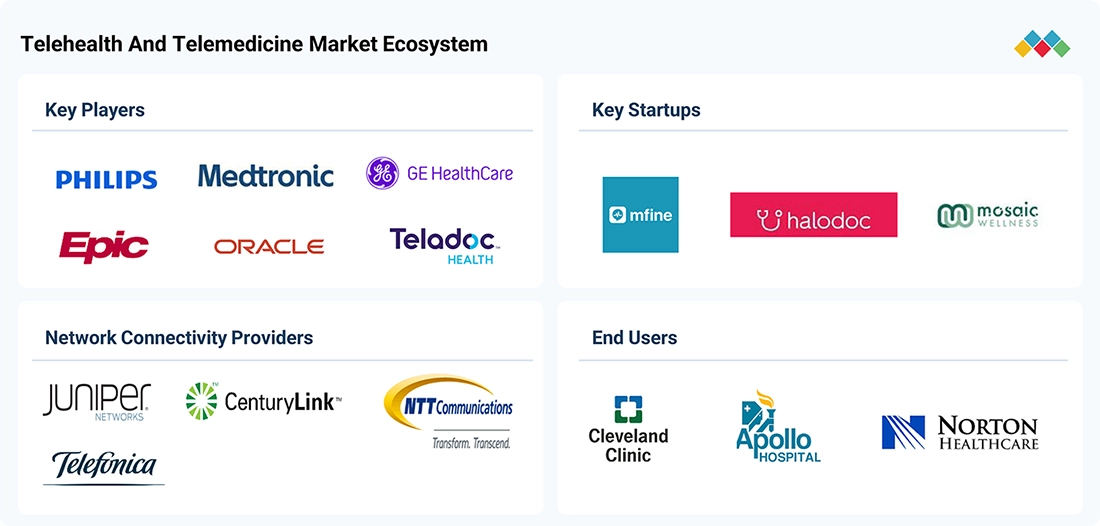
The telehealth and telemedicine market ecosystem consists of technology providers, network connectivity enablers, and healthcare end users. Key technology providers include Philips, Medtronic, GE HealthCare, Epic, Oracle, and Teladoc Health, which develop virtual care platforms, remote patient monitoring solutions, teleconsultation tools, electronic health record (EHR) integrations, and other digital health technologies that facilitate remote interactions between patients and healthcare providers. These companies increasingly focus on integrating telehealth capabilities with clinical workflows, data analytics, artificial intelligence, and connected medical devices to improve accessibility and continuity of care. Network connectivity enablers, including Juniper Networks, CenturyLink, NTT Communications, and Telefónica, provide the underlying telecommunications, cloud connectivity, network security, and data transmission infrastructure required to support reliable virtual healthcare delivery. High-speed, secure connectivity is especially important for real-time video consultations, remote monitoring, medical data transmission, and connected-device applications. Healthcare end users, such as Cleveland Clinic, Apollo Hospitals, and Norton Healthcare, represent the demand side of the ecosystem and drive the adoption of telehealth solutions across hospitals, specialty care, primary care, and chronic disease management. These organizations increasingly seek solutions that can expand patient reach, reduce unnecessary in-person visits, improve care coordination, and support patient-centered care delivery. Collaboration across the value chain from technology and connectivity providers to healthcare institutions is therefore essential for improving interoperability, strengthening data security, expanding access to virtual care, and enabling scalable and sustainable telehealth delivery.
Logos and trademarks shown above are the property of their respective owners. Their use here is for informational and illustrative purposes only.
MARKET SEGMENTS
Source: Secondary Research, Interviews with Experts, MarketsandMarkets Analysis
Telehealth and Telemedicine Market, by Region
The global telehealth and telemedicine market is segmented into five major regions: North America, Europe, the Asia Pacific, Latin America, and the Middle East & Africa. In 2025, North America accounted for the largest share of the global market. This regional segment's large share can be attributed to legislative extensions expanding telehealth and telemedicine access, along with favorable government investments and digital integration.
Telehealth and Telemedicine Market, by Component
By component, the telehealth and telemedicine market is segmented into hardware, software, and services. The software segment accounted for the largest market share in 2025. The software segment's large share is driven by the rising adoption of telehealth platforms, AI-driven diagnostic tools, and EHR integration. The increasing demand for cloud-based telemedicine solutions, remote patient monitoring software, and mobile health (mHealth) applications has also driven market expansion. Additionally, advances in AI, big data analytics, and interoperability solutions have improved the efficiency and scalability of telehealth services, making software a crucial component of healthcare's digital transformation.
Telehealth and Telemedicine Market, by Function
By function, the telehealth and telemedicine market is segmented into clinical care management, preventive care management, diagnostics & treatment, remote patient monitoring/patient monitoring, rehabilitation & recovery, administrative, analytics & reporting, patient engagement, and other functions. In 2025, clinical care management accounted for the largest share of the telehealth and telemedicine market. Growth in clinical care management is driven by its ability to improve patient outcomes, manage chronic diseases effectively, and expand access to care, particularly in underserved areas.
Telehealth and Telemedicine Market, by Application
By application, the telehealth and telemedicine market is segmented into primary care, specialty care, teleICU, virtual sitting & nursing, and other applications. In 2025, the specialty care segment accounted for the largest share of the telehealth and telemedicine market. The large share of the specialty care segment is due to the rising prevalence of chronic diseases, advanced telehealth technologies, and increased demand for remote specialists. AI integration, better internet access, and expanded insurance further drive growth.
Telehealth and Telemedicine Market, by Age Group
By age group, the telehealth and telemedicine market is segmented into pediatrics, adults, and geriatrics. In 2025, the adults segment accounted for the largest share of the telehealth and telemedicine market. The adults segment's large share is driven by the high prevalence of chronic conditions requiring ongoing management and the convenience of remote consultations. Moreover, the familiarity of adults with digital health tools and their preference for flexible healthcare options further drive the growth of telehealth services in this demographic.
Telehealth and Telemedicine Market, by End User
On the basis of end users, the telehealth and telemedicine market is segmented into healthcare providers, healthcare payers, patients, pharmaceutical & biotechnology companies, MedTech companies, and other end users. In 2025, the healthcare providers segment accounted for the largest share of the telehealth and telemedicine market. The healthcare providers segment's high growth can be attributed to the increasing availability of portable, special-purpose technologies and the potential to reach patients in remote areas, thereby reducing hospital readmission rates.
REGION
Asia Pacific to be fastest-growing region in global telehealth and telemedicine market during forecast period
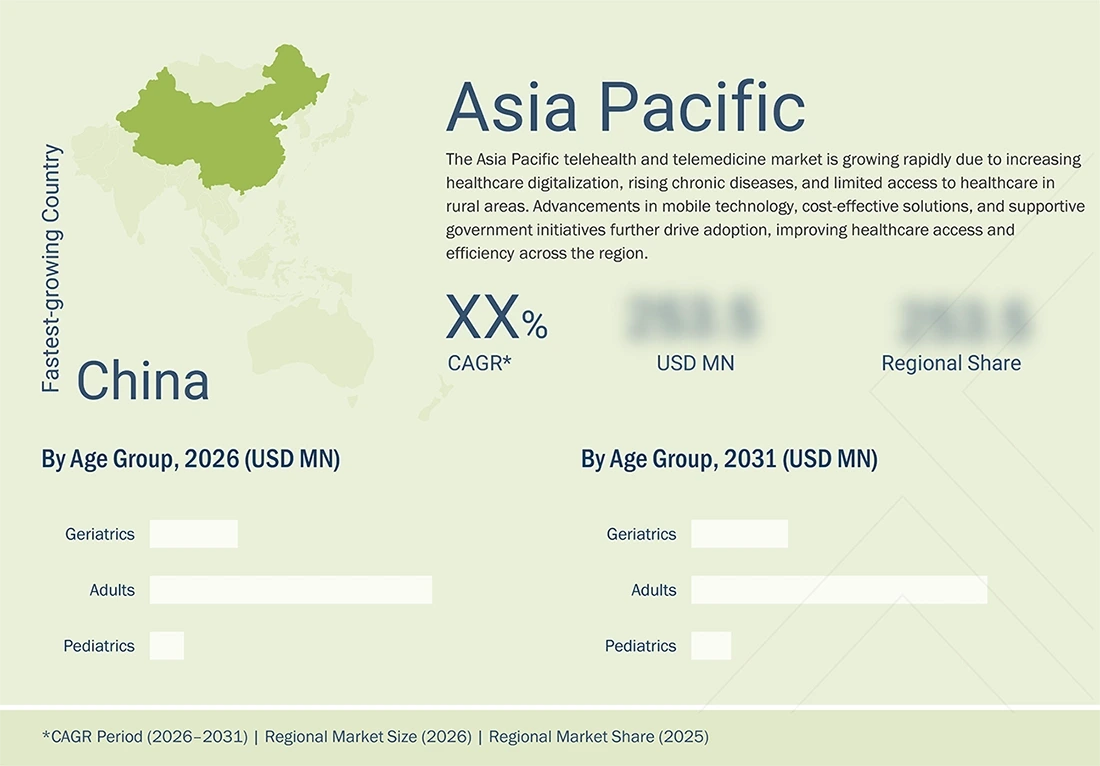
The Asia Pacific telehealth and telemedicine market is growing rapidly due to increasing healthcare digitalization, rising chronic diseases, and limited access to healthcare in rural areas. Advancements in mobile technology, cost-effective solutions, and supportive government initiatives further drive adoption, improving healthcare access and efficiency across the region. This regional market includes China, Japan, India, Australia, and the Rest of Asia Pacific (RoAPAC). Several factors, including advances in digital health infrastructure, government reforms and technological innovations, government digitalization initiatives, and government investment in rural aged care, are fueling growth in the Asia Pacific market.
TELEHEALTH AND TELEMEDICINE MARKET: COMPANY EVALUATION MATRIX
In the telehealth and telemedicine market matrix, Philips (Star) leads with a strong market share and a comprehensive portfolio spanning remote patient monitoring, virtual care platforms, and integrated digital health ecosystems. The company’s extensive global presence and partnerships with healthcare providers enable seamless connectivity between patients and clinicians, reinforcing its leadership in digital care delivery. Cisco (Emerging Leader) is rapidly gaining traction with its secure, high-performance communication infrastructure and expanding suite of telehealth solutions designed to support virtual consultations and enterprise-scale healthcare networks. While Philips dominates through end-to-end care integration and clinical-grade solutions, Cisco shows strong potential to move toward the leaders’ quadrant as demand for secure, interoperable, and scalable telehealth platforms continues to grow.
Source: Secondary Research, Interviews with Experts, MarketsandMarkets Analysis
KEY MARKET PLAYERS
- Koninklijke Philips N.V. (Netherlands)
- Medtronic (Ireland)
- GE Healthcare (US)
- Epic Systems Corporation (US)
- Oracle (US)
- Doximity, Inc. (US)
- Teladoc Health, Inc. (US)
- American Well (US)
- Siemens Healthineers AG (Germany)
- Cisco Systems Inc. (US)
- Included Health, Inc. (Doctor on Demand, Inc.) (US)
- AMC Health (US)
- TeleSpecialists (US)
- Walgreen Co. (US)
- Caregility (US)
- CVS Health (US)
- EverNorth Health, Inc. (US)
- Elation (US)
- Iron Bow Healthcare Solutions (US)
- ZoomCommunications, Inc. (US)
- Timedoc Health (US)
- Cerebral Inc. (US)
- Kindbody (US)
- Transcarent (US)
- Caresimple, Inc. (US)
MARKET SCOPE
| REPORT METRIC | DETAILS |
|---|---|
| Market Size in 2025 (Value) | USD 106.0 Billion |
| Market Forecast in 2026 (Value) | USD 118.8 Billion |
| Market Forecast in 2031 (Value) | USD 198.9 Billion |
| Growth Rate | CAGR of 10.9% from 2026–2031 |
| Years Considered | 2024–2031 |
| Base Year | 2025 |
| Forecast Period | 2026–2031 |
| Units Considered | Value (USD Million/Billion) |
| Report Coverage | Revenue Forecast, Company Ranking, Competitive Landscape, Growth Factors, Trends |
| Segments Covered |
|
| Regions Covered | North America, Asia Pacific, Europe, Latin America, Middle East & Africa |
WHAT IS IN IT FOR YOU: TELEHEALTH AND TELEMEDICINE MARKET REPORT CONTENT GUIDE
DELIVERED CUSTOMIZATIONS
We have successfully delivered the following deep-dive customizations:
| CLIENT REQUEST | CUSTOMIZATION DELIVERED | VALUE ADDS |
|---|---|---|
| Market Size Estimation for Data Monetization Tools & Services in Healthcare |
|
|
RECENT DEVELOPMENTS
- March 2026 : VSee showcased an autonomous AI telehealth robot at HIMSS 2026, designed to navigate hospital corridors and reach patients' bedsides for virtual rounding, tele-ICU, telestroke, and emergency-response applications. Indicates increasing integration of AI, robotics, and telemedicine infrastructure to extend virtual care into hospital-based and high-acuity applications.
- February 2026 : Ardent Health partnered with hellocare.ai to deploy an AI-assisted virtual physician, virtual nursing, virtual patient observation, and patient-safety platform across more than 2,000 patient rooms. Demonstrates growing adoption of enterprise-scale virtual care and AI-enabled remote clinical support within hospitals.
- January 2026 : VSee Health and DocBox announced a strategic partnership to launch an AI-enabled Virtual ICU platform, combining virtual care capabilities with AI-supported critical-care workflows. Highlights the expansion of telemedicine beyond virtual consultations into AI-enabled, high-acuity hospital care and virtual ICU services.
- COLUMN 'A' SHOULD BE IN TEXT FORMAT AND NOT DATE FORMAT :
Table of Contents
 Exclusive indicates content/data unique to MarketsandMarkets and not available with any competitors.
Methodology
The study involved significant work to estimate the current size of the telehealth and telemedicine market. We conducted exhaustive secondary research to gather information on the telehealth and telemedicine market. Next, we validated these findings, assumptions, and sizing with industry experts across the value chain through primary research. We used different approaches, such as top-down and bottom-up, to estimate the total market size. Next, we used market breakup and data triangulation to estimate the market size of the telehealth and telemedicine segments and subsegments.
Secondary Research
This research study relied heavily on secondary sources, including directories and databases such as Dun & Bradstreet, Bloomberg Businessweek, and Factiva; white papers, annual reports, and companies’ house documents; investor presentations; and companies' SEC filings. The market for companies offering telehealth and telemedicine solutions was identified using secondary data from paid and unpaid sources, by analyzing the product portfolios of major companies in the ecosystem, and by rating companies based on performance and quality. The secondary research process drew on various sources to identify and collect information for this study. Secondary sources included annual reports, press releases, company investor presentations, white papers, journals, certified publications, and articles from recognized authors, directories, and databases.
The secondary research process referred to various sources to identify and collect information related to the study. These sources included annual reports, press releases, investor presentations of telehealth and telemedicine vendors, forums, certified publications, and white papers. Secondary research provided critical information on the industry’s value chain, the total pool of key players, market classification, and segmentation from market- and technology-oriented perspectives.
Primary Research
In the primary research process, we interviewed sources from both the supply and demand sides to obtain qualitative and quantitative information for this report. Primary sources mainly included industry experts from core and related industries, as well as preferred suppliers, manufacturers, distributors, technology developers, researchers, and organizations across all segments of this industry’s value chain. The team conducted in-depth interviews with primary respondents, including key industry participants, subject-matter experts (SMEs), C-level executives of key market players, and industry consultants, among others, to gather and validate critical qualitative and quantitative information and assess prospects.
Primary research was conducted to identify segmentation types, industry trends, key players, and key market dynamics such as drivers, restraints, opportunities, challenges, and strategies adopted by key players.
After completing market engineering (calculations for market statistics, market breakdown, market size estimations, market forecasting, and data triangulation), we conducted extensive primary research to gather information and verify and validate the critical numbers.
Throughout the market engineering process, we used top-down and bottom-up approaches and several data triangulation methods to estimate and forecast the overall market segments and subsegments listed in this report. We conducted extensive qualitative and quantitative analysis across the entire market engineering process to identify key information/insights throughout the report.
Breakdown of the Primary Respondents:
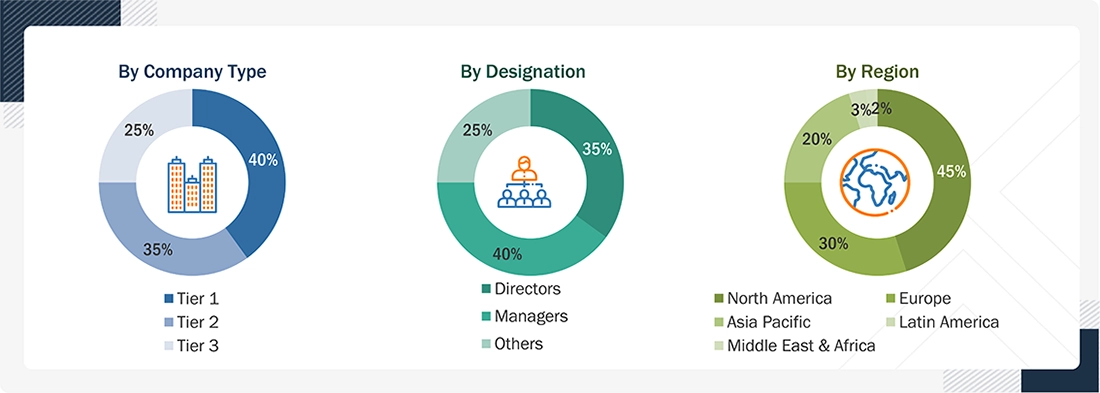
Note 1: Others include sales, marketing, and product managers.
Note 2: Tiers are defined based on a company’s total revenue. As of 2025: Tier 1 = >USD 1 billion, Tier 2 = USD 500 million to USD 1 billion, and Tier 3 = <USD 500 million.
To know about the assumptions considered for the study, download the pdf brochure
Market Size Estimation
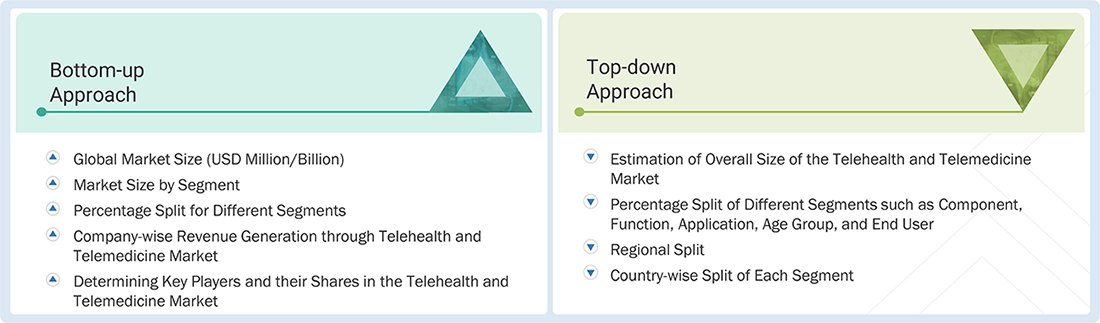
The market size estimates and forecasts in this study are derived through a mix of the bottom-up approach (revenue share analysis of leading players) and the top-down approach (assessment of utilization/adoption/penetration trends by component, function, application, age group, end user, and region).
Telehealth and Telemedicine Market : Top-Down and Bottom-Up Approach
Data Triangulation
After arriving at the overall market size using the market size estimation processes, the market was split into several segments and subsegments. To complete the overall market engineering process and arrive at the exact statistics of each market segment and subsegment, the data triangulation and market breakdown procedures were employed, wherever applicable. The data was triangulated by studying various factors and trends on both the demand and supply sides of the telehealth and telemedicine market.
Market Definition
Telehealth: Telehealth is a broad group of healthcare services enabled by digital communication technologies. This includes care, education, and other health services delivered through telecommunications equipment such as video conferencing, mobile applications, remote patient monitoring devices, and wearable health technologies. Telehealth offers a wide range of services, including preventive care, chronic disease management, mental health support, and virtual consultations.
Telemedicine: Telemedicine is a type of telehealth that focuses on delivering clinical services remotely. It includes diagnosing, treating, and monitoring patients using digital communication tools, often filling gaps in communities with limited access to healthcare facilities. Examples include online consultations, virtual follow-ups, and electronic transmission of medical imaging for diagnostic purposes.
Key Stakeholders
- Pharmaceutical and Biotechnology Companies
- Contract Research Organizations (CROs)
- Technology and AI Companies
- Regulatory Authorities
- Hospitals and Healthcare Providers
- Patients and Patient Advocacy Groups
- Clinical Trial Investigators and Site Coordinators
- Data Management and Analytics Firms
- Academic Institutions and Research Organizations
- Investors and Venture Capital Firms
- Clinical Trial Software Providers
- Ethics Committees and Institutional Review Boards (IRBs)
- Insurance Companies
Report Objectives
- To define, describe, and forecast the global telehealth and telemedicine market based on component, function, application, age group, end user, and region
- To provide detailed information regarding the factors influencing the growth of the market (such as the drivers, restraints, opportunities, and challenges)
- To strategically analyze micromarkets with respect to individual growth trends, prospects, and contributions to the overall telehealth and telemedicine market
- To analyze market opportunities for stakeholders and provide details of the competitive landscape for market leaders
- To forecast the size of the telehealth and telemedicine market in five main regions (along with their respective key countries): North America, Europe, Asia Pacific, Latin America, and the Middle East & Africa
- To profile key players and comprehensively analyze their product portfolios, market positions, and core competencies in the market
- To track and analyze competitive developments such as product & service launches; expansions; partnerships, agreements, and collaborations; and acquisitions in the telehealth and telemedicine market
- To benchmark players within the telehealth and telemedicine market using the Company Evaluation Matrix framework, which analyzes market players on various parameters within the broad categories of business strategy, market share, and product offering
Available customizations:
With the provided market data, MarketsandMarkets offers customizations to meet your company’s specific needs. The following customization options are available for the report:
Company Information
-
Detailed analysis and profiling of additional market players (up to 5)
Geographic Analysis
-
Further breakdown of the Rest of Europe telehealth and telemedicine market into Denmark, Norway, and others
-
Further breakdown of the Rest of Asia Pacific telehealth and telemedicine market into Vietnam, New Zealand, South Korea, and others
Critical Insights Uncovered: Strategic FAQs You Need to Know
What revenue strategies are market leaders using to dominate the telehealth and telemedicine market by 2030?
Key players like Koninklijke Philips N.V., Medtronic, and Epic Systems Corporation are focusing on technology innovations such as AI integration (Epic with Microsoft Azure AI), remote patient monitoring, and strategic partnerships (Philips with Masimo). These strategies improve clinical care management and personalized patient monitoring, supporting growth projected through 2030.
Which overlooked markets are emerging as high-ROI zones in the telehealth and telemedicine market?
Low- and middle-income countries, particularly where 80% of the aging population will reside by 2050, present emerging opportunities. These regions face a growing elderly population and healthcare access challenges, making telehealth a critical solution to meet complex healthcare needs.
How are fast-track approvals in North America driving early revenue for telehealth players?
In November 2024, Philips received FDA approval for remote scanning and protocol management features in its Radiology Operations Command Center, enabling radiologists to assist scans remotely. Such approvals shorten time-to-market and enhance telehealth adoption, boosting revenue potential.
What funding signals the next big shift in the telehealth and telemedicine market?
Partnerships like Zoom’s October 2024 collaboration with Suki to integrate AI-powered clinical documentation highlight increased investment in AI-enhanced telehealth solutions, marking a shift towards intelligent, automated healthcare delivery.
What key innovation gaps offer untapped revenue potential in telehealth and telemedicine?
High initial infrastructure costs and lack of IT expertise remain barriers, especially in rural and underserved areas. Addressing cybersecurity challenges and developing cost-effective, scalable solutions could unlock significant market potential.
Which pricing or reimbursement shifts are opening new growth paths in North America?
Positive government policies, including Medicare and Medicaid coverage for telehealth services, have improved healthcare access and affordability, supporting market growth and adoption of remote care technologies.
How are go-to-market models evolving to win in specialty care segments?
The specialty care segment, including teleradiology, teledermatology, and telepsychiatry, is growing due to rising demand for remote expert consultations. Telehealth platforms enable timely medical interventions and cost-effective care, driving market dominance in this segment.


Personalize This Research
- Triangulate with your Own Data
- Get Data as per your Format and Definition
- Gain a Deeper Dive on a Specific Application, Geography, Customer or Competitor
- Any level of Personalization
Let Us Help You
- What are the Known and Unknown Adjacencies Impacting the Telehealth and Telemedicine Market
- What will your New Revenue Sources be?
- Who will be your Top Customer; what will make them switch?
- Defend your Market Share or Win Competitors
- Get a Scorecard for Target Partners

Custom Market Research Services
We Will Customise The Research For You, In Case The Report Listed Above Does Not Meet With Your Requirements
Get 10% Free CustomisationTESTIMONIALS

JAYANT RAJPUROHIT
Director of Market Insights, Data and Analytics
SFI Health,
Leading Pharmaceutical Companywww.sfihealth.com/

We at SFI Health approached MarketsandMarkets for an Opportunity Assessment on "Incidence and Prevalence of Focus Indications" as we wanted to know the most attractive HCPs like Physician, Functional MD, Naturopath and Pharmacist. The project was critical for us to ensure our focus on the right target which would enable sustainable growth and profitability for SFI Health. The business insights provided exceeded our expectations and we were extremely impressed. The team at MarketsandMarkets is highly professional and detail oriented and very well understood our business needs. MarketsandMarkets offers a unique combination of expertise and dedicated engagement model. We identified 2 new products to be launched in coming months, based on the research findings provided by MarketsandMarkets. We are happy with the services and would strongly recommend MarketsandMarkets to my peers in the industry.

BEATRIZ DE LA CALLE
Head of Commercial Analytics
Qualicaps,
Leading Pharmaceutical Companywww.qualicaps.com/

We partnered with MarketsandMarkets for an assessment study on hard empty capsules. The team was extremely professional in understanding our business requirements and we received timely responses to all our queries. The market intelligence and the recommendations has met our business requirements. We were extremely impressed to see the final study results; it really exceeded our expectations. The market intelligence offered by MarketsandMarkets, and clarity on next steps will help us achieve our business objective for the Year 2021. We are happy with the services and would strongly recommend MarketsandMarkets to my peers in the industry.

Bob Williams,
Senior Director Business Development & Innovation
Bracco Diagnostics Inc.,
Italian Multinational in life sciences sector and a World Leader in imaging diagnosticsimaging.bracco.com/us-en
We were pleased with targeted insights that MarketsandMarkets identified from a custom study on the 'Radiation Dose Management Solutions Market'. Your team identified and characterized the market participants as well as underlying trends accurately. This study was useful to Bracco in formulating business strategies for our dose monitoring product lines and we thank MarketsandMarkets for the job well done.
Cody Coonradt,
Market Development and Strategy Manager
3M Health Information Systems,
Leader in Health care Coding, Payment & Analytics Solutions.www.3m.com/3M/en_US/health-information-systems-us
The value for our organization comes from three things: depth of research, specificity of segments and being easy to work with. As important as the first two are, the third can't be underestimated. MarketsandMarkets, maybe more than any other research vendor, wants to know what is top of mind for our team and what big questions we are grappling to answer.
Their customer first approach and high value engagement model, have given us great analysis and excellent value for money




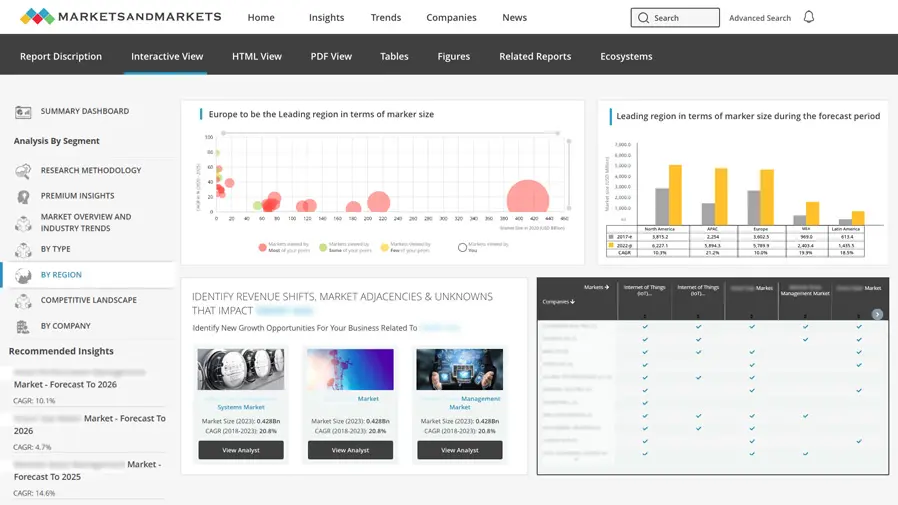
Growth opportunities and latent adjacency in Telehealth and Telemedicine Market