Account Intelligence Software Comparison: Features & Capabilities
September 04, 2025

Finding the right Account Intelligence Software feels a lot like dating – exciting at first, then suddenly overwhelming with too many options.
I've spent countless hours testing different platforms, and I can tell you that not all Account Intelligence Platforms are created equal. While some excel at data enrichment, others shine with predictive analytics. Account Based Intelligence has transformed how businesses identify and engage high-value prospects, but choosing the wrong solution can waste both time and money.
That's exactly why I created this comparison. I'll walk you through five leading solutions – HockeyStack, HubSpot Marketing, ZoomInfo, 6sense, and Demandbase – highlighting what each does best and where they fall short. No marketing fluff, just practical insights to help you make the right choice for your specific needs.
Let's cut through the noise and find your perfect match.
STOP GUESSING YOUR PIPELINE
START GROWING IT WITH AI SALES!!
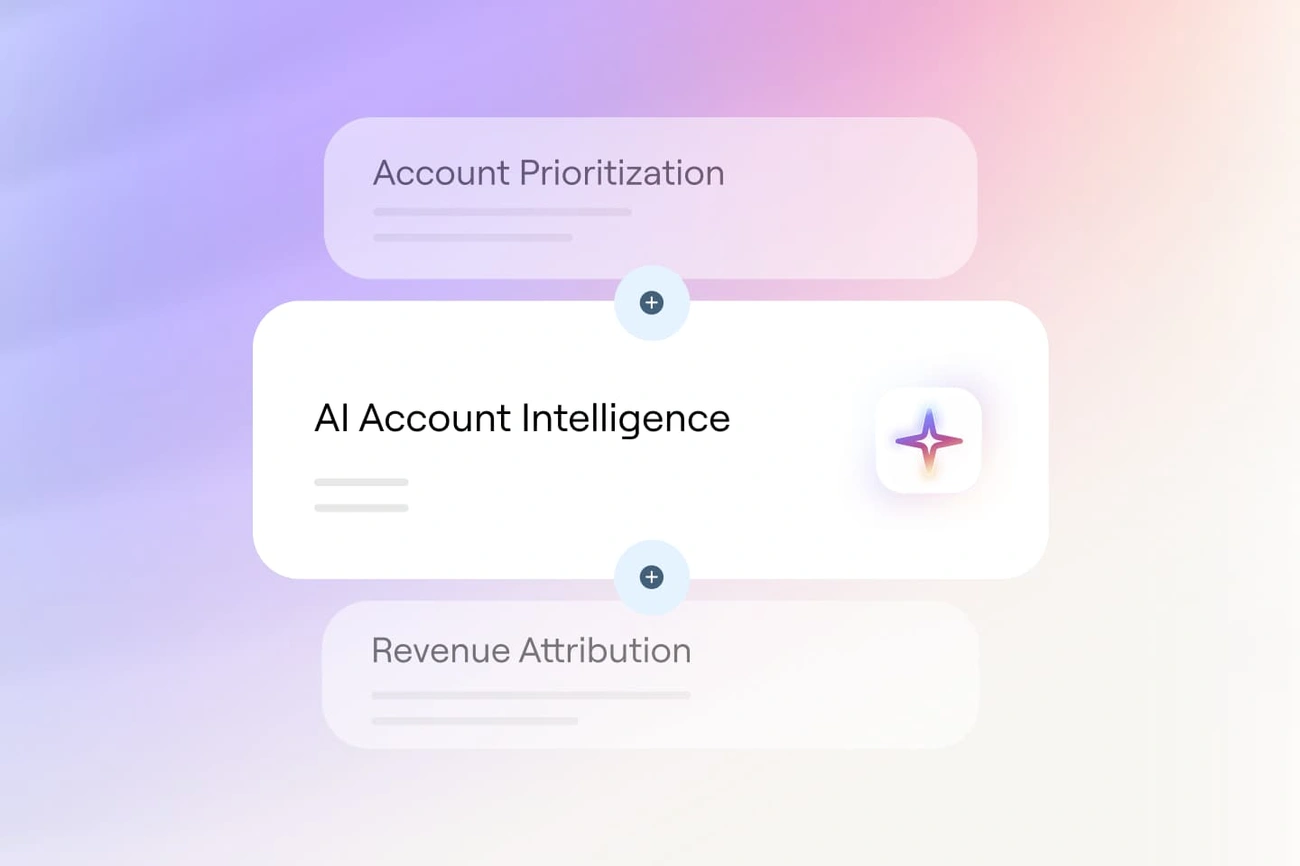
Image Source: HockeyStack
HockeyStack stands out as a B2B analytics and attribution platform specifically designed to connect the dots between marketing efforts and actual revenue. Unlike traditional tools that focus on vanity metrics, HockeyStack integrates with your entire tech stack to provide a holistic view of your customer journey.
HockeyStack offers a suite of features centered around AI-powered intelligence and workflow automation:
1. Odin AI Analyst - HockeyStack's AI analyst answers complex marketing questions instantly in plain English. Instead of spending hours creating reports, you can ask Odin about campaign performance, attribution, or funnel trends and receive visual answers immediately. What impressed me most was how Odin explains the "why" behind performance metrics – detailing why campaigns worked and which touchpoints drove revenue.
2. Nova AI Sales Rep Assistant - Nova lives inside Salesforce and connects to all your sales and marketing data. It pulls information from your CRM, call transcripts, emails, and buyer journey data to answer questions like "Which accounts are most likely to convert today?" The assistant also generates outreach content and suggests relevant materials based on industry and funnel stage.
3. Multi-touch revenue attribution - HockeyStack provides a complete picture of how prospects interact with your marketing before converting. It tracks both online and offline interactions and allows you to compare different attribution models side-by-side. Many customers mention how this gives them much clearer visibility into which channels actually drive revenue.
4. Account-level journey tracking - The platform stitches together every touchpoint—organic, paid, outbound, partner—at the account level. This helps you understand how buying committees progress from first touch to closed-won deals, even before leads fill out a form, thanks to their proprietary fingerprint technology.
5. Stakeholder Maps - HockeyStack identifies buyers, influencers, blockers, and champions across every deal using internal and external signals. The maps are AI-generated from CRM and online behavior data, allowing for persona-specific messaging.
6. Automated workflows - Perhaps the most powerful feature is how HockeyStack automates end-to-end workflows across your tech stack. When high-intent signals are detected, Nova can enrich accounts with company data, outline decision-makers, update your CRM, notify account owners, and launch personalized email sequences—all automatically.
Pros:
Unified command center - HockeyStack connects your entire tech stack (CRM, marketing automation, ad platforms) to create a single source of truth for revenue teams.
AI-driven insights - Both Odin and Nova provide actionable intelligence without requiring data science expertise.
No-code customization - Anyone on your team can build custom reports and dashboards without touching SQL.
Cookieless tracking - Their proprietary fingerprint technology tracks anonymous activity across visits.
True account-level analysis - HockeyStack unifies complex B2B journeys at the account level, even when buying committees come through various channels.
Drill-down capabilities - Users appreciate that every metric is clickable, allowing deeper investigation into specific accounts or campaigns.
Cons:
Steep learning curve - Several users mention that mastering HockeyStack's analytics and features requires significant time investment.
Complex setup process - The platform's extensive capabilities mean initial configuration can be challenging.
Premium pricing - Compared to basic attribution tools, HockeyStack requires a higher investment.
HockeyStack offers custom-built plans based on company needs with startup pricing available. Pricing information varies across sources:
According to recent updates, HockeyStack's pricing plans start at $139/month for up to 10,000 unique visitors as of December 2023.
Previous pricing (August 2023) indicated plans starting at $949/month for up to 10,000 unique website visitors and 10 seats.
Another source suggests platform pricing starts at $2,200 per month.
All pricing includes:
Unlimited dashboards and reports
All visualization types (funnels, tables, charts, buyer journeys)
AI-analyst capabilities
No-code report builder
Multi-touch attribution models
Incrementality reports
Buyer journey modeling
For exact pricing, you'll need to request a demo as costs are primarily based on the volume of traffic or users you're tracking.
After reviewing customer testimonials and case studies, I've found HockeyStack works exceptionally well for:
B2B SaaS companies with complex sales cycles - HockeyStack is particularly valuable for businesses with multiple stakeholders involved in the buying process. The platform's ability to track account-level journeys and identify buying committee members makes it ideal for longer B2B sales cycles.
Companies struggling with attribution challenges - Businesses that need to connect marketing efforts to actual revenue see significant benefits. For instance, ActiveCampaign was able to cut ad spend by 50% without sacrificing revenue after switching to HockeyStack.
Organizations with "dark funnel" problems - If your team struggles to understand engagement before form fills, HockeyStack's cookieless tracking and account intelligence capabilities provide visibility into previously "immeasurable" activities.
Teams with cross-functional GTM motions - HockeyStack serves as a unified platform where marketing, sales, and RevOps can all work from the same data.
For example, 8x8's marketing team used HockeyStack to achieve full-funnel visibility and track every touchpoint across the customer journey within a single platform. This approach helped them outline which campaigns accelerated deals at each stage and demonstrate marketing's impact on sales.
Additionally, Delve, an AI-native compliance platform, cut reporting time by 50+ hours quarterly with HockeyStack's automated dashboards and made faster data-driven decisions based on real performance data.
HockeyStack's approach differs from competitors by bringing all data together in one platform while providing deep AI-powered intelligence and automating repetitive tasks. Furthermore, it offers true account-level journey tracking that includes outbound and non-cookie sources, which many competing platforms struggle to unify.
Ready to turn your Rep
INTO BEST PERFORMER ?
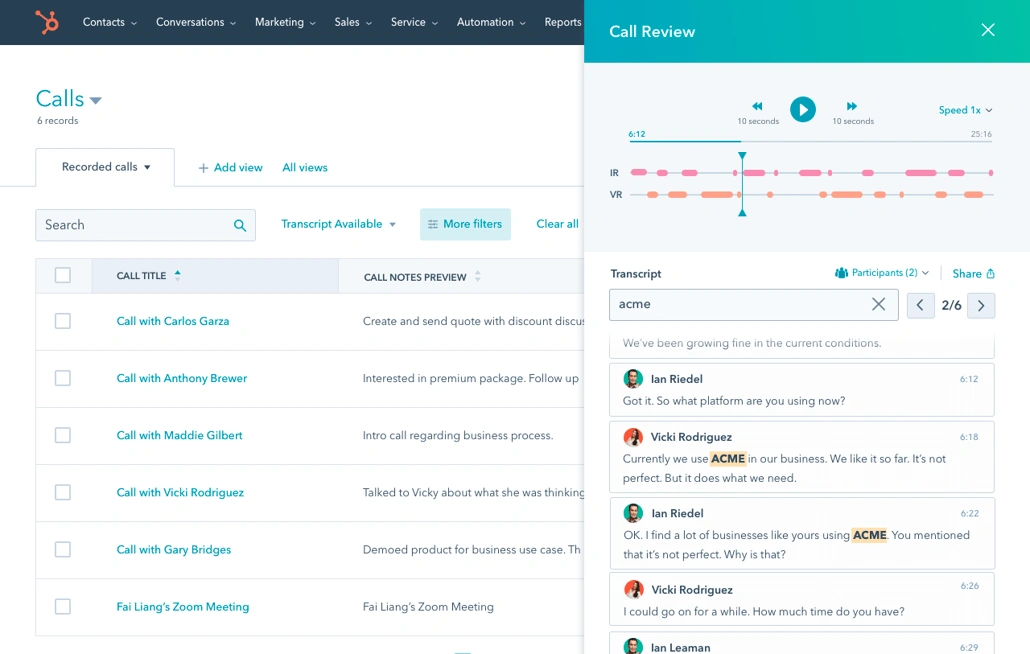
Image Source: HubSpot
HubSpot Marketing stands as a full-featured marketing automation platform that incorporates robust account intelligence capabilities. As part of HubSpot's broader CRM ecosystem, the Marketing Hub integrates seamlessly with sales and service functions to create a unified customer intelligence system.
Breeze Intelligence forms the cornerstone of HubSpot's account intelligence capabilities. This AI-powered system leverages the Clearbit technology HubSpot acquired, offering three essential components:
Data Enrichment - Automatically keeps company and contact records current using a database of over 200 million profiles, ensuring your account data remains accurate without manual intervention.
Buyer Intent Detection - Identifies high-intent companies by analyzing your total addressable market alongside high-conversion web pages, helping prioritize accounts showing purchase signals.
Form Shortening - Streamlines conversion funnels by intelligently reducing form fields based on existing CRM data, improving completion rates while still capturing necessary information.
Beyond these core capabilities, HubSpot Marketing includes:
Custom company scoring that allows you to build sophisticated account scoring models considering fit, engagement, and buying stage factors.
Account-based marketing workflows that trigger personalized multi-channel campaigns when target accounts demonstrate specific buying signals.
Real-time alerts notifying sales representatives when important accounts revisit key pages, repeatedly open emails, or perform high-intent actions.
Breeze Copilot serving as a ChatGPT-like interface that can instantly answer queries about prospects, meeting schedules, lead assignments, and even draft outreach emails tailored to specific contacts.
Social & Content Agent that generates content (including podcasts and case studies) and recommends optimal distribution times based on website scans and previous activity.
Context-aware assistance providing real-time summaries of company and contact information with the latest activity included.
Notably, 76% of marketers who use HubSpot AI tools report that it helps them create content faster, illustrating the practical impact of these features.
Pros:
User-friendly interface makes the platform accessible even for team members without technical or marketing automation expertise. The workflows in particular receive praise for being intuitive and flexible, allowing teams to implement complex marketing strategies without specialized skills.
HubSpot Academy provides extensive free training resources that help new team members quickly learn the platform. This educational component significantly reduces the learning curve commonly associated with marketing automation platforms.
Professional email templates that are both well-designed and easy to customize, enabling consistent brand communications.
Unified platform approach gives teams access to the same customer information across marketing, sales, and service functions, creating confidence in data consistency. After 6 months of use, HubSpot Marketing Hub customers typically see a 107% increase in inbound leads.
Multi-touch revenue attribution allowing marketers to accurately measure campaign impact on revenue generation.
AI-powered A/B testing that optimizes content performance through continuous testing of page variations.
Cons:
Limited support options with no chat or phone support available at lower tiers, which can delay resolution of urgent issues.
Initial complexity despite its user-friendly design, as some users report feeling overwhelmed at first due to the wide range of features and settings.
Escalating costs as you scale. While starter plans are accessible, expenses can rise quickly when adding more contacts or accessing advanced features. Many users report needing to upgrade to more expensive plans much faster than anticipated when requiring even basic automation or analytics.
Limited email customization compared to platforms like Outlook and Gmail, with restrictions on personalization options for team signatures.
No A/B testing on lower-tier plans requires upgrading to the Professional package starting at $800 per month to access this essential feature.
Potential vendor lock-in concerns due to limited customization options compared to more flexible platforms.
HubSpot Marketing Hub offers tiered pricing based on features and contact volumes:
Free - Includes basic tools like forms, email marketing, ad management, landing pages, shared inbox, list segmentation, and live chat. Contains no marketing contacts but allows unlimited non-marketing contacts.
Starter - $15.00 per month (when paid annually) or $20.00 per month (monthly billing) for 1,000 marketing contacts. Additional contacts are sold in bundles of 1,000 for $37.50 per month.
Professional - $800.00 per month (annual billing) including 2,000 marketing contacts. Additional contacts available in bundles of 5,000 from $224.72 per month. Requires a one-time onboarding fee of $3,000.00.
Enterprise - $3,600.00 per month with 10,000 marketing contacts. Additional contacts sold in bundles of 10,000 for $100.00 per month. Includes a one-time onboarding fee of $6,000.00.
For businesses seeking expanded reporting capabilities, HubSpot offers a Reporting Limit Increase Add-On priced around $200.00 per month.
From analyzing the factual information, HubSpot Marketing proves most effective for:
Mid-sized B2B companies that want an all-in-one platform to manage inbound marketing, lead nurturing, and account-based campaigns without requiring a dedicated operations team. The platform's unified approach allows marketing, sales, and revenue operations teams to work from the same data source.
Organizations transitioning from basic marketing tools to more sophisticated automation benefit from HubSpot's intuitive interface coupled with extensive training resources. The platform scales alongside business growth, with 80% of marketers who use HubSpot AI tools reporting it helps them manage multiple marketing channels more effectively.
Companies focusing on omnichannel marketing find value in HubSpot's ability to streamline marketing across email, social media, and PPC advertising while providing accurate revenue attribution. This helps marketing teams demonstrate their impact on business results.
Businesses that value operational efficiency appreciate how HubSpot centralizes marketing functions that would otherwise require multiple disconnected tools. As one customer noted, "A campaign that used to take four different team members and six web-based tools can be done by one person with HubSpot".
HubSpot Marketing was named the #1 Marketing Product for small business, mid-market, and enterprise companies on G2 in 2024, reflecting its versatility across different company sizes.
The platform excels in environments where marketing teams need to quickly demonstrate value, especially considering customers typically see a 107% increase in inbound leads within six months of implementation.

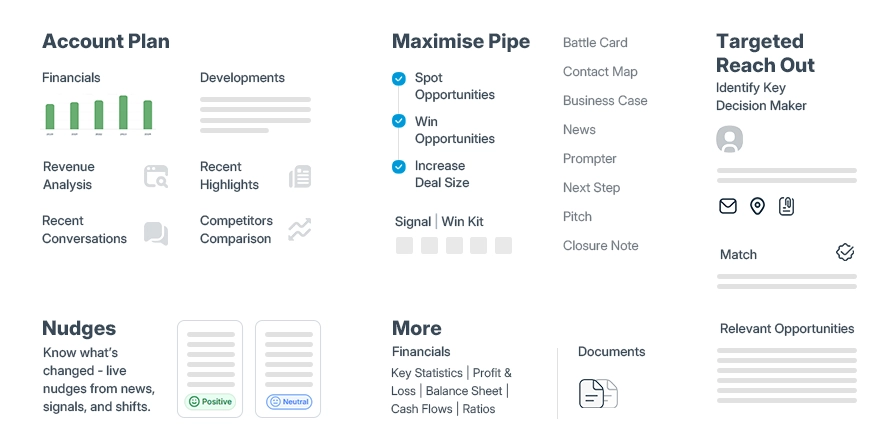

Image Source: zoominfo
ZoomInfo operates as a powerful go-to-market intelligence platform that puts high-quality B2B data at the center of account intelligence strategies. The platform emphasizes data accuracy and real-time insights to help sales and marketing teams identify and engage with potential customers more effectively.
At its core, ZoomInfo provides several key components that work together to create a comprehensive account intelligence solution:
Data enrichment and management stands as ZoomInfo's foundation, automatically appending and updating CRM and marketing automation platforms with accurate, real-time information. This capability helps prevent data decay and ensures teams work with the most current contact and company information.
Buyer intent detection identifies accounts actively researching products or solutions similar to yours. This intelligence helps prioritize outreach to prospects already showing purchase signals, significantly increasing conversion chances.
ZoomInfo Copilot, launched in mid-2023, serves as an AI Sales assistant that analyzes intent signals to surface valuable account intelligence. The system identifies corporate initiatives, personnel changes, and unusual competitor research activity to highlight new opportunities. Users report being 60% more productive with Copilot.
Account-based marketing tools leverage ZoomInfo's extensive database of over 100 million business contacts to help marketers identify and prioritize high-potential leads. The platform received leadership recognition in the 2024 Gartner Magic Quadrant for ABM Platforms.
Advanced search capabilities allow users to filter prospects based on specific criteria such as industry, company size, location, and technographic data. This granular approach ensures marketing campaigns and sales efforts target only the most relevant audience segments.
Conversation intelligence (through Chorus) analyzes customer interactions across sales calls, emails, and chat sessions to provide insights into customer sentiments, compliance issues, and agent performance.
Website visitor tracking helps leverage site traffic to identify best-fit customer profiles, even before they fill out forms. This feature allows teams to gain visibility into which companies are visiting your site and what they're interested in.
I found the automated email capabilities particularly impressive. McGriff, a business development manager at Apricorn, noted that Copilot's ability to craft compelling, personalized emails cut his typical outreach time from two hours to just 20 minutes, saving approximately five hours weekly and increasing response rates by 10%.
Pros:
Extensive B2B database provides accurate contact information including direct phone numbers and email addresses, allowing teams to bypass gatekeepers and reach decision-makers directly
Real-time buying signals help prioritize accounts most likely to convert based on their research activities
Powerful AI assistance with ZoomInfo Copilot saving users 10 hours per week on average by automating manual tasks
Advanced data search with sophisticated filtering options for granular targeting
Multi-channel outreach tools for engaging prospects through their preferred communication channels
Predictive modeling for precise customer profiling and opportunity identification
Integration capabilities with various CRM and marketing automation tools for seamless data flow
Cons:
Complex pricing structure creates difficulty in understanding total costs upfront and comparing plans
Steep learning curve with many users reporting initial complexity despite the platform's powerful capabilities
Limited free trial that only provides access to ten contacts and requires participation in a live demo
High cost may be prohibitive for smaller businesses or startups with limited budgets
Data access limitations as features like intent data are typically only available in higher-tier plans
ZoomInfo offers tiered subscription plans with pricing based on several factors including number of users, selected features, and credit usage. Although ZoomInfo doesn't publicly list specific prices on their website, these are the general tiers based on reliable sources:
Professional Plan - Starts at approximately USD 14995.00 per year with a typical two-year commitment. This entry-level tier includes:
5,000 annual bulk credits
Support for up to three users
Core database access
Email alerts
Basic Salesforce integration
Additional users can be added at USD 1500.00 each
Advanced Plan - Begins around USD 24995.00 per year and includes:
10,000 annual bulk credits
1,000 monthly credits per user
Access to deeper CRM integrations
More detailed company and contact data
Additional user slots at USD 2500.00 each
Features like WebSights, intent data, and events tracking
Elite Plan - Starts at approximately USD 39995.00 per year with:
10,000 annual bulk credits
1,000 monthly credits per user
Full access to all features and add-ons
Premium support with dedicated account managers
Maximum data access suitable for large-scale operations
Beyond the annual subscription costs, many features require additional investment. For example, global data access costs USD 9995.00 extra, whereas email verification through NeverBounce adds USD 3000.00 to the price.
After testing ZoomInfo extensively, I've found it works best for:
Large enterprise companies with established sales and marketing teams benefit most from ZoomInfo's extensive data on industries, companies, and key decision-makers. The platform's ability to provide detailed contact information and organizational hierarchies enables these teams to target leads precisely.
Data-driven sales organizations that need to quickly identify and connect with decision-makers. ZoomInfo's Copilot successfully predicted nearly half of users' existing pipeline, with 45% of opportunities in their CRMs matching ZoomInfo Copilot recommendations to engage.
Account-based marketing teams utilizing targeted outreach strategies. The platform excels at identifying buying committees, with 71% of users uncovering new opportunities at existing accounts through the platform.
Businesses targeting specific industries or high-value accounts find value in ZoomInfo's advanced search filters that allow focusing on particular markets or roles within companies.
Companies with multiple go-to-market functions benefit from ZoomInfo's suite of products (SalesOS, MarketingOS, OperationsOS, and TalentOS) that share the same data foundation.
ZoomInfo serves over 36,000 companies worldwide, helping them reach new customers and expand into new markets. The platform's integration of AI throughout its products enhances functionality across sales, marketing, and operations.
For businesses seeking to improve their account intelligence capabilities, ZoomInfo provides a data-first approach that focuses on accuracy, depth, and actionability of B2B information.
STOP CHASING PROSPECTS
START CLOSING DEALS!!
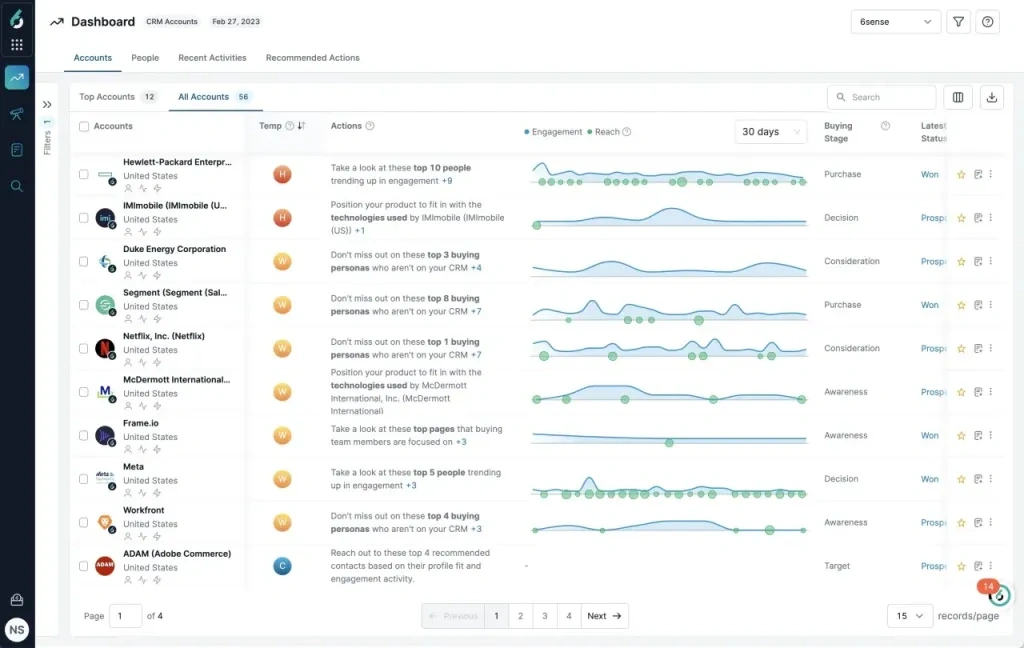
Image Source: ZenABM
As an AI-driven revenue platform, 6sense focuses on predicting buyer behavior through its extensive signal network called the Signalverse. This Account Intelligence Software stands out with its ability to identify anonymous buyer activities up to six months before competitors spot the opportunity.
6sense's core value centers around its predictive capabilities that help revenue teams prioritize the right accounts at the right time:
Account Identification accurately matches anonymous and known buyer behavior to specific accounts, making it easier to target accounts even before they fill out forms on your website. The platform claims up to 85% match accuracy, considerably higher than industry averages.
Predictive Analytics is where 6sense truly shines. The platform collects over a trillion data points daily to analyze B2B buying patterns. I found that 6sense's AI categorizes accounts into buying stages, showing you precisely where prospects are in their journey.
Intent Data reveals what topics, products, and services prospects are researching, even when they haven't identified themselves. This gives sales teams valuable insight into prospect interests without requiring form submissions.
Multi-Channel Orchestration creates consistent account experiences across advertising, email, and sales outreach. The platform automatically serves relevant ads to visitors from targeted accounts, ensuring you never miss engagement opportunities.
Sales Intelligence highlights key decision-makers within accounts, providing contact information and engagement data directly within your CRM. This integration gives sales teams critical account insights without switching between tools.
Contact & Company Data provides access to real-time B2B contact data through a credit-based system, enabling personalized outreach to the right people.
Pros:
Predictive insights - The AI accurately identifies accounts entering buying cycles early, giving teams a significant time advantage
Effective segmentation - Creates detailed audience segments based on firmographics and engagement data
Strong CRM integration - Delivers account intelligence directly within your existing sales tools
Buyer journey tracking - Clearly shows account progression through different buying stages
Automated recommendations - The platform suggests optimal actions based on account activity
Cons:
Clunky user interface - Multiple users report the UI is slow and difficult to navigate
Data accuracy issues - Some reviews mention problems with inaccurate or outdated contact data
High cost - The significant investment may be difficult to justify for smaller companies
Slow data refresh - Sales teams note lag times when refreshing data in the platform
Complex implementation - Setting up the platform can be time-consuming
6sense offers custom pricing based on company size, selected features, and data consumption needs. Although exact figures aren't publicly listed, reliable sources indicate:
Annual investment range: Most companies pay between $60,000 and $300,000 per year
Enterprise plans often exceed $100,000 annually
Free plan available but limited to just one user and 50 credits per month
The platform uses a credit-based system for accessing B2B contact data, with credits consumed when unlocking emails, phone numbers, and enriched company records.
6sense works most effectively for:
Enterprise organizations with established marketing and sales teams benefit from 6sense's ability to align both departments around a single source of truth. The platform excels at creating consensus between teams on when in-market accounts are ready to convert to opportunities.
Companies targeting large accounts see strong results through 6sense's buying committee identification capabilities. The platform maps out entire buying teams, not just individual leads.
Businesses with complex sales cycles utilize 6sense to time their engagement based on buying signals. Drata implemented the platform when moving upmarket and saw a 4.5x increase in demos and 3x increase in close rates.
Organizations focused on efficiency leverage 6sense to eliminate guesswork in prospecting. FullStory transformed their account-based marketing with 6sense and experienced a 48% increase in average contract value for in-market accounts.
Teams struggling with hidden buying signals find value in 6sense's ability to reveal the "dark funnel" of research activity happening before prospects identify themselves.
STOP GUESSING YOUR PIPELINE
START GROWING IT WITH AI SALES!!
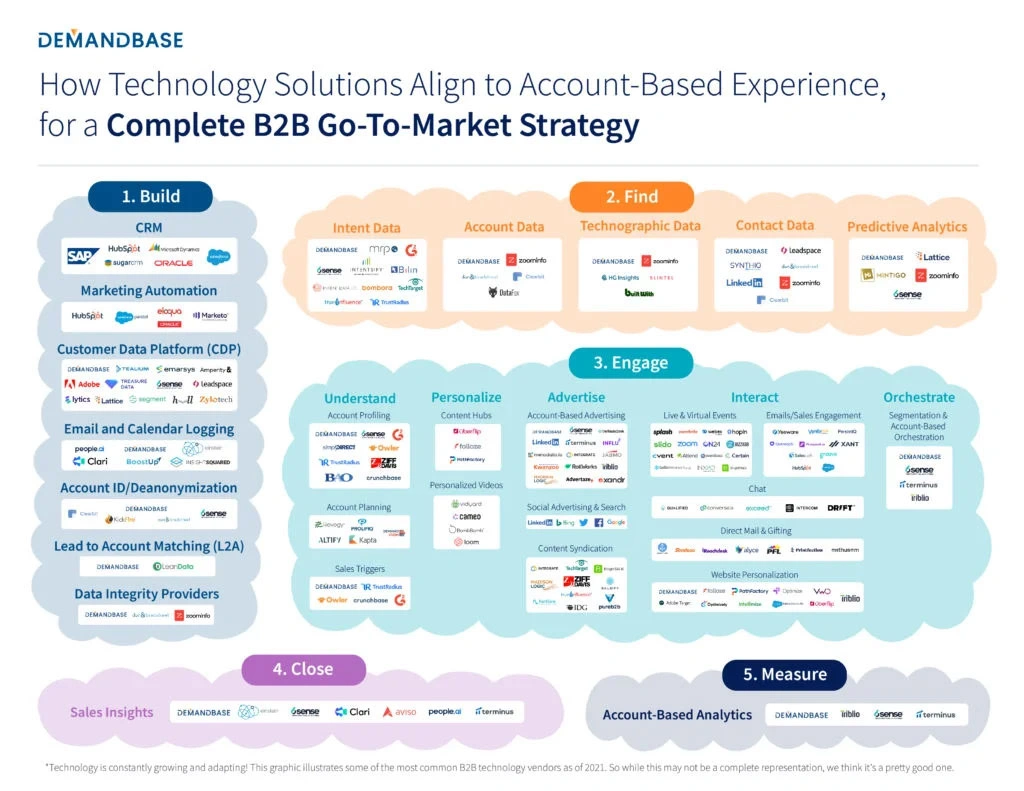
Image Source: Demandbase
Demandbase operates as an account-based go-to-market platform that fuses your first-party data with their trusted B2B insights to create what they call "Account Intelligence." This AI-powered solution helps teams identify opportunities sooner, engage with precision, and close deals faster.
At the core of Demandbase One lies its Account Intelligence capability that combines your existing marketing and sales data with their extensive third-party database. The platform gathers data from over 40,000 sources and applies machine learning and AI to deliver exceptional accuracy.
Their data infrastructure includes:
100M+ company profiles with detailed firmographics
810K+ intent keywords combining bidstream data with curated content
47K technologies tracked, including software hidden behind firewalls
176M B2B contacts with decision-maker details
3.7B+ IP addresses for accurate account matching
Demandbase helps sales teams build account-based strategies by providing a holistic view of accounts and their buying teams. Their intent data allows for prioritizing in-market accounts that are actively researching solutions like yours.
Pros:
Actionable prospect data provides clear insights into account engagement patterns
Customizable experiences through straightforward account list creation
Helpful prediction scores during outreach campaigns that combine intent signals with engagement data
Easy-to-use interface enhances lead generation and website tracking experience
Cons:
Account data accuracy issues occasionally require manual verification
Similar insights available from more affordable alternatives
Contact information sometimes contains outdated information about decision-makers
Demandbase One's pricing structure consists of a clear platform fee covering essential software and services, plus a flat fee per user for easy scaling. Rather than offering separate sales and marketing solutions, they tailor plans to fit all go-to-market teams.
Based on customer reports, the median contract value is approximately $65,000 per year, with buyers saving an average of 13% through negotiations.
Demandbase works most effectively for:
Marketing teams using intent-based account discovery to identify and prioritize accounts actively researching relevant topics.
Sales teams leveraging comprehensive account intelligence including company profiles, news updates, and buying committee insights to personalize outreach.
Account-based marketing (ABM) teams designing comprehensive strategies from initial account selection through engagement and measurement.
Executive teams monitoring ABM program performance, tracking engagement metrics, and measuring impact on pipeline growth.
Overall, Demandbase excels in environments where marketing and sales need to collaborate around targeted accounts, providing a unified platform that eliminates traditional departmental silos.
Make Every Rep Speak
Like Your Top 1%
Choosing the right account intelligence software ultimately comes down to your specific business needs and growth stage. After testing these five platforms extensively, I've noticed clear differences in their core strengths.
HockeyStack stands out for B2B SaaS companies with complex sales cycles, offering powerful AI analysts and true account-level journey tracking. Meanwhile, HubSpot Marketing proves ideal for mid-sized B2B companies seeking an all-in-one platform without needing dedicated operations teams.
ZoomInfo excels through its massive B2B database and direct contact information, making it perfect for large enterprise sales teams targeting specific decision-makers. Alternatively, 6sense delivers exceptional predictive capabilities that identify buying signals up to six months before competitors even notice the opportunity. Lastly, Demandbase shines with its account-based strategy approach, helping teams unify marketing and sales efforts around targeted accounts.
The right platform will significantly impact your ability to identify high-value prospects, understand buying committees, and time your engagement perfectly. Most companies struggle not from lack of data but from difficulties turning that information into actionable intelligence. Each tool attempts to solve this problem differently.
Though implementation may seem daunting at first, the benefits of a properly configured account intelligence platform far outweigh the initial investment. Sales cycles shorten, conversion rates improve, and teams waste less time pursuing low-probability deals.
My advice? Start by thoroughly examining your existing sales and marketing processes. Identify specific pain points these tools might solve. Request demos from your top contenders and ask tough questions about how they address your particular challenges. The perfect account intelligence platform isn't necessarily the one with the most features – it's the one that solves your unique business problems efficiently.
Account intelligence software provides comprehensive data and insights about potential customers, helping businesses identify high-value prospects, understand buying behaviors, and engage more effectively. It benefits companies by improving lead quality, shortening sales cycles, and increasing conversion rates.
HockeyStack focuses on complex B2B sales cycles with AI-driven analytics and account-level journey tracking, while HubSpot Marketing offers a more all-in-one platform approach suitable for mid-sized companies looking to manage inbound marketing and lead nurturing without extensive technical expertise.
ZoomInfo is known for its extensive B2B database, providing accurate contact information and direct access to decision-makers. It excels in data enrichment, advanced search capabilities, and real-time buying signals, making it particularly valuable for large enterprise sales teams.
6sense uses AI to analyze over a trillion data points daily, categorizing accounts into buying stages and revealing intent data. This allows businesses to identify potential customers up to six months before they actively enter the buying cycle, giving sales teams a significant time advantage.
Demandbase is best suited for companies implementing account-based marketing (ABM) strategies. It's particularly effective for marketing and sales teams that need to collaborate closely on targeted accounts, providing a unified platform for account discovery, engagement, and performance measurement.

Category: Uncategorized Tags: ai, AIOps, Artificial Intelligence, cloud, cloud platform, Cybersecurity, Information and Communications Technology , VR