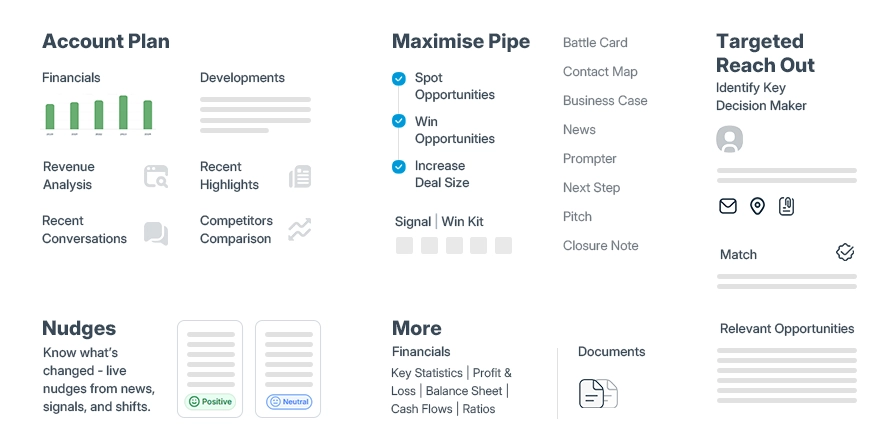
The best account management software can reshape how businesses handle their most valuable client relationships. I tested more than 2,000 tools for different Revenue Operations use cases and found that the right software makes all the difference when juggling emails, project updates, and client expectations on multiple platforms.


Struggling to Manage,
Accounts Efficiently
Discover the best account management software and unlock smarter revenue growth with SalesPlay.
Experience the Platform
Poor data quality in account management costs businesses about $15 million yearly in losses. Account management solutions bring more value than traditional CRM software, especially when handling sales processes in multiple divisions, locations, and touch points. The right account management tool can streamline your operations whether you manage the top 20% of key customers or coordinate with connections among LinkedIn's 700+ million users in 200+ countries.
This piece looks at the top account management software options for 2025. You'll find detailed comparisons of features, pricing, and use cases to help you make an informed choice that matches your business needs. Our extensive reviews and testing will help you find a solution that fits your specific requirements perfectly.
What is Account Management Software?
Account management software brings all customer information together to make client relationship management smoother throughout their time with your business. These powerful tools do more than just store contacts. They help businesses track finances, build client relationships, and keep an eye on how well customer accounts are doing.
Definition and core purpose
Account management software works as a digital center that brings client-related data into one available system. This software helps businesses organize contacts, record interactions, and track money movement in accounts of all sizes. These management solutions give companies a structured way to handle customer relationships and get the most value over time.
The software does more than just store data. These platforms help companies create lasting bonds with clients by making their experience positive and showing they come first. The software also helps with activities after the sale to strengthen existing relationships instead of just chasing new customers.
These tools also give evidence-based insights through detailed tracking. Account managers can see communication history, project details, and other data to give more individual-specific service. This detailed approach will give businesses a full picture of each client's experience, so they can spot what clients need and find ways to grow.
Traditional CRM and account management software handle customer information differently. CRM systems focus on creating and converting sales pipelines. They excel at stages, forecasts, and getting new logos. Account management solutions focus on keeping and growing existing customer relationships over time.
The main difference shows in how they work. Traditional CRMs want to move quickly through a sales funnel. Account management needs to see the whole relationship—including people, plans, health, risk, and whitespace. On top of that, account management software has features for building relationships that CRMs often miss:
-
Visual organization maps showing decision makers and influencers
-
Health/risk models with configurable thresholds and alerts
-
Whitespace analytics for identifying expansion opportunities
-
Portfolio visibility tools for managing renewal timelines
There's another reason they're different in their basic approach. CRM solutions react to sales and use one approach for everyone. Account management solutions focus on relationships and take action first. They use strategies that fit each client's needs. CRM success looks at increased sales, while account management reviews ROI improvement over time.

Who uses account management tools
Many professionals who maintain client relationships use account management software. Sales teams, account managers, and customer success specialists use these tools to make client interactions better and improve business results.
Key account managers make up the core user group. They usually handle no more than 3-5 high-value accounts at once. These professionals put intense focus on the most valuable accounts that could grow significantly. They use the software to understand client needs deeply and adjust their approach.
Tax specialists use these solutions to organize client information and make tax preparation smoother. Customer success teams rely on these tools to watch client health metrics, keep clients happy, and stop them from leaving.
Business owners and executives get value from the detailed overview these systems provide. Real-time insights into account status and performance help leaders make smart decisions about resources and strategy. Teams across departments use these platforms to keep messages consistent and coordinate client service.
Companies that want stronger client relationships and better efficiency can benefit from good account management software. As businesses see how valuable existing customer relationships are, these tools have become vital for growth and staying competitive.
Ready to turn your Rep
INTO BEST PERFORMER ?
Top 8 Account Management Software Tools in 2025
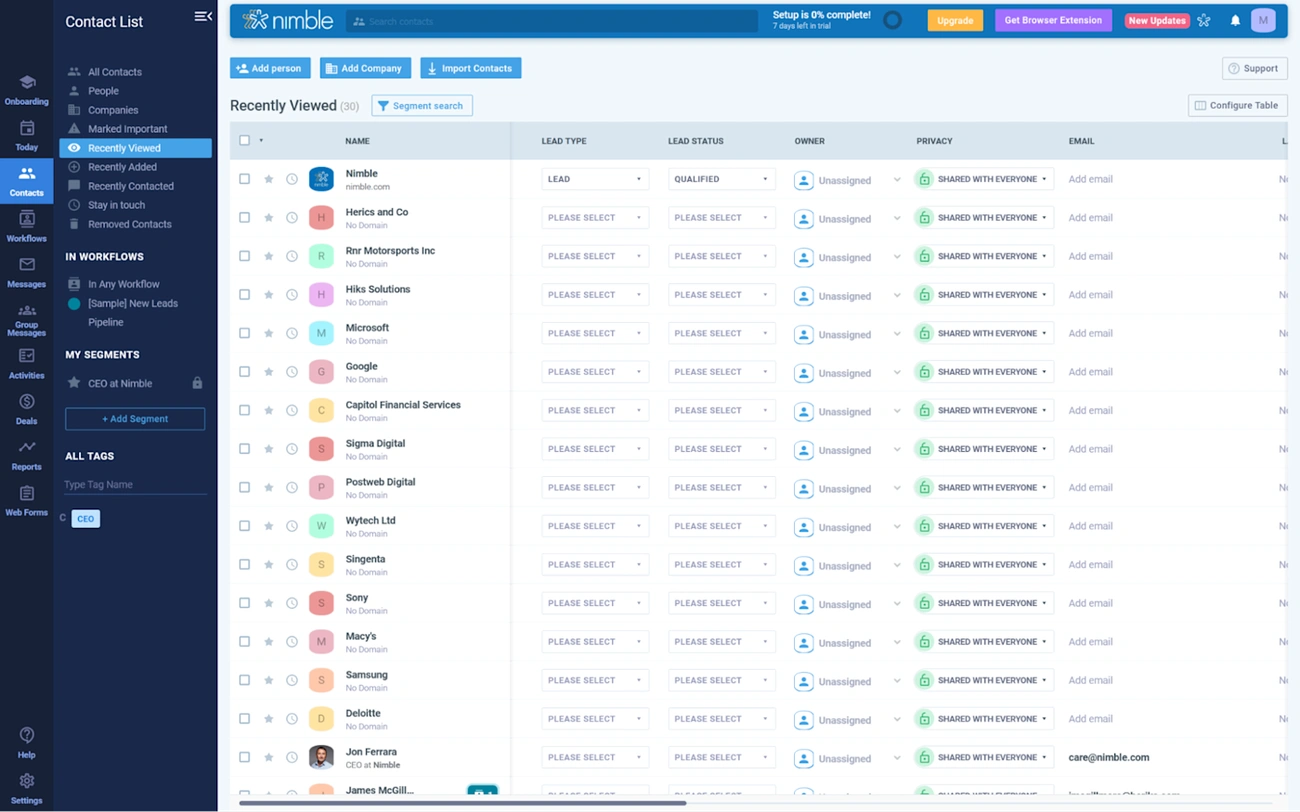
Image Source: Zapier
Choosing the right account management software can feel daunting with countless options in the market. Our team tested numerous platforms and gathered user feedback to identify eight outstanding solutions for 2025. Each platform shines in its unique way.
1. Planhat – Best for customer success teams
Planhat offers a complete platform built specifically for customer success teams who want to build stronger client relationships. The platform's health scoring system spots at-risk customers before issues grow bigger. Teams can keep track of customer status through centralized note-taking and health monitoring features. Planhat users see a 20% boost in customer retention, which proves its real-life application value. The platform turns scattered customer data into useful information, and 87% of current users would recommend it.
2. Canopy – Best for tax professionals
Canopy creates specialized account management tools that tax professionals and accounting firms need. The platform comes with complete document management tools, including virtual storage, AI-powered file naming, and built-in eSignature. Clients can upload documents, check files, and use a mobile app on the go. Tax experts value Canopy because it lets them get tax transcripts electronically and exchange documents safely with clients. The platform serves as a central hub for all client work.
3. Bitrix24 – Best for team collaboration
Bitrix24 makes shared work easier through its collection of integrated tools. Teams can chat, hold video calls with 100+ people, share files, and manage projects in one place. The platform's AI assistant helps create content and generate ideas. Teams can work safely with outside partners like freelancers and clients through workgroup features. Account managers who work across departments or handle multiple client projects find Bitrix24 especially helpful.
4. Revamp CRM – Best for ecommerce businesses
Revamp CRM connects directly with BigCommerce, Shopify, and WooCommerce. Businesses can track customer data, handle sales pipelines, and organize contacts all in one place. Users love how they can monitor both sales history and email marketing together. Many call it "the best CRM for eCommerce" they've found. Online retailers get resilient infrastructure at $19 per month.
5. EngageBay – Best for small businesses
EngageBay creates an all-in-one CRM solution that helps small businesses grow. Sales pipeline management, contact organization, and marketing automation tools cost just $13.79 monthly. Sales teams can track leads until deals close, while managers watch account activities across all contact points. A 9.2/10 G2 rating shows EngageBay works well for businesses that need powerful yet affordable account management tools.
6. Kapta – Best for strategic account management
Kapta takes account management beyond traditional CRM. AI helps detect customer issues early, while health scoring prevents customer loss and whitespace analysis finds upsell opportunities. Account managers can understand client organizations better through org chart visualization. Companies using Kapta find 17% more upsell opportunities, making it perfect for high-value strategic accounts.
7. Freshworks – Best for AI-powered insights
Freshworks excels with its Freddy AI technology that brings analytical insights to account management teams. Contact and account management work alongside deal insights and visual pipeline tools. The AI handles routine tasks while providing applicable information for smarter decisions. The user-friendly design and quick setup make Freshworks stand out from competitors. Users report better response times and higher productivity.
8. ClientShare – Best for shared client portals
ClientShare masters Quarterly Business Review (QBR) management through its Pulse platform. Half of FTSE 100 and one-third of S&P companies use it to spot risky accounts and find growth chances. Teams can run business reviews, measure NPS and CSAT, and build stronger client relationships. Users say ClientShare has been "instrumental in key contract retention," helping one company reach 98% retention after implementation.

Your Accounts Deserve Smarter Management
Uncover the best 2025 software to streamline workflows and grow revenue fast with SalesPlay.
View Interactive Demo
Key Features to Look for in Account Management Software
Selecting the perfect account management platform for your business needs requires identifying essential features that drive results. Success in account management software depends on several core capabilities that work together to improve client relationships.
Sales pipeline and opportunity tracking
Quality sales pipeline features help organize your prospects and deals visually through various stages. Top account management software has kanban-style dashboards that show your entire sales funnel. Teams can easily move deals as they progress through different stages with this clear visualization.
Look for tools that have AI-powered insights beyond simple tracking. These tools identify deals most likely to close or miss targets. Account managers can prioritize their efforts and focus on high-value chances. This helps businesses optimize resources and improve conversion rates.
The best systems track velocity and report on sales pipeline speed to identify process bottlenecks. Software that has customizable stages works best to match your unique sales workflows.
Client communication and collaboration tools
Quality client interaction capabilities are the foundations of any resilient account management solution. Platforms should have integrated communication channels with secure messaging, email templates, and built-in client portals for document exchange. Teams can maintain clear communication with clients without switching between multiple applications.
End-to-end encryption and role-based access controls protect sensitive client information, making secure document management essential. Video conferencing capabilities have also become crucial, as many platforms now include these features.
Team collaboration features aid work between internal departments. The most effective tools have workgroup features that enable secure collaboration with external users like freelancers and clients.
Custom dashboards and reporting
Strong reporting capabilities turn raw data into applicable information. Software should have customizable dashboards where users see key metrics quickly. Personalized views help teams focus on specific priorities without distraction.
Data visualization tools present complex information through intuitive charts and graphs. Advanced solutions have interactive reporting that lets users examine specific data points, filter information, and customize views based on their needs.
Account management platforms should have pre-built report templates and customization options. This makes it easy to generate insights about client activity, task completion, and revenue.
Automation and workflow management
Automation features boost productivity by handling routine tasks. Quality account management software has:
-
Automated deadline reminders to prevent missed follow-ups
-
Pre-built workflow templates for common processes
-
Task creation and assignment capabilities
-
Up-to-the-minute progress tracking across projects
Automated notifications keep both account managers and clients informed about critical milestones and project updates. This reduces manual work while improving client service consistency.
Security and compliance features
Data protection matters greatly since account management software stores sensitive client information. Leading platforms provide security through multi-factor authentication (MFA). Users must verify their identity through multiple methods before accessing accounts.
Quick identification and fixing of vulnerabilities happen through regular security audits and updates. Access control mechanisms let administrators specify who can see financial information, which keeps sensitive data protected.
Businesses handling financial information must comply with industry regulations. Choose software that follows industry protocols strictly and monitors potential security threats continuously.
STOP CHASING PROSPECTS
START CLOSING DEALS!!
How We Evaluated These Tools
My systematic approach to identify the best account management solutions emerged after I examined dozens of account management platforms. The assessment focused on five vital areas that show whether a tool delivers results in real-life business environments.
Core functionality and use cases
The essential account management capabilities became my primary assessment criterion. Each tool needed to excel at:
-
Managing customer accounts and storing data securely
-
Tracking sales pipelines and opportunities
-
Automating routine communication tasks
-
Generating detailed reports on client activity
I looked beyond these simple features to find standout capabilities that solved specific business challenges. AI-powered features like conversation intelligence software have gained importance as companies want to scale support operations without adding more staff. Each platform's capability to give detailed account views helped combine all customer interactions, purchase history, and relationship data in one place.
Ease of use and onboarding
User experience determines implementation success. The assessment covered interface design, learning curve, and accessibility across devices. The best account management solutions provided an accessible interface with quick access to key features and customizable user settings that adapted to different workflows.
The onboarding experience received special attention through available training resources such as interactive product tours, template libraries, and instructional videos. Data migration became straightforward with the best platforms, which matters because this process costs time and money when implementing new account management solutions.
Integration with CRM and other tools
Account management software must blend naturally with existing business systems. The assessment included each platform's API capabilities and connection options with popular CRM systems, project management tools, and communication platforms.
Tools that eliminated data silos and ensured company-wide information consistency ranked high. The best integrations enabled automatic synchronization between systems and eliminated duplicate data entry while maintaining data integrity. This integration capability helps businesses gain data-based insights from their entire company infrastructure.
Customer support and documentation
Quick issue resolution needs reliable customer support. Support channels (phone, email, chat), response times, and help documentation availability underwent thorough assessment. The best account management solutions offered detailed knowledge bases, regular updates, and personalized assistance for complex issues.
Value for money and pricing flexibility
The final analysis focused on pricing structures to find solutions with the best return on investment. Competitive pricing, cost transparency, discount availability, and flexible pricing tiers became key factors.
Different pricing models received careful consideration, including subscription-based, freemium, per-user, and pay-as-you-go options. Platforms offering adaptable options stood out because they adjusted to changing team sizes and evolving business requirements. The top solutions matched their value to their price point without hiding fees for essential features like data migration or integration capabilities.
Emerging Trends in Account Management Solutions
Technology and innovation are changing the account management world faster than ever. Organizations will approach account management differently as we head into 2025. Several key developments shape this transformation.
AI and conversation intelligence software
Artificial intelligence has revolutionized account management completely. A newer study, published in 2023 by McKinsey shows AI could take over about 30% of work hours through autonomous AI by 2030. This technology helps understand customer businesses better by 72% and makes identifying non-competitive deals 23% more efficient. AI-powered tools now generate organization charts and relationship maps automatically, which saves account managers almost 20 hours each week.
AI-powered conversation intelligence software analyzes sales conversations and gives managers evidence-based insights about team, seller, and call performance. Teams can spot risks and opportunities easily as these tools create transcripts, mark crucial moments, and show customer sentiment.
Customer journey mapping
AI has made journey mapping tools better at understanding customer behaviors and priorities. Complex data becomes easier to interpret with improved visualization features, and some platforms now offer 3D mapping with dynamic visual elements. Mapping across channels like social media, email, and in-store interactions helps businesses create consistent experiences.
Remote collaboration features
Account management tools have adapted to new work patterns, with 12.7% of full-time employees working remotely and 28.2% following a hybrid model. Teams can work together from anywhere using virtual collaboration solutions. Collaborative employees stick to tasks 64% more often than solo workers. Companies save about $11,000 per remote employee yearly on office expenses.
Data privacy and compliance upgrades
Regulatory changes have made privacy management features essential. The EU has created the world's first AI regulation. Modern data privacy tools handle compliance requirements automatically while showing a complete picture of customer data sources, storage, and access.
Integration of IoT and real-time analytics
Real-time data processing capabilities help account managers get instant insights from connected devices and customer interactions. Account managers can now take proactive steps and create individual-specific experiences based on actual usage patterns and behaviors.
How to Choose the Right Software for Your Business
Your organization needs the right account management software. A step-by-step approach will give you the best value for your investment.
Assessing your business size and needs
Your unique requirements should guide your choice based on transaction volume, industry regulations, and specific processes. Retail businesses need inventory management features. Consulting firms focus more on project-based accounting. The right system should handle your current operations and adapt to your growth.
Evaluating integration with existing tools
Your current tech stack needs to work naturally with the new software. Account management software should blend with email marketing platforms, CRM systems, and financial software. Your team members will access updated information without switching between applications. This makes collaboration and work more efficient.
Considering scalability and future growth
The best solutions provide:
-
Flexible features with customizable add-ons
-
Adaptable user interfaces that grow with your team
-
Integration capabilities with other business tools
Budgeting and pricing models
Look beyond the initial price tag at expenses for upgrades, customer support, and system integration. You'll find various pricing options like subscription-based, per-user, usage-based, and freemium models.
Trial periods and demos
Most providers give you free versions or trials of their software. These test periods help you review the functionality before spending money, just like when you test-drive a car.
STOP GUESSING YOUR PIPELINE
START GROWING IT WITH AI SALES!!
Conclusion
Account management software has evolved from simple client tracking tools into detailed platforms that simplify business operations and build stronger customer relationships. This piece shows how these specialized solutions are nowhere near traditional CRMs. They focus on nurturing existing relationships instead of just getting new customers.
The right account management platform you pick ends up depending on your specific business needs. Small businesses might love EngageBay's affordable yet powerful features. Enterprise organizations that handle strategic accounts could get more value from Kapta's advanced relationship mapping capabilities. Whatever your company size, your software should have everything in sales pipeline tracking, client communication tools, custom reporting, and resilient security measures.
The account management world is changing faster than ever. AI-powered features now help teams learn about customer behaviors better. Remote collaboration tools let teams work efficiently from anywhere. On top of that, data privacy capabilities have become crucial as regulatory requirements change worldwide.
You should take advantage of free trials and demos to test how each platform fits your processes. Think over both your current needs and future growth plans. The right software becomes your powerful ally and helps your team create stronger client relationships while improving operations.
Your business needs an account management solution that turns customer data into useful insights. These tools deliver great returns through better client retention, more upsell opportunities, and personalized service when used right. Time spent finding the perfect platform pays off through stronger client relationships and green business growth.
Frequently Asked Questions (FAQs)
Q1. What are the key differences between account management software and traditional CRM?
Account management software focuses on nurturing existing customer relationships, while traditional CRM primarily deals with creating and converting sales pipelines. Account management tools offer features like relationship mapping, health scoring, and whitespace analytics, which are often lacking in CRMs.
Q2. How can AI improve account management processes?
AI in account management can automate routine tasks, provide predictive insights for deal closure, analyze customer sentiment from conversations, and generate organization charts. This technology can significantly improve efficiency and help identify risks and opportunities in client relationships.
Q3. What security features should I look for in account management software?
Look for multi-factor authentication, end-to-end encryption, role-based access controls, and regular security audits. The software should also comply with industry-specific regulations and offer continuous monitoring of potential security threats.
Q4. How do I choose the right account management software for my business?
Assess your business size and specific needs, evaluate integration capabilities with your existing tools, consider scalability for future growth, analyze pricing models, and take advantage of free trials or demos. The ideal solution should address both your current operations and support your future expansion plans.
Q5. What are some emerging trends in account management solutions?
Key trends include AI and conversation intelligence software, advanced customer journey mapping, enhanced remote collaboration features, improved data privacy and compliance tools, and the integration of IoT for real-time analytics. These innovations are reshaping how businesses approach account management and customer relationships.
Make Every Rep Speak
Like Your Top 1%