Sales Automation Guide: Transform Your Sales Process in 2025
August 22, 2025
The sales landscape has fundamentally shifted. What worked five years ago—manual prospecting, generic email sequences, and gut-feeling forecasting—now leaves revenue operations teams scrambling to keep up with sophisticated buyers and accelerated decision cycles.
In 2025, the most successful sales organizations aren't just using tools for sales; they're leveraging intelligent automation platforms to transform every stage of their sales process. From account intelligence that reveals hidden opportunities to AI for sales that powers conversation analysis and surfaces winning strategies, modern sales automation tools have evolved far beyond simple email scheduling.
As the MarketsandMarkets SalesPlay team, we've analyzed hundreds of sales automation tool implementations and identified the patterns that separate high-performing revenue operations teams from those still struggling with manual processes. This comprehensive guide reveals exactly how to choose the best sales tools and optimize them to drive measurable results in 2025.
Current Market Reality: Organizations using comprehensive sales automation tools report a 14.5% increase in sales productivity and 12.2% reduction in marketing overhead, according to MarketsandMarkets SalesPlay research. Yet 67% of sales teams still rely on manual processes for critical activities like lead qualification and opportunity scoring.
The gap between early adopters of AI sales tools and laggards continues to widen. Companies that have successfully implemented the right sales automation tools aren't just seeing incremental improvements—they're experiencing fundamental transformations in how they identify, engage, and convert prospects.
Several converging trends are making sales automation tools not just beneficial but essential for competitive survival:
Buyer Sophistication: Modern B2B buyers complete 67% of their research before engaging with sales teams, demanding more personalized and relevant interactions that only advanced sales automation tools can deliver at scale
Data Abundance: The average enterprise generates 2.5 quintillion bytes of data daily, but less than 23% is actionable without intelligent sales automation tools to process and analyze it
Shortened Sales Cycles: Decision timelines have compressed by an average of 18% since 2022, requiring faster response and more efficient qualification processes enabled by automation tools
Remote Selling Complexity: With 78% of sales interactions happening virtually, traditional relationship-building approaches need enhancement from conversation intelligence and other advanced tools
Pro Tip from SalesPlay on Choosing Sales Automation Tools
The most successful sales automation tool implementations don't replace human expertise—they amplify it. Focus on automating prospecting and repetitive tasks while empowering your team to spend more time on high-value activities like strategic relationship building and complex problem-solving. When comparing sales automation tools, prioritize those that enhance rather than replace human judgment.
Today's sales automation tools have evolved far beyond basic CRM functionality. Modern sales automation platforms integrate artificial intelligence, machine learning, and predictive analytics to provide capabilities that were impossible just a few years ago:
Predictive Lead Scoring Tools: AI algorithms in modern sales automation tools analyze thousands of data points to identify prospects most likely to convert
Dynamic Content Personalization: Advanced automation tools create tailored messaging based on prospect behavior, industry, and engagement history
Conversation Intelligence: Natural language processing in cutting-edge sales automation analyzes sales calls to identify successful patterns and coaching opportunities
Revenue Forecasting: Machine learning models within sales tools provide accurate pipeline predictions based on historical data and current market conditions
These capabilities, when properly implemented through integrated sales automation tools, create a multiplier effect that dramatically increases sales team effectiveness. MarketsandMarkets SalesPlay data shows that organizations leveraging advanced sales automation tools achieve 23% higher win rates compared to those using basic automation solutions.
STOP GUESSING YOUR PIPELINE
START GROWING IT WITH AI SALES!!
The sales automation tools landscape encompasses a diverse ecosystem of specialized solutions, each designed to optimize specific aspects of the sales process. Understanding these sales automation tool categories and their capabilities is crucial for building an effective automation strategy that delivers ROI.
Customer Relationship Management (CRM) Platforms serve as the foundation layer of any sales automation stack, managing contact data, opportunity tracking, and basic workflow automation. However, modern CRM systems have evolved to include AI-powered features like predictive analytics and automated data entry, making them essential tools rather than just databases. CRM automation has become a key focus for many organizations looking to streamline their sales processes.
Sales Engagement Platforms represent the next tier of sales automation tools, orchestrating multi-channel outreach sequences that combine email, phone, and social media touchpoints in coordinated campaigns. These tools use behavioral triggers and engagement scoring to optimize timing and messaging automatically, enhancing sales enablement efforts.
Account Intelligence Tools represent perhaps the most significant advancement in B2B sales automation tools. These platforms aggregate and analyze vast amounts of data about target accounts, providing insights that would be impossible to gather manually and transforming how sales teams prioritize and approach prospects.
Key Takeaway on Sales Automation Tools ROI
MarketsandMarkets SalesPlay research indicates that account intelligence tools deliver the highest ROI among sales automation tools categories, with users reporting 34% improvement in qualification accuracy and 28% reduction in sales cycle length when properly implemented.
The integration of artificial intelligence has transformed sales automation tools from simple task execution to intelligent decision support. Modern AI sales platforms offer sophisticated capabilities that continuously learn and improve performance:
Predictive Lead Scoring: Machine learning algorithms in advanced tools analyze historical conversion data, current market conditions, and prospect behavior to assign dynamic scores that indicate likelihood to purchase
Opportunity Risk Assessment: AI models within automation tools identify deals at risk of stalling or losing by analyzing communication patterns, engagement levels, and competitive intelligence
Next Best Action Recommendations: Intelligent sales automation tools provide real-time guidance on optimal follow-up strategies based on prospect stage, behavior, and successful historical patterns
Automated Insights Generation: Modern sales automation tools surface actionable insights from large datasets, highlighting trends, opportunities, and potential issues that human analysis might miss
Conversation intelligence represents one of the most impactful developments in sales automation tools. These solutions record, transcribe, and analyze sales conversations to extract valuable insights about buyer needs, competitive positioning, and successful messaging strategies that can transform team performance.
Key capabilities of conversation intelligence sales automation tools include:
Talk Time Analysis: Identifying optimal conversation balance between sales rep and prospect to improve engagement
Sentiment Detection: Recognizing emotional cues and engagement levels throughout conversations to inform follow-up strategy
Keyword Tracking: Monitoring mentions of competitors, pain points, and buying signals to provide actionable intelligence
Coaching Recommendations: Providing specific feedback on questioning techniques, objection handling, and closing strategies based on successful patterns
Implementation Warning
While conversation intelligence offers powerful capabilities, successful implementation requires careful change management. Sales teams may initially resist call recording and analysis. Focus on positioning these sales automation tools as coaching aids rather than monitoring systems to ensure adoption.
The effectiveness of sales automation tools depends heavily on their ability to integrate seamlessly with existing systems and share data across platforms. Modern tools stacks typically include 8-12 different solutions, making integration architecture a critical success factor.
Key integration requirements when evaluating sales automation tools include:
Bidirectional Data Sync: Ensuring information flows seamlessly between CRM, marketing automation, and sales engagement platforms without manual intervention
Real-Time Updates: Maintaining current data across all automation tools to prevent outdated information from driving incorrect automation decisions
Unified Analytics: Creating comprehensive reporting that spans multiple tools to provide complete performance visibility
Workflow Orchestration: Enabling complex, multi-system processes that trigger actions across different sales automation tools based on specific conditions
The sales intelligence solution architecture developed by MarketsandMarkets SalesPlay provides a framework for designing integration strategies that maximize sales automation tools effectiveness while minimizing complexity.
Our comprehensive tool selection guide helps you evaluate options based on your specific requirements.
Ready to turn your Rep
INTO BEST PERFORMER ?
Selecting the right sales automation tools requires understanding not just individual platform capabilities, but how different solutions work together to create a cohesive automation strategy. Based on extensive analysis and client implementations, the MarketsandMarkets SalesPlay team has identified the most effective sales automation tools categories and specific platforms driving results in 2025.
While CRM selection often depends on organizational size and specific requirements, certain platforms have emerged as leaders in automation capability and AI integration:
|
Platform Category |
Key Automation Features |
Best Use Cases |
SalesPlay Integration |
|
AI-Enhanced CRM |
Predictive scoring, automated data entry, intelligent workflows |
Large enterprises with complex sales processes |
Native API integration for enhanced analytics |
|
Sales-Focused Platforms |
Pipeline management, activity tracking, performance analytics |
Mid-market companies prioritizing sales efficiency |
Bi-directional data sync for comprehensive insights |
|
Industry-Specific Solutions |
Vertical-specific workflows, compliance automation, specialized reporting |
Organizations in regulated or specialized industries |
Custom integration for industry-specific intelligence |
SalesPlay Insights
Our research shows that organizations achieve 31% better automation ROI when they prioritize integration capability over individual feature richness. The best sales automation tools are the ones that connect seamlessly with your existing tech stack rather than offering the longest feature list.
Sales engagement platforms have become essential sales automation tools for managing complex, multi-touch outreach campaigns. The most effective solutions combine automation sophistication with personalization capabilities:
Sequence Automation Leaders: Sales automation tools that excel at creating sophisticated, branching email sequences with behavioral triggers and dynamic content insertion
Multi-Channel Orchestrators: Tools that coordinate email, phone, social media, and direct mail touchpoints in unified campaigns
Personalization Engines: Sales automation that use AI to customize messaging at scale while maintaining authentic, human-like communication
Performance Optimizers: Platforms that continuously test and improve campaign elements through automated A/B testing and machine learning
The most successful implementations combine multiple sales automation tools strategically rather than relying on a single solution. For example, using a specialized email automation platform for sophisticated nurturing sequences while leveraging a different tool for social media automation and phone prospecting workflows.
Account intelligence tools have become the differentiating factor in modern B2B sales. These sales automation tools aggregate data from hundreds of sources to provide comprehensive account insights that inform automation decisions:
Impact Data: MarketsandMarkets SalesPlay clients using advanced account intelligence sales automation tools report 42% improvement in initial meeting conversion rates and 27% increase in average deal size.
Critical capabilities to evaluate when comparing account intelligence sales automation tools include:
Data Aggregation Breadth: The number and quality of data sources integrated into the platform
Real-Time Updates: How quickly the system reflects changes in account status, personnel, or business conditions
Predictive Analytics: The sophistication of algorithms used to identify buying signals and opportunity indicators
Integration Capabilities: How seamlessly the platform shares insights with CRM and other automation tools
Custom Alert Configuration: The flexibility to set up automated notifications based on specific account changes or threshold events

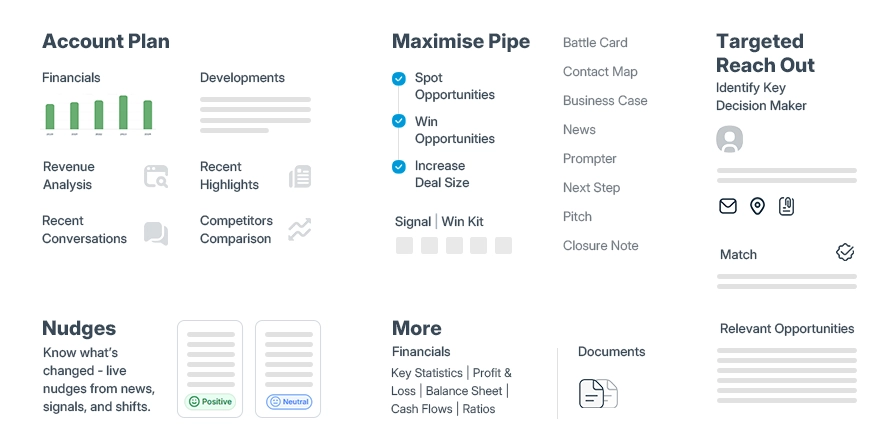
The conversation intelligence category has matured rapidly, with several sales automation tools platforms now offering sophisticated analysis capabilities that directly impact sales performance:
Market Leaders typically offer comprehensive conversation analytics, including sentiment analysis, competitive intelligence extraction, and coaching recommendations based on successful call patterns.
Specialized Solutions focus on specific aspects like objection handling analysis, discovery question optimization, or closing technique improvement.
Integrated Platforms combine conversation intelligence with other sales automation tools capabilities, creating unified systems that use call insights to optimize email sequences, update CRM records, and trigger follow-up actions automatically.
Implementation Strategy
Start with conversation intelligence sales automation tools that offer the strongest integration capabilities with your existing CRM and sales engagement platforms. The value multiplies when call insights automatically inform other automation processes rather than existing in silos.
Revenue intelligence platforms represent the evolution of sales forecasting from spreadsheet-based guesswork to AI-powered prediction. These sales automation tools analyze pipeline data, historical patterns, and external factors to provide accurate revenue forecasts and risk assessments.
The future of revenue intelligence lies in platforms that combine multiple data sources and use machine learning to continuously improve prediction accuracy. Key features to evaluate when comparing revenue intelligence sales automation tools include:
Multi-Variable Analysis: Platforms that consider deal characteristics, rep performance, market conditions, and historical data simultaneously
Risk Identification: Tools that flag deals at risk of slipping or losing based on activity patterns and engagement metrics
Scenario Planning: Systems that allow modeling different outcomes based on various assumptions and market conditions
Actionable Recommendations: Platforms that not only predict outcomes but suggest specific actions to improve results
Organizations implementing advanced revenue intelligence sales automation tools report 19% improvement in forecast accuracy and 24% better quota attainment, according to MarketsandMarkets SalesPlay benchmark data.
Understanding the distinction between revenue intelligence and traditional sales forecasting is crucial for selecting sales automation tools that will actually impact sales performance rather than simply digitizing existing processes.
Let our experts help you create a custom sales automation tool stack that maximizes automation ROI for your specific situation.
Schedule a Strategy Consultation
Successful automation tools implementation requires a systematic approach that balances technological capability with organizational change management. The MarketsandMarkets SalesPlay team has developed a proven methodology that ensures sales automation tools initiatives deliver measurable results rather than creating expensive complexity.
Before selecting sales automation tools or designing workflows, organizations must thoroughly understand their current state and define specific automation objectives. This foundation phase determines the success of the entire sales automation tools implementation.
Current State Analysis involves documenting existing sales processes, identifying manual bottlenecks, and quantifying the time and resources spent on repetitive tasks. The most effective approach combines process mapping with actual time tracking to create accurate baseline measurements before implementing sales automation tools.
Critical Success Factor for Sales Automation Tools
MarketsandMarkets SalesPlay research shows that organizations spending at least 40 hours on current state analysis achieve 73% higher sales automation tools ROI compared to those that skip this step.
Key assessment areas include:
Process Documentation: Mapping current sales workflows from initial prospecting through deal closure and account expansion
Technology Audit: Inventorying existing tools, integration points, and data quality issues
Performance Baselines: Establishing current metrics for conversion rates, cycle times, and productivity measures
Resource Allocation: Understanding how sales team members currently spend their time and identifying high-value activities
Pain Point Prioritization: Ranking the most significant obstacles to sales efficiency and effectiveness
Automation Strategy Design translates assessment findings into specific automation objectives with measurable success criteria. This phase requires balancing ambitious goals with realistic implementation timelines and change management capabilities.
With clear requirements and success criteria established, the tool selection process becomes more strategic and less overwhelming. The MarketsandMarkets SalesPlay tool selection framework evaluates sales automation platforms across multiple dimensions:
Functional Fit: How well the sales automation tools address specific process requirements and pain points
Integration Capability: The platform's ability to connect with existing systems and share data seamlessly with other sales automation tools
Scalability: Whether the sales automation solution can grow with organizational needs and handle increased volume
User Experience: The learning curve and daily usability for sales team members using the sales automation tool
Total Cost of Ownership: Including licensing, implementation, training, and ongoing maintenance costs of sales automation tool
Common Pitfall
Many organizations focus too heavily on feature checklists and neglect integration requirements when comparing sales automation tools. A tool with fewer features that integrates seamlessly often delivers better results than a feature-rich platform that creates data silos.
Integration Architecture Planning determines how different automation tools will connect and share data to create unified workflows. Modern sales automation tools stacks typically involve 6-10 different platforms, making integration strategy crucial for success.
Critical integration considerations for sales automation tools include:
Data Flow Design: Mapping how information moves between sales automation systems and identifying potential bottlenecks or quality issues
Single Source of Truth: Establishing which system serves as the authoritative source for different types of data across sales automation tools
Real-Time vs. Batch Processing: Determining which sales automation tools integrations require immediate updates and which can use scheduled synchronization
Error Handling: Planning how the sales automation tools system will manage integration failures and data conflicts
STOP CHASING PROSPECTS
START CLOSING DEALS!!
Rather than attempting organization-wide deployment, successful sales automation tools implementations start with carefully selected pilot programs that provide learning opportunities and build confidence in the new approach.
Pilot Scope Definition involves selecting a subset of the sales team, specific processes, or particular customer segments for initial sales automation tools implementation. The most effective pilots balance learning opportunities with manageable complexity.
Ideal pilot characteristics for sales automation tools implementation:
Representative Sample: The pilot group should reflect the broader organization's challenges and opportunities
Measurable Outcomes: Clear metrics that can be tracked and compared to baseline performance before sales automation tools
Manageable Scope: Limited enough to allow intensive support and rapid iteration of tools configuration
Champion Participation: Including sales team members who are enthusiastic about sales automation and can influence others
Pilot Success Metrics: MarketsandMarkets SalesPlay data shows that successful sales automation tools pilots typically achieve 15-25% improvement in target metrics within 60-90 days, providing confidence for broader rollout.
Iterative Optimization during the pilot phase allows organizations to refine sales automation workflows, adjust tool configurations, and address user feedback before wider deployment. This approach prevents small issues from becoming major problems during full sales automation tools implementation.
Expanding from successful pilot programs to organization-wide sales automation tool implementation requires careful planning and strong change management practices. Technical deployment is often the easier aspect—cultural adoption of sales automation tools typically presents the greater challenge.
Training and Enablement must address both technical skills and behavioral changes required for sales automation tools success. The most effective programs combine multiple learning modalities and provide ongoing support beyond initial training.
Essential training components for sales automation tools include:
Technical Proficiency: Hands-on training with each sales automation tool and integrated workflow
Process Understanding: Clear explanation of new workflows and the reasoning behind sales automation tool changes
Performance Expectations: Specific metrics and success criteria for individual team members using sales automation
Ongoing Support: Accessible resources for questions, troubleshooting, and advanced sales automation tools techniques
Performance Monitoring and Optimization ensures the sales automation tools system continues delivering value as market conditions change and the organization grows. Regular performance reviews identify opportunities for additional optimization and expansion of sales automation capabilities.
Long-Term Success Strategy
Create a continuous improvement culture around sales automation tools. Schedule monthly reviews to assess performance, identify new opportunities, and adapt to changing business conditions. Automation is not a "set it and forget it" solution—it requires ongoing attention to maximize value.
For organizations experiencing challenges with existing sales automation tools systems, our guide on fixing failed automation implementations provides specific strategies for turning around underperforming systems.
Access our detailed implementation methodology and get expert guidance for your automation journey.
STOP GUESSING YOUR PIPELINE
START GROWING IT WITH AI SALES!!
Account intelligence represents the most transformative advancement in B2B sales automation tools, fundamentally changing how sales teams identify, prioritize, and engage target accounts. These sophisticated sales automation tools platforms aggregate vast amounts of data from multiple sources to provide actionable insights that would be impossible to gather manually.
Traditional account research involved hours of manual investigation across company websites, news sources, and social media platforms. Sales representatives would spend significant time gathering basic information about prospects, often working with outdated or incomplete data.
Modern account intelligence sales automation tools automate this process while providing far more comprehensive and current insights. These platforms continuously monitor thousands of data sources, including:
Corporate Filings and Financial Reports: Revenue trends, profitability indicators, and strategic initiatives
News and Media Coverage: Company announcements, executive changes, and market developments
Social Media Activity: Executive posts, company updates, and industry engagement
Technology Deployment: Software installations, infrastructure changes, and digital transformation initiatives
Personnel Changes: New hires, departures, and organizational restructuring
Competitive Intelligence: Market positioning, pricing changes, and strategic partnerships
Regulatory and Compliance Updates: Industry-specific requirements and compliance status changes
Performance Impact
MarketsandMarkets SalesPlay analysis shows that sales teams using advanced account intelligence tools achieve 38% higher initial meeting acceptance rates and 29% shorter sales cycles compared to teams relying on manual research.
Real-Time Trigger Event Detection represents one of the most valuable features of account intelligence sales automation tools. These systems monitor for specific events that indicate increased likelihood of purchase or engagement opportunity:
Leadership Changes: New executives often bring fresh perspectives and budget authority for new initiatives
Funding Events: Investment rounds, acquisitions, or significant contracts indicate increased spending capacity
Technology Changes: Software implementations or infrastructure updates may create complementary needs
Expansion Activities: New office openings, market entries, or workforce growth signal scaling requirements
Competitive Developments: Competitor wins or losses may create opportunities for repositioning
Predictive Scoring and Prioritization uses machine learning algorithms to analyze historical data and current account characteristics to predict likelihood of engagement and purchase. This capability helps sales teams focus efforts on accounts with the highest probability of success.
Advanced scoring models in account intelligence sales automation tools consider multiple factors simultaneously:
Firmographic Fit: Company size, industry, location, and other basic characteristics
Technographic Profile: Current technology stack and digital maturity indicators
Intent Signals: Research behavior, content consumption, and competitive analysis activity
Relationship Mapping: Existing connections, warm introduction opportunities, and influencer networks
Timing Indicators: Budget cycles, contract renewal dates, and strategic planning periods
Understanding the distinction between sales intelligence software and platforms is crucial for making appropriate sales automation tools selections. This difference significantly impacts both functionality and implementation approach.
Sales Intelligence Software typically focuses on specific functions like contact discovery, email finding, or basic company research. These sales automation tools excel at particular tasks but require integration with other systems to create comprehensive workflows.
Sales Intelligence Platforms provide broader functionality that spans multiple aspects of the sales process. These sales automation tools solutions often include account research, contact management, engagement tracking, and analytics in unified systems.
|
Aspect |
Software Solutions |
Platform Solutions |
|
Scope |
Specialized, focused functionality |
Comprehensive, multi-functional |
|
Integration |
Requires multiple tool integration |
Built-in workflow connectivity |
|
Cost Structure |
Lower individual cost, higher total cost |
Higher individual cost, potentially lower total cost |
|
Implementation |
Faster individual deployment |
Longer implementation, simpler ongoing management |
Modern B2B sales intelligence platforms have evolved to address the complexity of enterprise sales cycles and the need for sophisticated account-based selling approaches.
Account Mapping and Relationship Intelligence helps sales teams understand complex organizational structures and identify key decision-makers and influencers. Advanced sales automation tools platforms use AI to analyze communication patterns, organizational charts, and public information to create comprehensive stakeholder maps.
Key relationship intelligence features in B2B sales automation tools include:
Organizational Chart Construction: Automated mapping of reporting relationships and departmental structures
Decision Maker Identification: AI-powered analysis to identify individuals with purchase authority or significant influence
Champion Recognition: Systems that identify potential advocates based on engagement patterns and role characteristics
Warm Introduction Pathways: Mapping potential connection routes through existing relationships and network analysis
Make Every Rep Speak
Like Your Top 1%
Advanced Strategy
Use relationship intelligence to design multi-threaded sales approaches that engage multiple stakeholders simultaneously. MarketsandMarkets SalesPlay data shows that deals with 3+ engaged stakeholders have 67% higher close rates.
Intent Data and Buying Signal Detection represents another significant advancement in sales intelligence platform tools. These systems monitor online behavior to identify accounts actively researching solutions or showing other indicators of purchase intent.
Intent signals tracked by advanced sales automation tools include:
Content Consumption: Downloads, webinar attendance, and research report access
Search Behavior: Solution-related queries and competitive research activity
Website Engagement: Time spent on specific pages, repeat visits, and content sharing
Social Media Activity: Posts about challenges, solution requests, and vendor evaluations
Predictive sales intelligence uses machine learning algorithms to analyze historical data, current market conditions, and account characteristics to forecast future sales outcomes with unprecedented accuracy.
Modern predictive platforms consider hundreds of variables simultaneously, including:
Historical Performance Data: Past conversion rates, cycle times, and deal characteristics
Current Pipeline Metrics: Opportunity stages, engagement levels, and competitive situations
Market Conditions: Economic indicators, industry trends, and seasonal patterns
Sales Rep Performance: Individual track records, activity levels, and skill assessments
Account Characteristics: Company attributes, technology stack, and organizational changes
Accuracy Improvements: Organizations implementing AI-powered predictive intelligence report 31% improvement in forecast accuracy and 24% better quota attainment compared to traditional forecasting methods, according to MarketsandMarkets SalesPlay research.
Real-Time Opportunity Scoring continuously evaluates deal probability based on current activity and engagement patterns. Unlike static scoring models that require manual updates, AI-powered systems adapt to changing conditions and learn from new data continuously.
Advanced scoring considers:
Engagement Quality: Depth and frequency of interactions across stakeholders
Competitive Position: Relative standing compared to other vendors in evaluation
Budget Authority: Confirmed decision-making power and approved spending capacity
Timeline Alignment: Prospect's stated timeline versus typical sales cycle patterns
Solution Fit: Match between prospect needs and available solutions
Successful account intelligence implementation requires careful attention to data quality, user adoption, and integration with existing sales processes. The most common failure points involve overwhelming users with too much information or creating disconnected workflows that don't align with natural sales activities.
Data Quality Management forms the foundation of effective intelligence platforms. Poor data quality undermines even the most sophisticated AI algorithms and erodes user confidence in the system.
Essential data quality practices include:
Source Verification: Ensuring intelligence platforms use authoritative, current data sources
Duplicate Detection: Implementing systems to identify and merge duplicate account records
Accuracy Monitoring: Regular audits to verify information quality and identify systematic issues
User Feedback Integration: Enabling sales teams to report and correct inaccurate information
Workflow Integration ensures that intelligence insights become actionable within existing sales processes rather than creating additional administrative burden.
Adoption Challenge
Many organizations purchase sophisticated intelligence platforms but fail to achieve adoption because insights aren't integrated into daily workflows. Success requires embedding intelligence into existing CRM systems and sales engagement platforms.
Effective integration strategies include:
CRM Embedding: Surfacing relevant intelligence directly within existing account and opportunity records
Alert Automation: Configuring systems to notify sales reps of important account changes or opportunities
Campaign Integration: Using intelligence insights to inform email sequences, call scripts, and meeting agendas
Reporting Integration: Including intelligence metrics in standard sales performance reports and dashboards
Learn how to design and implement account intelligence systems that drive measurable sales performance improvements.
Artificial intelligence has transformed sales from an art based on intuition and experience to a science driven by data and predictive insights. AI sales platforms now provide capabilities that were unimaginable just a few years ago, fundamentally changing how sales teams identify opportunities, engage prospects, and optimize performance.
Modern AI sales platforms leverage multiple technologies simultaneously—machine learning, natural language processing, predictive analytics, and computer vision—to augment human sales capabilities across every aspect of the sales process.
Key AI applications in sales include:
Predictive Lead Scoring: Algorithms that analyze hundreds of variables to identify prospects most likely to purchase
Dynamic Pricing Optimization: AI systems that recommend optimal pricing strategies based on deal characteristics and competitive intelligence
Personalized Content Generation: Natural language processing that creates customized emails, proposals, and presentations at scale
Sales Coaching and Performance Optimization: Machine learning platforms that identify successful patterns and provide specific improvement recommendations
Automated Competitive Intelligence: Systems that monitor competitor activities and provide strategic positioning guidance
Performance Impact: MarketsandMarkets SalesPlay data shows that sales teams using comprehensive AI platforms achieve 23% higher win rates, 18% shorter sales cycles, and 31% improvement in sales productivity compared to teams using traditional methods.
Conversation intelligence represents one of the most impactful applications of AI in sales. These platforms record, transcribe, and analyze sales conversations to extract actionable insights about buyer behavior, successful messaging strategies, and coaching opportunities.
Advanced Natural Language Processing enables modern conversation intelligence platforms to understand context, sentiment, and intent beyond simple keyword recognition. These systems can identify subtle buying signals, competitive mentions, and objection patterns that human analysis might miss.
Core conversation intelligence capabilities include:
Automated Transcription and Summarization: Converting speech to text with high accuracy and generating concise meeting summaries
Sentiment Analysis: Identifying emotional responses and engagement levels throughout conversations
Topic and Keyword Tracking: Monitoring specific subjects, competitor mentions, and product feature discussions
Talk Time and Interaction Analysis: Measuring conversation balance and identifying optimal engagement patterns
Question Quality Assessment: Evaluating discovery questions and providing recommendations for improvement
Objection Identification and Response Analysis: Cataloging objections and analyzing successful handling techniques
Modern conversation intelligence platforms provide real-time coaching capabilities that help sales representatives improve performance during actual sales interactions. These systems can identify opportunities for better questioning, suggest responses to objections, and highlight when to introduce specific topics or solutions.
Live Call Guidance uses AI to analyze conversations in real-time and provide discrete coaching suggestions. This capability helps less experienced representatives handle complex situations and ensures consistent messaging across the sales team.
Real-time features include:
Battle Card Suggestions: Automatically surfacing relevant competitive information and positioning guidance
Next Question Recommendations: AI-powered suggestions for discovery questions based on conversation flow
Objection Response Coaching: Real-time guidance on handling specific objections based on successful historical patterns
Compliance Monitoring: Ensuring regulated industries maintain appropriate language and disclosures
Implementation Best Practice
Introduce conversation intelligence as a coaching tool rather than a monitoring system. Focus on skill development and performance improvement to ensure team adoption and maximize value from the technology.
Post-Call Analysis and Insights provide detailed breakdowns of conversation effectiveness, highlighting successful techniques and identifying areas for improvement. These insights become particularly valuable when aggregated across multiple calls and representatives.
STOP GUESSING YOUR PIPELINE
START GROWING IT WITH AI SALES!!
AI-powered conversation analysis reveals competitive intelligence that would be difficult to gather through other means. By analyzing hundreds or thousands of sales conversations, these platforms identify patterns in competitor positioning, pricing strategies, and customer objections.
Competitive insights generated include:
Competitor Mention Analysis: Frequency and context of competitor discussions across conversations
Win/Loss Pattern Recognition: Identifying factors that correlate with competitive wins and losses
Pricing and Objection Trends: Understanding common price objections and successful negotiation strategies
Feature and Benefit Messaging: Analyzing which product positioning resonates most effectively with prospects
Strategic Value
Conversation intelligence provides a wealth of data for product development, marketing messaging refinement, and overall go-to-market strategy optimization. Ensure insights are shared across departments to maximize organizational impact.
Conversation intelligence provides market insights that inform product development, marketing messaging, and competitive strategy beyond direct sales impact. MarketsandMarkets SalesPlay clients report using conversation insights to influence product roadmaps and marketing campaigns.
The greatest value from conversation intelligence emerges when insights automatically inform other sales automation processes. Modern platforms integrate with CRM systems, sales engagement tools, and marketing automation to create unified, intelligence-driven workflows.
Automated CRM Updates use conversation analysis to populate opportunity records with relevant information, update contact details, and log important meeting outcomes without manual data entry.
Dynamic Follow-Up Sequences leverage conversation insights to customize subsequent outreach based on specific topics discussed, objections raised, or interest levels expressed during calls.
Integration capabilities include:
Implementing conversation intelligence requires careful attention to privacy laws, industry regulations, and organizational policies. Different jurisdictions have varying requirements for call recording consent and data handling.
Consent Management involves establishing clear processes for obtaining and documenting permission to record sales conversations. Many platforms provide automated consent tracking and management capabilities.
Data Security and Retention policies must address how conversation recordings and transcripts are stored, accessed, and eventually deleted. This is particularly important for organizations in regulated industries with specific compliance requirements.
Compliance Requirements
Ensure your conversation intelligence implementation complies with relevant privacy laws (GDPR, CCPA) and industry regulations (HIPAA, SOX) before deployment. Consult legal counsel for specific compliance requirements in your jurisdiction and industry.
Your SDRs work 9–5
AI Sales works 24/7!!
Measuring the impact of AI sales and conversation intelligence requires tracking both quantitative performance improvements and qualitative changes in sales effectiveness.
Key performance indicators include:
Organizations typically see measurable improvements within 90 days of implementation, with continued enhancement as the AI systems learn from more data and sales teams adapt their approaches based on insights.
Discover how AI-powered conversation intelligence can improve your team's performance and accelerate revenue growth.
Successful sales automation implementation requires rigorous measurement and continuous optimization based on performance data. Organizations that fail to establish proper metrics and tracking systems often struggle to demonstrate value and miss opportunities for improvement.
Before implementing any automation tools, organizations must establish accurate baseline measurements across all relevant performance indicators. This foundation enables precise ROI calculation and identifies areas where automation delivers the greatest impact.
Sales Performance Baselines should capture both efficiency and effectiveness metrics across the entire sales process:
Resource Allocation Analysis documents how sales team members currently spend their time, providing critical insights into automation opportunities and expected productivity gains.
Time Allocation Reality: MarketsandMarkets SalesPlay research shows that sales representatives spend only 34% of their time on actual selling activities, with the remainder devoted to administrative tasks, research, and internal meetings.
Common time allocation categories include:
Effective automation measurement requires tracking metrics that directly correlate with business outcomes while providing insights into process efficiency and quality improvements.
Revenue Impact Metrics measure the direct financial benefits of automation implementation:
| Metric | Calculation | Target Improvement | Measurement Frequency |
|---|---|---|---|
| Revenue per Rep | Total Revenue ÷ Number of Reps | 15-25% increase | Monthly |
| Sales Cycle Length | Average days from lead to close | 20-30% reduction | Monthly |
| Win Rate | Closed Won ÷ Total Opportunities | 10-20% improvement | Quarterly |
| Pipeline Velocity | (Opportunities × Win Rate × Average Deal Size) ÷ Sales Cycle | 25-40% increase | Monthly |
Efficiency and Productivity Metrics track how automation affects sales team capacity and resource utilization:
Measurement Best Practice
Focus on leading indicators that predict future performance rather than only lagging indicators that report past results. MarketsandMarkets SalesPlay clients who track leading indicators achieve 28% better forecast accuracy.
Calculating automation ROI requires considering both direct costs and indirect benefits across multiple time periods. Many organizations underestimate ROI by focusing only on obvious benefits while overlooking less visible improvements.
Direct Cost Components include all expenses associated with automation implementation and ongoing operation:
Benefit Quantification must capture both obvious improvements and subtle efficiency gains that compound over time:
ROI Calculation Formula
ROI = (Total Benefits - Total Costs) ÷ Total Costs × 100
Include a 12-month measurement period to capture full implementation benefits. Many organizations see negative ROI in months 1-3 due to implementation costs and learning curves.
Modern sales automation platforms provide sophisticated analytics capabilities that enable continuous performance optimization and strategic insights beyond basic ROI measurement.
Predictive Analytics for Performance Forecasting uses historical data and current trends to predict future performance and identify potential issues before they impact results.
Advanced analytics applications include:
Continuous Optimization Strategies use performance data to identify opportunities for additional automation or process improvements:
Sales automation benefits often extend beyond immediate sales performance improvements to create strategic advantages that compound over time.
Strategic Benefits include capabilities that enable new business models, market expansion, or competitive differentiation:
Long-Term Impact: Organizations with mature automation implementations report 43% higher revenue growth rates and 31% better customer retention compared to companies in early implementation stages, according to MarketsandMarkets SalesPlay longitudinal studies.
Organizational Learning and Capability Development represent often-overlooked benefits that create lasting competitive advantages:
Access our comprehensive measurement framework and optimization strategies to ensure your automation investment delivers maximum value.
STOP GUESSING YOUR PIPELINE
START GROWING IT WITH AI SALES!!
The sales automation tools landscape continues evolving rapidly as artificial intelligence capabilities advance and organizations become more sophisticated in their implementation approaches. Understanding emerging trends helps organizations prepare for the next generation of automation capabilities and competitive requirements.
Generative AI and Large Language Models are beginning to transform content creation, proposal development, and customer communication. These technologies enable automated generation of personalized emails, custom proposals, and even dynamic presentations based on specific prospect characteristics and needs.
Near-term applications include:
Voice Technology and Natural Language Processing are making sales tools more intuitive and reducing the friction between automation systems and daily sales activities.
Augmented Reality and Virtual Selling capabilities are expanding, particularly for complex B2B solutions that benefit from immersive demonstration experiences.
Future Outlook
MarketsandMarkets SalesPlay predicts that by 2027, 78% of sales interactions will involve some form of AI assistance, with generative AI handling 45% of initial prospect communications.
As automation becomes more prevalent, buyer expectations continue rising for personalized, relevant, and timely interactions. Modern B2B buyers expect sales teams to understand their business, anticipate their needs, and provide value from the first interaction.
Hyper-Personalization Requirements mean that generic outreach and standard presentations are increasingly ineffective. Buyers expect communications that demonstrate specific understanding of their industry, company, and individual role challenges.
Key expectation shifts include:
Revenue Operations (RevOps) has emerged as a critical discipline that aligns sales, marketing, and customer success teams around unified processes, technologies, and metrics. This evolution reflects the growing complexity of modern sales automation and the need for coordinated optimization across the entire revenue cycle.
RevOps responsibilities include:
Strategic Recommendation
Organizations implementing comprehensive sales automation should consider establishing dedicated RevOps capabilities. MarketsandMarkets SalesPlay data shows that companies with formal RevOps teams achieve 19% faster revenue growth and 15% higher profitability.
As AI capabilities become more sophisticated, organizations must address ethical considerations around automation, data privacy, and the balance between efficiency and human connection.
Transparency and Disclosure requirements are increasing, with buyers expecting clear indication when they're interacting with automated systems versus human representatives.
Data Privacy and Security considerations become more complex as automation systems collect and analyze increasing amounts of personal and business information.
Key ethical considerations include:
Ready to turn your Rep
INTO BEST PERFORMER ?
Future sales automation tools will integrate more deeply with enterprise resource planning (ERP), customer success, and business intelligence systems to create unified views of customer relationships and business performance.
End-to-End Customer Journey Automation will span from initial awareness through renewal and expansion, with sales automation coordinating seamlessly with marketing automation and customer success platforms.
Financial System Integration will enable real-time visibility into deal profitability, payment status, and customer lifetime value directly within sales workflows.
Sales automation tools in 2025 represents a fundamental shift from manual, intuition-based selling to data-driven, AI-enhanced revenue generation. Organizations that successfully implement comprehensive automation strategies gain sustainable competitive advantages through improved efficiency, enhanced customer experiences, and superior market intelligence.
Based on extensive analysis and client implementations, the MarketsandMarkets SalesPlay team has identified the most important factors that determine automation success:
Bottom Line
Organizations that implement sales automation strategically report average improvements of 23% in sales productivity, 18% reduction in sales cycle length, and 31% increase in win rates. However, success requires commitment to proper implementation methodology and ongoing optimization.
For organizations beginning their automation journey, the MarketsandMarkets SalesPlay team recommends a phased approach that builds capability progressively while delivering measurable results at each stage:
Phase 1: Foundation (Months 1-3)
Phase 2: Acceleration (Months 4-8)
Phase 3: Optimization (Months 9-12)
Understanding why automation initiatives fail helps organizations avoid expensive mistakes and implementation delays. The most common pitfalls include:
Critical Warning
Organizations that rush automation implementation without proper planning achieve 67% lower ROI and have 43% higher implementation failure rates. Invest time in proper planning and phased deployment to ensure success.
Organizations ready to begin or enhance their sales automation journey should focus on three immediate priorities:
1. Assessment and Planning
Conduct a thorough evaluation of current sales processes, technology infrastructure, and team capabilities. Use this assessment to create a detailed implementation roadmap with specific milestones and success criteria.
2. Technology Selection and Integration
Evaluate automation platforms based on functional requirements, integration capabilities, and total cost of ownership. Prioritize solutions that work well together rather than individual best-of-breed tools that create complexity.
3. Team Preparation and Training
Invest in comprehensive change management and training programs that help team members understand not just how to use new tools, but why automation will improve their effectiveness and success.
The MarketsandMarkets SalesPlay team provides comprehensive guidance for organizations implementing sales automation. From strategic planning through optimization, our expertise helps ensure your automation investment delivers maximum value.
Start Your Automation Journey Access Complete ResourcesSTOP CHASING PROSPECTS
START CLOSING DEALS!!


Category: Uncategorized Tags: ai, AIOps, Artificial Intelligence, cloud, cloud platform, Cybersecurity, Information and Communications Technology , VR