Training Programs: Maximizing Sales Intelligence ROI
September 12, 2025

Did you know that companies waste up to 70% of their sales technology investments because teams simply don't know how to use them effectively?
That's right! Sales enablement programs often fall short despite significant financial commitments. However, when properly implemented, these programs can transform your sales performance. Sales Intelligence ROI doesn't happen by accident - it requires strategic training approaches. I've seen firsthand how AI sales workshops dramatically improve adoption rates, while targeted sales intelligence training turns underperforming teams into revenue-generating powerhouses.
The gap between purchasing powerful sales tools and actually generating returns is surprisingly wide. In fact, many organizations struggle to measure the true impact of their investments, leading to questionable budget decisions year after year.
Throughout this article, I'll share proven strategies to maximize your return on sales intelligence investments through effective training programs. We'll explore common pitfalls, practical implementation steps, and real-world examples that you can apply immediately to your team. Let's boost your sales intelligence ROI together!
STOP GUESSING YOUR PIPELINE
START GROWING IT WITH AI SALES!!
Sales intelligence has evolved substantially beyond simple contact databases into a powerful strategic asset. Modern sales teams now rely on it as their foundation for informed decision-making throughout the sales cycle.
Sales intelligence refers to the systematic collection, analysis, and application of data that enables salespeople to make smart decisions throughout the selling process. It combines tools, techniques, and practices that facilitate gathering information about prospects and customers to understand their needs and close more deals.
The modern sales landscape demands much more than basic contact information. Today's sales intelligence platforms offer:
Automated lead scoring and qualification
Real-time tracking of buying signals
Integration with CRM systems
Predictive analytics for forecasting
Conversation intelligence to identify purchasing intent
Nearly 65% of organizations now use sales intelligence software to access customer data and improve sales performance. Additionally, companies using these tools report a 35% increase in lead conversion rates and 34% faster sales cycles.
What makes current sales intelligence particularly valuable is its AI foundation. According to research, 4 in 5 sales teams are either experimenting with or have already implemented AI in their sales processes. These AI-powered tools save sales professionals 1-5 hours weekly by automating manual tasks. Furthermore, 73% of professionals report that AI tools have increased their team's productivity.
Sales intelligence functions across the entire sales cycle—from prospecting to closing deals. Initially, it helps sellers prioritize leads and personalize outreach. As the process advances, more detailed intelligence creates a robust data set that enables highly targeted solutions. This allows sales teams to identify prospects at their most receptive moments, reaching them before competitors do.
Despite significant investments in sales intelligence, many companies aren't seeing payoffs. There's a concerning trend as the perceived ROI of intelligence has dropped 15% during the past decade. Without clear ROI measurement, you're essentially flying blind.
ROI serves as the critical metric for evaluating the effectiveness of your sales intelligence investments. It connects your technology investments to actual business outcomes and justifies continued spending.
Tracking specific metrics is essential for linking your sales intelligence strategy to revenue growth. The key performance indicators that matter most include:
Lead-to-customer conversion rate - This fundamental metric directly reflects your sales intelligence quality and effectiveness. The average B2B SaaS lead-to-customer conversion ranges between 0.5-1.5%.
Pipeline velocity - This measures how quickly deals progress through your sales pipeline, calculated as: Average Deal Size × Win Rate / Sales Cycle Length.
Industry benchmarks - Comparing your metrics against standards reveals your competitive position. For example, the median conversion rate from marketing-qualified leads to sales-qualified leads is approximately 20%, while the average win rate across industries hovers around 47%.
Companies that implement sales intelligence effectively typically see 5-10% revenue growth with the same or improved margins. Moreover, many of these benefits appear quickly, often within a few months, along with improved customer and employee satisfaction.
Sales intelligence ultimately prepares your team with data and insights before entering sales calls or meetings. By doing this homework, your reps can confidently approach conversations and tailor their points to resonate better with prospects. After all, did you know that 76% of companies that properly measure their Sales Intelligence ROI see a significant increase in revenue growth? Yet many organizations struggle to identify which metrics actually matter.
Ultimately, sales enablement programs succeed when they help teams convert data into actionable strategies that drive real business results. Organizations implementing AI sales tools have seen an average increase of 25% in sales productivity and a 15% boost in revenue. Through effective training and proper ROI tracking, you can achieve similar results.
Many organizations waste nearly 70% of their sales technology stack investments, yet the problem extends beyond poor tool selection. The path to achieving strong Sales Intelligence ROI is filled with avoidable obstacles that I've seen repeatedly derail promising programs.
Rushing into AI adoption without laying proper groundwork is a costly and common mistake. Companies often dive into sales intelligence prematurely, tempted by the buzz surrounding AI. Without specific goals and a structured implementation plan, these initiatives become expensive experiments that drain resources rather than enhance productivity.
The financial stakes are significant. Between software licenses, integration costs, and training expenses, AI investments can easily climb into six figures. Without defined objectives, these investments frequently deliver minimal returns, leaving teams with underused tools and marginal improvements at best.
Fragmented efforts further compound the problem. When different departments implement AI independently, it creates disconnected tools and inconsistent data. For instance, sales might use one AI platform for prospecting while marketing relies on another for lead scoring. This creates data silos and workflow gaps that make collaboration and efficiency nearly impossible.
Ready to turn your Rep
INTO BEST PERFORMER ?
Even the most sophisticated AI system becomes worthless if your team doesn't use it consistently. Organizations report that sales teams waste nearly 20% of their workweek searching for internal information, essentially paying employees to hunt for data rather than close deals. Indeed, a revealing survey found sales representatives spent almost 65% of their work time doing something other than selling.
Poor integration with existing CRM systems remains a critical concern for successful AI implementation. Specifically, 53% of effective implementations started by consolidating their tech stack first. This approach streamlines data flow and minimizes integration complexities.
The disconnect between tools creates additional costly problems:
Lead management suffers, with 20-80% of leads lost due to slow response times
Manual assignment delays cause opportunities to languish in system limbo
Organizations lose approximately 12% of revenue directly due to poor-quality data
Marketing and sales teams use an average of 23 different systems, creating numerous opportunities for inefficiency. Consequently, most organizations utilize less than 50% of their sales tools' potential capabilities, wasting valuable resources on shelfware.
One of the most fundamental pitfalls is implementing AI without aligning it with specific business objectives. Sales intelligence must connect directly to your company's specific challenges and opportunities. Without proper alignment, salespeople may misinterpret sales intelligence data, causing them to chase the wrong leads or prioritize inappropriate products.
The disconnect between sales and marketing creates a particularly damaging effect on ROI. According to a Gartner study, 62% of respondents describe their sales and marketing functions as defining qualified leads differently. This misalignment inevitably leads to inefficient customer engagement and lost opportunities.
Poor alignment likewise creates tension between teams. The often-quoted statistic that 65% of marketing content goes unused by sales illustrates this problem. Typically, marketing creates content with little input from sellers, resulting in materials that don't address salespeople's actual needs or fail to impact deals.
Studies indicate that misaligned incentives and pricing structures are the main cause of sales demotivation. If a company launches a new product but places incentives on existing solutions, sales will focus more on those that align with their goals, risking product success and even sacrificing company profits.
Selecting the right training focus is crucial for maximizing your sales intelligence investment. Even the most powerful tools become useless when teams lack the skills to leverage them effectively. In truth, 3 in 4 sales reps say their company's enablement programs prepare them to meet their quotas. This means proper training directly impacts revenue goals and overall business success.
Effective skill assessment begins with a multi-faceted approach. Instead of generic training, start by evaluating your team's existing abilities through:
Surveys and quizzes to gage technical aptitude
Role-playing exercises to observe practical application
Pre-training assessments to establish baseline competencies
This data-driven assessment allows managers to track team performance and quickly pinpoint improvement areas. Subsequently, personalized feedback drives results—research shows reps receiving tailored coaching see performance improvements of up to 27%.
Understanding resistance factors is equally important. Approximately 67% of employees don't feel ready to work with AI technologies, while 58% of business leaders cite their team's lack of AI skills as their primary challenge. Common resistance sources include:
Fear of job displacement (59% of sales professionals worry about AI taking their jobs)
Comfort with traditional tools like spreadsheets
Perception that AI tools monitor activities negatively
Sales teams typically fall into three distinct profiles: those who resist change (actively avoid new tools), those who accept change (use tools when directed but don't maximize potential), and those who lead change (champion the technology). Recognizing these categories allows you to customize your training approach accordingly.

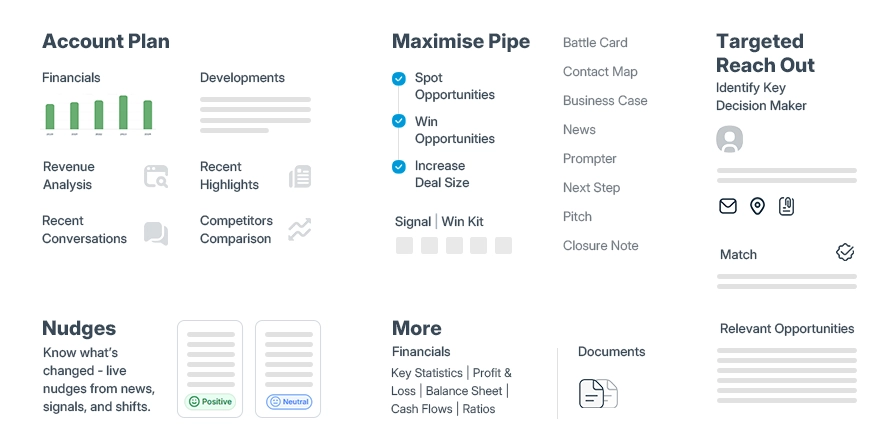
Creating a structured framework for your sales training is fundamental for successful intelligence tool adoption. Research shows that 70% of information from traditional slide-based training is forgotten within just one week. To prevent this knowledge loss and maximize your investment, your training must align with specific tool features.
Effective sales enablement begins with well-defined objectives that align with broader business goals rather than vague targets. The SMART methodology offers the most effective approach:
Specific - Clearly define what you want to accomplish
Measurable - Ensure goals can be tracked with appropriate metrics
Attainable - Keep challenges realistic yet achievable
Relevant - Align with overall revenue organization goals
Time-bound - Establish specific timeframes for completion
One-size-fits-all training rarely yields results. Your framework should include multiple learning approaches: onboarding training (30-60 day program), product training (positioning, features, benefits), technology and skills training (hands-on practice with your sales intelligence stack), and market understanding (industry knowledge).
According to Mary Shea, a former chief revenue officer, "You can't just bring in the training company you used in your last gig, or that your company has been using. You need to help salespeople engage in the digital world – and that's a lot more complicated than it was before". Active learning experiences dramatically outperform passive instruction. Create safe environments where reps can practice with sales intelligence tools without affecting real customer data.
Look specifically for sales intelligence software with AI features and capabilities that match your training focus: AI-powered insights to prioritize deals based on lead potential, opportunity health, and relevant sales activities. As noted by Seleste Lunsford, companies that look at training holistically get win rates 15% higher than those that focus just on training needs.
In essence, your training must equip sellers with sales enablement resources to successfully use sales intelligence tools for gathering, tracking, and analyzing data. Once properly trained, your team can create simple, concise narratives of sales accounts that include relevant business information—ultimately understanding your customers' needs far better than before.
A staggering 61% of learning and development practitioners identify lack of clear goals as the biggest barrier to measuring the impact of their training programs. Without a structured approach, your sales intelligence investment might become another costly experiment rather than a revenue driver.
Establishing precise training objectives requires more than vague aspirations like "improve team performance." Effective sales enablement programs use the SMART framework to create actionable goals that drive adoption:
Specific - Define exactly what skills or knowledge improvement you expect
Measurable - Establish concrete metrics to track progress
Attainable - Set realistic yet challenging targets
Relevant - Connect directly to sales processes and business needs
Time-bound - Create specific timeframes for completion
When setting training goals, remember that traditional slide-based training results in 70% information loss within just one week. Hence, focus your goals on practical application and retention, not merely information delivery.
Sales training programs are almost 9 times more effective when tightly aligned with business objectives (53%) compared to those with weak alignment (6%). This means your training strategy must directly connect to key performance indicators your business aims to achieve.
High-performing organizations are 3 times more likely to use data analytics to monitor and measure the business impact of their learning. Begin by identifying metrics that matter at both behavioral and results levels. Did the training lead to changed behavior? Did that behavior drive measurable business outcomes like increased revenue or improved customer satisfaction?
For instance, McKinsey shares a case study of a telecom company that used analytics to identify 15 key skills associated with above-average productivity. They created tailored learning journeys for 1,000 sellers, resulting in a 10% increase in deal size per sales rep.
Attempting an all-at-once launch typically fails. According to Gartner, phased implementations were 64% more likely to complete on budget compared to all-at-once approaches. This primarily comes from better resource allocation and clearer milestone-based budgeting.
Start with a pilot team to test processes before expanding company-wide. Ideal pilot candidates typically share several characteristics:
Change receptivity: Teams with successful technology adoption history
Pain acuity: Groups experiencing acute versions of the problems your product solves
Executive sponsorship: Strong leadership support
Reasonable complexity: Enough complexity for meaningful validation
Smart AI implementation follows this pattern as well. Gartner advises to "start with AI capabilities that don't require major change management". Begin by embedding agents or assistants into key seller workflows—your CRM, inbox, or call tools—focusing on reducing context switching.
Throughout this process, remember that "sellers need enablement—structured training, in-app prompts, and contextual coaching—to understand when and how to use AI". Make adoption easy with phased rollouts and clear messaging to maximize your sales intelligence ROI.
STOP CHASING PROSPECTS
START CLOSING DEALS!!
Successful sales enablement programs require more than just purchasing tools—you need a thoughtful adoption strategy. Based on industry research, only 54% of AI projects make it from pilot to production. This stark reality underscores why proper onboarding remains critical for maximizing your Sales Intelligence ROI.
The success of your sales intelligence initiative hinges on leadership commitment. Without executive backing, even the most powerful tools become expensive shelf-ware. Leaders play a pivotal role in driving AI integration by assessing specific sales challenges, identifying appropriate tools, and providing hands-on support.
Forrester identifies leadership buy-in as the most critical factor for successful adoption. Organizations with executive advocates see adoption rates four times higher than those without visible leadership endorsement. Beyond merely mandating usage, leaders should:
Use sales intelligence terminology in pipeline reviews
Share success stories where frameworks directly closed deals
Demonstrate how tools helped identify patterns in buyer behavior
When executives understand the tools firsthand, they make better strategic decisions. Their extensive business knowledge ensures the risks and benefits align with the company's goals. Moreover, their participation signals the importance of adoption to the entire organization.
Starting small allows you to test thoroughly and secure early wins that build momentum. By running internal pilots targeting key user scenarios, you'll receive early feedback to guide product development and create a core of users who can help lead adoption across your organization.
Effective testing strategies include:
Collaborative testing enabling immediate feedback in small, manageable increments
Automated testing at every stage of implementation creating continuous feedback loops
User feedback mechanisms that are structured and repeatable
"Advocates and champions are always important, not just for leading from the front," notes Barrass, "You also get more candid feedback by empowering these people to be part of pilot groups". This approach ensures you receive honest input about what's working—and what isn't—before full-scale implementation.
Ideal pilot candidates typically share several characteristics: change receptivity, pain acuity, executive sponsorship, and reasonable complexity. Throughout this process, set clear milestones for each phase and include buffer time for addressing unexpected issues.
For scenario-based training to deliver lasting results, it must be integrated into the broader sales leadership strategy rather than treated as a one-off exercise. This means embedding simulations into onboarding programs, ongoing coaching sessions, and even sales meetings.
Active learning experiences dramatically outperform passive instruction. Create safe environments where reps can practice with sales intelligence tools without affecting real customer data. Role-playing exercises are particularly effective as they allow sales professionals to practice techniques before money is at stake.
Sales leadership teams should use real customer case studies to inform scenario design. By drawing on actual sales experiences—both successful and unsuccessful—leaders ensure training remains grounded in reality. Each scenario should have a specific purpose, such as improving negotiation tactics or strengthening closing techniques, with clearly defined desired outcomes.
For video enablement content, the ideal length is 30 seconds to one minute. Consider different learning formats since some people prefer demo sessions while others want to watch videos on their own time. This multimodality approach, including courses, demos, and written documentation, helps your readiness efforts reach the most people with the most impact.
Measuring the true impact of your sales intelligence training requires a structured approach backed by data. Organizations with robust measurement frameworks typically see 25-40% higher long-term value from their sales intelligence investments. Let's examine how to effectively track and assess your training programs.
Lead indicators serve as predictive measures that signal whether training is being integrated into daily sales activities. These early signals help identify if your training is likely to produce results before final outcomes materialize. Key adoption metrics to monitor include:
Training completion rates: Track who completed the program and their engagement levels
User adoption percentages: Measure how many team members actively use the tools after training
Feature utilization: Identify which specific features are being used and which are ignored
System engagement levels: Monitor how frequently sales reps log in and use the platform
Manager feedback provides crucial qualitative insights that complement usage statistics. Incorporate direct observational feedback into coaching plans to strengthen the connection between training and field performance. Additionally, CRM activity metrics offer tangible evidence of behavioral change—tracking measurable increases in seller activities such as prospecting calls, meetings booked, and proposals submitted.
STOP GUESSING YOUR PIPELINE
START GROWING IT WITH AI SALES!!
Lagging indicators measure the long-term business outcomes resulting from consistent behavior change. Focus on metrics that directly connect training to revenue outcomes:
Win rates: The percentage of deals your team closes compared to total opportunities
Average deal size: Typically increases with improved negotiation skills
Sales cycle length: Should decrease as your team becomes more efficient
Pipeline velocity: How quickly leads move through your sales process
Lead-to-opportunity conversion: Measures prospecting effectiveness
Organizations that effectively measure behavior change see 9% higher sales goal attainment compared to those that don't. Therefore, it's vital to establish pre-training benchmarks before your program begins. These baseline metrics serve as your comparison point for post-training evaluation.
Sales dashboards transform raw data into visual intelligence, making your metrics accessible and actionable. One of the primary benefits of business intelligence dashboards is the ability to consolidate data from multiple systems into a single source of truth. This data centralization fosters cross-departmental collaboration and ensures leadership teams make decisions based on accurate, consistent information.
Modern dashboards integrate data from multiple sources to present KPIs in one place, giving you a complete picture from macro-level down to individual performance. Furthermore, interactive elements like filters, dropdown menus, and drill-down capabilities allow users to customize their view and explore data more deeply.
When building your ROI dashboard, consider these best practices:
Create visual representations for your KPIs using different charts and graphs to make data easily understandable
Include both direct ROI measures (increased revenue, reduced costs) and indirect ROI benefits (better employee engagement, faster decision cycles)
Update metrics in real-time to provide the most current data available
Although the metrics in your dashboard will vary based on your specific goals, focusing on both lead and lag indicators creates a complete picture of training effectiveness. Remember that aligning training KPIs with business objectives ensures every training outcome ties to a revenue or performance goal.
Long-term success with sales intelligence requires ongoing refinement after initial implementation. Organizations that follow proven optimization methods typically achieve 60-80% higher ROI from their sales intelligence investments.
Collecting feedback from your sales reps is fundamental to improving your sales enablement programs. As a result, you should:
Ask reps what's working and what would work better to make them feel part of the decision-making process
Create structured feedback loops that transform outputs into inputs, generating valuable insights for both tactical and strategic improvements
Use feedback patterns to identify areas where sales reps need additional training or support
Companies offering formal coaching report a 16.7% higher win rate than those that don't. Furthermore, personalized feedback significantly boosts performance—reps who receive tailored coaching see performance improvements of up to 27%.
Firstly, identify what works through performance reviews involving cross-functional teams. Once you've discovered winning strategies, implement A/B testing programs for messaging, outreach timing, and targeting strategies.
Organizations using AI-driven sales intelligence close 20-30% more deals than their non-AI using counterparts. This indicates substantial room for growth through proper scaling of successful practices.
Simultaneously, connect your various departments—primarily your sales and marketing teams—through effective feedback loops. You can accomplish this by:
Using your CRM as a communication hub
Holding weekly meetings between sales and marketing
Collecting and analyzing customer responses to identify improvement opportunities
Make Every Rep Speak
Like Your Top 1%
Research indicates that continuous training and coaching, along with real-time feedback, can improve performance by up to 88% compared to traditional static training. Organizations that foster peer-to-peer learning and informal coaching see long-term performance gains.
Nevertheless, most salespeople forget 70% of information learned within just one week of training. To combat this, implement "in-flow" support systems that provide help exactly when needed.
To create an effective continuous learning environment:
Incorporate role-playing, live coaching, and simulated sales conversations
Use real customer scenarios to make learning practical and relevant
Implement microlearning—short, targeted lessons that reinforce key concepts over time
Companies investing in comprehensive sales coaching see a 50% increase in net sales per rep. Additionally, organizations leveraging AI tools report higher engagement, better retention, and improved performance across their teams.
The proof of successful sales enablement programs lies in real-world results. Several organizations have transformed their performance through strategic sales intelligence training, providing valuable insights for your own implementation.
Prior to implementing sales intelligence training, many sales teams struggled with fundamental problems. At ACI Corporation, sales conversions languished below 5% with qualified leads at just 45.5%. In another case, a construction company in Northeast Ohio faced a sluggish economy with sales revenues down by 12% and stalled regional expansion.
Most organizations began with clear objectives: improve sales rates, enhance product knowledge, and develop better client communication skills. Meanwhile, top performing companies specifically aimed to establish baseline foundational knowledge of sales methodology with common terminology and create effective sales playbooks.
Effective implementation typically followed a multi-stage approach. For the construction company, they began by administering sales aptitude assessments to all customer-facing employees, followed by two-day seminars on selling excellence. Their executive team participated in dedicated sales and marketing process improvement workshops where they developed specific goals, projects, and action plans.
The results proved remarkable across various organizations:
ACI Corporation saw sales conversions jump from under 5% to 6.5%, while qualified leads increased from 45.5% to 64.1%
The construction company achieved a 50% growth rate increase
Markerstudy Group saved 4 minutes per call, translating to 56,000 hours annually
One B2B software firm experienced a 32% increase in sales conversions
Naturally, these success stories reveal critical lessons. Primarily, continuous reinforcement emerged as essential for long-term results. Organizations with highly effective sales training are 4.8x more likely to provide ongoing reinforcement, helping salespeople retain and apply new skills.
Similarly, leadership involvement proved decisive. In one case study, 85% of leaders implemented regular coaching cadences with their teams after being trained alongside sellers, driving accountability and skill application. This aligns with research showing organizations with highly effective training are 5.2x more likely to have resources that prepare sales managers to coach their teams.
Finally, tailored training content directly impacted results. One company's focus on industry-specific challenges and value-based selling led to a 71% increase in total opportunities. This personalized approach helped sellers shift from pushing individual products to offering complete solutions.
Sales intelligence training programs hold the key to unlocking significant returns on your technology investments. Throughout this article, we've seen how proper implementation transforms underperforming teams into revenue-generating powerhouses. Undoubtedly, the difference between wasted resources and remarkable ROI lies in your strategic approach to training.
Most importantly, effective sales intelligence programs require clear goals, leadership commitment, and alignment with business objectives. The evidence speaks for itself – companies with structured training methods see 25-40% higher long-term value from their sales intelligence investments. Additionally, organizations using AI-driven sales intelligence close 20-30% more deals than those without such capabilities.
Remember that maximizing ROI doesn't happen overnight. Rather, it demands ongoing refinement, feedback loops, and continuous learning opportunities. Therefore, you must create an environment where your team consistently applies new skills and tools in real-world selling situations.
Sales intelligence ultimately empowers your representatives to make data-driven decisions that directly impact your bottom line. When properly trained, your team will identify high-potential opportunities, engage prospects more effectively, and close deals faster. Though implementation requires thoughtful planning, the payoff in increased revenue, shortened sales cycles, and improved win rates makes it well worth the investment.
Start today by assessing your current training approach, identifying gaps, and creating a strategic plan that aligns with your specific business goals. After all, your competitors are likely exploring similar technologies – but your training program will be the true differentiator in achieving superior results. With the right foundation in place, your sales intelligence investment will deliver the exceptional returns you've been seeking.
Sales intelligence training can significantly boost ROI by enhancing lead conversion rates, shortening sales cycles, and increasing deal sizes. Effective training programs help sales teams leverage data-driven insights, leading to more targeted prospecting and personalized customer interactions.
Common mistakes include investing in tools without clear use cases, failing to integrate with existing workflows, and misaligning sales intelligence initiatives with overall business goals. These errors often result in underutilized tools and wasted resources.
Companies should identify key skills needed for tool adoption and match training content to specific sales intelligence features. This involves assessing the team's existing abilities, understanding potential resistance factors, and creating personalized learning paths aligned with business objectives.
Key metrics to track include usage and adoption rates, performance improvements such as win rates and average deal size, and overall pipeline velocity. Using dashboards to visualize these metrics can help in understanding the ROI of training initiatives.
To optimize for long-term success, organizations should continuously refine training based on feedback, scale successful practices across teams, and encourage ongoing learning and coaching. This approach helps maintain high performance and ensures the sales team stays adaptable to changing market conditions.
STOP GUESSING YOUR PIPELINE
START GROWING IT WITH AI SALES!!

Category: Uncategorized Tags: ai, AIOps, Artificial Intelligence, cloud, cloud platform, Cybersecurity, Information and Communications Technology , VR