Revenue Intelligence Implementation: Enterprise Best Practices
September 05, 2025

Revenue intelligence software has become a crucial part of modern sales organizations, not just an optional extra. Today's businesses need more than simple reporting tools to stimulate growth and maintain their competitive edge.
Traditional CRM systems excel at gathering valuable information. Enterprise revenue intelligence platforms take this further by turning sales and financial data into practical insights. These advanced systems analyze huge amounts of data and spot patterns that humans might overlook. They also offer immediate suggestions that directly boost revenue growth.
This piece explains how revenue intelligence solutions can improve your organization's decision-making process. You'll learn more about your sales pipeline and customer interactions. The coverage ranges from implementation strategies to ROI measurement, giving you the knowledge you need to use these powerful tools for your enterprise growth in 2025.
Revenue intelligence has become essential in 2025. Companies now see the limitations of traditional sales tools and are making use of more sophisticated data analysis approaches. Modern complex selling environments need detailed systems that store information and generate insights to drive revenue growth.
STOP GUESSING YOUR PIPELINE
START GROWING IT WITH AI SALES!!
CRM systems are the foundations of business operations that help companies organize and track customer interactions. But these traditional tools can't meet what modern enterprise sales teams need.
The biggest problem with traditional CRMs lies in their dependence on manual data entry, which creates several critical problems:
Subjective and outdated information: CRM records often show a rep's subjective view of customer interactions instead of objective reality. Industry experts note, "What we get is typically very sparse and outdated, and ended up being the rep's opinion."
Administrative burden: Sales representatives use up to 20% of their time on manual data entry instead of critical customer-facing activities
Limited integration capabilities: Organizations use nearly 1,000 different applications. Only 28% of these apps blend with each other, which creates substantial data silos
Beyond these technical limitations, we designed traditional CRMs to handle pre-purchase phases that focus on new customers and closing deals. They often miss the significant role of post-purchase involvement for customer retention and expansion.
On top of that, it's hard for CRMs to provide live insights and predictive capabilities. Their static coverage offers limited value to identify trends, opportunities, and potential churn risks. This reactive approach results in missed opportunities and lower customer satisfaction.
The evidence speaks for itself - despite nearly every company using CRM, average sales quota attainment has dropped each year for the past five years. This decline shows that traditional CRM systems alone can't drive revenue growth in today's competitive landscape.
Companies are moving faster toward data-driven sales operations powered by revenue intelligence platforms. This represents a fundamental change in how organizations arrange their sales strategy and execution.
Sales operations has grown beyond managing CRM systems and reports. Recent research shows companies that invest in data-driven sales operations see 15% higher quota attainment and 20% faster sales cycles. More organizations that use AI in their sales processes have seen a 50% increase in leads and appointments.
This reshaping of the scene continues to gain momentum. Between 2022 and 2023, companies investing in data analytics grew from 87.8% to 93.9%. B2C companies that put data-driven marketing first are 1.5 times more likely to see increased involvement and revenue growth.
Data-driven sales operations offer these advantages:
First, better forecasting accuracy. Sales teams can make reliable predictions about future outcomes by analyzing historical patterns and live data. This leads to better strategic planning and resource allocation.
Second, improved customer insights. Data analysis reveals customer priorities, anticipates market changes, and identifies the best paths to increased revenue. Sales teams can personalize their approach and connect with prospects at the perfect moment.
Third, operational efficiency. Workplace confusion decreases when sales teams, management, and marketing share unified data resources. This arrangement creates matching targets across departments and promotes accountability.
Sales operations teams now focus on quality-focused outcomes that guide revenue instead of quantity-driven metrics like calls made or emails sent. A sales operations leader explains, "Most sales activity data only tells us how much a rep is doing, not how well they're doing it. We're moving toward a more outcome-focused approach, tracking what actually drives revenue instead of just raw activity."
What a world of data-driven approach makes revenue intelligence essential rather than optional in 2025's enterprise sales environment.
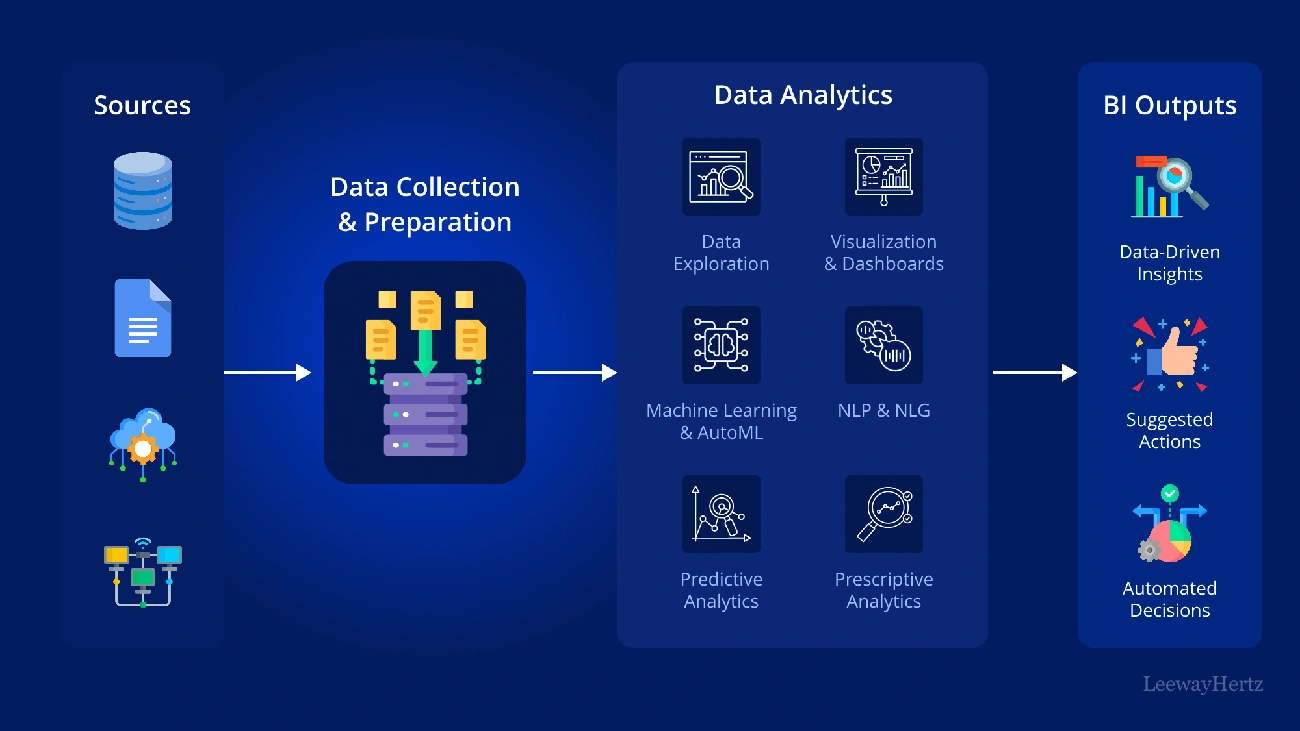
Image Source: LeewayHertz
Revenue intelligence platforms work through a three-step process that turns raw data into practical sales insights. These systems use advanced algorithms to spot patterns and opportunities that simple reporting tools might miss.
Revenue intelligence starts with complete data collection from multiple sources. These platforms gather information from various touchpoints and create a unified view of customer interactions and sales activities. This eliminates the barriers that usually keep valuable data separate.
Ready to turn your Rep
INTO BEST PERFORMER ?
Advanced platforms typically collect:
Customer interactions (website visits, email engagement, shopping cart behavior)
Sales conversations (call recordings, email threads, meeting notes)
CRM data (opportunities, pipeline status, account information)
Historical performance metrics (win rates, close rates, lead response time)
Enterprise sales teams face a big challenge that this integration solves. One expert points out that "knowing what to do to improve sales production and goal-setting means knowing what your company is specifically working with". These platforms build a complete foundation by bringing together data from each team's software.
The platforms connect with popular CRM systems like Salesforce, Microsoft Dynamics, and HubSpot. Data flows naturally between systems, which creates a single source of truth for all revenue-related information.
After collecting data, the software uses sophisticated AI and machine learning algorithms to find patterns, trends, and unusual activity. These platforms don't just report numbers - they uncover connections between data points that seem unrelated.
Different platforms offer various analytical tools. Most use predictive analytics that can forecast sales outcomes with amazing accuracy. Some platforms can even predict quarterly revenue with up to 98% accuracy. Sales teams can make confident decisions about resource allocation with this level of precision.
AI-powered analytics spots inefficiencies in sales processes, flags potential problems, and suggests ways to improve operations. To cite an instance, the system might notice certain customer objections that regularly stop deals at specific stages.
These platforms learn from new data and fine-tune their models as market conditions and buyer behaviors change. This adaptive feature keeps insights relevant even as business environments shift.
The final step turns insights into practical recommendations right when they're needed. Modern platforms show these recommendations through accessible dashboards, alerts, or within the tools sales representatives already use.
Real-time recommendations include:
The most promising deals based on engagement signals
Best times to contact prospects
Content or approaches that work for specific customer segments
Warnings about at-risk opportunities
These systems act like virtual sales coaches and give guidance based on past successes and current data. One platform describes it this way: they "advise you on the next best action, helping you win every time".
The best platforms put recommendations right in the user's workflow. Sales representatives can take action directly from forecasting screens when everything lives in one place. This saves time by eliminating the need to switch between tools.
Advanced systems use context-aware personalization. They combine live session data with long-term priorities to create tailored experiences across touchpoints. Sales teams can respond quickly to customer behavior, which speeds up purchases and boosts conversion rates.
This three-step process changes how enterprises handle sales data. It gives complete visibility, practical insights, and timely recommendations that propel revenue development.
The revenue intelligence market has evolved by a lot. Specialized platforms now address different aspects of the sales process. You'll make better choices for your organization when you understand these distinct categories.
These all-in-one platforms combine multiple functions into a single, integrated solution. They handle everything from the original lead generation through deal closure and customer expansion.
Complete revenue intelligence suites typically include:
Predictive Analytics: Advanced forecasting and deal scoring that accurately predict sales outcomes
Sales Coaching: AI-powered recommendations based on individual performance patterns
Performance Monitoring: Live tracking of key metrics with customizable dashboards
Simplified processes: Automated workflows that eliminate manual tasks
These platforms' strength comes from their unified data model. All revenue intelligence functions work with the same underlying information. This eliminates data silos that can create conflicting insights. On top of that, it costs less than putting together multiple point solutions.

These specialized platforms analyze sales conversations, calls, and meetings. They extract useful insights from verbal and written communications using advanced natural language processing and machine learning to understand context, sentiment, and buying intent.
Conversation intelligence helps revenue teams utilize AI. It converts unstructured data from spoken, written, and video conversations between buyers and sellers into deal and coaching insights that boost seller performance. To name just one example, Gong captures and analyzes every interaction. It uses conversational AI to spot trends, buyer signals, and areas for improvement.
These platforms record and transcribe sales conversations automatically. They measure talk-time ratios, track important discussion topics, and spot emotional patterns throughout interactions. Users report that companies using conversation intelligence have shortened sales cycles by 19%.
Deal intelligence platforms excel at providing detailed insights into individual opportunities and overall pipeline health. They emphasize predictive deal scoring, risk assessment, and pipeline optimization to help sales teams allocate resources effectively.
These tools show pipeline health through advanced analytics and coverage capabilities. Salesloft's deal intelligence helps revenue teams "win bigger deals, see the full sales process, and build stronger connections with buyers". The platform provides an unfiltered view of pipeline health and enables effective deal management. Teams can determine which deals move forward and which might stall.
Modern deal intelligence platforms use sophisticated machine learning algorithms. They factor in hundreds of variables to generate accurate deal scores. Gong's pipeline management software provides "a unique view into pipeline health – which deals are good, and which deals are slipping". It captures all customer interactions and connects this activity data back to CRM opportunities.
These platforms focus on the early stages of the sales process. They help sales teams identify, research, and prioritize prospects. The tools blend internal data with external intelligence sources to create complete prospect profiles.
Lead intelligence software delivers data and insights about leads. Sales and marketing teams can attract, qualify, and nurture prospects more effectively. These tools gather information from multiple sources like public records, web scraping, and third-party data providers. They build complete, current pictures of prospects.
Advanced scoring and prioritization mechanisms rank prospects based on multiple factors. These include fit criteria, intent signals, timing indicators, and competitive positioning. Cognism provides lead intelligence data in a variety of industries. It cleans existing CRM records and enriches new leads entering your systems. 6sense combines intent data, behavioral insights, and predictive analytics to identify accounts actively researching solutions.
Each platform type brings unique capabilities. You can deploy them independently or as part of a complete revenue intelligence strategy. Your specific business challenges, existing tech stack, and revenue growth priorities will determine the right choice.
The right revenue intelligence software can transform your enterprise's performance. Here's a deep dive into the platforms that will shape revenue intelligence in 2025.
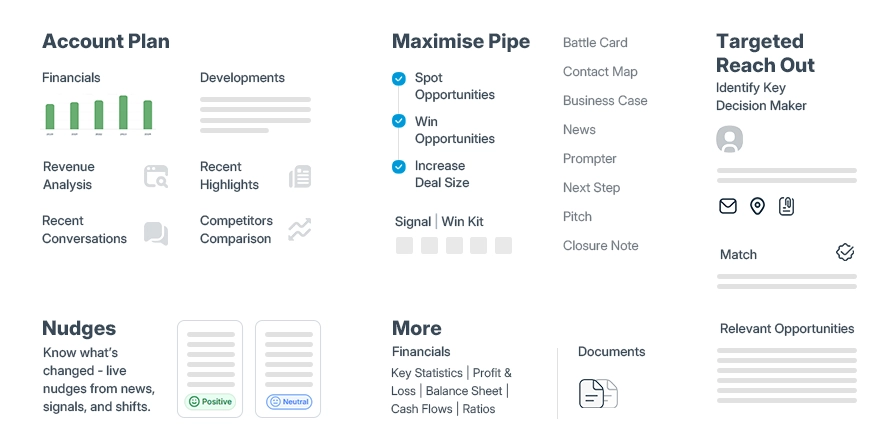
SalesPlay is the world's first AI Sales intelligence platform that transforms sales execution speed and precision through its revolutionary suite of 7 AI Agents. Unlike competitors offering fragmented data, SalesPlay delivers pitch-ready opportunity ecosystems—hyper-personalized sales kits, mapped buying centers, and conversion-ready outreach sequences that eliminate 80% of manual work while consistently closing deals others can't identify. Built on exclusive MarketsandMarkets intelligence and thousands of premium data sources, and exclusive vendor partnerships, the platform creates a competitive moat that drives 3x productivity gains by enabling every rep to execute with the precision of your organization's elite performers.
Clari stands out by giving users a complete pipeline visibility with better forecasting accuracy. The platform brings data together from multiple sources to show deal progress and risks immediately. Sales, marketing, and customer success teams work together with a single source of truth. While the platform works well for pipeline management, it targets larger organizations. This makes it less available for smaller companies looking for expandable solutions.
Gong leads the conversation intelligence space. The platform records, transcribes and analyzes sales calls, meetings and emails to show what happens in customer interactions. Teams learn which sales pitches succeed through its AI analytics and predictive features. The platform finds patterns in successful deals. Some users point to its high cost and setup complexity as factors smaller organizations should think about.
STOP CHASING PROSPECTS
START CLOSING DEALS!!
Salesforce uses its strong CRM position to build revenue intelligence features. Sales Cloud analyzes existing sales data within the platform through AI. This helps teams improve customer interactions and performance. The platform spots trends and opportunities for revenue growth by studying your data. Teams already using Salesforce will find this integration convenient.
Superlayer brings a fresh approach to revenue platforms for driven sales teams. The software updates your CRM from team conversations automatically. This saves time by removing manual data entry. Teams can run effective pipeline reviews, forecast accurately and receive tailored coaching through AI-powered tools. Superlayer spots risks and sends practical alerts based on proven methods. Everything gets noticed.
People.ai solves manual data entry problems. The platform automatically captures and logs sales activities, emails, meetings and contacts into your CRM. Sales teams get complete, accurate data without extra work. Account forensics map relationships and engagement with target accounts. The automation brings great value, though the original setup needs time investment.
InsightSquared, now part of Mediafly, brings tools that show your entire sales process. Sales leaders can spot bottlenecks, coach teams and make data-driven choices through pipeline analytics, forecasting and activity tracking. The platform connects to your CRM and shows sales data in user-friendly dashboards. Teams can spot trends and track performance easily.
Mediafly's Revenue360 combines sales enablement with revenue intelligence. Teams get practical advice through AI analytics that study sales and product data. The platform shows all revenue activity - campaigns, content, calls and emails - in one view. Teams develop skills through customizable scorecards and development plans.
HubiFi focuses on automated revenue recognition for high-volume businesses. The platform creates clean, compliant financial data as its foundation. It works across systems for ASC 606 compliance and creates one source of truth for revenue data. Teams close books faster and pass audits with confidence through immediate analytics and dynamic segmentation. HubiFi merges smoothly with accounting software, ERPs and CRMs. This makes it essential for complete revenue intelligence.
Each platform brings unique features that match different business needs. Your ideal choice depends on your business challenges and current technology setup.
Revenue intelligence has moved faster beyond simple analytics. Several powerful trends are changing how enterprises make use of information to drive growth and competitive advantage in 2025.
NLP has become the life-blood of advanced revenue intelligence platforms in 2025. These technologies analyze sales conversations with unprecedented depth. They identify buying signals, emotional cues, and subtle patterns that human sales managers might overlook. Companies that use NLP-powered tools see a 20% increase in sales and 30% reduction in support costs.
US users of generative AI grew from 7.8 million in 2022 to 77.8 million in 2023. AI will initiate 95% of seller research workflows by 2027, up from less than 20% in 2024.
The most important change comes from agentic AI—a transformative leap that makes software entities act within sales environments autonomously. These systems create plans, integrate with external applications, and execute sales tasks independently.
Predictive analytics serves as the life-blood of revenue intelligence. Machine learning models now analyze hundreds of variables to generate sophisticated deal scores and risk assessments. Companies that implement AI-powered sales analytics see a 60% reduction in costs and a 30% increase in revenue.
Key capabilities now include:
Predictive forecasting with up to 98% accuracy for quarterly predictions
Automated identification of at-risk deals before problems surface
Next-best-action recommendations based on historical success patterns
Sales teams now emphasize quality-focused outcomes that directly drive revenue instead of quantity-driven metrics. Hyper-automation combines AI, machine learning, and robotic process automation to create self-optimizing revenue engines that adjust workflows based on live data.
STOP GUESSING YOUR PIPELINE
START GROWING IT WITH AI SALES!!
Real-time revenue operations stand out as one of the most important trends of 2025. Organizations can no longer wait for monthly or quarterly reviews to adjust strategies—markets just need immediate responsiveness.
Advanced platforms include dynamic pricing algorithms that adjust based on market conditions, competitive positioning, and customer behavior patterns. Businesses achieve 15% higher average deal values while maintaining healthy win rates with these capabilities.
Live pipeline management has become crucial. Forecasting engines update predictions as new information becomes available. Leading platform users have improved their forecast accuracy by 43%.
Revenue intelligence breaks down traditional departmental silos between sales, marketing, customer success, and product teams. AI-driven sales intelligence aids cross-functional collaboration by offering unified insights into customer behavior, competitor activity, and market trends.
This collaborative approach brings better lead quality, individual-specific communication, and more accurate sales forecasting. Revenue intelligence platforms help organizations implement revenue stand-ups that keep all teams aligned around common goals through shared dashboards and cross-functional incentive structures.
Successful organizations bring sales, marketing, customer success, and finance under unified revenue operations structures in 2025. This integration improves collaboration and data accuracy. Teams stay aligned strategically across departments—which leads to more predictable revenue growth and better customer experiences.
Revenue intelligence tools need proper planning and step-by-step execution to maximize ROI. A well-laid-out approach helps companies avoid common mistakes and get value from these powerful platforms faster.
Your first step should be a full evaluation of your sales processes, data assets, and tech infrastructure. Look for problems in your current operations - like long sales cycles, wrong forecasts, or poor pipeline management. This review should get into data quality from all sources and find any inconsistencies, duplicates, or gaps that could hurt your revenue intelligence work.
Take time to review your data world including CRM fields, sales activity logs, email platforms, and meeting records. Clean data forms the foundation of useful intelligence. Without it, even the best platform will give you wrong insights.
You need to state what you want to achieve with revenue intelligence before looking at solutions. Your goals might focus on better sales forecasts, clearer pipeline views, or team performance tracking. Clear objectives will help you pick the right platform and create a solid plan.
Next, pick key performance indicators that line up with these objectives. These KPIs should follow the SMART framework - specific, measurable, achievable, relevant, and time-bound. Sales teams often track metrics like deal speed, win rates, forecast accuracy, and sales rep output.
Look at these key factors when picking a revenue intelligence platform:
Integration capabilities: The solution should merge naturally with your current tech stack, including CRM, email, calendar, and conversation intelligence tools.
Scalability: Pick a platform that can grow as your business does, handling more users and complex data as needed.
User experience: Focus on accessible interfaces that people want to use and can learn quickly.
Try out potential solutions through free trials or demos before you commit. Read user reviews on G2 or Capterra to see how other companies use these tools.
Make Every Rep Speak
Like Your Top 1%
Change resistance is one of the biggest roadblocks to a successful launch. You can tackle this by:
Showing your team how revenue intelligence helps them make better decisions and boost revenue
Getting key stakeholders involved in choosing the platform to build support and reduce pushback
Creating complete training programs that cover everything in your chosen platform
Companies that get stakeholder alignment right see 78% faster value and 45% higher platform satisfaction long-term.
Note that AI features help uncover insights and speed up work, but they should enhance human talent and judgment—not take their place. Find the features that truly help your team succeed and focus your training there.
Organizations need a well-laid-out framework to get the best results from revenue intelligence investments. Sales metrics show how these tools propel business development through measurable performance improvements.
Deal velocity shows how fast opportunities progress from original contact to closing. Teams that close more deals quickly generate more revenue. Companies using advanced revenue intelligence strategies see 32% higher win rates and 28% faster sales cycles than traditional methods.
Sales teams that use AI to optimize their work increase win rates by 50%. The numbers look even better for enterprise deals where multiple contacts matter. Companies win 58% of deals when they involve at least four contacts.
Better revenue forecasts help companies allocate resources and plan strategies with confidence. Organizations using predictive revenue intelligence improve their forecast accuracy by 41%. This advantage matters because over 80% of companies missed their revenue targets in the past two years.
Companies that use AI-driven forecasting models reduce errors by 15-20% compared to traditional approaches. Only 9% of companies can forecast within 5% of actual results. This gap shows how revenue intelligence tools could help many businesses improve.
Customer lifetime value (CLV) represents total revenue from a customer's entire relationship with your business. The calculation multiplies average purchase value by frequency and customer lifespan, minus service costs.
Companies with strong customer intelligence capabilities achieve 89% customer retention and 156% net revenue retention through better expansion selling and churn prevention. These numbers matter since 42% of sales leaders say recurring sales top their revenue sources.
Revenue intelligence tools make sales teams more effective. Automation saves about 6.5 hours per sales professional each week. Teams spend 43% more time with customers and convert 38% more activities into results.
Companies that measure efficiency after adding AI report 10-15% better sales operations. These numbers prove revenue intelligence platforms deliver real value in many ways.
Successful enterprises need strategic approaches to maximize their technology investments as revenue intelligence continues to develop. The digital world moves toward more integrated, AI-driven solutions that cover organizations completely.
Revenue intelligence and business intelligence serve different purposes but create powerful results together. BI gives foundational data to understand business performance, while revenue intelligence turns these analytical insights into strategies that boost profitability. This partnership creates a clear picture - BI shows trends in customer behavior that helps revenue intelligence predict future effects and suggest practical strategies.
Companies should choose platforms with open APIs and flexible data structures that combine smoothly between systems. This integration builds a unified data ecosystem where insights move freely across the enterprise technology stack.
US users of generative AI jumped from 7.8 million in 2022 to 77.8 million in 2023. AI will start 95% of seller research workflows by 2027, up from less than 20% in 2024.
Companies should prepare for three major changes beyond current applications. Autonomous AI agents will flag risks and suggest actions. The tech stack will see deeper workflow integration. Teams will deliver customization at scale. These advances will alter how go-to-market teams work and create highly tailored buyer experiences.
Revenue intelligence grows beyond sales when traditional department barriers break down. Modern organizations combine sales, marketing, customer success, and finance under unified revenue operations structures.
Leading companies focus on capturing activity across multiple channels and exploit advanced data capture to learn about customer interactions. Leaders must find useful AI and machine learning tools that spot patterns and predict outcomes across functions. This cross-functional strategy delivers better lead quality, customized communication, and more accurate forecasting.
Revenue intelligence software has evolved from a luxury add-on to become the most important part of enterprise growth strategy in 2025. This guide shows how these smart platforms do more than just store customer data - they provide practical insights that traditional CRM systems don't deal very well with.
Companies that use revenue intelligence get ahead of their competition through better forecast accuracy, faster deals, and improved sales productivity. Teams can make smarter decisions about pipeline management, resource allocation, and customer strategies by using AI and live analytics.
The market offers different types of revenue intelligence platforms. From complete suites to specialized conversation and deal intelligence tools, companies can choose solutions that fit their specific needs. Each option tackles different parts of revenue generation and shows clear returns on investment.
A successful rollout needs proper planning, clear goals, and team coordination. Companies should evaluate their data environment, set up key metrics, and pick platforms that combine smoothly with their current systems. Even the best revenue intelligence tools won't work well without good preparation and training.
Revenue intelligence keeps growing as AI gets better and teams work together more naturally. Forward-thinking companies are getting ready for generative AI. They utilize broader business intelligence systems and expand their capabilities across departments.
Without doubt, tomorrow's market leaders will be the ones who utilize revenue intelligence effectively today. These platforms help companies turn data into practical insights to make faster, smarter decisions that drive lasting growth and boost customer value.
Revenue intelligence software uses AI and advanced analytics to transform sales and financial data into actionable insights. Unlike traditional CRMs that mainly store customer information, revenue intelligence platforms analyze vast amounts of data to identify patterns, provide real-time recommendations, and directly impact revenue growth.
Revenue intelligence platforms improve sales forecasting accuracy by analyzing historical patterns and real-time data using AI and machine learning algorithms. They can predict quarterly revenue with up to 98% accuracy, enabling sales teams to make more reliable predictions and better strategic planning decisions.
Key benefits include improved forecast accuracy, increased deal velocity and win rates, enhanced customer insights, operational efficiency, and increased sales rep productivity. Organizations using revenue intelligence often see 15% higher quota attainment, 20% faster sales cycles, and a 50% increase in leads and appointments.
Conversation intelligence platforms analyze sales calls, meetings, and emails using natural language processing to extract actionable insights. They help identify trends, buyer signals, and areas for improvement in sales conversations. Companies implementing conversation intelligence have reported shortening sales cycles by 19%.
When selecting a revenue intelligence platform, organizations should consider integration capabilities with existing systems, scalability to accommodate growth, user experience for easy adoption, and specific features that align with their sales objectives. It's also important to assess current data quality, set clear KPIs, and ensure proper team alignment and training for successful implementation.
STOP GUESSING YOUR PIPELINE
START GROWING IT WITH AI SALES!!

Category: Uncategorized Tags: ai, AIOps, Artificial Intelligence, cloud, cloud platform, Cybersecurity, Information and Communications Technology , VR