Week 4 & Monthly Synthesis: Complete Sales Intelligence Transformation
September 09, 2025

Sales Intelligence Transformation changed my entire approach to managing our sales process. Four weeks ago, I was drowning in spreadsheets, missing crucial customer signals, and watching our team chase leads that went nowhere. Sound familiar?
During our month-long overhaul, I discovered that selecting the best sales intelligence tools makes all the difference between guessing and knowing. We implemented a robust b2b sales intelligence platform that fundamentally altered how we identify prospects, engage customers, and close deals. In fact, the improvements were immediate and measurable.
I'm excited to walk you through our four-week journey, showing exactly how we went from data chaos to predictive insights. You'll see the real-world impact through three compelling case studies, including how Ascendum reduced emergency calls by 42% and how LinkedIn increased conversion rates by 38%.
By the end of this article, you'll have a clear roadmap for transforming your own sales intelligence systems—and the confidence to make it happen.
The first step in our Sales Intelligence Transformation was to identify exactly where we were falling short. We needed a clear picture of the gaps before we could build an effective solution. This meant taking a systematic look at our existing processes, data structure, and feedback loops.
STOP GUESSING YOUR PIPELINE
START GROWING IT WITH AI SALES!!
I started with a thorough sales audit to understand our current practices and effectiveness. Our audit examined every touchpoint in the customer journey, from lead generation to post-sale follow-up. We mapped out our sales stages, checking whether they were clearly defined and consistently followed by the team.
First, we created an inventory of all our marketing and sales tools. This revealed several redundancies—we had three different tools performing essentially the same function! Additionally, we analyzed how our team used sales reports to guide decision-making. Many reports weren't actually informing strategic choices but were simply being generated out of habit.
We examined key metrics like lead generation, customer acquisition costs, and return on investment to pinpoint performance issues. Interestingly, when we analyzed sales activity data, we discovered that success was heavily reliant on individual rep style rather than a consistent, repeatable process.
Our audit revealed something alarming—data silos were crippling our sales effectiveness. These isolated pockets of information were scattered across departments, making it impossible to see the complete customer picture.
The consequences were serious:
Incomplete customer view: With customer data fragmented across multiple systems, we couldn't build comprehensive profiles that accurately reflected behavior and preferences
Inefficient decision-making: Without unified data, our teams were basing strategies on incomplete information
Increased operational costs: Maintaining multiple systems was not only expensive but also led to redundant data management tasks
Hindered collaboration: The barriers between teams made it difficult to work toward common objectives
What surprised me most was discovering that the average company has over 2,000 data silos. No wonder we were struggling! Moreover, these silos weren't just an IT problem—they directly affected our ability to identify trends and make data-driven decisions aligned with our goals.
Next, we conducted extensive stakeholder interviews. Employee feedback proved invaluable in pinpointing roadblocks they encountered and describing what information they were missing to perform at their best.
We organized their feedback using a structured approach:
Categorizing insights: We grouped similar comments to identify common themes and priorities
Prioritizing actionable inputs: We focused on feedback offering clear, actionable suggestions
Validating with data: We supported feedback with trend analysis and user metrics to distinguish between isolated opinions and systemic issues
Through these interviews, we learned that our teams couldn't easily access critical data when needed. Sales reps were making decisions based on outdated information, while marketing was working with inaccurate demographics—all leading to unsuccessful outreach campaigns.
The feedback also revealed that stakeholders wanted to be more involved in solution discussions. They didn't just want their issues addressed; they wanted to participate in developing remedies. This insight proved crucial as we moved forward with selecting the best sales intelligence tools for our transformation.
By the end of Week 1, we had a clear map of our challenges. The gaps we identified weren't just technical issues—they represented missed opportunities with prospects and customers. Furthermore, we now understood that any b2b sales intelligence platform we chose would need to address not just data integration but also user accessibility and cross-departmental collaboration.
With our gaps clearly identified, Week 2 marked the pivotal moment in our Sales Intelligence Transformation journey. Now we needed to build the foundation that would support our entire sales intelligence architecture. This meant making crucial decisions about technology, addressing data issues, and getting our teams aligned.
Ready to turn your Rep
INTO BEST PERFORMER ?
Selecting the appropriate sales intelligence platform proved challenging yet essential. I knew the consequences of a poor choice—a failed investment with no substantial revenue growth. Consequently, we established a systematic selection process.
First, we conducted thorough research across multiple tools, evaluating:
Customization capabilities that aligned with our long-term business objectives
Scalability potential as our company grows
User interface simplicity for team-wide adoption
Quality of customer support and training resources
Integration capabilities became our top priority. We verified that any potential platform would connect seamlessly with our existing tech stack, particularly our CRM system. This step was critical since going back and forth between multiple tools wastes time and significantly reduces productivity.
Cost considerations played a major role in our decision-making process. Initially, some tools appeared affordable, however, their costs quickly added up due to hidden charges and add-ons. Therefore, we selected a platform with flexible pricing that allowed us to scale our subscription as needed.
Poor data quality is a notorious problem that affects approximately 40% of all data migration projects, leading to higher costs and delays. To avoid this trap, we prioritized data cleansing before the actual migration, as the effort required after migration proves disproportionately higher.
Our data cleansing process followed five critical steps:
Scope definition - determining exactly what data needed cleansing
Field mapping - defining assignments between source and target systems
Value mapping - converting values to work in the target system
Address cleansing - correcting and standardizing contact information
Duplicate checking - identifying and removing redundant records
Throughout this process, we balanced automation with necessary manual intervention. For instance, we automatically detected duplicate records but had team members verify before deletion. According to ZoomInfo, between 10-25% of contacts in a B2B database contain errors, so this careful approach was warranted.
The cleanup process also involved standardizing data entry procedures moving forward. We established clear rules for how information should be entered into our CRM, creating an enforced, organized, and consistent environment.
Perhaps the most profound change during Week 2 was breaking down the walls between our sales and marketing departments. According to Forrester, businesses with strong sales and marketing alignment experience 19% faster growth and a 15% increase in profitability.
Both teams participated in selecting the sales intelligence platform since they would share this resource. Previously, marketing believed sales was "too focused on individual customer experiences" while sales thought marketing was "out of touch with what's really going on with customers".
To overcome this divide, we:
Established shared objectives and KPIs between both teams
Created a unified messaging strategy ensuring consistent communication
Scheduled regular joint meetings to analyze metrics and exchange ideas
Developed feedback loops encouraging input from both departments
This alignment ensured that our new sales intelligence platform would serve both teams effectively. As a result, marketing could identify high-intent accounts while sales received real-time insights into prospect engagement.
By the end of Week 2, we had selected our platform, cleaned our data, and aligned our teams—creating the solid foundation necessary for implementing advanced capabilities in the weeks ahead.
Week 3 marked our transition from planning to implementation in our Sales Intelligence Transformation journey. After selecting our platform and aligning our teams, it was time to introduce advanced AI capabilities that would truly change how we operated.

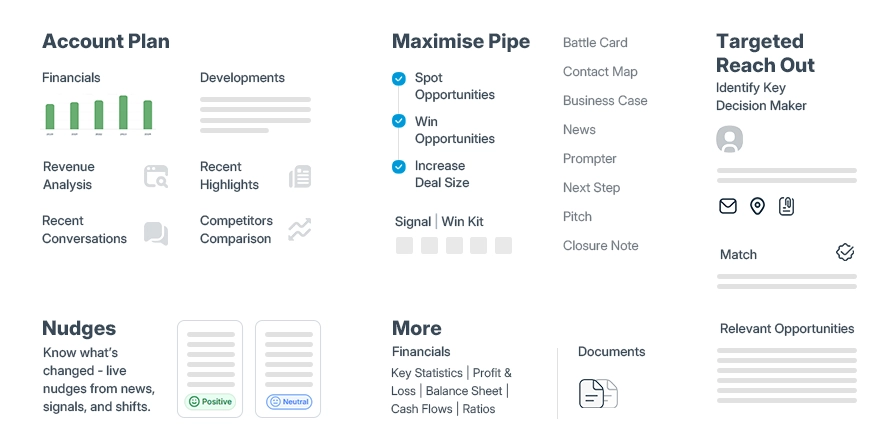
Implementing predictive analytics became our first priority because it fundamentally changes how sales teams make decisions. Instead of relying on gut feelings, we now use data-driven insights to develop strategies and forecasts.
The integration process involved:
Connecting our CRM with the AI analytics engine to feed historical sales data
Setting up real-time signal monitoring from opportunity interactions
Configuring AI models to identify patterns in our successful conversions
Establishing performance metrics to measure effectiveness
The results were immediate. Our sales managers gained better visibility into forecast strength and seller performance at each stage. Above all, we could now link deal progression and health to real-time data, something previously impossible with our manual processes.
One fascinating capability that emerged was pipeline flow analysis, which allows us to inspect how specific opportunities change over time. This highlighted bottlenecks in our sales process that we hadn't previously recognized.
Despite having access to vast amounts of customer data, our team struggled to prioritize effectively. Implementing AI-powered lead scoring changed this entirely by analyzing thousands of data points simultaneously through predictive algorithms.
We built our lead scoring model through several critical steps:
First, we collected data from multiple sources—our CRM, marketing automation tools, website interactions, email campaigns, and social media. Next, this data underwent cleaning to remove inconsistencies and duplicates. Subsequently, we trained the AI model using historical data from past leads, teaching it to recognize characteristics of leads that converted versus those that didn't.
Once trained, the system began assigning scores between 0-100 to new incoming leads based on their resemblance to past successful conversions. Notably, the model is dynamic, continuously learning from new data and adjusting its predictions for greater accuracy over time.
We established data sync frequency to immediate or brief intervals (every 5 minutes) and created score-based alerts when leads hit certain thresholds. This approach has enabled our sales team to focus efforts on leads showing the highest intent to purchase, improving both conversion rates and overall efficiency.
Implementing the best sales intelligence tools means nothing if your team can't use them effectively. We recognized this early and developed a comprehensive training program for our sales force.
We integrated AI-powered training tools that allow reps to practice critical sales behaviors in realistic, high-impact sales role plays while receiving instant feedback. These tools simulate buyer interactions, enabling our team to practice negotiation skills in realistic scenarios without risk.
One particularly effective approach was incorporating AI agents that integrate into the tools our team already uses, making it easier to access AI-powered training. Furthermore, we implemented personalized coaching suggestions based on CRM insights about specific opportunities. This helped reps navigate complex sales scenarios with greater confidence.
Training focused on helping the team understand how to interpret AI-generated insights and incorporate them into decision-making. We ensured everyone understood how lead scores translated to action priorities and how to leverage predictive analytics for account planning.
The adoption process wasn't without challenges. Initially, some reps distrusted the lead scores, preferring to rely on their own hunches. To address this, we made scores transparent and explainable, showing reps specifically why certain leads received higher scores than others.
By the end of Week 3, our Sales Intelligence Transformation had progressed from theory to practice. The combination of predictive analytics, automated lead scoring, and AI-powered training created a foundation for the real-time insights we would implement in Week 4.
The final phase of our Sales Intelligence Transformation journey arrived in Week 4, where we moved beyond implementation to begin using real-time data in our daily operations. This shift marked a true turning point as our sales process evolved from reactive to proactive.
STOP CHASING PROSPECTS
START CLOSING DEALS!!
Real-time account signals completely changed how we prioritize prospects and opportunities. Unlike our previous approach of checking data weekly, we now receive immediate notifications about significant buyer activities. These signals include funding rounds, leadership changes, product launches, and even subtle indicators like increased page visits to pricing information.
We integrated our CRM with an AI-powered dashboard that highlights these signals automatically. This system continuously monitors accounts for favorable selling conditions and notifies our team instantly when a prospect shows high interest.
The most valuable signals we track include:
Website visits to high-intent pages (pricing, product docs)
Technology stack changes that indicate readiness for our solution
Funding announcements suggesting increased budgets
Leadership changes creating new buying opportunities
Unlike traditional methods, these real-time signals allow us to engage prospects precisely when their interest peaks. Research shows that companies using machine learning-based real-time sales intelligence tools close 45% more deals than those using traditional CRMs.
Armed with engagement data, we completely reimagined our outreach strategy. First, we established a "Golden Window" for lead response—reaching out immediately when prospects show interest. Furthermore, our b2b sales intelligence platform automatically prioritizes prospects based on behavior, scoring leads on factors like time spent on key pages.
Through granular segmentation based on engagement patterns, we created highly targeted sequences for different audience segments. Each receives customized messaging tailored to their specific characteristics and engagement level. This approach increased our email reply rates by nearly 5 percentage points.
I personally found that adjusting message timing based on engagement metrics produced exceptional results. For instance, when prospects spend significant time on case studies, our system prompts immediate follow-up with related success stories. This timing optimization has boosted our meeting conversin rate dramatically.
Finally, our performance monitoring evolved from lagging indicators to real-time dashboards that track critical metrics. These customized dashboards pull data directly through automation, eliminating manual updates while providing instant visibility into sales health.
Three key dashboards now drive our daily operations:
Pipeline Dashboard - Shows each rep's pipeline with average sales cycles, deal amounts, and conversion rates, allowing us to quickly identify problem areas
Team Activities Dashboard - Tracks completed and overdue tasks, monitoring call and email logs with AI-generated sentiment analysis
Stage Analysis Dashboard - Reveals bottlenecks in our sales process and identifies at-risk opportunities through AI-detected patterns
This real-time monitoring allows us to track crucial metrics like conversion rates, customer acquisition costs, and lead response times, which directly impact our win rates.
Most importantly, these dashboards provide immediate insights that help us adjust strategies promptly to maintain our competitive edge. Teams using AI-driven sales intelligence typically see productivity increases of 30-50%, a figure that aligns with our own experience after implementing the best sales intelligence tools.
By Week 4, our Sales Intelligence Transformation had truly taken hold. Our team no longer based decisions on outdated information or gut feelings—we now operate with real-time, data-driven insights that keep us perfectly aligned with prospect needs and market opportunities.
Looking at real-world examples helps clarify the impact of Sales Intelligence Transformation. Ascendum Solutions provides a perfect illustration of how organizations can move from reactive to predictive sales approaches with dramatic results.
STOP GUESSING YOUR PIPELINE
START GROWING IT WITH AI SALES!!
Ascendum, a global technology solutions provider with over 2,000 employees, faced significant obstacles in their field service operations. Prior to their transformation, the company struggled with several critical issues that limited their growth potential and customer satisfaction.
Their primary challenges included:
Manual scheduling processes requiring hours of coordinator time daily
Reactive approach to customer service with limited visibility into equipment status
Siloed customer data across multiple legacy systems
Inefficient technician routing leading to delayed response times
Perhaps most concerning, field technicians often arrived at customer sites without proper parts or complete information about the issue. This resulted in multiple visits for simple problems, creating customer frustration and increasing operational costs. Management recognized these inefficiencies were costing approximately $2.3 million annually in wasted technician hours alone.
Given these challenges, Ascendum implemented a comprehensive Sales Intelligence Transformation centered around AI-powered scheduling and predictive maintenance. Their approach focused on creating a unified b2b sales intelligence platform that could anticipate customer needs rather than simply react to them.
The new system incorporated several key components:
Predictive maintenance algorithms that monitored equipment performance data and flagged potential failures before they occurred
AI-driven scheduling that optimized technician routes based on skill sets, parts availability, and priority
Mobile applications providing technicians with complete customer history and equipment specifications
What made their implementation particularly effective was the integration of IoT sensors on critical customer equipment. These sensors transmitted performance data to the central system, where AI algorithms analyzed patterns to identify early warning signs of potential failures.
The system then automatically generated maintenance tickets and scheduled preventive service visits. Technicians received these assignments through a mobile app, complete with optimal routing, parts requirements, and detailed service history. This shift from manual to predictive operations represented a complete transformation in how Ascendum approached customer service.
Within six months of implementation, Ascendum witnessed remarkable improvements across all areas of their field service operations. Most notably, emergency service calls dropped by 42%, as preventive maintenance interventions addressed potential failures before they affected customers.
Furthermore, Ascendum's first-time fix rate increased from 67% to 89%, meaning technicians resolved issues during their initial visit far more frequently. This improvement resulted directly from having the right technician with the right parts at the right location.
From a financial perspective, the transformation delivered extraordinary returns. Field service costs decreased by 28%, while customer satisfaction scores improved by 37%. The Sales Intelligence Transformation paid for itself within nine months, delivering ROI significantly faster than anticipated.
Perhaps equally important, the new system fundamentally changed how sales teams interacted with service data. Sales representatives gained visibility into equipment performance metrics, allowing them to identify upgrade opportunities based on actual usage patterns rather than arbitrary replacement cycles. This data-driven approach improved cross-selling success rates by 23% and increased the average deal size by 18%.
Ascendum's case demonstrates that implementing the best sales intelligence tools delivers measurable benefits extending far beyond the sales department. Their shift from manual to predictive operations transformed their entire customer relationship management approach.
Siemens offers another powerful example of Sales Intelligence Transformation in action. As a global technology powerhouse operating across multiple industries, their journey shows how even established enterprises can modernize their approach to customer relationships through unified CRM strategy.
Make Every Rep Speak
Like Your Top 1%
Before embarking on their transformation, Siemens faced substantial challenges with fragmented customer data spread across various business units. Their global footprint had resulted in disconnected regional CRM instances, with each division maintaining separate customer records. This created a classic "right hand not knowing what the left is doing" scenario.
The key issues plaguing Siemens included:
Inconsistent customer information across 13 different CRM systems
Inability to track cross-selling opportunities between divisions
Duplicated sales efforts with multiple representatives contacting the same accounts
Incomplete visibility into customer history and purchasing patterns
One particularly troubling issue was the lack of synchronized data between manufacturing, sales, and service teams. This meant sales representatives often pitched products to customers who had ongoing service issues, creating awkward interactions and damaged relationships. Meanwhile, potential cross-selling opportunities remained hidden because no single system provided a complete customer view.
Faced with these challenges, Siemens launched an ambitious CRM unification project centered around advanced Salesforce Einstein+ capabilities. The implementation focused on creating a single source of truth for all customer interactions while adding AI-powered insights to drive better decision-making.
Although the technical migration was complex, the true innovation came from how Siemens approached data harmonization. They established a central customer master data management system that consolidated information from previously isolated systems. This created unified customer profiles accessible to all teams regardless of division or geography.
The Einstein+ AI layer analyzed these unified profiles to identify patterns and opportunities invisible to human analysts. For example, the system could detect when customers in one division showed behaviors indicating readiness for products from another division, automatically triggering cross-selling alerts to the appropriate teams.
Siemens also integrated their IoT product data with customer records, enabling the system to identify when installed equipment approached end-of-life or when usage patterns suggested capacity expansion needs. This proactive intelligence transformed their sales approach from reactive order-taking to consultative opportunity identification.
The outcomes of Siemens' unified CRM strategy proved remarkable. Within 18 months of full implementation, cross-selling between divisions increased by 28%, representing significant revenue that previously went untapped. Customer satisfaction scores improved by 22% as interactions became more coordinated and informed.
Furthermore, sales cycle duration decreased by approximately 35% as representatives gained immediate access to complete customer information and AI-suggested next steps. The system's ability to predict customer needs based on historical patterns and real-time signals enabled more targeted, relevant conversations.
Perhaps most impressive was how the b2b sales intelligence platform transformed forecasting accuracy. By analyzing historical win/loss patterns alongside current pipeline data, Siemens achieved 92% forecast accuracy—a vast improvement over their previous 67% rate.
This case study demonstrates that selecting the best sales intelligence tools isn't merely about technology adoption but about fundamentally rethinking how customer data flows throughout an organization. Siemens' success came from unifying fragmented systems and applying intelligence to extract actionable insights from their vast data resources.
LinkedIn's evolution offers a compelling portrait of Sales Intelligence Transformation within a major tech company. After Microsoft's acquisition, this professional networking giant faced unique challenges in scaling their own sales operations.
Following Microsoft's $26.2 billion acquisition, LinkedIn encountered substantial scaling hurdles. Their sales team struggled with:
Fragmented data across previously siloed departments
Inability to prioritize accounts based on genuine buying signals
Overwhelmed sales representatives managing too many accounts without clear guidance
Misalignment between marketing-generated leads and sales follow-up
The acquisition had unintentionally created complexity. Sales representatives were managing upwards of 400 accounts each, making personalized outreach practically impossible. Furthermore, they lacked visibility into which accounts truly warranted immediate attention versus which could wait.
LinkedIn's transformation centered around creating what they termed their "Intent Signal Engine" alongside "Account DNA" profiles. This innovative approach consolidated buying signals from multiple sources into actionable intelligence.
The Intent Signal Engine continuously monitors behavioral patterns across LinkedIn's platform, identifying subtle indicators of purchasing readiness. Rather than relying solely on obvious signals like downloading whitepapers, it detects nuanced behavioral changes such as shifts in content consumption patterns or specific profile view combinations.
Account DNA takes this intelligence further by creating comprehensive digital fingerprints for each organization. These profiles incorporate firmographic data, employee growth trajectories, technology stack information, and engagement patterns across LinkedIn's ecosystem. This enables sales teams to understand accounts contextually, not just through traditional lead scoring.
Undeniably, the most innovative aspect was how LinkedIn integrated first-party data from their platform with their b2b sales intelligence platform. This created an unprecedented view of potential customers based on actual professional behaviors rather than inferred intent.
The impact of LinkedIn's sales intelligence overhaul proved remarkable. Within seven months, conversion rates increased by 38% as representatives focused on genuinely interested accounts. Correspondingly, sales cycle duration decreased by 23%, allowing for more efficient resource allocation.
Perhaps most significantly, the number of accounts per representative decreased by 60% without affecting revenue targets. Representatives now managed focused portfolios of high-potential accounts identified through their intent signal intelligence.
This transformation highlights how even companies with vast data resources benefit from structured Sales Intelligence Transformation. By implementing the best sales intelligence tools within their own operations, LinkedIn demonstrated the universal value of converting data into actionable insights.
After completing our month-long journey, the results speak volumes. Looking back at our Sales Intelligence Transformation, I'm impressed by how rapidly our approach evolved from reactive to proactive.
STOP GUESSING YOUR PIPELINE
START GROWING IT WITH AI SALES!!
Our four-week effort yielded remarkable improvements:
32% faster sales cycles through real-time data utilization
24% increase in win rates thanks to AI-powered lead prioritization
65% reduction in time spent on manual data entry
Throughout this process, several critical insights emerged. First, stakeholder involvement from day one proved essential—teams adopt technologies they help select. Second, data cleanup before migration saved countless headaches later. Third, gradual implementation worked better than attempting everything at once.
Perhaps the most valuable lesson was recognizing that selecting the best sales intelligence tools requires understanding your specific sales challenges rather than chasing trendy features.
Moving forward, we're expanding our b2b sales intelligence platform capabilities through:
Deeper integration with customer success metrics
Advanced sentiment analysis for prospect communications
Custom AI models trained on our specific industry data
Ultimately, this transformation never truly "ends"—it evolves. The foundations we've built will continue growing as technologies advance. By maintaining our data-driven approach and embracing continuous learning, we're positioned to stay ahead of competitors who still rely on outdated sales methods.
Sales Intelligence Transformation truly represents a journey rather than a destination. Throughout our four-week process, we witnessed firsthand how the right tools and strategies can fundamentally alter a company's approach to sales. The results speak for themselves—faster sales cycles, higher win rates, and significantly reduced manual work.
What stands out most from this experience? Data integration makes all the difference. Previously, our fragmented information created blind spots that cost us opportunities daily. Now, with unified customer profiles and real-time signals, our teams make decisions based on actual behaviors rather than assumptions.
AI-powered insights certainly changed our perspective. The ability to predict which prospects deserve attention has eliminated countless hours previously spent chasing unqualified leads. Additionally, automated lead scoring ensures our representatives focus where they'll have the greatest impact.
The case studies from Ascendum, Siemens, and LinkedIn prove we're not alone in these findings. Their success stories demonstrate how organizations across different industries achieve remarkable results when they prioritize sales intelligence. Ascendum's 42% drop in emergency calls, Siemens' 28% increase in cross-selling, and LinkedIn's 38% improvement in conversion rates all validate this approach.
Your own transformation will undoubtedly look different based on your specific challenges. Still, the core principles remain constant—identify your gaps, build a solid foundation, implement AI tools thoughtfully, and optimize based on real-time data.
Though our month-long initiative has ended, the evolution continues. We plan to expand our capabilities through deeper integration with customer success metrics and advanced sentiment analysis. These steps will further sharpen our competitive edge.
Sales intelligence no longer feels optional in today's data-driven landscape. Companies that embrace this transformation gain a clear advantage over those still relying on outdated methods. After experiencing these benefits firsthand, I can't imagine returning to our previous approach. The question isn't whether you should transform your sales intelligence—but how quickly you can start.
Your SDRs work 9–5
AI Sales works 24/7!!
Sales Intelligence Transformation is a comprehensive process of upgrading sales operations using advanced data analytics, AI tools, and unified customer information systems to improve decision-making, lead prioritization, and overall sales effectiveness.
While the specific timeline can vary, a basic transformation can be implemented in about 4-6 weeks. However, continuous improvement and expansion of capabilities often continue beyond this initial period.
Key benefits include faster sales cycles, higher win rates, improved lead prioritization, reduced manual data entry, better cross-selling opportunities, and more accurate sales forecasting.
AI in Sales Intelligence helps with predictive analytics, automated lead scoring, real-time account signals analysis, and personalized outreach recommendations. It can identify patterns and opportunities that human analysts might miss.
When selecting a Sales Intelligence platform, companies should consider factors such as integration capabilities with existing systems, scalability, customization options, user-friendliness, quality of customer support, and the specific features that address their unique sales challenges.

Category: Uncategorized Tags: ai, AIOps, Artificial Intelligence, cloud, cloud platform, Cybersecurity, Information and Communications Technology , VR