Week 1 in AI Sales: Intelligence, Automation & Revenue Optimization
August 28, 2025
Artificial intelligence in sales delivers 91% accuracy when predicting deal outcomes, while traditional forecasting methods achieve only 67%. This represents more than just improvement - it's a complete transformation in revenue generation approaches.
Sales teams relied on instincts and activity metrics that didn't always lead to results. The data now shows how AI-powered sales intelligence boosts performance significantly. Companies see 34% better performance within 60 days after implementing sales AI. Businesses that exploit AI in their sales strategies can boost revenue by 10% or more.


AI sales automation makes teams smarter, not just faster. Teams that use revenue intelligence tools achieve 28% higher quota rates. They spend 78% less time analyzing while making better decisions. The digital world of sales intelligence moves faster now. AI has altered the map by moving from co-pilot to agent. This enables sophisticated approaches to customer targeting and conversion.
This piece will show why artificial intelligence in sales stands as more than just another tech buzzword. It's a proven reality that changes how successful teams work. We'll look at important metrics, working implementation strategies, and future expectations as we approach 2025.
"You won't lose your sales manager job to AI. You'll lose it to a manager who is using AI better." — Ryan Vaillancourt, VP of Sales, Revenue.io
Modern buyers have changed their decision-making process. They interact with sellers less often and much later in the sales cycle. This basic change makes traditional sales approaches less and less effective, creating a significant gap between company selling methods and customer buying preferences.
Ready to turn your Rep
INTO BEST PERFORMER ?
Sales professionals who rely only on gut feelings and personal charm face disaster in today's competitive marketplace. This approach guides them toward inconsistency, subjectivity, limited scalability, and missed opportunities. A newer study shows that 50.3% of respondents agreed with the statement "I trust my gut to tell me what's true and what's not". This shows how deeply ingrained intuition-based decision-making remains despite its flaws.
Traditional sales tactics built themselves on a simple principle – active pressure and persistence. These approaches typically involved:
Aggressive scripts with ready-made answers to all objections
Cold calls without preliminary preparation
A philosophy of "closing the deal at any cost"
Mass mailings of similar offers
Manipulative techniques creating artificial lack or urgency
The biggest problem? Gut feelings can easily result in flawed decisions based on incomplete information. Emotions unrelated to the situation often influence even experts' decisions. Intuition generally relies on pattern recognition that limits the options people think about when facing new scenarios.
On top of that, incorrect use of intuition can cause salespeople to wrongly apply "rules of thumb" from one area to unrelated situations. This creates a dangerous blind spot. One sales professional admitted, "Please don't tell my manager, but I never use the slide deck we are supposed to use in the first meeting". This clearly shows that traditional approaches don't deal very well with customers' actual needs.
Data-driven decision-making (DDDM) puts emphasis on using data and analysis instead of gut feelings to inform business decisions. Humanity gets more and thus encourages more than 402.74 million terabytes of data daily. Organizations now have unprecedented access to information that can guide strategic choices.
DDDM allows businesses to:
Generate up-to-the-minute insights and predictions
Optimize performance and test new strategies
Arrange decisions with business goals and objectives
Organizations that adopt a data-driven culture see real benefits like improved customer satisfaction and better strategic planning. To cite an instance, financial institutions use advanced machine learning algorithms to detect and prevent fraud. This proactive approach protects customers from financial loss and improves trust.
E-commerce retailers who analyze market dynamics and customer priorities can identify untapped customer segments and develop innovative products. Utility companies make use of information analytics to predict energy consumption patterns accurately by looking at factors like time of day and historical energy loads.
In spite of that, implementing data-driven decision-making brings its own challenges. Poor-quality data can lead to inaccurate analyzes, and data illiteracy among employees may result in misinterpretations. Decision-makers might also selectively interpret data to support preconceived notions, showing confirmation bias.
These challenges haven't stopped the move toward data-driven sales. Millennials continue to replace Boomers in leadership positions. Companies that stick to traditional methods will find success nowhere near as easy to achieve. Modern sales tools now provide valuable information about prospects that helps create meaningful conversations – like how reps used to pick up on office decoration cues during in-person visits, but now applied to digital environments.
Sales strategies don't transform overnight. The development from intuition-based to data-driven approaches represents a significant adaptation to today's business environment. Accelerating, constant, disruptive change dominates this landscape.
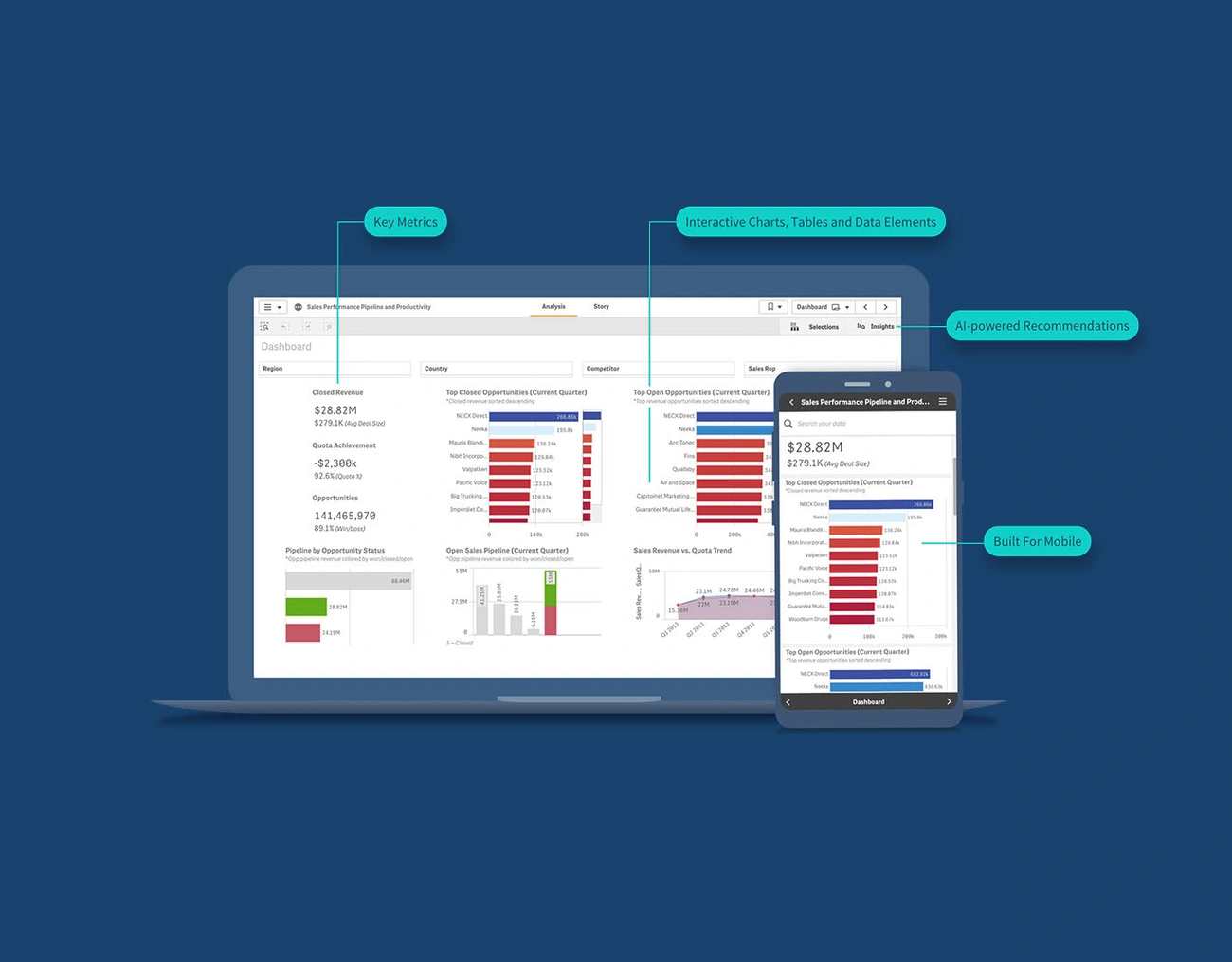
Image Source: Qlik
Sales organizations now rely on informed metrics instead of gut instinct to predict outcomes. Let's get into four powerful predictive metrics that modern sales teams use with AI to boost results.

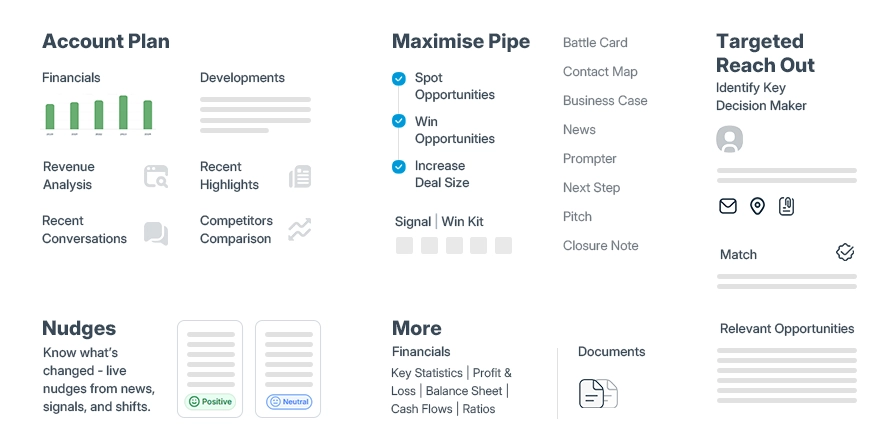
Deal velocity shows how fast opportunities progress through your sales pipeline to closure. This metric goes beyond traditional sales cycle measurements by combining multiple factors to predict revenue generation speed. The formula takes the number of opportunities, multiplies it by average deal size and win rate, then divides by your sales cycle length. This approach gives you a dollar value that represents expected daily revenue generation.
Deal velocity helps you spot bottlenecks in your sales process. Your organization faces higher risks when deals get stuck during contract negotiations. To cite an instance, delays give prospects extra time to change their mind or competitors to step in. Stalled deals also tie up your sales and legal resources, which drives up your average cost per deal.
AI tools do a great job of tracking and analyzing deal velocity patterns. They alert teams about opportunities that need attention before risks arise.
A big pipeline matters, but volume alone won't guarantee success. The pipeline quality index looks at both quantity and quality to predict conversion likelihood. This metric proves very useful because different business lines can affect overall measurements differently - renewal deals usually stay open much longer than incremental sales.
A solid pipeline quality index has:
Pipeline coverage ratio (3-4x of sales target is usually healthy)
Stage-to-stage conversion time
Total pipeline value
Average sales cycle length
AI systems watch these factors non-stop. They warn you early when pipeline quality drops and suggest fixes before revenue takes a hit.
Customer lifetime value (CLV) measures what a customer is worth throughout your entire relationship. CLV looks at overall customer value instead of single-transaction worth. This metric helps you understand customer loyalty and average churn rates.
The simple CLV formula multiplies customer value by your organization's average customer lifespan. More detailed approaches factor in costs: CLV = (Average Revenue per Customer × Customer Lifespan) − Total Costs of Serving the Customer.
AI-powered CLV predictors analyze patterns in customer data to forecast future value. Sales teams can:
Find high-value customers for targeted marketing
Make better decisions about resource use
Improve product quality based on high-CLV customer feedback
Keep cash flow steady and reduce churn
A client spending $10,000 yearly for ten years has a CLV of $100,000, making them very valuable to keep.
Global markets see churn rates as high as 30%, so finding at-risk customers before they leave matters a lot. Good churn risk indicators look at both operational insights (falling purchases, smaller purchase amounts) and experience insights throughout the customer's journey.
Low engagement rates work as an early warning sign. AI tools track metrics like website visits, account logins, email opens, and click-through rates to spot disengaged customers.
AI analyzes customer feedback in support tickets and product reviews to find patterns that suggest unhappiness.
Dropping Customer Lifetime Value points to decreasing loyalty. AI can alert sales teams to step in before customers leave by tracking this metric.
AI systems can spot the "absence of signal" - customers who don't complain but have stopped engaging completely. These quiet customers often have the highest churn risk.
Sales teams gain clear visibility into their pipeline health, customer relationships, and future revenue by using these four predictive metrics with AI systems.
STOP CHASING PROSPECTS
START CLOSING DEALS!!
Sales professionals save an average of 2 hours and 15 minutes daily by using AI to automate manual tasks. AI's real value in sales extends beyond time savings—it completely changes the way teams operate and achieve results.
Sales teams often mistake being busy for being productive. A sales expert puts it well: "If all you're doing on a call with a prospect is saying 'hello,' all you'll hear is 'hell no'". Many organizations stumble by using a basic linear model. They break down results into theoretical activity plans that managers must coach weekly or daily.
Teams can escape this trap with AI by spotting the difference between meaningful interactions and wasted effort. Research shows that successful teams now use AI to optimize rather than force activity. This change matters because 81% of sales teams either experiment with or fully use AI tools.
Numbers tell the story clearly: 83% of AI-equipped sales teams grew their revenue versus 66% of teams without it. It also helps that sales reps with AI are 2.4x less likely to feel overwhelmed. This shows that AI doesn't just add more tasks—it makes each activity count more.
Effective sales activities target four essential areas: educating prospects, gathering vital information, showcasing solution benefits, and closing deals. AI helps direct reps toward these valuable activities.
AI-powered tools analyze massive data sets to spot patterns that humans might miss. Sales teams can now make decisions based on solid evidence instead of gut feelings.
The technology helps reps focus on promising opportunities. AI can identify frequent website visitors or track sudden activity increases to highlight prime targets for immediate contact. About 80% of reps using AI say they easily get customer insights needed to close deals, compared to 54% at companies without AI.
Sales teams can build stronger relationships while AI handles routine tasks. Studies show AI doubles the time reps spend selling to customers—from roughly 25% to 50% of their day.

AI provides deeper insights into customer engagement quality beyond basic metrics like call counts or email numbers. This represents a significant change in measuring sales effectiveness.
AI sentiment analysis tools give a complete view of active conversations. Coaches can quickly detect if prospect interactions turn negative. AI also predicts deal closure likelihood based on past data and specific characteristics.
Modern engagement tracking looks at three main areas:
Total engagement across active users in a specific period
Engagement per active user during that time
Engagement buckets that group users into power, core, and casual categories
This detailed approach helps track whether casual users become core users or stop engaging.
Results prove AI's value—AI-powered lead scoring boosts conversions by 25% and increases add-to-cart actions by 17%. Small behaviors predict big outcomes. Companies see better performance within 60 days of implementing sales AI.
AI complements rather than replaces sales jobs. About 68% of teams using AI hired more people last year, while only 47% of non-AI teams did the same. The technology works as a partner, helping teams handle more leads without sacrificing quality.


Sales organizations conduct pipeline meetings more than once a month 72% of the time, yet forecast accuracy remains a tough challenge. Traditional sales forecasting methods can't keep up with AI solutions that provide clearer insights into future revenue.
Stage-based forecasting gives weighted probabilities to deals based on their current sales cycle position. Salesforce's default stages go from Prospecting (10%) to Negotiation/Review (90%). This approach has several key problems:
Ignores deal complexity - Stage-based probabilities can't handle deal-specific issues like multiple stakeholders, budget changes, or competitive threats
Relies on historical averages - Complex sales don't follow historical conversion rates that this method assumes work for all deals
Overlooks deal duration - A deal's time in a particular stage substantially changes its closing chances, but traditional forecasting misses this
Combines incompatible activities - Sales teams often mix pipeline management with forecasting on their calendars, which hurts pipeline health
These issues lead to missed forecasts. Four out of five sales managers miss at least one forecast every quarter.
AI forecasting moves away from probability guesswork toward data-driven predictions. These systems look at hundreds of variables and spot troubled deals 60+ days before usual warning signs appear.
Today's AI forecasting tools learn about deal health through signal analysis. Take Gong's AI Deal Predictor - it looks at over 300 signals from CRM data, calls, meetings, emails, and conversation features. The system ranks deals by health percentiles instead of using simple probabilities.
Companies using AI-powered forecasting see up to 20% better accuracy. Teams that make use of AI for forecasting report major improvements 41% of the time, while 43% see moderate gains.
AI does more than predict outcomes - it shows why deals succeed or fail. Sales leaders can use these insights to coach their teams better and fix processes instead of just watching numbers.
AI sales forecasting now combines external factors with internal pipeline data. Adding outside information makes predictions more accurate by including real-life factors that affect buying decisions.
New external data sources include:
Economic indicators like GDP growth and consumer confidence show broader spending patternsIndustry trends reveal new products, changing market conditions, and shifting customer priorities Environmental factors such as weather data affect seasonal demandSocial trends from online reviews and social media provide real-time insights
Companies that combine external data see clear benefits: better accuracy, early warning systems that lower risk, smarter decisions, and smoother operations.
Making different data sources work together while maintaining quality presents technical challenges. Smart companies solve these issues through data standards, quality checks, integration tools, and good relationships with data providers.
Monthly or quarterly forecasts will soon be outdated. AI-powered sales forecasting brings continuous updates - teams can adjust their strategy based on current data rather than last month's numbers.
Companies that make use of artificial intelligence in sales perform better than their competitors. They discover hidden performance patterns and address critical gaps. Organizations using AI-powered insights see real improvements in performance. They generate higher revenue and optimize their efficiency.
Your SDRs work 9–5
AI Sales works 24/7!!
A precise assessment starts the process of skill development. A 2022 survey revealed that executives believed 38% of their workers would need "fundamental retraining or replacement" within three years to fix workforce skills gaps. AI-powered skill gap analysis helps organizations identify their sales teams' exact training needs.
Johnson & Johnson led the way with "skills inference" - an AI system that analyzes employee data to measure skills proficiency. They defined 41 specific "future-ready" skills and integrated relevant data sources. A large language model helped them rate each technologist's proficiency on a 0-5 scale. The results were impressive. Professional development engagement grew by 20%, and 90% of technologists used the learning platform.
AI does more than identify gaps. It provides tailored coaching through sales call analysis, interaction recording, and targeted feedback. Sales representatives practice their pitches through AI-powered role-plays customized for specific deals. Companies that use AI-driven skill development see sales grow up to 10% while costs drop by 20%.
AI-powered territory optimization turns basic geographical assignments into a competitive edge. These systems analyze lead volume, market potential, and sales rep capacity. Sales teams get a fair distribution of opportunities. Territories stay balanced as market conditions evolve.
Numbers tell the story clearly. Teams using AI territory planning tools become 40% more efficient. Predictive scoring finds high-potential opportunities, which has increased new customer acquisition by 35%.
AI monitors territory performance constantly and adjusts based on up-to-the-minute data. Sales teams focus on promising regions and segments without guessing what might work.
Competitive win rate is a vital performance indicator. It shows the percentage of deals won against direct competitors. The calculation divides competitive deals won by total competitive opportunities. This metric reveals your team's success against specific rivals.
AI finds patterns in successful deals to improve competitive win analysis. Companies that use AI to optimize sales activities see their win rates jump by 50%. Key findings show:
Enterprise deals are 233% less likely to close without decision maker involvement
Team selling approaches make you 258% more likely to close deals
Discussing competitors early improves closing chances by 49%
Win rates increase 10% when pricing discussions occur during first calls
Companies that track competitive win rates spot and handle competitive threats 40% faster than others. This creates a significant advantage.
These AI-powered insights offer more than short-term gains. Organizations that use Sales AI build lasting competitive advantages. They make data-driven decisions that steadily increase their lead over competitors who still rely on gut feelings.
"Leadership isn't about being the genius in the room—it's about being the genius maker." — Scott Miller, EVP, FranklinCovey; leadership expert
Recent studies show 60% of customers still prefer human interactions over AI. This significant insight highlights why sales strategies need a thoughtful balance between automation and personal connection.
Successful sales organizations create clear frameworks to determine which activities work better with automation versus human involvement. Here's how to find the optimal split:
Automate routine tasks - AI automation works best for data entry, original outreach emails, and social media management
Keep the human element for complex situations - Empathy and creativity from real people make a difference during discovery calls, negotiations, and conflict resolution
A customer trip visualization helps teams spot where automation streamlines processes and human intervention builds vital trust. Companies that take this balanced approach see their AI investments boost revenue by 15% and improve sales ROI by 10-20%.
"Sales humanity" has grown more vital as discussions about AI in sales continue to expand. AI tools now let salespeople spend more time on these human factors that make the difference.
Copilot for Sales shows this approach by integrating next-generation AI and sales insights into everyday productivity tools. This AI assistant helps sellers streamline their work through email support, customized content creation, and analytical insights without taking over core human duties.
Future leaders will exploit both their technology and talent to deliver better value. The aim isn't to replace sales professionals but to improve their skills—AI handles data analysis while humans build relationships that close deals.
Strong relationships between people and technologies need trust as their foundation. High-stakes sales scenarios demand transparency—customers should know whether they're talking to AI or a human.
Sales representatives need complete access to conversation history and context when leads move from AI-managed interactions. The timing of these handoffs matters to avoid disrupting leads mid-conversation or surprising them with unexpected transfers.
Great salespeople stand out through authentic connections. AI keeps evolving, but it will never match the genuine human connection that exceptional salespeople create.
AI sales tools work best when you plan how they fit with your current processes and business goals. Your organization needs a clear approach to get the most value and adoption.
Sales tools must talk to your CRM or they'll create more work instead of less. The right AI setup starts with smooth integration that lets data flow easily between platforms. Teams that beat their revenue goals often automate their sales processes - about 61% of them do this.
You should check your existing tech stack before adding new AI sales tools. Look for tools that work with your CRM, marketing automation, and communication platforms. Your data needs strong protection through encryption, access controls, and GDPR compliance.
For optimal results:
Start small with one area of your sales process before expanding
Find the weak spots in your workflow where AI can help most
Clean and organize your data before moving it
Change management makes AI integration work because it helps technology improve - not disrupt - your business and people. Your sales team should help choose the tools. They often spot important requirements that lead to better results.
Training should include user-friendly interfaces, onboarding videos, and easy-to-reach support. Research shows three things matter a lot for AI adoption: clear explanation of what AI does, trust in leadership, and confidence in ability to adapt.
Getting AI's true value means tracking both early signs and long-term financial effects. Set your baseline KPIs before you start - this gives you a clear way to measure improvements.
A full picture needs both process measures (that show likely ROI) and output measures (that show actual ROI). Process measures look at customer satisfaction and employee productivity, while output measures track revenue growth, cost savings, and better performance.
AI implementation needs constant monitoring and fine-tuning to deliver the results you want.
The rise of ai sales intelligence moves quickly toward a future where AI doesn't just help—it anticipates and acts. Sales teams will fundamentally change how they utilize technology by 2025.
Agentic AI marks the next frontier in sales technology. These autonomous software entities can see, decide, and act within digital environments. Future AI tools will handle complex workflows without human input and manage entire deals. AI agents will smoothly coordinate approvals between multiple stakeholders. They will process customer requests before problems arise. AI adoption will reach new heights. Experts predict that agentic AI will make at least 15% of daily work decisions by 2028.
Tomorrow's CRM systems will do more than store data—they'll drive revenue execution. AI-integrated CRM platforms will blend artificial intelligence, workflow automation, and live system integrations. This combination will deliver the right insights at the perfect moment. These systems will capture sales interactions automatically. Your calls, meetings, and emails will sync directly into your CRM.
Revenue intelligence tools now give complete visibility into every aspect of sales performance. These tools combine human instinct, weighted pipeline analysis, and artificial intelligence. This combination creates unprecedented forecast accuracy. By 2030, 80% of sales leaders will see AI integration in sales workflows as a vital competitive edge. Revenue intelligence platforms will soon add blockchain for secure data sharing. IoT integration will provide live insights based on actual customer product usage.
AI has turned sales from a gut-feeling profession into an evidence-based discipline. The numbers tell a compelling story. AI doesn't just improve sales outcomes - it completely reshapes them with 91% accuracy in deal predictions compared to 67% with traditional methods. Teams that use sales intelligence tools see 34% better performance within 60 days, up to 10% more revenue, and 28% higher quota achievement rates.
Moving away from traditional sales tactics shows clear progress. Successful sales teams now use AI to focus on activities that matter most while automation handles routine tasks. Sales representatives can now spend 50% of their day actually selling, double their previous 25%.
AI analyzes complex signals like deal velocity scores, pipeline quality indices, customer lifetime value predictors, and churn risk indicators. These metrics give an unprecedented view of future revenue. Problems in deals become visible months before traditional indicators would show them.
The best sales organizations know how to balance automation with personal connection. AI serves best as a co-pilot, not a replacement. It handles data analysis, routine tasks, and early outreach while humans build relationships and handle complex negotiations. Companies typically see up to 15% more revenue and 10-20% better ROI with this approach.
The future of AI sales tools points toward greater autonomy by 2025. Agentic AI will manage complex workflows without human input. CRM systems will grow from simple data storage into revenue execution orchestrators. They will capture interactions automatically and surface useful insights at the right time.
Companies that thrive will implement AI sales tools strategically. They will focus on careful data integration, thoughtful change management, and continuous performance tracking. Despite AI's powerful capabilities, successful sales still needs human touch to build trust in high-stakes deals. This creates a powerful partnership between technological efficiency and genuine human connection.
According to industry forecasts, AI is projected to drive a 15% increase in sales productivity by 2025. This boost is attributed to advancements in technology, market maturity, and evolving customer expectations.
No, AI is not expected to replace human salespeople entirely. Instead, AI serves as a powerful tool to enhance human capabilities, handling data analysis and repetitive tasks while allowing salespeople to focus on relationship-building and complex negotiations.
By 2025, we can expect to see more autonomous AI agents handling complex sales workflows, deeper CRM integrations with real-time insights, and highly accurate revenue intelligence tools that combine human instinct with advanced data analysis.
Yes, a career in AI sales is considered promising. Studies indicate that AI can make people more valuable in their roles, even in highly automatable jobs. The integration of AI in sales is expected to create new opportunities and enhance existing roles rather than eliminate them.
Effective sales teams are using AI to automate routine tasks like data entry and initial outreach, while reserving human touch for complex situations such as discovery calls and negotiations. This balanced approach typically yields revenue increases of up to 15% and improves sales ROI by 10-20%.
Make Every Rep Speak
Like Your Top 1%


Category: Uncategorized Tags: ai, AIOps, Artificial Intelligence, cloud, cloud platform, Cybersecurity, Information and Communications Technology , VR