
Probiotics Market

Probiotics Market Report by Product Type (Functional Food & Beverages (FnB), Dietary Supplements, and Feed), Ingredient (Bacteria and Yeast), End User (Human and Animal), Distribution Channel, and Region - Global Forecast to 2030




OVERVIEW
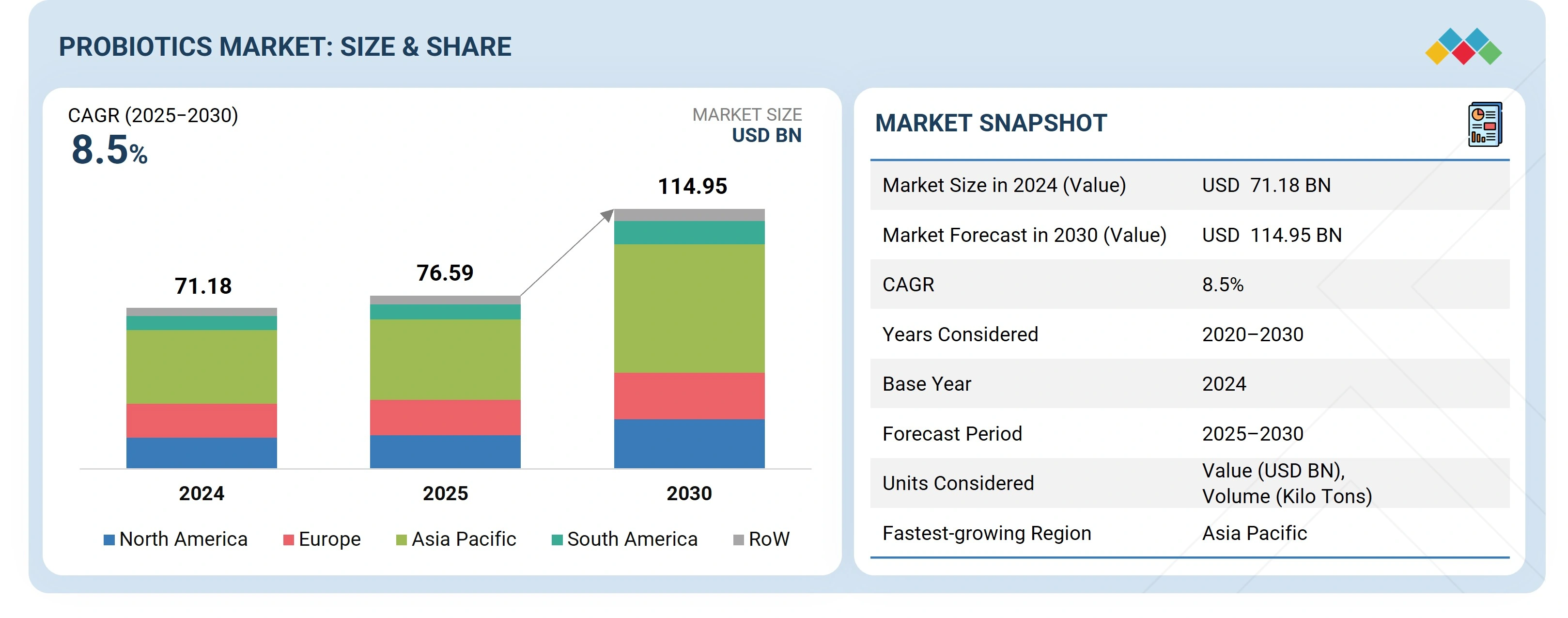
Source: Secondary Research, Interviews with Experts, MarketsandMarkets Analysis
The global probiotics market was valued at USD 76.59 billion in 2025 and is projected to reach USD 114.95 billion by 2030, growing at a CAGR of 8.5% from 2025 to 2030. Consumers are increasingly shifting toward condition-based segments and opting for nutritional products instead of excessive, self-medicated antibiotics to address gastrointestinal disorders and unhealthy lifestyle choices. This shift is a crucial aspect of this group's potential. Regions such as South Asia and the Pacific, including countries like China, Japan, and India, have seen a rise in the popularity of indigenous, locally developed probiotic products. These items are becoming lifestyle icons, serving as a test phase for how probiotics can integrate into traditional diets. Since the late 1980s, the awareness of probiotics has evolved from insufficient evidence of their benefits to a clearer understanding, with established definitions, regulations on consumption, and endorsements in place.
KEY TAKEAWAYS
-
By RegionThe Asia Pacific accounted for 45.9% of the probiotics market in 2024.
-
By IngredientsThe yeast segment is expected to register the highest CAGR of 9.7% during the forecast period.
-
By Product TypeThe dietary supplements segment will grow at the fastest rate during the forecast period.
-
By End UserThe human segment accounted for 93.2% of the market share in 2024.
-
By Distribution ChannelThe online segment will grow at the fastest rate during the forecast period.
-
Competitive Landscape – Key PlayersKey players in the probiotics market include Novonesis, International Flavors & Fragrances (IFF), Kerry Group, Archer Daniels Midland (ADM), Danone, Nestlé, Yakult Honsha, and BioGaia.
-
Competitive Landscape – StartupsEmerging players in the probiotics market include Probi AB, Winclove Probiotics, UAS Laboratories, AB-Biotics, and Deerland Probiotics & Enzymes.
The global probiotics market was valued at USD 76.59 billion in 2025 and is projected to reach USD 114.95 billion by 2030, growing at a CAGR of 8.5% from 2025 to 2030. The probiotics market is expected to experience growth as the food and nutrition industries increasingly adopt advanced encapsulation technologies. These technologies aim to improve ingredient performance while enhancing product stability and shelf life. By utilizing nanoencapsulation, sensitive bioactives such as vitamins, minerals, omega-3 fatty acids, probiotics, flavors, carotenoids, and polyphenols can be protected from heat, humidity, oxygen, and processing stresses. With careful release, taste masking, and improved bioavailability, nanoencapsulation ensures exceptional food quality and sensory performance. This allows products to keep pace with the evolving packaging industry, which includes functional foods, fortified beverages, dietary supplements, infant nutrition, and sports nutrition products.
TRENDS & DISRUPTIONS IMPACTING CUSTOMERS' CUSTOMERS
The probiotics market is being shaped by a shift toward strain-specific, clinically substantiated products, as manufacturers move away from generic formulations to targeted solutions for digestive health, immunity, pediatrics, women’s health, and metabolic support. There is a clear trend toward non-dairy and shelf-stable formats, driven by lactose intolerance, plant-based diets, and the need for ambient storage. Advances in fermentation, stabilization, and encapsulation technologies are enabling wider application across supplements, beverages, and fortified foods, while e-commerce and direct-to-consumer models are accelerating product launches and consumer reach. Market disruption is primarily driven by regulatory tightening on health claims, increasing demand for scientific validation, and rapid innovation by specialized players. Companies lacking strain ownership, clinical data, or formulation capabilities face margin pressure and the risk of delisting in regulated markets. At the same time, digital health platforms, personalized nutrition, and microbiome testing are beginning to influence product development and consumer expectations. These factors are reshaping competitive dynamics, favoring players with strong R&D capabilities, regulatory expertise, and scalable production infrastructure, while accelerating consolidation across the probiotics value chain.
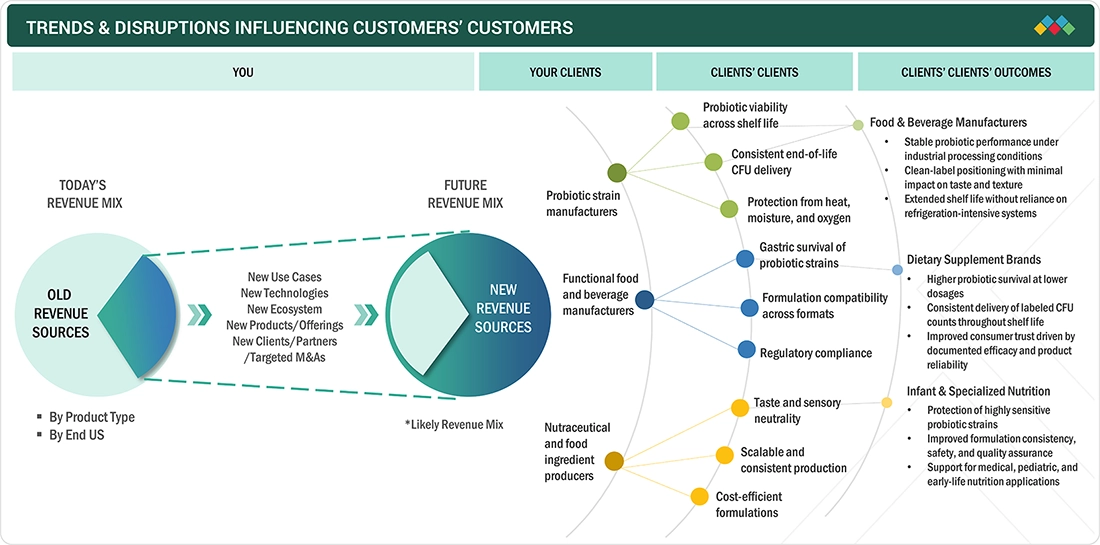
Source: Secondary Research, Interviews with Experts, MarketsandMarkets Analysis
MARKET DYNAMICS

Level
-
Rising demand for digestive health, immunity, and preventive nutrition

-
Integration of probiotics into daily-consumption foods and beverages


Level
-
Regulatory restrictions on probiotic health claims

-
Stability and viability issues across processing and storage


Level
-
Expansion of condition-specific and strain-specific probiotics

-
Growth of non-dairy and shelf-stable probiotic formats


Level
-
High cost of strain development and clinical validation

-
Maintaining viability across large-scale manufacturing

Source: Secondary Research, Interviews with Experts, MarketsandMarkets Analysis
Driver: Rising demand for digestive health, immunity, and preventive nutrition
Demand for probiotics is being driven by increasing diagnoses of gastrointestinal disorders, higher antibiotic use that impacts the gut microbiota, and growing acceptance of preventive nutrition across age groups. Probiotics are increasingly positioned as daily-consumption products through foods, beverages, and supplements, supporting repeat purchase behavior. Healthcare professionals are also recommending probiotics as adjuncts to antibiotic therapy and pediatric nutrition, strengthening demand in clinical and pharmacy-led channels.
Restraint: Regulatory restrictions on probiotic health claims
Probiotic commercialization is constrained by strict regulations governing health and functional claims, particularly in the US and Europe. Authorities require clear strain identification, stability throughout shelf life, and scientific substantiation for any claimed benefit. These requirements increase development timelines, limit on-pack communication, and create uncertainty for food-based probiotic launches, especially for small and mid-sized manufacturers operating across multiple regions.
Opportunity: Expansion of condition-specific and strain-specific probiotics
Advances in microbiome science are enabling manufacturers to develop strain-specific probiotics targeted at defined health outcomes such as infant gut health, women’s health, immunity, and metabolic support. This shift supports premium pricing, differentiation, and stronger engagement with healthcare professionals. Targeted formulations also enable entry into medical nutrition and hospital channels, expanding the addressable market beyond traditional consumer wellness segments.
Challenge: High cost of strain development and clinical validation
Developing commercially viable probiotic strains requires significant investment in screening, fermentation optimization, stability testing, and human clinical studies. Scaling production while maintaining consistent viability and regulatory compliance adds further complexity. These factors increase entry barriers and favor established players with dedicated R&D infrastructure, regulatory expertise, and global manufacturing capabilities.
PROBIOTICS MARKET: COMMERCIAL USE CASES ACROSS INDUSTRIES
| COMPANY | USE CASE DESCRIPTION | BENEFITS |
|---|---|---|
 |
Development and large-scale fermentation of clinically documented probiotic strains for dietary supplements, functional foods, infant nutrition, and medical nutrition applications, with focus on strain stability and regulatory compliance | Ensures consistent strain performance, improves shelf-life stability, supports regulatory acceptance, and enables scalable supply across multiple end-use segments |
 |
Production of probiotic ingredients and formulation support for supplements and functional foods, including stability optimization and application-specific blends | Improves probiotic viability during processing and storage, supports targeted formulations, and enables integration into diverse food and supplement matrices |
 |
Delivery systems and formulation technologies for probiotics in supplements and functional beverages, designed to enhance survival through processing and digestion | Enhances gastrointestinal survival, supports controlled release, and maintains probiotic efficacy throughout product shelf life |
 |
Application-focused probiotic solutions for functional foods, beverages, and nutrition products, including multi-strain blends and stability-enhancing technologies | Enables incorporation of probiotics into everyday foods, improves taste and formulation compatibility, and supports clean-label positioning |
Logos and trademarks shown above are the property of their respective owners. Their use here is for informational and illustrative purposes only.
MARKET ECOSYSTEM
The probiotics market ecosystem operates through an integrated flow that connects ingredient innovation, product manufacturing, regulation, and distribution. At the upstream level, ingredient and technology providers develop probiotic strains, fermentation processes, and stabilization solutions that ensure viability, safety, and consistency. Their role includes strain discovery, scale-up fermentation, drying or coating technologies, and technical support to enable use across food, supplement, and clinical applications. Food and functional nutrition manufacturers sit at the core of the ecosystem, converting probiotic ingredients into finished products such as fermented foods, beverages, dietary supplements, infant nutrition, and medical nutrition. This stage involves formulation design, dosage optimization, shelf-life validation, sensory compatibility, and compliance with market-specific requirements. Product portfolios are shaped by consumer health needs, application feasibility, and channel strategy. Regulatory and standards authorities define the framework for the commercialization of probiotics. They govern strain approval, safety assessments, labeling norms, and permissible claims. Regulatory compliance directly impacts product positioning, launch timelines, and cross-border scalability. Downstream, distribution and end-use channels, including ingredient distributors, retail chains, pharmacies, direct-selling networks, and online platforms, connect products to end consumers. Market feedback from sales performance, healthcare recommendations, and consumer adoption flows back into portfolio optimization, creating a continuous improvement loop across the ecosystem.
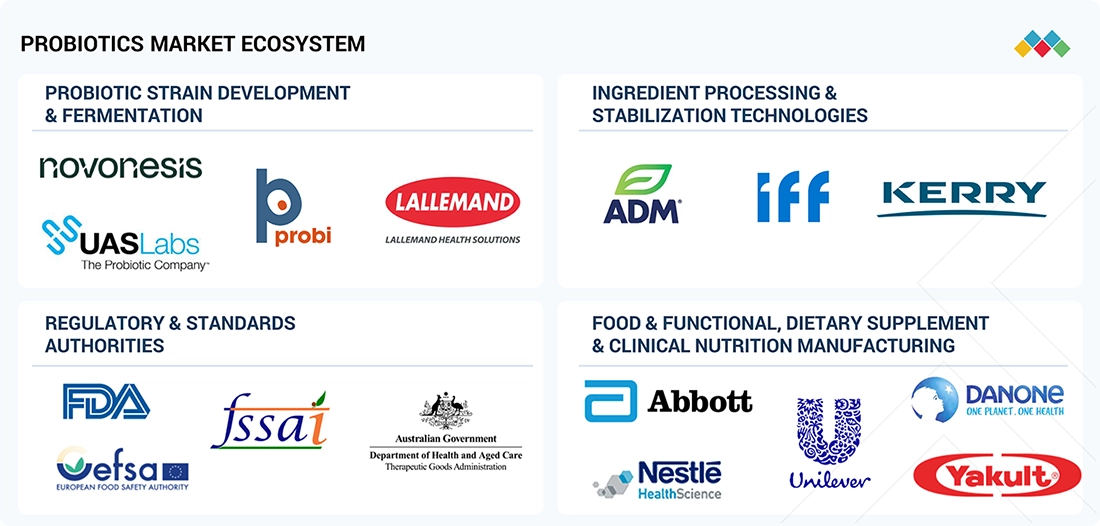
Logos and trademarks shown above are the property of their respective owners. Their use here is for informational and illustrative purposes only.
MARKET SEGMENTS
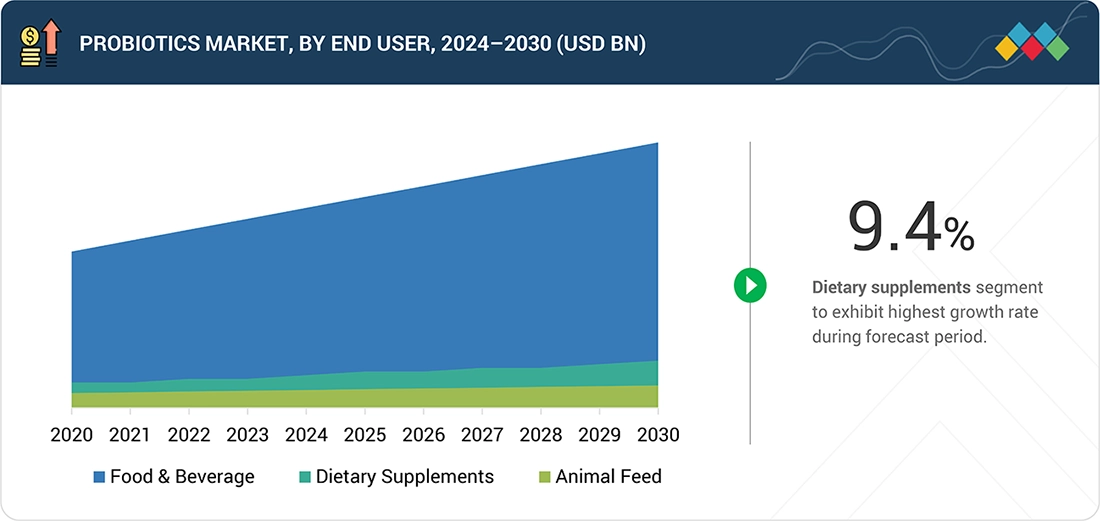
Source: Secondary Research, Interviews with Experts, MarketsandMarkets Analysis
Probiotics Market, by Product Type
By product type, the food & beverage sector holds the largest share of the probiotics market, driven by high consumption frequency and integration into daily diets. Probiotic dairy products, such as fermented milk drinks and yogurts, along with an increasing variety of non-dairy beverages, facilitate regular intake, leading to higher sales volumes compared to occasional supplement use. Consumers view probiotic foods as natural and preventive, which lowers adoption barriers across various age groups, including children and the elderly. The established cold-chain infrastructure, brand familiarity, and wide availability in retail outlets have further supported the large-scale commercialization of probiotic foods. Dietary supplements represent a rapidly growing subsegment, particularly in capsule, powder, and sachet formats, thanks to their targeted health positioning and convenient dosing. However, while supplements typically deliver higher value per unit, they tend to have lower sales volumes than food-based formats. Feed-grade probiotics, although a smaller segment, are structurally important due to their role in managing livestock gut health and reducing reliance on antibiotic growth promoters. Overall, food and beverages continue to dominate the market because of repeat purchasing behavior, a broader consumer base, and the ease of integrating these products into daily nutrition. Continuous innovation in flavors, formats, and non-dairy alternatives is further enhancing the contributions of this product segment to overall market growth.
Probiotics Market, by End User
The human end-user segment dominates the probiotics market, accounting for the majority of consumption and value generation. Demand is driven by widespread use of probiotics in dietary supplements, functional foods, infant nutrition, and medical nutrition products targeting digestive health, immunity, and overall wellness. Rising healthcare awareness, increasing gastrointestinal issues, and growing use of probiotics as adjuncts to antibiotic therapy are reinforcing adoption across multiple age groups. Human probiotics benefit from a strong distribution infrastructure, including pharmacies, supermarkets, specialty health stores, and online platforms. This segment also supports higher product differentiation through strain-specific formulations, clinical substantiation, and targeted health claims, enabling premium pricing and brand loyalty. Infant and pediatric applications remain particularly significant due to the strong involvement of healthcare professionals and caregivers in purchase decisions. The animal end-user segment, while growing, remains smaller in value terms and is primarily driven by feed efficiency, gut health, and disease prevention in livestock and aquaculture. Although regulatory pressure to reduce antibiotic usage supports long-term adoption, animal probiotics are more price-sensitive and volume-driven. As a result, human consumption continues to anchor investment priorities and innovation activity within the probiotics market.
Probiotics Market, by Ingredient
The ingredient segment of the probiotics market is dominated by bacterial probiotics, particularly strains belonging to Lactobacillus and Bifidobacterium. These bacteria account for the majority of commercial applications due to their established safety profiles, extensive clinical documentation, and broad regulatory acceptance. Their proven efficacy in digestive health, immune support, and pediatric nutrition has made them the preferred choice for food, supplement, and medical nutrition manufacturers. Bacterial probiotics benefit from mature fermentation technologies, scalable production processes, and compatibility with multiple delivery formats, including capsules, sachets, dairy products, and beverages. Advances in stabilization, freeze-drying, and protective coating techniques have further improved their viability during processing and storage, supporting expansion into shelf-stable products. Yeast-based probiotics, such as Saccharomyces boulardii, represent a smaller but specialized segment. These ingredients are mainly used in clinical and therapeutic applications due to their resistance to antibiotics and gastric conditions. However, their narrower application scope and higher formulation complexity limit widespread use. As a result, bacterial probiotics continue to dominate the ingredient segment, supported by manufacturing scalability, scientific validation, and broad end-use applicability.
Probiotics Market, by Distribution Channel
Hypermarkets and supermarkets account for the largest share of probiotic product distribution, driven by their role as primary retail outlets for food, beverages, and daily health products. Probiotic foods and drinks benefit significantly from shelf placement in dairy and beverage aisles, where high footfall and impulse purchasing support volume sales. Centralized procurement and nationwide distribution networks allow manufacturers to scale rapidly through this channel. Pharmacies and drugstores represent a key channel for probiotic supplements and pediatric formulations, where professional recommendation influences purchasing decisions. These outlets support higher-value products and reinforce credibility, particularly for clinically positioned probiotics. Specialty health stores cater to premium and niche formulations, while online channels are gaining momentum due to convenience, subscription models, and access to detailed product information. Despite rapid growth in e-commerce, supermarkets remain dominant due to frequent shopping cycles, cold-chain availability, and consumer trust in established food retailers. The coexistence of mass retail for volume growth and pharmacy/online channels for value growth continues to define the distribution landscape of the probiotics market.
REGION
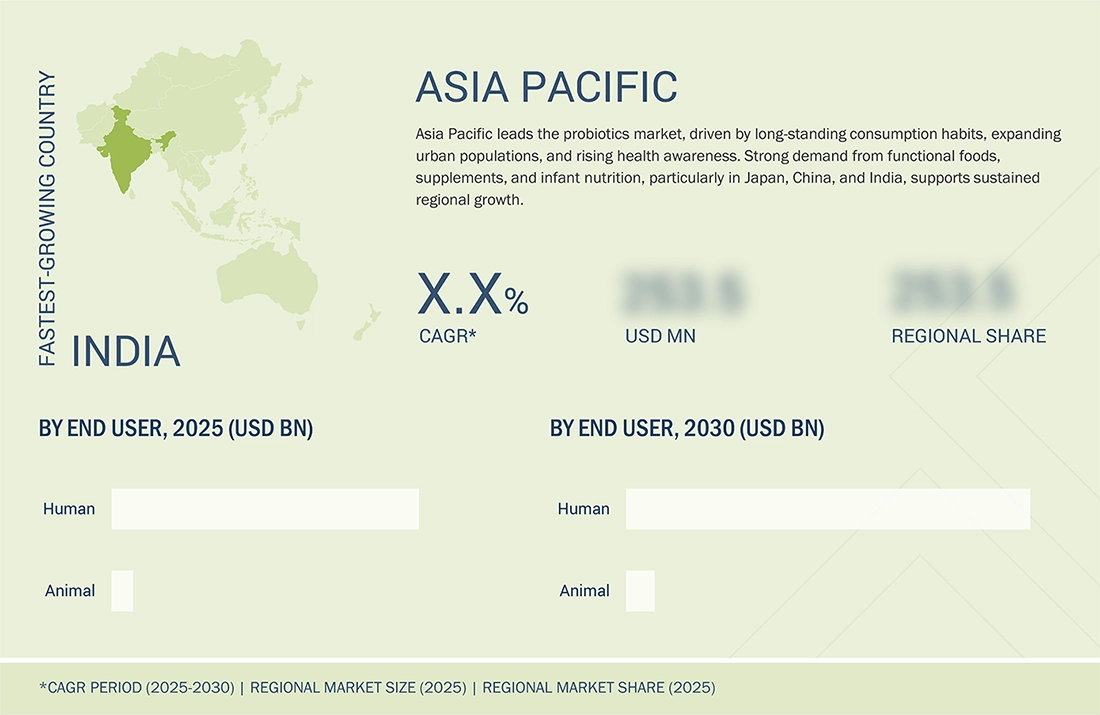
Asia Pacific is the largest and fastest-growing region in the probiotics market
Asia Pacific leads the probiotics market, supported by long-standing consumption habits, high awareness of gut health, and strong participation from regional and multinational companies. Japan remains a foundational market, led by Yakult Honsha Co., Ltd., which has continued to expand localized production and distribution across Southeast Asia through the 2020s. In China, multinational players such as Danone S.A. expanded specialized nutrition and fermented dairy capacity between 2021 and 2023 to address rising demand for digestive and pediatric nutrition. India has emerged as a high-growth market, with Nestlé S.A. strengthening its probiotic dairy and nutrition portfolio through product launches and localized sourcing initiatives since 2022. Regional ingredient suppliers and domestic brands are also increasing investments in fermentation capacity and formulation capabilities. These developments, combined with rising urbanization and modern retail expansion, continue to position Asia Pacific as the central growth engine of the global probiotics market.
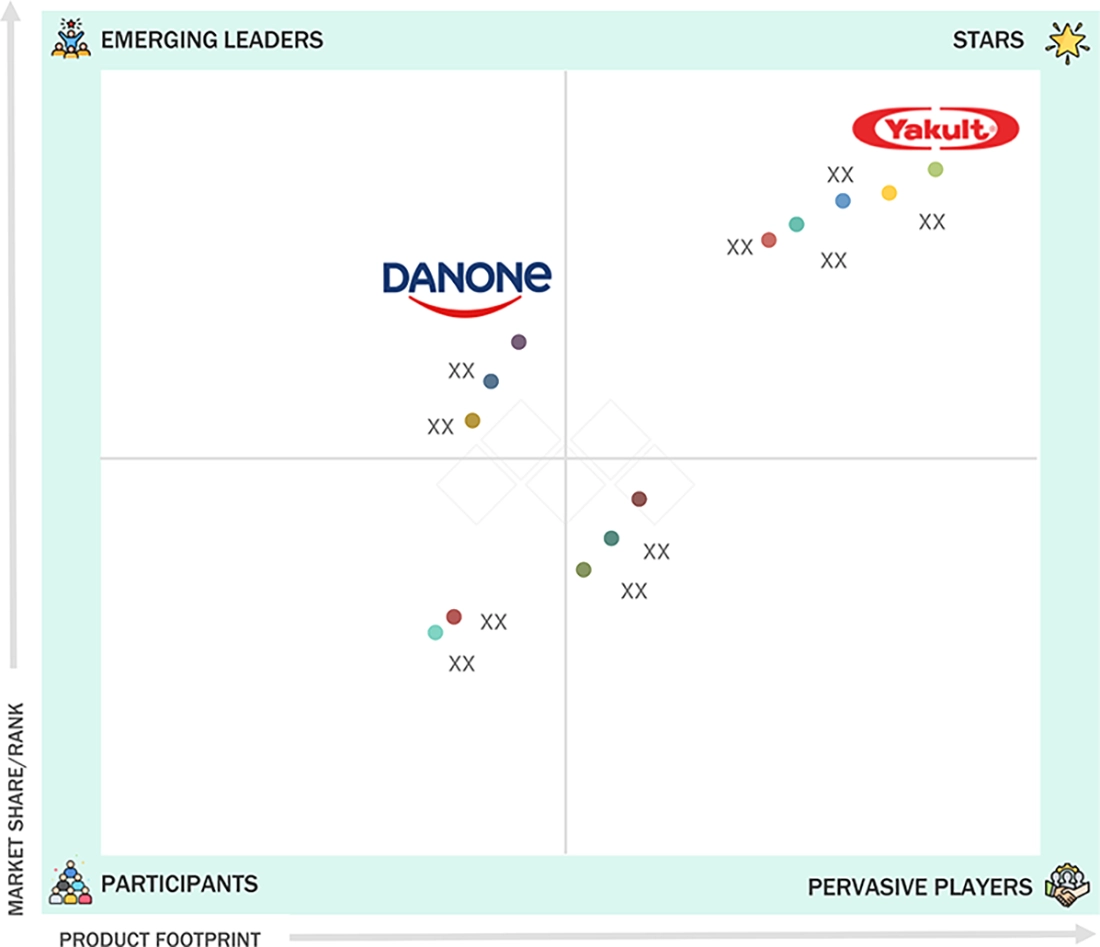
PROBIOTICS MARKET: COMPANY EVALUATION MATRIX
The market quadrant analysis of the probiotics market highlights clear differentiation among players based on product footprint and market reach. Companies positioned in the Stars quadrant demonstrate strong global presence combined with broad and well-established probiotic portfolios. These players benefit from high brand recognition, extensive distribution networks, and consistent demand driven by routine consumption patterns. Their positioning reflects sustained investment in product expansion, geographic scale, and consumer engagement, enabling them to maintain leadership across multiple regions and applications. The Emerging Leaders quadrant captures companies that show strong growth momentum and expanding probiotic offerings but with comparatively narrower global penetration. These players are actively strengthening their portfolios through innovation, regional expansion, and targeted positioning in functional foods and nutrition segments. The Pervasive Players category includes companies with wide geographic presence but relatively limited product breadth, often focusing on select formats or regions. Meanwhile, Participants represent companies with localized operations or narrower portfolios, typically addressing specific consumer segments or regional markets. Overall, the quadrant illustrates a market where scale, portfolio depth, and consumption frequency are key determinants of competitive positioning, with clear pathways for upward movement through portfolio diversification and geographic expansion.
Source: Secondary Research, Interviews with Experts, MarketsandMarkets Analysis
KEY MARKET PLAYERS
- Novonesis A/S (Denmark)
- Yakult Honsha Co., Ltd. (Japan)
- Danone S.A. (France)
- Nestlé S.A. (Switzerland)
- BioGaia AB (Sweden)
- Probi AB (Sweden)
- Archer Daniels Midland Company (ADM, US)
- International Flavors & Fragrances (IFF, US)
- Kerry Group plc (Ireland)
- Lallemand Inc. (Canada)
- Morinaga Milk Industry Co., Ltd. (Japan)
- Meiji Holdings Co., Ltd. (Japan)
- Lifeway Foods, Inc. (US)
- UAS Laboratories LLC (US)
- Reckitt Benckiser Group plc (UK)
MARKET SCOPE
| REPORT METRIC | DETAILS |
|---|---|
| Market Size in 2024 (Value) | USD 71.18 BN |
| Market Forecast in 2030 (Value) | USD 114.95 BN |
| CAGR | 8.5% |
| Years Considered | 2020–2030 |
| Base Year | 2024 |
| Forecast Period | 2025–2030 |
| Units Considered | Value (USD Billion), Volume (Kiloton) |
| Segments Covered |
|
| Region Covered | North America, Europe, Asia Pacific, South America, RoW |
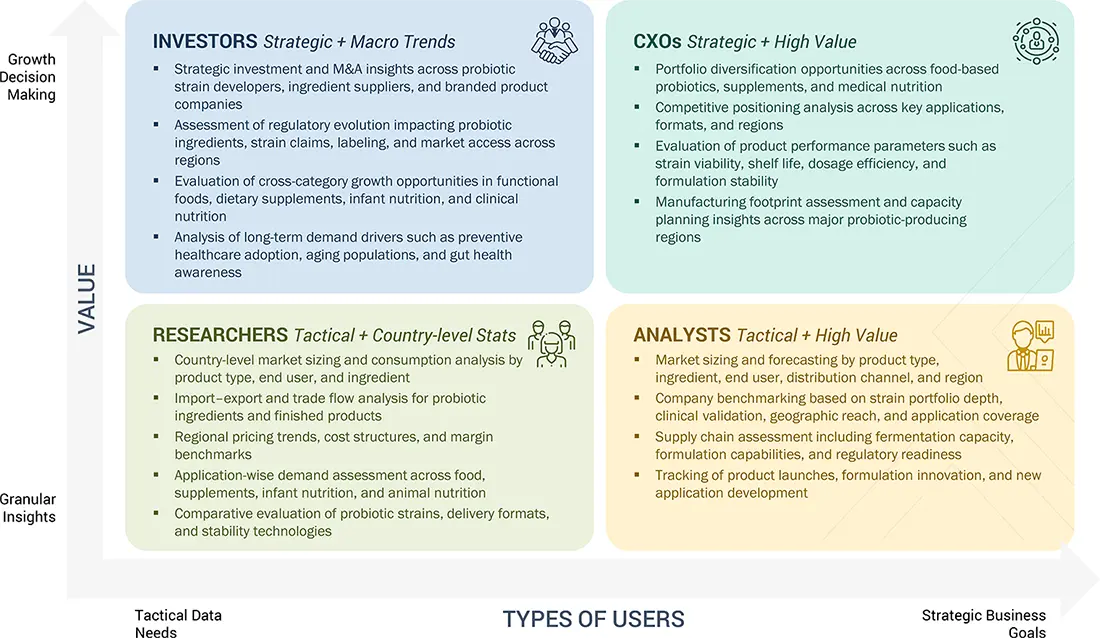
WHAT IS IN IT FOR YOU: PROBIOTICS MARKET REPORT CONTENT GUIDE
DELIVERED CUSTOMIZATIONS
We have successfully delivered the following deep-dive customizations:
| CLIENT REQUEST | CUSTOMIZATION DELIVERED | VALUE ADDS |
|---|---|---|
| Probiotics Market |
|
|
| Functional & Probiotic Foods Market |
|
|
| Dietary Supplements Probiotics Market |
|
|
| Infant & Clinical Nutrition Probiotics Market |
|
|
RECENT DEVELOPMENTS
- November 2025 : Probi expanded its probiotic offering with Sports & Active Nutrition by Probi (L. plantarum 299V for human performance), Pets by Probi (LP6595 and S. salivarius for pet digestive/oral health), and Bimuno GOS combined with Probi Defendum/Digestis for synbiotics in digestive and immune support.?
- October 2025 : PharmExtracta unveiled Colipral capsules with E. coli 5C (ECP24®) strain for ulcerative colitis remission, prostatitis prevention, and post-colonoscopy balance, plus Brevicillin Drops using Bifidobacterium breve PRL2020 for antibiotic-resistant child probiotics at CPHI 2025.?
- June 2025 : Danone acquired The Akkermansia Company to bolster its gut health portfolio with the pasteurized Akkermansia muciniphila MucT strain, targeting obesity, diabetes, and inflammation management.?
- April 2025 : Lallemand launched the Innov’Biome challenge seeking new probiotic strains, postbiotics, and microbiome applications for human health impacts through May 2025.?
- March 2025 : Lallemand Health Solutions launched Cerenity, a clinically studied probiotic blend targeting the gut-muscle axis to support mobility, strength, and quality of life in healthy aging.?
Table of Contents
 Exclusive indicates content/data unique to MarketsandMarkets and not available with any competitors.
Methodology
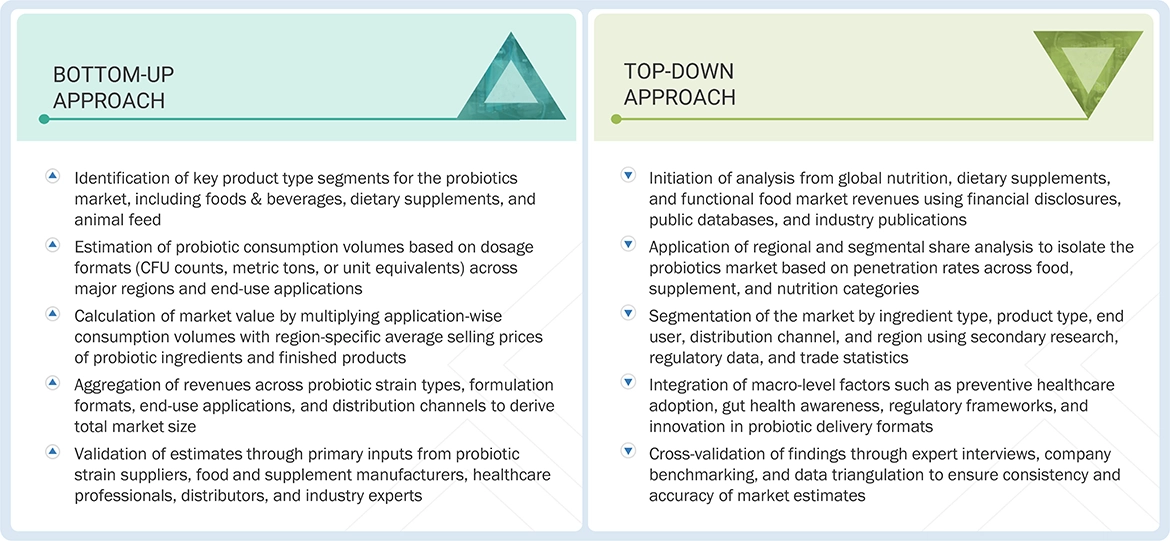
The study employed two primary approaches to estimate the current size of the probiotics market. Exhaustive secondary research was conducted to gather information on the market, peer markets, and parent markets. The next step was to validate these findings, assumptions, and sizing with industry experts across the value chain through primary research. Both top-down and bottom-up approaches were employed to estimate the complete market size. After that, market breakdown and data triangulation were used to estimate the market size of segments and subsegments.
Secondary Research
This research study involved the extensive use of secondary sources, directories, and databases such as Bloomberg Businessweek and Factiva to identify and collect information useful for a technical, market-oriented, and commercial study of the market.
In the secondary research process, various sources such as annual reports, press releases & investor presentations of companies, white papers, food journals, certified publications, articles from recognized authors, directories, and databases were referred to identify and collect information.
Secondary research was mainly used to obtain key information about the industry’s supply chain, the total pool of key players, and market classification and segmentation as per the industry trends to the bottom-most level, regional markets, and key developments from both market- and technology-oriented perspectives.
Primary Research
Extensive primary research was conducted after obtaining information regarding the probiotics market scenario through secondary research. Several primary interviews were conducted with market experts from both the demand and supply sides across major countries of North America, Europe, Asia Pacific, South America, and the RoW. Primary data was collected through questionnaires, emails, and telephonic interviews. The primary sources from the supply side included various industry experts, such as chief executive officers (CXOs), vice presidents (VPs), directors from business development, marketing, research, and development teams, and key opinion leaders. Primary interviews were conducted to gather insights into market statistics, revenue from products and services, market breakdowns, market size estimates, market forecasting, and data triangulation. Primary research also helped in understanding the various trends in packaging materials, types, formats, technologies, and applications. Stakeholders from the demand side, such as research institutions and universities, and third-party vendors, were interviewed to understand the buyer’s perspective on the service, and their current usage of packaging and the outlook of their business, which will affect the overall market.
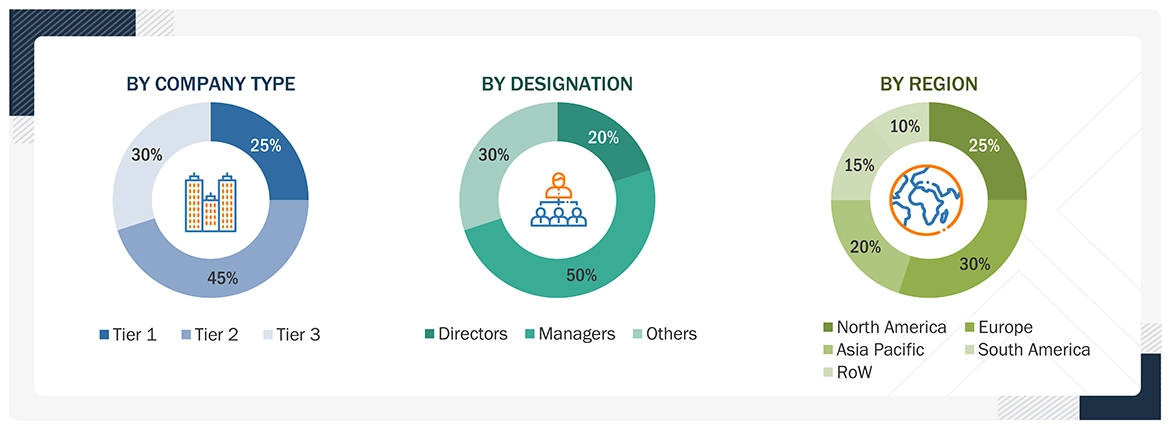
Note: The three tiers of the companies are defined based on their total revenues in 2024, as per the availability of financial data: Tier 1: Revenue >USD 1 billion, Tier 2: USD 100 million–1 billion, and Tier 3: Revenue USD 100 million.
To know about the assumptions considered for the study, download the pdf brochure
|
COMPANY NAME |
DESIGNATION |
|
Novonesis A/S (Denmark) |
R&D Scientist – Probiotics |
|
Danone S.A. (France) |
Global Probiotics Category Manager |
|
Nestlé Health Science (Switzerland) |
Medical Nutrition Manager |
|
Yakult Honsha Co., Ltd. (Japan) |
Probiotic Research Specialist |
|
BioGaia AB (Sweden) |
Clinical Affairs Manager |
Market Size Estimation
Both the top-down and bottom-up approaches were used to estimate and validate the total size of the probiotics market. These approaches were also widely used to determine the sizes of various subsegments in the market. The research methodology used to estimate the market size includes the following details:
- The key players in the industry and the overall markets were identified through extensive secondary research.
- All shares, splits, and breakdowns were determined using secondary sources and verified through primary sources.
- All possible parameters that affect the market covered in this research study were accounted for, viewed in extensive detail, verified through primary research, and analyzed to obtain final quantitative and qualitative data.
- The research included the study of reports, reviews, and newsletters of top market players, along with extensive interviews for opinions from leaders, such as CEOs, directors, and marketing executives.
Probiotics Market : Top-Down and Bottom-Up Approach
Data Triangulation
After arriving at the overall market size from the estimation process explained above, the total market was split into several segments and subsegments. The data triangulation and market breakdown procedures were employed, where applicable, to estimate the overall probiotics market and obtain exact statistics for all segments and subsegments. The data was triangulated by examining various factors and trends on both the demand and supply sides. The market size was also validated using both the top-down and bottom-up approaches.
Market Definition
The joint Food and Agriculture Organization (FAO)/World Health Organization (WHO) working group defines probiotics as “live micro-organisms, which when administered in adequate amounts confer a health benefit on the host” (FAO/ WHO, 2001).
Probiotics are living microorganisms that have been shown to provide specific health benefits to consumers. They are known to support gut health and help the digestive system run smoothly. Yogurt is one of the prime natural sources of probiotics.
According to the National Center for Complementary and Integrative Health, “Probiotics are live microorganisms that are intended to have health benefits when consumed or applied to the body.” The major function of probiotics is to maintain a healthy balance in the body. Several types of microorganisms are present in probiotics, and they may have different effects on the body. The most common bacteria belong to the group called Lactobacillus and Bifidobacterium.
Key Stakeholders
- Manufacturers, Importers and Exporters, Traders, Distributors, and Suppliers of Probiotics
- Nutraceutical Manufacturers
- Food Processors and Manufacturers
- Government and Research Organizations
- Trade Associations and Industry Bodies
- Regulatory Bodies and Associations
- Food and Agriculture Organization (FAO)
- World Health Organization (WHO)
- International Dairy Federation (IDF)
- European Food & Feed Cultures Association (EFFCA)
- National Yogurt Association (NYA)
- International Scientific Association for Probiotics and Prebiotics (ISAPP)
- International Probiotics Association (IPA)
- Council for Responsible Nutrition (CRN)
- National Yogurt Association (NYA)
- International Frozen Yogurt Association (IFYA)
- American Nutrition Association (ANA)
Report Objectives
- To determine, define, and project the size of the probiotics market, with respect to ingredient, product type, end user, distribution channel, and regional markets, over a five-year period, ranging from 2025 to 2030
- To identify the attractive opportunities in the market by determining the largest and fastest-growing segments across regions
- To provide detailed information about the key factors influencing the growth of the market (drivers, restraints, opportunities, and challenges)
- To analyze the micromarkets with respect to individual growth trends, prospects, and their contribution to the total market
- To strategically profile the key market players and comprehensively analyze their core competencies in each segment
- To track and analyze competitive developments, such as alliances, joint ventures, new product developments, mergers, and acquisitions, in the probiotics market
Available customizations:
With the given market data, MarketsandMarkets offers customizations according to company-specific scientific needs.
The following customization options are available for the report:
Product Analysis
- Product Matrix, which gives a detailed comparison of the product portfolio of each company
Geographic Analysis
With the given market data, MarketsandMarkets offers customizations according to company-specific scientific needs.
- Further breakdown of the Rest of the Europe probiotics market, by key country
- Further breakdown of the Rest of the Asia Pacific probiotics market, by key country
- Further breakdown of the Rest of South America probiotics market, by key country
Company Information
- Detailed analyses and profiling of additional market players
Need a Tailored Report?
Customize this report to your needs
Get 10% FREE Customization
Customize This ReportPersonalize This Research
- Triangulate with your Own Data
- Get Data as per your Format and Definition
- Gain a Deeper Dive on a Specific Application, Geography, Customer or Competitor
- Any level of Personalization
Let Us Help You
- What are the Known and Unknown Adjacencies Impacting the Probiotics Market
- What will your New Revenue Sources be?
- Who will be your Top Customer; what will make them switch?
- Defend your Market Share or Win Competitors
- Get a Scorecard for Target Partners

Custom Market Research Services
We Will Customise The Research For You, In Case The Report Listed Above Does Not Meet With Your Requirements
Get 10% Free CustomisationTESTIMONIALS

Business Innovation Director
US Based Leading Agribusiness,
Food and Ingredients ManufacturerI highly appreciate the team's efficiency for a well-conducted study that helped us clarify some blind spots in the area of proteins. Although compiling information for B2B ingredients is very difficult, the MnM team pulled out the task successfully. The quality of research, level of insights, and the responsiveness of the team were commendable!
Growth opportunities and latent adjacency in Probiotics Market







Taylor
Jul, 2026
How are probiotics gaining market share in the health and nutrition industry?.
Jennifer
Jul, 2026
Which industries are driving growth for probiotics and prebiotics?.
Morgan
Jul, 2026
Prebiotics and probiotics are gaining market share because consumers are increasingly prioritizing gut health and preventive wellness..
River
Jul, 2026
Functional foods and beverages are helping probiotics move into mainstream consumer markets..