2025 Sales Intelligence Strategy: Planning for Success
September 09, 2025
Did you know that companies using a Sales Intelligence Strategy are 3x more likely to close deals faster than those relying on traditional methods?
Surprising, right? As we approach 2025, the sales landscape continues to transform dramatically. I've watched countless sales teams struggle with outdated approaches while their competitors surge ahead with modern 2025 sales intelligence tools. The difference isn't just marginal—it's game-changing. In fact, organizations implementing advanced sales management strategies report a 35% increase in revenue within the first year.


The reality is simple: yesterday's sales tactics won't work in tomorrow's market. Customer expectations have evolved, competition has intensified, and the sheer volume of available data has exploded. Therefore, developing a forward-thinking Sales Intelligence Strategy isn't just helpful—it's essential for survival.
Throughout this article, I'll walk you through everything you need to know about building an effective Sales Intelligence Strategy for 2025. From leveraging real-time insights to implementing AI-powered forecasting, we'll cover the practical steps that will position your sales team for unprecedented success.
Sales intelligence has become the cornerstone of successful sales operations as we move further into 2025. Understanding its essence and implementation is crucial for any organization looking to stay competitive in an increasingly data-driven marketplace.
At its fundamental level, sales intelligence is the systematic collection, analysis, and application of data-driven insights that sales professionals use to make informed decisions throughout the selling cycle. It encompasses the tools, techniques, and practices that facilitate data collection, tracking, and analysis to provide critical information about prospects and customers.
The core purpose of sales intelligence is straightforward yet powerful—to prepare sellers with actionable data and insights before they engage with prospects. By conducting thorough research, sales professionals can approach conversations confidently and tailor their presentations to resonate with each prospect's unique situation.
Modern sales intelligence functions across the entire sales cycle—from prospecting to closing deals. Initially, it helps sales teams:
Prioritize the right leads based on data signals
Personalize outreach for better engagement
Anticipate prospect needs and objectives
Build confidence before entering sales conversations
Target prospects with solutions specific to their needs
As the sales process progresses, more detailed intelligence is gathered, creating a robust dataset that enables highly targeted solutions. This continuous enrichment of sales intelligence allows teams to adapt their strategies as they learn more about their prospects.
Additionally, the sales intelligence market reflects its growing importance, with projections showing it will reach USD 3.80 billion by 2025, growing at a Compound Annual Growth Rate (CAGR) of 12.3%. This significant growth underscores how essential these tools have become for forward-thinking sales organizations.

Although sales intelligence and business intelligence are often mentioned together, they serve distinctly different purposes. Business intelligence functions as your company's history textbook—cataloging past data, analytics, summaries, and decisions. It provides a broader view by analyzing historical and operational data across an entire organization.
Sales intelligence, conversely, focuses on why certain events occurred and how to improve future outcomes specifically in the sales context. Here are the key differences:
Focus and Perspective: Business intelligence is concerned with what happened in your business operations across all departments. Sales intelligence specifically targets sales data and explains why sales outcomes happen and how to improve them.
Time Orientation: Business intelligence creates long-term plans that typically implement slowly. Sales intelligence outlines immediate, actionable steps.
Scope: Business intelligence encompasses all areas of business data analysis—including finance, marketing, and operations. Sales intelligence specifically targets sales-related data to inform strategies and decisions.
Data Sources: Business intelligence typically relies on internal data. Sales intelligence gathers information from multiple external sources—including news feeds, social media, company databases, and public filings.
Primary Function: Business intelligence shows what happened in the business to guide strategic planning. Sales intelligence helps sales teams understand prospect behavior and context to optimize immediate sales activities.
Both approaches rely on data to generate actionable insights and use analytics to evaluate information and uncover trends. The key distinction lies in their application—sales intelligence is specifically designed to make your sales process more effective, personalized, and efficient.
A well-implemented Sales Intelligence Strategy combines quantitative insights like purchase history and engagement metrics with qualitative information such as buyer intent signals and competitive positioning. This approach enables sales teams to identify high-value opportunities, personalize outreach, and optimize their pipeline for maximum effectiveness.
Ready to turn your Rep
INTO BEST PERFORMER ?
Modern sales teams have replaced outdated reports with immediate data tracking that delivers insights as transactions occur. This shift from static to real-time data represents one of the most significant changes in how sales intelligence operates in 2025.
The traditional approach to data processing relied on batch processing—waiting for a set amount of data to accumulate before analysis. However, this created a fundamental problem: by the time insights were generated, they were already outdated. Consider a stock trading platform offering insights from 10 minutes ago—in an environment where stocks fluctuate every second, such 'late' information can mean the difference between profit and loss.
Real-time data processing has become essential for businesses looking to thrive in today's fast-paced environment. According to research, B2C companies that prioritize data-driven marketing are 1.5 times more likely to see increased engagement and revenue growth. This impact extends across sales operations in several ways:
Rapid market response: Real-time sales analytics allows businesses to respond instantly to market trends, customer preferences, and competitive dynamics
Proactive strategy: Instead of creating reactive strategies based on past events, real-time insights enable companies to anticipate market movements based on real-time triggers
Competitive edge: When you spot market trends before competitors, you gain significant advantage—especially important as AI adoption speeds up sales intelligence processes
Data-driven decisions: Through immediate tracking, sales teams can make informed choices backed by current data, not historical assumptions
Importantly, 64% of companies recognize that improving operations with real-time data is vital for achieving their business goals. This urgency exists because modern consumers expect immediate answers and service, making real-time analytics fundamental in today's marketplace.
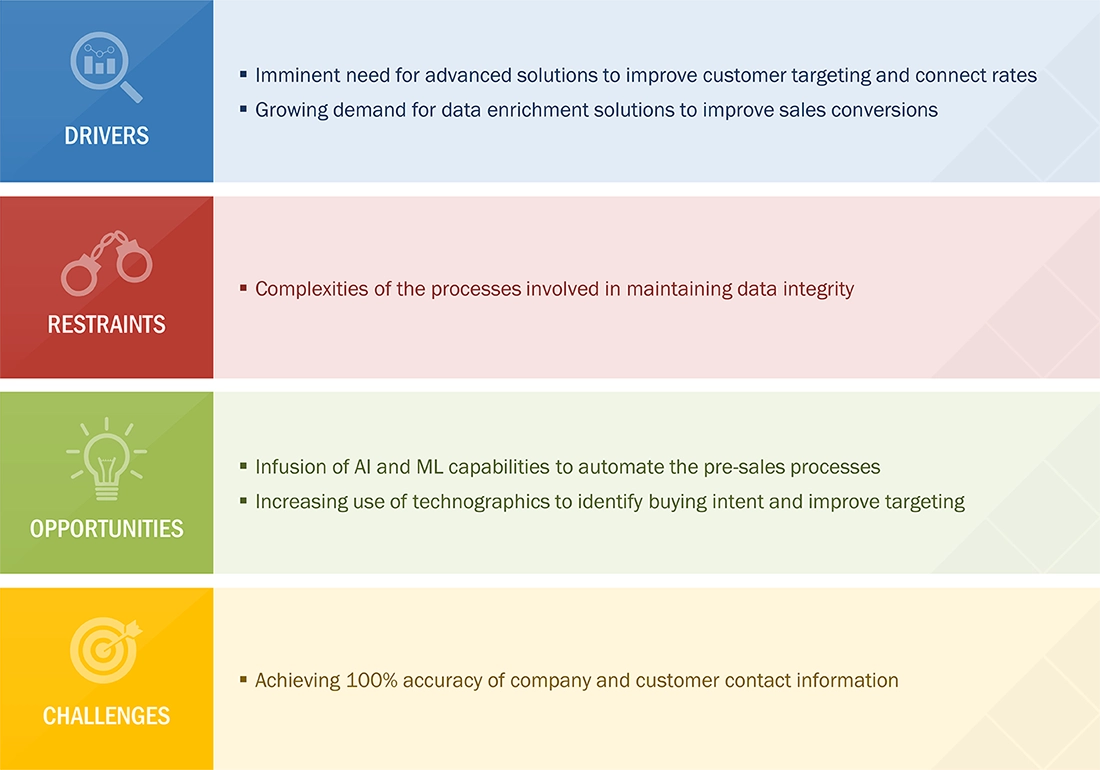
The applications of real-time data in Sales Intelligence Strategy extend across multiple industries, each leveraging the technology with remarkable results.
In retail and e-commerce, real-time data enables dynamic customer segmentation based on behaviors and preferences. When a social media influencer promotes a product, data-savvy retailers can quickly detect the spike in search activity and launch targeted promotions before the buzz fades. Similarly, e-commerce platforms can update inventory in real-time, preventing overselling and ensuring customer satisfaction.
Financial institutions utilize real-time data for fraud prevention, transaction monitoring, and equipping traders with timely information affecting investment decisions. Acting instantly on this information allows banks to mitigate losses and safeguard client assets.
For healthcare organizations, real-time data processing can literally save lives. Hospitals monitor vital signs through connected devices, with alerts triggering immediate responses during emergencies. Moreover, AI analyzes patient data trends to predict potential health issues before they escalate.
Manufacturing companies armed with real-time data can divert resources to high-demand production lines. Through real-time IoT sensors and machine learning, they can foresee mechanical failures and proactively schedule maintenance, avoiding costly downtime.
Sales teams implementing advanced real-time sales intelligence have seen impressive results. Companies using AI-driven sales intelligence report productivity increases of 30-50%. Consequently, sales reps using these tools close 20-30% more deals than their non-AI using counterparts.
Looking at specific metrics, organizations using real-time sales intelligence have experienced a 21% increase in sales, a 56-second reduction in average handling time, and a 27% boost in customer satisfaction scores. Furthermore, companies focusing on real-time data can raise efficiency by up to 30%.
As we progress through 2025, a robust Sales Intelligence Strategy must incorporate real-time data capabilities. The evidence clearly shows that organizations equipped with instant insights can make faster decisions, deliver personalized experiences, and ultimately drive better sales outcomes than those still relying on static reports and historical analysis.

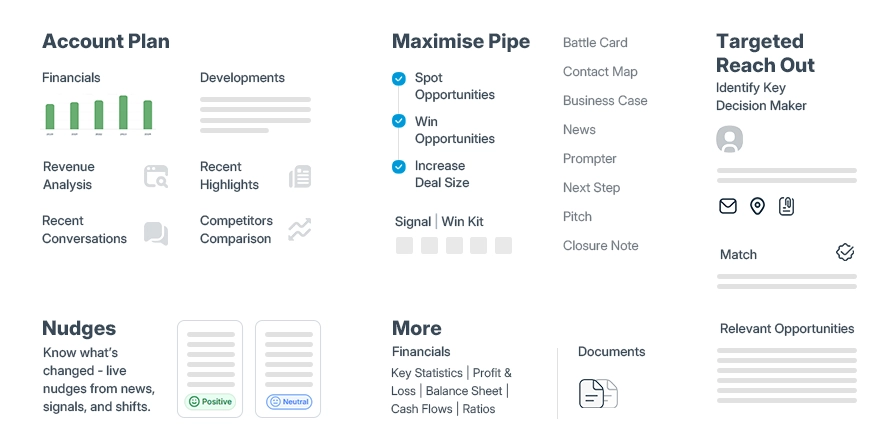
Artificial Intelligence has fundamentally changed how sales teams analyze and act on data. By 2027, 95% of seller research workflows will begin with AI, up from less than 20% in 2024. This dramatic shift represents more than just adopting new technology—it signals a complete transformation in how sales intelligence operates.
The evolution of sales analytics follows a clear progression path. Almost half of businesses today still perform "descriptive analytics," which uses static, backward-looking data to measure what happened in the past. Essentially, descriptive analytics functions like a historian, telling you "this is what happened" without offering future guidance.
Predictive analytics, conversely, uses historical data, statistical algorithms, and machine learning techniques to identify the likelihood of future outcomes. Rather than simply reporting past results, predictive models:
Anticipate market changes before they happen
Identify patterns in customer and lead behaviors
Make informed predictions about sales opportunities
The main difference between these approaches is their orientation—descriptive analytics creates a summary of historical data to show patterns and relationships, whereas predictive analytics makes projections about future events by analyzing similar occurrences from the past.
For a Sales Intelligence Strategy to succeed in 2025, this transition is crucial. Only 7% of businesses currently have "prescriptive analytics" capabilities (the next evolution beyond predictive), yet 37% plan to implement these advanced forecasting tools within the next two years. Organizations that make this shift gain the ability to move from reactive to proactive sales approaches.
AI-powered lead scoring has emerged as one of the most valuable applications in modern Sales Intelligence Strategy. Traditional lead scoring relied on arbitrary point systems and subjective assessments, often leading to inconsistencies and missed opportunities.
In contrast, AI lead scoring uses machine learning to dynamically assess and rank leads based on a broader range of data points and complex patterns. This approach:
Automatically evaluates leads based on their likelihood to convert
Examines vast datasets including CRM data, website interactions, email engagement, and social media activity
Continuously learns from historical outcomes to improve accuracy over time
The results are impressive—a survey of sales teams using AI revealed that 98% believe it improves lead prioritization. By analyzing which leads converted in the past versus those that didn't, AI models can identify high-potential prospects with remarkable precision.
Notably, AI lead scoring doesn't just save time—it fundamentally changes decision-making throughout the sales funnel. Teams using AI for lead scoring report more accurate lead prioritization, shorter sales cycles, and improved personalization in outreach.
For sales forecasting, AI has been equally transformative. Traditional forecasting methods struggle with accuracy—only 7% of teams achieve a forecast accuracy of 90% or more, with the median accuracy between 70-79%.
AI-augmented forecasting provides a compelling alternative. By 2025, leading firms are improving forecast accuracy by up to 35%, with some advanced platforms achieving up to 96% accuracy. This increased precision comes from AI's ability to:
Analyze historical data and open sales pipeline information
Identify key factors influencing deal outcomes
Recognize patterns humans might miss
Update predictions based on new information
McKinsey forecasts that generative AI alone could create approximately USD 1.00 trillion worth of productivity gains across sales and marketing. Already, Gartner predicts that by 2028, 60% of B2B seller work will be done through conversational user interfaces via generative AI sales technologies—up from less than 5% in 2023.
The transition to AI-powered analytics requires more than just new software—it demands a cultural shift. For implementation success, sales leaders should start by communicating a future state where sellers no longer have to manually log calls (thanks to activity intelligence) or project outcomes (because of AI deal scoring). This vision, paired with the right tools and data strategy, positions sales teams to fully leverage AI's potential in their 2025 Sales Intelligence Strategy.


A successful Sales Intelligence Strategy hinges on having the right technical foundation in place. Building a modern sales intelligence system requires three critical components working together to transform raw data into actionable insights that drive performance.
The foundation of any effective sales intelligence platform starts with data aggregation—collecting information from multiple sources including CRM systems, social media, market reports, and customer interactions. This process involves gathering, consolidating, and analyzing data to optimize sales strategies.
Raw data alone provides little value without proper aggregation and context from multiple sources. Once collected, data undergoes cleaning to remove inconsistencies, duplicates, and errors. Data enrichment then takes this process further by enhancing existing customer profiles with additional relevant information.
The enrichment process follows three key steps:
Append: Add missing fields like job titles, phone numbers, or company details
Verify: Confirm data accuracy using trusted third-party sources
Refresh: Keep customer data current through scheduled or real-time updates
Without proper data enrichment, sales teams face significant challenges, including missed revenue opportunities from targeting wrong contacts, slow routing of high-intent leads, and personalization efforts that fall flat due to inaccurate information.
Primarily, aggregating sales data helps businesses prioritize high-value leads, personalize outreach, improve forecasting accuracy, accelerate sales cycles, and align sales and marketing efforts. Through data cleaning during aggregation, you'll achieve higher levels of data quality, making it easier to generate insights and make better decisions.
Customer Relationship Management (CRM) systems serve as the central hub for sales intelligence, unifying and centralizing both internal and external data. A modern CRM can automatically capture and sync relevant sales intelligence from emails, calendars, and calls, eliminating error-prone manual data entry.
Marketing automation tools complement CRMs by focusing on campaign management, email marketing, and customer segmentation. Together, they create a powerful combination—CRM provides the customer data that marketing automation needs as its fuel.
The integration of these systems yields substantial benefits. First, customer data flows seamlessly between tools with no information getting lost in transit. Second, after marketing actions, CRM data gets enriched with information on how customers responded to messages. Finally, unified reporting gives both sales and marketing teams a complete view of the funnel from lead generation through closing deals.
Altogether, effective CRM integration significantly enhances lead quality by consolidating customer data into a single, accessible platform. This unified data repository allows sales teams to track customer interactions, preferences, and purchase history more effectively.
Lead scoring provides an objective approach to ranking lead quality using data. This component identifies your most promising leads by tracking online behaviors, email engagement, and other activities. Modern lead scoring can be:
Manual: Points assigned based on demographic, company, behavioral, and spam data, typically on a 1-100 scale
Predictive: Using AI and machine learning to analyze historical data and predict conversion likelihood
Importantly, your sales intelligence tool must have lead scoring and prioritization capability so your sales reps can make the most of their time. Companies that use lead scoring experience a 77% increase in lead generation ROI.
Segmentation allows for targeted messaging to specific audiences. AI-driven segmentation goes beyond traditional factors like industry or company size, identifying patterns in how leads interact with your brand. This enables dynamic grouping based on intent signals, engagement levels, and predictive scores.
Advanced lead segmentation helps you qualify leads and tailor the customer journey using real-time, intent-based data—not static tags or guesswork. Subsequently, this approach improves various metrics, including higher open and click-through rates, better lead-to-customer conversion, and increased revenue per subscriber.
STOP GUESSING YOUR PIPELINE
START GROWING IT WITH AI SALES!!
Implementing a robust Sales Intelligence Strategy directly impacts performance metrics across your entire sales organization. Let's explore exactly how this technology drives measurable improvements.
The traditional sales cycle requires weeks of manual research, outdated CRM data review, and wasted time on low-potential leads. A proper Sales Intelligence Strategy accelerates this process in several ways.
First, AI-driven tools help sales teams identify and focus exclusively on leads showing genuine buying intent. By flagging prospects who demonstrate purchase signals—like visiting pricing pages or engaging repeatedly with sales emails—teams can intervene precisely when interest peaks.
Beyond just identifying promising leads, sales intelligence speeds up deal progression by automating prospect research. Rather than spending hours gathering background information, representatives gain immediate access to decision-maker details, purchasing intent signals, and significant company milestones. This targeted approach removes friction from the sales process.
Overall, companies implementing comprehensive sales intelligence solutions experience a 25-35% reduction in average deal length. Teams using AI-powered sales intelligence have also seen a 15% boost in revenue alongside a 30% decrease in sales cycle time.
In today's market, personalization has evolved from optional to essential. Research shows that 71% of consumers expect companies to deliver personalized interactions, with 76% becoming frustrated when this doesn't happen. Sales intelligence provides the foundation for this crucial personalization.
With detailed insights into customer behavior, preferences, and pain points, sales teams can craft highly targeted messages that resonate with prospects. Representatives gain valuable information about:
Customer pain points and specific requirements
Recent business developments affecting prospects
Short-term goals and priorities
This approach delivers impressive results—personalization drives a 10-15% revenue lift on average, with company-specific improvements ranging from 5-25%. McKinsey's research confirms this impact, noting that fast-growing organizations drive 40% more revenue from personalization than slower-moving competitors.
Timing represents another critical advantage. Sales intelligence tools monitor digital signals and behavior patterns to identify when prospects are most receptive to outreach. This capability ensures representatives don't just make calls—they make calls when prospects are most likely to answer.
Sales intelligence dramatically improves operational efficiency. For starters, it automates time-consuming tasks that typically consume representatives' days. AI-powered solutions can reduce manual research time by up to 70%, allowing teams to focus exclusively on high-value selling activities.
These productivity gains translate directly to business outcomes. Companies implementing AI sales tools have seen an average increase of 25% in sales productivity. For individual representatives, AI-powered sales intelligence saves upwards of 2 hours per day. Consequently, Gartner predicts that by 2026, B2B sales organizations using generative AI will reduce time spent on prospecting and customer-meeting preparation by over 50%.
Make Every Rep Speak
Like Your Top 1%
Even more impressive, sales teams that frequently use AI report 47% increased productivity and save an average of 12 hours weekly by automating repetitive tasks. According to studies, AI-driven sales teams close 20-30% more deals than their non-AI using counterparts.
The financial impact is substantial. McKinsey found that companies using AI in their sales processes see an average increase of 10-15% in sales revenue alongside a 5-10% reduction in sales costs. Furthermore, organizations implementing advanced sales intelligence tools experience a 35-45% increase in deal closure rates through better prospect qualification and personalized engagement strategies.
Selecting the right sales intelligence platforms can be pivotal to your success in 2025. As the market expands—projected to reach USD 7.35 billion by 2030 with a 10.6% annual growth rate—choosing from the abundance of available options requires careful consideration.
G2 ranks ZoomInfo Sales, LinkedIn Sales Navigator, and Apollo.io among the leading sales intelligence solutions based on verified user reviews. Each platform offers distinct advantages:
ZoomInfo Sales stands out with its vast global contact database, allowing teams to identify key decision-makers quickly. Its analytics provide clear insights into what drives results, helping teams refine their approach to capture attention and win loyal customers.
LinkedIn Sales Navigator excels at relationship-building by providing access to LinkedIn's extensive professional network. With precise search filters and live updates, it enables teams to engage prospects at the perfect moment with resonant messaging.
Apollo.io combines lead generation, engagement, and analytics in one platform. Its data-driven approach improves conversion rates and streamlines workflows, making it ideal for teams looking to scale their sales processes.
Other noteworthy platforms include:
Gong.io for conversation intelligence and coaching
HubSpot Sales Hub for AI-powered automation
Clari for forecasting accuracy and pipeline health tracking
Salesforce for comprehensive CRM integration
First, prioritize data quality and accuracy. High-quality, validated data forms the foundation of effective sales strategies. Look for tools that source information from reliable, up-to-date origins and provide data enrichment features.
Integration capabilities rank next in importance. Your sales intelligence tool should seamlessly connect with your CRM (Salesforce, HubSpot, Microsoft Dynamics) and other business tools to ensure smooth data flow and consistent information across platforms.
AI and predictive capabilities have become essential features. Modern platforms should offer:
Predictive lead scoring that forecasts conversion probability
Opportunity insights identifying expected growth
Automated research capabilities eliminating manual data entry
Real-time insights and alerts drastically improve effectiveness. Top systems surface actionable intelligence as events happen—not after weekly review meetings. This includes alerts for competitor insights, market trends, and prospect activities.
Additionally, evaluate the platform's security features to ensure your sales intelligence remains protected and private. Look for robust security measures and compliance with industry standards like GDPR and CCPA.
Throughout evaluation, consider your specific business needs. The right tool must align with your business objectives, integrate with existing data systems, and help your team accomplish more in less time. Ultimately, your selection should support your broader Sales Intelligence Strategy while addressing your unique sales challenges.
Successful implementation of a Sales Intelligence Strategy requires careful planning and execution. Without a methodical approach, even the best tools will fail to deliver their promised value.
Begin by conducting a comprehensive evaluation of your existing systems before selecting any sales intelligence technology. This assessment should examine your technology infrastructure, data quality, process maturity, and team capabilities. Research shows that companies offering formal coaching report a 16.7% higher win rate, yet many organizations fail to properly assess team capabilities before deployment.
Effective skill assessment starts with a multi-faceted approach:
Surveys and quizzes to gage technical aptitude
Role-playing exercises to observe practical application
Pre-training assessments to establish baseline competencies
Data quality assessment is particularly crucial—organizations with high-quality data are 2.5 times more likely to exceed their sales targets. As part of this evaluation, identify potential roadblocks like disconnected systems or poor data integration that could undermine your implementation.
Resistance to new technology remains one of the biggest adoption hurdles—about 67% of employees don't feel ready to work with AI technologies. Common sources of resistance include fear of job displacement, comfort with traditional tools, and lack of trust in AI recommendations.
To overcome these challenges, create structured training frameworks. Since 70% of information from traditional slide-based training is forgotten within one week, prioritize active learning experiences:
Develop role-specific training with SMART objectives (Specific, Measurable, Attainable, Relevant, Time-bound)
Implement multiple learning approaches including onboarding, product, and technology training
Provide hands-on practice in safe environments before deploying tools in live situations
Organizations following change management best practices achieve adoption rates exceeding 85% within the first 90 days of implementation. For maximum impact, consider starting with a pilot group of tech-receptive team members before full deployment.
Without clear metrics to track adoption, you can't determine if your investment is paying off. Establish key performance indicators that specifically measure tool adoption:
Adoption rate: Percentage of users integrating tools into their workflow
Activation rate: Percentage of users experiencing the tool's value
Time-to-value: How quickly users realize value from the tools
Beyond usage metrics, connect adoption to actual sales outcomes by tracking how tool usage correlates with closed-won revenue and pipeline creation. Sales dashboards provide an at-a-glance view of progress toward adoption goals, revealing where teams need improvement.
Monthly reviews offer the ideal cadence for evaluating KPIs, allowing for meaningful pattern recognition without overwhelming teams. Through consistent measurement and iteration, your Sales Intelligence Strategy will continue delivering value well into 2025 and beyond.
STOP GUESSING YOUR PIPELINE
START GROWING IT WITH AI SALES!!
Even the best Sales Intelligence Strategy faces obstacles. Understanding these challenges upfront helps you prepare effective solutions.
Poor data quality costs companies approximately USD 15.00 million yearly, undermining sales intelligence effectiveness. MIT Sloan research shows 85% of AI projects fail primarily because of data quality problems. Common issues include:
Duplicate records creating confused customer profiles
Outdated information (about 3% of data becomes obsolete monthly)
Incomplete data missing critical fields
Inconsistent formats between systems
These problems create both financial and trust issues. Inconsistent data leads to unreliable reports, while AI models trained on flawed data produce flawed decisions. For successful integration, focus on data cleansing, validation, and establishing standardized formats. Prioritize integrating your two most critical data sources first—typically CRM and marketing automation—before expanding gradually.
People often resist new technology more than anything else. In fact, 19% of organizations report their culture directly prevents AI implementation. Fear drives much of this resistance—59% of sales professionals worry about job security as AI advances.
To overcome resistance, focus on transparent communication that answers specific concerns. Involve teams early in designing changes, as companies involving at least 7% of employees in change projects double their success rate. Position AI as support for sales expertise, not a replacement. Provide sufficient training in psychologically safe environments where mistakes become learning opportunities.
As we've seen throughout this article, a well-executed Sales Intelligence Strategy has become essential rather than optional for sales success in 2025. The statistics speak for themselves - companies implementing these advanced approaches close deals three times faster while experiencing significant revenue growth.
The transition from static data to real-time insights stands as perhaps the most critical shift. Sales teams now require immediate information to make effective decisions. Therefore, implementing AI-powered analytics should be your top priority. These tools transform lead scoring, improve forecasting accuracy, and ultimately drive better sales outcomes.
Your modern sales intelligence system must include three fundamental components: robust data aggregation, seamless CRM integration, and sophisticated lead scoring capabilities. Without these elements working together, even the most expensive tools will fail to deliver results.
The benefits of proper implementation are substantial. First, your sales cycles will shorten as teams focus exclusively on high-potential leads. Additionally, personalization will improve dramatically through deeper customer insights. Most importantly, your representatives will spend less time on manual tasks and more time closing deals.
Though challenges certainly exist - particularly around data quality and team resistance - the solutions we've discussed provide clear pathways to overcome them. Start with thorough assessment, develop structured training, and consistently measure results against defined KPIs.
The future belongs to sales teams that embrace intelligence-driven approaches. While yesterday's tactics focused on intuition and persistence, tomorrow's success comes from data-backed decisions and strategic timing. Your competition has likely already begun this journey.
The question isn't whether you need a Sales Intelligence Strategy for 2025 - it's how quickly you can implement one. Begin today by evaluating your current processes, exploring available tools, and mapping out your implementation plan. The results will transform not just your sales metrics but your entire approach to customer engagement.
Your SDRs work 9–5
AI Sales works 24/7!!
Sales intelligence is the systematic collection and analysis of data-driven insights that help sales professionals make informed decisions throughout the selling cycle. It's crucial in 2025 because it enables sales teams to prioritize leads, personalize outreach, and adapt strategies in real-time, leading to faster deal closures and increased revenue.
AI enhances sales performance by automating lead scoring, improving forecasting accuracy, and providing real-time insights. It helps sales teams identify high-potential prospects, personalize communications, and focus on the most promising opportunities. Companies using AI-powered sales intelligence report 20-30% more closed deals compared to those not using AI.
A modern sales intelligence system consists of three critical components: data aggregation and enrichment, CRM and marketing automation integration, and lead scoring and segmentation. These elements work together to transform raw data into actionable insights that drive sales performance.
To overcome resistance, companies should focus on transparent communication, involve team members early in the change process, and position AI as a support tool rather than a replacement for human expertise. Providing sufficient training in a psychologically safe environment where mistakes are viewed as learning opportunities is also crucial for successful adoption.
Businesses implementing a sales intelligence strategy can expect shorter sales cycles, enhanced personalization in customer interactions, and increased rep productivity. Companies report up to 35% reduction in average deal length, 15% boost in revenue, and savings of up to 2 hours per day for sales reps through automation of repetitive tasks.


Category: Uncategorized Tags: ai, AIOps, Artificial Intelligence, cloud, cloud platform, Cybersecurity, Information and Communications Technology , VR