The Difference Between Marketing Nurture and Sales Nurture
February 26, 2026
Every revenue leader has seen this play out: Marketing passes a lead to Sales. Sales calls it "not ready." Marketing insists it's qualified. The lead goes cold. The opportunity dies in the handoff.
The gap between marketing nurture and sales nurture is not a terminology issue. It is an execution gap that costs enterprise teams millions in lost pipeline. Marketing teams operate in campaigns. Sales teams operate in conversations. When these two worlds do not connect operationally, leads fall through.
This article examines the structural differences between marketing nurture and sales nurture, where lead ownership actually shifts, and how revenue intelligence platforms like SalesPlay by MarketsandMarkets eliminate the friction that kills deals before they start.
If your sales team is manually researching accounts, guessing when to engage, or writing every email from scratch, this is not a process problem. It is a tooling problem.
Marketing nurture is designed to move anonymous traffic and early-stage leads toward qualification. It operates at scale across hundreds or thousands of contacts simultaneously. The primary goal is education, awareness, and demand generation.
Marketing nurture campaigns are typically:
Marketing nurture works when prospects are still learning. It introduces your brand, establishes thought leadership, and moves people from awareness to consideration. But marketing nurture is not built to handle:
Marketing nurture stops being effective the moment a lead requires context beyond segmentation. When a prospect transitions from "interested in the category" to "evaluating solutions for a specific business problem," generic campaigns fail.
The result? Sales receives leads with no context, no clear next step, and no indication of what the prospect actually cares about. This is where lead nurture strategy and lead ownership becomes critical.
Is your marketing-to-sales handoff costing you pipeline?
Watch a SalesPlay DemoSee how revenue intelligence eliminates the gap between nurture and execution.
Sales nurture is not a slower version of marketing nurture. It is fundamentally different in intent, execution, and outcome. Sales nurture happens after lead ownership has shifted. The goal is no longer awareness. The goal is progression.
Effective sales nurture is:
Sales nurture is where deals are actually built. But most sales teams execute it poorly because they treat it like marketing nurture with a personal email address.
Without proper tooling, sales nurture looks like this:
This is not a training problem. This is a systems problem. Sales teams do not have the infrastructure to execute nurture at the speed and specificity required to win enterprise deals.
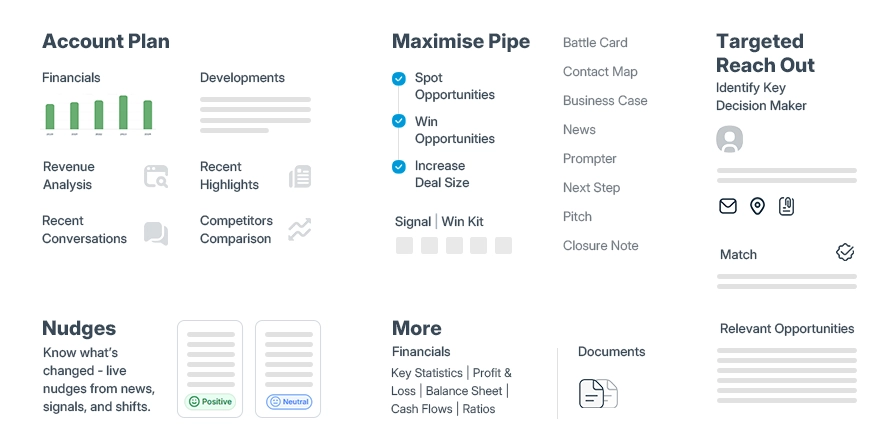
SalesPlay by MarketsandMarkets solves this by automating the research, signal detection, and message personalization that makes sales nurture actually work. The Auto-Nurture Agent allows sellers to create personalized email campaigns tied to specific opportunities and contacts, with every message drafted based on real account intelligence and opportunity context.
Understanding the difference between marketing nurture and sales nurture is not academic. It determines where leads die, where pipeline stalls, and where revenue gets lost. Here are the operational distinctions that matter:
Marketing Nurture: Leads are owned by Marketing Operations or Demand Gen teams. Success is measured by MQL volume, engagement rates, and campaign performance.
Sales Nurture: Leads are owned by individual sellers or account teams. Success is measured by pipeline created, deals progressed, and revenue closed.
The handoff point is where most organizations fail. Marketing considers a lead "qualified" based on scoring models. Sales considers a lead qualified based on business context and buying intent. These definitions rarely align.
Marketing Nurture: Personalization is limited to merge tags (first name, company, industry). Content is broadly relevant to a segment.
Sales Nurture: Personalization extends to account-specific business changes, individual stakeholder priorities, and opportunity-level messaging. Content is relevant to a specific problem the account is trying to solve right now.
Generic personalization does not create urgency. Account-specific context does. This is why sales nurture cannot be executed with marketing automation platforms alone.
Marketing Nurture: Emails send based on fixed intervals or behavioral triggers like page visits and content downloads.
Sales Nurture: Outreach is triggered by account signals — budget approvals, leadership changes, earnings calls, expansion initiatives, competitive displacement opportunities.
Marketing nurture operates on a calendar. Sales nurture operates on account movement. SalesPlay's Signals Agent continuously monitors target accounts and surfaces relevant developments that create real reasons to engage, similar to how intent data reveals buying signals.
Marketing Nurture: Educational content designed to build awareness and trust over time. Think: blog posts, eBooks, webinars, newsletters.
Sales Nurture: Conversation starters, opportunity-specific insights, and next-step proposals designed to advance a deal. Think: battle cards, pitch material, meeting prep, stakeholder-specific talking points.
The content shift reflects the intent shift. Marketing nurture teaches. Sales nurture moves.
Marketing Nurture: Built to run at scale across thousands of contacts with minimal manual intervention.
Sales Nurture: Built for precision across dozens of high-value accounts with maximum contextual relevance.
This is not a choice between efficiency and effectiveness. It is a question of matching the right approach to the right stage. Marketing nurture scales awareness. Sales nurture scales execution.
See how SalesPlay connects account intelligence to sales execution.
Request a Personalized DemoWatch how the Spot Opportunities Agent identifies pipeline before your competitors even know it exists.
The handoff between marketing nurture and sales nurture is not defined by lead score thresholds. It is defined by context availability and engagement intent.
The transition is not a binary event. It is a gradual shift from education to execution. But the moment an opportunity becomes identifiable, marketing nurture alone will not close it.
SalesPlay's Spot Opportunities Agent automates this identification process. It continuously scans Salesforce-connected target accounts, detects where budget, priorities, or initiatives align with your offerings, and surfaces opportunities ranked by relevance. Sellers can see exactly why an opportunity exists, which signal triggered it, and which product offering fits — eliminating the guesswork in lead ownership transitions. Learn more about opportunity-driven lead nurturing.
In complex B2B sales, there is often a period where both marketing and sales nurture run in parallel. Marketing continues to educate the broader buying committee while Sales engages with identified champions. This works only when:
Without operational alignment, parallel nurture creates message fatigue and conflicting narratives. SalesPlay eliminates this friction by consolidating account intelligence, opportunity tracking, and nurture execution in one platform.
Manual sales nurture does not scale. But generic automation does not work. The solution is intelligent automation that combines scale with specificity.
SalesPlay's Auto-Nurture Agent allows sellers to create personalized email nurture campaigns tied to specific opportunities and contacts. Here is how it works operationally:
This is not marketing automation repurposed for sales. This is sales execution built on real account intelligence. Every email is grounded in:
The result is sales nurture that feels personal because it is contextually accurate, not just dynamically populated.
Sales nurture automation without account intelligence creates noise. Sellers send generic check-ins. Prospects disengage. Pipeline stalls.
SalesPlay connects nurture execution to the account movements that create real urgency. When a target account announces a new initiative, expands into a new region, or shows competitive displacement signals, SalesPlay does not just alert the seller. It drafts the outreach, provides the talking points, and runs the sequence.
This is how you scale sales nurture without losing precision. This is how you create pipeline consistently, not accidentally.
Stop losing deals in the handoff.
See SalesPlay in ActionWatch how the Auto-Nurture Agent turns account intelligence into executed outreach in minutes, not hours.
The traditional MQL model is broken. It measures activity, not intent. It rewards volume, not quality. It creates a false sense of pipeline health while sales teams struggle to find deals worth working.
MQLs are typically defined by:
None of these behaviors confirm that a business problem exists, that budget is available, or that a decision process has started. An MQL is a signal of interest. It is not a signal of opportunity.
Sales teams are not asking for more MQLs. They are asking for opportunities they can actually close.
SalesPlay operates on a fundamentally different model. It does not wait for leads to self-qualify through behavior scoring. It actively identifies opportunities inside target accounts based on business signals and strategic alignment.
The Spot Opportunities Agent answers the question sales leaders actually care about: "Where can we sell right now — and why?"
For each opportunity, SalesPlay provides:
This is not lead scoring. This is opportunity intelligence. And it eliminates the need for artificial handoff thresholds between marketing and sales.
In an opportunity-first model, lead ownership is not a binary state. It is a shared view of account readiness:
There is no handoff friction because there is no artificial qualification gate. When an opportunity is identified, it is already connected to the context, contacts, and content needed to move it forward.
Eliminating the gap between marketing nurture and sales nurture requires operational changes, not just better tools. Here is how revenue leaders are rethinking lead ownership and nurture execution:
Stop debating what makes an MQL. Start defining what makes an opportunity worth pursuing. SalesPlay makes this operational by categorizing opportunities as high, medium, or low relevance based on signal strength and strategic fit.
Marketing teams track engagement, content consumption, and campaign interactions. Sales teams rarely see this data. SalesPlay's Account Intelligence Agent consolidates multi-source account information in one view, including recent conversations and engagement history.
Marketing automation platforms make it easy to send generic emails at scale. Sales nurture should be just as easy — but with 10x the personalization. The Auto-Nurture Agent achieves this by drafting every message based on real opportunity and stakeholder context. Explore additional lead nurturing strategies for enterprise teams.
Time-based nurture works for awareness. It fails for sales. SalesPlay's Signals Agent surfaces relevant news and developments tied to accounts, creating natural reasons to engage that prospects actually care about.
Sales teams lose deals not because they lack opportunities, but because they lack the messaging to advance them. SalesPlay's Win Opportunities Agent provides battle cards, elevator pitches, talking points, and auto-generated pitch material tied to every opportunity. This aligns with modern sales enablement best practices.
Sellers spend hours preparing for meetings by pulling slides, searching notes, and reconstructing context. SalesPlay's Meeting Prep Agent generates a one-page prep document that includes opportunity summary, attendee context, conversation starters, and suggested next steps.
Leads exist in isolation. Contacts exist inside accounts. SalesPlay's Spot Contacts Agent allows sellers to start from a known person, see opportunities relevant to them, and understand why each opportunity matters to that individual specifically.
Ready to eliminate the gap between nurture and execution?
Explore SalesPlaySee how revenue intelligence transforms how enterprise sales teams identify, engage, and close opportunities.
Marketing nurture is a one-to-many, content-driven approach designed to educate prospects and generate Marketing Qualified Leads (MQLs) at scale. Sales nurture is a one-to-few, context-driven approach focused on advancing specific opportunities within target accounts. Marketing nurture operates on fixed schedules; sales nurture operates on account signals and business changes. The key difference is intent: marketing nurture builds awareness, sales nurture builds pipeline.
Lead ownership should transfer when a specific opportunity becomes identifiable within a target account. This happens when prospects engage with bottom-funnel content, account-level signals indicate active evaluation (budget approvals, new hires, stated initiatives), multiple stakeholders engage, or a prospect requests a conversation or demo. The transition is not defined by lead score thresholds but by context availability and buying intent. SalesPlay's Spot Opportunities Agent automates this identification by continuously scanning accounts and surfacing opportunities ranked by relevance.
Effective lead nurturing in enterprise B2B requires combining account intelligence with personalized execution. This means: triggering outreach based on account signals rather than arbitrary timelines, personalizing messages based on opportunity-specific context and stakeholder priorities, connecting nurture to real business changes tracked continuously, and providing sellers with ready-to-use messaging and content. SalesPlay's Auto-Nurture Agent automates this by creating personalized email campaigns tied to specific opportunities, with every message drafted based on account intelligence and opportunity context.
Lead nurtures are typically marketing-owned, automated email campaigns designed to educate and qualify prospects over time using generalized content. Sales sequences are seller-driven, account-specific outreach campaigns designed to start conversations and advance identified opportunities using personalized messaging. Lead nurtures operate at scale with broad segmentation; sales sequences operate with precision targeting specific accounts and buying center contacts. The critical distinction is that sales sequences require account-level context and opportunity intelligence to be effective — context that platforms like SalesPlay provide through continuous account monitoring and signal detection.
MQLs fail because they measure activity, not intent. Traditional MQL definitions rely on accumulated lead scores from content downloads, form fills, and website behavior — none of which confirm that a business problem exists, budget is available, or a decision process has started. An MQL is a signal of interest, not a signal of opportunity. Sales teams need opportunities they can actually close, not contacts who downloaded a whitepaper. SalesPlay solves this by operating on an opportunity-first model, actively identifying opportunities inside target accounts based on business signals and strategic alignment rather than waiting for leads to self-qualify through behavior scoring.
SalesPlay automates sales nurture by connecting execution to real account intelligence. The Auto-Nurture Agent allows sellers to select opportunities and contacts, then drafts every email personalized by opportunity context and individual stakeholder relevance. Each message is grounded in account-level business changes tracked by the Account Intelligence Agent, opportunity-specific context from the Spot Opportunities Agent, and stakeholder priorities surfaced by the Spot Contacts Agent. This is not generic automation with merge tags — it is intelligent automation that scales execution without sacrificing contextual accuracy. The result is sales nurture that feels personal because it is based on what is actually happening inside the account right now.
The difference between marketing nurture and sales nurture is not semantic. It is operational. Marketing nurture builds awareness at scale. Sales nurture builds pipeline with precision. The gap between these two motions is where most enterprise deals die.
Traditional approaches to lead ownership create artificial gates that prospects never asked for and sellers cannot operationalize. MQLs measure activity, not intent. Lead scores reward engagement, not readiness. Handoffs happen based on thresholds, not opportunities.
SalesPlay by MarketsandMarkets eliminates this friction by operating on a fundamentally different model: opportunity-first revenue intelligence. Instead of waiting for leads to self-qualify, SalesPlay actively identifies opportunities inside target accounts, connects them to the stakeholders who matter, and provides sellers with the context and content needed to move deals forward.
The Account Intelligence Agent consolidates everything that matters about an account in one view. The Spot Opportunities Agent identifies where to sell and why. The Auto-Nurture Agent executes personalized sequences at scale. The Win Opportunities Agent provides ready-to-use messaging and battle cards. The Meeting Prep Agent ensures sellers walk into every conversation prepared and focused.
This is not better marketing automation. This is sales execution built on continuous account intelligence and signal detection.
For sales leaders tired of losing pipeline in the handoff, for revenue operations teams tired of debating lead definitions, and for sellers tired of manually researching accounts and guessing when to engage — SalesPlay provides the operational clarity and execution speed that enterprise selling requires. Discover more about how sales leaders use revenue intelligence to build predictable pipeline.
Selling with SalesPlay feels focused. Guided. Calm. Controlled. Predictable. Not because the tool automates everything, but because it surfaces exactly what matters, exactly when it matters, with the context needed to act.
Watch how opportunity identification, account intelligence, and sales nurture execution work together to eliminate the gaps that cost you deals.
Request a SalesPlay Demo Explore SalesPlayStop debating lead ownership. Start building pipeline that actually closes.


Category: Uncategorized Tags: ai, AIOps, Artificial Intelligence, cloud, cloud platform, Cybersecurity, Information and Communications Technology , VR