The Future of Revenue Intelligence: 2025 Predictions & Trends
August 29, 2025
Revenue Intelligence is transforming how businesses approach sales—and we're just getting started. By 2025, experts predict that companies using advanced revenue intelligence tools will outperform competitors by up to 30% in pipeline conversion rates.
The evolution from basic CRM systems to sophisticated revenue intelligence software is happening faster than many realize. Importantly, this shift isn't just about collecting more data—it's about creating truly intelligent revenue operations that drive predictive insights and actionable guidance. As someone who's tracked these developments closely, I'm excited to share what's coming next.


In this article, I'll walk you through the most significant revenue intelligence trends for 2025, explain how AI is revolutionizing sales forecasting, and compare the leading platforms reshaping how teams close deals. Additionally, I'll outline implementation strategies that actually work and the metrics that will matter most in measuring success.
Whether you're already using these technologies or just starting to explore them, the future of revenue intelligence offers game-changing potential for your bottom line.
Modern revenue operations have undergone a fundamental transformation in recent years. Revenue intelligence in 2025 has evolved into something far more sophisticated than its predecessor systems – it now uses data and artificial intelligence to uncover risks and opportunities across the entire sales pipeline. Unlike traditional reporting tools focused on past performance, today's revenue intelligence platforms surface forward-looking signals, helping teams identify issues and take decisive action before quotas and forecasts are missed.
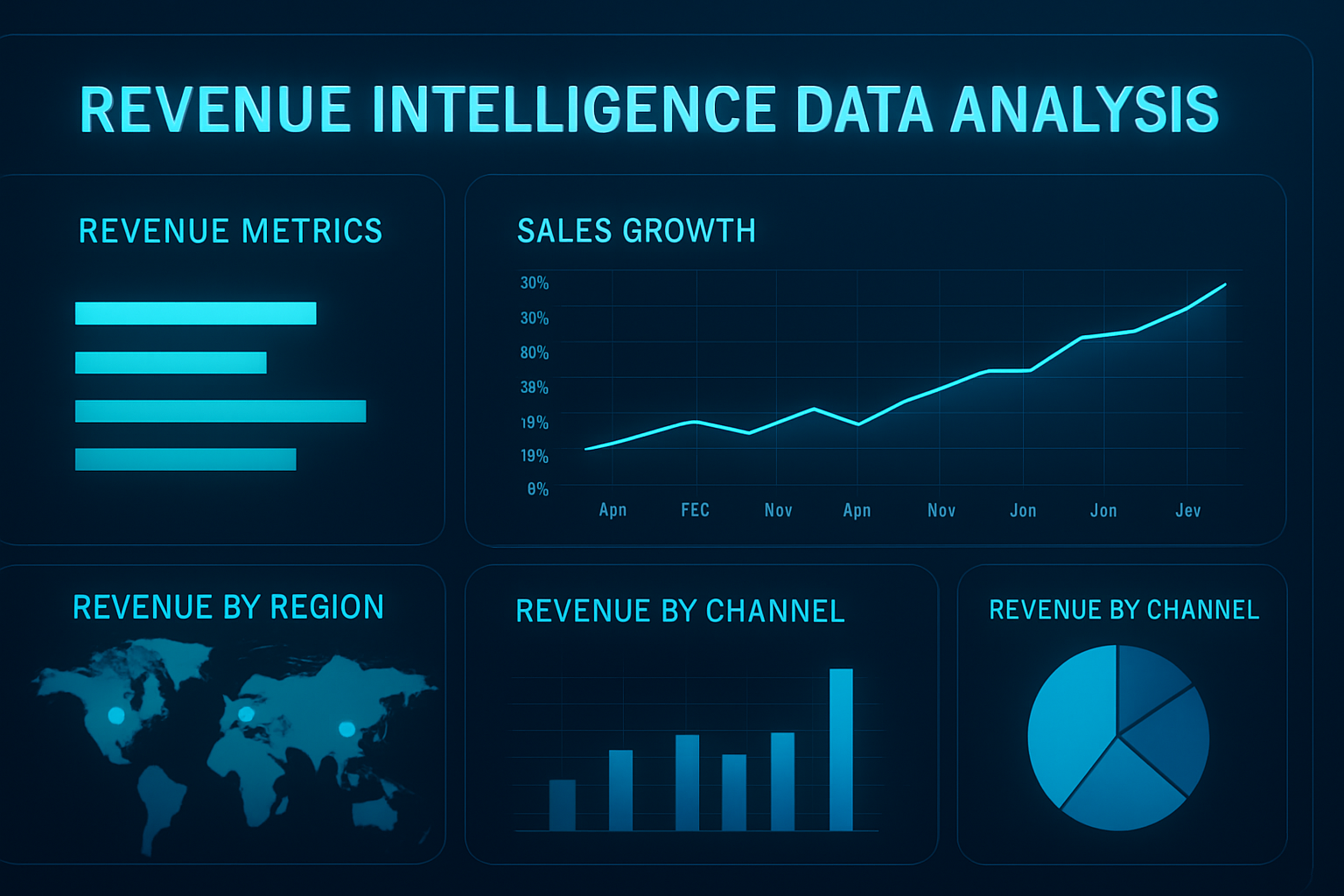
Customer Relationship Management (CRM) systems have long served as the backbone of commercial engagement—primarily functioning as passive repositories tracking interactions and storing customer profiles. However, the digital landscape has drastically reshaped their purpose and capabilities.
This evolution marks a critical shift from reactive to predictive approaches. While reactive CRM systems helped businesses respond to customer inquiries and track past interactions, predictive CRM leverages artificial intelligence, machine learning, and advanced analytics to forecast customer behavior, identify opportunities before they arise, and prevent problems before they impact the customer experience.
The results speak for themselves. Organizations using predictive analytics in their CRM systems experience an average 25% increase in sales and 30% increase in customer satisfaction. Furthermore, companies implementing predictive churn models report 25% reductions in customer churn and 15% increases in customer retention rates.
By 2025, Gartner predicts that 80% of customer interactions will be handled by AI, automation, and predictive analytics technologies. This transformation is turning CRM from a passive system of record into an active system of transformation—where predictive intelligence, automation, and AI-driven insights drive commercial strategies at scale.
The practical applications are substantial:
Automated data capture across channels (emails, calls, meetings)
Real-time analysis of customer interactions
Proactive identification of at-risk accounts
Guidance on next best actions for sales representatives
Modern revenue intelligence software automatically identifies customer interactions, associates them with the appropriate accounts in sales force automation systems, and logs these interactions on behalf of sellers—drastically reducing manual data entry.
Artificial intelligence now forms the core of modern sales ecosystems, with its role expanding beyond simple automation. According to industry projections, by 2028, at least 15% of day-to-day work decisions will be made autonomously through agentic AI, up from 0% in 2024. Moreover, the global market for AI agents is expected to increase by a staggering 820% by 2030.
The AI technologies reshaping sales can be categorized into three evolutionary stages:
Predictive AI – Forecasts outcomes based on historical data and patterns, providing next-best-action recommendations and traditional chatbot functionality.
Generative AI – Understands and generates human-like content, enabling personalized communications and content creation. Approximately 70% of sales leaders now prioritize investment in Generative AI.
Agentic AI – Anticipates outcomes and takes autonomous actions based on real-time data and learned behavior, handling lead prioritization and dynamic pricing strategies.
These AI capabilities enable revenue intelligence platforms to analyze customer behavior at unprecedented scale. AI-powered tools can now analyze patterns in successful interactions and flag potential deal risks before they impact pipeline health. Meanwhile, machine learning algorithms evaluate hundreds of variables to generate sophisticated deal scores and risk assessments, helping sales teams focus on high-probability opportunities.
The integration of natural language processing (NLP) has particularly transformed how revenue intelligence systems operate. These advanced systems can analyze conversations to understand context, sentiment, and buying signals—going far beyond simple keyword recognition.
By 2030, 80% of sales leaders will consider AI integration in sales workflows as a critical factor for competitive advantage. This shift reflects how AI is not merely enhancing traditional processes but fundamentally redefining how modern sales teams operate, make decisions, and drive revenue growth.
A robust revenue intelligence platform consists of three essential building blocks that work together to drive sales performance. These components collect data, analyze patterns, and provide actionable guidance to sales teams in ways that weren't possible with traditional CRM systems alone.

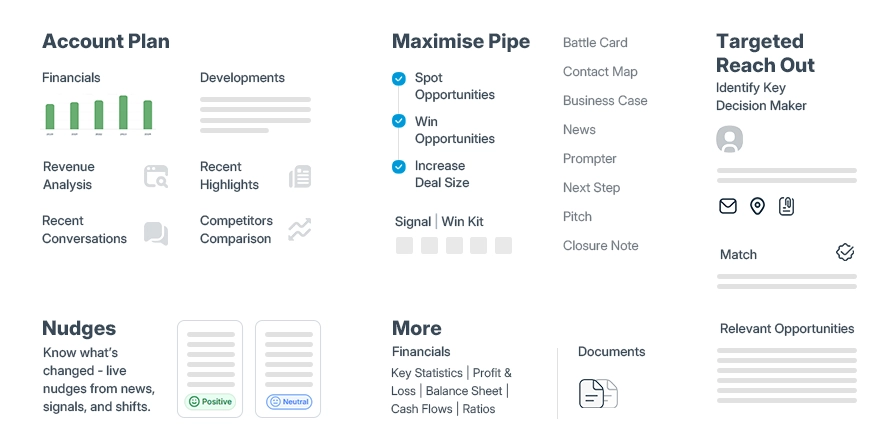
The foundation of any effective revenue intelligence tool starts with automated activity capture – technology that records all customer interactions without manual intervention. This capability eliminates the tedious task of data entry that sales representatives traditionally faced, subsequently allowing them to focus on what matters most: building relationships and closing deals.
Modern platforms automatically capture and sync every touchpoint—emails, calls, meetings, and tasks—directly with your CRM system. In fact, this automation helps maintain data consistency across the organization as every interaction is captured using the same methodology, which eliminates discrepancies common with manual entry.
The real value emerges when these systems provide instant updates. Rather than waiting for sales reps to log information, data synchronizes in real-time, ensuring teams always work with the most current customer data. Auto capture features in platforms like Microsoft Dynamics 365 Sales generate activity suggestions for emails and meetings based on data from users' Outlook accounts, displaying relevant interactions on timelines alongside other activities related to specific records.
For privacy and control, these activity suggestions remain visible only to the individual user until they choose to track the email or meeting, at which point they can make the information visible to everyone with access to that record.
Next, predictive deal scoring represents a significant advancement over traditional opportunity assessment methods. This component leverages data and predictive models to forecast the probability of success for individual sales opportunities. Rather than relying on gut feelings, these systems incorporate historical data, customer behavior patterns, and various predictive variables to generate a probability score indicating the likelihood of closing each deal.
Dear Lucy's deal scoring system, for instance, analyzes variables in real-time using CRM data from platforms like Salesforce and Microsoft Dynamics, delivering scores from 0-100. Key variables that impact these scores include:
Deal value and stage
Customer engagement metrics and trends
Opportunity lifetime and projected close date
Sales representative performance
Lead source quality
Customer history and scheduled interactions
Alongside scoring, risk detection capabilities identify potential deal problems early. AI-powered analytics can analyze thousands of data points in real-time, providing immediate insights into potential risks. These systems can detect issues like declining engagement, unusual stakeholder behavior, or misalignment with successful deal patterns. Companies implementing AI-powered risk detection tools have seen a 25% increase in forecast accuracy and a 15% increase in close rates.
The third critical component provides immediate guidance to sales representatives during customer interactions. Real-time sales coaching uses artificial intelligence to deliver personalized training and feedback that's available 24/7. Unlike traditional coaching that happens days or weeks after calls, these systems offer guidance during live conversations.
The technology works by collecting data from various sources, including customer interactions and CRM data, to create context-specific role plays for representatives. During calls, the AI listens for patterns in speech, sentiment, and objection handling, providing instant feedback on engagement, word choice, and strategy.
This approach addresses a significant challenge in sales organizations – most sales managers simply lack sufficient time to provide personalized training to every representative who needs it. As a result, organizations that implement effective sales coaching see quota attainment improvements of up to 7%.
Beyond just providing feedback, these systems enable representatives to practice objection handling, negotiation, and pitching in risk-free environments. For instance, Salesforce's Agentforce offers always-on coaching skills that representatives can access directly from opportunity records, allowing them to engage in conversational role plays drawing on CRM data including customer profiles and deal information.
As we approach 2025, revenue intelligence technologies are advancing at unprecedented speed. Based on market research and emerging implementations, eight key trends stand out as game-changers for sales organizations seeking competitive advantage.
The era of missed forecasts is ending. Although 80% of companies have missed their revenue forecasts within the last two years, organizations implementing AI-powered forecasting models are changing this narrative. Sales teams using AI have experienced 83% revenue growth compared to just 66% of teams without AI. These sophisticated models analyze hundreds of variables, including historical performance, market trends, and real-time pipeline data to predict outcomes with remarkable precision. Notably, businesses with accurate sales forecasts are 7% more likely to hit quota, giving AI adopters a significant edge in planning and execution.
Intent data has become the compass guiding strategic sales outreach. These signals reveal three critical insights: what companies are researching, how intensely they're engaged, and which stakeholders are involved in the buying process. Instead of cold outreach, teams can now prioritize accounts showing genuine buying behavior, consequently increasing conversion rates. Indeed, 76% of B2B marketers confirm increased ROI from focusing on high-intent leads. Modern platforms detect these signals across first-party channels (website visits, content downloads), second-party platforms (G2, LinkedIn), and third-party networks.

Autonomous agents represent the next frontier in sales automation. Starting in November 2024, Microsoft will release 10 new autonomous agents in Dynamics 365 specifically for sales, service, finance, and supply chain teams. These AI-powered systems can qualify leads, manage routine follow-ups, and even handle portions of deal progression without human intervention. For instance, the Sales Qualification Agent automatically researches inbound leads and creates personalized outreach emails, freeing representatives to focus on high-value conversations.
Natural Language Processing (NLP) has transformed how sales teams understand customer interactions. Advanced conversation intelligence platforms analyze calls, emails, and meetings to extract meaningful insights about prospect sentiment, buying intent, and potential objections. These systems detect subtle emotional cues and buying signals that might be missed in manual reviews. The resulting intelligence helps teams identify successful talk tracks, objection handling techniques, and key behaviors—scoring and coaching each representative after every call.
Organizations are building comprehensive data infrastructures that connect every revenue touchpoint. These unified systems integrate CRM, marketing automation, conversation intelligence, and financial data into a single source of truth. This approach eliminates data silos and provides a 360-degree view of the customer journey. First, it consolidates customer interactions into actionable insights. Second, it enables teams to detect patterns from top performers, build best-practice libraries, and onboard new hires faster.
Static territory models are giving way to dynamic, AI-driven approaches. Unlike traditional geographic or industry-based assignments, dynamic territories continuously update based on real-time data like buying intent and account activity. This method ensures sales teams consistently focus on the most promising, in-market accounts at any given time. Companies implementing dynamic territory management report increased rep productivity, accelerated pipeline velocity, higher conversion rates, and improved team morale.
Revenue intelligence is moving directly into daily workflows through integration with collaboration platforms. Solutions now deliver real-time insights and alerts within Slack and Zoom, ensuring critical revenue signals never go unnoticed. These embedded capabilities allow teams to take immediate action on deal risks or opportunities without switching contexts. Furthermore, this integration bridges the gap between sales conversations and execution, automating follow-up tasks and keeping deals moving forward.
Finally, generative AI is revolutionizing how teams create sales content. These tools can instantly generate personalized emails, proposals, and presentations tailored to specific customer needs. By analyzing prospect data, generative AI crafts messaging that resonates with individual buyers, addressing their unique pain points. Consequently, 79% of sales teams agree that generative AI solves the challenge of executing personalization at scale, enabling even junior representatives to communicate like seasoned experts.
STOP CHASING PROSPECTS
START CLOSING DEALS!!
Accurate sales forecasting remains one of the most challenging aspects of revenue management. Gartner research indicates that 67% of sales operations leaders agree creating accurate forecasts is harder today than three years ago. Fortunately, AI-powered forecasting tools are providing solutions that traditional approaches simply cannot match.
Machine learning models excel at analyzing both historical data and current trends to generate highly accurate pipeline predictions. Unlike conventional forecasting methods that rely primarily on historical data and manual analysis, AI leverages sophisticated algorithms to process vast datasets and identify patterns human analysts might miss.
These models can incorporate both structured and unstructured data, examining multiple factors simultaneously:
Deal-specific variables: Value, sales cycle length, time spent in current stage
Engagement metrics: Decision-maker interactions, email response rates, meeting frequency
Customer-related factors: Industry, company size, past purchase behavior
External conditions: Market trends, competitive factors, seasonality
The impact is substantial—83% of sales teams using AI experienced revenue growth in the past year, compared to just 66% of teams without AI. Initially, these systems analyze comprehensive sales data to identify high-performing strategies and areas for improvement. They then continuously monitor pipeline activity and market conditions, delivering instant updates on deal health.
Neural networks are particularly effective for pipeline forecasting because they mimic human brain processes to identify patterns in complex datasets. Their adaptability ensures real-time insights that sales managers can use to adjust strategies quickly. Evidently, support vector machines (SVMs) complement this approach by providing precise breakdowns of pipeline stages, customer groups, and deal types.
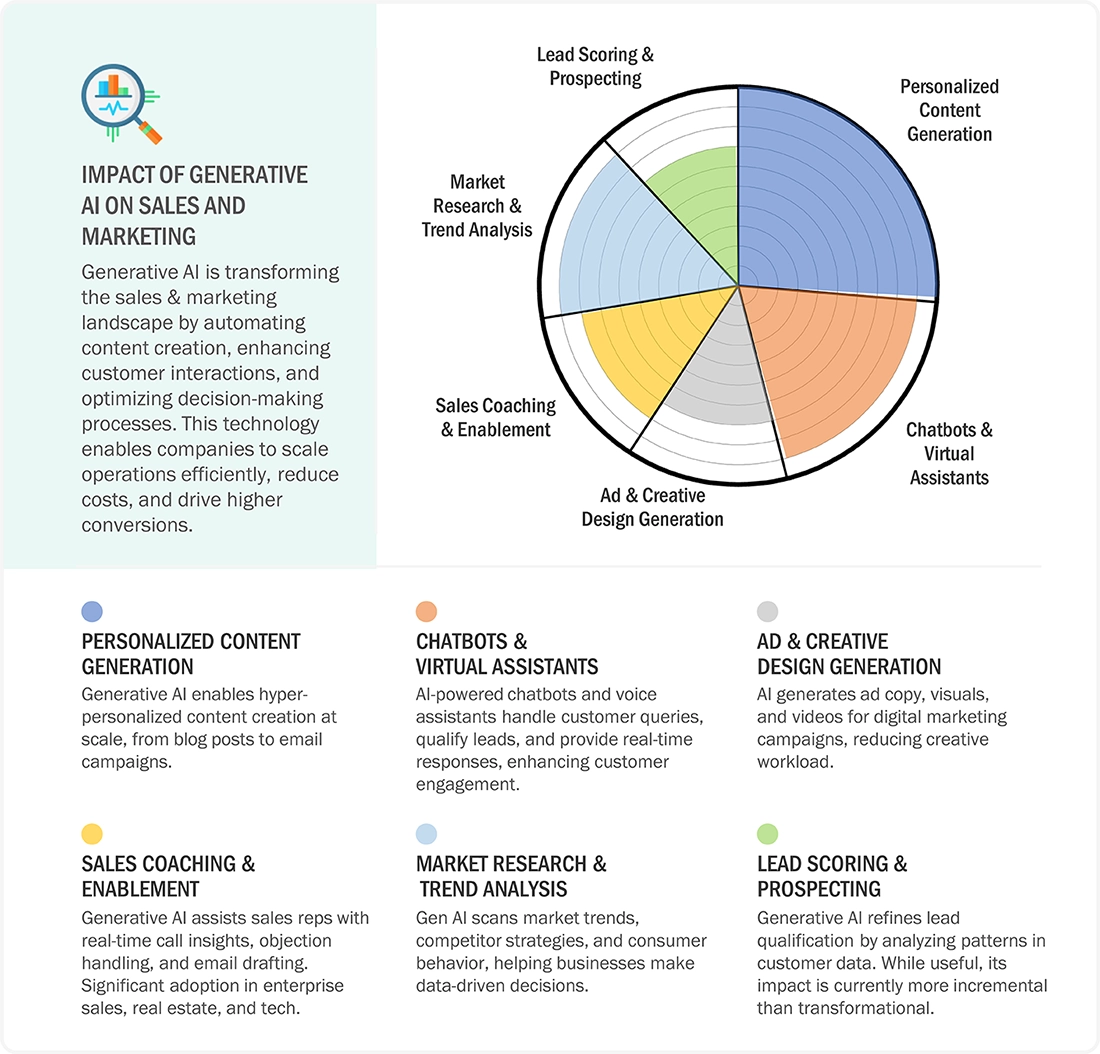
The human brain excels at pattern recognition—identifying situations and instinctively comparing them with past experiences. Top sales performers consciously harness this ability, evaluating each customer and opportunity against patterns of previous success. AI now replicates and enhances this natural capability at scale.
Primarily, AI algorithms identify specific combinations of factors that generate the highest probability of closing a sale. These systems can analyze customer behavior and preferences, using sentiment analysis and predictive modeling to help sales representatives understand what motivates potential customers. Regarding deal progression, AI examines historical patterns to determine which opportunities are most likely to convert.
The technology analyzes patterns associated with successful and unsuccessful deals, looking for behavioral indicators that signal progress or risk. When deals stall or customers disengage, the system notifies teams early and suggests specific actions like scheduling follow-up meetings. By recognizing these patterns, AI provides unbiased assessment of opportunity health and employee performance.
Top-performing sales organizations now use these capabilities to create a "template" of success—essentially codifying the collective patterns observed in their most successful deals. This approach allows all team members to leverage the organization's accumulated experience rather than relying solely on individual pattern recognition skills.
For implementation, companies are establishing fully automated performance testing pipeline systems that evaluate models every time there is updated data. The most effective approach involves creating end-to-end workflows that automate different steps including data loading, transformation, training, and deployment.
Real-time access to revenue intelligence has become a critical factor separating high-performing sales teams from their competitors. As silos between departments break down, the most effective organizations now operate with synchronized systems that deliver immediate insights directly within the tools teams use every day.
The integration of revenue intelligence tools with collaboration platforms like Slack and Microsoft Teams marks a fundamental shift in how sales information flows throughout organizations. These integrations allow revenue signals to appear directly in the platforms where teams spend most of their time, eliminating the need to switch between multiple applications. This approach creates a seamless experience where critical information finds representatives, not the other way around.
For sales professionals, this means receiving instant notifications about meaningful changes:
Deal amount adjustments
Engagement updates from prospects
Urgent tasks requiring immediate attention
Customer buying signals
The Zoom and Slack partnership exemplifies this trend, with over 15,000 teams now using their integration monthly—a 200% increase in just one year. This growth reflects how valuable these connections have become for sales organizations. Through these integrations, teams gain visibility into meeting details and participants before joining calls, significantly improving preparation and context.
Furthermore, the ability to launch Zoom meetings directly from Slack using simple commands (/zoom) streamlines the transition from conversation to action. Sales representatives can instantly respond to buying signals without the friction of scheduling delays or platform switching. With calendar app integrations, joining meetings becomes even easier—representatives simply click a button in their Slack notifications.
Altogether, these capabilities keep teams informed and ready to act, providing a competitive edge in converting leads into customers.
Beyond alerts, revenue intelligence platforms now automate entire playbooks based on specific triggers. These systems don't just notify representatives about what's happening—they guide them through exactly what to do next and nudge them to take immediate action.
The impact is substantial, especially considering how cross-functional alignment affects sales execution. When sales, marketing, and customer success operate in isolation, everything slows down. Accordingly, today's revenue operations teams implement workflow automation to maintain momentum throughout the buyer journey.
This automation extends beyond basic task reminders to include sophisticated sequences:
Automatic data capture from buyer interactions
Smart prioritization of follow-up activities
Guided next steps based on prospect engagement patterns
Cross-team notifications when action is needed
The most advanced systems connect all sales tools and platforms—from Zoom and Eventbrite to Stripe—capturing business data and using it to build intelligent signals. Primarily, this approach ensures nothing falls through the cracks while maintaining a consistent experience for prospects.
The evolution of collaboration platforms further supports this trend. Slack, Microsoft Teams, and Asana now include RevOps-specific integrations that enhance cross-functional collaboration. These tools help teams stay on the same page and execute faster through shared account plans, success plans, and unified data.
Organizations implementing these practices report significant improvements in gap-filling across their go-to-market process, along with better alignment between sales and revenue operations teams. In practical terms, this means faster responses to market opportunities, more consistent follow-through, and ultimately, higher conversion rates.
As revenue intelligence tools continue to mature, the seamless integration of alerts and workflow automation represents perhaps the most tangible way these technologies deliver value—turning insights into action at the moment it matters most.
Selecting the right revenue intelligence platform requires careful evaluation of each solution's strengths and capabilities. Three leading platforms—Momentum, Gong, and Clari—offer distinct approaches to driving sales efficiency and forecast accuracy.
Each platform connects with CRM systems differently, affecting data quality and user experience. Momentum integrates seamlessly with Salesforce and HubSpot, enabling real-time pipeline management without requiring users to log into multiple tools. The platform automatically updates Salesforce records and enriches CRM fields based on activities.
Gong primarily focuses on Salesforce integration, featuring native CRM integration with deal boards. Yet, some teams may need additional integrations for complete sales forecasting. The platform syncs conversation data back to the CRM but may provide only partial synchronization.
Clari offers advanced CRM sync capabilities with both Salesforce and Microsoft Dynamics. The system connects directly to CRM, billing systems, and other data sources, allowing projections to update automatically when deals close or subscriptions renew. This real-time connection eliminates lag between sales activity and financial reporting.
Make Every Rep Speak
Like Your Top 1%
Clari excels in forecast accuracy with its predictive pipeline visibility and deal risk scoring. The platform uses AI to analyze sales rep behavior and deal patterns to predict which opportunities will close. Clari claims it can future-proof predictions of any revenue model with 98% accuracy.
Momentum identifies risks like stalled follow-ups or missing next steps and pushes real-time alerts into Slack. Its AI Agents support sales managers with real-time detection of gaps and churn risks.
Gong offers deal scoring through its Gong Forecast module (available as a separate add-on). The platform analyzes calls, emails, and meetings, generating insights on deal health based on engagement signals.
The most significant distinction between these platforms lies in their operational approach. Momentum operates as a Slack-first solution, pushing all workflows, alerts, and actions directly into the collaboration platform where teams already work. This integration creates a seamless experience with real-time nudges and follow-ups.
Otherwise, Gong functions primarily as a standalone conversation intelligence platform with triggered notifications. While it offers integrations, users typically need to access the Gong platform directly for detailed insights.
Similarly, Clari operates as a separate dashboard-based system focusing on forecast accuracy rather than daily workflow integration. Its approach requires RevOps maturity to deploy and maintain effectively.
For teams evaluating these platforms, the decision often depends on workflow preferences—whether they prioritize Slack-native execution (Momentum), conversation intelligence (Gong), or enterprise forecasting capabilities (Clari).
Successful implementation of revenue intelligence tools requires strategic planning and methodical execution. Organizations that approach implementation systematically are significantly more likely to achieve their revenue optimization goals and realize maximum return on investment.
First and foremost, data quality forms the foundation of any successful revenue intelligence deployment. Before launching, ensure your data foundation is solid with these essential elements:
Clean CRM data – "Garbage in, garbage out" applies directly here; ensure contact records, deal stages, and activity logs are accurate and up-to-date
Data entry standards – Establish consistent rules for how information is recorded across teams
Regular auditing procedures – Implement systematic checks for data accuracy and completeness
Integration requirements – Identify all necessary data connections between systems
Dirty data costs the US economy approximately $3.10 trillion annually, whereas addressing bad data during collection costs merely $1.00 per record versus $10.00 to clean it later.
Most successful implementations follow a carefully planned phased approach that builds momentum while minimizing disruption:
Pilot Phase (0-60 days) – Start with a selected team of strong leaders willing to experiment
Core Functionality (60-120 days) – Implement essential features across the organization
Advanced Features (120-180 days) – Gradually introduce sophisticated capabilities as users develop competency
Throughout this process, focus on defining clear metrics. Primarily track 2-3 key performance indicators such as forecast accuracy, meeting-to-close ratio, or CRM hygiene score.
Executive sponsorship is crucial, as implementations with strong C-level support see 40% higher adoption rates. Coupled with this, frontline managers drive day-to-day adoption and need specific training on using insights for coaching rather than just performance monitoring.
To overcome resistance, conduct an "impact assessment" that documents current processes and identifies all stakeholders involved. This creates a foundation for thorough communication planning.
User adoption improves when you show representatives what's in it for them. As such, demonstrate how the tool saves time and helps close deals rather than positioning it as surveillance. Beyond that, establish regular feedback loops with users to continuously refine the implementation.
Effective measurement of revenue intelligence initiatives requires tracking specific metrics that demonstrate tangible business impact. For organizations investing in these tools, understanding the key performance indicators is essential for justifying expenditure and guiding future strategy decisions.
Forecast accuracy serves as the cornerstone metric for revenue intelligence effectiveness. Companies implementing AI-powered analytics typically experience a 25% increase in forecast accuracy. First and foremost, establishing industry-specific benchmarks helps contextualize progress – in the SaaS industry, 80-90% accuracy is considered good, yet 90-95% is excellent.
Several factors influence accuracy improvement:
Data quality and completeness: Organizations with clean, consistent data achieve up to 60% reduction in extreme oversell error
AI model selection: Companies using advanced algorithms see 20% higher forecast precision
Time horizon: Accuracy typically decreases as forecast horizon extends
To improve forecast precision, organizations should track accuracy by product category and sales channel rather than only at aggregate levels. Though benchmarking across companies remains challenging due to incomparability in processes and data structures.
Your SDRs work 9–5
AI Sales works 24/7!!
Revenue intelligence platforms directly impact deal velocity and conversion rates. Organizations typically report 10-25% faster deal cycles after implementation. Given that the average B2B sales cycle spans 84 days, workflow automation can potentially shorten this by 30%.
Win rate improvements also demonstrate ROI. Sales teams using revenue intelligence see 5-15% higher quota attainment. In parallel, organizations with established sales enablement programs for over two years experience 7% improvement in win rates.
The average sales cycle calculation formula (Total days to close all deals ÷ Number of deals) provides the baseline metric. As an illustration, if one deal took 30 days and another took 20 days, the average would be 25 days.
Pipeline velocity offers perhaps the most precise measurement of revenue intelligence ROI. The formula – (Qualified Opportunities × Win Rate × Average Deal Size) ÷ Sales Cycle Length – quantifies daily revenue flow.
For example, with 15 qualified opportunities, 40% win rate, $600,000 average deal size, and 25-day sales cycle, the pipeline velocity equals $144,000 per day. This metric helps set realistic goals and provides day-by-day revenue visibility.
Revenue attribution connects marketing and sales activities to actual revenue, tracking metrics such as:
Customer lifetime value (CLV)
Customer acquisition cost (CAC)
Number of leads generated
Revenue per lead (RPL)
Engagement rates
Due to the increasingly complex B2B sales process, revenue attribution goes beyond basic tracking pixels, especially for companies with long sales cycles and multi-stakeholder deals. In essence, effective measurement requires connecting every touchpoint to bottom-line results through a unified approach to pipeline management.
Revenue intelligence stands at the threshold of a significant transformation as we approach 2025. Throughout this article, I've examined how this technology has evolved from basic CRM systems to sophisticated predictive platforms powered by artificial intelligence. The shift toward AI-driven sales ecosystems represents far more than incremental improvement—it fundamentally changes how organizations identify opportunities, manage risks, and close deals.
The eight key trends we explored—from AI-powered forecasting to generative content creation—will likely reshape sales operations over the next few years. Particularly noteworthy, automated activity capture eliminates tedious data entry while predictive deal scoring identifies high-potential opportunities with remarkable accuracy. Similarly, real-time coaching provides representatives with immediate guidance, consequently improving performance across entire teams.
Organizations that embrace these technologies gain substantial advantages. Teams using AI-powered sales tools experience 83% revenue growth compared to 66% for those without such capabilities. Additionally, accurate forecasting correlates directly with quota attainment, while intent data helps teams focus on genuinely interested prospects rather than cold outreach.
Success with revenue intelligence tools demands thoughtful implementation strategies. Data hygiene forms the foundation—without clean, standardized information, even the most advanced platforms will falter. Phased rollouts allow teams to adapt gradually, while strong executive sponsorship ensures adoption across the organization.
Measuring ROI requires tracking specific metrics like forecast accuracy, sales cycle reduction, and pipeline velocity. These measurements demonstrate tangible business impact beyond simple activity metrics.
The future belongs to sales organizations that effectively blend human expertise with artificial intelligence. Although technology continues to advance rapidly, the fundamental goal remains unchanged: understanding customer needs and delivering appropriate solutions. Revenue intelligence simply enables this mission with unprecedented precision and efficiency. Teams that master these tools today will undoubtedly outperform their competitors tomorrow.
Revenue intelligence uses AI and data analytics to provide predictive insights and actionable guidance for sales teams. It's transforming sales by automating data capture, providing real-time coaching, and enabling more accurate forecasting and risk detection.
AI-powered forecasting models analyze hundreds of variables, including historical data, market trends, and real-time pipeline information, to predict outcomes with high precision. This results in significantly more accurate forecasts compared to traditional methods.
Key trends include AI-powered forecasting, real-time buyer intent signals, autonomous sales process management, conversation intelligence with NLP, unified revenue data infrastructure, and generative AI for sales content creation.
Modern revenue intelligence platforms integrate seamlessly with CRM systems, collaboration tools like Slack and Zoom, and other sales technologies. This allows for real-time alerts, automated workflow management, and the delivery of insights directly within the tools teams use daily.
Important metrics include forecast accuracy improvement, sales cycle reduction, win rate gains, pipeline velocity, and revenue attribution. Tracking these metrics helps organizations demonstrate the tangible business impact of their revenue intelligence investments.


Category: Uncategorized Tags: ai, AIOps, Artificial Intelligence, cloud, cloud platform, Cybersecurity, Information and Communications Technology , VR