Airport Full Body Scanner Market by Technology (Millimeter Wave Scanner (Active Scanner, Passive Scanner) & Backscatter X-Ray), Airport Class (Class A, Class B, Class C) and Region - Global Forecast to 2035


Airport Full Body Scanners Market
Airport Full Body Scanners Market Summary
The global Airport Full Body Scanners Market is estimated to reach approximately USD 1.85 billion in 2025 and is projected to grow to USD 4.20 billion by 2035, registering a CAGR of 8.6% during the forecast period. The market is experiencing strong growth driven by increasing air passenger traffic, rising security concerns, and the need for advanced screening technologies at airports worldwide. Full body scanners are critical for detecting concealed threats such as weapons, explosives, and contraband, ensuring passenger safety and compliance with global aviation security standards. The integration of artificial intelligence (AI), Internet of Things (IoT), and automation is transforming these systems into intelligent security platforms capable of real-time threat detection, automated screening, and enhanced accuracy. Digital transformation in airport operations, along with advancements in imaging technologies and data analytics, is further accelerating market growth globally.
Key Market Trends & Insights
The Airport Full Body Scanners Market is evolving rapidly as airports adopt advanced technologies to enhance security and passenger experience. North America leads the market due to stringent aviation security regulations, high passenger volumes, and early adoption of advanced screening technologies. Asia Pacific is the fastest-growing region, driven by rapid expansion of airport infrastructure, increasing air travel demand, and rising investments in aviation security.
Millimeter wave scanners dominate the market due to their ability to provide high-resolution imaging without using ionizing radiation, making them safe and widely accepted. Backscatter X-ray scanners are also used, particularly in high-security environments, although their adoption is influenced by regulatory considerations.
Emerging trends include the use of AI-powered threat detection, automated screening processes, and integration with biometric identification systems. AI and automation are significantly improving detection accuracy, reducing false alarms, and enhancing passenger throughput, while IoT connectivity is enabling seamless integration with airport security networks.
Market Size & Forecast
-
Base year market size (2025): USD 1.85 billion
-
Forecast value by 2035: USD 4.20 billion
-
CAGR (2025–2035): 8.6%
-
Growth is driven by increasing air passenger traffic, rising security concerns, advancements in imaging technologies, and integration of AI and IoT
Airport Full Body Scanners Market Top 10 key takeaway
-
The market is expected to more than double by 2035
-
Millimeter wave scanners dominate due to safety and efficiency
-
North America leads with stringent security regulations
-
Asia Pacific is the fastest-growing region globally
-
AI-driven threat detection is improving accuracy
-
IoT integration enables connected airport security systems
-
Automation is enhancing passenger throughput
-
Increasing airport infrastructure investments are driving demand
-
Regulatory compliance is shaping technology adoption
-
Continuous innovation is intensifying market competition
Product Insights
Millimeter wave scanners represent the leading product segment in the Airport Full Body Scanners Market, driven by their ability to provide detailed imaging without exposing passengers to harmful radiation. These scanners use non-ionizing radio frequency waves to detect concealed objects, making them widely accepted by regulatory authorities and passengers alike. Their high accuracy and safety profile have led to widespread adoption across major international airports.
Backscatter X-ray scanners also hold a notable share, particularly in high-security applications where enhanced detection capabilities are required. However, concerns related to radiation exposure have limited their widespread use in certain regions.
Emerging product innovations include advanced multi-view scanners, portable scanning systems, and integrated security solutions that combine scanning with biometric identification. AI integration is enabling automated threat detection, reducing the need for manual inspection and improving overall efficiency.
Technology / Component Insights (Rename based on keyword if needed)
Technological advancements are at the core of the Airport Full Body Scanners Market, with innovations in imaging, data processing, and connectivity driving significant improvements. Advanced imaging technologies such as millimeter wave and X-ray imaging are enabling high-resolution scans and accurate detection of concealed threats.
AI is playing a transformative role by enabling automated threat recognition, anomaly detection, and decision support. Machine learning algorithms analyze scan data in real time, reducing false positives and improving detection accuracy. IoT integration is facilitating seamless communication between scanners, security systems, and control centers, enabling coordinated operations.
Cloud-based platforms are supporting data storage and analytics, enabling centralized monitoring and management of security systems. Automation technologies are improving passenger throughput and reducing wait times. Future innovation trends include the development of contactless screening systems, integration with biometric technologies, and advancements in privacy-enhancing algorithms.
Application Insights
The commercial airport segment dominates the Airport Full Body Scanners Market, driven by the increasing volume of air passengers and the need for efficient and reliable security screening. Airports are investing in advanced scanning technologies to enhance security while maintaining a smooth passenger experience.
Government and military applications also contribute to market growth, with full body scanners being used in border security, defense facilities, and high-security locations. These applications require advanced detection capabilities and robust system performance.
Future opportunities lie in the integration of full body scanners with smart airport ecosystems, enabling seamless and automated security processes. The growing emphasis on contactless travel and digital transformation is expected to drive further adoption of advanced scanning technologies.
Regional Insights
North America leads the Airport Full Body Scanners Market, supported by stringent aviation security regulations, high passenger traffic, and strong investment in advanced security technologies. The region continues to drive innovation and adoption of next-generation scanning systems.
Europe is experiencing steady growth, driven by regulatory compliance, modernization of airport infrastructure, and increasing focus on passenger safety. The region is actively adopting advanced screening technologies to enhance security.
Asia Pacific is the fastest-growing region, fueled by rapid expansion of airport infrastructure, rising air travel demand, and increasing investments in aviation security. Countries such as China and India are playing a key role in driving regional growth.
-
North America dominates due to advanced security infrastructure
-
Europe shows steady growth with regulatory compliance
-
Asia Pacific is the fastest-growing region globally
-
Increasing passenger traffic is driving demand
-
Technological advancements are accelerating adoption
Country-Specific Market Trends
In Asia Pacific, China is witnessing a CAGR of approximately 9.5%, driven by large-scale airport construction projects and investments in aviation security technologies. Japan is also experiencing steady growth, supported by technological innovation and strong regulatory frameworks.
In North America, the United States remains the largest market, with a CAGR of around 8.2%, driven by continuous investment in airport security modernization. Canada and Mexico are also contributing to market growth through infrastructure development.
In Europe, Germany and France are key markets, with CAGRs of approximately 8.0% and 7.8%, respectively. These countries are focusing on enhancing airport security and adopting advanced screening technologies.
-
China leads growth in Asia Pacific with strong infrastructure investments
-
Japan focuses on innovation and advanced technologies
-
The United States dominates the global market
-
Germany and France drive growth in Europe
-
Government regulations are key growth drivers
Key Airport Full Body Scanners Market Company Insights
The Airport Full Body Scanners Market is highly competitive, with leading players focusing on innovation, technological integration, and strategic partnerships. Companies such as Smiths Detection, Rapiscan Systems, Leidos, OSI Systems, Nuctech Company Limited, and Analogic Corporation are actively shaping the market landscape.
These companies are investing heavily in research and development to introduce advanced scanning systems with AI-enabled capabilities, improved imaging quality, and enhanced operational efficiency. Strategic collaborations with airports and government agencies are enabling them to expand their market presence and deliver innovative solutions.
The focus on integrating AI, improving detection accuracy, and enhancing passenger experience is shaping competitive strategies. Continuous innovation and technological advancement are expected to remain key drivers of competition in the market.
-
Companies are investing in AI-driven scanning technologies
-
Strategic partnerships are enhancing market reach
-
Focus on automation and efficiency is increasing
-
R&D investments are driving innovation
-
Global expansion strategies are strengthening market presence
Recent Developments
Recent developments in the Airport Full Body Scanners Market highlight the growing emphasis on advanced technologies and digital transformation. Several companies have introduced next-generation scanners with enhanced imaging capabilities and AI-powered threat detection.
In addition, partnerships between technology providers and airport authorities are enabling the integration of IoT-based solutions, improving connectivity and operational efficiency. Governments are also increasing investments in aviation security, further driving market growth.
Market Segmentation
The Airport Full Body Scanners Market is segmented based on product, technology/component, application, and region. By product, the market includes millimeter wave scanners and backscatter X-ray scanners, with millimeter wave scanners dominating due to their safety and efficiency.
In terms of technology, the market encompasses traditional scanning systems, AI-enabled solutions, IoT-integrated platforms, and advanced imaging technologies. These technologies are driving improvements in performance, accuracy, and connectivity.
Applications are categorized into commercial airports, government facilities, and military installations. Regionally, the market is divided into North America, Europe, Asia Pacific, and the rest of the world.
-
Millimeter wave scanners dominate the product segment
-
AI and IoT technologies are driving innovation
-
Commercial airports represent the largest application segment
-
Government and military applications show strong growth potential
-
Asia Pacific is emerging as a key growth region
Conclusion
The Airport Full Body Scanners Market is poised for strong growth through 2035, driven by increasing air travel demand and advancements in security technologies. The integration of AI, IoT, and automation is transforming scanning systems into intelligent platforms capable of delivering real-time insights and enhancing operational efficiency.
As global aviation continues to expand, the demand for advanced security solutions will remain strong. Companies that invest in innovation and align their strategies with emerging trends will be well-positioned to capitalize on future opportunities. The market’s growth trajectory underscores its critical role in ensuring passenger safety and maintaining global aviation security.
FAQs
1. What is the current market size of the Airport Full Body Scanners Market?
The market size is estimated at USD 1.85 billion in 2025.
2. What is the expected growth rate of the market?
The market is projected to grow at a CAGR of 8.6% from 2025 to 2035.
3. What are the key drivers of market growth?
Key drivers include increasing air passenger traffic, rising security concerns, AI integration, and IoT adoption.
4. Which region leads the Airport Full Body Scanners Market?
North America is the leading region due to stringent security regulations and advanced infrastructure.
5. Who are the major players in the market?
Major players include Smiths Detection, Rapiscan Systems, Leidos, OSI Systems, Nuctech Company Limited, and Analogic Corporation.
 Exclusive indicates content/data unique to MarketsandMarkets and not available with any competitors.
Table of Contents
1 Introduction (Page No. - 14)
1.1 Objectives of the Study
1.2 Market Definition
1.3 Study Scope
1.3.1 Markets Covered
1.3.2 Years Considered for the Study
1.4 Currency & Pricing
1.5 Distribution Channel Participants
1.6 Limitations
1.7 Market Stakeholders
2 Research Methodology (Page No. - 17)
2.1 Research Data
2.1.1 Secondary Data
2.1.1.1 Key Data From Secondary Sources
2.1.2 Primary Data
2.1.2.1 Key Data From Primary Sources
2.1.2.2 Key Industry Insights
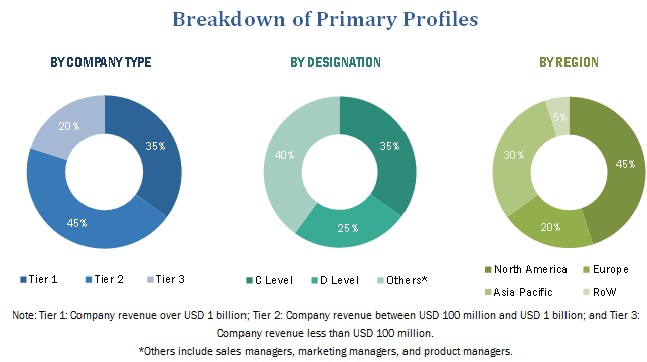
2.1.2.3 Breakdown of Primaries
2.2 Demand-Side Analysis
2.2.1 Introduction
2.2.2 Demand-Side Factors
2.2.2.1 Easy Detection of Metal and Non-Metal Objects
2.2.2.2 Need to Reduce the Passenger Average Waiting Time
2.3 Market Size Estimation
2.3.1 Bottom-Up Approach
2.3.2 Top-Down Approach
2.4 Market Breakdown & Data Triangulation
2.5 Research Assumptions
3 Executive Summary (Page No. - 26)
4 Premium Insights (Page No. - 29)
4.1 Attractive Market Opportunities in the Market
4.2 Market, By Technology, 2014-2021
4.3 Market Share in Europe
4.4 North America Accounted for the Largest Market Share Amongst All the Regions
4.5 Millimeter Wave Airport Full Body Scanner Market: By Sub Type (2016 vs 2021)
4.6 Life Cycle Analysis
5 Market Overview (Page No. - 32)
5.1 Introduction
5.2 Market Segmentation
5.3 Market Dynamics
5.3.1 Drivers
5.3.1.1 Increasing Safety Concerns
5.3.1.2 Smuggling of Narcotics
5.3.1.3 Reduction in Passenger Waiting Time
5.3.2 Restraints
5.3.2.1 Health Concerns
5.3.2.2 Privacy Issues
5.3.3 Oppurtunities
5.3.3.1 Low Cost Product
5.3.4 Challenges
5.3.4.1 Improving the Effectiveness of Existing Scanners
5.3.4.2 Data Protection
6 Industry Trends (Page No. - 38)
6.1 Introduction
6.2 Supply Chain Analysis
6.3 Value Chain Analysis
6.4 Technology Trends
6.4.1 Advanced Softwares
6.5 Porter’s Five Forces Analysis
6.5.1 Threat of New Entrants
6.5.2 Threat of Substitutes
6.5.3 Bargaining Power of Suppliers
6.5.4 Bargaining Power of Buyers
6.5.5 Intensity of Competitive Rivalry
7 Airport Full Body Scanner Market, By Technology (Page No. - 43)
7.1 Introduction
7.2 Millimeter Wave Scanner
7.2.1 Millimeter Wave Scanner, By Sub Type
7.2.1.1 Active Millimeter Wave Scanner
7.2.1.2 Passive Millimeter Wave Scanner
7.3 Backscatter X-Ray Scanner
8 Airport Full Body Scanner Market, By Airport Class (Page No. - 50)
8.1 Introduction
8.2 Class A
8.3 Class B
8.4 Class C
9 Airport Full Body Scanner Market, By Geography (Page No. - 55)
9.1 Introduction
9.2 North America
9.2.1 By Technology
9.2.1.1 Millimeter Wave Scanner, By Sub Type
9.2.2 By Airport Class
9.2.3 By Country
9.2.3.1 U.S.
9.2.3.1.1 By Technology
9.2.3.1.2 By Sub Type
9.2.3.1.3 By Airport Class
9.2.3.2 Canada
9.2.3.2.1 By Technology
9.2.3.2.2 By Sub Type
9.2.3.2.3 By Airport Class
9.3 Europe
9.3.1 By Technology
9.3.1.1 Millimeter Wave Scanner, By Sub Type
9.3.2 By Airport Class
9.3.3 By Country
9.3.3.1 The Netherlands
9.3.3.1.1 By Technology
9.3.3.1.2 By Sub Type
9.3.3.1.3 By Airport Class
9.3.3.2 U.K.
9.3.3.2.1 By Technology
9.3.3.2.2 By Sub Type
9.3.3.2.3 By Airport Class
9.3.3.3 Germany
9.3.3.3.1 By Technology
9.3.3.3.2 By Airport Class
9.3.3.4 France
9.3.3.4.1 By Technology
9.3.3.4.2 By Airport Class
9.4 Asia-Pacific
9.4.1 By Technology
9.4.1.1 Millimeter Wave Scanner, By Sub Type
9.4.2 By Airport Class
9.4.3 By Country
9.4.3.1 The Philippines
9.4.3.1.1 By Technology
9.4.3.1.2 By Sub Type
9.4.3.1.3 By Airport Class
9.4.3.2 Australia
9.4.3.2.1 By Technology
9.4.3.2.2 By Sub Type
9.4.3.2.3 By Airport Class
9.4.3.3 Thailand
9.4.3.3.1 By Technology
9.4.3.3.2 By Airport Class
9.4.3.4 Japan
9.4.3.4.1 By Technology
9.4.3.4.2 By Airport Class
9.5 Rest of the World
9.5.1 By Technology
9.5.1.1 Millimeter Wave Scanner, By Sub Type
9.5.2 By Airport Class
9.5.3 By Country
9.5.3.1 South Africa
9.5.3.1.1 By Technology
9.5.3.1.2 By Sub Type
9.5.3.1.3 By Airport Class
9.5.3.2 Nigeria
9.5.3.2.1 By Technology
9.5.3.2.2 By Airport Class
9.5.3.3 Ghana
9.5.3.3.1 By Technology
9.5.3.3.2 By Airport Class
10 Competitive Landscape (Page No. - 82)
10.1 Overview
10.2 Market Share Analysis: By Company
10.3 Contracts & Agreements is the Key Growth Strategy
10.4 Brand Analysis
10.5 Product Portfolio
10.6 Competitive Situations and Trends
10.6.1 Contracts, 2013-2015
10.6.2 New Product Development, 2015
10.6.3 New Product Launch, 2015
10.6.4 Certification, 2013-2014
11 Company Profile (Page No. - 88)
11.1 Competitive Benchmarking, By Product Type
(Overview, Financials, Products & Services, Strategy, and Developments)*
11.2 Smiths Group PLC
11.3 L-3 Communications Holdings, Inc.
11.4 American Science & Engineering Group
11.5 Rapiscan Systems Ltd.
11.6 Tek84 Engineering Group LLC
11.7 Millivision Inc.
11.8 Braun & Company
11.9 Brijot Imaging Systems (Microsemi)
11.10 CST Digital Communications
11.11 Morpho (Safran)
*Details on Overview, Financials, Product & Services, Strategy, and Developments Might Not Be Captured in Case of Unlisted Companies.
12 Appendix (Page No. - 105)
12.1 Discussion Guide
12.2 Knowledge Store: Marketsandmarkets’ Subscription Portal
12.3 Introducing RT: Real Time Market Intelligence
12.4 Available Customizations
12.5 Related Reports
List of Tables (60 Tables)
Table 1 Market, By Technology, 2014–2021 (USD Million)
Table 2 Millimeter Wave Scanner Market, By Region, 2014–2021 (USD Million)
Table 3 Millimeter Wave Scanner Market, By Sub Type, 2014–2021 (USD Million)
Table 4 Active Millimeter Wave Scanner Market, By Region, 2014–2021 (USD Million)
Table 5 Passive Millimeter Wave Scanner Market, By Region, 2014–2021 (USD Million)
Table 6 Backscatter X-Ray Scanner Market, By Region, 2014–2021 (USD Million)
Table 7 Market, By Airport Class, 2014-2021 (USD Million)
Table 8 Class A Airport Full Body Scanner Market, By Region, 2014-2021 (USD Million)
Table 9 Class B Airport Full Body Scanner Market, By Region, 2014-2021 (USD Million)
Table 10 Class C Airport Full Body Scanner Market, By Region, 2014-2021 (USD Million)
Table 11 Market, By Region, 2014-2021 (USD Million)
Table 12 North America: Market, By Technology, 2014-2021 (USD Million)
Table 13 North America: Millimeter Wave Scanner Market, By Sub Type, 2014-2021 (USD Million)
Table 14 North America: Market, By Airport Class, 2014-2021 (USD Million)
Table 15 North America: Market, By Country, 2014-2021 (USD Million)
Table 16 U.S.: Market, By Technology, 2014-2021 (USD Million)
Table 17 U.S.: Millimeter Wave Scanner Market, By Sub Type, 2014-2021 (USD Million)
Table 18 U.S.: Market, By Airport Class, 2014-2021 (USD Million)
Table 19 Canada: Market, By Technology, 2014-2021 (USD Million)
Table 20 Canada: Millimeter Wave Scanner Market, By Sub Type, 2014-2021 (USD Million)
Table 21 Canada: Market, By Airport Class, 2014-2021 (USD Million)
Table 22 Europe: Market, By Technology, 2014-2021 (USD Million)
Table 23 Europe: Millimeter Wave Scanner Market, By Sub Type, 2014-2021 (USD Million)
Table 24 Europe: Market, By Airport Class, 2014-2021 (USD Million)
Table 25 Europe: Market, By Country, 2014-2021 (USD Million)
Table 26 The Netherlands: Market, By Technology, 2014-2021 (USD Million)
Table 27 The Netherlands: Millimeter Wave Scanner Market, By Sub Type, 2014-2021 (USD Million)
Table 28 The Netherlands: Market, By Airport Class, 2014-2021 (USD Million)
Table 29 U.K.: Market, By Technology, 2014-2021 (USD Million)
Table 30 U.K.: Millimeter Wave Scanner Market, By Sub Type, 2014-2021 (USD Million)
Table 31 U.K.: Market, By Airport Class, 2014-2021 (USD Million)
Table 32 Germany: Market, By Technology, 2014-2021 (USD Million)
Table 33 Germany: Market, By Airport Class, 2014-2021 (USD Million)
Table 34 France: Market, By Technology, 2014-2021 (USD Million)
Table 35 France: Market, By Airport Class, 2014-2021 (USD Million)
Table 36 APAC: Market, By Technology, 2014-2021 (USD Million)
Table 37 APAC: Millimeter Wave Scanner Market, By Sub Type, 2014-2021 (USD Million)
Table 38 APAC: Market, By Airport Class, 2014-2021 (USD Million)
Table 39 APAC: Market, By Country, 2014-2021 (USD Million)
Table 40 The Philippines: AirpoMarket, By Technology, 2014-2021 (USD Million)
Table 41 The Philippines: Millimeter Wave Scanner Market, By Sub Type, 2014-2021 (USD Million)
Table 42 The Philippines: Market, By Airport Class, 2014-2021 (USD Million)
Table 43 Australia: Market, By Technology, 2014-2021 (USD Million)
Table 44 Australia: Millimeter Wave Scanner Market, By Sub Type, 2014-2021 (USD Million)
Table 45 Australia: Market, By Airport Class, 2014-2021 (USD Million)
Table 46 Thailand: Market, By Technology, 2014-2021 (USD Million)
Table 47 Thailand: Market, By Airport Class, 2014-2021 (USD Million)
Table 48 Japan: Market, By Technology, 2014-2021 (USD Million)
Table 49 Japan: Market, By Airport Class, 2014-2021 (USD Million)
Table 50 RoW: Market, By Technology, 2014-2021 (USD Million)
Table 51 RoW: Millimeter Wave Scanner Market, By Sub Type, 2014-2021 (USD Million)
Table 52 RoW: Market, By Airport Class, 2014-2021 (USD Million)
Table 53 RoW: Market, By Country, 2014-2021 (USD Million)
Table 54 South Africa: Market, By Technology, 2014-2021 (USD Million)
Table 55 South Africa : Millimeter Wave Scanner Market, By Sub Type, 2014-2020 (USD Million)
Table 56 South Africa: Market, By Airport Class, 2014-2021 (USD Million)
Table 57 Nigeria: Market, By Technology, 2014-2021 (USD Million)
Table 58 Nigeria: Market, By Airport Class, 2014-2021 (USD Million)
Table 59 Ghana: Market, By Technology, 2014-2021 (USD Million)
Table 60 Ghana: Market, By Airport Class, 2014-2021 (USD Million)
List of Figures (48 Figures)
Figure 1 Markets Covered: Airport Full Body Scanner Market
Figure 2 Global Market: Study Years
Figure 3 Research Flow
Figure 4 Research Design
Figure 5 Breakdown of Primary Interviews: By Company Type, Designation, & Region
Figure 6 Global Drug Trend With the Estimated Number of Drug Users (2006-2013)
Figure 7 Market Size Estimation Methodology : Bottom-Up Approach
Figure 8 Market Size Estimation Methodology : Top-Down Approach
Figure 9 Data Triangulation
Figure 10 Assumptions of the Research Study
Figure 11 Millimeter Wave Scanners Projected to Dominate the Market During the Forecast Period
Figure 12 North America Expected to Grow at the Highest CAGR in the Market
Figure 13 Class A Airport Full Body Scanner Market Expected to Grow at the Highest CAGR During the Forecast Period
Figure 14 Contracts & Agreements has Been the Key Growth Strategy
Figure 15 Attractive Market Opportunities in the Market, 2016-2021
Figure 16 Millimeter Wave Scanner Dominates the Market
Figure 17 U.K. Accounted for the Largest Share in 2016
Figure 18 North America Accounted for the Largest Share in the Market in 2016
Figure 19 Active Scanner to Dominate the Millimeter Wave Airport Full Body Scanner Market Globally
Figure 20 North America Expected to Be the Fastest-Growing Market
Figure 21 Airport Full Body Scanners : Market Segmentation
Figure 22 Number of Deaths From Terrorist-Attacks Between 2010 and 2015
Figure 23 Total Number of Seizures From Different Transportation Modes in 2014
Figure 24 Supply Chain: Distribution Through Third Party Agencies is the Most Preferred Strategy Followed By Key Organizations
Figure 25 Value Chain Analysis: Major Value is Added During the Manufacturing and Assembling Phase
Figure 26 Porter’s Five Forces Analysis
Figure 27 Market, By Technology, 2016 & 2021 (USD Million)
Figure 28 Millimeter Wave Scanner Market, By Region, 2016 & 2021 (USD Million)
Figure 29 Millimeter Wave Scanner Market, By Sub Type, 2016 & 2021 (USD Million)
Figure 30 Backscatter X-Ray Scanner Market, By Region, 2016 & 2021 (USD Million)
Figure 31 Market, By Airport Class, 2016 & 2021 (USD Million)
Figure 32 Class A Airport Full Body Scanner Market, By Region, 2016 & 2021 (USD Million)
Figure 33 Class B Airport Full Body Scanner Market, By Region, 2016 & 2021 (USD Million)
Figure 34 Class C Airport Full Body Scanner Market, By Region 2016 & 2021 (USD Million)
Figure 35 Market: Geographic Snapshot (2016-2021)
Figure 36 North American Full Body Scanner Market Snapshot: U.S. Commanded the Largest Market Share in 2016
Figure 37 European Full Body Scanner Market Snapshot: U.K. Expected to Command the Largest Market Share in 2016
Figure 38 Asia-Pacific Full Body Scanner Market Snapshot: Australia Commanded the Largest Market Share in 2016
Figure 39 RoW Full Body Scanner Market Snapshot: South Africa Estimated to Command the Largest Market Share in 2016
Figure 40 Companies Adopted Contracts as Key Strategy During the Period (2013-2015)
Figure 41 Brand Analysis : Market
Figure 42 Product Portfolio : Key Market Player
Figure 43 Smiths Group PLC : Company Snapshot
Figure 44 SWOT Analysis: Smiths Group PLC
Figure 45 L-3 Communications : Company Snapshot
Figure 46 SWOT Analysis: L-3 Communications
Figure 47 American Science & Engineering Group : Company Snapshot
Figure 48 SWOT Analysis: American Science & Engineering Group
Research Methodology:
Airport full body scanner and its subsegment was arrived by referring to varied secondary sources, such as Hoovers, Bloomberg Businessweek, Factiva, annual reports, and publications, among others. Furthermore, market triangulation was performed with the help of statistical techniques using econometric tools. All percentage shares, splits, and breakdowns were determined using secondary sources and verified through primary sources. All possible parameters that affect the market have been accounted for, viewed in extensive detail, verified through primary research, and analyzed to acquire the final quantitative and qualitative data. This data was consolidated with detailed inputs and analysis from MarketsandMarkets, and presented in this report.
To know about the assumptions considered for the study, download the pdf brochure
The ecosystem of the airport full body scanner comprises airport authorities, airport full body scanner manufacturer, service providers, software providers, and end users.
Airport full body scanner Insights
The key players in the airport full body scanner market include Smiths Group PLC (U.K), L-3 Communications Holdings, Inc. (U.S), American Science & Engineering Group (U.S.), Rapiscan Systems Ltd.(U.S.) , Tek84 Engineering Group LLC(U.S.) , Millivision Inc. (U.S.) CST Digital Communications (South Africa), and Safran Morpho (France), among others.
Key Target Audience:
- Security Systems Manufacturers
- Airport Authorities
- Sub-component Manufacturers
- Technology Support Providers
- Security Systems leasers
- Airport Operator
Scope of the Report:
This research report categorizes the airport full body scanner market into the following segments and subsegments:
Airport full body scanner market, By Technology
-
Millimeter Radio-Wave Scanner, By sub type
- Passive Scanner
- Active Scanner
- Backscatter X-Ray Scanner
Airport full body scanner market, By Class
- Class A
- Class B
- Class C
Airport full body scanner market, By Region
- North America
- Europe
- Asia Pacific
- Rest of the World
Customizations Available for the Report:
Along with the market data, MarketsandMarkets offers customizations as per the specific needs of a company. The following customization options are available for the report:
Company Information
- Detailed analysis and profiling of additional market players (up to five)
- Market Share analysis of Top 5 Players
- Volume Analysis of Full body Scanner












Growth opportunities and latent adjacency in Airport Full Body Scanner Market
We would like to get more information about full body X-rays for security at our airport, including the positive and negative aspects for humans. We currently have less information regarding the products and effects. Thank you.