Collaborative Combat Aircraft Market Size, Share & Report Growth by Platform (Manned and Unmanned), by Application (Air Superiority, Ground Attack, Intelligence, surveillance, and Reconnaissance (ISR), and Electronic Warfare), by System (Sensor System, Communication System, Weapon System, and Navigation System), by End Users (Air Forces, Navy/Naval Aviation, and Special Operations Forces (SOF)), and Region - Global Forecast to 2035


The collaborative combat aircraft market reached an estimated USD 2,850 million in 2025 and is projected to climb to USD 18,000 million by 2035, expanding at a CAGR of 20% from 2026 to 2035. This growth is driven by the arrival of production contracts for a platform type that did not exist in operational inventories five years ago. In June 2026, the US Air Force awarded Increment 1 production contracts to Anduril and General Atomics for the first 150 collaborative combat aircraft—Anduril's FQ-44A Fury and General Atomics' FQ-42A Dark Merlin (Gambit 2)—with delivery expected before the end of the decade. The USAF targets a unit cost under USD 30 million per aircraft, roughly one-third the cost of an F-35A. GA-ASI's YFQ-42A completed its maiden flight on August 27, 2025; Anduril's YFQ-44A Fury flew in October 2025. In December 2025, the USAF selected nine vendors for Increment 2—a more exquisite, survivable CCA design. In Australia, Boeing and the Royal Australian Air Force completed the MQ-28 Ghost Bat's 100th flight in March 2025, executed an air-to-air autonomous weapon engagement from an MQ-28 teamed with an E-7A Wedgetail and F/A-18F Super Hornet in December 2025, and received an AUD 754 million (USD 538 million) contract for seven additional aircraft. The Australian government has invested over AUD 4 billion in the program. In March 2026, Airbus confirmed it is preparing two Kratos Valkyrie aircraft with a European mission system, targeting a German Air Force CCA capability by 2029. Boeing and Rheinmetall have teamed to offer the MQ-28 Ghost Bat to the Bundeswehr. The collaborative combat aircraft market is where autonomous warfare meets production reality—and the programs that define it are transitioning from prototype demonstrations to factory-floor manufacturing.

Top 10 Key Takeaways
- North America holds the largest base, anchored by the USAF CCA program—the world's largest loyal wingman initiative with over 1,000 units planned across increments.
- Europe is the fastest-growing region, driven by Germany's CCA requirement targeting 2029, FCAS remote carriers, and the UK's LANCA/Tempest-associated adjuncts.
- Attritable/reusable loyal wingmen (Fury, Gambit, MQ-28) lead by platform revenue; autonomy and mission AI software is the fastest-growing subsystem.
- ISR and distributed sensing is the leading mission role; strike and weapons carriage is the fastest-growing as CCAs move from sensor platforms to armed effectors.
- Non-traditional entrants (Anduril, Shield AI) won Increment 1 contracts over legacy primes (Boeing, Lockheed Martin)—a procurement outcome that reshaped competitive expectations.
- Autonomy software is a separate competitive layer: RTX Collins Aerospace provides mission AI for the FQ-42A, Shield AI's Hivemind for the FQ-44A—the AI that flies the CCA is contested independently of the airframe.
- The USAF targets under USD 30 million per CCA—one-third the cost of an F-35A—establishing the cost benchmark for every CCA program globally.
- Germany's 2029 requirement is the largest European CCA competition: Boeing/Rheinmetall (MQ-28), Airbus/Kratos (Valkyrie with European mission system), and potentially Airbus Wingman compete.
- The near-term opportunity lies in Increment 1 production ramp, Increment 2 awards, German CCA procurement, Australian MQ-28 scaling, and GA-ASI's European Gambit production starting 2027.
- The near-term risk is scaling production from prototype quantities to hundreds per year, integrating CCAs with multiple manned platforms (F-35, F-22, F-47, Eurofighter, Rafale), and resolving autonomous engagement authority.
Why the Collaborative Combat Aircraft Market Matters Now
For decades, air combat was defined by crewed fighters—expensive, exquisite platforms with a single pilot making every decision. The collaborative combat aircraft changes this equation by adding autonomous or semi-autonomous unmanned wingmen that fly alongside manned fighters, extending their sensing, reach, and lethality while absorbing mission risk that would otherwise fall on a crewed aircraft. A CCA can carry sensors into contested airspace ahead of a manned fighter, launch weapons from a forward position, jam enemy radars, act as a decoy to draw fire, or provide electronic warfare support—all while a human pilot in a nearby aircraft retains authority over engagement decisions.
The market covers the platforms, autonomy software, mission systems, and ground control infrastructure that enable collaborative combat aircraft operations. It includes attritable and reusable loyal wingmen, high-performance stealth CCA for contested environments, modified existing UAV platforms adapted for the CCA role, and European CCA programs such as FCAS remote carriers, Airbus Wingman, BAE LANCA, and Baykar Kizilelma. The market spans airframes and propulsion, autonomy and mission AI software, sensors and EO/IR, datalinks and networking, ground control and MUM-T integration, and weapons/payload integration. Out of scope are conventional unmanned combat aerial vehicles without manned-unmanned teaming capability, traditional ISR drones, and small tactical drones. The market connects to Military Drones Market (https://www.marketsandmarkets.com/Market-Reports/military-drone-market-221577711.html), Unmanned Systems Market (https://www.marketsandmarkets.com/Market-Reports/unmanned-systems-market-18210274.html), Military Platforms Market (https://www.marketsandmarkets.com/Market-Reports/military-platforms-market-109616288.html), Artificial Intelligence in Military Market (https://www.marketsandmarkets.com/Market-Reports/artificial-intelligence-military-market-41793495.html), and Electronic Warfare Market (https://www.marketsandmarkets.com/Market-Reports/electronic-warfare-market-1301.html).
The market has a distinctive structure: the airframe and the autonomy software are contested separately. For USAF CCA Increment 1, Anduril and GA-ASI won the hardware contracts, but RTX Collins Aerospace provides the command-and-control/mission autonomy software for the FQ-42A while Shield AI provides it for the FQ-44A. This separation creates two competitive layers—the platform layer and the AI layer—and the winners of each may differ. The AI that flies the CCA, selects targets, manages sensors, and coordinates with the manned fighter is as strategically important as the airframe itself.
Market Trends Shaping the Collaborative Combat Aircraft Market
The defining trend is non-traditional entrants winning contracts over legacy defense primes. Anduril—founded in 2017—won the USAF CCA Increment 1 hardware contract alongside GA-ASI, beating Boeing and Lockheed Martin, two companies that have dominated military aviation for generations. Shield AI, a startup, provides the Hivemind autonomy software for Anduril's Fury. This outcome signals that the USAF values speed-to-field, software-defined architecture, and cost discipline over incumbency—a procurement philosophy that is reshaping competitive dynamics across the defense industry.
A second trend is Germany's 2029 CCA requirement opening Europe's largest loyal wingman competition. The Bundeswehr has expressed an operational need for a CCA to operate alongside crewed fighters before FCAS arrives in the 2040s. Boeing and Rheinmetall have teamed to offer the MQ-28 Ghost Bat as a mature, proven solution. Airbus is preparing two Kratos Valkyrie aircraft with a European mission system. Airbus also developed its own stealthy Wingman concept. The outcome of Germany's selection will set the European CCA standard for a generation.
A third trend is the transition from prototype demonstration to production manufacturing. GA-ASI's YFQ-42A flew in August 2025. Anduril's YFQ-44A flew in October 2025. Boeing's MQ-28 completed its 100th flight in March 2025. The USAF awarded production contracts for 150 Increment 1 aircraft in June 2026. The market is moving from flight-test footage to factory-floor deliveries—a transition that demands manufacturing capacity, supply-chain readiness, and quality systems that prototype programs do not require.
A fourth trend is autonomy software becoming the highest-value subsystem. RTX Collins Aerospace and Shield AI compete for the mission AI that controls how CCAs fly, sense, decide, and coordinate with manned fighters. This software determines whether a CCA is effective in combat—and it is updated, retrained, and improved continuously, creating a recurring revenue stream that extends well beyond the initial platform delivery.
A fifth trend is GA-ASI building Gambit in Europe with European partners, targeting international procurement starting 2027. This positions GA-ASI to capture allied CCA demand with locally manufactured platforms—a strategy that addresses industrial-participation requirements while building on the USAF-validated Gambit design.
Market Drivers Accelerating Growth
The first driver is the USAF CCA program—the world's largest loyal wingman initiative with over 1,000 units planned across increments and Increment 1 production contracts for 150 aircraft awarded in June 2026. This program sets the global benchmark for CCA performance, cost, and acquisition strategy.
The second driver is the cost imperative. At under USD 30 million per CCA versus approximately USD 82.5 million per F-35A (Lot 17), a CCA costs one-third as much as a crewed fighter while extending its combat capability. This cost ratio makes force multiplication through CCAs economically viable at a scale that additional manned fighters do not permit.
The third driver is Australia's AUD 4 billion+ MQ-28 Ghost Bat investment validating the CCA concept in operational flight test. The RAAF has demonstrated MQ-28 teaming with E-7A Wedgetail and F/A-18F Super Hornet, including an autonomous air-to-air weapon engagement in December 2025—the most advanced CCA operational demonstration conducted by any air force.
Market Challenges and Restraints
The most significant restraint is autonomous engagement authority. A CCA carrying weapons into contested airspace raises hard questions about who decides to fire, under what conditions an AI can release weapons, and how human control is maintained when communication links are degraded or severed. Rules of engagement for lethal autonomous systems are not settled in any major military, and resolving them is a prerequisite for armed CCA employment.
A second restraint is scaling production. Prototype programs produce single-digit aircraft in dedicated facilities with hand-built processes. Production contracts for 150+ aircraft require manufacturing lines, quality control, supply-chain management, and workforce scaling that the winning companies—particularly Anduril, a startup—have not previously executed at this scale.
A third challenge is manned-unmanned teaming integration. A CCA must operate in tight coordination with the manned fighter it supports—sharing sensor data, receiving commands, coordinating maneuvers, and handing off targets in real time. Integrating CCA control into the cockpit of an F-35, F-22, F-47, Eurofighter, or Rafale requires software modification to the manned platform, which is often more complex than building the CCA itself.
Segment Insights
By Platform Type
Attritable/reusable loyal wingmen (Fury, Gambit 2, MQ-28) lead by revenue, because they are the platforms entering production first and the ones anchoring the largest programs of record (USAF Increment 1, Australian AIR6015).
High-performance stealth CCA (Increment 2 designs) is the fastest-growing platform type, because the USAF selected nine vendors for Increment 2 in December 2025 and these more exquisite, survivable designs command higher unit costs and larger R&D budgets.
By Mission Role
ISR and distributed sensing leads, because extending sensor coverage into contested airspace ahead of manned fighters is the first operational mission that CCAs perform and the one with the lowest autonomous-engagement-authority risk.
Strike and weapons carriage is the fastest-growing mission role, as CCAs transition from sensor platforms to armed effectors—demonstrated by the MQ-28's December 2025 autonomous air-to-air weapon engagement.
Key segmentation conclusions:
- Attritable loyal wingmen lead production; Increment 2 stealth designs grow fastest on higher-value programs.
- ISR leads initial missions; strike grows fastest as autonomous weapon engagement matures.
- Autonomy software is the highest-value subsystem and the one contested independently of the airframe.
- The USAF two-increment structure (affordable Increment 1 + exquisite Increment 2) creates a tiered market.
- European CCA programs are at an earlier stage but accelerating on Germany's 2029 requirement.
Regional Analysis: Collaborative Combat Aircraft Market by Region
North America
North America holds the largest base, valued at roughly USD 1,083 million in 2025 and projected to reach about USD 7,000 million by 2035, growing at a CAGR of 20.0%. The United States dominates through the USAF CCA program—the world's largest loyal wingman initiative. Increment 1 production contracts for 150 aircraft (Anduril FQ-44A Fury + GA-ASI FQ-42A Gambit 2) were awarded in June 2026. Increment 2 selected nine vendors in December 2025. The USAF plans over 1,000 CCAs across increments, integrated with the F-47, F-35, and F-22. RTX Collins Aerospace and Shield AI compete for autonomy software. Canada is exploring manned-unmanned teaming capabilities as part of NORAD modernization.
Europe
Europe is the fastest-growing region, valued at approximately USD 627 million in 2025 and forecast to reach around USD 4,800 million by 2035, expanding at a CAGR of 23.0%. Germany's CCA requirement targeting 2029 operational capability is the largest European loyal wingman competition—Boeing/Rheinmetall (MQ-28), Airbus/Kratos (Valkyrie with European mission system), and Airbus Wingman compete. GA-ASI will build Gambit aircraft in Europe with partners starting 2027. The United Kingdom is developing LANCA and Tempest-associated adjuncts through BAE Systems. France contributes through Dassault's FCAS remote carrier work and nEUROn heritage.
Asia Pacific
Asia Pacific holds the second-largest base, valued at roughly USD 855 million in 2025 and projected to reach about USD 5,000 million by 2035, growing at a CAGR of 19.0%. Australia leads globally in CCA operational maturity: the Royal Australian Air Force and Boeing completed the MQ-28's 100th flight in March 2025, demonstrated autonomous air-to-air weapon engagement in December 2025, and received an AUD 754 million contract for seven additional aircraft. The Australian government has invested over AUD 4 billion in MQ-28. Japan is exploring loyal wingman capabilities for F-35 integration. South Korea and India are developing indigenous CCA programs (HAL CATS Warrior for India).
Rest of World
The Rest of World market reached an estimated USD 285 million in 2025 and is projected to hit about USD 1,200 million by 2035, growing at a CAGR of 16.0%. The Middle East leads through Saudi Arabia's potential MQ-9B and Gambit procurement and broader interest in autonomous combat platforms. Turkey's Baykar Kizilelma is both a domestic program and an export opportunity. Israel is developing unmanned wingman capabilities for F-35I integration.
Regional outlook summary:
- North America holds the largest base on the USAF CCA program (1,000+ units planned across increments).
- Europe grows fastest on Germany's 2029 CCA requirement, FCAS remote carriers, and UK LANCA/Tempest adjuncts.
- Asia Pacific holds the second-largest base on Australia's AUD 4B+ MQ-28 program—the most operationally mature CCA.
- Autonomy software, manned-unmanned teaming integration, and production scaling are the universal variables.
- The competitive outcome of Germany's CCA selection will define the European market for a generation.
Country-Specific Insights
The United States is the definitional market. The USAF CCA program is the world's largest loyal wingman initiative, with over 1,000 units planned. Increment 1 production contracts for 150 aircraft (Anduril Fury + GA-ASI Gambit 2) were awarded in June 2026 after competitive prototyping that eliminated Boeing and Lockheed Martin. Increment 2 selected nine vendors in December 2025 for a more exquisite, survivable design. The F-47 sixth-generation fighter is being designed from inception to control CCAs. RTX Collins Aerospace and Shield AI compete for mission autonomy software. The FY2026 budget includes USD 15 million for crewed-platform integration technology.
Australia is the world's CCA operational leader. The RAAF and Boeing have completed over 100 MQ-28 Ghost Bat flights, demonstrated autonomous weapon engagement, proven E-7A Wedgetail and F/A-18F teaming, and deployed the MQ-28 to an operational air base and a multinational exercise. Total investment exceeds AUD 4 billion. The December 2025 contract (AUD 754 million for seven aircraft) funds the next phase.
Germany is the European CCA pivot. The Bundeswehr's requirement for an operational CCA by 2029 has attracted Boeing/Rheinmetall (MQ-28), Airbus/Kratos (Valkyrie), and potentially Airbus Wingman. The outcome will set the standard for allied European air forces. The United Kingdom and France contribute through LANCA/Tempest and FCAS remote carrier development. Turkey's Baykar Kizilelma is the most advanced non-Western CCA, with autonomous flight capability and jet propulsion.
Country-level conclusions:
- The US defines the market through the USAF CCA program: 1,000+ units, two increments, production contracts awarded June 2026.
- Australia leads operational maturity: 100+ MQ-28 flights, autonomous weapon engagement, AUD 4B+ investment.
- Germany's 2029 CCA requirement is the pivot that opens European-scale procurement.
- The UK and France develop LANCA/Tempest adjuncts and FCAS remote carriers for the 2030s.
- Turkey's Kizilelma is the most advanced non-Western CCA program.
Key Company Insights
The competitive landscape spans four tiers: USAF CCA hardware winners, autonomy software competitors, international CCA developers, and Increment 2 contenders. The leading players include Anduril, General Atomics, Boeing, Kratos, Northrop Grumman, Lockheed Martin, Shield AI, RTX/Collins Aerospace, Airbus, BAE Systems, Dassault, Baykar, Saab, Leonardo, and HAL.
- Anduril Industries (FQ-44A Fury)
- General Atomics Aeronautical Systems (FQ-42A Gambit 2 / MQ-20)
- Boeing (MQ-28 Ghost Bat)
- Kratos Defense (XQ-58A Valkyrie)
- Northrop Grumman (Increment 2 / X-47B Heritage)
- Lockheed Martin (Increment 2)
- Shield AI (Hivemind Autonomy)
- RTX / Collins Aerospace (Mission Autonomy Software)
- Airbus (Wingman / FCAS Remote Carrier)
- BAE Systems (LANCA / Tempest Adjuncts)
- Dassault Aviation (FCAS Remote Carrier / nEUROn)
- Baykar (Kizilelma)
- Saab (CCA Studies / Gripen Integration)
- Leonardo (GCAP-Associated CCA)
- Hindustan Aeronautics Limited (CATS Warrior)
Anduril won the USAF CCA Increment 1 hardware contract with the FQ-44A Fury—making Anduril, a company founded in 2017, one of two suppliers for the most important autonomous combat aircraft program in the world. Shield AI provides the Hivemind autonomy software for Fury. General Atomics won the other Increment 1 slot with the FQ-42A Gambit 2, based on the XQ-67A OBSS design. GA-ASI's YFQ-42A completed its maiden flight on August 27, 2025. RTX Collins Aerospace provides the mission autonomy software for Gambit. GA-ASI will build Gambit in Europe starting 2027 for international procurement.
Boeing's MQ-28 Ghost Bat is the most operationally mature CCA globally—over 100 flights, autonomous weapon engagement, teaming with manned fighters and AEW&C, and multinational exercise deployment. Boeing/Rheinmetall are offering MQ-28 for Germany's 2029 requirement. Kratos' XQ-58A Valkyrie is being prepared with a European mission system by Airbus for the German competition.
Airbus is developing both the FCAS remote carrier (as part of the Franco-German-Spanish next-generation combat system) and its own stealthy Wingman concept. BAE Systems leads LANCA and Tempest-associated adjuncts for the UK. Baykar's Kizilelma is the most advanced non-Western CCA, with jet propulsion and autonomous flight.
Key company strategy conclusions:
- Anduril is the market's defining disruptor: a 2017 startup that won USAF CCA Increment 1 over Boeing and Lockheed Martin.
- GA-ASI holds both a USAF CCA slot and the European production strategy (Gambit in Europe, 2027).
- Boeing's MQ-28 Ghost Bat is the most operationally mature CCA globally—100+ flights, weapon engagement, export potential.
- Shield AI and RTX Collins Aerospace compete for the autonomy software layer—the AI that flies the CCA is as strategically valuable as the airframe.
- Airbus/Kratos and Boeing/Rheinmetall are the front-runners for Germany's 2029 CCA competition.
Recent Developments
- In June 2026, the USAF awarded Increment 1 production contracts to Anduril and General Atomics for the first 150 collaborative combat aircraft, with delivery expected before the end of the decade.
- In December 2025, the Royal Australian Air Force and Boeing executed an autonomous air-to-air weapon engagement from an MQ-28 Ghost Bat teamed with an E-7A Wedgetail and F/A-18F Super Hornet.
- In December 2025, the USAF selected nine vendors for CCA Increment 2, focused on more survivable designs for contested environments.
- In March 2026, Airbus confirmed it is preparing two Kratos Valkyrie aircraft with a European mission system, targeting an operational CCA capability for the German Air Force by 2029.
- In March 2026, Boeing Australia and Rheinmetall teamed to offer the MQ-28 Ghost Bat to the German Bundeswehr for Germany's loyal wingman requirement.
Real-World Use Cases
The Royal Australian Air Force's MQ-28 Ghost Bat program demonstrates the operational maturity of collaborative combat aircraft. Boeing and the RAAF completed the MQ-28's 100th flight in March 2025, operated it from an operational air base, and demonstrated teaming with the E-7A Wedgetail and F/A-18F Super Hornet. The program has also shown autonomous air-to-air engagement capability, supporting Australia's position as one of the most advanced CCA operators. The Australian government's investment of more than AUD 4 billion and the follow-on AUD 754 million contract for seven additional aircraft indicate continued commitment to scaling the capability.
The USAF CCA Increment 1 program shows how rapid prototyping and competitive down-selection are reshaping combat-aircraft acquisition. The Air Force initially funded Anduril, Boeing, General Atomics, Lockheed Martin, and Northrop Grumman, then advanced Anduril and General Atomics for production-representative test articles and first production contracts. The approach emphasizes affordability, open architecture, and fleet diversity, with the first increment expected to provide operational learning before larger follow-on procurement.
Market Segmentation
The collaborative combat aircraft market segments across four interlocking axes. By platform type, it spans attritable loyal wingmen, high-performance stealth CCA, modified existing UAVs, and European FCAS/Tempest remote carriers—four categories at different points on the cost-survivability curve. By mission role, it covers ISR, strike, electronic warfare, decoy/SEAD support, and air-to-air—five roles that a single modular CCA airframe can serve through payload and software reconfiguration. By subsystem, it covers airframe/propulsion, autonomy software, sensors, datalinks, ground control, and weapons integration. By region, investment follows air force CCA programs, industrial strategy, and the pace of manned-unmanned teaming integration.
These axes interlock: a USAF CCA Increment 1 aircraft uses the Anduril FQ-44A Fury airframe (attritable loyal wingman), with Shield AI Hivemind autonomy (mission AI subsystem), carrying an ISR payload on initial missions and a weapons payload as the program matures—three axes in a single evolving platform configuration.
Segmentation summary:
- Attritable loyal wingmen lead production; stealth Increment 2 designs grow fastest on higher-value programs.
- ISR leads initial missions; strike grows fastest as autonomous weapon engagement matures.
- Autonomy software is contested independently of airframe—the highest-value recurring subsystem.
- The two-increment structure creates a tiered market: affordable Increment 1, exquisite Increment 2.
- Europe's CCA programs are at an earlier stage but will scale rapidly on Germany's 2029 requirement.
Conclusion and Future Outlook
Through 2035, collaborative combat aircraft will mature from first-generation loyal wingmen into a permanent, integral element of allied air-combat architecture—as essential to air superiority as the manned fighters they accompany. The forces driving the market—USAF Increment 1 production for 150 aircraft with 1,000+ planned across increments, Australia's 100+ flight MQ-28 program, Germany's 2029 requirement opening European procurement, and GA-ASI's European production starting 2027—provide a decade of committed demand. AI and autonomy will define the platform's trajectory: CCAs will evolve from single-mission sensor carriers to multi-role combat participants that sense, jam, strike, and defend alongside their manned lead, with human pilots providing strategic direction while machine intelligence handles the speed-critical maneuvering and coordination that exceeds human reaction time.
The competitive landscape will be defined by who controls the autonomy layer. The airframe is the platform; the AI is the capability. Shield AI, RTX Collins Aerospace, and others competing for mission autonomy software will shape CCA effectiveness more than the airframe manufacturers, because the software determines whether the CCA flies a useful mission or merely follows the manned fighter. For air force acquisition executives, defense-industrial leaders, autonomy developers, and investors, the collaborative combat aircraft market is where the future of air combat is being manufactured—and the organizations that capture the platform, software, and integration layers of CCA will define how air power is projected for the next thirty years.
Frequently Asked Questions (FAQ)
1. How big is the collaborative combat aircraft market?
The collaborative combat aircraft market was estimated at roughly USD 2,850 million in 2025 and is projected to reach about USD 18,000 million by 2035. North America accounts for the largest share, anchored by the USAF CCA program with over 1,000 units planned.
2. What is the collaborative combat aircraft market growth rate?
The market is forecast to grow at a CAGR of approximately 20% from 2026 to 2035. Europe is the fastest-growing region at around 23%, driven by Germany's 2029 CCA requirement and FCAS remote carrier development.
3. Which segment leads the collaborative combat aircraft market?
By platform type, attritable/reusable loyal wingmen (Fury, Gambit, MQ-28) lead. Stealth Increment 2 designs grow fastest. By mission role, ISR leads; strike grows fastest.
4. Who are the key players in the collaborative combat aircraft market?
Leading companies include Anduril (Fury), General Atomics (Gambit 2), Boeing (MQ-28 Ghost Bat), Kratos (Valkyrie), Northrop Grumman, Lockheed Martin, Shield AI, RTX/Collins Aerospace, Airbus, BAE Systems, Dassault, Baykar, Saab, Leonardo, and HAL.
5. What are the factors driving the collaborative combat aircraft market?
The primary drivers are the USAF CCA program (150 Increment 1 aircraft, 1,000+ planned), the under-USD-30M unit cost targeting one-third the F-35A price, Australia's AUD 4B+ MQ-28 investment, and Germany's 2029 CCA requirement opening European procurement.
Speak With Our Analyst
MarketsandMarkets can help decision-makers assess the collaborative combat aircraft market in greater detail, including increment structure, autonomy software competition, platform economics, international procurement strategy, and regional opportunity mapping. Request a sample of the full study, speak with an analyst, or customize the scope by platform type, subsystem, mission role, or geography.
 Exclusive indicates content/data unique to MarketsandMarkets and not available with any competitors.
TABLE OF CONTENTS
1 Introduction
1.1 Study Objectives
1.2 Market Definition and Scope
1.2.1 Inclusions and Exclusions
1.3 Study Scope
1.3.1 Markets Covered
1.3.2 Geographic Segmentation
1.3.3 Years Considered
1.4 Currency Considered
1.5 Stakeholders
2 Executive Summary
3 Premium Insights
3.1 Attractive Opportunities in the Collaborative Combat Aircraft Market
3.2 Market, By Platform Type
3.3 Market, By Region
3.4 Market, By Mission Role
5 Market Overview
5.1 Introduction
5.2 Market Dynamics
5.2.1 Drivers
5.2.1.1 USAF Increment 1 Production Contracts for 150 CCA — the Defining Program of Record
5.2.1.2 Unit Cost Targeting Under USD 30 Million — One-Third the Cost of an F-35A
5.2.1.3 Australia's AUD 4 Billion MQ-28 Ghost Bat Investment Validating the CCA Concept
5.2.2 Restraints
5.2.2.1 Autonomous Engagement Authority — Rules of Engagement for Lethal AI in Contested Airspace
5.2.2.2 High Development Risk — Programs Moving from Prototype to Production at Startup Speed
5.2.3 Opportunities
5.2.3.1 Germany's CCA Requirement by 2029 Opening Europe's Largest Loyal Wingman Competition
5.2.3.2 Increment 2 and Beyond — More Exquisite, Survivable CCA Designs for Contested Environments
5.2.4 Challenges
5.2.4.1 Manned-Unmanned Teaming Integration with F-35, F-22, F-47, Eurofighter, and Rafale
5.2.4.2 Scaling Production from Prototype Quantities to Hundreds Per Year
5.3 Value Chain Analysis
5.4 Ecosystem Analysis
5.5 Investment and Funding Scenario
5.6 Pricing Analysis
5.6.1 Attritable CCA (Under USD 30M Unit Cost)
5.6.2 Reusable / High-End CCA (USD 30M–80M)
5.6.3 Autonomy Software and Mission Systems (Per-Aircraft Integration Cost)
5.7 Trends and Disruptions Impacting Customer Business
5.8 Technology Analysis
5.8.1 Key Technologies (Autonomy AI, Manned-Unmanned Teaming, Sensor Fusion, Modular Payloads)
5.8.2 Complementary Technologies (NGAD/F-47, 5th-Gen Fighters, AWACS/AEW&C, Datalinks)
5.8.3 Adjacent Technologies (Swarming, Electronic Warfare, Stealth, Directed Energy)
5.9 Porter's Five Forces Analysis
5.10 Key Stakeholders and Buying Criteria
5.11 Case Study Analysis
5.12 Patent Analysis
5.13 Key Conferences and Events
5.14 Regulatory Landscape
5.14.1 USAF CCA Acquisition Strategy (Increment Structure, EMD, Production)
5.14.2 Export Controls (ITAR, Wassenaar) for Autonomous Combat Aircraft
5.14.3 NATO Autonomous Weapons Policy and Human Control Requirements
5.14.4 Airworthiness Certification for Autonomous Combat Platforms
5.15 Impact of AI and Autonomy on the Market
5.16 Impact of 2025 US Tariffs on Supply Chains
6 Industry Trends
6.1 Non-Traditional Entrants (Anduril, Shield AI) Winning Contracts Over Legacy Primes (Boeing, Lockheed)
6.2 Autonomy Software as a Separate Competition — RTX Collins and Shield AI for Mission AI
6.3 The Attritable vs. Reusable Design Philosophy Debate
6.4 Germany's 2029 CCA Requirement Opening the European Loyal Wingman Competition
6.5 GA-ASI Building Gambit in Europe — International Production Starting 2027
6.6 From Single Wingman to Multi-Aircraft Teaming — One Pilot Controlling Multiple CCAs
7 Technology Adoption and Strategic Disruption Landscape
7.1 USAF CCA (Anduril Fury, GA-ASI Gambit) vs. Boeing MQ-28 Ghost Bat vs. Kratos XQ-58A Valkyrie
7.2 Increment 1 (Affordable, Attritable) vs. Increment 2 (More Exquisite, Survivable)
7.3 US Programs vs. European Programs (FCAS Remote Carriers, Airbus Wingman, LANCA) vs. Asian Programs
7.4 Purpose-Built CCA vs. Modified Existing UAV (Valkyrie Repurposed, MQ-9 Derivative)
8 Customer Landscape and Buyer Behavior
8.1 Decision-Making Process — Air Force Chief of Staff, Head of Air Combat Command, Acquisition Executive
8.2 Procurement Model: Increment-Based, Competitive Prototyping, Spiral Development
8.3 Cost Framework: Unit Flyaway Cost, Autonomy Software Per-Platform, Ground Control, Sustainment
8.4 The "Attritable" Economics: How Many CCAs Can Be Lost Per Mission While Remaining Cost-Effective?
9 Collaborative Combat Aircraft Market, By Platform Type
9.1 Introduction
9.2 Attritable / Reusable Loyal Wingmen (Anduril FQ-44A Fury, GA-ASI FQ-42A Gambit 2, Boeing MQ-28)
9.3 High-Performance Stealth CCA / Increment 2 Designs
9.4 Modified Existing UAV Platforms (Kratos XQ-58A Valkyrie, MQ-20 Avenger Derivative)
9.5 FCAS / Tempest Remote Carriers and European CCA
10 Collaborative Combat Aircraft Market, By Mission Role
10.1 Introduction
10.2 ISR and Distributed Sensing
10.3 Strike and Weapons Carriage
10.4 Electronic Warfare and Jamming
10.5 Decoy and Threat Suppression (SEAD/DEAD Support)
10.6 Air-to-Air Combat Support
11 Collaborative Combat Aircraft Market, By Subsystem
11.1 Introduction
11.2 Airframe and Propulsion
11.3 Autonomy and Mission AI Software
11.4 Sensors, EO/IR, and Radar
11.5 Communications, Datalinks, and Networking
11.6 Ground Control Systems and MUM-T Integration
11.7 Weapons Integration and Payload
12 Collaborative Combat Aircraft Market, By Region
12.1 Introduction
12.2 North America
12.2.1 United States
12.2.2 Canada
12.3 Europe
12.3.1 Germany
12.3.2 United Kingdom
12.3.3 France
12.3.4 Rest of Europe
12.4 Asia Pacific
12.4.1 Australia
12.4.2 Japan
12.4.3 South Korea
12.4.4 India
12.4.5 Rest of Asia Pacific
12.5 Rest of World
12.5.1 Middle East (Saudi Arabia, UAE, Israel)
12.5.2 Others
13 Competitive Landscape
13.1 Overview
13.2 Key Player Strategies / Right to Win
13.3 Revenue Analysis
13.4 Market Share Analysis
13.5 Company Evaluation Matrix
13.6 Competitive Benchmarking
13.7 Competitive Scenario
14 Company Profiles
14.1 Anduril Industries (FQ-44A Fury)
14.2 General Atomics Aeronautical Systems (FQ-42A Gambit 2 / MQ-20 Avenger)
14.3 Boeing (MQ-28 Ghost Bat)
14.4 Kratos Defense (XQ-58A Valkyrie)
14.5 Northrop Grumman (CCA Increment 2 / X-47B Heritage)
14.6 Lockheed Martin (Speed Racer / Increment 2)
14.7 Shield AI (Autonomy Software / Hivemind)
14.8 RTX / Collins Aerospace (CCA Mission Autonomy Software)
14.9 Airbus (Wingman / FCAS Remote Carrier)
14.10 BAE Systems (LANCA / Tempest Adjuncts)
14.11 Dassault Aviation (FCAS Remote Carrier / nEUROn Heritage)
14.12 Baykar (Kizilelma)
14.13 Saab (CCA Studies / Gripen Integration)
14.14 Leonardo (GCAP-Associated CCA)
14.15 Hindustan Aeronautics Limited (CATS Warrior / Indian CCA)
15 Appendix
15.1 Discussion Guide
15.2 KnowledgeStore: MarketsandMarkets' Subscription Portal
15.3 Customization Options
15.4 Related Reports
15.5 Author Details
Exhaustive secondary research was done to collect information on collaborative combat aircraft market, its adjacent markets, and its parent market. The next step was to validate these findings, assumptions, and sizing with industry experts across the value chain through primary research. Demand-side analyses were carried out to estimate the overall size of the market. Both top-down and bottom-up approaches were employed to estimate the complete market size. Thereafter, market breakdown and data triangulation were used to estimate the size of segments and subsegments.
Secondary Research
In the secondary research process, various secondary sources, such as D&B Hoovers, Bloomberg, Business Week, and different magazines were referred to identify and collect information for this study. Secondary sources also included annual reports, press releases & investor presentations of companies, certified publications, articles by recognized authors, and research papers.
Primary Research
Extensive primary research was conducted after acquiring information regarding the collaborative combat aircraft market scenario through secondary research. The market for collaborative combat aircraft is being driven by a range of stakeholders, including aircraft manufacturers, infrastructure providers, and governments. The demand-side of this market is characterized by various end users, such as military forces, defense contractors, and international defense organizations. The supply side is characterized by technological advancements and the development in collaborative combat aircraft. Various primary sources from both the supply and demand sides of the market were interviewed to obtain qualitative and quantitative information. Following is the breakdown of primary respondents.
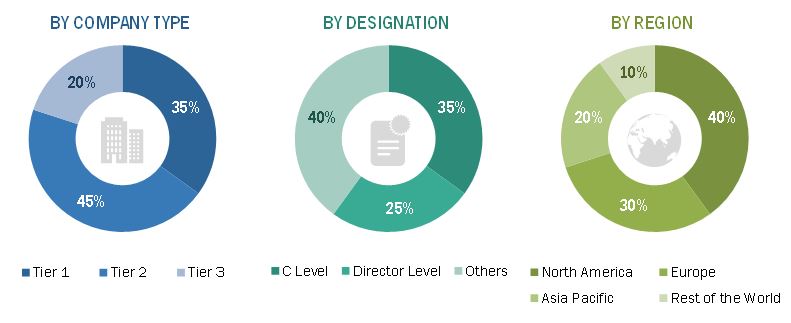
To know about the assumptions considered for the study, download the pdf brochure
Market Size Estimation
Both the top-down and bottom-up approaches were used to estimate and validate the total size of the collaborative combat aircraft market. These methods were also used extensively to estimate the size of various subsegments in the market. The research methodology used to estimate the market size includes the following:
- The key players in the industry and markets were identified through extensive secondary research.
- The industry’s supply chain and market size, in terms of value, were determined through primary and secondary research processes.
- All percentage shares, splits, and breakdowns were determined using secondary sources and verified through primary sources.
Data Triangulation
After arriving at the overall market size from the market size estimation process, the total market has been split into several segments and subsegments. To complete the overall market engineering process and arrive at the exact statistics for market segments and subsegments, the data triangulation procedure has been implemented, wherever applicable. The data has been triangulated by studying various factors and trends from both the demand and supply sides. Along with this, the market size has been validated using both top-down and bottom-up approaches.
Report Objectives
- To define, describe, segment, and forecast the size of the collaborative combat aircraft market based on platform, application, system, end users, and region.
- To forecast the size of different segments of the market with respect to five key regions, namely, North America, Europe, Asia Pacific, and Rest of the World, along with their key countries
- To identify and analyze the key drivers, restraints, opportunities, and challenges influencing the growth of the market.
- To identify technology trends currently prevailing in the collaborative combat aircraft market
- To analyze micro markets with respect to individual growth trends, prospects, and their contribution to the overall market
- To analyze opportunities in the market for stakeholders by identifying the key market trends
- To profile the leading market players and comprehensively analyze their market share and core competencies.
- To analyze the degree of competition in the market by identifying the key growth strategies, such as acquisitions, new product launches, contracts, and partnerships, adopted by the leading market players.
- To identify detailed financial positions, key products, and unique selling points of the leading companies in the market
- To provide a detailed competitive landscape of the market, along with a ranking analysis, market share analysis, and revenue analysis of the key players
Scope of the Report
|
Report Metric |
Details |
|
Market size available for years |
2023–2028 |
|
Base year considered |
2022 |
|
Forecast period |
2023-2028 |
|
Forecast units |
Value (USD Million) |
|
Segments covered |
By Platform, By Application, By System, By End Users |
|
Geographies covered |
North America, Europe, Asia Pacific, Rest of the World |
|
Companies covered |
Lockheed Martin Corporation (US), Boeing Company (US), Airbus SE (Netherlands), Northrop Grumman Corporation (US), Saab AB (Sweden), BAE Systems plc (UK), Dassault Aviation SA (France), Leonardo S.p.A. (Italy), Textron Inc. (US), General Dynamics Corporation (US) are some of the major players of Collaborative Combat Aircraft market. (25 Companies) |
Collaborative Combat Aircraft Market Highlights
The study categorizes the collaborative combat aircraft market based on Platform, Application, System, End Users, and Region.
|
Segment |
Subsegment |
|
By Platform |
|
|
By Application |
|
|
By System |
|
|
By End Users |
|
|
By Region |
|
Available Customizations
MarketsandMarkets offers the following customizations for this market report:
Company Information
- Profiling of additional market players (up to 5)
Product Analysis
- Product matrix, which provides a detailed comparison of the product portfolio of each company in the collaborative combat aircraft market.












Growth opportunities and latent adjacency in Collaborative Combat Aircraft Market