Edge Computing in Video Surveillance Market By Deployment (On-Premises, Cloud), Technology (AI-Based Video Analytics, Computer Vision), Application (Intrusion Detection, Object Tracking, Facial Recognition, Traffic Monitoring) - Global Forecast to 2032


The Edge Computing in Video Surveillance Market is gaining momentum as organizations increasingly deploy intelligent surveillance systems that process video data closer to cameras and connected devices rather than relying exclusively on centralized cloud infrastructure. For this article, the market is estimated at approximately USD 8.0 billion in 2025 and is projected to reach USD 20.0 billion by 2032, registering a compound annual growth rate (CAGR) of approximately 14.0% from 2026 to 2032. These figures are illustrative planning estimates, not independently verified market statistics. Growth is supported by artificial intelligence (AI), the Internet of Things (IoT), smart-city investments, industrial automation, and digital transformation initiatives. Edge computing enables faster threat detection, reduced network bandwidth consumption, improved operational continuity, and more responsive video analytics. As enterprises prioritize real-time intelligence and scalable security infrastructure, edge-based surveillance is gaining importance.
Key Market Trends & Insights
- Leading region: North America is expected to remain a major market, supported by enterprise security spending, smart infrastructure projects, and adoption of AI-powered surveillance.
- Fastest-growing region: Asia Pacific has strong growth potential as China, India, Japan, and South Korea expand smart-city infrastructure, transportation networks, and industrial automation.
- Dominant deployment: On-premises deployments remain important for organizations that require local control over sensitive footage, predictable latency, and continued operation during network disruptions.
- Emerging technology: AI-enabled cameras, edge AI processors, computer vision, and compact video analytics servers are improving real-time detection and automated incident classification.
- Application momentum: Intrusion detection and traffic monitoring are significant use cases because they require rapid alerts and continuous analysis of video streams.
- Privacy and efficiency: Local processing can reduce the amount of footage transmitted to cloud platforms, although organizations must still implement appropriate privacy controls, cybersecurity safeguards, and data-retention policies.
Market Size & Forecast
- Base year market size (2025): Approximately USD 8.0 billion.
- Forecast market size by 2032: Approximately USD 20.0 billion.
- CAGR (2026–2032): Approximately 14.0%.
- Growth factors: Increasing deployment of AI-powered security cameras, connected IoT infrastructure, smart-city initiatives, and automated monitoring systems is expected to support demand for edge computing in video surveillance.
Note: These market figures are illustrative estimates prepared for this article, not verified third-party market data. The market definition and scope should be validated before using them in a published research report.
Edge Computing in Video Surveillance Market: Top 10 Key Takeaways
- Edge computing is transforming video surveillance by enabling real-time video processing closer to cameras and connected devices.
- AI-powered video analytics is improving the identification of suspicious activities, unauthorized access, and unusual traffic patterns.
- On-premises deployment remains important for facilities requiring local data control, low latency, and operational resilience.
- Cloud-connected edge architectures support centralized monitoring while reducing the need to transmit every video stream continuously.
- Smart cities, transportation infrastructure, manufacturing facilities, and commercial buildings are important demand centers.
- Edge AI video analytics software is helping organizations automate monitoring and reduce dependence on manual surveillance.
- On-camera smart video surveillance enables cameras to classify objects and detect events without relying entirely on remote servers.
- Edge computing CCTV traffic monitoring can support vehicle counting, congestion analysis, and incident detection.
- Privacy compliance, cybersecurity, hardware costs, and integration complexity remain important adoption challenges.
- Future opportunities will center on intelligent cameras, real-time analytics hardware, scalable edge servers, and automated security workflows.
Product Insights
The edge computing in video surveillance market includes intelligent cameras, edge computing gateways, video analytics appliances, and dedicated edge servers that process surveillance footage locally. AI-enabled surveillance cameras are an important product category because they can perform selected analytics directly on the device. These capabilities allow cameras to detect people, vehicles, restricted-area entry, and other predefined events without transmitting every frame to a centralized system.
Edge servers and video analytics appliances are also important, particularly for large facilities operating hundreds or thousands of cameras. These systems aggregate video streams, run advanced computer vision models, and coordinate alerts across multiple locations. They can offer greater processing capacity than individual cameras while retaining the latency and bandwidth advantages of local computing.
Demand is also expanding for compact edge AI hardware with dedicated neural processing units (NPUs), graphics processing units (GPUs), and optimized inference accelerators. Such hardware supports increasingly sophisticated analytics while helping manage power consumption. Manufacturers are also improving compatibility with existing IP cameras and video management systems, allowing organizations to upgrade surveillance capabilities without replacing their entire infrastructure.
Technology / Component Insights
Artificial intelligence and computer vision are central to the edge computing in video surveillance market. AI-based video analytics software can identify objects, recognize patterns, classify events, and distinguish potentially significant incidents from routine activity. Processing these workloads near the camera reduces the time required to generate alerts and can improve responsiveness in security-sensitive environments.
Edge computing hardware provides the processing capacity required to execute these models. Depending on the deployment, this may include intelligent cameras, embedded processors, edge gateways, or low-latency video surveillance edge servers. Hardware selection depends on camera resolution, the number of concurrent video streams, analytics complexity, power requirements, and expected operating conditions.
IoT connectivity enables surveillance equipment to exchange information with access-control systems, alarms, sensors, and building management platforms. For example, a detected intrusion can trigger an alert, activate lighting, and notify security personnel through an integrated system. Automation helps coordinate these responses and reduces the need for continuous manual monitoring.
Cloud platforms remain complementary rather than necessarily competing technologies. Hybrid architectures can process video locally while transmitting metadata, event clips, or selected footage to the cloud for centralized reporting and long-term analysis. Future innovation is expected to focus on smaller AI models, hardware acceleration, improved cybersecurity, model updates, and more efficient processing of high-resolution video streams.
Application Insights
Intrusion detection is a significant application of edge computing in video surveillance because it requires rapid identification of unauthorized access, perimeter breaches, and movement in restricted areas. Edge-based systems can analyze video locally and generate alerts without waiting for all footage to reach a remote data center. Industrial facilities, warehouses, airports, commercial properties, and critical infrastructure operators can benefit from this approach.
Object tracking is another important application. Computer vision systems can follow the movement of people, vehicles, and assets across monitored areas, supporting security investigations and operational analysis. In manufacturing and logistics, these capabilities can help monitor restricted zones, improve asset visibility, and support automated workflows.
Facial recognition can be deployed for identity verification and access management where legally permitted. However, biometric surveillance raises significant privacy, accuracy, and compliance concerns. Organizations must assess applicable laws, lawful purposes, data-protection obligations, and restrictions on biometric processing before deploying such systems.
Traffic monitoring offers considerable growth potential as cities and transport operators seek real-time visibility into congestion, vehicle movement, road incidents, and intersection performance. Edge computing CCTV traffic monitoring can reduce communication delays and enable local processing even when network connectivity is constrained. Additional opportunities include retail analytics, workplace safety, automated industrial inspection, and monitoring of remote infrastructure.
Regional Insights
North America
North America is an important market for edge computing in video surveillance because of established enterprise security infrastructure, investments in transportation, and demand for intelligent monitoring. The United States represents a significant opportunity across commercial buildings, logistics, manufacturing, healthcare, public infrastructure, and critical facilities. Canada is investing in connected infrastructure and digital security, while Mexico offers opportunities in industrial parks, transport corridors, commercial properties, and logistics operations. Procurement requirements, privacy legislation, cybersecurity expectations, and restrictions affecting particular surveillance vendors can influence adoption.
Europe
Europe benefits from demand for secure infrastructure, industrial automation, and smart-city applications. Germany is an important market because of its manufacturing base and industrial security requirements. The United Kingdom and France have opportunities across transportation, commercial property, public infrastructure, and enterprise security, while Italy and Spain are investing in digital infrastructure and urban monitoring. Nordic countries also offer opportunities through connected infrastructure and technology adoption. The General Data Protection Regulation (GDPR) and national rules governing video surveillance affect system design, data retention, access controls, and the use of biometric analytics.
Asia Pacific
Asia Pacific offers substantial growth potential due to urbanization, infrastructure development, manufacturing expansion, and connected transportation systems. China has a large surveillance technology ecosystem, while Japan and South Korea emphasize industrial automation and advanced electronics. India offers opportunities through smart-city programs, transportation upgrades, commercial development, and enterprise digitization. Australia is a market for infrastructure and commercial security solutions, while Singapore's connected urban infrastructure supports demand for intelligent monitoring. Adoption varies across countries according to local regulation, procurement policies, budgets, and data-protection requirements.
Regional Insights at a Glance
- North America benefits from enterprise security modernization and established video management infrastructure.
- Asia Pacific has strong potential from smart-city projects, industrial expansion, and transportation investment.
- Europe places significant emphasis on privacy, cybersecurity, and compliant surveillance deployment.
- India, China, Japan, and South Korea offer different growth opportunities across public infrastructure and industrial applications.
- Regional demand depends on camera installations, edge hardware availability, connectivity, regulatory requirements, and total cost of ownership.
Country-Specific Market Trends
Country-level adoption is shaped by the maturity of digital infrastructure, public-sector procurement, privacy regulation, and the need for real-time analytics. The following CAGRs are illustrative estimates for the broader edge computing in video surveillance market, not independently verified country forecasts.
In China, smart infrastructure, transportation monitoring, industrial security, and domestic AI hardware development support adoption. Japan's opportunities are linked to labor-saving automation, manufacturing, transport safety, and intelligent building management.
In North America, the United States benefits from enterprise modernization, critical infrastructure security, logistics, and AI-enabled camera deployments. Canada's demand is supported by commercial security and infrastructure projects. Mexico's opportunities include manufacturing, industrial facilities, retail, and transport security.
In Europe, Germany's industrial and manufacturing sectors create demand for integrated surveillance and automation. France offers opportunities in transport, commercial security, public infrastructure, and industrial facilities. Across both markets, privacy requirements and cybersecurity standards influence purchasing decisions.
| Country | Illustrative CAGR (2026–2032) | Key Demand Drivers |
| China | 16.0% | Smart infrastructure and industrial surveillance |
| Japan | 13.0% | Automation and transport safety |
| United States | 14.0% | Enterprise security and AI analytics |
| Canada | 12.0% | Infrastructure and commercial security |
| Mexico | 13.0% | Industrial parks and logistics |
| Germany | 12.0% | Manufacturing and industrial automation |
| France | 12.0% | Transport and infrastructure security |
These figures are indicative assumptions for editorial use. They should not be presented as sourced market forecasts without supporting research.
Country-Level Insights
- China offers opportunities in connected infrastructure and large-scale surveillance deployments.
- Japan's aging workforce and automation priorities support intelligent monitoring.
- The United States has opportunities in enterprise security, logistics, and critical infrastructure.
- Canada and Mexico present different opportunities across public infrastructure and industrial facilities.
- Germany and France require solutions that address security needs alongside data protection and regulatory compliance.
Key Edge Computing in Video Surveillance Company Insights
Competition includes surveillance camera manufacturers, networking and computing vendors, video management providers, and AI analytics specialists. Companies differentiate themselves through edge processing capabilities, AI model performance, integration with existing systems, cybersecurity, and lifecycle support.
Axis Communications focuses on network cameras and edge-based analytics, including capabilities that support processing directly on compatible devices. Motorola Solutions combines video security, command-center technologies, and analytics within broader security ecosystems. Hikvision and Dahua Technology offer extensive camera portfolios with embedded analytics and intelligent surveillance capabilities, subject to applicable procurement and regulatory restrictions in different markets.
Hanwha Vision develops network cameras and AI-enabled video security products, while Bosch Security Systems emphasizes integrated security solutions and analytics. Cisco contributes networking and infrastructure technologies relevant to connected surveillance environments. NVIDIA provides accelerated computing platforms that can support AI video analytics, while Intel supplies processors and edge computing technologies used in video processing and inference systems.
Company Strategy Highlights
- Axis Communications emphasizes network cameras and distributed analytics.
- Motorola Solutions focuses on integrated video security and command-center workflows.
- Hanwha Vision and Bosch address intelligent cameras and enterprise security deployments.
- Hikvision and Dahua offer broad surveillance portfolios, subject to market-specific restrictions.
- NVIDIA and Intel support the computing infrastructure used for advanced edge AI workloads.
Recent Developments
Industry development is centered on improving the intelligence, efficiency, and interoperability of video surveillance systems. The following are ongoing product and technology development directions, not claims of specific newly announced deals.
- AI-enabled camera development: Manufacturers continue to enhance embedded object detection, classification, and event analytics to reduce dependence on centralized processing.
- Edge AI hardware optimization: Chipset and computing vendors are advancing inference acceleration to support multiple video streams and more complex models within power and thermal constraints.
- Hybrid edge-cloud surveillance: Video security platforms increasingly support local event processing alongside centralized monitoring, analytics, and management.
- Cybersecurity improvements: Vendors are incorporating stronger device authentication, secure software updates, access controls, and network protection into connected surveillance infrastructure.
- Analytics integration: Video platforms are expanding integration with access control, industrial automation, traffic systems, and incident-management software.
Market Segmentation
The edge computing in video surveillance market can be segmented by deployment, technology, application, and region. By deployment, the market includes on-premises and cloud models. On-premises solutions process video within the customer's facility or local infrastructure, while cloud-connected models combine edge processing with remote storage, management, or analytics. Hybrid architectures can incorporate elements of both.
By technology, the market includes AI-based video analytics and computer vision. AI-based analytics supports event detection and classification, while computer vision enables object recognition, tracking, and scene interpretation. By application, the market includes intrusion detection, object tracking, facial recognition, and traffic monitoring, alongside adjacent use cases such as workplace safety and industrial monitoring.
Regionally, the market spans North America, Europe, Asia Pacific, and the rest of the world. Adoption is influenced by infrastructure spending, surveillance requirements, data protection rules, AI capabilities, and local supplier ecosystems.
Segmentation Highlights
- Deployment: On-premises, cloud-connected, and hybrid edge-cloud architectures.
- Technology: AI-based video analytics, computer vision, and edge inference hardware.
- Application: Intrusion detection, object tracking, facial recognition, and traffic monitoring.
- End-user opportunities: Government, transportation, manufacturing, retail, logistics, and commercial buildings.
- Regions: North America, Europe, Asia Pacific, and other global markets.
Conclusion
The edge computing in video surveillance market is evolving from conventional video recording toward intelligent, automated security infrastructure. Processing video near its source can reduce latency, optimize network usage, and support faster responses to incidents. These benefits are particularly relevant for transportation networks, industrial facilities, logistics centers, commercial properties, and connected urban infrastructure.
Through 2032, market growth is expected to depend on AI adoption, hardware performance, interoperability, cybersecurity, and the expansion of IoT-connected environments. Edge AI video analytics software and real-time video edge analytics hardware will remain important as organizations seek to automate monitoring without transferring every video stream to centralized systems.
However, successful deployment requires more than advanced analytics. Organizations must evaluate accuracy, false-alarm rates, lifecycle costs, system integration, and privacy obligations. Vendors that combine reliable hardware, efficient AI models, strong security, and flexible deployment options are well positioned to compete as surveillance becomes increasingly data-driven.
FAQs
1. What is the market size of the edge computing in video surveillance market?
For this article, the market is estimated at approximately USD 8.0 billion in 2025, with a projected value of USD 20.0 billion by 2032. These figures are illustrative and require validation against a defined market scope and independent research.
2. What is the projected growth rate of the edge computing in video surveillance market?
The illustrative forecast assumes a CAGR of approximately 14.0% from 2026 to 2032. Actual growth will depend on AI adoption, infrastructure spending, product pricing, and deployment patterns.
3. What are the key drivers of the market?
Key drivers include AI-powered analytics, real-time incident detection, smart-city infrastructure, IoT adoption, industrial automation, and the need to reduce video transmission and processing delays.
4. Which region is expected to lead the market?
North America is expected to remain a major market due to enterprise security investment and established surveillance infrastructure. Asia Pacific also offers strong growth potential from urbanization, industrial development, and smart-infrastructure initiatives.
5. Who are the key companies in the market?
Important participants include Axis Communications, Motorola Solutions, Hikvision, Dahua Technology, Hanwha Vision, Bosch Security Systems, Cisco, NVIDIA, and Intel. Their roles differ across cameras, analytics, networking, and computing infrastructure.
Revenue
Revenue in the edge computing in video surveillance market is generated through intelligent cameras, edge servers, video analytics software, computing hardware, licenses, integration services, and ongoing maintenance. Recurring software subscriptions and analytics upgrades can create additional revenue beyond initial hardware sales. Vendors may also generate income from system integration, cybersecurity, technical support, and enterprise video management. Revenue opportunities depend on deployment scale, the number of connected cameras, analytics sophistication, and the balance between local processing and cloud services.
Investment & Funding
Investment opportunities span AI-enabled surveillance cameras, edge computing processors, inference accelerators, low-latency video surveillance edge servers, and analytics platforms. Investors are also interested in software that improves detection accuracy, reduces false alarms, and integrates video intelligence with operational systems. Funding priorities are likely to include cybersecurity, energy-efficient hardware, privacy-aware analytics, and scalable edge infrastructure. Investment decisions should consider customer acquisition costs, hardware margins, software revenue potential, regulatory exposure, and the ability to integrate with established video management platforms.
Mergers & Acquisitions (M&A)
Mergers and acquisitions in the broader video surveillance ecosystem can help companies acquire AI analytics expertise, strengthen camera and computing portfolios, and expand access to enterprise customers. Strategic buyers may seek capabilities in computer vision, edge AI chipsets, video management software, cybersecurity, and cloud integration. Partnerships and acquisitions can also help vendors combine camera hardware with analytics and incident-response platforms. Specific transaction values and announcements should be verified before publication because not every video surveillance transaction directly concerns edge computing.
Recent Developments
- AI analytics: Continued development of embedded models for people, vehicle, and event classification is improving local surveillance intelligence.
- Edge hardware: Increased optimization of processors and accelerators is supporting video inference across multiple camera streams.
- Hybrid architecture: Edge-cloud platforms are combining immediate local alerts with centralized management and reporting.
- System integration: Vendors are improving interoperability between video analytics, access control, alarms, and building management systems.
- Privacy and security: Product development increasingly emphasizes secure device configuration, software updates, access management, and data minimization.
 Exclusive indicates content/data unique to MarketsandMarkets and not available with any competitors.
Table of Contents
1. Introduction
1.1 Study Objectives
1.2 Market Definition
1.3 Market Scope
1.4 Market Segmentation
1.5 Years Considered
1.6 Currency and Pricing Considerations
1.7 Limitations and Assumptions
2. Research Methodology
2.1 Research Data
2.2 Secondary Research
2.3 Primary Research
2.4 Market Size Estimation
2.5 Data Triangulation
2.6 Forecasting Model and Key Assumptions
3. Executive Summary
3.1 Market Overview
3.2 Market Size and Growth Forecast
3.3 Key Market Trends
3.4 Attractive Opportunities by Deployment
3.5 Growth Opportunities by Technology
3.6 Regional Growth Opportunities
4. Premium Insights
4.1 Key Factors Influencing Market Growth
4.2 Market Opportunities by Deployment
4.3 Market Opportunities by Technology
4.4 Market Opportunities by Application
4.5 Adoption of AI-Powered Edge Video Analytics
4.6 Regional Investment Opportunities
5. Market Overview
5.1 Introduction
5.2 Market Dynamics
5.2.1 Drivers
5.2.1.1 Increasing Demand for Real-Time Video Analytics
5.2.1.2 Growing Adoption of AI-Powered Surveillance Systems
5.2.1.3 Rising Investments in Smart Cities and Intelligent Transportation
5.2.1.4 Increasing Need for Low-Latency Security Monitoring
5.2.2 Restraints
5.2.2.1 High Initial Costs of Edge Computing Infrastructure
5.2.2.2 Integration Challenges with Legacy CCTV Systems
5.2.2.3 Limited Processing Capacity and Power Constraints in Edge Devices
5.2.3 Opportunities
5.2.3.1 Growing Adoption of Edge AI Video Analytics Software
5.2.3.2 Expansion of Smart Infrastructure and Industrial Automation
5.2.3.3 Increasing Demand for On-Camera Smart Video Surveillance
5.2.3.4 Integration of Edge Computing with IoT and 5G Networks
5.2.4 Challenges
5.2.4.1 Cybersecurity Risks in Distributed Surveillance Infrastructure
5.2.4.2 Data Privacy and Regulatory Compliance Requirements
5.2.4.3 Managing AI Accuracy and False-Positive Detection Rates
5.2.4.4 Interoperability Across Cameras, Servers, and Video Management Systems
5.3 Role of Edge Computing in Modern Video Surveillance
5.4 Edge Computing Versus Cloud-Based Video Processing
5.5 Role of Artificial Intelligence and Computer Vision
5.6 Integration of IoT, 5G, and Automated Security Systems
5.7 Data Privacy, Cybersecurity, and Video Data Management
5.8 Value Chain Analysis
5.9 Ecosystem Analysis
5.10 Porter's Five Forces Analysis
6. Edge Computing in Video Surveillance Market, by Deployment
6.1 Introduction
6.2 On-Premises
6.2.1 Local Video Processing and Storage
6.2.2 Low-Latency Surveillance and Incident Detection
6.2.3 Enterprise and Critical Infrastructure Deployments
6.3 Cloud
6.3.1 Cloud-Connected Edge Surveillance
6.3.2 Centralized Video Management and Remote Monitoring
6.3.3 Scalable Video Analytics and Data Storage
6.3.4 Hybrid Edge-Cloud Surveillance Architectures
7. Edge Computing in Video Surveillance Market, by Technology
7.1 Introduction
7.2 AI-Based Video Analytics
7.2.1 Real-Time Threat and Anomaly Detection
7.2.2 Automated Event Classification
7.2.3 Behavioral Analysis and Predictive Security
7.2.4 AI-Enabled Video Search and Investigation
7.3 Computer Vision
7.3.1 Object Detection and Classification
7.3.2 Object Tracking and Movement Analysis
7.3.3 Facial Recognition and Identity Verification
7.3.4 Scene Understanding and Activity Recognition
7.3.5 Edge-Based Image and Video Processing
8. Edge Computing in Video Surveillance Market, by Application
8.1 Introduction
8.2 Intrusion Detection
8.2.1 Perimeter Security and Restricted-Area Monitoring
8.2.2 Unauthorized Access Detection
8.2.3 Automated Security Alerts
8.3 Object Tracking
8.3.1 People and Vehicle Tracking
8.3.2 Asset Monitoring and Movement Analysis
8.3.3 Object Tracking Across Multiple Cameras
8.4 Facial Recognition
8.4.1 Identity Verification and Access Control
8.4.2 Biometric Surveillance Applications
8.4.3 Privacy and Regulatory Compliance Considerations
8.5 Traffic Monitoring
8.5.1 Vehicle Detection and Classification
8.5.2 Traffic Flow and Congestion Monitoring
8.5.3 Accident and Incident Detection
8.5.4 Smart Transportation and Intelligent Traffic Management
9. Edge Computing in Video Surveillance Market, by Region
9.1 Introduction
9.2 North America
9.2.1 US
9.2.2 Canada
9.2.3 Mexico
9.3 Europe
9.3.1 Germany
9.3.2 UK
9.3.3 France
9.3.4 Italy
9.3.5 Spain
9.3.6 Rest of Europe
9.4 Asia Pacific
9.4.1 China
9.4.2 Japan
9.4.3 India
9.4.4 South Korea
9.4.5 Australia
9.4.6 Rest of Asia Pacific
9.5 Rest of the World
9.5.1 Middle East
9.5.2 Africa
9.5.3 South America
10. Competitive Landscape
10.1 Introduction
10.2 Market Share Analysis
10.3 Competitive Positioning of Key Players
10.4 Product Portfolio and Technology Analysis
10.5 Strategic Developments
10.5.1 Product Launches and Enhancements
10.5.2 Partnerships and Collaborations
10.5.3 Mergers and Acquisitions
10.5.4 Research and Development Investments
10.5.5 AI Analytics and Edge Hardware Innovations
11. Company Profiles
11.1 Axis Communications
11.2 Motorola Solutions
11.3 Hikvision
11.4 Dahua Technology
11.5 Hanwha Vision
11.6 Bosch Security Systems
11.7 Cisco Systems
11.8 NVIDIA
11.9 Intel Corporation
11.10 Honeywell International
12. Emerging Technologies and Trends
12.1 Edge AI and Intelligent Camera Processing
12.2 Low-Latency Video Surveillance Edge Servers
12.3 AI-Based Anomaly Detection and Behavioral Analytics
12.4 Integration of 5G and IoT Connectivity
12.5 Hybrid Edge-Cloud Video Surveillance
12.6 Privacy-Preserving Video Analytics
12.7 Automated Security Monitoring and Incident Response
12.8 AI Model Optimization and Hardware Acceleration
13. Investment and Growth Opportunities
13.1 Investment Opportunities in Edge AI Hardware
13.2 Growth Opportunities in Intelligent Video Analytics Software
13.3 Opportunities in Smart Cities and Traffic Monitoring
13.4 Expansion of Industrial and Commercial Surveillance
13.5 Opportunities in Cloud-Connected Edge Infrastructure
13.6 Strategic Partnerships Across the Surveillance Ecosystem
14. Future Outlook of the Edge Computing in Video Surveillance Market
14.1 Market Outlook Through 2032
14.2 Evolution of AI-Powered Video Surveillance
14.3 Impact of Edge Computing on Real-Time Security Operations
14.4 Role of IoT, 5G, and Automation in Intelligent Surveillance
14.5 Emerging Opportunities in Transportation and Industrial Monitoring
14.6 Strategic Recommendations for Market Participants
15. Appendix
15.1 Key Industry Terms and Definitions
15.2 Abbreviations
15.3 Relevant Standards and Regulatory Considerations
15.4 Related Reports
15.5 About MarketsandMarkets











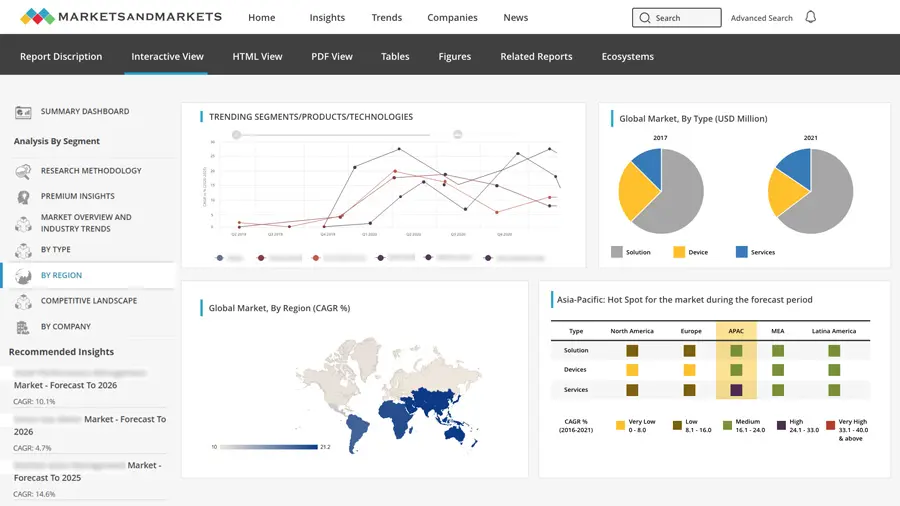
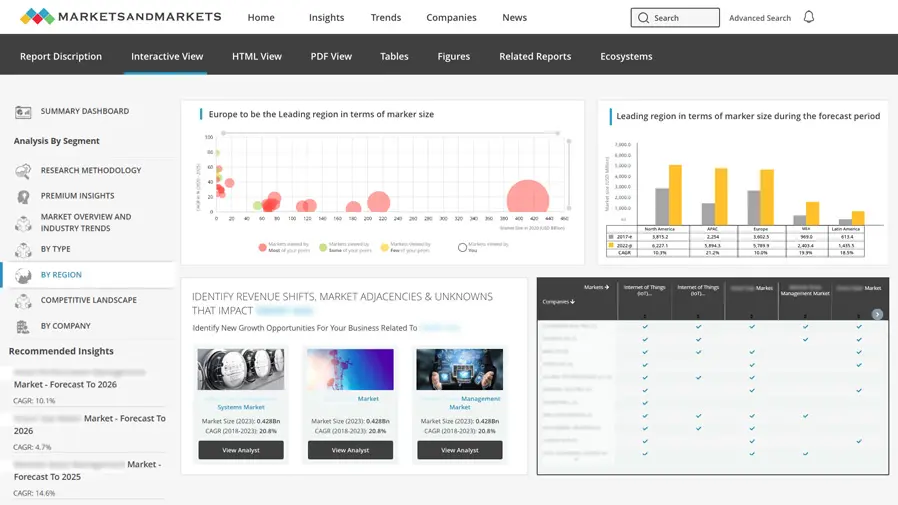
Growth opportunities and latent adjacency in Edge Computing in Video Surveillance Market