Train Seat Market by Train Type (High Speed, Passenger, Light, Tram, Monorail), Seat Type (Regular, Recliner, Folding, Dining, Smart), Rail Car Type (Overland, Subway, Long Distance) - Global Forecast to 2035


Train Seat Market Summary
The global Train Seat Market is projected to expand from approximately US$ 2.30 Billion in 2025 to US$ 3.47 Billion by 2035 at a CAGR of 4.2% from 2025 to 2035. The market is being supported by railway infrastructure modernization, expansion of metro and high-speed rail networks, replacement of aging rolling stock, increasing passenger expectations for comfort, and demand for lightweight, durable, fire-safe, and sustainable interior components. Industry estimates place the 2025 market in the broad range of US$2.3–3.0 billion, depending on market definition and segmentation methodology.
Train seats are increasingly evolving from basic passenger fixtures into engineered components that influence safety, ergonomics, accessibility, passenger experience, vehicle weight, and lifecycle cost. High-speed rail, metro systems, regional trains, intercity services, and premium rail operators are encouraging manufacturers to develop modular seating platforms with improved ergonomics, recyclable materials, integrated power connectivity, and optimized space utilization. GRAMMER, for example, offers passenger and driver seats across city, regional, high-speed, and very-high-speed rail applications, highlighting the industry's shift toward specialized seating architectures.
Key Market Trends & Insights
The North American market remains a major high-value market, supported by commuter rail modernization, intercity passenger rail investment, fleet refurbishment, and demand for enhanced passenger comfort. However, Asia Pacific is expected to record the fastest expansion among the major established regions, driven by extensive metro construction, high-speed rail development, urbanization, and large-scale rolling-stock procurement. Several current industry estimates identify Asia Pacific as the largest regional market, demonstrating the importance of China, Japan, India, and other Asian railway systems.
The passenger seat segment represents the dominant product category because passenger coaches, metro cars, regional trains, and high-speed rail vehicles require large volumes of standardized or customized seating systems. Premium, ergonomic, reclining, lightweight, and modular seats are gaining attention as operators compete on passenger experience.
Technology adoption is also reshaping the market. IoT-enabled condition monitoring, embedded sensors, digital seat reservation systems, occupancy analytics, and connected passenger interfaces can help operators understand utilization and maintenance requirements. AI can support passenger-flow analysis, predictive maintenance, seat-occupancy forecasting, and interior configuration optimization, although AI remains an enabling technology rather than a standalone train-seat product category.
Sustainability is another important trend. Manufacturers are developing recyclable materials, lightweight structures, modular components, and designs intended to reduce lifecycle environmental impact. GRAMMER's New Regio passenger seat, for instance, uses a recyclable mono-material construction and a flexible platform aimed at different passenger-compartment configurations.
Market Size & Forecast
-
Base year market size (2025): US$ 2.30 Billion
-
Forecast market value (2035): US$ 3.47 Billion
-
CAGR (2025–2035): 4.2%
-
Primary growth factors: railway infrastructure investment, high-speed rail expansion, metro modernization, rolling-stock replacement, passenger comfort requirements, lightweight materials, and sustainable interior design.
The projected growth reflects a mature but steadily expanding transportation-component market. Replacement demand is particularly important because train seats must satisfy safety, durability, fire-resistance, hygiene, accessibility, and ergonomic requirements over long operating cycles. A separate industry estimate projects the market at US$2.98 billion in 2025 and US$4.56 billion by 2035, illustrating the variation caused by different definitions of the addressable market.
AI-Powered Military Transformation: The Future of Smart Combat and Defense Top 10 Key Takeaways
-
The global Train Seat Market is estimated at approximately US$ 2.30 Billion in 2025 and is projected to reach US$ 3.47 Billion by 2035 at a CAGR of 4.2% from 2025 to 2035.
-
Passenger seats represent the largest product opportunity because of their extensive deployment across metro, regional, intercity, and high-speed trains.
-
Railway fleet modernization is generating recurring replacement opportunities for seating manufacturers.
-
North America remains an important high-value market because of commuter, intercity, and rolling-stock modernization programs.
-
Asia Pacific is positioned for strong growth because of rapid urban rail development and high-speed railway investment.
-
Lightweight structures can help rail operators improve vehicle energy efficiency and passenger capacity.
-
AI and IoT can enable seat-occupancy analytics, predictive maintenance, passenger-flow optimization, and smarter fleet management.
-
Sustainable materials and recyclable seat architectures are becoming increasingly important in new rolling-stock projects.
-
Modular seat platforms allow manufacturers to customize comfort, density, configuration, and functionality across different rail applications.
-
Competitive differentiation is increasingly based on safety, ergonomics, sustainability, total cost of ownership, customization, and passenger experience.
Product Insights
Passenger seats dominate the Train Seat Market because a single passenger train can require hundreds of seating positions, creating substantial volume opportunities for manufacturers. Passenger seating is used across city trains, metro systems, regional trains, intercity services, high-speed rail, and very-high-speed trains. Demand is shifting from conventional fixed seating toward ergonomically engineered products offering better lumbar support, improved cushioning, optimized legroom, enhanced fire safety, reduced weight, and easier maintenance.
Premium and first-class seats represent an attractive value segment, particularly in high-speed and intercity rail. These products can incorporate adjustable backrests, armrests, tables, privacy features, USB/power connectivity, and improved acoustic or vibration characteristics. Driver seats also remain important because locomotive operators require ergonomic and adjustable seating designed around long-duration operation.
Emerging categories include modular seats, lightweight composite seats, recyclable mono-material designs, accessibility-oriented seating, vandal-resistant metro seats, and connected seating concepts. Manufacturers are increasingly developing common seat platforms that can be configured for multiple train types, reducing engineering complexity and supporting faster customization.
Technology / Component Insights
Train-seat technology is moving toward lightweight engineering, modular construction, advanced materials, ergonomic design, digital monitoring, and automation. Structural components increasingly use engineered metals, composites, high-performance polymers, and optimized frames to balance strength with weight. Weight reduction is strategically important because lower vehicle mass can contribute to improved energy efficiency.
AI and IoT are emerging as supporting technologies rather than primary seat technologies. Embedded sensors can potentially monitor occupancy, vibration, temperature, usage frequency, or component condition. Data collected from connected interiors can be integrated with cloud-based fleet-management platforms to support predictive maintenance and improve asset utilization.
Automation is particularly relevant to manufacturing. Robotic welding, automated assembly, digital quality inspection, and computer-aided design can improve production consistency and scalability. FISA, for example, has invested in robotic welding capacity for railway-seat manufacturing, illustrating the growing role of industrial automation in the seating supply chain.
Future innovation is expected to focus on smart materials, modular architectures, digital twins, sensor-enabled components, recyclable materials, improved fire resistance, and manufacturing processes that reduce material waste.
Application Insights
Passenger railway applications account for the largest portion of demand, covering metro, commuter, regional, intercity, and high-speed trains. The strongest opportunities are linked to new rolling-stock orders and refurbishment programs where operators replace outdated interiors with more comfortable, durable, accessible, and aesthetically modern seating.
Metro and urban rail systems offer particularly strong long-term potential because expanding cities are investing in public transportation capacity. High-speed rail creates another attractive opportunity because operators generally place greater emphasis on passenger comfort, premium interiors, seat ergonomics, connectivity, and design differentiation.
Replacement and refurbishment will remain critical through 2035. Existing fleets require seat replacements because of wear, vandalism, hygiene requirements, changing safety standards, and modernization programs. This creates aftermarket revenue opportunities in addition to original-equipment manufacturing.
Regional Insights
North America represents a major high-value market for train seats, supported by commuter rail modernization, intercity passenger rail development, refurbishment of aging rolling stock, and increasing attention to passenger comfort and accessibility. The US and Canada offer opportunities for manufacturers capable of meeting stringent safety and durability requirements.
Europe benefits from mature railway infrastructure, extensive intercity networks, high-speed rail penetration, and strong emphasis on sustainable transportation. Germany, France, the UK, Italy, and other European markets continue to support demand for advanced rail interiors, although procurement cycles can be lengthy.
Asia Pacific is expected to demonstrate the strongest growth momentum among major regions. China, Japan, India, South Korea, and Southeast Asian economies are investing in high-speed rail, metro networks, commuter systems, and rolling-stock modernization. Current industry estimates also identify Asia Pacific as the largest rail-seat market by regional revenue.
-
North America remains a significant high-value market for premium and modernization-oriented seating.
-
Europe emphasizes safety, sustainability, ergonomics, and passenger experience.
-
Asia Pacific benefits from large-scale metro and high-speed rail investments.
-
China remains one of the most important markets because of its extensive railway infrastructure.
-
Urbanization and public-transport investment are expanding long-term seating demand across emerging Asian economies.
Country Specific Market Trends
In Asia Pacific, China is expected to register approximately 4.8% CAGR from 2025 to 2035, supported by high-speed railway expansion, metro development, and rolling-stock procurement. Japan is projected to grow at approximately 3.7% CAGR, driven primarily by fleet modernization, premium passenger experience, accessibility, and replacement demand. India represents an increasingly important opportunity as metro expansion, semi-high-speed rail, and modernization of passenger coaches increase demand for locally manufactured railway interiors. Oriental Rail Infrastructure, for example, manufactures seats and berths for multiple Indian Railways coach categories.
In North America, the United States is projected to grow at around 4.1% CAGR, supported by commuter rail modernization and intercity passenger-rail investment. Canada could achieve approximately 3.8% CAGR, while Mexico is estimated at around 3.5% CAGR, supported by urban mobility and rail infrastructure development.
In Europe, Germany is expected to expand at approximately 3.6% CAGR, supported by fleet renewal and passenger-rail modernization. France could grow at around 3.7% CAGR, supported by high-speed and regional rail investments. Across Europe, environmental regulations and passenger expectations are encouraging lightweight and recyclable seating solutions.
-
China is expected to remain a major APAC demand center.
-
Japan emphasizes advanced ergonomics, safety, reliability, and fleet refurbishment.
-
The United States offers opportunities in commuter and intercity rail modernization.
-
Germany and France remain important European markets for advanced rail interiors.
-
India offers strong long-term potential through metro, regional, and passenger-coach modernization.
Key Company Insights
The competitive environment includes global seating specialists and railway-interior manufacturers such as GRAMMER AG, Magna International, Compin-Fainsa, Kiel Group, FISA, and Seats Incorporated, alongside regional suppliers. GRAMMER maintains a broad railway portfolio covering passenger and driver seats for city, regional, high-speed, and very-high-speed applications.
Companies are increasingly competing through modular product architectures, lightweight construction, improved passenger ergonomics, sustainability, safety certification, and project customization. AI and digital technologies are likely to become more relevant through manufacturing automation, predictive maintenance, digital engineering, and connected fleet systems rather than through standalone AI-powered seats.
Regional suppliers are also strengthening their position by developing customized products for local rolling-stock manufacturers and railway operators. The ability to meet railway certification requirements, provide lifecycle support, and deliver high-volume production is becoming as important as seat design itself.
-
GRAMMER focuses on comprehensive passenger and driver seating platforms.
-
Compin-Fainsa emphasizes railway interiors and customized passenger solutions.
-
Kiel Group competes through rail seating engineering and interior systems.
-
FISA combines customized seating with automated manufacturing capabilities.
-
Regional suppliers compete through localization, customization, pricing, and aftermarket support.
Recent Developments
Rail-seat innovation is increasingly focused on modular and sustainable designs. GRAMMER has introduced the New Regio passenger-seat concept using a recyclable mono-material and flexible platform architecture intended to support different levels of equipment and passenger-compartment configurations.
Manufacturing automation is also progressing. FISA has implemented robotic welding technology to improve production efficiency and capacity, demonstrating how automation is being integrated into railway-seat manufacturing processes.
Meanwhile, smart-rail research is exploring IoT, GPS, RFID, connected systems, and vision-based passenger counting to improve passenger management and railway operations. These technologies create future opportunities for seat occupancy analytics and connected interior systems.
Market Segmentation
The Train Seat Market can be segmented By Product, By Technology / Component, By Application, and By Region. By Product, the market includes passenger seats, driver seats, and specialized seating configurations, with passenger seats representing the largest opportunity. By Technology / Component, the market covers conventional mechanical seating structures, ergonomic systems, lightweight materials, modular architectures, sensor-enabled components, and digitally connected interior technologies. By Application, demand is distributed across high-speed trains, regional trains, metro and urban rail, intercity trains, commuter trains, and other passenger-rail applications. By Region, the market covers North America, Europe, Asia Pacific, Latin America, and the Middle East & Africa, with Asia Pacific showing particularly strong expansion potential.
-
Passenger seats remain the dominant product category.
-
Lightweight and modular structures are gaining market share.
-
High-speed and metro applications offer attractive growth opportunities.
-
IoT and sensor technologies are creating new smart-interior possibilities.
-
Asia Pacific is expected to deliver strong long-term market expansion.
Conclusion
The Train Seat Market is entering a period of gradual technological transformation as railway operators increasingly view interior design as an important component of passenger experience, energy efficiency, safety, and lifecycle economics. The market is projected to grow from approximately US$ 2.30 Billion in 2025 to US$ 3.47 Billion by 2035 at a CAGR of 4.2% from 2025 to 2035, with growth supported by new rail infrastructure, rolling-stock replacement, high-speed rail, metro expansion, and modernization programs.
AI, IoT, automation, and cloud-connected railway systems will increasingly influence seat design and manufacturing. Predictive maintenance, occupancy analytics, digital engineering, automated production, and connected passenger services could create additional value beyond the physical seating product.
By 2035, successful manufacturers will likely differentiate themselves through lightweight engineering, sustainable materials, modular platforms, passenger-centric ergonomics, advanced safety, customization, and intelligent manufacturing. For railway OEMs, operators, and interior-system suppliers, investment in innovative seating technologies can become strategically important as rail transportation shifts toward more comfortable, connected, efficient, and environmentally sustainable passenger experiences.
FAQs
1. What is the projected size of the Train Seat Market?
The global Train Seat Market is estimated at approximately US$ 2.30 Billion in 2025 and is projected to reach around US$ 3.47 Billion by 2035 at a CAGR of 4.2% from 2025 to 2035. Different research methodologies can produce higher estimates depending on the products and aftermarket services included.
2. What is the growth rate of the Train Seat Market?
The market is projected to expand at approximately 4.2% CAGR from 2025 to 2035. Growth is supported by railway infrastructure investment, fleet modernization, high-speed rail expansion, metro development, and demand for improved passenger comfort.
3. What are the key drivers of the Train Seat Market?
Major drivers include increasing high-speed and urban rail investments, replacement of aging rolling stock, passenger demand for ergonomic seating, stringent safety requirements, lightweight construction, sustainability initiatives, and adoption of automated manufacturing technologies.
4. Which region is expected to lead the Train Seat Market?
North America remains a major high-value market, while Asia Pacific is expected to demonstrate particularly strong growth due to large-scale railway, metro, and high-speed rail investments. Several industry estimates currently identify Asia Pacific as the largest regional market.
5. Who are the key companies in the Train Seat Market?
Major participants include GRAMMER AG, Magna International, Compin-Fainsa, Kiel Group, FISA, and Seats Incorporated, along with regional railway-seat and interior suppliers. Competition centers on safety, ergonomics, customization, sustainability, lightweight construction, manufacturing efficiency, and lifecycle support.
 Exclusive indicates content/data unique to MarketsandMarkets and not available with any competitors.
Table of Contents
1 Introduction (Page No. - 10)
1.1 Objectives of the Study
1.2 Market Definition and Scope12
1.3 Market Segmentation
1.4 Currency & Years Considered for Study
2 Research Methodology (Page No. - 16)
2.1 Market Size Estimation
2.2 Market Breakdown & Data Triangulation
2.3 Actual Research Methodology
2.4 Report Assumptions
3 Executive Summary (Page No. - 24)
4 Market Overview (Page No. - 27)
4.1 Introduction
4.2 Market Dynamics of Train Seat
4.2.1 Drivers
4.2.2 Restraints
4.2.3 Opportunities
4.2.4 Challenge
4.3 Porter's Five Force Analysis
5 Train Seat Market, By Train Type (Page No. - 35)
5.1 High Speed Train
5.1.1 High Speed Train Market By Seat Type: Value
5.1.2 High Speed Train Market By Seat Type: Volume
5.2 Passenger Train
5.2.1 Passenger Train Market By Seat Type: Value
5.2.2 Passenger Train Market By Seat Type: Volume
5.3 Light Train
5.3.1 Light Train Market By Seat Type: Value
5.3.2 Light Train Market By Seat Type: Volume
5.4 Tram
5.4.1 Tram Market By Seat Type: Value
5.4.2 Tram Train Market By Seat Type: Volume
5.5 Monorail
5.5.1 Monorail Market By Seat Type: Value
5.5.2 Monorail Market By Seat Type: Volume
6 Train Seat Market, By Seat Type (Page No. - 49)
6.1 Regular Seat
6.1.1 Regular Seat Market By Train Type: Value
6.1.2 Regular Seat Market By Train Type: Volume
6.2 Recliner Seat
6.2.1 Regular Seat Market By Train Type: Value
6.2.2 Regular Seat Market By Train Type: Volume
6.3 Folding Seat
6.3.1 Folding Seat Market By Train Type: Value
6.3.2 Folding Seat Market By Train Type: Volume
6.4 Dining Seat
6.4.1 Dining Seat Market By Train Type: Value
6.4.2 Dining Seat Market By Train Type: Volume
6.5 Smart Seat
6.5.1 Smart Seat Market By Train Type: Value
6.5.2 Smart Seat Market By Train Type: Volume
7 Train Seat Market, By Railcar Type (Page No. - 58)
7.1 Overland
7.2 Subway
7.3 Long-Distance
8 Train Seat Market, By Region (Page No. - 62)
8.1 North America
8.2 Asia-Pacific
8.3 Europe
9 Competitive Landscape (Page No. - 66)
9.1 Company Ranking
9.2 Competitive Landscape
9.2.1 New Product Development
9.2.2 Mergers & Acquisitions.69
9.2.3 Conferences, Awards, and Exhibitions
9.2.4 Expansions
10 Company Profile (Page No. - 74)
10.1 Faurecia Automotive Seating
10.2 Fenix Group LLC
10.3 Freedman Seating Co
10.4 Grammer AG
10.5 Harita Seating System Ltd
10.6 Magna International Inc
10.7 Saira Seats
10.8 Transcal Ltd.
10.9 Camira Fabric Ltd.
10.10 Fainsa
10.11 Sears Manufacturing Company
10.12 Seats Incorporated.
10.13 The C.E. White Co.
10.14 The White Company, Inc
10.15 USSC Group.
List of Tables (22 Tables)
Table 1 List of Companies in Global Train Seat Market
Table 2 General Assumptions
Table 3 Overland Segment is Expected to Held the Largest Share During the Forecast Period
Table 4 Global Train Seat Market By Railcar Type (Thousand Units) (2016-2022)
Table 5 APAC Held the Largest Market Share in 2015
Table 6 Global Train Seat Market: Company Ranking Analysis, 2014
Table 7 Global Market: New Product and Technology Developments
Table 8 Global Market: Mergers & Acquisitions
Table 9 Global Market: Conferences, Awards, and Exhibitions
Table 10 Global Market: Expansions
Table 11 Faurecia Group: Total Revenue, EBIT, & Net Income, 2012-2013 ($Million)
Table 12 Faurecia Group: Business Segment, 2012-2013 ($Million)
Table 13 Faurecia Group:Geographic Segment, 2012-2013
Table 14 Freedman Seating Co.: Total Revenue & Net Income, 2011-2013 ($Million)
Table 15 Grammar AG: Total Revenue, EBIT, & Net Income, 2010-2013 ($Million)
Table 16 Grammar AG: Business Segement, 2010-2013 ($Million)
Table 17 Grammar AG: Geographic Segment, 2010-2013 ($Million)
Table 18 Harita Seating System Ltd.: Total Revenue, EBIT, & Net Income, 2009-2013 ($Million)
Table 19 Magna International Inc.: Total Revenue, EBIT, & Net Income, 2010-2013 ($Million)
Table 20 Magna International Inc.: Geographic Segment, 2010-2013 ($Million)
Table 21 Saira Seats: Total Revenue, Net Operating Income, & Net Income, 2011-2013 ($Million)
Table 22 Transcal Ltd: Total Revenue & Net Income, 2011-2013 ($Million)
List of Figures (54 Figures)
Figure 1 Market Segmentation
Figure 2 Market Size Estimation for Global Train Seat Market
Figure 3 Market Breakdown & Data Triangulation for Global Market
Figure 4 Market Size Estimation for Global Market
Figure 5 Global Train Seat Market 2016-2022 ($Million)
Figure 6 Global Market 2016-2022 (Thousand Units)
Figure 7 Market Dynamics of Global Train Seat
Figure 8 Global Market Drivers Impact Analysis
Figure 9 Global Market Restraints Analysis
Figure 10 Global Train Seat Market Opportunities Impact Analysis
Figure 11 Bargaining Power of Supplier
Figure 12 Bargaining Power of Buyer
Figure 13 Threat of New Entrant
Figure 14 Threat of Substitutes
Figure 15 Degree of Competition
Figure 16 High Speed Train Market is Likely to Grow at the Highest CAGR By 2022
Figure 17 Global Train Seat Market By Train Type (Thousand Units) (2016-2022)
Figure 18 The High Speed Train Market By Seat Type ($Million) (2016-2022)
Figure 19 The High Speed Train Market By Seat Type (Thousand Units) (2016-2022)
Figure 20 The High Speed Train Market By Region ($ Million) (2016-2022)
Figure 21 The High Speed Train Market By Region (Thousand Units) (2016-2022)
Figure 22 Regular Seat Held the Largest Market Share in 2015
Figure 23 The Passenger Train Market By Seat Type (Thousand Units) (2016-2022)
Figure 24 The Passenger Train Market By Region ($ Million) (2016-2022)
Figure 25 The Passenger Train Market By Region (Thousand Units) (2016-2022)
Figure 26 The Market for Smart Seats is Expected to Grow at the Highest CAGR
Figure 27 The Light Train Market By Seat Type (Thousand Units) (2016-2022)
Figure 28 The Light Train Market By Region ($ Million) (2016-2022)
Figure 29 The Light Train Market By Region (Thousand Units) (2016-2022)
Figure 30 The Tram Market By Seat Type ($ Million) (2016-2022)
Figure 31 The Tram Market By Seat Type (Thousand Units) (2016-2022)
Figure 32 The Tram Market By Region ($ Million) (2016-2022)
Figure 33 The Tram Market By Region (Thousand Units) (2016-2022)
Figure 34 The Monorail Market By Seat Type ($ Million) (2016-2022)
Figure 35 The Monorail Market By Seat Type (Thousand Units) (2016-2022)
Figure 36 The Monorail Market By Region ($ Million) (2016-2022)
Figure 37 The Monorail Market By Region (Thousand Units) (2016-2022)
Figure 38 Regular and Recliner Seats are Likely to Dominate the Global Market
Figure 39 The Smart Seat Market is Expected to Grow at the Highest CAGR Till 2022
Figure 40 The Regular Seat Market By Train Type ($ Million) (2016-2022)
Figure 41 The Regular Seat Market By Train Type (Thousand Units) (2016-2022)
Figure 42 The Recliner Seat Market By Train Type ($ Million) (2016-2022)
Figure 43 The Recliner Seat Market By Train Type (Thousand Units) (2016-2022)
Figure 44 The Folding Seat Market By Train Type ($ Million) (2016-2022)
Figure 45 The Folding Seat Market By Train Type (Thousand Units) (2016-2022)
Figure 46 The Dining Seat Market By Train Type ($ Million) (2016-2022)
Figure 47 The Dining Seat Market By Train Type (Thousand Units) (2016-2022)
Figure 48 The Smart Seat Market By Train Type ($ Million) (2016-2022)
Figure 49 The Smart Seat Market By Train Type (Thousand Units) (2016-2022)
Figure 50 The Monorail Market By Seat Type ($ Million) (2016-2022)
Figure 51 The Monorail Market By Seat Type (Thousand Units) (2016-2022)
Figure 52 Global Train Seat Market By Region
Figure 53 Global Market By Region ($Million) (2016-2022)
Figure 54 Global Market By Region (Thousand Units) (2016-2022)
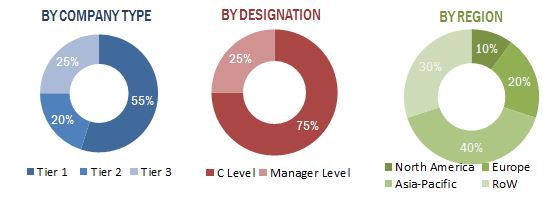
The base year considered for the study is 2015 and the market size is forecast from 2016 to 2022. The research methodology used to estimate and forecast the global train seat market included capturing data on the revenues of key market players through secondary research. The secondary sources for this research were International Railway Journal, Railway Gazette International, and International Union of Railways. Their offerings are also taken into consideration to determine the market segmentation. The bottom-up procedure was employed to arrive at the overall market size of the global market from the revenues of the key market players. After arriving at the overall market size, the total market was split into several segments and subsegments, which were then verified through primary research. Primary research included interviews with Chief Executive Officers (CEOs), Vice-presidents (VPs), directors, and executives of the companies operational in the market. Data triangulation and market breakdown procedures were employed to complete the overall market engineering process and arrive at the exact statistics for all segments and sub-segments. The breakdown of profiles of primary is given in the below figure:
To know about the assumptions considered for the study, download the pdf brochure
The train seat ecosystem comprises seat designers such as Faurecia Automotive Seating (France), Fenix Group LLC (Russia), and Freedman Seating Co. (U.S.) among others; manufacturers such as Grammar AG (Germany), Harita Seating System Ltd. (India), Magna International Inc. (Canada), Saira Seats (France), and Sears Manufacturing Company (U.S.); and suppliers, including Transcal Ltd. (U.K.), Camira Fabrics Ltd. (U.S.), Seats Incorporated (U.S.), The C.E. White Co. (U.S.), and USSC Group (U.S.), among others.
Key Target Audience
- Train Seat Manufacturers and Suppliers
- Research and Development (R&D) Companies
- Government organizations
- Business Research and Consulting Service Providers
- Research Organizations
- Academic Centers and Universities
- Associations and Industrial Bodies
- Technology Investors
Scope of the Report
The research report segments the Global Train Seat Market into following submarkets:
By Train Type:
- High-speed Train
- Passenger Train
- Light Train
- Tram
- Monorail
By Seat Type:
- Regular Seat
- Recliner Seat
- Folding Seat
- Dining Seat
- Smart Seat
By Railcar Type:
- Overland
- Subway
- Long Distance
- Others
By Region:
- North America
- Europe
- Asia-Pacific
Available Customizations
Along with the market data, MarketsandMarkets offers customizations as per the company’s specific needs. The following customization options are available for the report:
Product Analysis
- A detailed analysis of different products by various competitors in the train seat market would be carried out. This analysis will help devise strategies for the company
Geographic Analysis
- Further breakdown of North America train seat market
- Further breakdown of Europe train seat market
- Further breakdown of Asia-Pacific train seat market
Company Information
- Detailed analysis and profiling of additional market players













Growth opportunities and latent adjacency in Train Seat Market